31 Days of Halloween Reading
A free nonfiction reading passage for every day in October, from the history of the jack-o'-lantern to Day of the Dead. Each one comes at several reading levels, K to 8, with questions, an answer key and a coloring page.
More about these worksheets ▾ Show less ▴
Today · October 19
Picture yourself in Paris more than a hundred years ago, sitting in a dark room while a flickering black-and-white movie plays on a bedsheet. A man named Georges Melies is showing off his newest trick: a person who suddenly vanishes into a puff of smoke!
1 2 3 4 5 6 7 8 9 10 11 12 13 14 15 16 17 18 19 20 21 22 23 24 25 26 27 28 29 30 31
Read-along: Every passage on this page reads itself aloud, word by word, when you assign it online.▶ Hear an example
EXAMPLE
A sample passage. Students hear the passage you assign the same way.
■ Stop
✕ Close
Loading…
The bar at the bottom of the screen is what students get: pause, slow it down, or tap a word to hear it again.
×
RI.1 RI.2 RI.3 RI.4 RI.5 RI.6 RI.7 RI.8
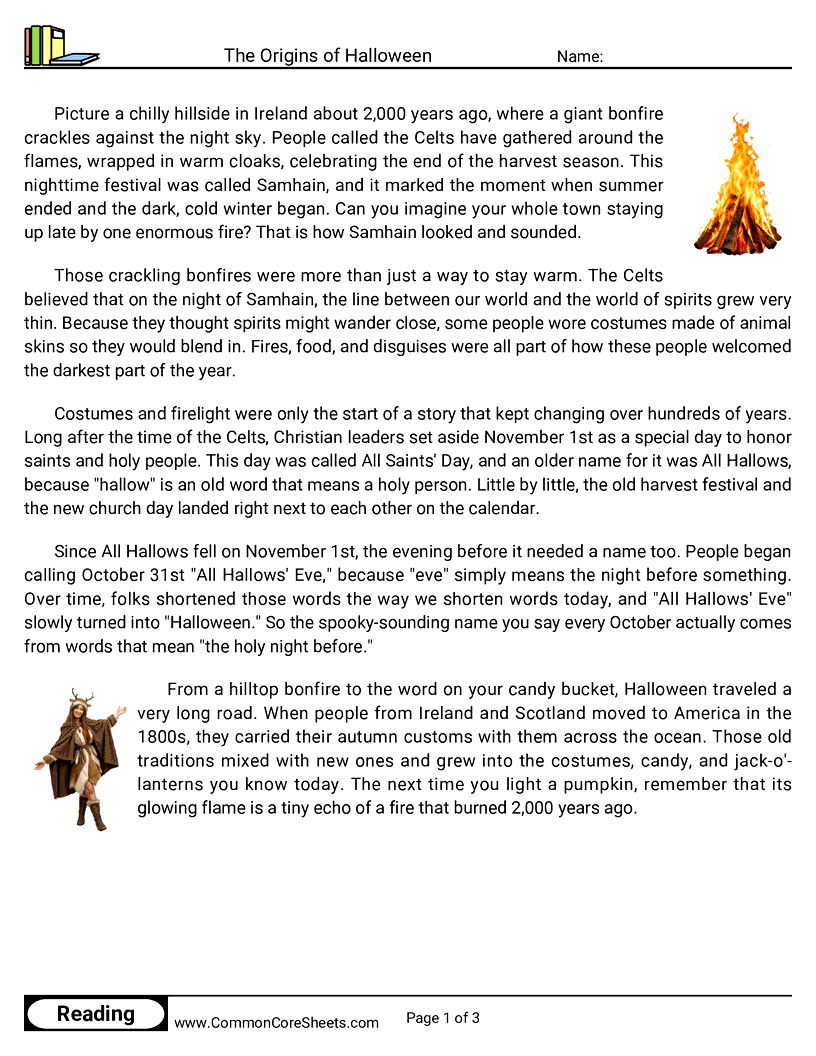
Read a chronological passage about the origins of Halloween Explain why the Celts lit bonfires and wore costumes during Samhain Find where the name "Halloween" comes from and what its old words mean Describe how the passage is organized in time order
RI.2 RI.3 RI.4 RI.5 RI.6 RI.7 RI.8
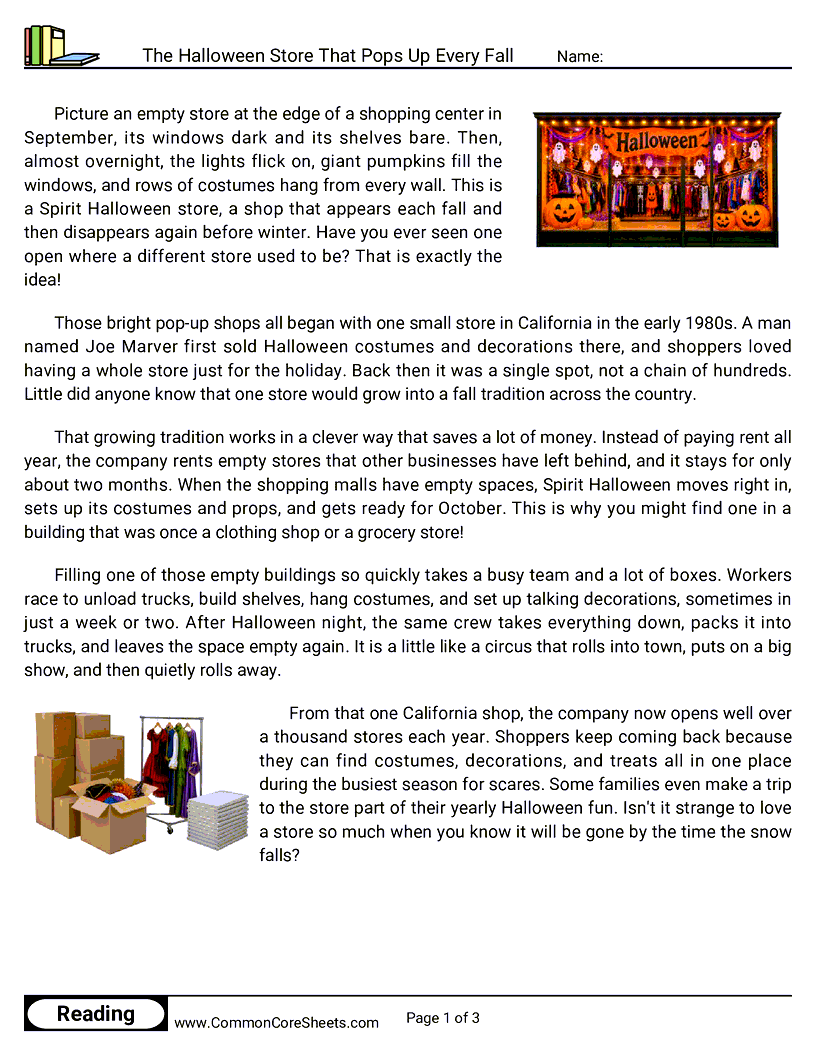
Read a chronological passage about the history of pop-up Halloween stores Explain why the company rents empty stores for only about two months Find details about how workers set up and take down a store Determine the meaning of the phrase pop-up using context
RI.1 RI.2 RI.3 RI.4 RI.5 RI.6 RI.7 RI.8
Read a passage about the history of Halloween in Anoka, Minnesota. Explain why the town started its Halloween celebration and how it grew. Find specific dates and details that show the order of events. Determine the meaning of vocabulary words using context.
RI.1 RI.2 RI.3 RI.4 RI.5 RI.6 RI.7 RI.8 RI.K
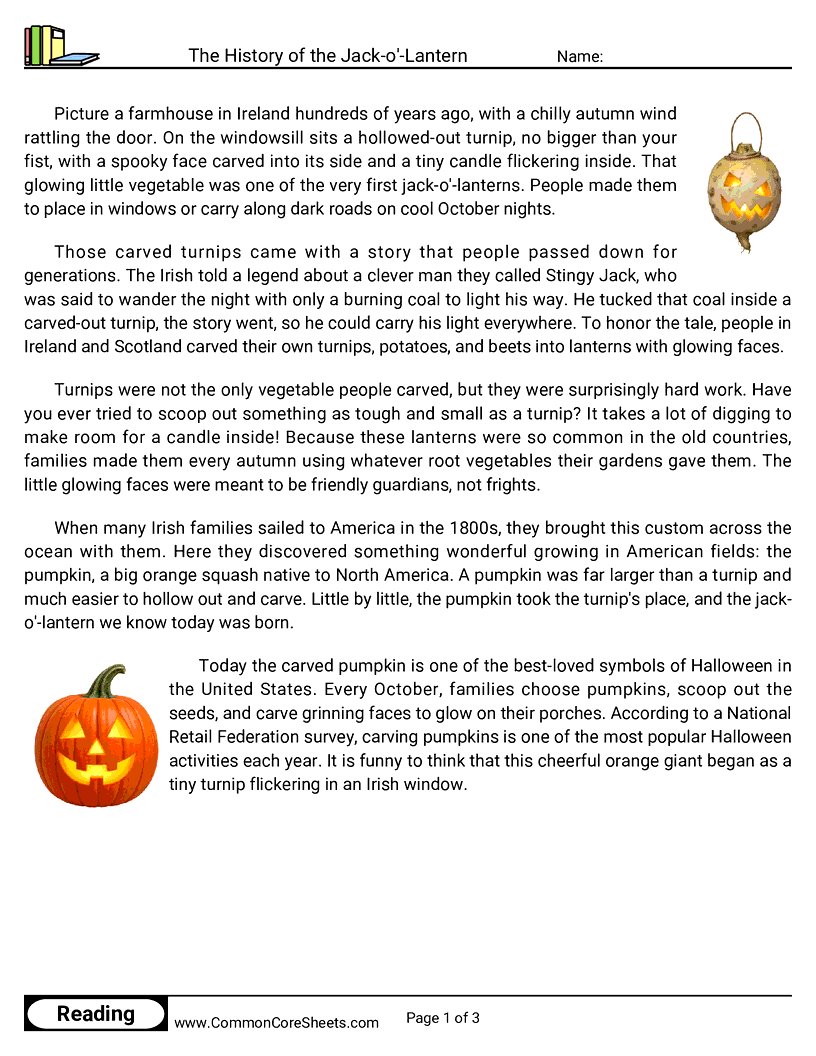
Read a chronological passage about the history of the jack-o'-lantern Explain why Irish immigrants switched from turnips to pumpkins in America Find details in the text that describe how early lanterns were made and used Determine the meaning of words like "legend" using context
RI.1 RI.2 RI.3 RI.4 RI.5 RI.6 RI.7 RI.8
Read a nonfiction passage about the 1991 Halloween blizzard in Minnesota Explain how cold air and warm air work together to make snow Find details that show how families coped with the storm Explain why people still tell stories about this Halloween
RI.1 RI.2 RI.3 RI.4 RI.5 RI.6 RI.7 RI.8 RI.K
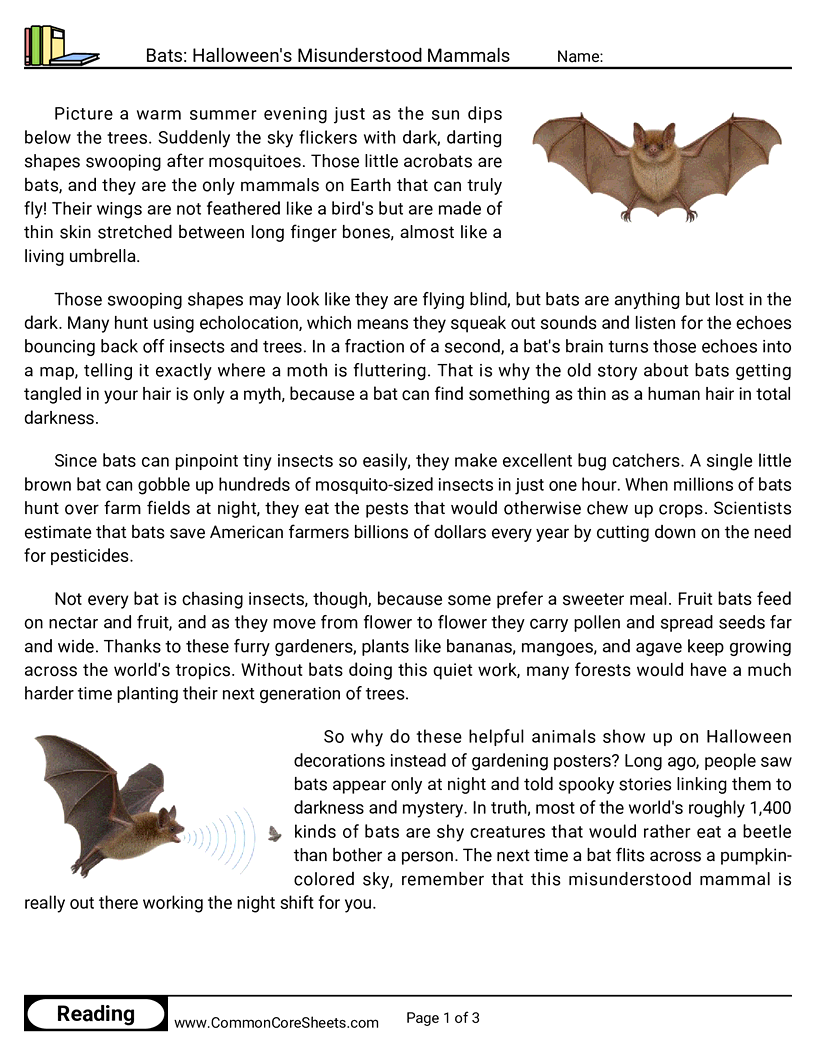
Read a passage about bats and explain what makes them the only flying mammals. Find details showing how echolocation helps bats hunt in the dark. Explain how bats help farmers and forests. Describe how the author organizes the passage from description to helpful facts.
RI.1 RI.2 RI.3 RI.4 RI.5 RI.6 RI.7 RI.8 RI.K
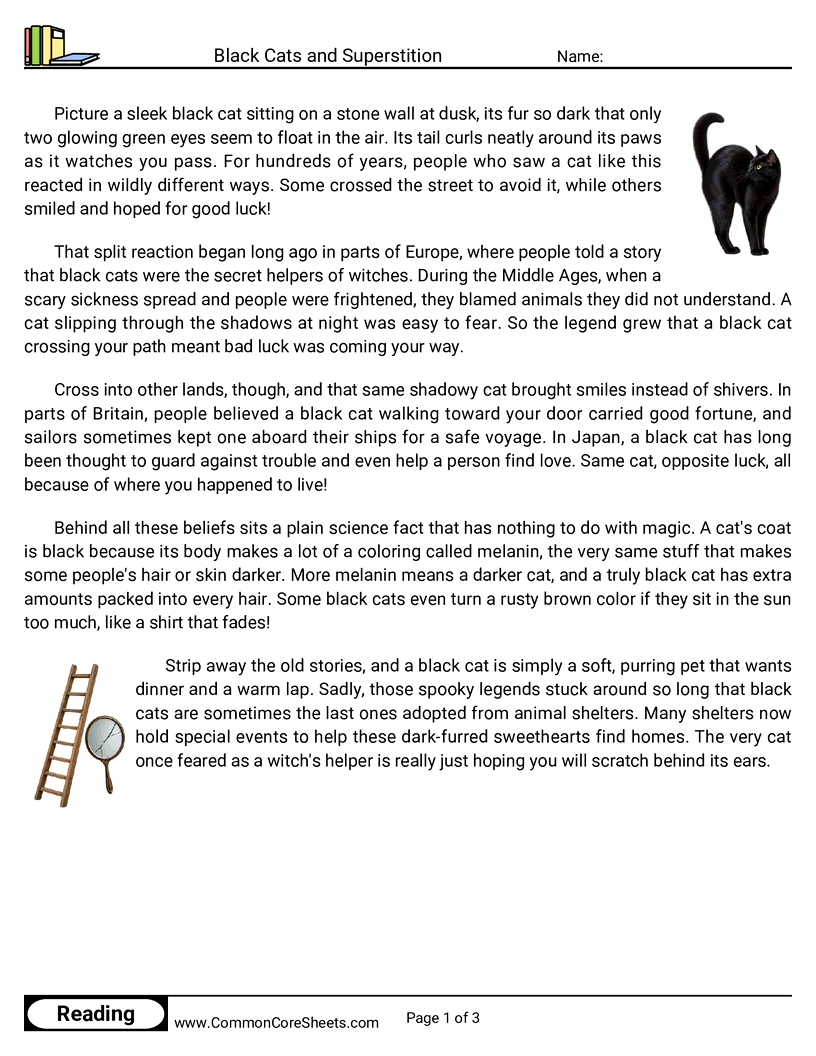
Read a nonfiction passage about the beliefs and science surrounding black cats Find details that explain why the same cat was seen as lucky in some places and unlucky in others Explain how melanin gives a cat its black coat Describe how the author compares opposite beliefs about black cats
RI.1 RI.2 RI.3 RI.4 RI.5 RI.6 RI.7 RI.8 RI.K
Read a nonfiction passage about the "It's the Great Pumpkin, Charlie Brown" special Explain how the cartoon was made by hand before computers existed Find details about who created the special and who wrote its music Determine the main idea and how key details support it
RI.2 RI.3 RI.4 RI.5 RI.6 RI.7 RI.8
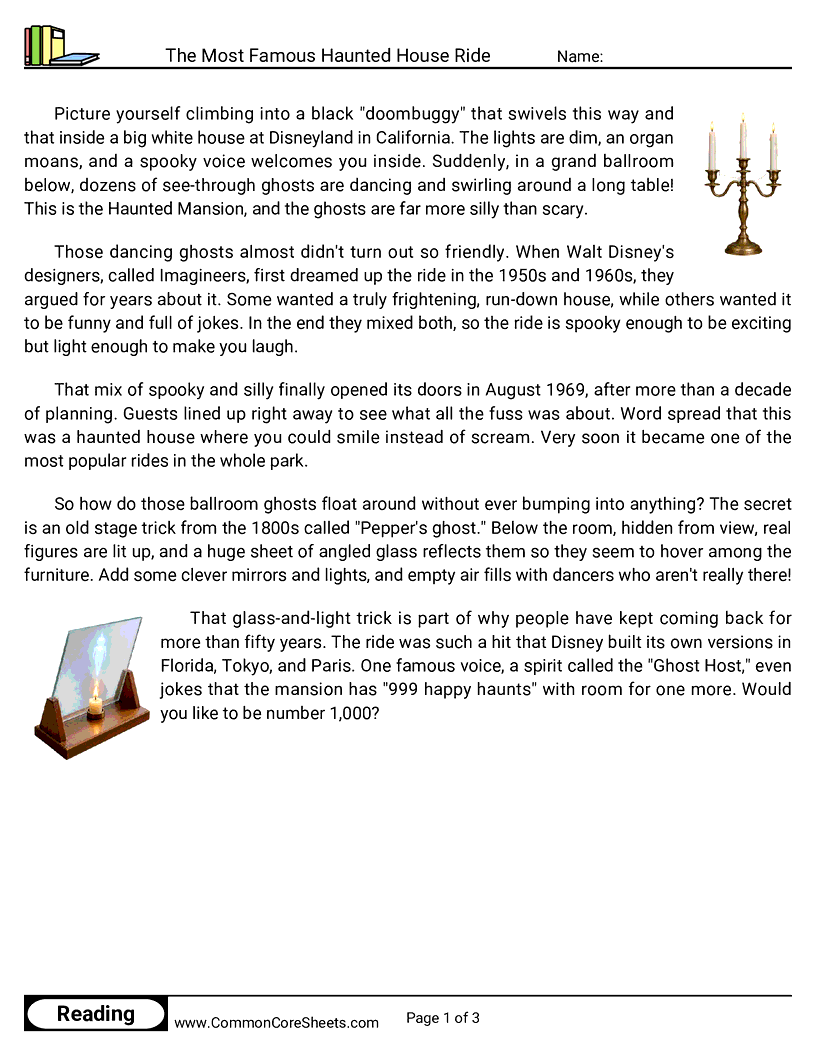
Read a nonfiction passage about the Haunted Mansion ride and its history. Explain how the Pepper's ghost trick makes the dancers appear to float. Find details that show why the ride became popular so quickly. Explain how the designers combined spooky and funny ideas.
RI.2 RI.3 RI.4 RI.5 RI.6 RI.7 RI.8
Read a chronological passage and follow how the parade grew over time Find specific details about who started the parade and when Explain why the parade feels like a celebration everyone can join Determine the meaning of words like "theme" from context
RI.1 RI.2 RI.3 RI.4 RI.5 RI.6 RI.7 RI.8 RI.K
Read a nonfiction passage about the Keene Pumpkin Festival and its world record Find specific details such as dates and pumpkin counts in the text Explain why the festival needs so many volunteers to work together Determine the meaning of the word scaffold from clues in the text
RI.1 RI.2 RI.3 RI.4 RI.5 RI.6 RI.7 RI.8 RI.K
Read a chronological passage about how Halloween costumes changed over time Find specific details about guising, homemade costumes, and store-bought outfits Explain why costumes changed after movies and TV became popular Determine the meaning of words like guising and disguise from context
RI.2 RI.3 RI.4 RI.5 RI.6 RI.7 RI.8
Read a chronological passage about Halloween costumes from the 1930s to today Find details that explain why certain costumes became popular Explain how real world events, like the space race, changed what children wore Identify the main idea and the text structure the author uses
RI.2 RI.3 RI.4 RI.5 RI.6 RI.7 RI.8
Read a passage about the origins of common superstitions Explain why some superstitions began as practical common sense Find details showing how scientists explain why people keep superstitions Determine the meaning of the word 'superstition' from the text
RI.3 RI.4 RI.5 RI.6 RI.7 RI.8
Read a nonfiction passage about "The Legend of Sleepy Hollow" and its author Find details about the characters, setting, and real town in the text Explain why the story became famous and how it spread over time Determine the meaning of new words using clues in the passage
RI.4 RI.5 RI.6 RI.7 RI.8
Read a nonfiction passage about how Mary Shelley wrote Frankenstein. Find details about when and where the story began. Explain why the book is called one of the first science fiction novels. Explain the question about responsibility the story asks.
RI.1 RI.2 RI.3 RI.4 RI.5 RI.6 RI.7 RI.8 RI.K
Read an informational passage about the human skeleton and its bones. Find specific details, such as bone counts and the minerals bones need. Explain why bones are described as living tissue that grows and heals. Describe how the author uses description to show how bones protect organs.
RI.2 RI.3 RI.4 RI.5 RI.6 RI.7 RI.8
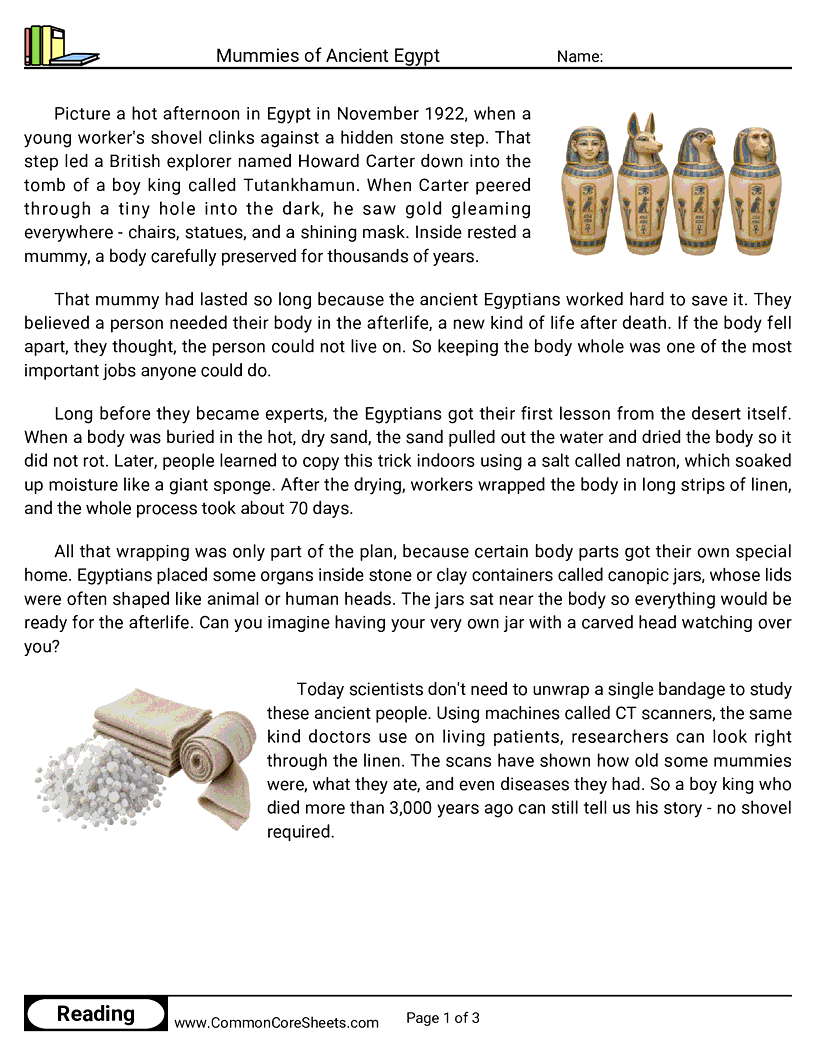
Read a nonfiction passage about how the ancient Egyptians made mummies Explain why the Egyptians preserved bodies and how the desert first helped them Find details about canopic jars, natron, and how long the process took Explain how scientists study mummies today using CT scanners
RI.4 RI.5 RI.6 RI.7 RI.8
Read a chronological passage about the history of spooky movies Find details about the people and studios that shaped monster films Explain why people enjoy feeling scared in a safe way Explain how sound, color, and special effects changed movies over time
RI.3 RI.4 RI.5 RI.6 RI.7 RI.8
Read a nonfiction passage about how movie monsters are created. Find details that explain each method used to make a monster. Explain why filmmakers changed from puppets to computers over time. Determine the meaning of words like prosthetics and animatronics from context.
RI.2 RI.3 RI.4 RI.5 RI.6 RI.7 RI.8
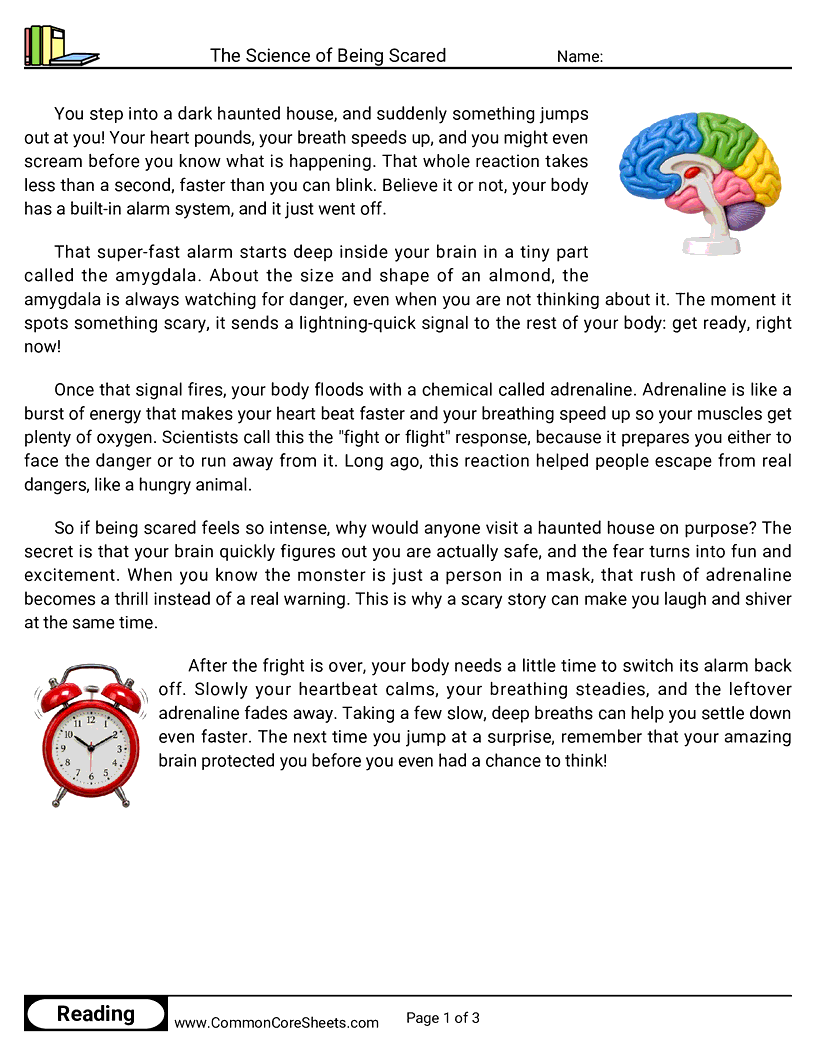
Read a passage about how the body reacts to being scared Find details about the amygdala and adrenaline in the text Explain why a haunted house can feel fun instead of frightening Describe how the body calms down after a fright
RI.1 RI.2 RI.3 RI.4 RI.5 RI.6 RI.7 RI.8 RI.K
Read a passage about the history of Halloween and trace how it changed over time. Find details that show how customs moved from Ireland and Scotland to other countries. Explain why the jack-o'-lantern changed from a turnip into a pumpkin. Explain how Day of the Dead is a separate celebration with its own meaning.
RI.1 RI.2 RI.3 RI.4 RI.5 RI.6 RI.7 RI.8
Read a passage about the Irish and Scottish roots of Halloween Find details that explain how old customs changed over time Explain why turnip lanterns became pumpkins in America Determine the meaning of words like guising and Oiche Shamhna in context
RI.1 RI.2 RI.3 RI.4 RI.5 RI.6 RI.7 RI.8 RI.K
Read a nonfiction passage about the Day of the Dead in Mexico. Find details that explain what an ofrenda is and why families build one. Explain how Indigenous and Catholic traditions blended to shape the holiday. Identify the meaning of words like ofrenda and calavera from context.
RI.1 RI.2 RI.3 RI.4 RI.5 RI.6 RI.7 RI.8
Read a chronological passage about how Halloween candy changed over time Find specific details and dates that show how treats changed Explain why wrapped candy replaced homemade treats Determine the meaning of words like "fun size" from context
RI.1 RI.2 RI.3 RI.4 RI.5 RI.6 RI.7 RI.8 RI.K
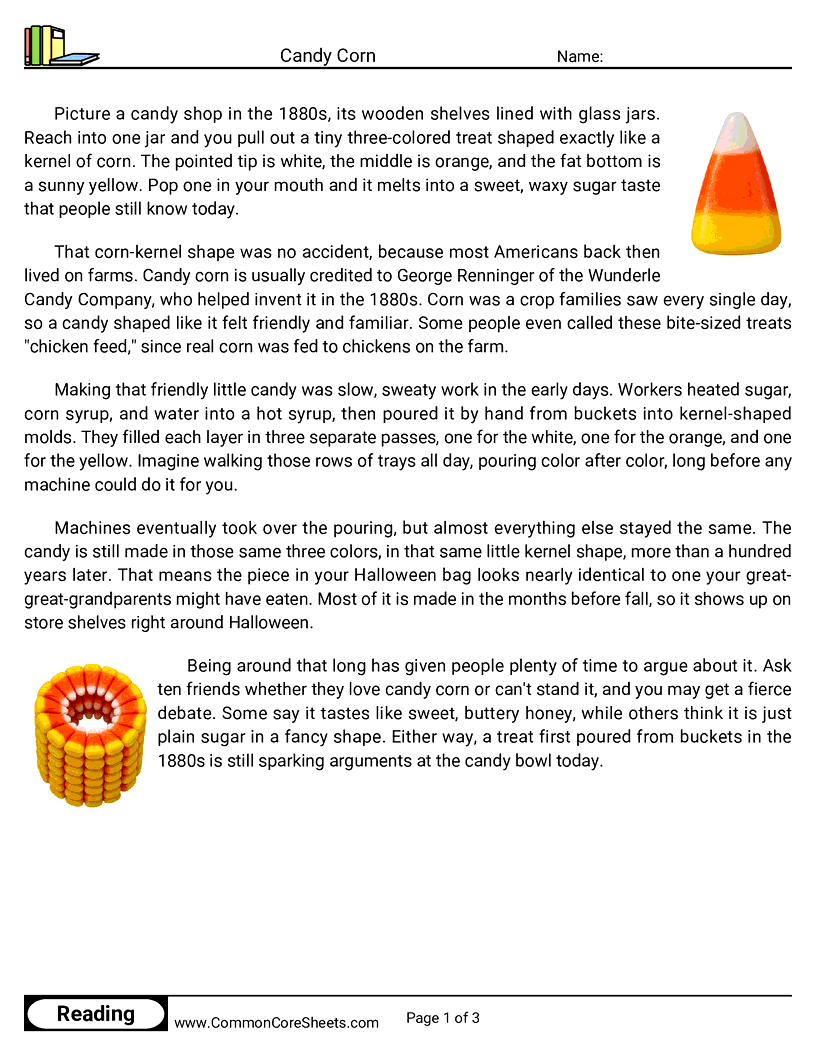
Read a chronological passage about the history of candy corn Find specific details that explain why the candy was shaped like corn Explain how candy corn was made before machines took over Determine the meaning of words like "credited" from context
RI.3 RI.4 RI.5 RI.6 RI.7 RI.8
Read a chronological passage about the history of haunted house attractions Find details that show how haunted houses changed over time Explain why schools and clubs began building haunted houses Determine the meaning of vocabulary words used in the text
RI.1 RI.2 RI.3 RI.4 RI.5 RI.6 RI.7 RI.8
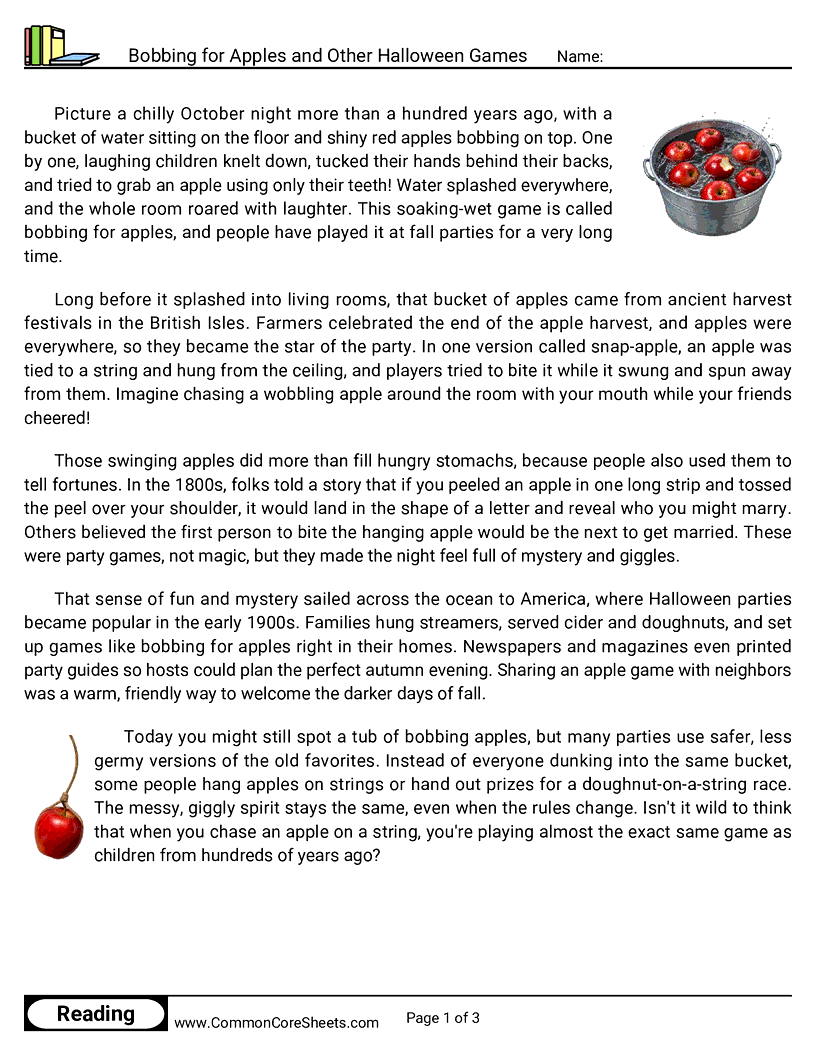
Read a passage about the history of Halloween apple games and party traditions Find details that explain how bobbing for apples and snap-apple were played Explain why apple games changed over time and how they are played today
RI.1 RI.2 RI.3 RI.4 RI.5 RI.6 RI.7 RI.8 RI.K
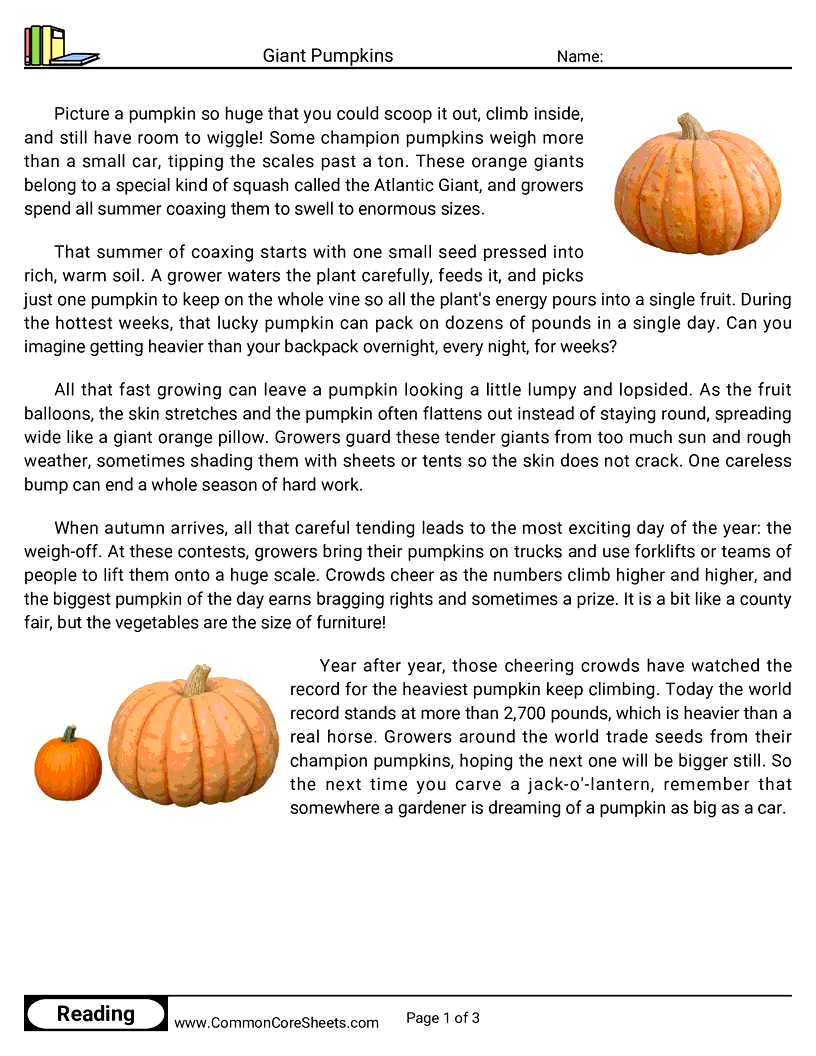
Read a passage about giant pumpkins and their growers. Find details explaining how growers help a pumpkin grow huge. Explain why the author uses comparisons like 'heavier than a horse'. Describe the steps a pumpkin goes through from seed to weigh-off.
RI.5 RI.6 RI.7 RI.8
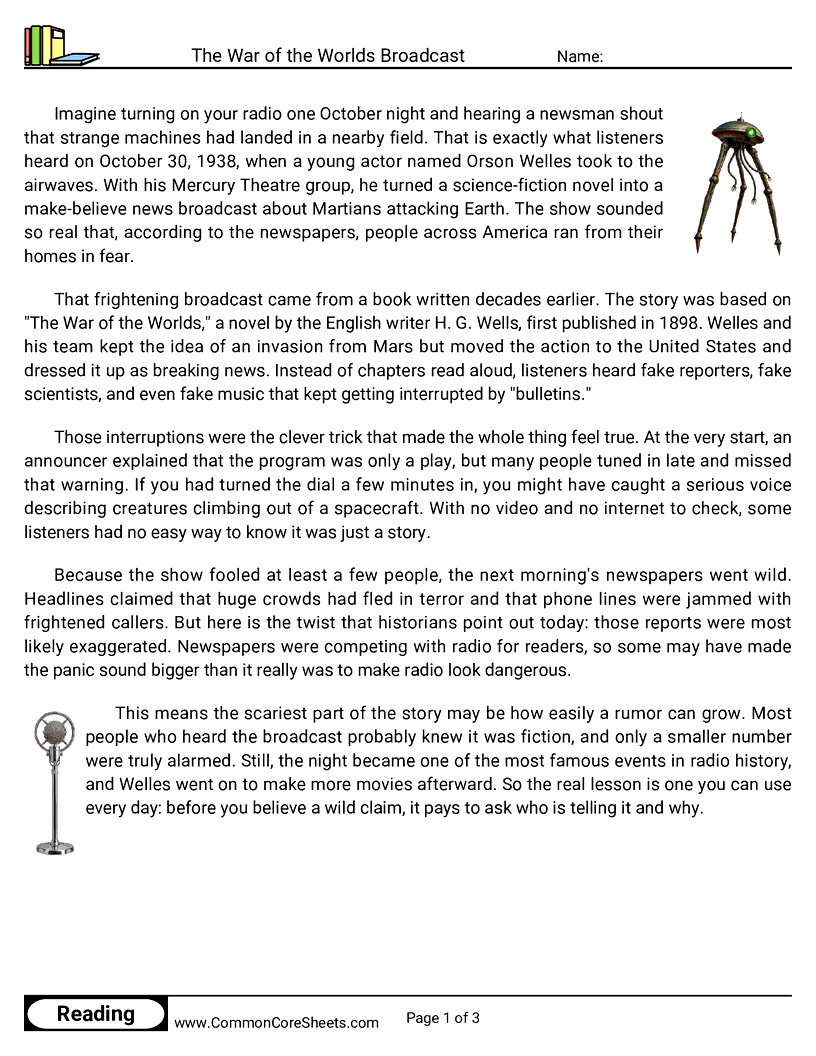
Read a nonfiction passage about the 1938 "War of the Worlds" broadcast and its aftermath Explain how the fake news format made the drama believable to listeners Trace and evaluate the claim that the broadcast caused mass panic Find the reasons historians give for doubting the newspaper reports
RI.1 RI.2 RI.3 RI.4 RI.5 RI.6 RI.7 RI.8 RI.K
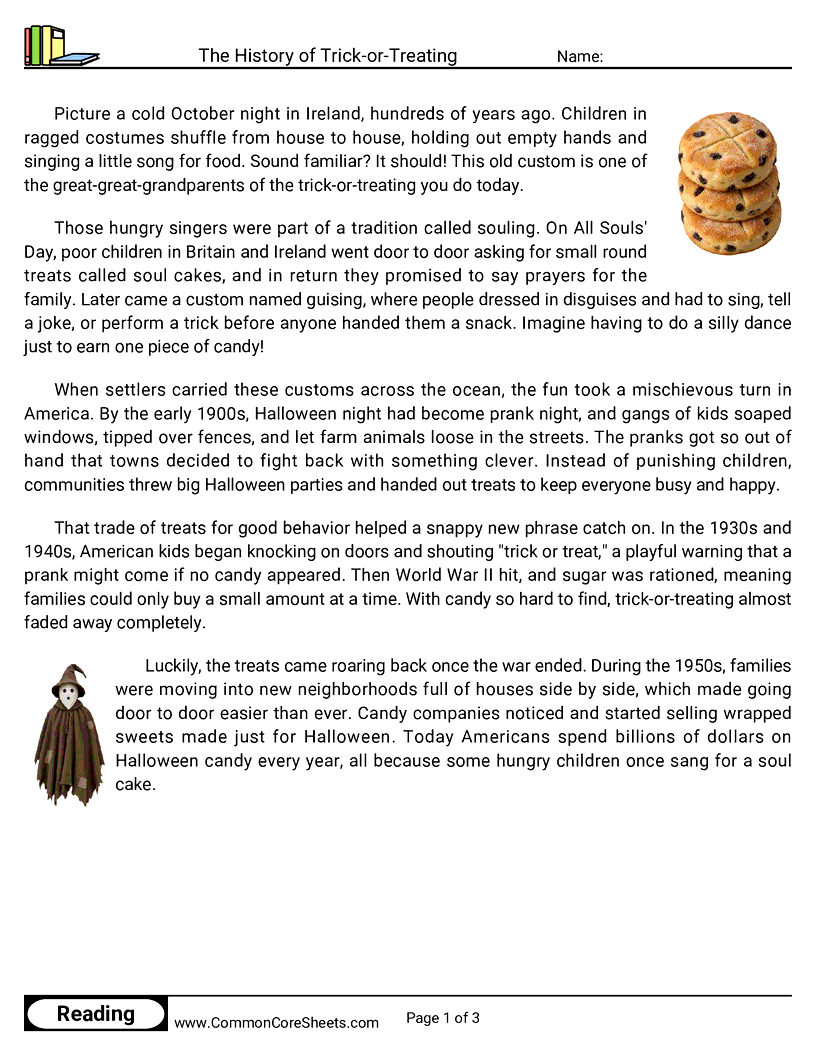
Read a chronological passage about the history of trick-or-treating Explain how and why the custom changed from souling to modern trick-or-treating Find details in the text that show cause and effect over time Determine the meaning of words like rationed and guising from context
RI.1 RI.2 RI.3 RI.4 RI.5 RI.6 RI.7 RI.8 RI.K
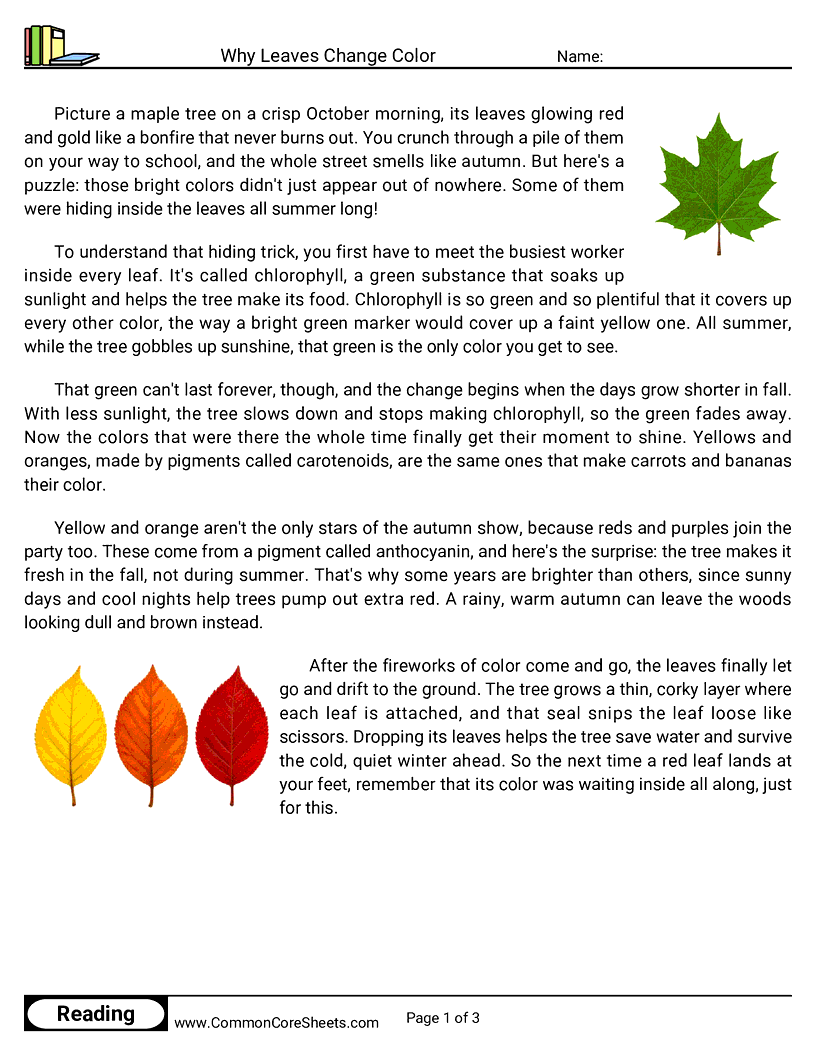
Read a science passage about why leaves change color in fall. Explain how chlorophyll, carotenoids, and anthocyanin each affect leaf color. Find details showing why some autumns are brighter than others. Explain why trees drop their leaves before winter.
RI.1 RI.2 RI.3 RI.4 RI.5 RI.K
Read a passage about how nocturnal animals survive and hunt in the dark Find details that explain how eyes, ears, and noses help animals at night Explain why some animals are active at night instead of during the day Determine the meaning of words like nocturnal and echolocation from context
RI.3 RI.4 RI.5 RI.6 RI.7 RI.8
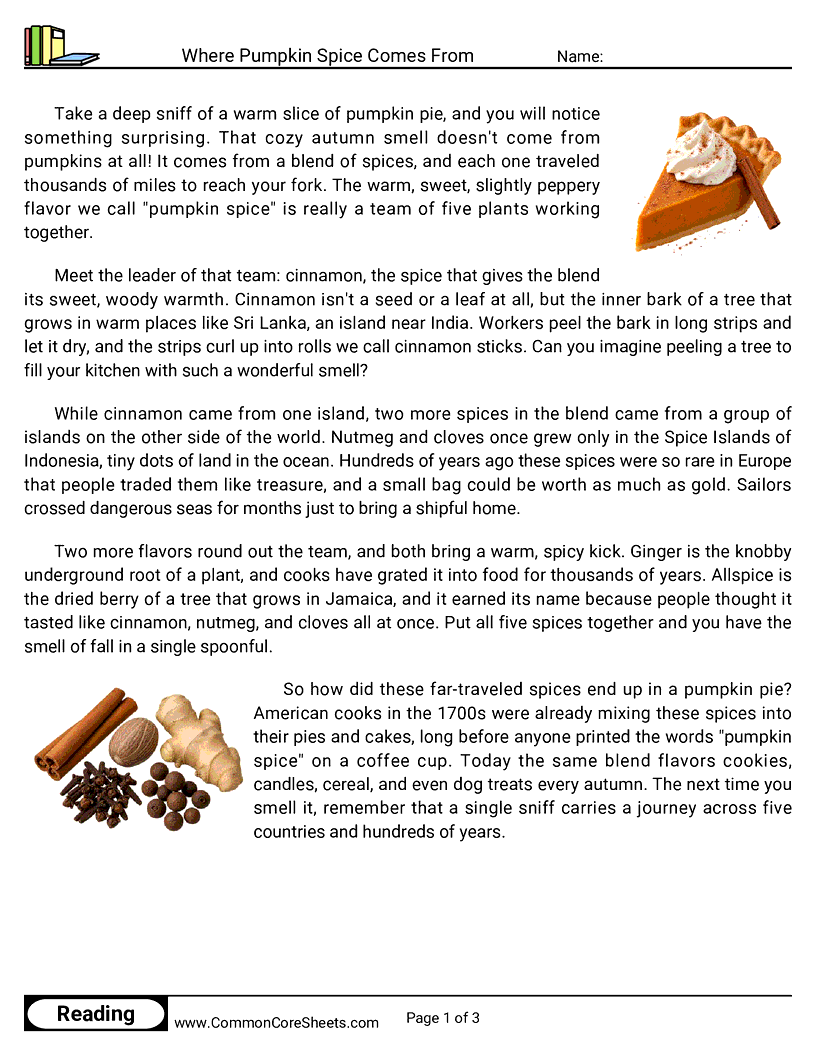
Read a nonfiction passage about the spices in pumpkin spice and where they grow. Find details that explain why certain spices were once as valuable as gold. Explain how five spices from different countries came together in pumpkin pie. Determine the meaning of domain-specific words like bark, root, and knobby from context.
RI.2 RI.3 RI.4 RI.5 RI.6 RI.7 RI.8
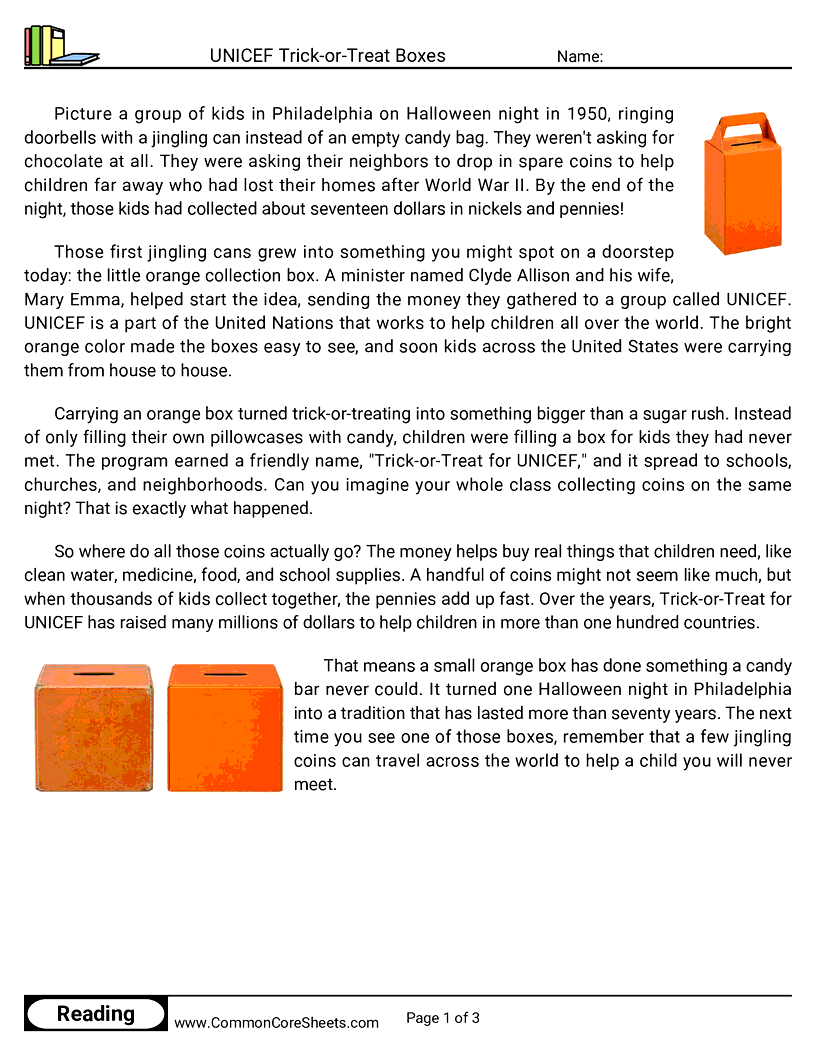
Read a chronological passage about the history of Trick-or-Treat for UNICEF. Find specific details about who started the program and what the money buys. Explain how a small collection box changed what trick-or-treating could do. Determine the meaning of words and phrases used in the text.
RI.6 RI.7 RI.8
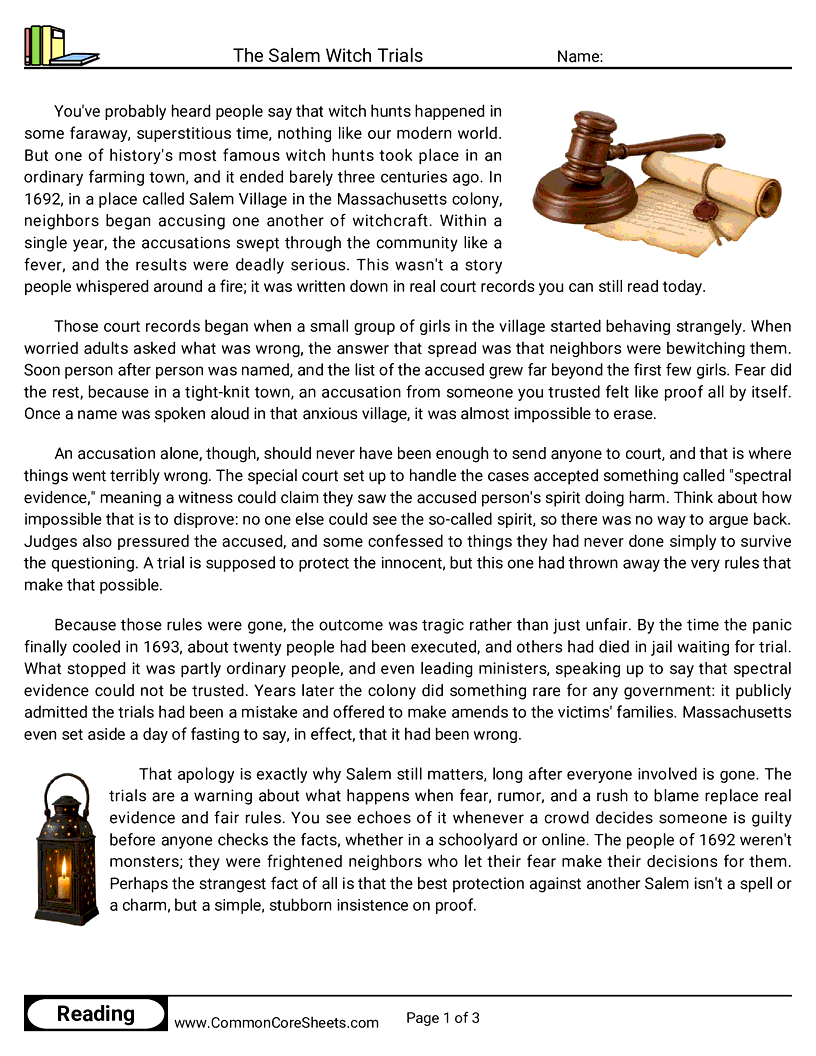
Read a nonfiction passage about the Salem witch trials and identify its central idea Find textual evidence showing how fear and spectral evidence shaped the outcome Explain the author's point of view about fair trials and how it is conveyed Determine the meaning of the term "spectral evidence" as used in the text
RI.3 RI.4 RI.5 RI.6 RI.7 RI.8
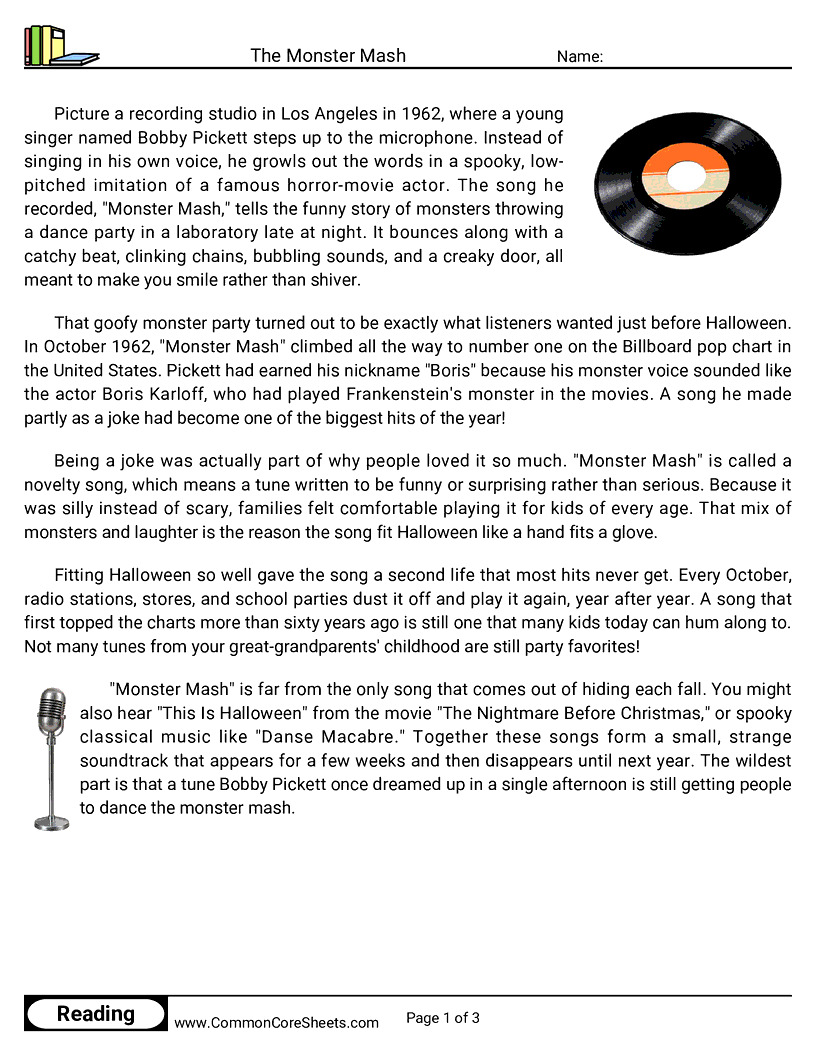
Read a passage about the song "Monster Mash" and Halloween music. Find details that explain when and how the song became a hit. Explain why a silly song became a lasting Halloween tradition. Determine the meaning of the phrase "novelty song" from context.
RI.1 RI.2 RI.3 RI.4 RI.5 RI.6
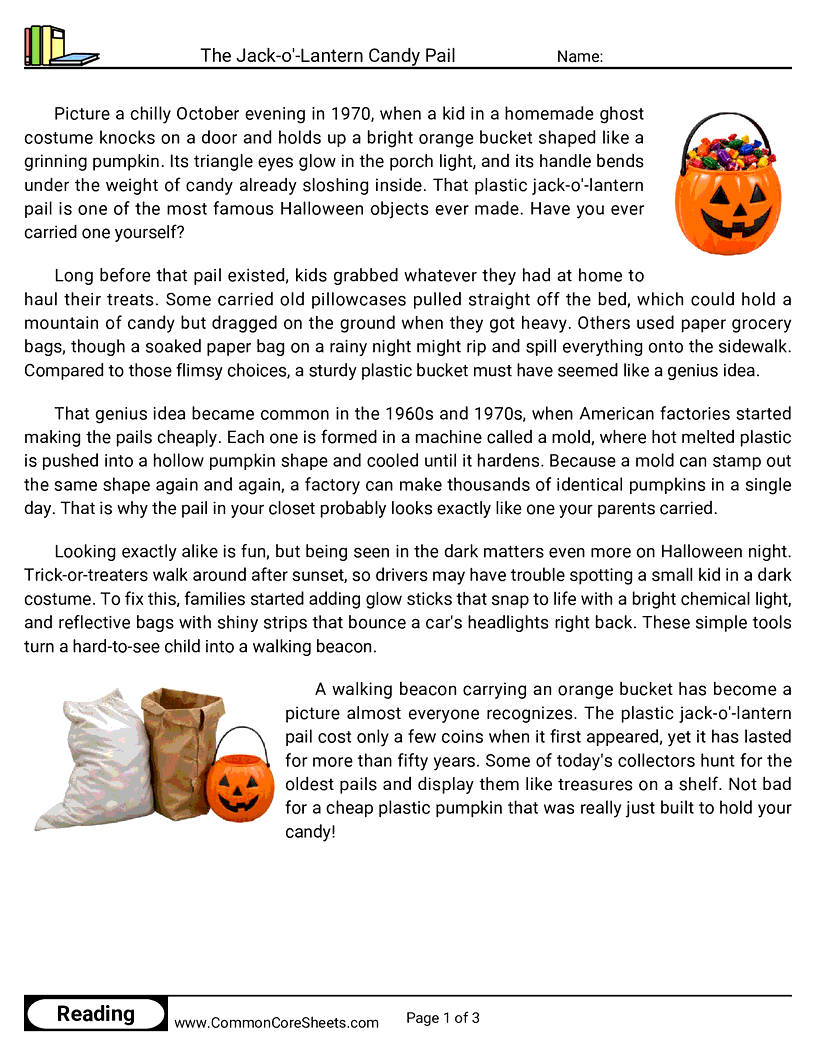
Read a chronological passage about how Halloween treat containers changed over time Explain how a plastic pail is formed in a mold and why factories can make so many Find details that show why glow sticks and reflective bags make trick-or-treating safer Explain how the author compares older containers to the plastic pail
RI.1 RI.2 RI.3 RI.4 RI.5 RI.6 RI.7 RI.8 RI.K
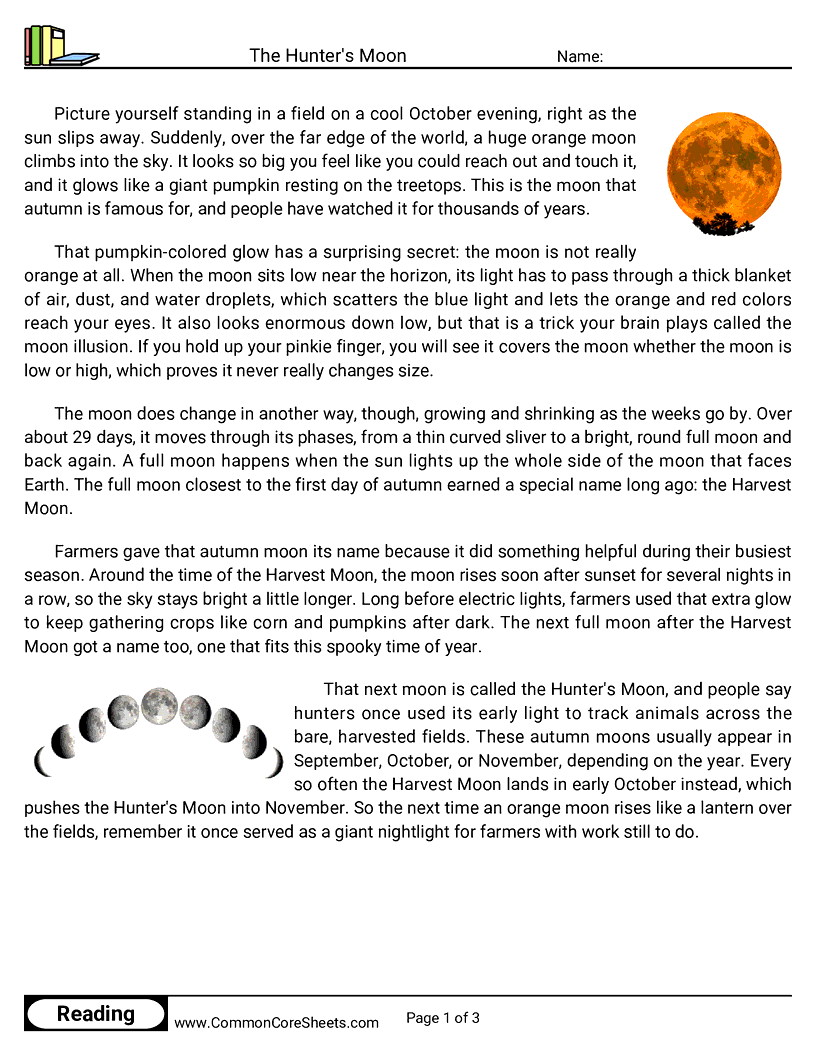
Read a nonfiction passage about the autumn full moons and how they work. Explain why the moon looks orange and large near the horizon. Find details about the Harvest Moon and the Hunter's Moon and how farmers used them. Identify the text structure the author uses to describe the moon's phases.
RI.4 RI.5 RI.6 RI.7 RI.8
Read a nonfiction passage about the Hungry Ghost Festival and its customs Find details that explain when and where the festival takes place Explain why people burn joss paper and leave the front row empty Describe how the author organizes and supports ideas in the text
RI.1 RI.2 RI.3 RI.4 RI.5 RI.6 RI.7 RI.8 RI.K
Read a chronological passage about how pumpkins spread through history Explain how the Three Sisters plants helped one another grow Find details that show how people used and changed the pumpkin over time Explain why pumpkins are considered a fruit
RI.3 RI.4 RI.5 RI.6 RI.7 RI.8
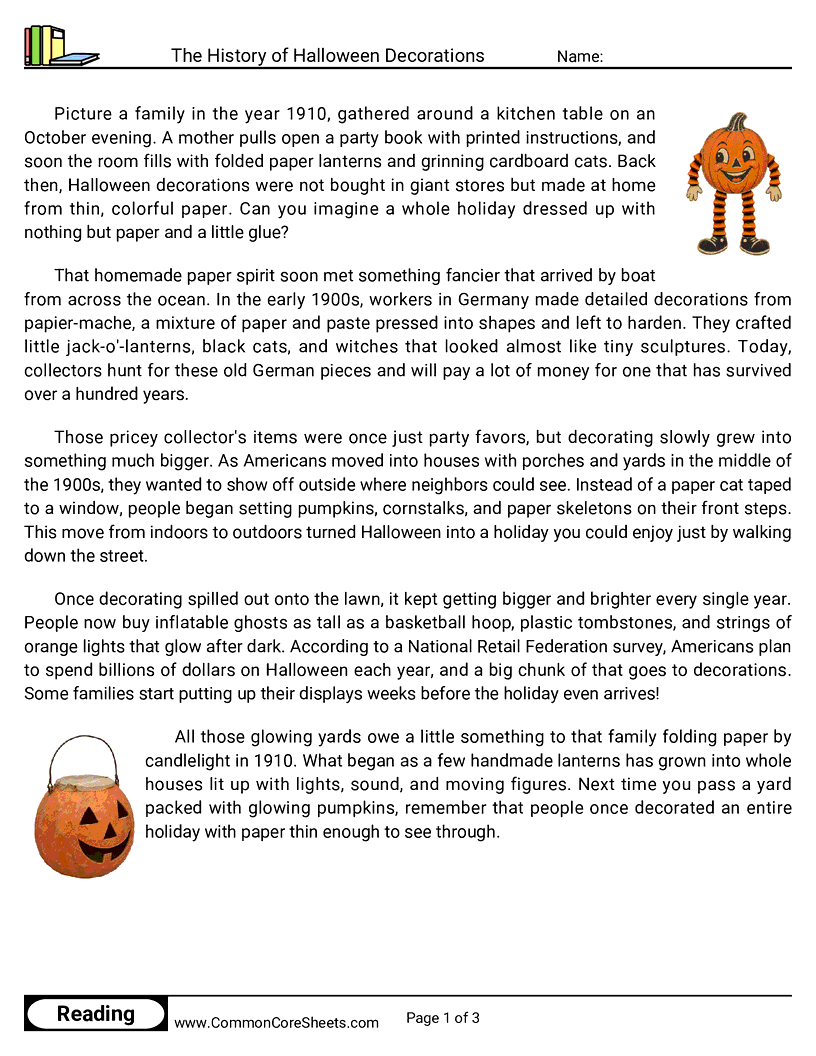
Read a chronological passage about the history of Halloween decorations. Find details that explain how and why decorating moved from indoors to outdoors. Explain the meaning of domain words such as papier-mache in context. Explain how the author uses evidence to show decorating grew bigger over time.
RI.1 RI.2 RI.3 RI.4 RI.K
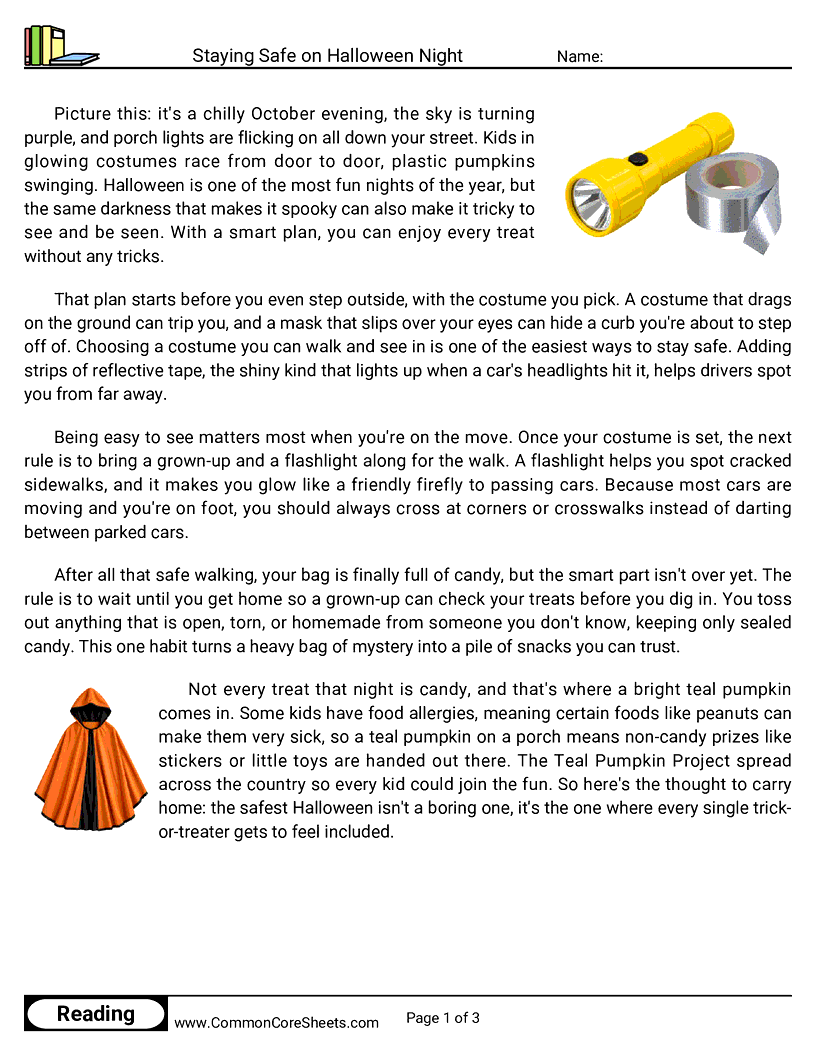
Read a passage about staying safe while trick-or-treating on Halloween night. Find specific safety rules and explain why each one matters. Explain what a teal pumpkin means and how the Teal Pumpkin Project spread. Describe how the author organizes information using order of events and cause and effect.
RI.1 RI.2 RI.3 RI.4 RI.5 RI.6 RI.7 RI.8 RI.K
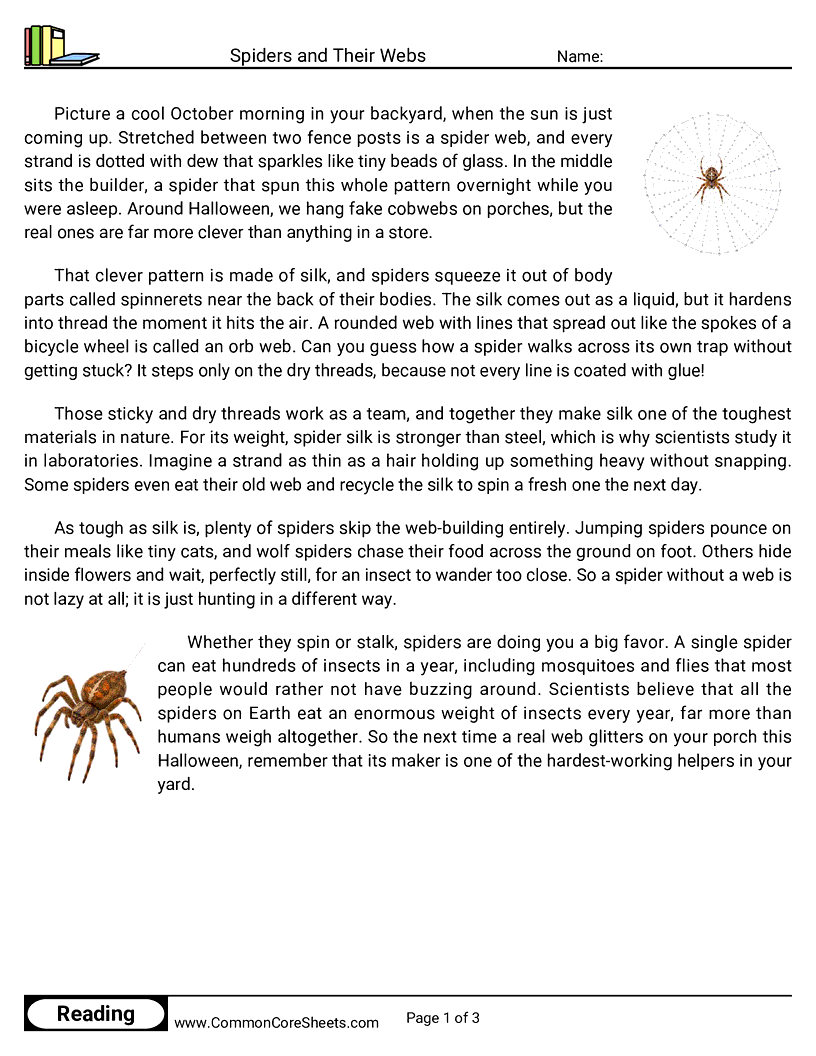
Read a nonfiction passage about spiders and the silk webs they spin Explain how spiders make silk and why it is so strong Find details showing how spiders help people by eating insects Describe how the author compares spiders that build webs with those that do not
RI.1 RI.2 RI.3 RI.4 RI.5 RI.6 RI.7 RI.8 RI.K
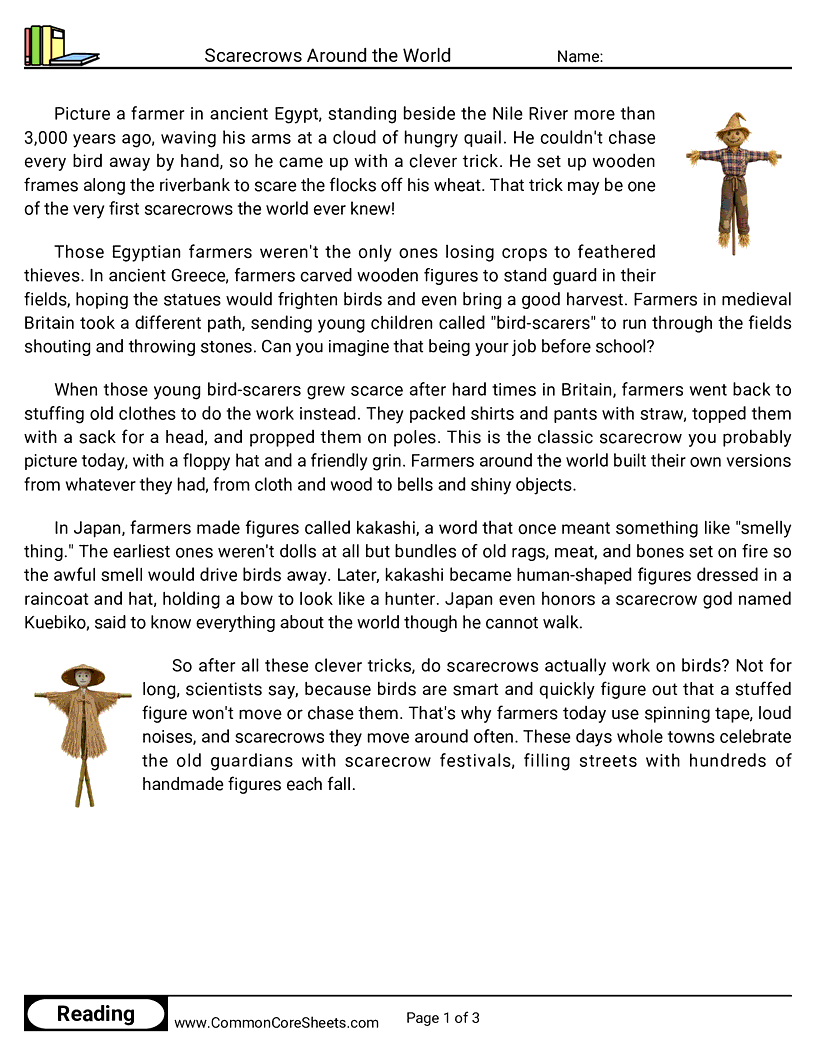
Read a nonfiction passage about the history of scarecrows in different cultures Find specific details that explain how and why scarecrows were made Explain why scarecrows do not keep birds away for long Describe how the passage is organized as a chronology through time
RI.1 RI.2 RI.3 RI.4 RI.5 RI.6 RI.7 RI.8 RI.K
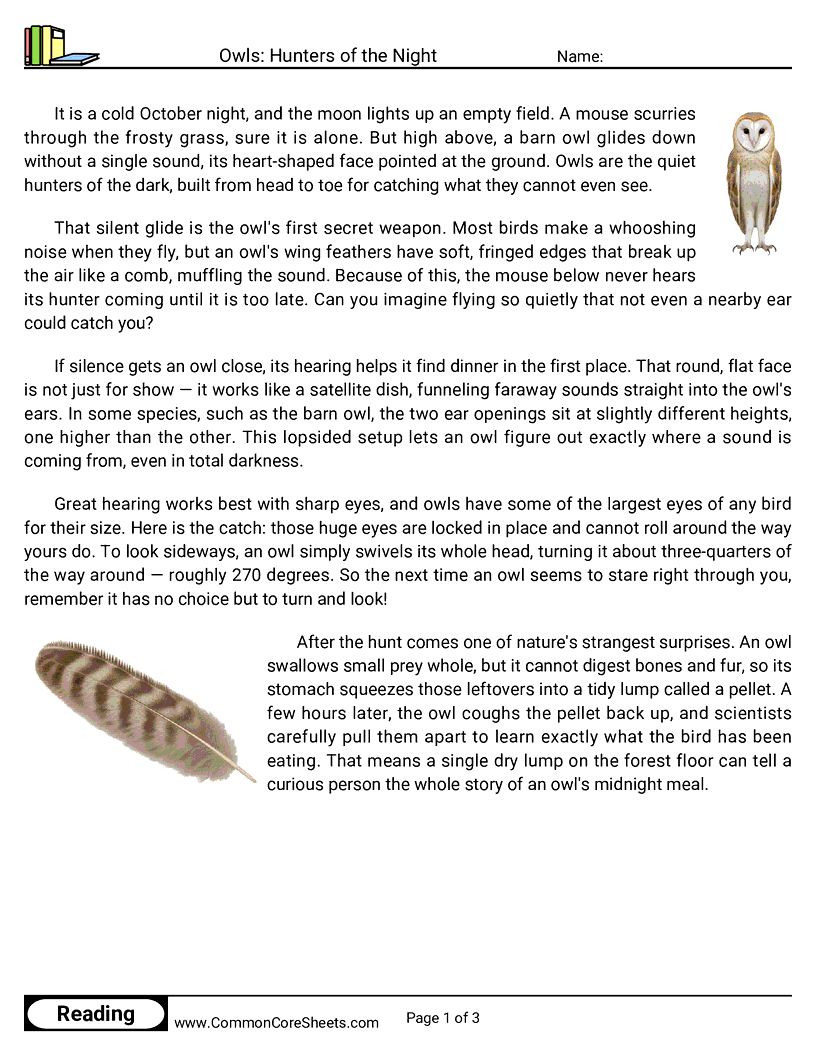
Read a nonfiction passage about how owls hunt at night. Explain how silent flight, hearing, and eyesight help an owl catch prey. Find details in the text that describe what an owl pellet is and why scientists study it. Describe how a cause-and-effect paragraph is organized.
RI.2 RI.3 RI.4 RI.5 RI.6 RI.7 RI.8
Read an informational passage about the Obon festival in Japan. Find details that explain what lanterns, dancing, and family visits mean during Obon. Explain how Obon is similar to and different from other holidays that remember the dead. Determine the meaning of festival words like Bon Odori and toro nagashi from context.
RI.1 RI.2 RI.3 RI.4 RI.5 RI.6 RI.7 RI.8 RI.K
Read a nonfiction passage about the life cycle of a pumpkin. Explain why bees are needed for a pumpkin to grow. Find details that show why a pumpkin is called a fruit. Describe the order of stages from seed to harvest.
RI.2 RI.3 RI.4 RI.5 RI.6 RI.7 RI.8
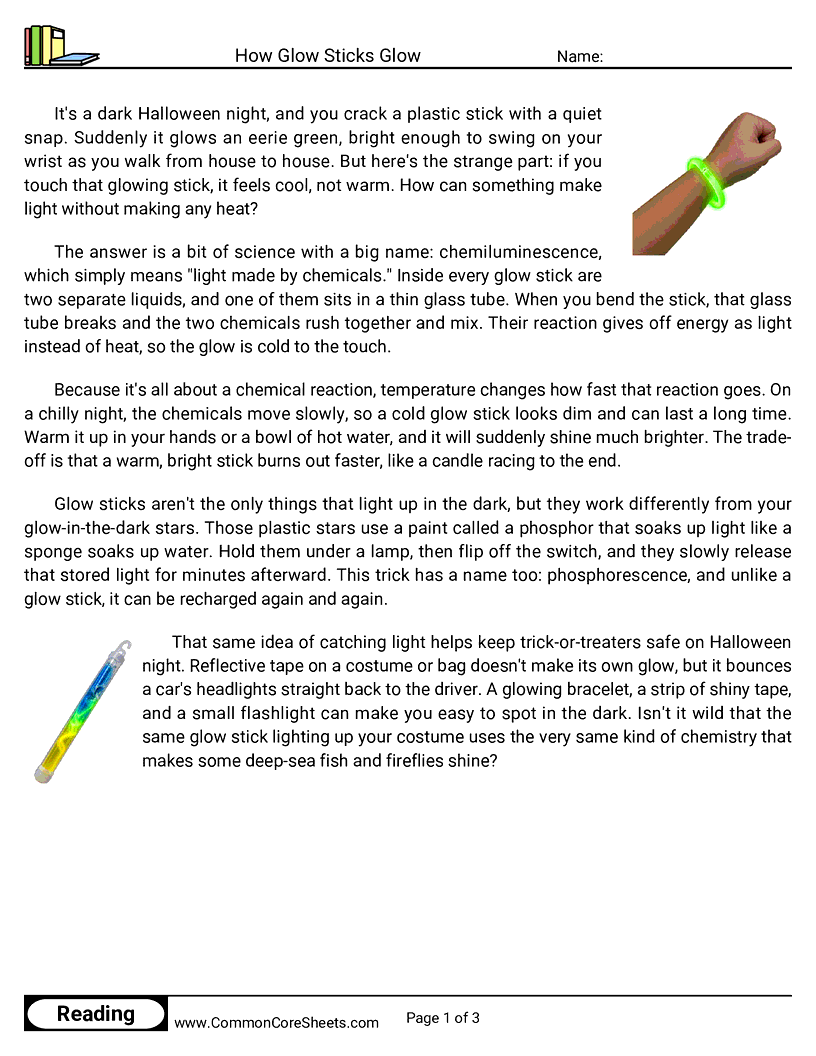
Read a passage about how glow sticks and glow-in-the-dark toys make light Explain why a glow stick feels cool and how temperature changes its brightness Find details that show how phosphorescence and reflective tape differ from a glow stick
RI.1 RI.2 RI.3 RI.4 RI.5 RI.6 RI.7 RI.8 RI.K
Read and follow the chronological steps that turn cacao beans into chocolate Explain why fermenting and roasting change the flavor of the beans Find details about how the Maya and Aztec peoples used cacao Explain how chocolate became a common Halloween candy
RI.1 RI.2 RI.3 RI.4 RI.5 RI.6 RI.7 RI.8 RI.K
Read a passage explaining how a corn maze is planned and cut into a field. Find details that show why October is the time farms open to visitors. Explain the steps a designer follows to hide a picture inside a cornfield. Explain how a corn maze fits into a larger harvest festival.
RI.4 RI.5 RI.6 RI.7 RI.8
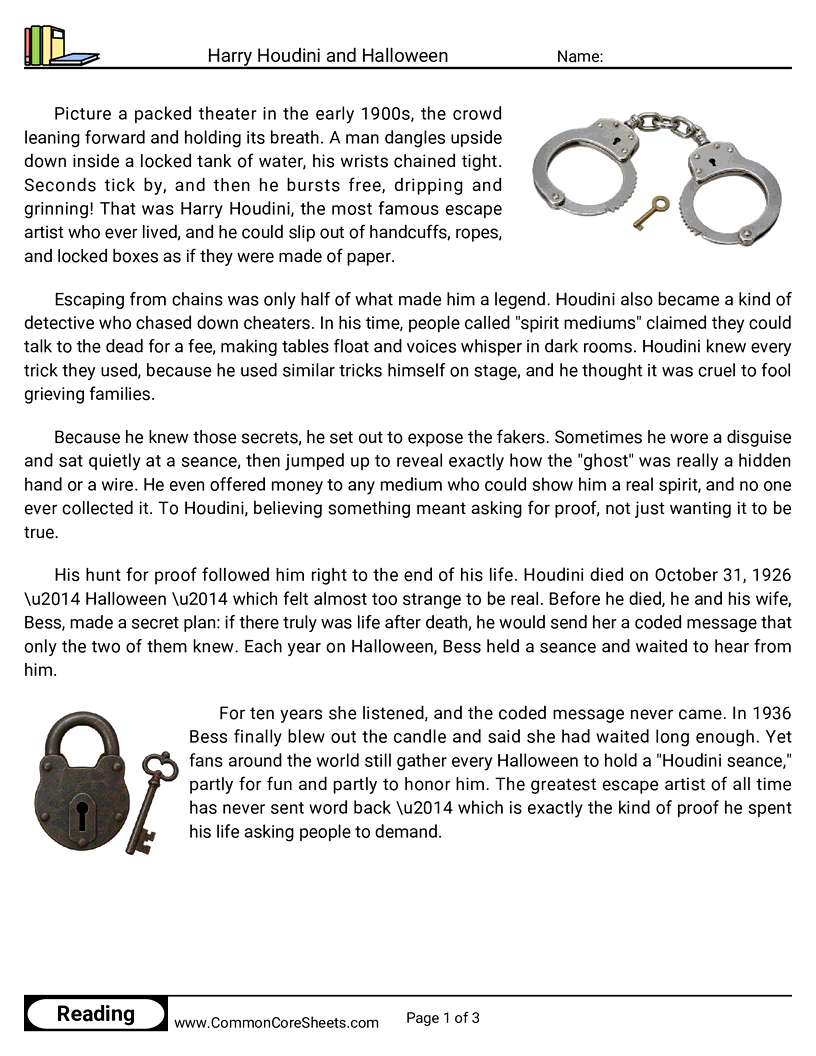
Read a nonfiction passage about Harry Houdini and his life's work Explain why Houdini worked to expose fake spirit mediums Find details in the text that show Houdini valued proof over belief Describe how the author organizes the passage in time order
RI.3 RI.4 RI.5 RI.6 RI.7 RI.8
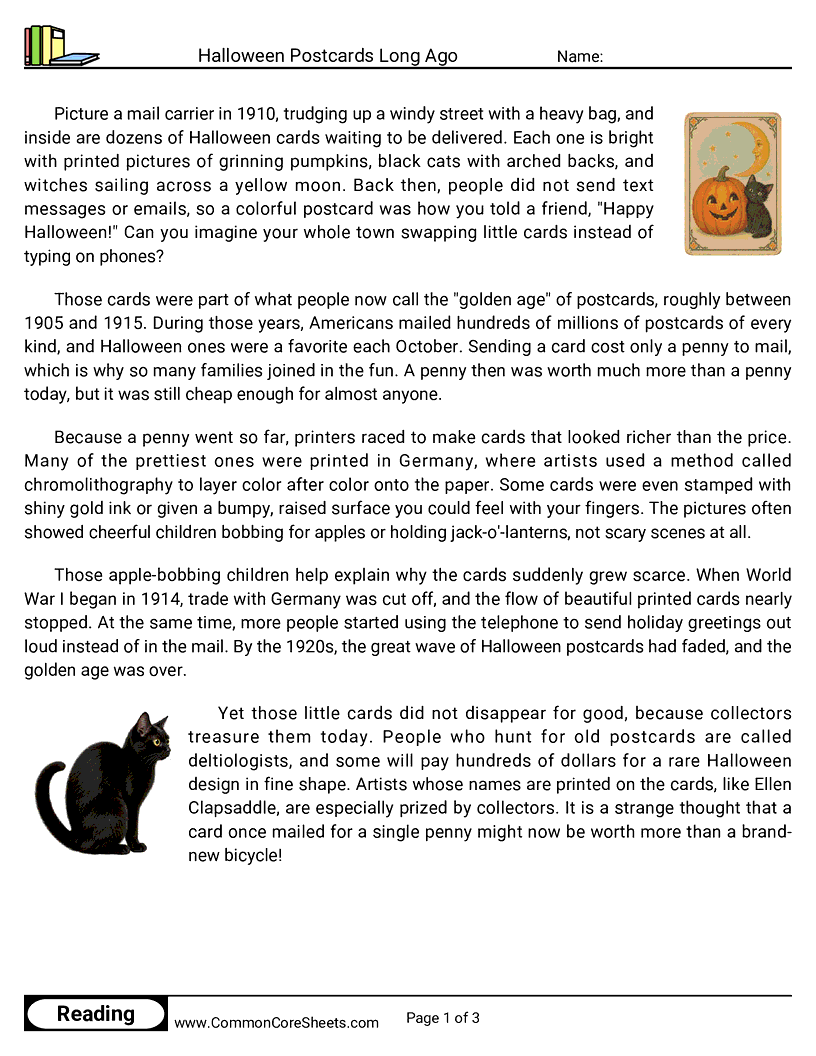
Read a nonfiction passage about vintage Halloween postcards and their history Find details that explain how the cards were made and mailed Explain why the postcards became scarce and why collectors value them today Determine the meaning of words like scarce and deltiologist from context
RI.3 RI.4 RI.5 RI.6 RI.7 RI.8
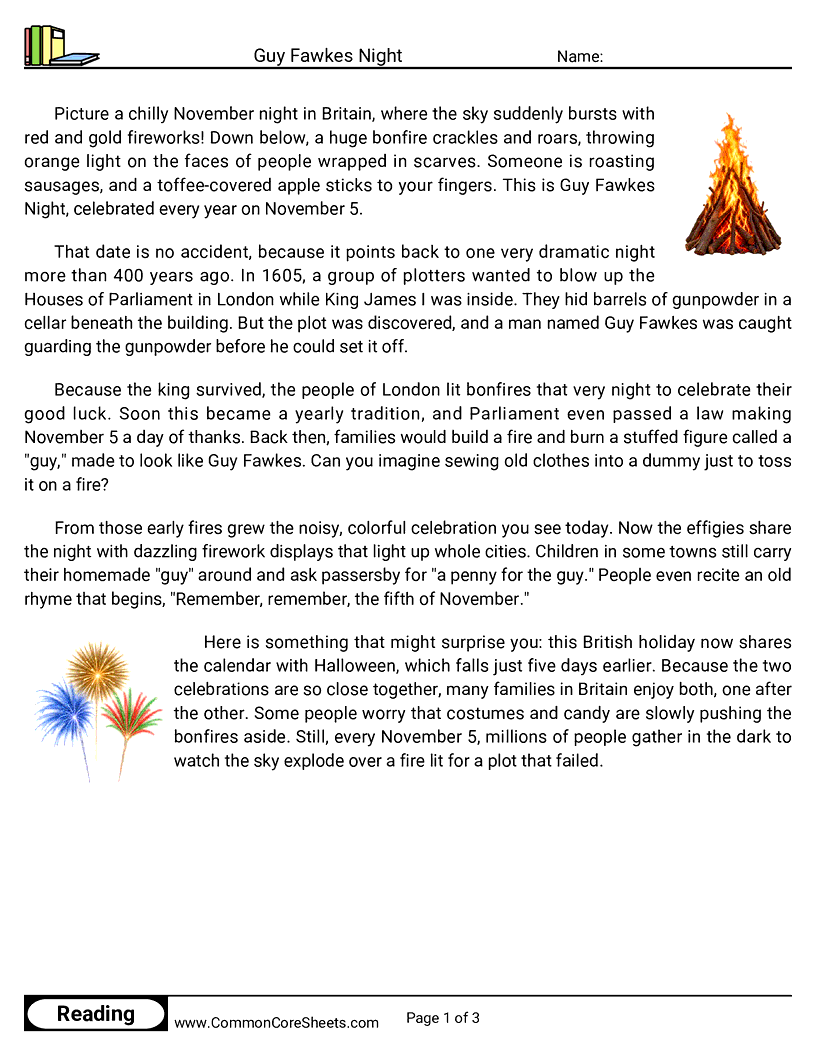
Read a nonfiction passage about the history and traditions of Guy Fawkes Night. Explain what happened during the Gunpowder Plot of 1605 and why people celebrated. Find details that show how the holiday changed from the 1600s to today. Explain how Guy Fawkes Night and Halloween share the November calendar.
RI.3 RI.4 RI.5 RI.6 RI.7 RI.8
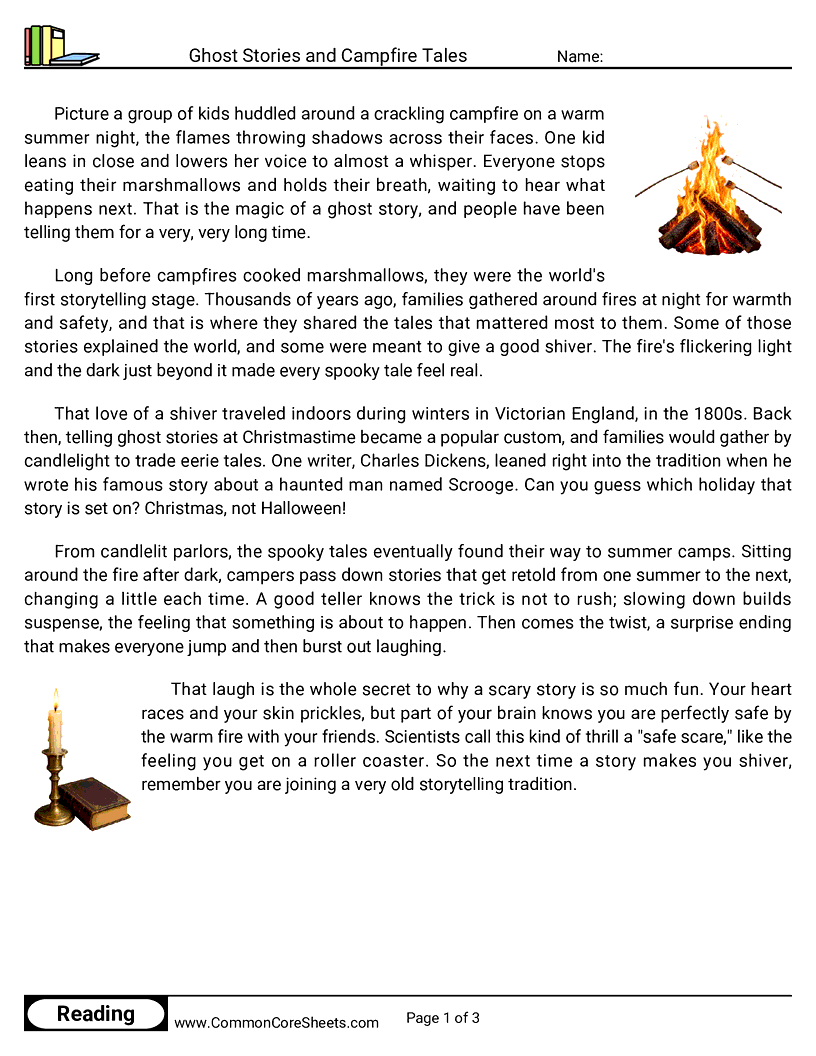
Read a passage about the tradition of telling ghost stories over time. Find details that explain how a storyteller builds suspense and surprise. Explain why people enjoy a "safe scare" using evidence from the text. Describe how the passage is organized from ancient times to today.
RI.6 RI.7 RI.8
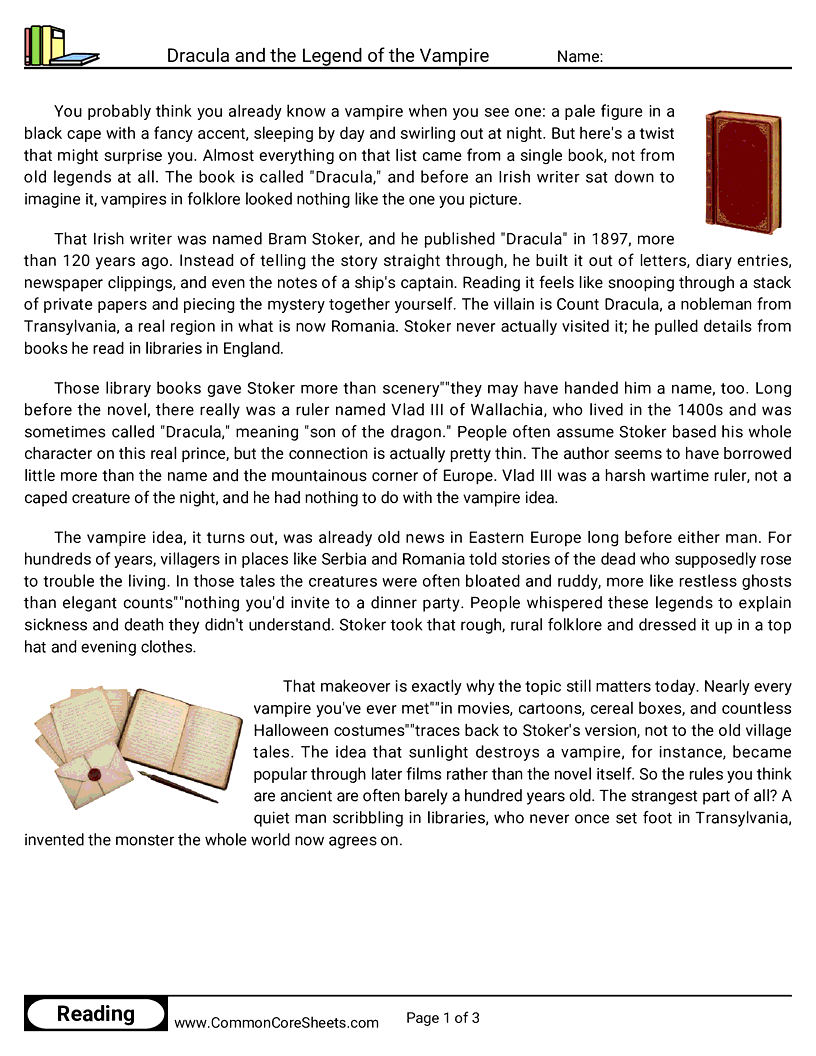
Read an analytical passage about the origins of the modern vampire. Find text evidence that distinguishes folklore, Stoker's novel, and film inventions. Explain how the author develops a central idea in layers across the paragraphs. Determine the meaning of figurative phrases such as "a costume stitched together."
RI.1 RI.2 RI.3 RI.4 RI.5 RI.6 RI.7 RI.8 RI.K
Read a nonfiction passage about the intelligence of crows and ravens. Find details that show how crows use tools and remember faces. Explain the differences between crows and ravens using the text. Explain how the author supports the idea that these birds are smart.
RI.3 RI.4 RI.5 RI.6 RI.7 RI.8
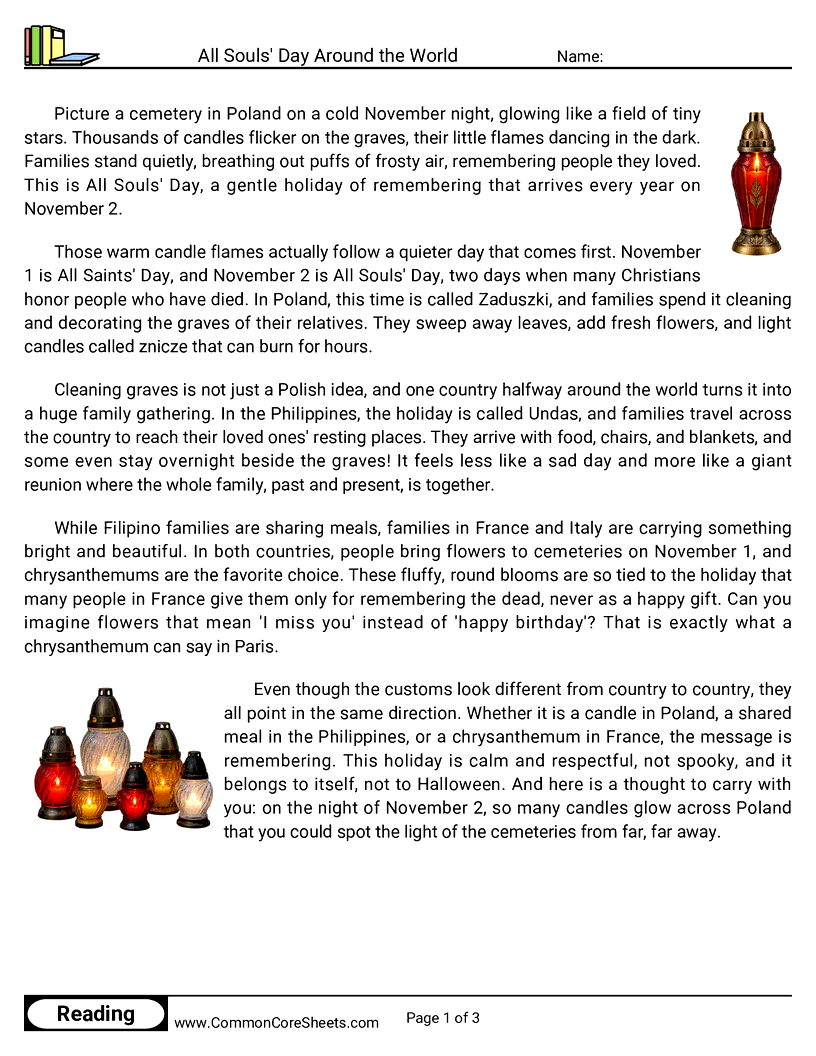
Read a passage comparing All Souls' Day customs in four countries Find details about candles, flowers, and meals used to honor the dead Explain why families visit and decorate graves on this holiday Identify the comparison structure the author uses across the article
RI.2 RI.3 RI.4 RI.5 RI.6 RI.7 RI.8
Read a passage explaining where the word Halloween came from. Find details about All Saints' Day, the apostrophe, and Robert Burns. Explain why the long phrase shortened into the word we use today. Describe the time-order structure the author uses to tell the story.
RI.1 RI.2 RI.3 RI.4 RI.5 RI.K
Read an informational passage about candy apples and caramel apples Explain why these treats are made in the fall Find details that show how caramel is made from sugar Explain the difference between a candy shell and caramel
Playwire Advertisement