Sentence Worksheets
Strengthen sentence craft with free sentence worksheets on combining sentences, fixing fragments, and identifying sentence types. Students learn to join short, choppy sentences into smooth compound and complex ones, recognize and repair incomplete thoughts, and tell statements, questions, commands, and exclamations apart. Each worksheet prints as a PDF with an answer key - no login or account required - and modified pages support students who need a lighter load. A great fit for 1st through 5th grade writing instruction and daily grammar practice.
More about these worksheets ▾ Show less ▴
×
L.1.1.j L.2.1.f
Know that a complete sentence needs a subject and a predicate Tell whether a sentence is missing its subject or its predicate Choose words that complete a sentence Recognize phrases that are not complete sentences
L.2.1.f
Know that every sentence has a subject and a predicate Recognize the complete subject as who or what the sentence is about Recognize the complete predicate as what the subject does Tell the two parts of a sentence apart
L.2.1.f
Find the complete subject of a sentence Find the complete predicate of a sentence Know that the predicate begins with the verb Recognize subjects that are longer than one word
L.3.1.a
Find the simple subject inside a complete subject Find the simple predicate, the verb Tell the simple subject from the describing words around it Explain how nouns and verbs work in a sentence
L.2.1.f L.3.1.h
Recognize a compound subject Recognize a compound predicate Know that and can join two subjects or two predicates Tell a compound part from a list inside one part
L.3.1.h L.3.1.i
Practice joining two short sentences into one smooth sentence Learn to use connecting words like and, but, and because Understand how to combine ideas without repeating words Practice writing longer sentences with correct punctuation
L.3.1.h L.3.1.i L.4.2.c
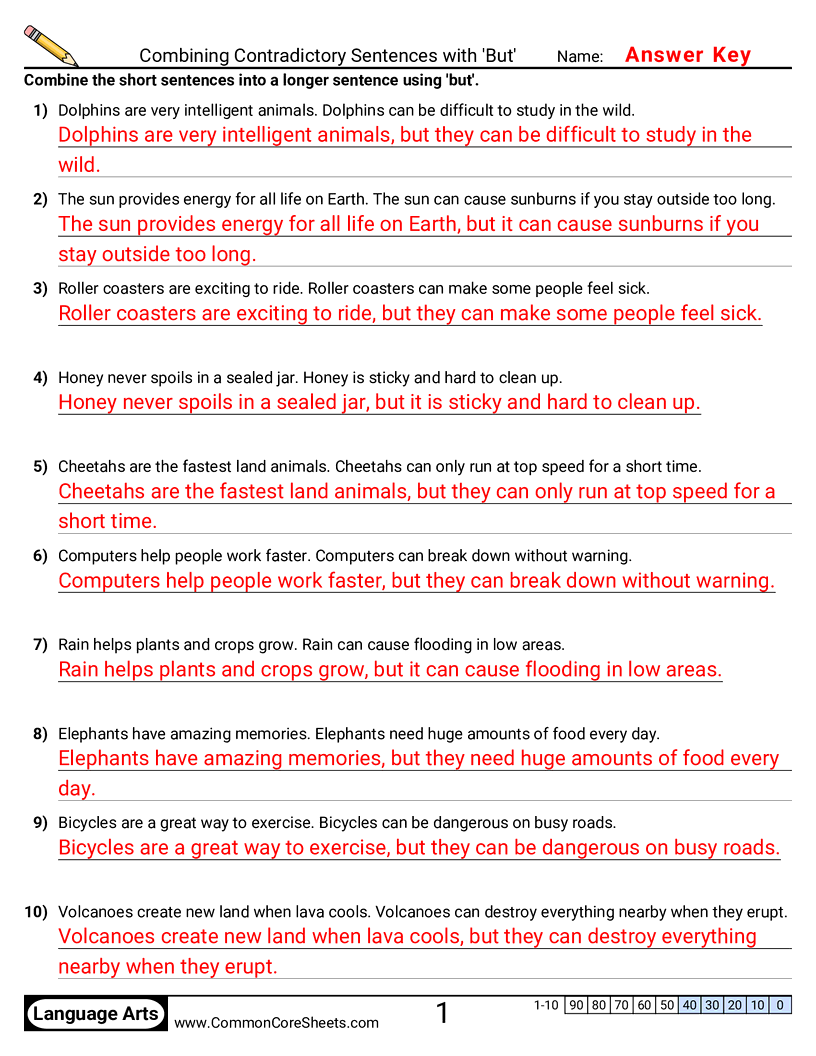
Practice combining two sentences that show opposite ideas using the word 'but' Learn where to place a comma when joining sentences with 'but' Understand how 'but' shows contrast between two thoughts Practice writing longer, smoother sentences instead of two short ones
L.3.1.h L.3.1.i
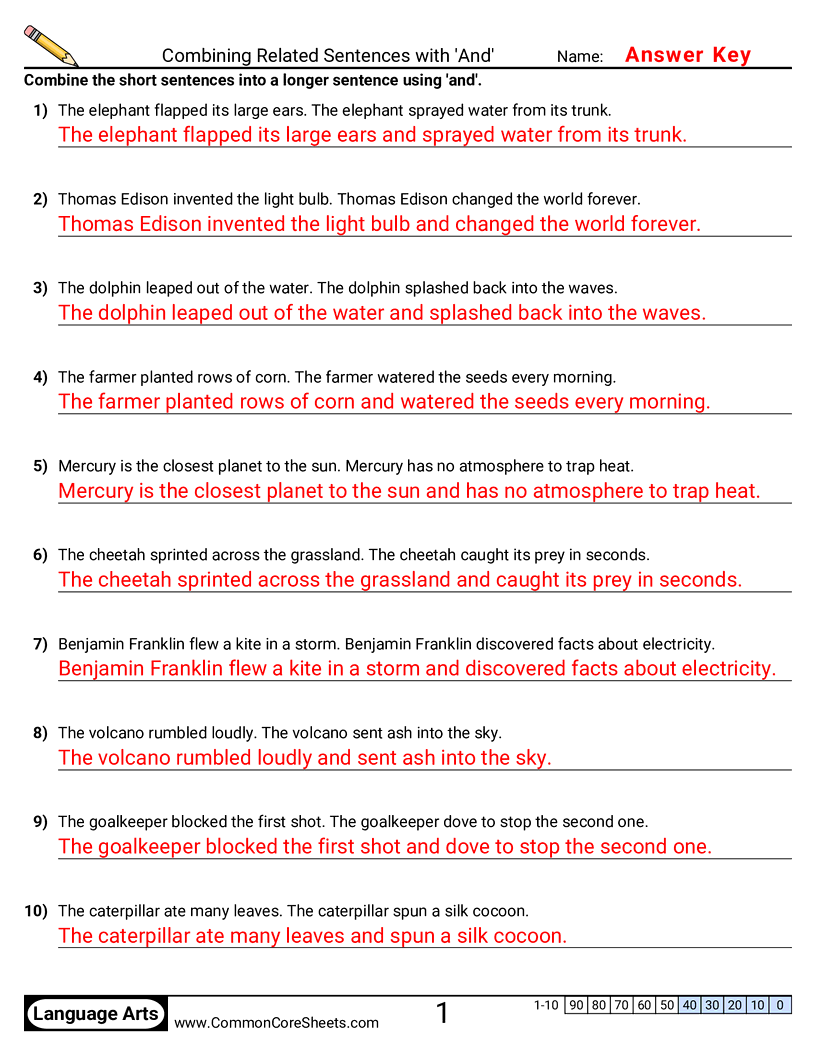
Combine two short sentences into one using the word 'and' Recognize when two sentences share a related idea Write smoother sentences instead of using many short choppy ones Understand how the word 'and' links thoughts together
L.3.1.i
Know what makes a sentence simple or compound Find the two complete thoughts in a compound sentence Tell a compound subject or predicate from a compound sentence Notice the comma before the conjunction
L.3.1.i
Know the difference between simple, compound and complex sentences Find a dependent clause and its subordinating conjunction Tell an opening phrase from an opening clause Use all three kinds of sentences in writing
L.3.1.i L.7.1.a
Know what a clause is Tell independent and dependent clauses apart Recognize words that start dependent clauses, like because, when and who
L.7.1.a
Explain the difference between a phrase and a clause Find the subject and verb in a clause Recognize prepositional, participial and infinitive phrases
L.3.1.i L.7.1.a
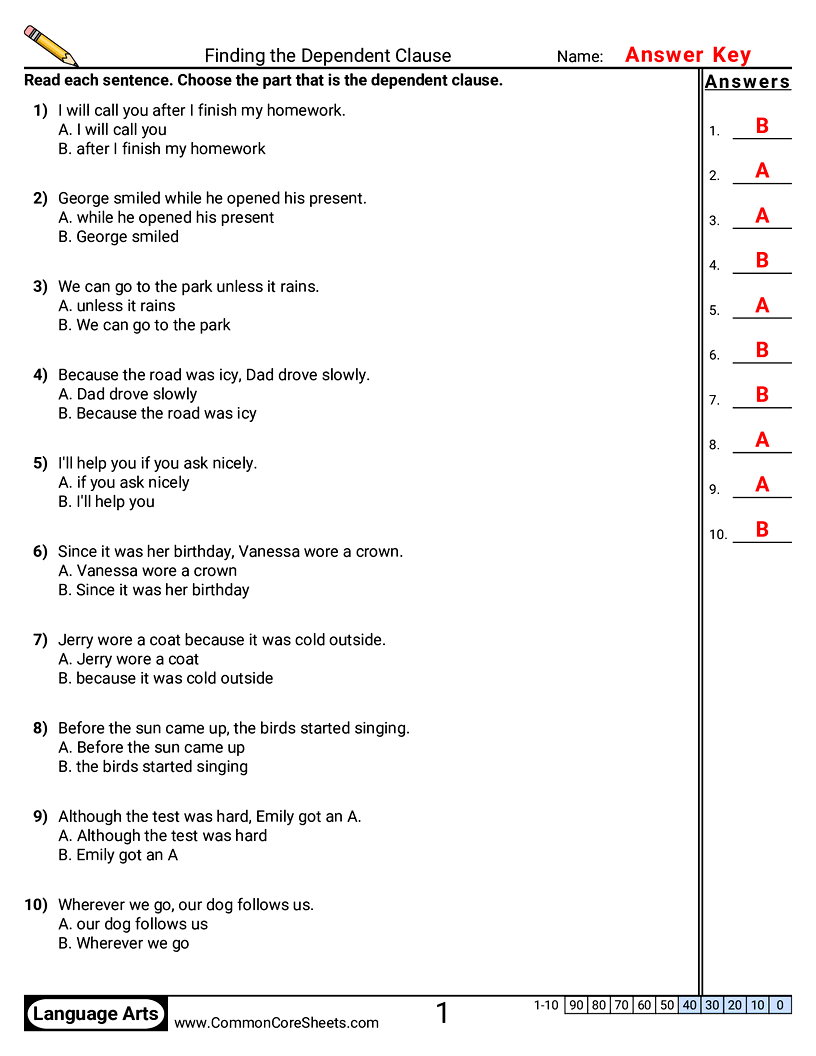
Find the dependent clause in a complex sentence Tell it from the independent clause Notice the word that starts the dependent clause
L.7.1.a
Explain the function of a clause in a sentence Tell adjective, adverb and noun clauses apart Use who, which and that to spot adjective clauses
L.7.1.b
Identify simple, compound, complex and compound-complex sentences Count the independent and dependent clauses in a sentence Know that a long sentence can still be simple
L.7.1.c
Recognize misplaced and dangling modifiers Place a modifier next to the word it describes Revise sentences so they say what the writer means
L.4.1.f
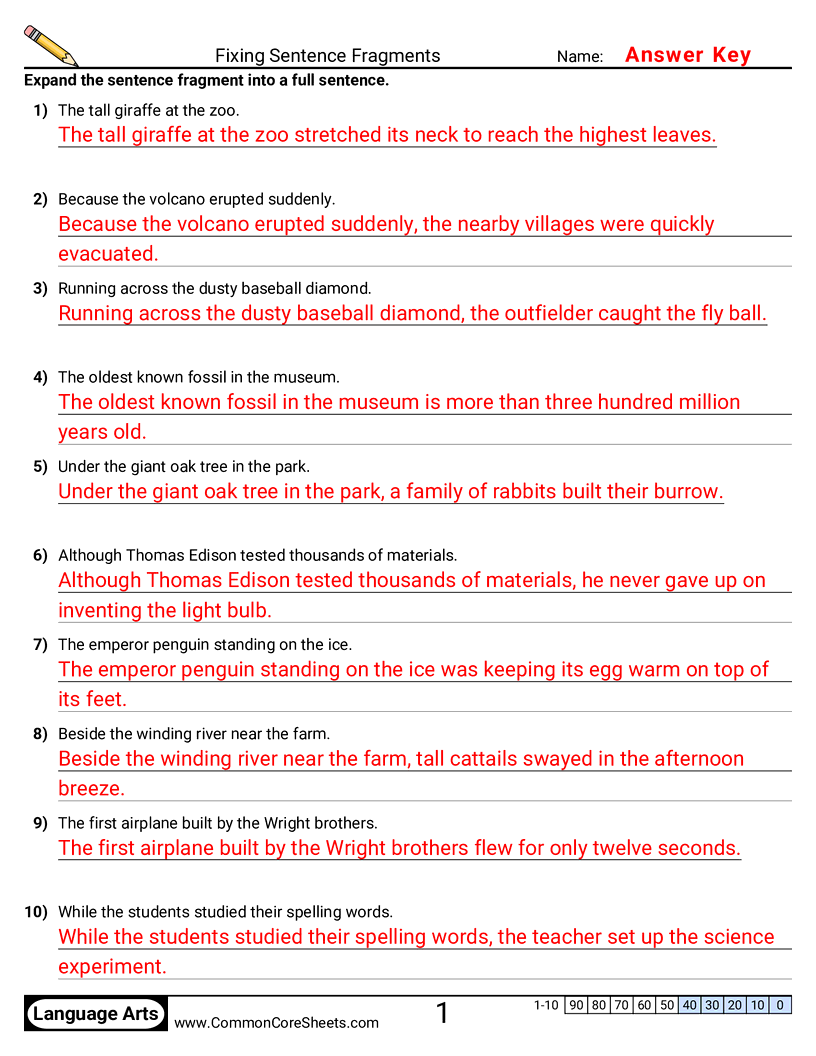
Tell the difference between a complete sentence and a fragment Add the missing subject or verb to fix a fragment Rewrite incomplete thoughts as full sentences Recognize when a group of words is missing a key part
L.4.1.f
Tell the difference between a complete sentence and an incomplete one Recognize when a group of words is missing a subject or a verb Understand that a complete sentence expresses a full thought Spot fragments so they can be fixed into full sentences
L.1.1.j L.4.1.f
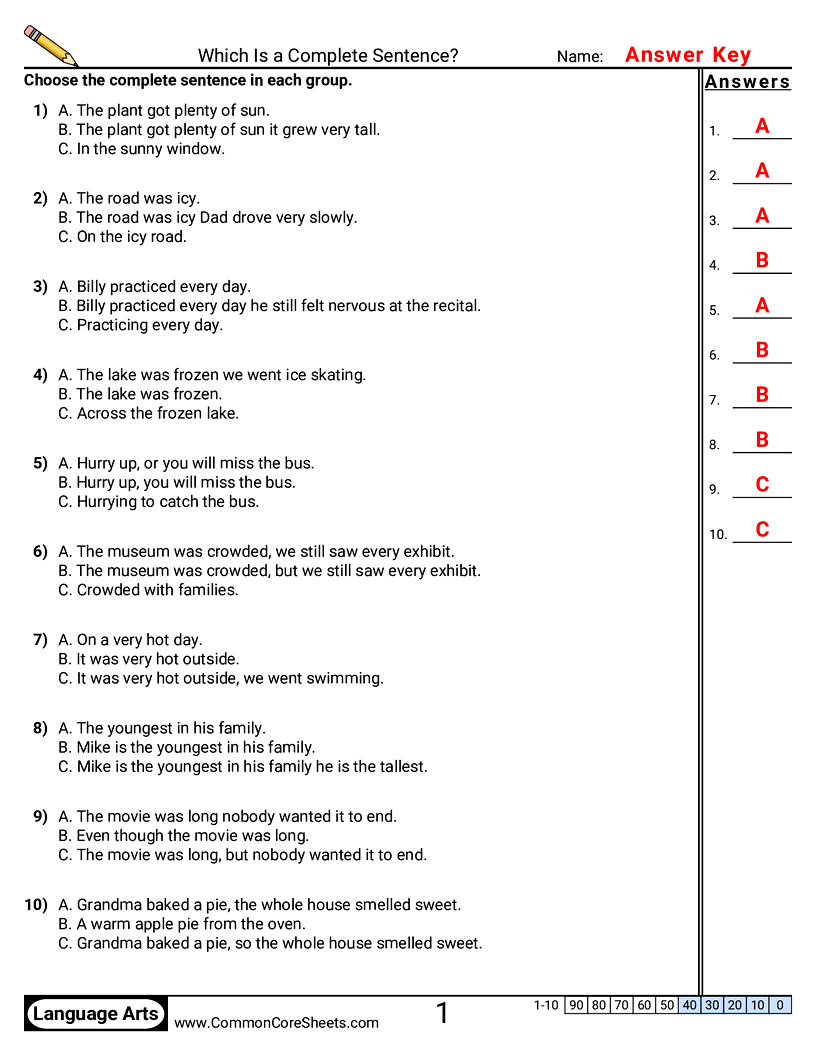
Recognize a complete sentence Tell a complete sentence from a fragment Tell a complete sentence from a run-on Check for a subject, a verb and a complete thought
L.4.1.f
Recognize a complete sentence Recognize a fragment that is missing a subject, a verb, or a complete thought Recognize a run-on, with or without a comma Know that a long sentence can still be complete
L.4.1.f
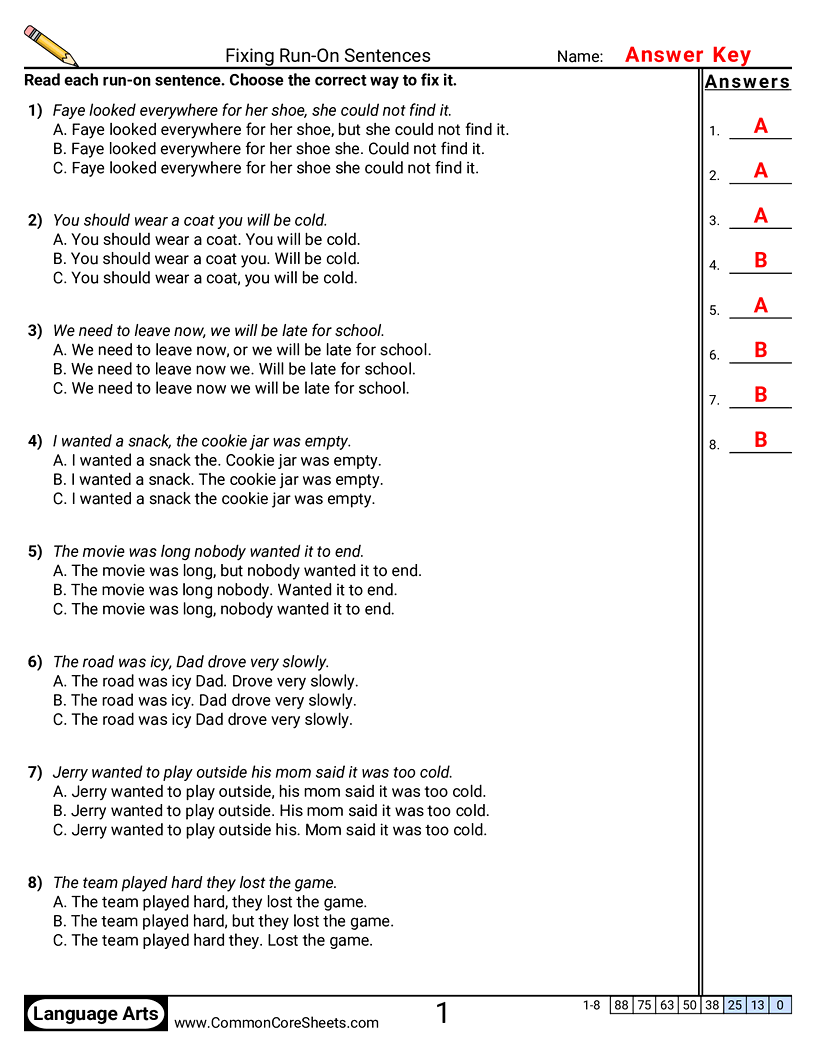
Fix a run-on with a period and a capital letter Fix a run-on with a comma and a conjunction Know that a comma alone does not fix a run-on Break a run-on in the right place
L.3.1.h L.4.1.f
Join two sentences with a comma and a conjunction Use but to show a contrast Use so to show a result Use or to show a choice or a warning
L.1.1.j
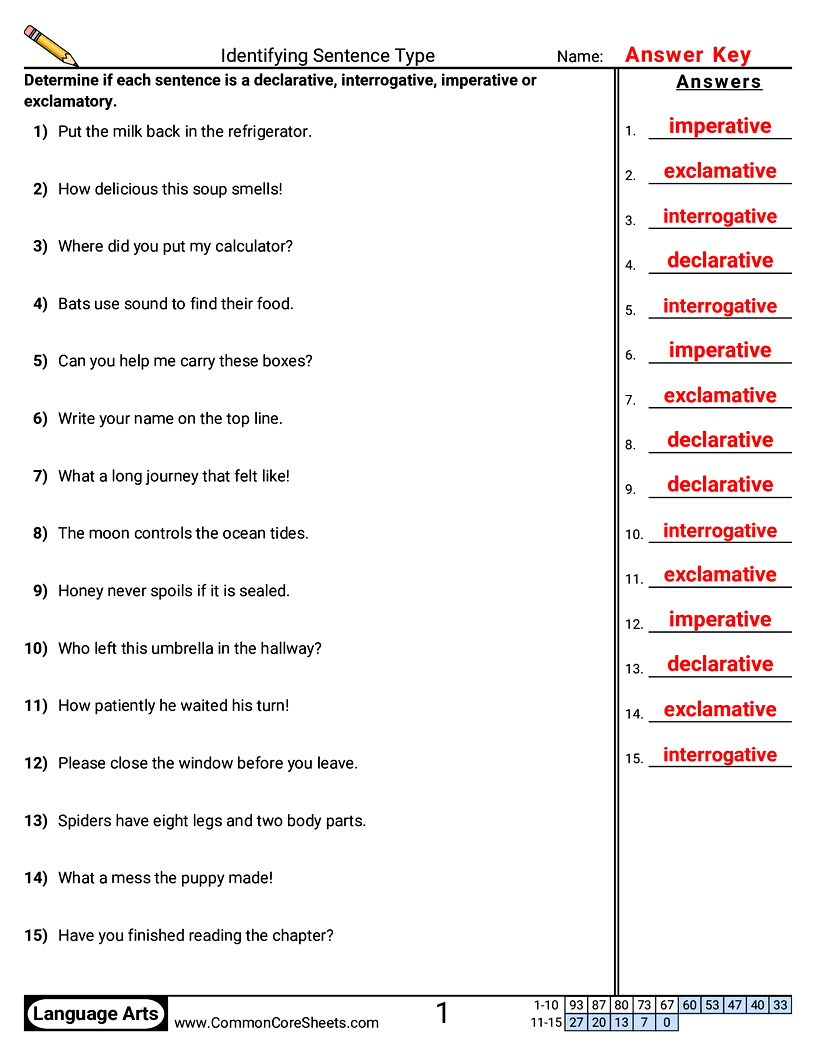
Tell the difference between statements, questions, commands, and exclamations Match a sentence to its correct type by how it is written Notice punctuation clues like periods, question marks, and exclamation points Sort several sentences into their proper categories at once
L.1.1.j
Tell the difference between statements, questions, commands, and exclamations Use ending punctuation like periods, question marks, and exclamation points as clues Recognize when a sentence is asking something versus telling something Identify commands that give an order or instruction
W.3.1.c
Choose a transition that matches the relationship between two ideas. Distinguish transitions that show time, contrast, examples, results, and importance. Improve the flow of writing with connecting words.
Advertisement