Cheat Sheets
Free cheat sheets. No login or account needed. From learn about fractions, subtraction steps, division steps and more.
More about these worksheets ▾ Show less ▴
×
About these worksheets
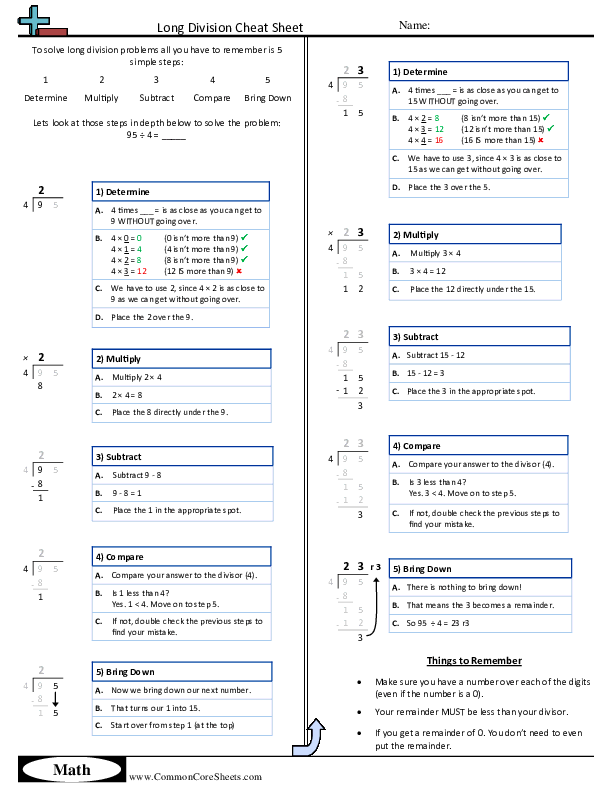
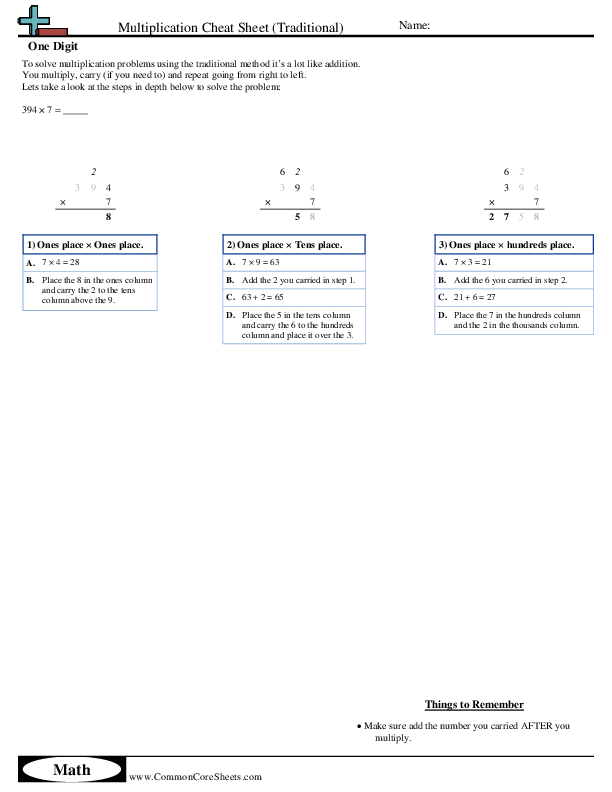
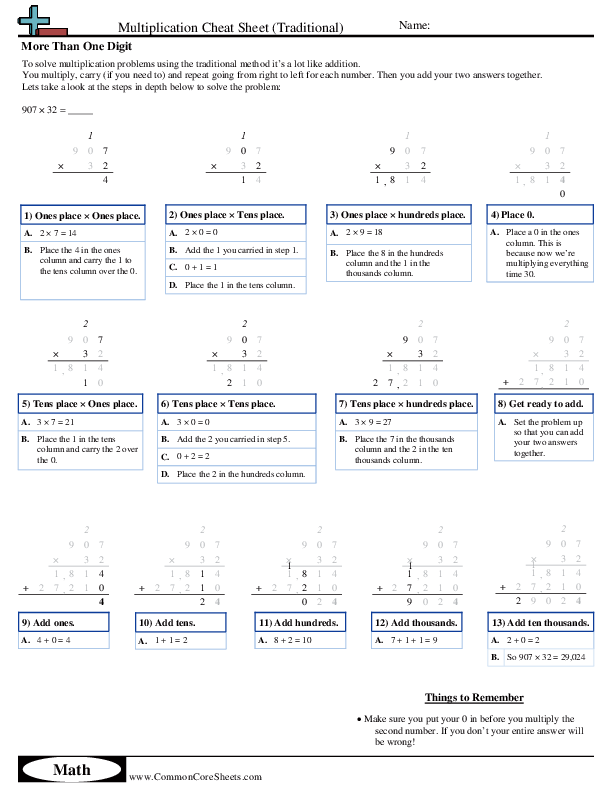
Quick-reference cheat sheets provide students with step-by-step instructions and key facts for essential math operations. Topics include multiplication tables, subtraction with and without zeros, long division, finding remainders with a calculator, single and multi-digit multiplication, polygon identification, and statistical measures like median, range, quartiles, and mean absolute deviation. These are ideal as classroom handouts or student reference cards.
3oa7
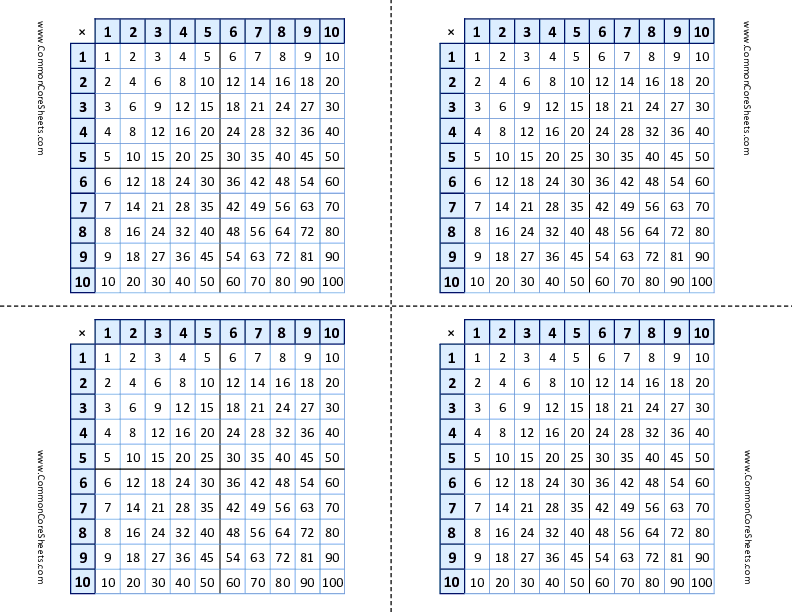
Memorize multiplication facts up to 10 × 10. Use a multiplication table to quickly find products when you get stuck. Notice patterns in the tables, like doubles and the 5s and 10s patterns.
3nbt2
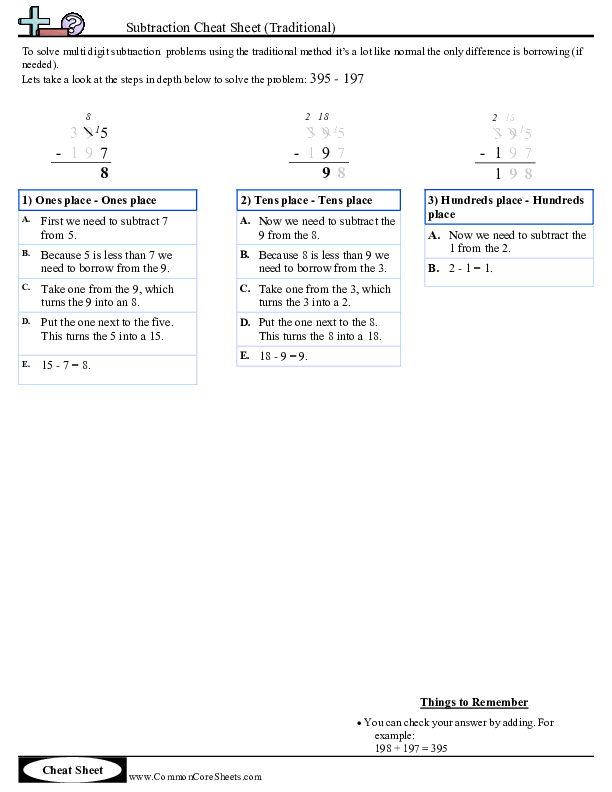
Learn how to set up subtraction problems in columns by lining up the ones, tens, and hundreds places. Practice subtracting multi-digit numbers using the traditional method. Use regrouping (borrowing) when the top digit is smaller than the bottom digit in a place value. Keep track of place value so each digit is subtracted from the correct digit.
4nbt4
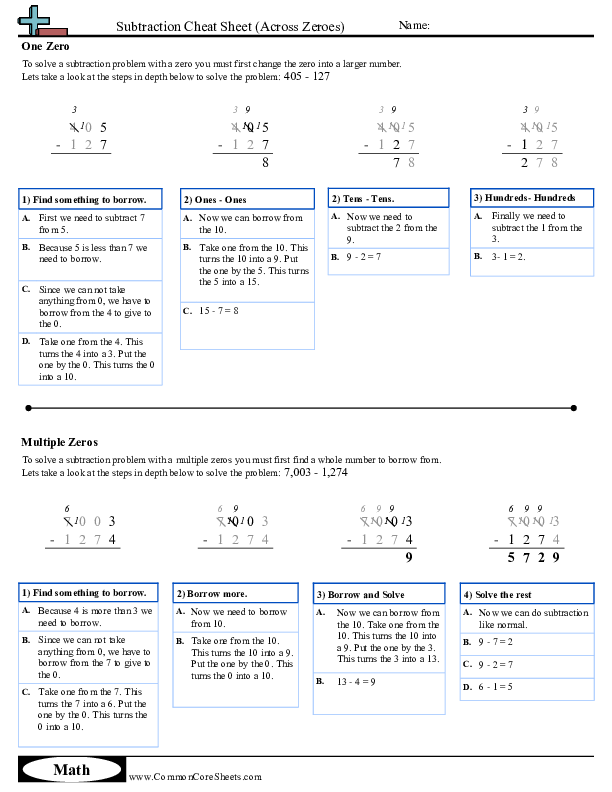
Learn how to subtract using the traditional column method when the top number has one or more zeros. Practice borrowing (regrouping) across zeros so each place has enough to subtract. Keep digits lined up by place value so ones, tens, hundreds, and thousands are subtracted correctly. Write each step neatly and clearly so it’s easy to follow how the borrowing changed the numbers.
4nbt6
Learn the steps of long division to divide a larger number by a smaller number. Practice using multiplication facts to figure out each digit of the quotient. Practice subtracting and bringing down the next digit to continue the division. Understand how to write the final answer with a remainder when it doesn’t divide evenly.
4nbt6
Use a calculator to divide two whole numbers and read the quotient from the display. Find the remainder by using the quotient to multiply back and then subtract from the original number.
3nbt3
Learn how to multiply a one-digit number by a larger number using the traditional vertical method. Regroup (carry) when a digit product is 10 or more and keep the work lined up correctly. Read and write the final product clearly after completing all the steps.
4nbt5 5nbt5
Multiply a multi-digit number by a number with more than one digit using the traditional long multiplication method. Line up digits by place value and keep partial products organized in the right columns. Use carrying (regrouping) correctly while multiplying and adding the partial products. Combine partial products to find the final product accurately.
3oa7
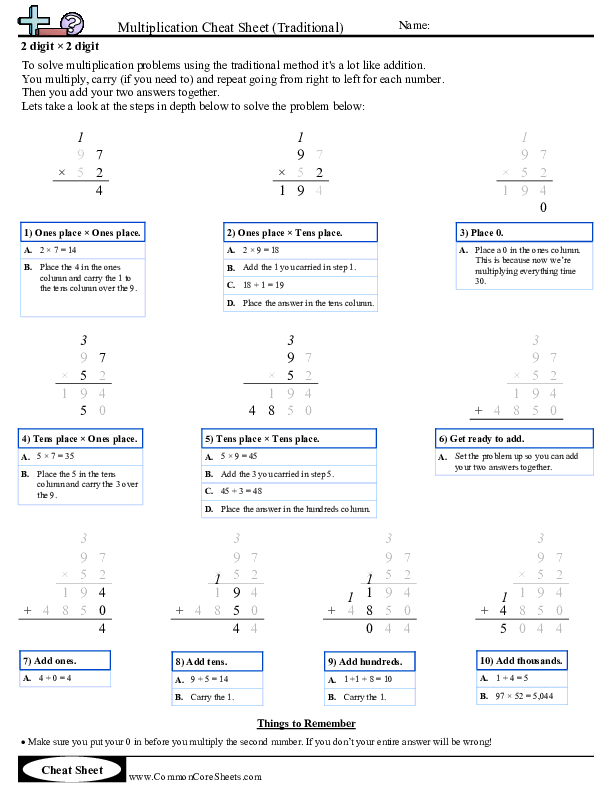
Learn the step-by-step process for multiplying a two-digit number by a two-digit number using the traditional method Practice carrying when a single-digit multiplication gives a two-digit result Understand why you place a zero when multiplying by the tens digit Add the two partial products together to get the final answer
3g1
Identify polygons by counting how many sides they have (5 to 10). Match each shape name to the correct picture (pentagon through decagon). Tell the difference between similar-looking polygons by checking the number of sides and corners.
6sp2
Find the median of a set of numbers by putting the data in order. Find the range by subtracting the smallest value from the largest value. Identify the lower quartile (Q1) and upper quartile (Q3) and use them to find the interquartile range (IQR). Calculate the mean absolute deviation (MAD) to describe how spread out the data is from the mean.
Playwire Advertisement