The History of the Jack-o'-Lantern Worksheet Download
Free reading comprehension worksheet about the history of the jack-o'-lantern. Pick the reading level (kindergarten to 8th grade), print the passage with its questions, or assign it online.


Sheet Information >
Available at kindergarten, 1st grade, 2nd grade, 3rd grade, 4th grade, 5th grade, 6th grade, 7th grade and 8th grade reading levels.
Read the passage
Look at that big orange face with a glowing grin! That is a jack-o'-lantern. People make one by carving a face into a pumpkin.
But the very first jack-o'-lanterns were not pumpkins at all! Long ago in Ireland and Scotland people carved faces into turnips. A turnip is a small round vegetable that grows in the ground.
Then people from Ireland came to live in America. They found big pumpkins that were easy to carve. Now the pumpkin is the face we see every Halloween!
Have you ever carved a big orange pumpkin? A carved pumpkin with a glowing face is called a jack-o'-lantern. People cut out eyes and a wide, toothy smile.
That glowing smile started far away, not with a pumpkin at all! Long ago in Ireland and Scotland, people carved turnips, which are small round root vegetables. They put a light inside so the little faces glowed in the dark.
People also told a story about a man they called Stingy Jack. When Irish families moved to America in the 1800s, they found pumpkins were bigger and easier to carve. Today the orange pumpkin is the face everyone knows on Halloween night!
Did you know the very first jack-o'-lanterns were not pumpkins at all? Long ago in Ireland and Scotland, people carved faces into turnips and other hard vegetables that grow in the ground. They set a tiny candle inside, and the little light glowed through the funny cut-out eyes.
Those glowing turnips came from a story people used to tell. The tale was about a man called Stingy Jack, who was said to wander in the dark with only a glowing coal to light his way. People carved scary faces to keep tricky old Jack away from their homes.
Keeping Jack away meant a lot of hard work, because turnips are small and tough to hollow out. When many families from Ireland came to America in the 1800s, they found a bright orange vegetable that was much easier to carve: the pumpkin! A pumpkin is big and soft inside, so a child could scoop it out with a spoon.
That switch to pumpkins changed the holiday forever. Today the carved pumpkin is one of the best-loved signs of Halloween, sitting on porches with a warm glow. So the next time you carve a grinning face, remember it started with a little turnip far across the sea!
Imagine you are walking home on a dark night, and a little glowing face flickers at you from a window sill! Today that glowing face is a pumpkin, orange and round, with a wide, toothy grin carved right into it. We call it a jack-o'-lantern, and a candle inside makes its cut-out eyes shine. But here is a surprise: the very first ones were not pumpkins at all.
Those first glowing faces started far across the ocean, in Ireland and Scotland, long ago. Instead of pumpkins, people there carved lanterns out of turnips, potatoes, and other root vegetables that grow underground. A turnip is much smaller and harder than a pumpkin, so carving one took a lot of work! When they were done, they set a burning coal or candle inside so the little face would glow in the dark.
People also told a story to explain those spooky lights, and it was about a man named Stingy Jack. The legend said Jack wandered the night carrying a carved turnip with a glowing coal tucked inside. Because of that tale, folks began calling the carved lanterns "jack-o'-lanterns," which means "Jack of the lantern." So the funny name we use today came from an old story people passed down for fun.
When Irish families moved to America in the 1800s, they brought this carving custom with them. There they discovered the pumpkin, which was much bigger and softer than a turnip and far easier to carve. So they switched to pumpkins, and soon the glowing orange faces became a favorite part of Halloween. Isn't it wild that today's happy pumpkin grin all started with a tiny, tough turnip?
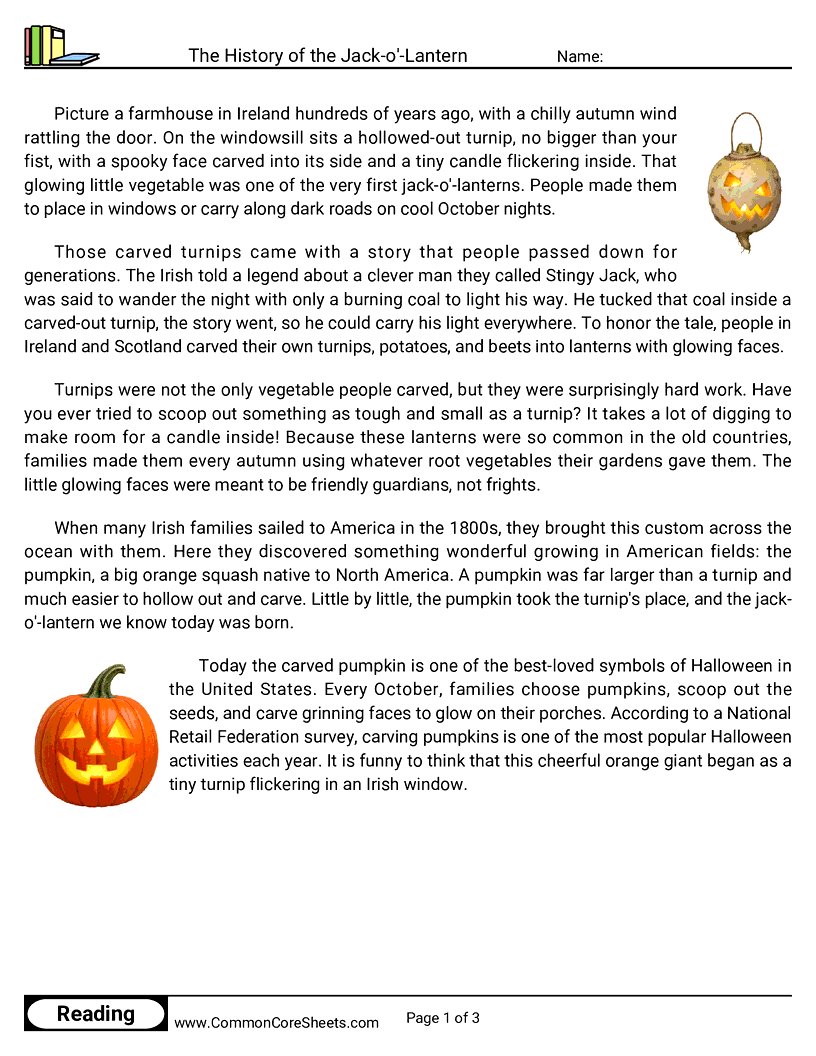
Picture a farmhouse in Ireland hundreds of years ago, with a chilly autumn wind rattling the door. On the windowsill sits a hollowed-out turnip, no bigger than your fist, with a spooky face carved into its side and a tiny candle flickering inside. That glowing little vegetable was one of the very first jack-o'-lanterns. People made them to place in windows or carry along dark roads on cool October nights.
Those carved turnips came with a story that people passed down for generations. The Irish told a legend about a clever man they called Stingy Jack, who was said to wander the night with only a burning coal to light his way. He tucked that coal inside a carved-out turnip, the story went, so he could carry his light everywhere. To honor the tale, people in Ireland and Scotland carved their own turnips, potatoes, and beets into lanterns with glowing faces.
Turnips were not the only vegetable people carved, but they were surprisingly hard work. Have you ever tried to scoop out something as tough and small as a turnip? It takes a lot of digging to make room for a candle inside! Because these lanterns were so common in the old countries, families made them every autumn using whatever root vegetables their gardens gave them. The little glowing faces were meant to be friendly guardians, not frights.
When many Irish families sailed to America in the 1800s, they brought this custom across the ocean with them. Here they discovered something wonderful growing in American fields: the pumpkin, a big orange squash native to North America. A pumpkin was far larger than a turnip and much easier to hollow out and carve. Little by little, the pumpkin took the turnip's place, and the jack-o'-lantern we know today was born.
Today the carved pumpkin is one of the best-loved symbols of Halloween in the United States. Every October, families choose pumpkins, scoop out the seeds, and carve grinning faces to glow on their porches. According to a National Retail Federation survey, carving pumpkins is one of the most popular Halloween activities each year. It is funny to think that this cheerful orange giant began as a tiny turnip flickering in an Irish window.
Have you ever wondered why we carve grinning faces into pumpkins every October? The answer takes you across an ocean and back hundreds of years, and it starts with a vegetable you might not expect. Long before pumpkins glowed on porches, people in Ireland and Scotland carved lanterns out of turnips, potatoes, and even big beets. Imagine a scooped-out turnip the size of your fist, lit from inside by a tiny ember, casting a wobbly little face onto a cottage wall!
Those flickering turnips were more than decorations, because they came wrapped in an old story. People in Ireland told a legend about a clever trickster nicknamed Stingy Jack, a man who was so sneaky that, the tale said, he was left to wander the night with only a glowing coal tucked inside a hollowed-out turnip to light his way. Because of that story, folks began calling the carved lanterns "Jack of the lantern," which slowly got squished together into the word jack-o'-lantern. Neighbors set the little lanterns in windows and doorways during the autumn festival of Samhain, an ancient Celtic celebration that marked the end of the harvest season.
A hollowed turnip, though, is not the easiest thing to carve, which is exactly why the tradition changed when it crossed the Atlantic. In the 1800s, huge numbers of Irish and Scottish families sailed to the United States, many of them fleeing hunger during Ireland's Great Famine. When they arrived, they went looking for turnips to carve and stumbled onto something far better suited for the job: the pumpkin. This bright orange fruit grew all over North America, and it was bigger, softer, and much easier to scoop than any turnip back home.
Trading the turnip for the pumpkin turned out to be a wonderful accident. A pumpkin's roomy insides gave carvers plenty of space for triangle eyes, jagged smiles, and a candle that actually stayed lit. As Halloween grew into a popular American holiday in the late 1800s and early 1900s, the carved pumpkin traveled right along with it and became the season's most recognized symbol. Today, according to the U.S. Department of Agriculture, American farmers grow well over a billion pounds of pumpkins each year, and a big share of them end up as grinning jack-o'-lanterns.
Those grinning faces have gotten a bit competitive, too. Every autumn, growers compete to raise the heaviest pumpkin, and the world-record giants have topped 2,700 pounds, heavier than a small car! People also gather to carve thousands of pumpkins at once, stacking the glowing lanterns into towering displays that light up whole towns. So the next time you press a candle into a pumpkin, remember that you are carrying on a custom that began with a humble turnip and a story told around Irish firesides long ago.
Picture a Halloween without a single carved pumpkin glowing on the porch. Sounds impossible, right? Yet the very first jack-o'-lanterns were not pumpkins at all, and they didn't come from America. They were small, gnarled turnips, potatoes, and beets, hollowed out and carved with grim little faces in Ireland and Scotland. A glowing ember or a tiny candle was tucked inside, so the vegetable seemed to flicker to life in the dark.
Those flickering faces weren't just for decoration, because people carved them to keep a legend alive. Storytellers spoke of a clever trickster called Stingy Jack, a man so slippery that he outsmarted the Devil himself. According to the tale, Jack was refused a place in either the good or the bad afterlife, so he was left to wander the earth with only a burning coal to light his way. He carried that coal inside a carved turnip, and people began calling the wandering light "Jack of the Lantern." To ward off Jack and other roaming spirits on Halloween night, families set their own carved lanterns in windows and doorways.
Carrying that flickering turnip across an ocean changed everything about it. In the mid-1800s, waves of Irish and Scottish families sailed to America, many escaping a terrible potato famine back home. They packed their customs along with their belongings, including the habit of carving glowing faces each autumn. But when they arrived, they discovered a vegetable that grew big, round, and hollow almost by design: the pumpkin. Native to the Americas, the pumpkin was cheaper, softer to carve, and far roomier than a stubborn little turnip.
Trading the turnip for the pumpkin turned a modest custom into a national sensation. A pumpkin's thick, moist walls slice like butter compared to a rock-hard root, so a family could carve a face in minutes instead of an hour. Its wide belly held a bigger candle, throwing a brighter, warmer glow across the porch. By the late 1800s, magazines and newspapers were describing carved pumpkins as part of American Halloween, and the tradition spread from town to town. In my view, few switches in holiday history have paid off so well, because the pumpkin practically begged to be carved.
Every October, that humble swap still lights up millions of front steps around the world. Growers now compete to raise giant pumpkins, and the heaviest ones on record have topped 2,800 pounds, heavier than a small car. Artists carve them into dragons, portraits, and haunted scenes far fancier than any turnip could hold. Meanwhile, in parts of Ireland and Scotland, some people still carve turnips the old way, keeping the original spooky faces alive. So the next time you scoop out a pumpkin, remember you're holding the newest chapter of a story that once glowed inside a tiny turnip.
Picture a chilly autumn night in Ireland, hundreds of years ago, and a small turnip glowing on a windowsill with a face scraped into its skin. That little vegetable lantern is the great-great-grandparent of the plump orange pumpkin grinning on your porch today. Long before pumpkins had anything to do with it, people in Ireland and Scotland carved faces into turnips, potatoes, and large beets, then tucked a burning coal or candle inside. The flickering light made the crooked faces seem to move, which was exactly the point. This is the story of how a homemade turnip lantern crossed an ocean and became one of the most recognizable symbols of Halloween.
Those faces were not carved just for fun, and the reason reaches back into old Irish folklore. People told a legend about a clever trickster nicknamed Stingy Jack, a man who fooled just about everyone he met and, so the story goes, ended up wandering the night with only a burning coal to light his way. He was said to carry that coal inside a hollowed-out turnip, which is why the carved lanterns earned the name "jack-o'-lantern" in the first place. Over time, families in Ireland and Scotland placed these glowing turnip faces in windows and doorways during the autumn season. The custom mixed a good story with a warm bit of light against the long, dark evenings.
That long, dark evening was Samhain, an ancient Celtic festival that marked the end of the harvest and the beginning of winter. People believed the line between the living world and the spirit world grew thin at this time of year, so lights, costumes, and small offerings all played a part. Later, as Christianity spread, the calendar gained All Saints' Day and All Souls' Day in early November, and the older customs blended with the new ones. The night before All Saints' Day was called All Hallows' Eve, a name that eventually got squeezed and shortened into "Halloween." The carved lantern rode along through all these changes, still glowing in the window.
Still glowing but stuck on one side of the ocean, the tradition needed a passport, and it got one in the 1800s. When a terrible potato famine struck Ireland in the 1840s, huge numbers of Irish families sailed to the United States looking for work and food. They brought their language, their songs, and their autumn customs, including the habit of carving lantern faces. There was just one problem: turnips were harder to find in their new home, and carving one was slow, stubborn work. So the newcomers looked around for something better and spotted a vegetable growing all over American farms.
That vegetable was the pumpkin, and it turned out to be almost perfectly designed for the job. Native to the Americas and grown by Indigenous peoples for thousands of years, pumpkins were big, soft-walled, and easy to hollow out with a spoon and a knife. Can you imagine trying to carve a grinning mouth into a rock-hard turnip the size of a golf ball? A pumpkin gave you a huge canvas instead, roomy enough for triangle eyes, jagged teeth, and a fat candle inside. By switching vegetables, Irish Americans accidentally upgraded a centuries-old custom into something bigger and brighter than ever before.
Bigger and brighter is exactly where the jack-o'-lantern has stayed ever since. Today Americans buy well over a billion pounds of pumpkins each year, and a large share of them are grown for carving rather than for pie. Farmers have even competed to grow giant pumpkins weighing more than a small car, far too heavy to sit on any windowsill. The next time you scoop out those slippery seeds and cut a lopsided smile, remember that you are repeating a ritual older than your country. A hollowed turnip lit by a wandering trickster's coal became the friendly orange face that now says "Halloween" better than almost anything else.
Picture a farmer in the Irish countryside a couple of centuries ago, hunched over a turnip by candlelight, scooping out its stubborn insides with a small knife. When he finished, he pressed a glowing ember inside and set the little lantern in his window, its carved eyes flickering against the dark. That gnarled, grimacing turnip was an early jack-o'-lantern, and it looks almost nothing like the round orange faces grinning from porches today. To understand how we got from that turnip to the pumpkin, you have to follow a legend, a wave of immigrants, and a very practical decision about which vegetable is easier to carve.
That legend traveled everywhere the turnip lanterns did, and it starred a character the Irish called Stingy Jack. People told a story about a clever, penny-pinching man who tricked the Devil and, when he died, found himself welcome in neither heaven nor the underworld. According to the tale, Jack was left to wander the dark with only a burning coal, which he tucked inside a hollowed turnip to light his endless path. The Irish began calling this restless figure "Jack of the Lantern," a name that eventually shortened to the word we still use. Folklorists treat the story as a piece of oral tradition rather than history, but it explains beautifully why anyone would carve a face into a root vegetable in the first place.
Turnips were not the only vegetables pressed into service by those glowing legends. In Ireland and parts of Scotland, people also hollowed out potatoes, beets, and especially the large turnip-like mangelwurzel, carving crude faces meant to represent spirits or to frighten them off. These lanterns were tied to Samhain, an ancient Celtic festival marking the end of the harvest and the coming of winter, celebrated around the start of November. The carvings were small, tough, and honestly a little ghoulish, since a scooped-out root by firelight throws strange shadows. Making one was hard labor, because turnip flesh is dense and unforgiving, nothing like the soft interior of the pumpkin you know.
That difference in difficulty turned out to matter enormously once the carvers crossed an ocean. When large numbers of Irish immigrants came to the United States in the 1800s, many fleeing the Great Famine of the 1840s, they brought their autumn customs with them. In America they encountered the pumpkin, a native squash that grows fat, hollow, and easy to slice, almost as if it were designed for carving. Trading a rock-hard turnip for a plump pumpkin was an obvious upgrade, and the practice spread quickly through their new communities. Historians point to this swap as a rare, well-documented example of a folk tradition changing its raw material to fit a new land.
The pumpkin did more than replace the turnip; it transformed what the lantern meant. As the carved squash caught on through the late 1800s, it drifted away from old Samhain beliefs and became a cheerful centerpiece of the growing American holiday of Halloween. Newspapers and children's magazines of the era began describing pumpkin lanterns as a seasonal amusement rather than a way to ward off wandering souls. The grinning orange face slowly became shorthand for the whole holiday, the way a decorated tree signals another celebration in December. What had started as a wary charm against the dark was becoming, of all things, a craft project.
From that craft project grew a competition that would astonish Stingy Jack himself. Growers now cultivate giant pumpkins that can top 2,500 pounds, and carvers turn ordinary ones into astonishingly detailed portraits. Meanwhile, according to a National Retail Federation survey, carving a pumpkin remains one of the most popular Halloween activities Americans plan each year. The turnip lantern has not vanished entirely, though; in parts of Ireland and Scotland you can still find people honoring the older, tougher tradition. It is a strange thought that the friendly pumpkin on your steps is the descendant of a scowling turnip carved to keep a wandering ghost at bay.
About this worksheet
Students read a nonfiction passage about the history of the jack-o'-lantern, written at 9 reading levels (kindergarten to 8th grade), and answer multiple-choice questions about it.
A reading comprehension worksheet about the history of the jack-o'-lantern with a different article for each reading level, kindergarten to 8th grade, each with its own multiple-choice questions aligned to the Common Core Reading: Informational Text standards. Printable with an answer key, and available as an online assignment at any level.
Student objectives
- Read a chronological passage about the history of the jack-o'-lantern
- Explain why Irish immigrants switched from turnips to pumpkins in America
- Find details in the text that describe how early lanterns were made and used
- Determine the meaning of words like "legend" using context
Everyday practice
- Notice the shapes and faces carved into jack-o'-lanterns on porches this October
- Compare how heavy a pumpkin feels next to a small turnip at the grocery store
- Ask a family member about traditions their family brought from another place