Parts of Speech Worksheets
Free parts of speech worksheets with answer key. No login or account needed. From nouns to verbs and everything in between, we've got you covered. A grading column and quick grade scale make grading a breeze, and modified pages help with lower level learners or when just introducing a topic. Great for teachers or for homeschool.
More about these worksheets ▾ Show less ▴
×
L.3.1.a
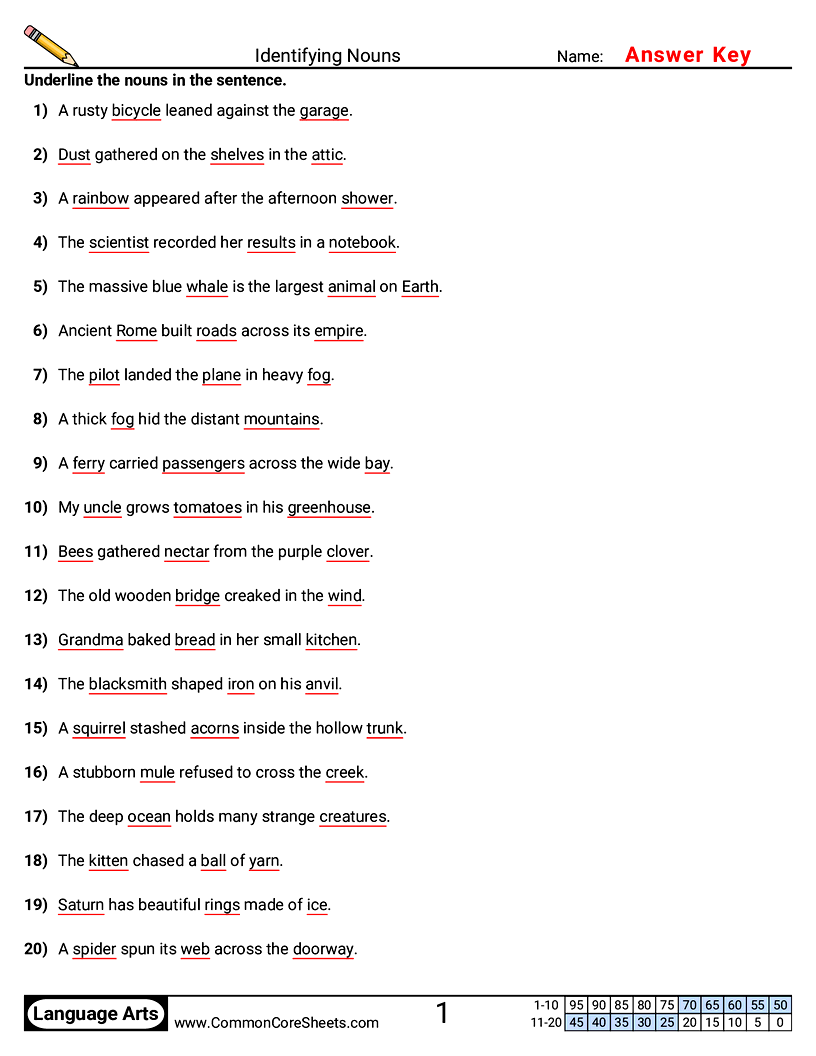
Learn what a noun is and how to spot one Find words that name people, places, or things in a sentence Tell the difference between nouns and other words like verbs or adjectives Practice picking out nouns from complete sentences
L.1.1.b
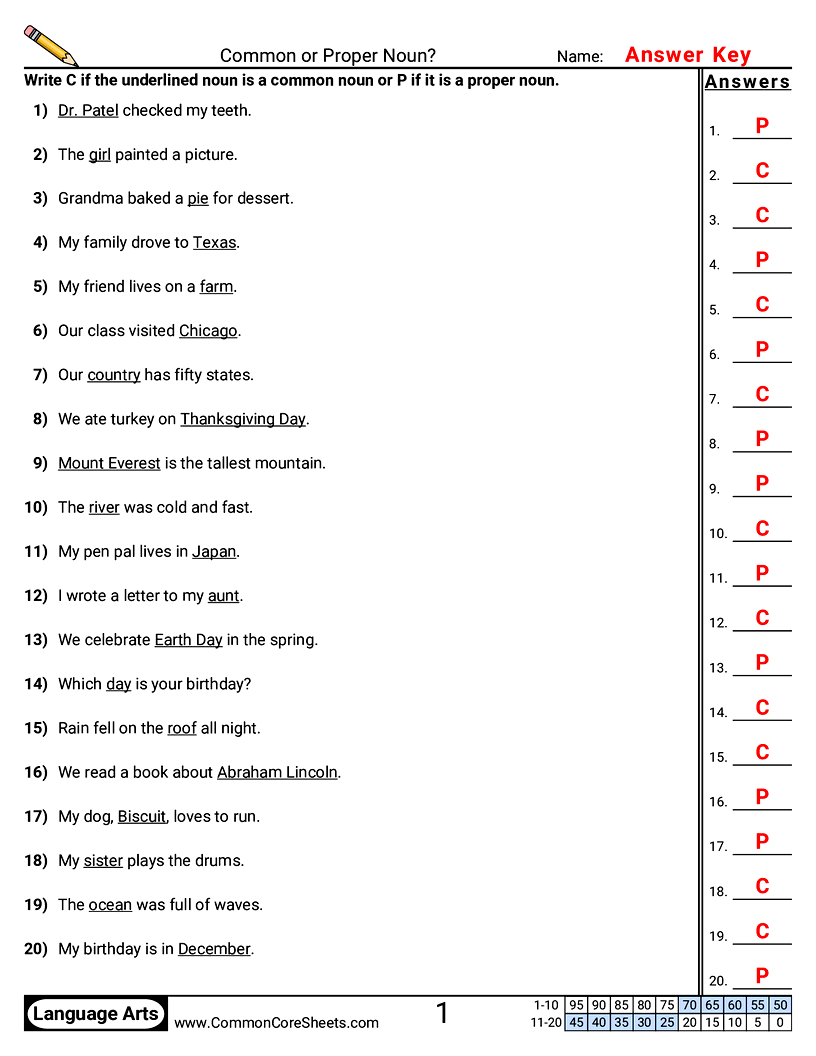
Tell the difference between a proper noun and a common noun Spot names of people, places, and specific things in a sentence Understand that proper nouns start with a capital letter Pick out the proper noun from a group of words
L.1.1.b
Know that a noun names a person, place, thing or idea Tell a common noun from a proper noun Know that proper nouns begin with a capital letter Recognize proper nouns that are more than one word, like Lake Michigan
L.3.1.a L.K.1.b
Know that a noun names a person, place or thing Know that a verb shows an action Tell nouns from verbs in a sentence Understand that some words can be a noun or a verb depending on how they are used
L.1.2.a L.2.2.a
Find the proper noun in a sentence Capitalize names of people, pets and places Capitalize days of the week, months and holidays Capitalize every important word in a name of more than one word
L.3.1.b
Form the plural of a noun by adding -s or -es Add -es to nouns ending in s, x, ch or sh Change y to i and add -es when a consonant comes before the y Change f to v and add -es for nouns like leaf and wolf
L.3.1.b
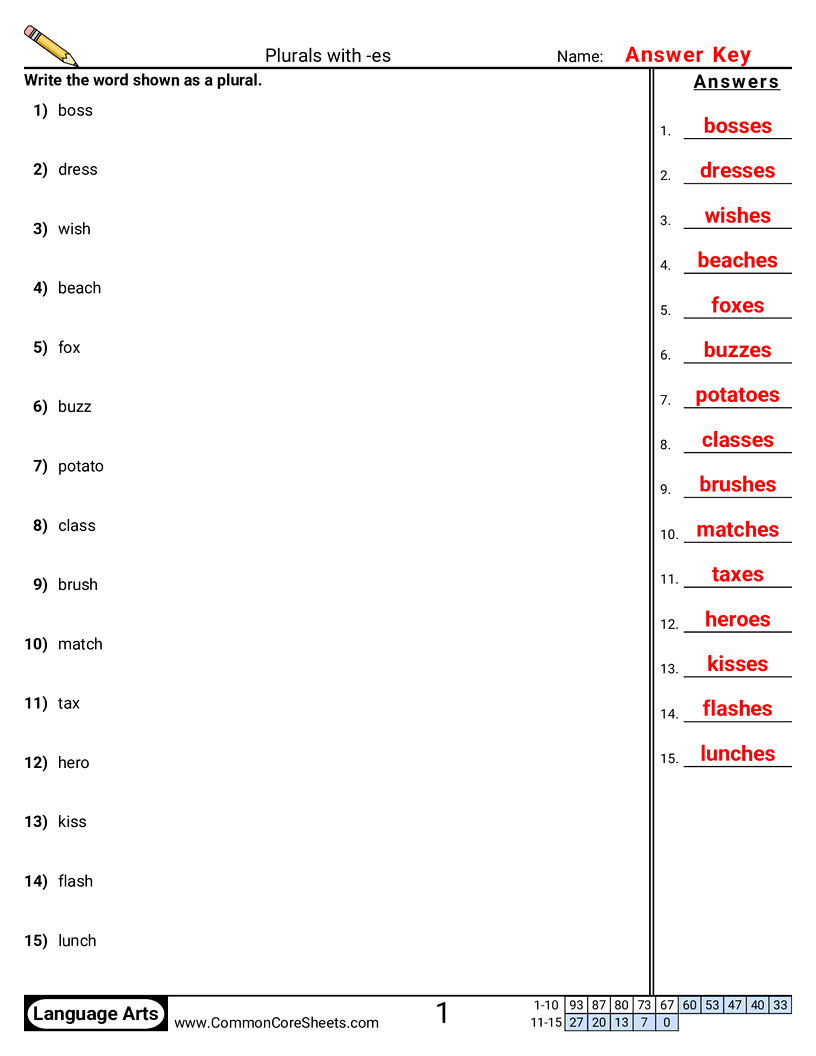
Learn when a word needs -es instead of just -s to become plural Practice adding -es to words that end in s, x, ch, sh, or z Recognize the difference between one item and more than one Spell plural nouns correctly when talking about groups of things
L.2.1.b
Form frequently used irregular plural nouns Know that some nouns change their spelling in the plural Know that some nouns are the same in the singular and plural Use irregular plurals correctly in a sentence
L.2.1.a
Know that a collective noun names a group Match collective nouns to the groups they name Use collective nouns for groups of animals, people and things Build vocabulary with words like flock, herd and crew
L.3.1.c
Know that a concrete noun names something you can sense Know that an abstract noun names an idea, feeling or quality Tell abstract nouns from concrete nouns in a sentence Use abstract nouns to describe feelings and qualities
L.3.1.a
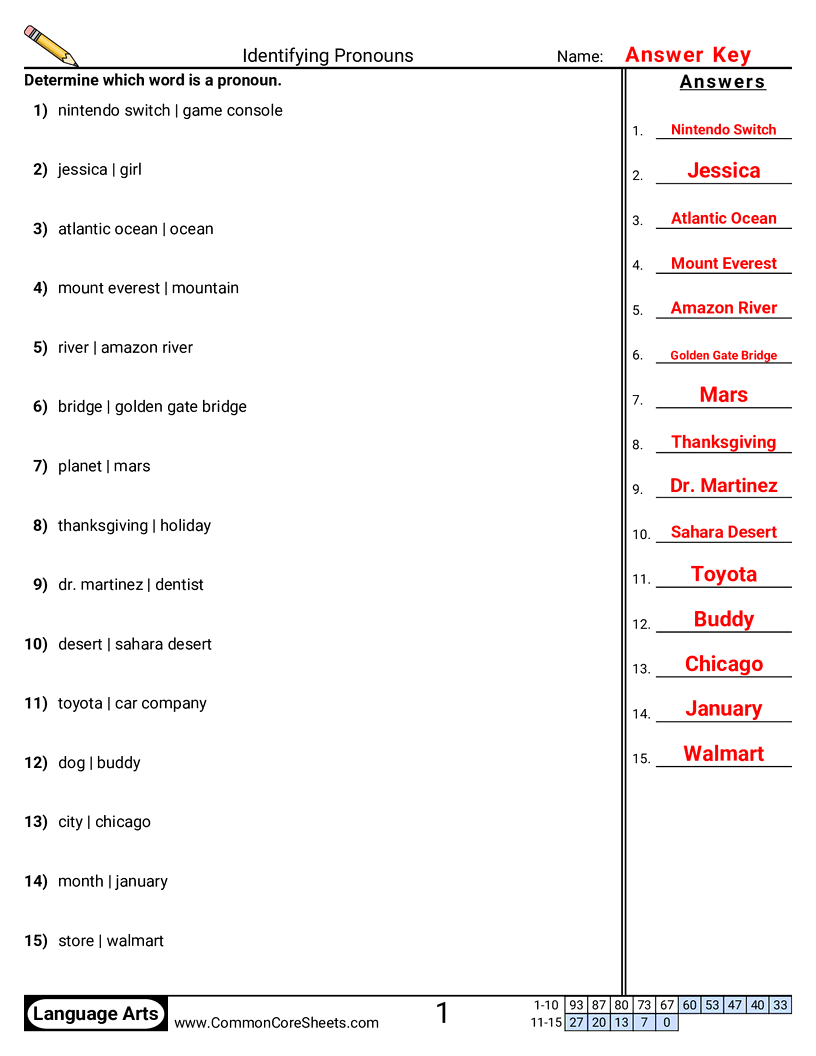
Recognize pronouns like he, she, it, they, and we in a sentence Tell the difference between a pronoun and a regular noun Understand that pronouns take the place of a person, place, or thing Point out the correct pronoun within a full sentence
L.1.1.d
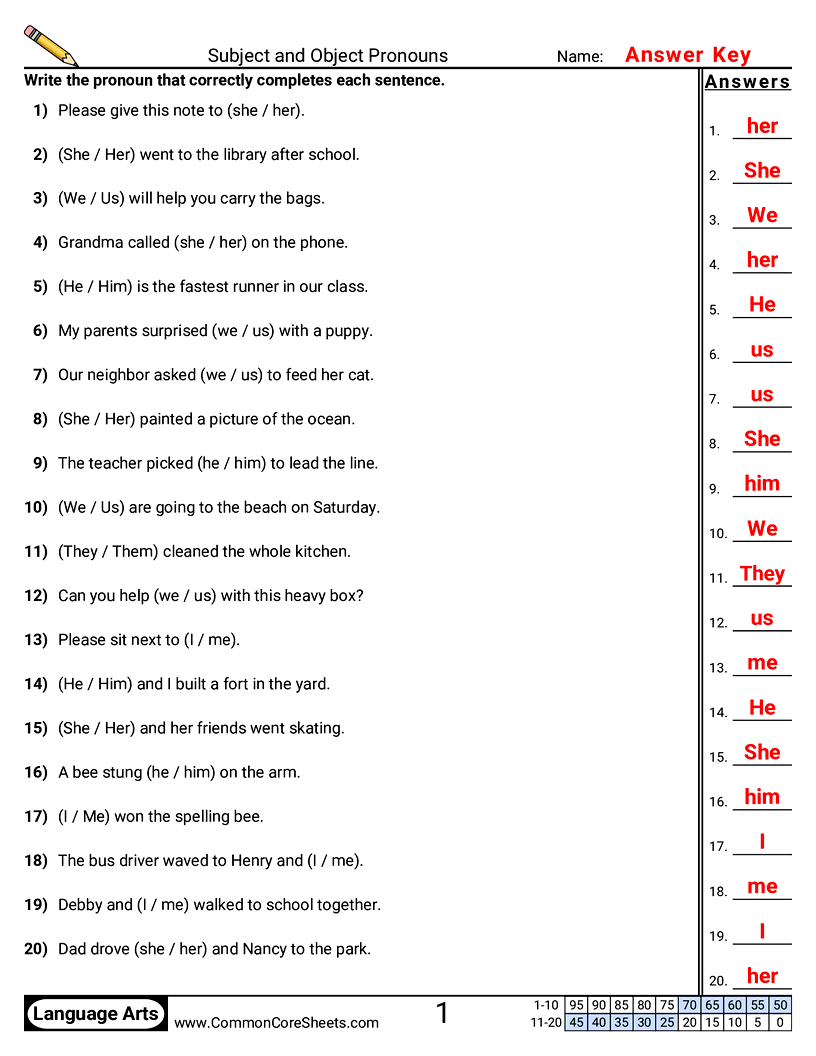
Know that a pronoun takes the place of a noun Choose he, she, it or they for a subject Choose him, her, it, us or them for an object Match a pronoun to one person, one thing or more than one
L.1.1.d L.6.1.a
Use I, he, she, we and they as subjects Use me, him, her, us and them as objects Choose the right pronoun when it is paired with a name Know when to say "Sara and I" and when to say "Ben and me"
L.1.1.d
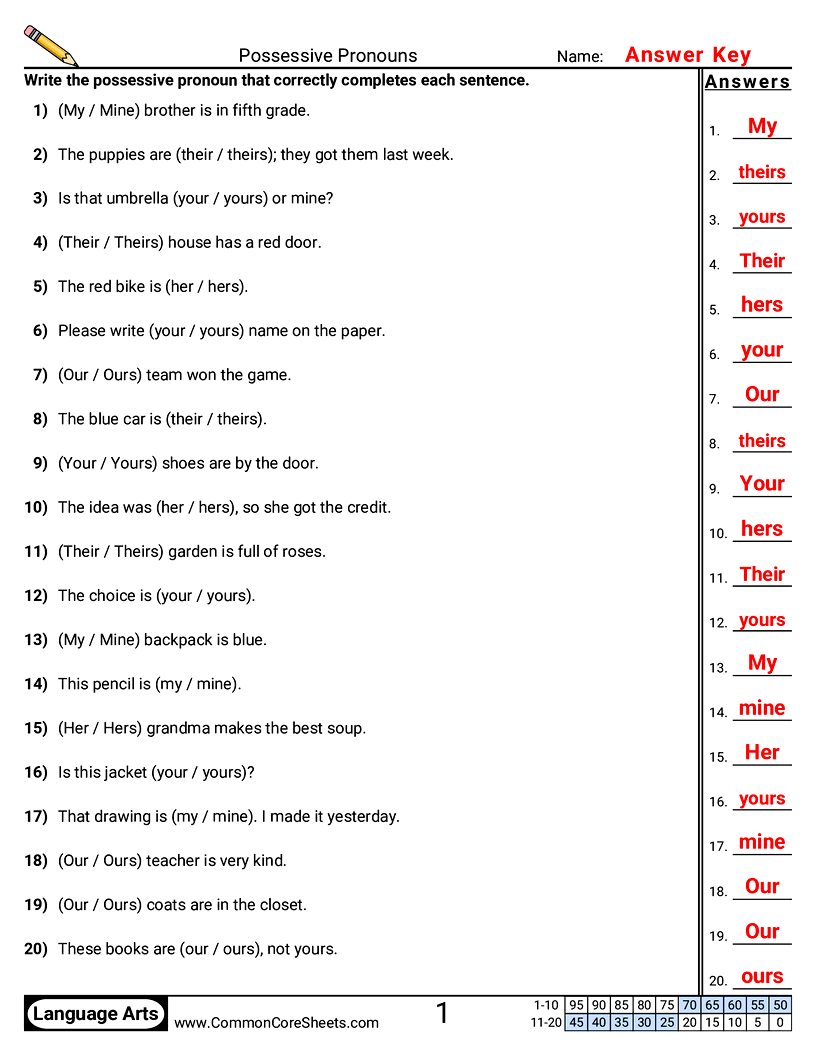
Use possessive pronouns to show who owns something Use my, your, her, our and their before a noun Use mine, yours, hers, ours and theirs on their own Tell which form a sentence needs
L.2.1.c
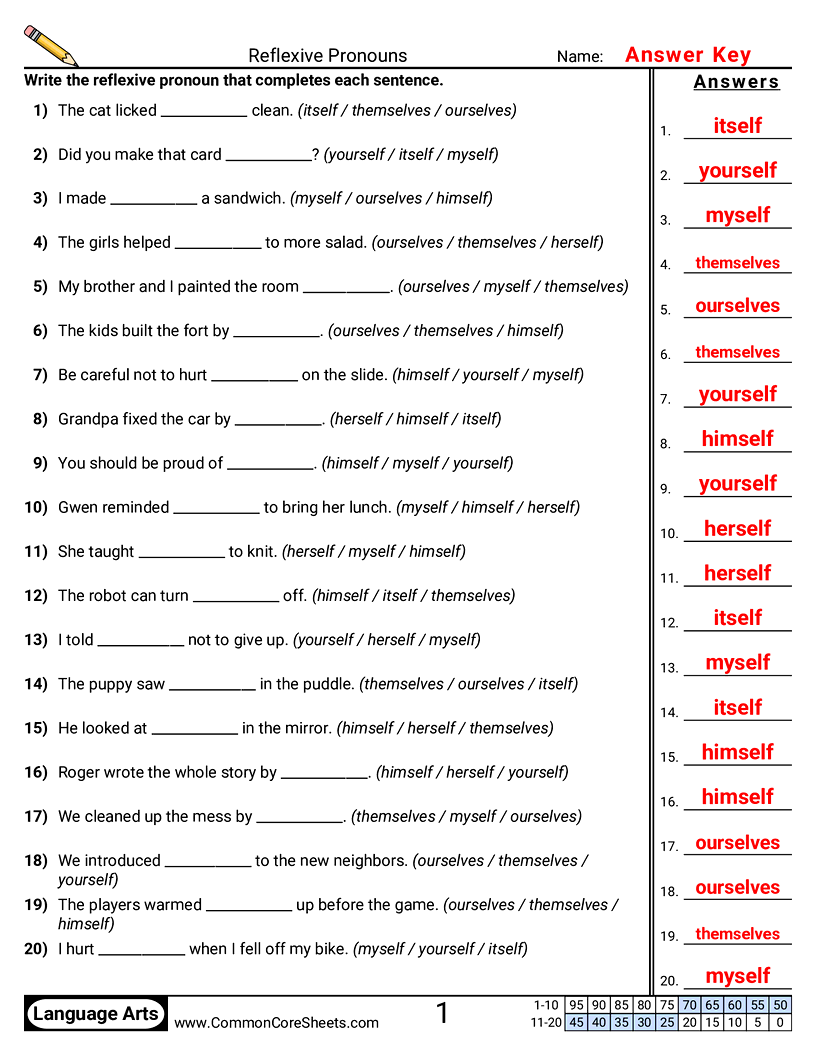
Use reflexive pronouns that end in -self and -selves Match a reflexive pronoun to the subject of the sentence Use -selves for more than one Use itself for animals and things
L.3.1.f
Find the noun a pronoun refers to Know that a pronoun must match its noun in number Use pronouns clearly in writing Follow who and what a sentence is about
L.2.1.e L.3.1.a
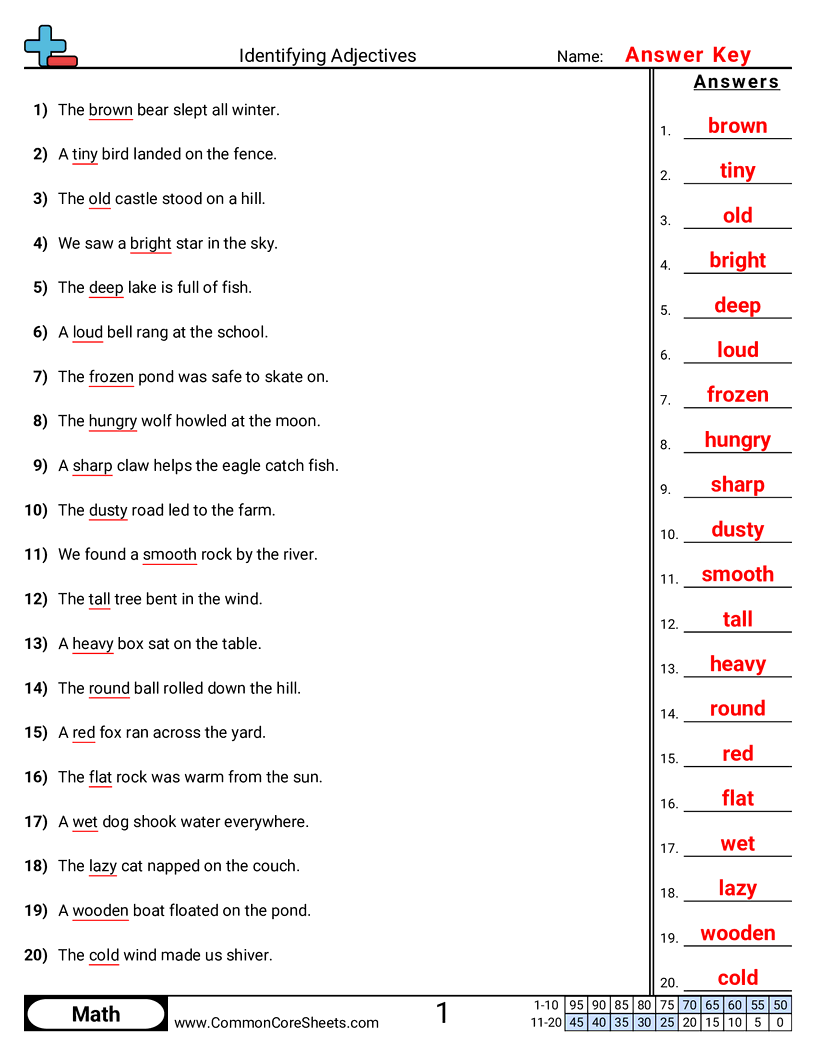
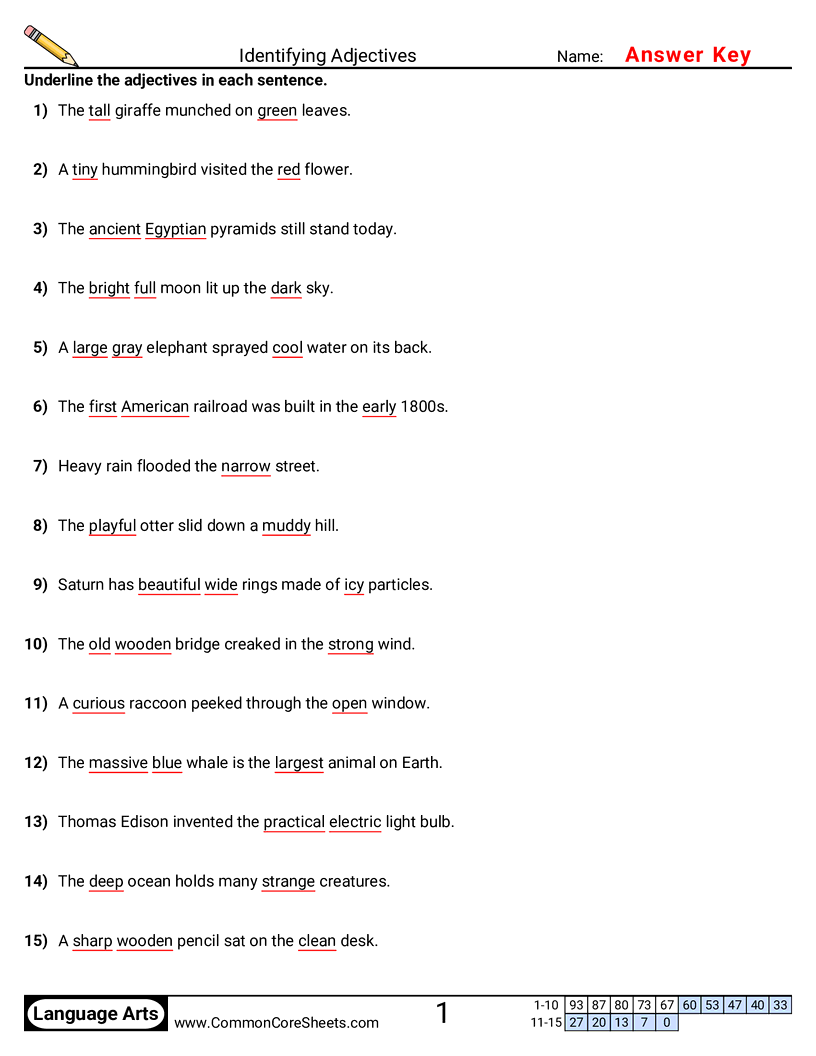
Find the adjective in a sentence Recognize words that describe how something looks, feels, or sounds Tell the difference between adjectives and other words like nouns or verbs Match adjectives to the noun they describe
L.3.1.a
Learn to recognize adjectives in a sentence Understand how adjectives describe nouns Tell the difference between adjectives and other words Practice spotting words that show size, color, or shape
L.1.1.f L.3.1.a
Know that an adjective describes a noun Find the noun an adjective describes Recognize adjectives that come after the noun they describe Use adjectives to add detail to writing
L.3.1.g
Tell when a sentence compares two things Tell when a sentence compares three or more things Choose between comparative and superlative forms Notice clue words like than and the ... of all
L.3.1.g
Use the comparative form to compare two things Use the superlative form to compare three or more Spell comparatives and superlatives with -er and -est Use more and most with longer adjectives, and know the irregular forms
L.4.1.d
Know that adjectives follow a usual order in English Put opinion adjectives before size, age and color Put color, origin and material adjectives close to the noun Choose a phrase that sounds natural
L.2.1.e
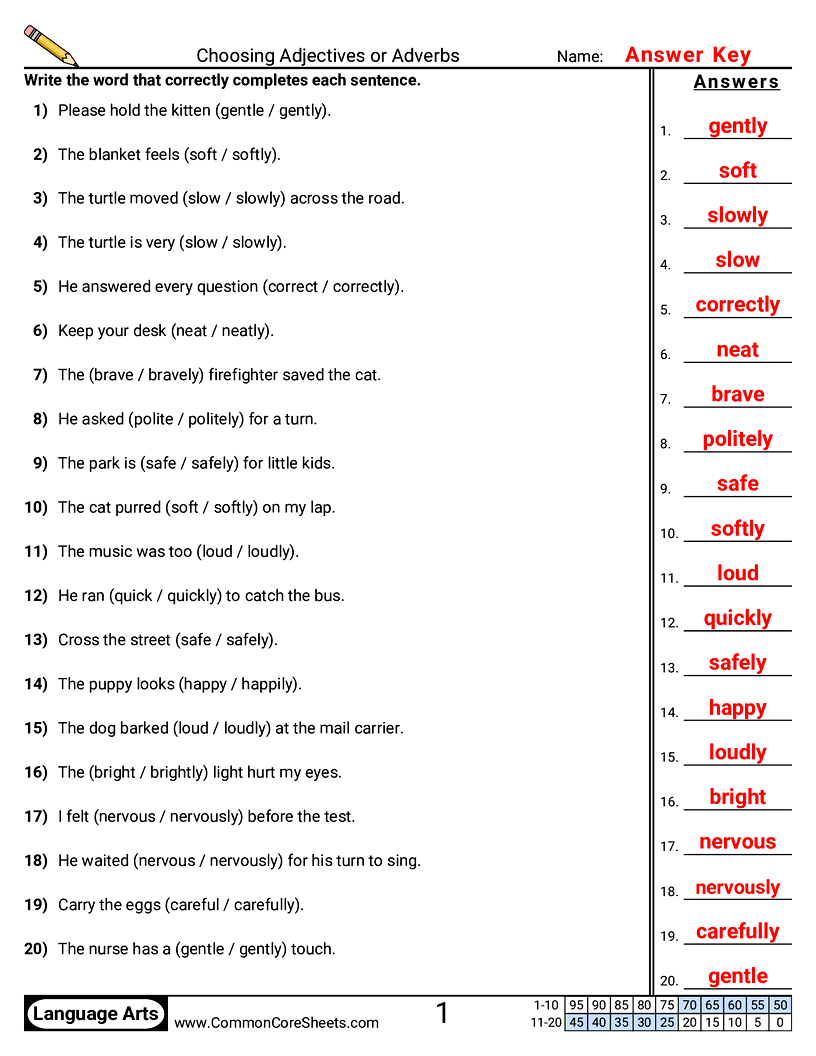
Know that an adjective describes a noun Know that an adverb tells how an action is done Choose between an adjective and an adverb in a sentence Use good and well correctly
L.3.1.a
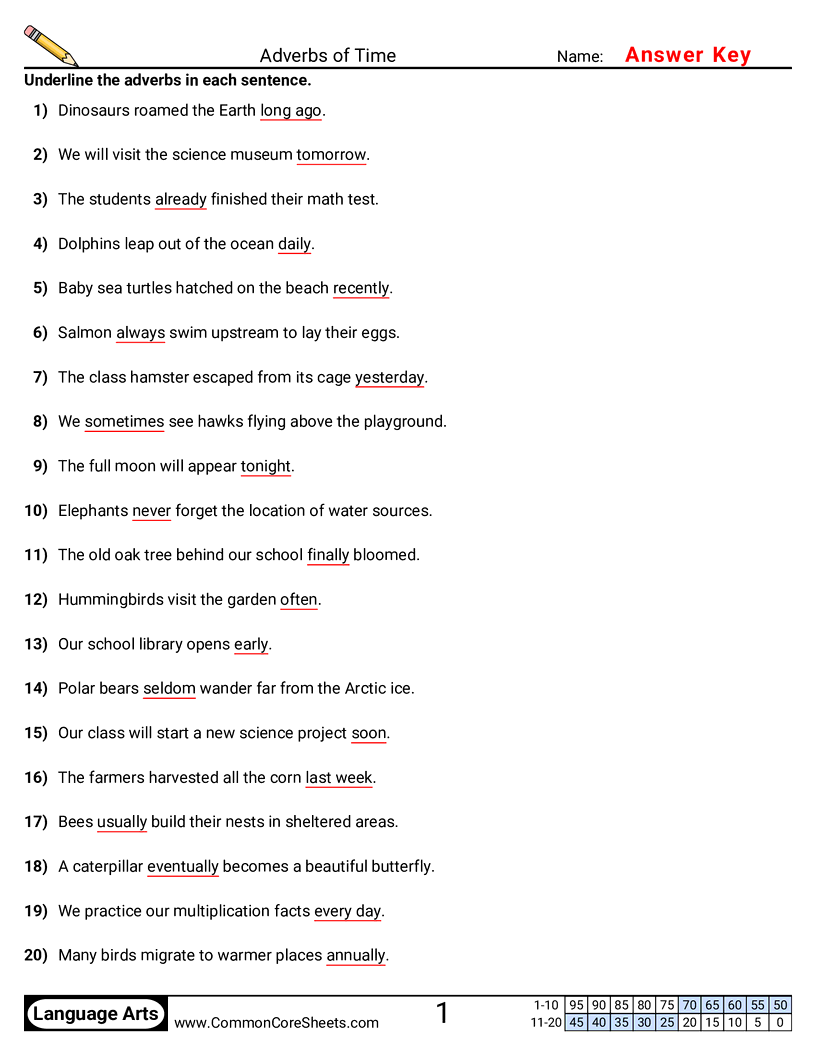
Recognize words that tell when something happens, like yesterday, soon, or later Pick out the adverb of time in a sentence Understand the difference between when an action happens and how it happens Use time words correctly when describing events
L.3.1.a
Identify adverbs that describe how an action happens Understand that many adverbs of manner end in -ly Choose the right adverb to complete a sentence Tell the difference between adjectives and adverbs
L.3.1.a
Identify adverbs of place in a sentence Understand that adverbs of place tell where something happens Recognize common location words like here, there, everywhere, and outside Tell the difference between adverbs of place and other kinds of words
L.3.1.a
Recognize words like very, too, quite, and almost in sentences Understand how adverbs of degree change the strength of a word Choose the right adverb of degree to complete a sentence Use adverbs of degree correctly in your own writing
L.3.1.a
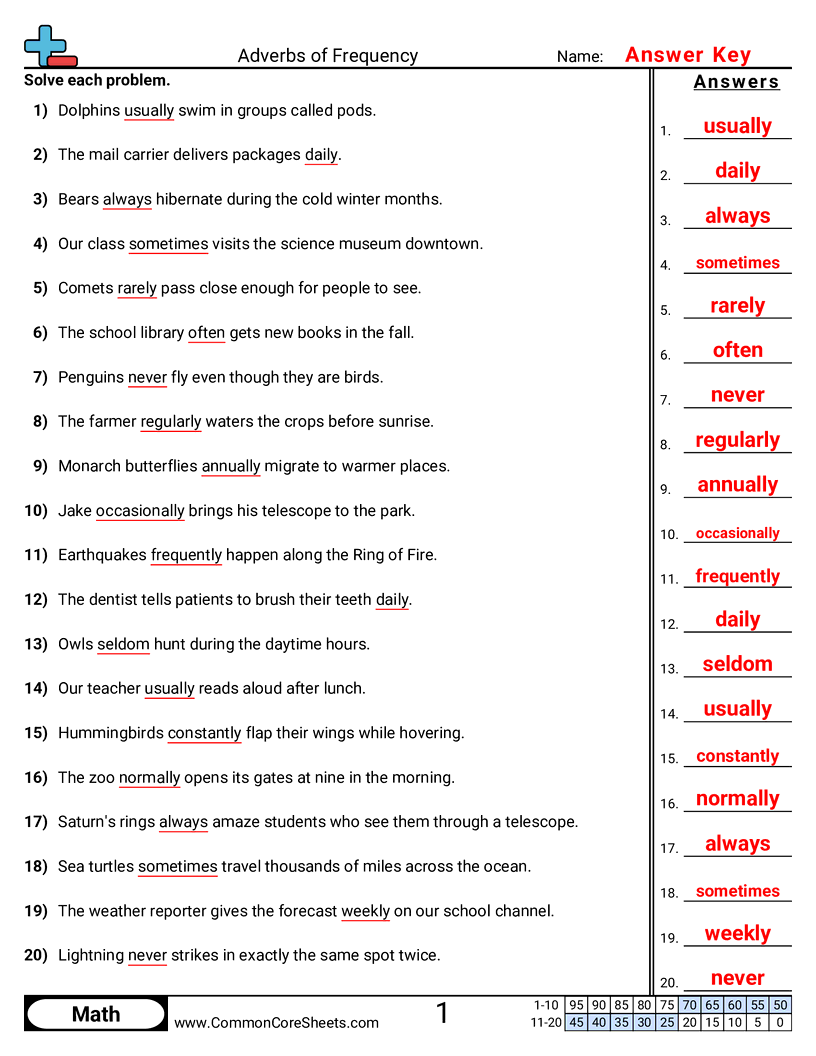
Recognize words that tell how often something happens like always, often, and never Choose the correct frequency adverb to complete a sentence Place adverbs of frequency correctly in a sentence Understand the difference in meaning between words like usually and rarely
L.3.1.a
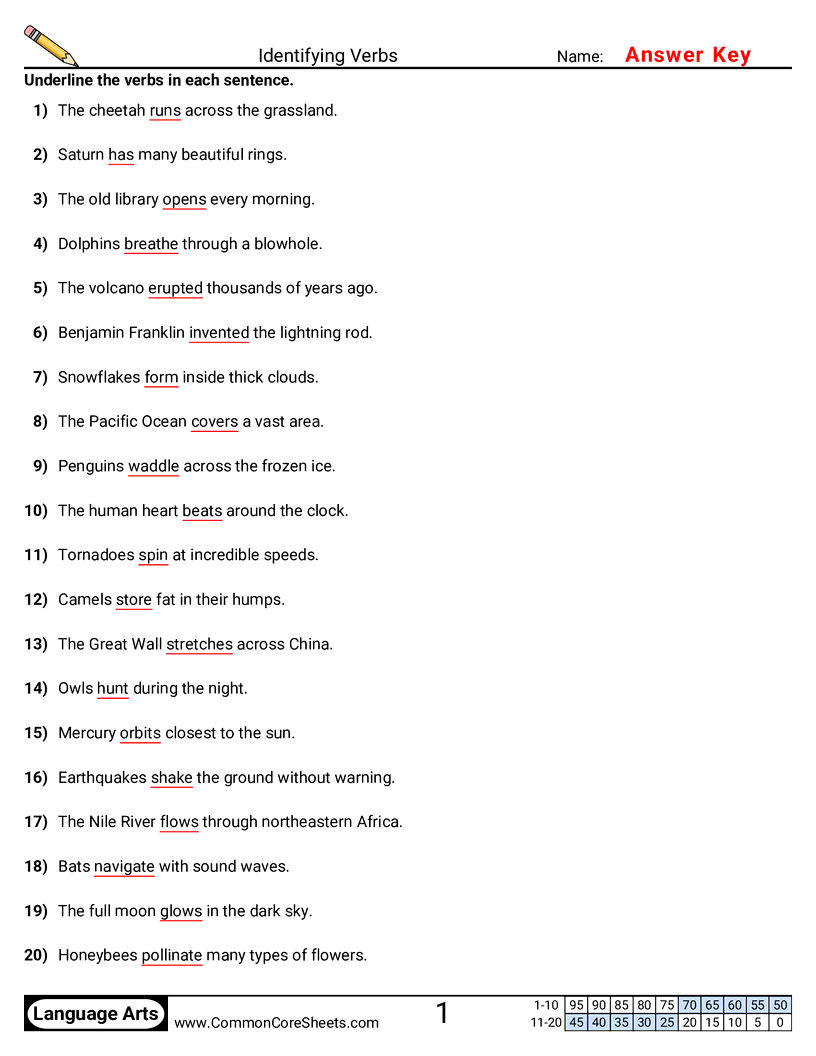
Find the action word in a sentence Tell the difference between verbs and other words Recognize verbs that show what someone is doing Practice spotting verbs in everyday sentences
L.3.1.e
Practice putting verbs into the future tense Learn to use 'will' and 'going to' correctly in sentences Recognize when a sentence is talking about something that hasn't happened yet Complete sentences with the right future tense verb form
L.3.1.f
Recognize when a verb does not match a plural subject in a sentence Correct verbs so they agree with plural subjects Practice using the right verb tense with words like 'they' and 'the dogs' Rewrite sentences to sound correct out loud
L.5.1.d
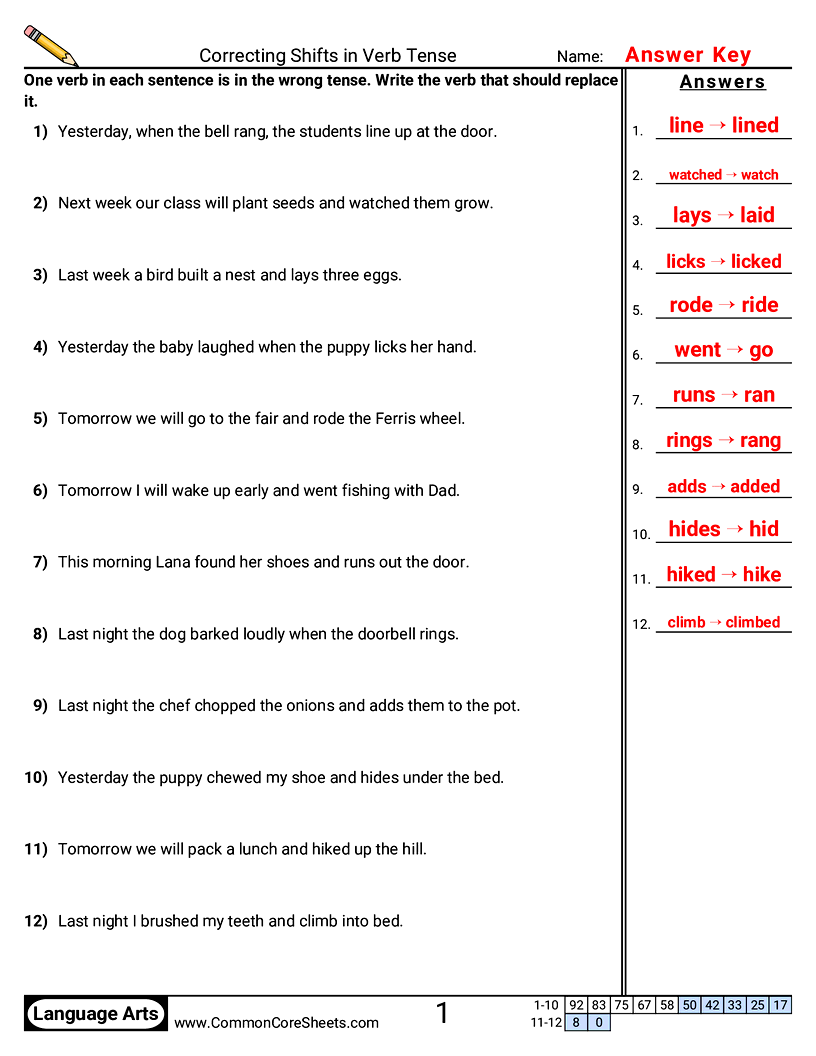
Recognize an inappropriate shift in verb tense Use a time clue to decide the tense of a sentence Correct a verb so the sentence stays in one tense
L.1.1.c
Match a verb to a singular or plural subject Know that a verb for one person or thing often ends in -s Read sentences that sound right
L.1.1.c L.3.1.f
Use am, is and are correctly Use was and were, has and have, and does and do correctly Match verbs to pronouns
L.3.1.f
Use a plural verb with subjects joined by and Make the verb agree with the nearer subject after or and nor Find all the parts of a compound subject
L.3.1.f
Find the subject when it comes after the verb Choose is or are after there and here Make verbs agree in questions
L.3.1.f
Use singular verbs with everyone, each and nobody Use plural verbs with both, many and several Use singular verbs with collective nouns like team and class
L.3.1.f
Find subject-verb agreement errors Correct verbs to agree with their subjects Proofread sentences for agreement
L.1.1.e L.3.1.e
Know that verbs show when something happens Tell past, present and future verbs apart Notice that future verbs use will
L.1.1.e L.3.1.e
Find the time clue in a sentence Choose the past, present or future form of a verb Use will for the future
L.3.1.e
Form the past, present and future tense of a verb Make present tense verbs agree with their subject Spell past tense verbs that end in -ed
L.3.1.d L.3.2.e
Form the past tense of regular verbs Double the final consonant when needed Drop the e or change y to i before -ed
L.2.1.d L.3.1.d
Use the past tense of common irregular verbs Know that irregular verbs do not add -ed Use a time clue to choose the past tense
L.2.1.d L.3.1.d
Write the past tense of common irregular verbs Spell irregular past tense verbs correctly Know which verbs do not add -ed
L.3.1.d L.5.1.b
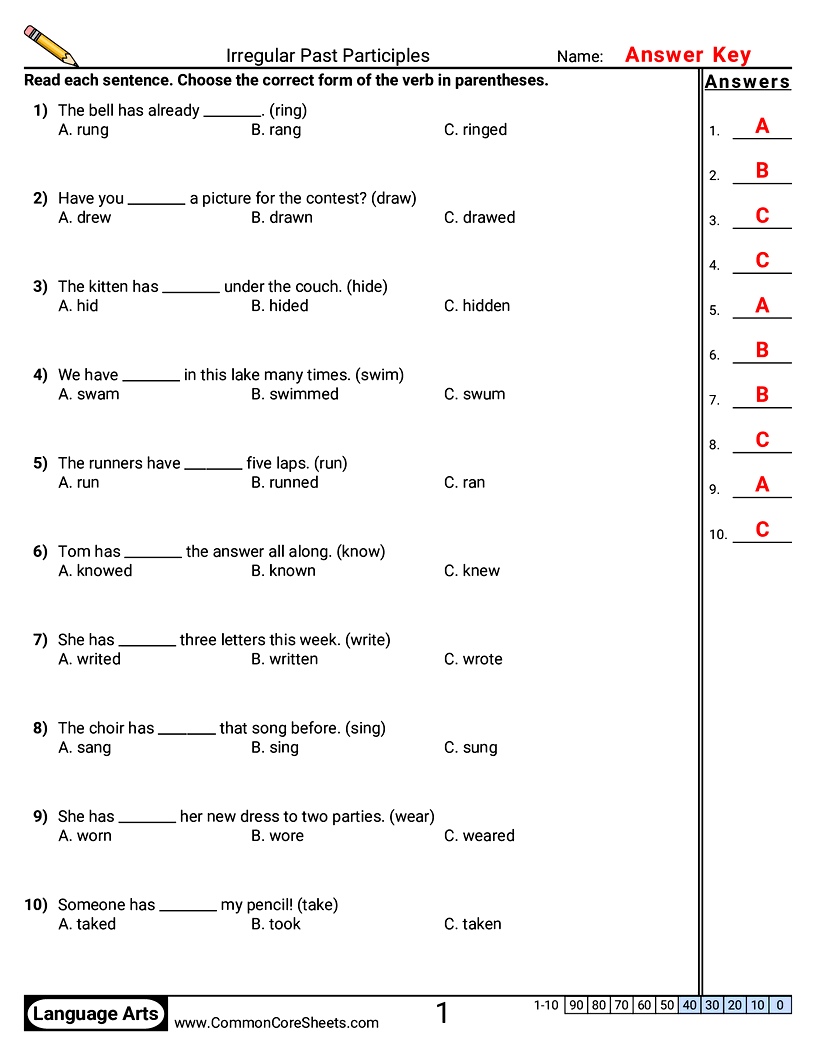
Use the past participles of irregular verbs Tell the past participle from the simple past Use has, have and had with the participle
L.4.1.b
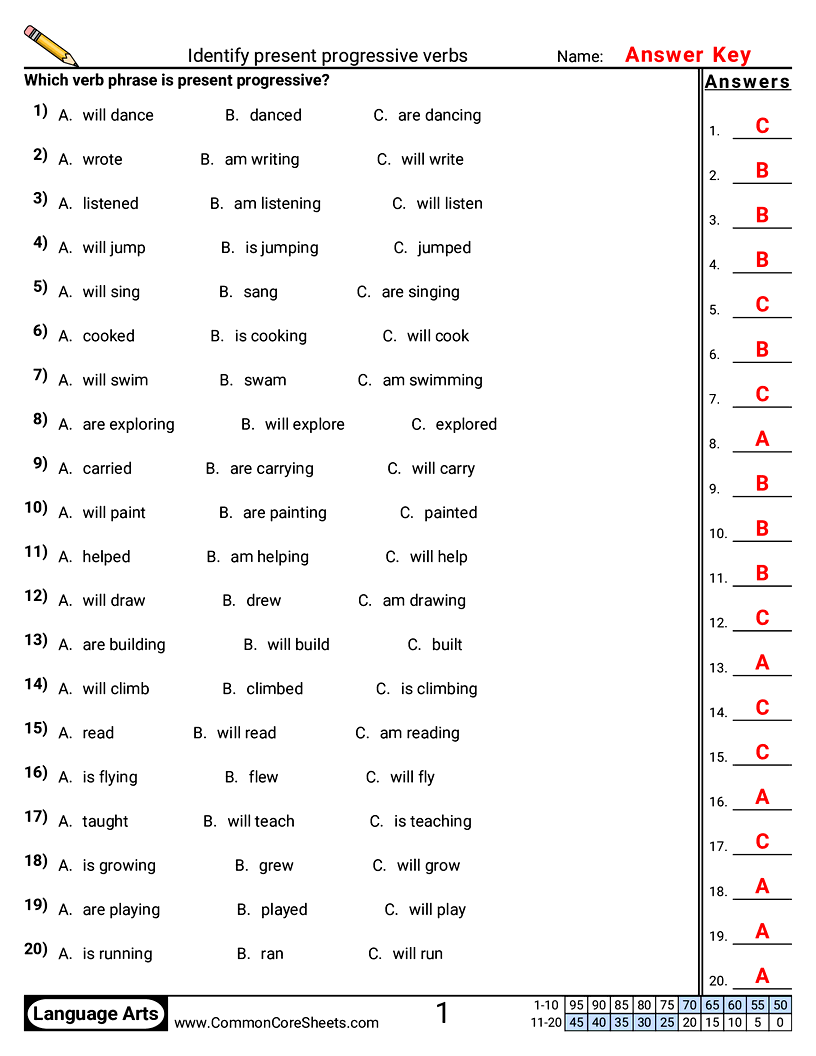
Recognize verbs that show an action happening right now Spot the helping verb paired with an -ing verb Tell the difference between present progressive and simple present verbs Understand how 'is,' 'am,' and 'are' combine with -ing verbs
L.4.1.b
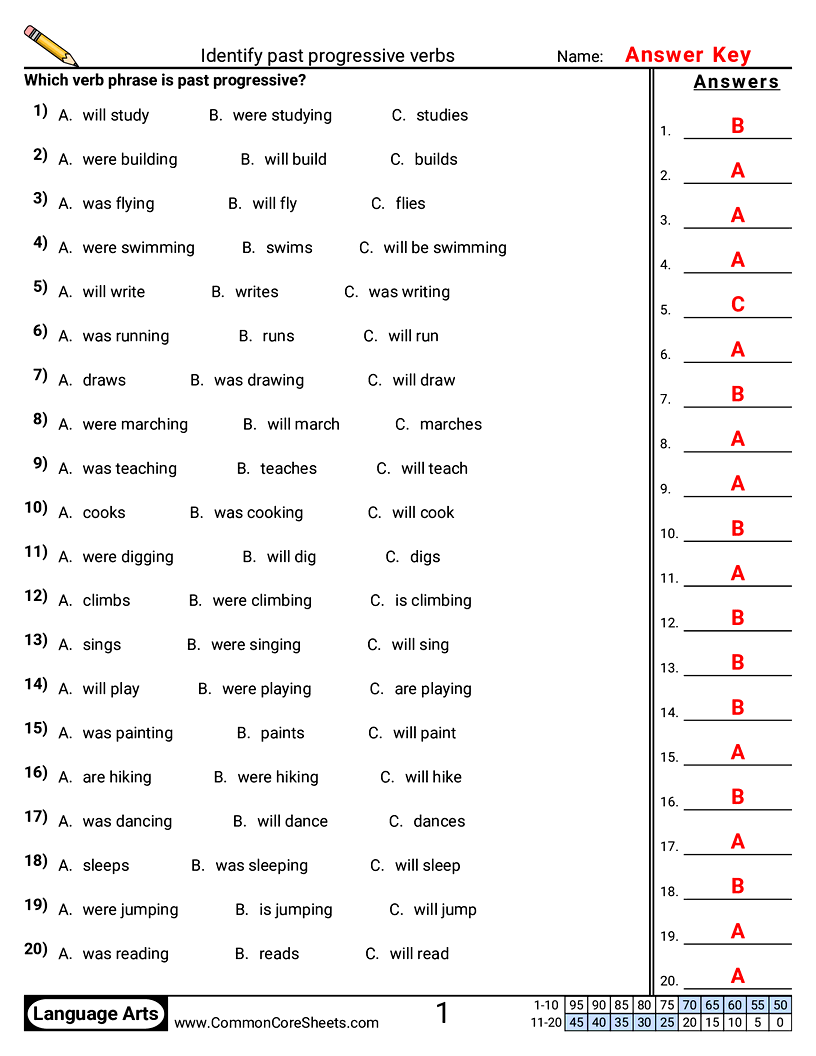
Recognize verbs that show an action was happening in the past Spot the helping words "was" and "were" paired with an -ing verb Tell the difference between simple past and past progressive verbs Point out past progressive verb phrases within a sentence
L.4.1.b
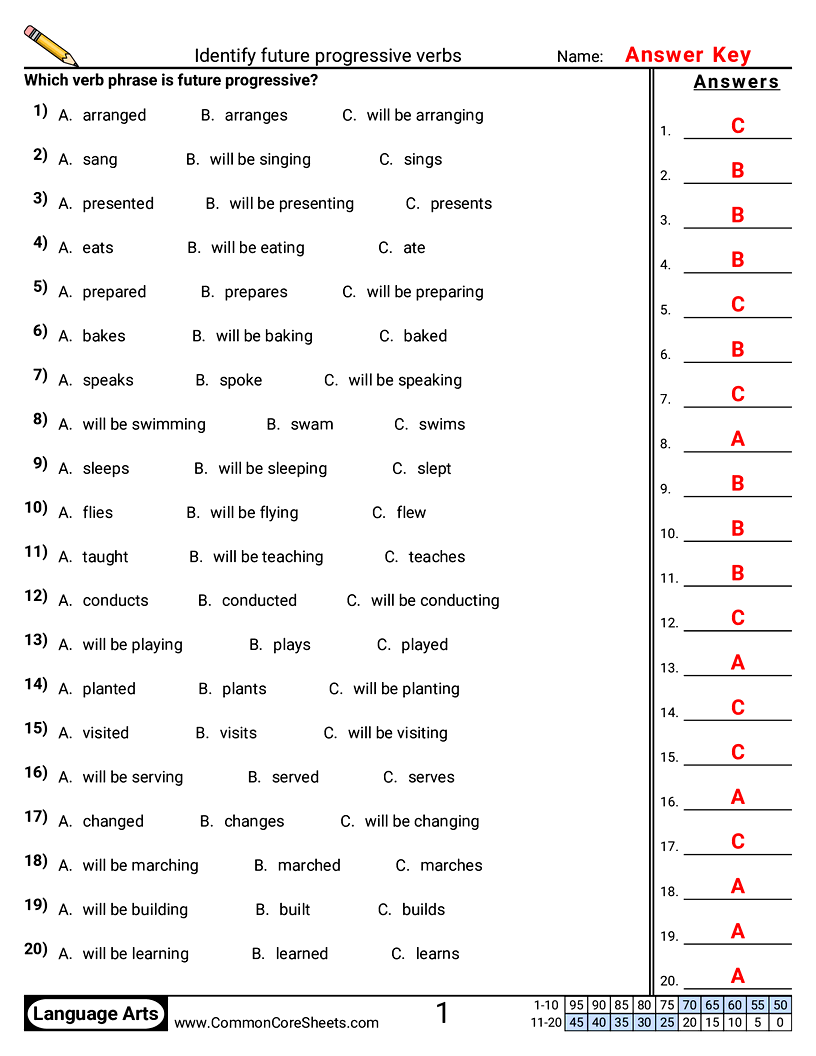
Recognize verbs in the future progressive tense Spot the 'will be' plus -ing pattern in a sentence Tell the difference between future progressive and other verb tenses Practice picking out verb phrases within a full sentence
L.4.1.b
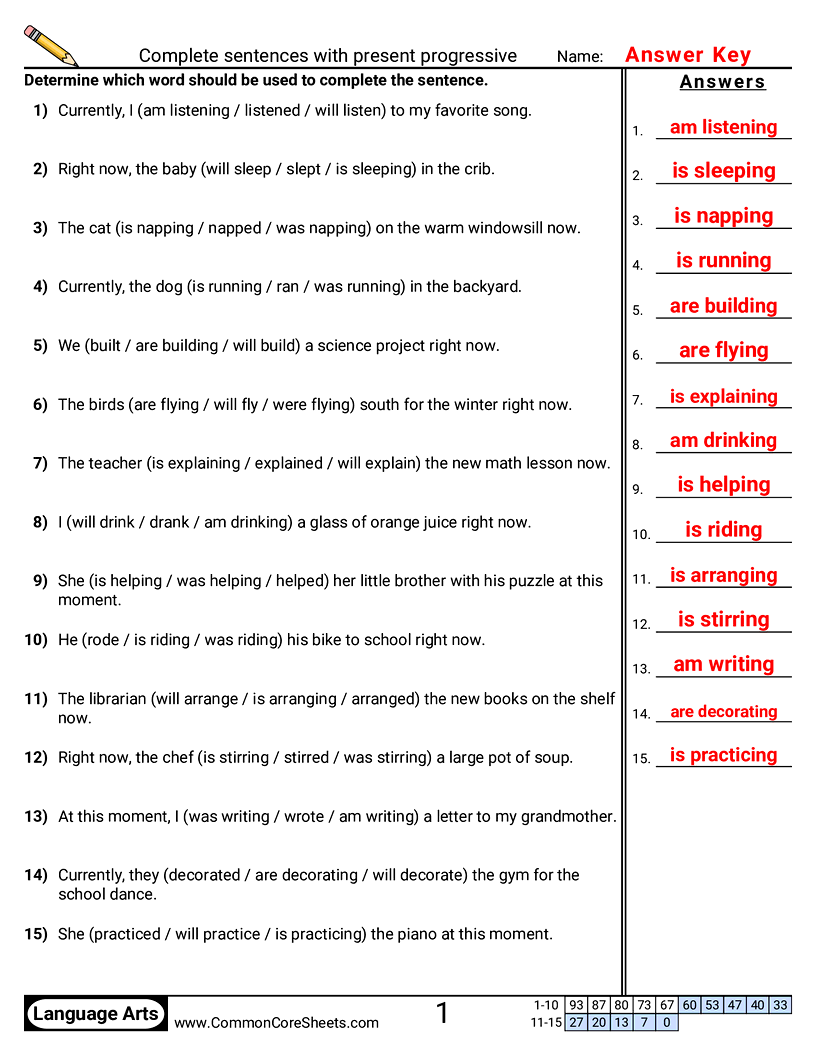
Practice forming verbs that end in -ing to show an action happening now Choose the correct helping verb: am, is, or are Match the verb form to the subject of the sentence Read a sentence and complete it so it makes sense
L.4.1.b
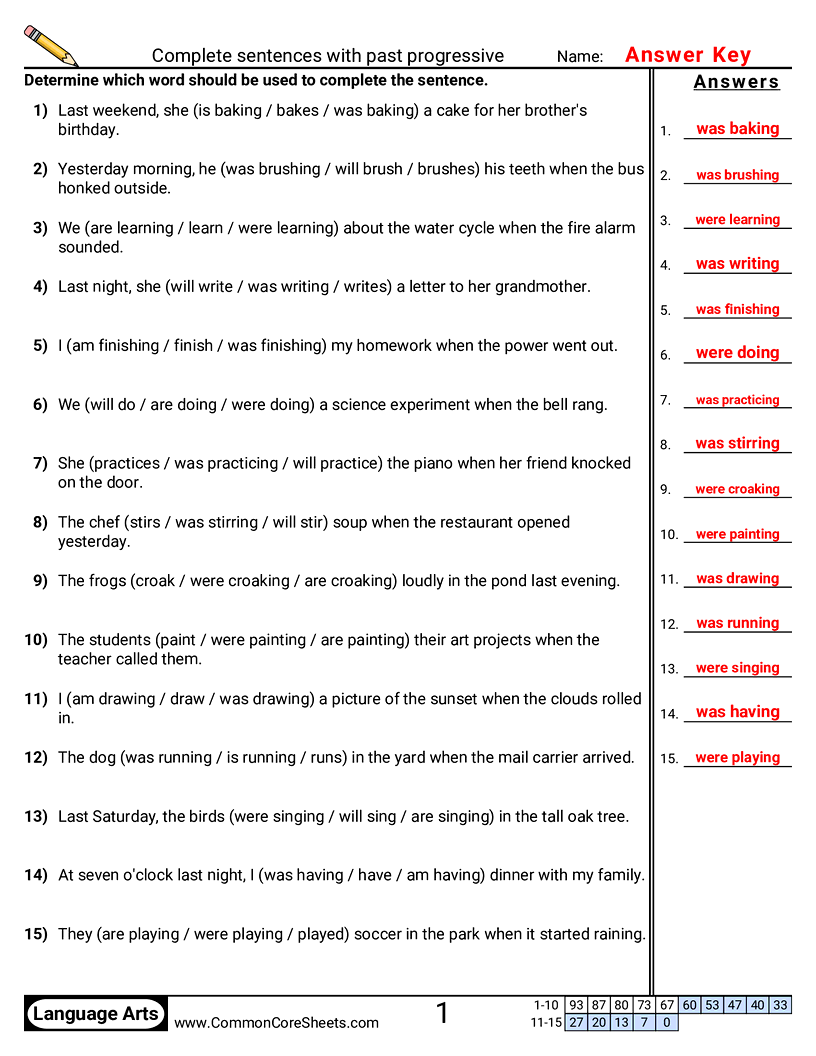
Practice forming the past progressive with was or were and an -ing verb Choose the correct verb form to fit the meaning of a sentence Match was or were to singular and plural subjects Understand how to describe actions that were happening in the past
L.4.1.b
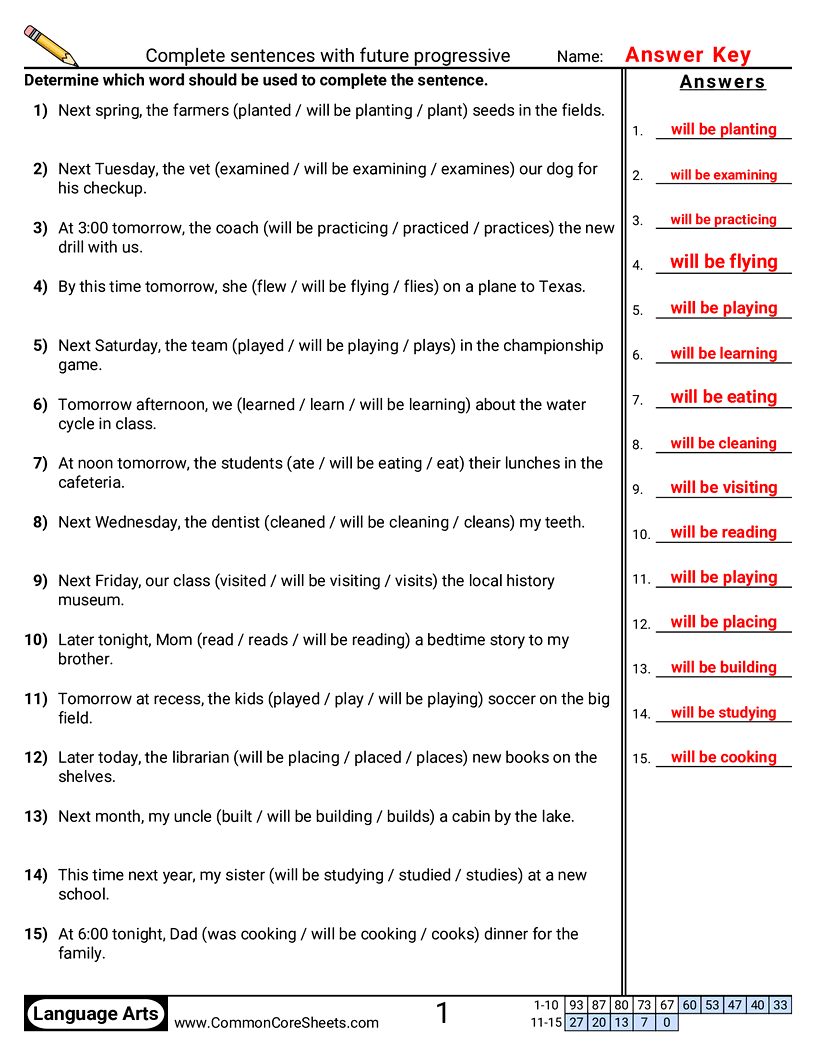
Practice forming the future progressive tense using 'will be' plus an '-ing' verb Choose the correct verb ending to describe an action happening in the future Complete sentences so they read correctly and make sense Recognize when to use future progressive instead of other tenses
L.4.1.b
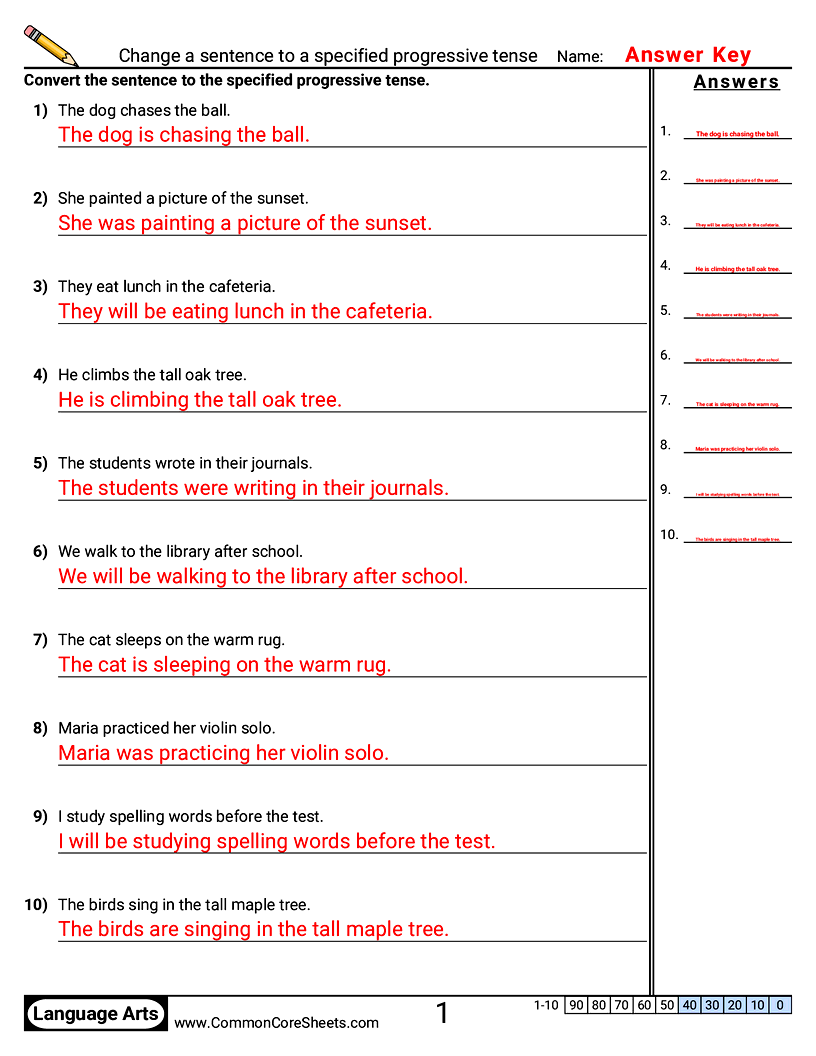
Practice changing verbs into past, present, and future progressive forms Learn to use the correct helping verb with -ing words Understand how progressive tenses show ongoing actions Rewrite sentences to match a requested tense
L.4.1.b
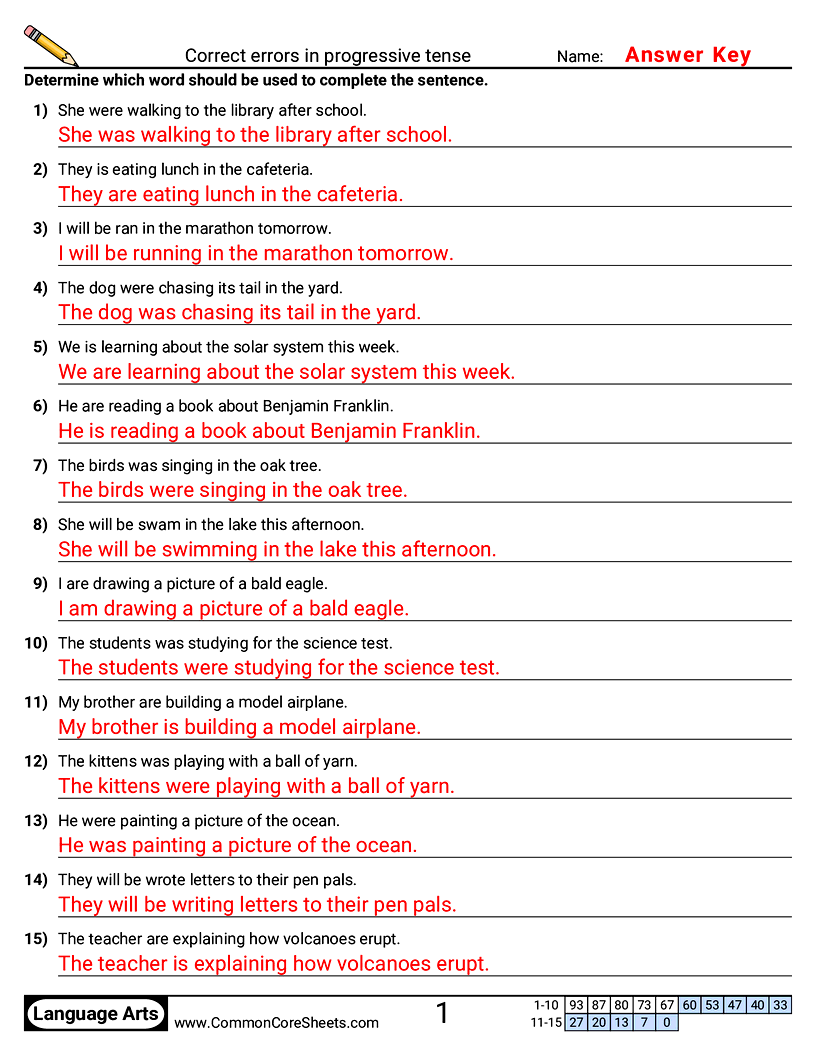
Spot mistakes in verbs that use -ing endings Fix sentences using the correct 'was/were/is/are/will be' plus verb form Tell the difference between past, present, and future progressive tenses Rewrite sentences so the verb tense matches the rest of the sentence
L.4.1.b
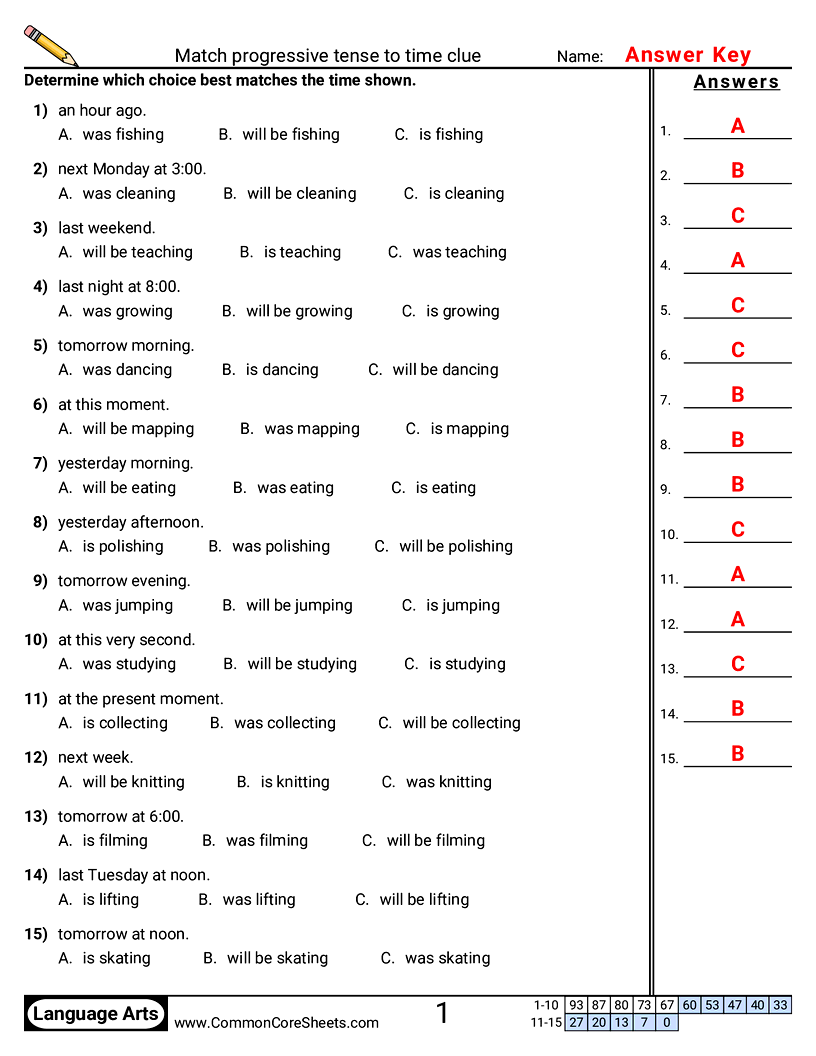
Recognize progressive verb tenses like 'was walking,' 'is walking,' and 'will be walking' Use time clue words to decide if an action is happening in the past, present, or future Match the correct progressive verb form to the time given in a sentence Understand how helping verbs change the meaning of a progressive verb
L.4.1.b
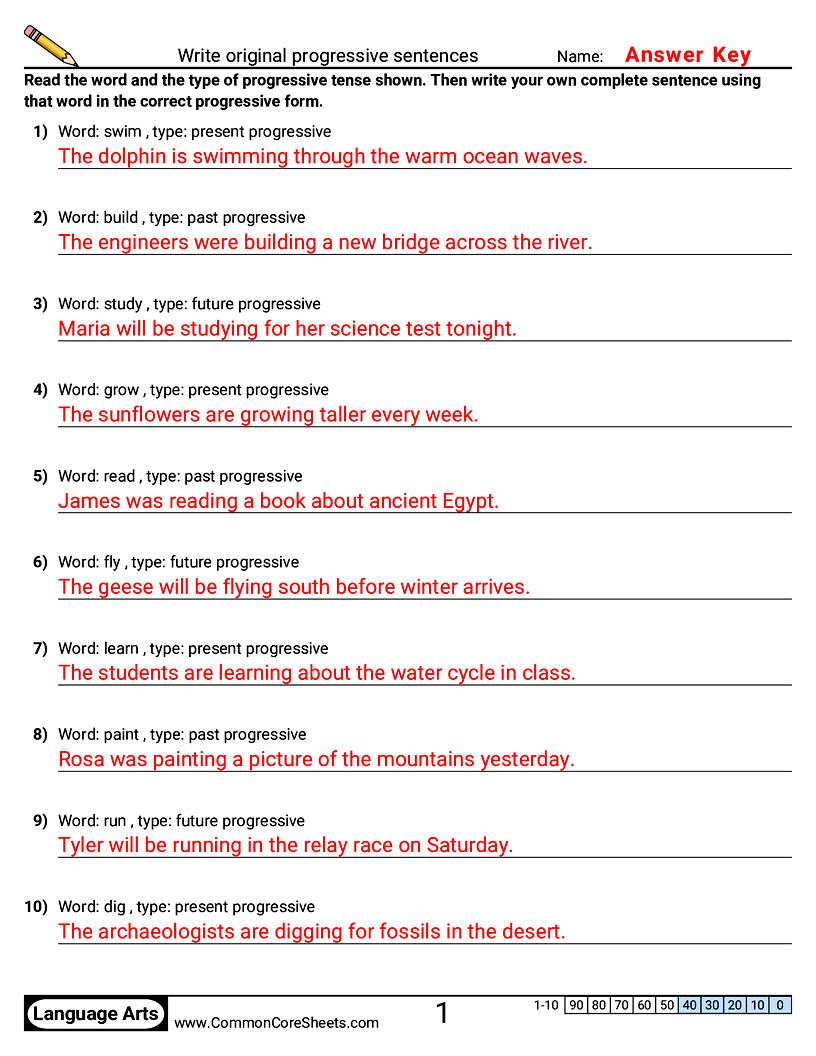
Write sentences that show an action is happening right now Use 'was' or 'were' with -ing verbs to show past ongoing actions Use 'will be' with -ing verbs to show future ongoing actions Choose the correct helping verb to match the subject Form complete sentences that clearly describe continuing action
L.5.1.b
Recognize the past, present and future perfect tenses Know that the perfect tenses use had, have, has or will have Tell the perfect tenses apart
L.5.1.b L.5.1.c
Form the past, present and future perfect tenses Use clues to choose the perfect tense that shows the right time Use the perfect tenses to show the order of events
L.8.1.b
Tell the active voice from the passive voice Find who or what does the action in a sentence Notice the form of be and the past participle in a passive verb
L.8.1.b
Find the doer of the action in a passive sentence Tell the doer from the receiver of the action Notice when a passive sentence leaves out the doer
L.8.1.b
Change a passive sentence to the active voice Keep the same doer and receiver Keep the same verb tense
L.8.1.b
Change an active sentence to the passive voice Form a passive verb with be and the past participle Keep the same verb tense
L.8.1.b
Form passive verbs in the past, present and future Make the form of be agree with the subject Use a time clue to choose the tense
L.8.1.d
Recognize a shift in verb voice Revise a sentence so it stays in one voice Use the active voice to make writing clearer
L.8.1.a
Know what a verbal is Tell gerunds, participles and infinitives apart Notice that the same -ing word can be a gerund or a participle
L.8.1.a
Explain the function of a gerund in a sentence Find gerunds used as subjects, objects and predicate nouns Tell a gerund after is from a verb in the progressive tense
L.8.1.a
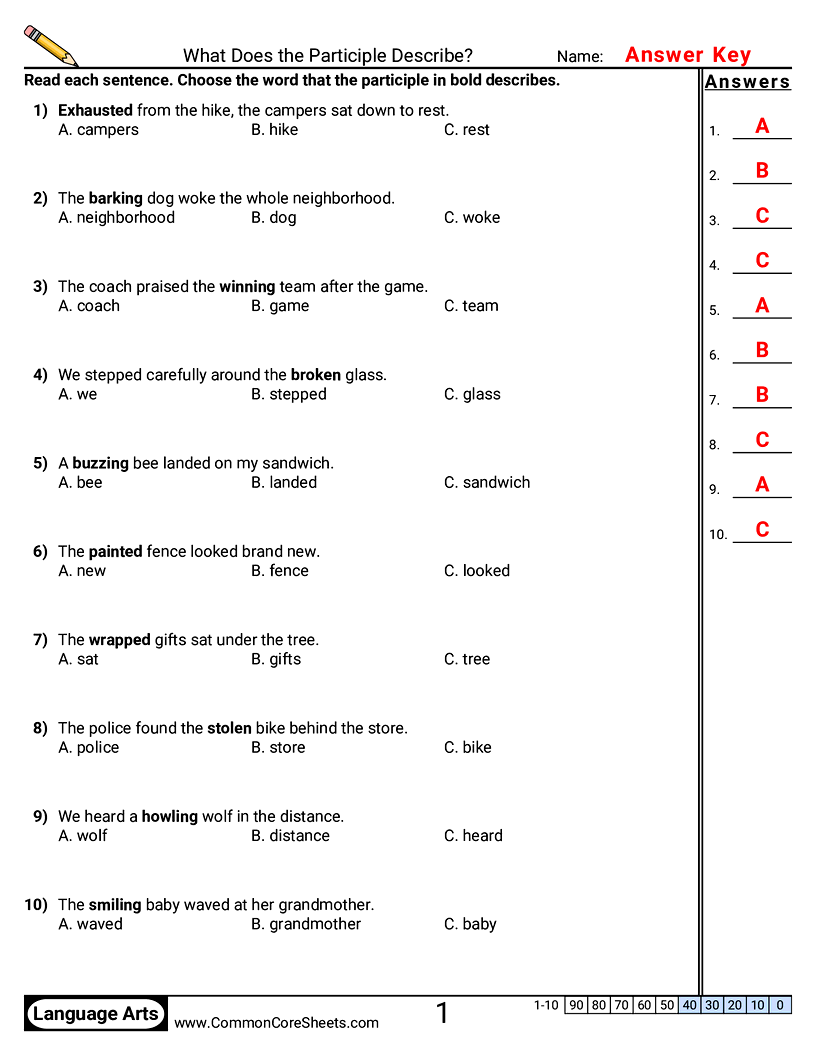
Explain the function of a participle in a sentence Find the noun a participle describes Read sentences that open with a participial phrase
L.8.1.a
Explain the function of an infinitive in a sentence Tell infinitives used as nouns, adjectives and adverbs apart Ask which one or why to find an adjective or adverb infinitive
L.8.1.a
Tell a verbal from a verb in a verb phrase Notice helping verbs like is, was and has Find gerunds, participles and infinitives in sentences
L.8.1.a
Recognize an infinitive Tell an infinitive from a prepositional phrase that starts with to Check whether the word after to is a verb or a noun
L.4.1.c
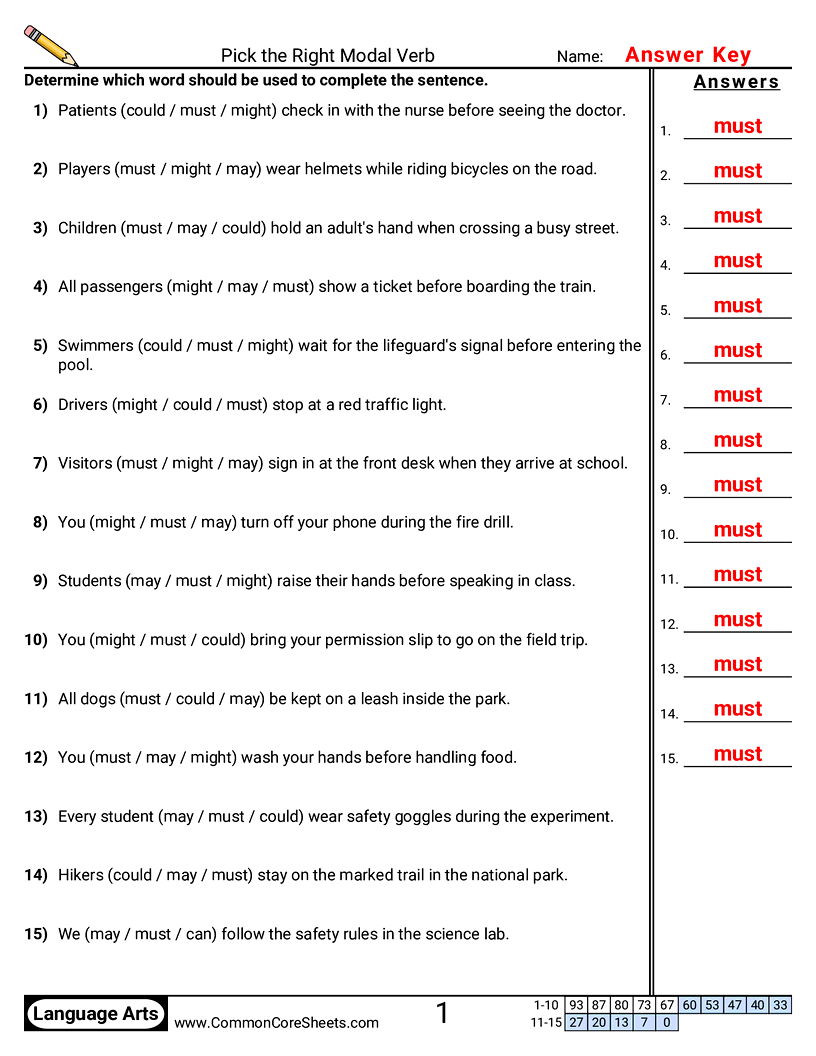
Pick the modal verb that fits the meaning of a sentence Understand how words like should, could, and must change a sentence Show ability, permission, or obligation using the right modal verb Tell the difference between similar modal verbs like can and may
L.4.1.c
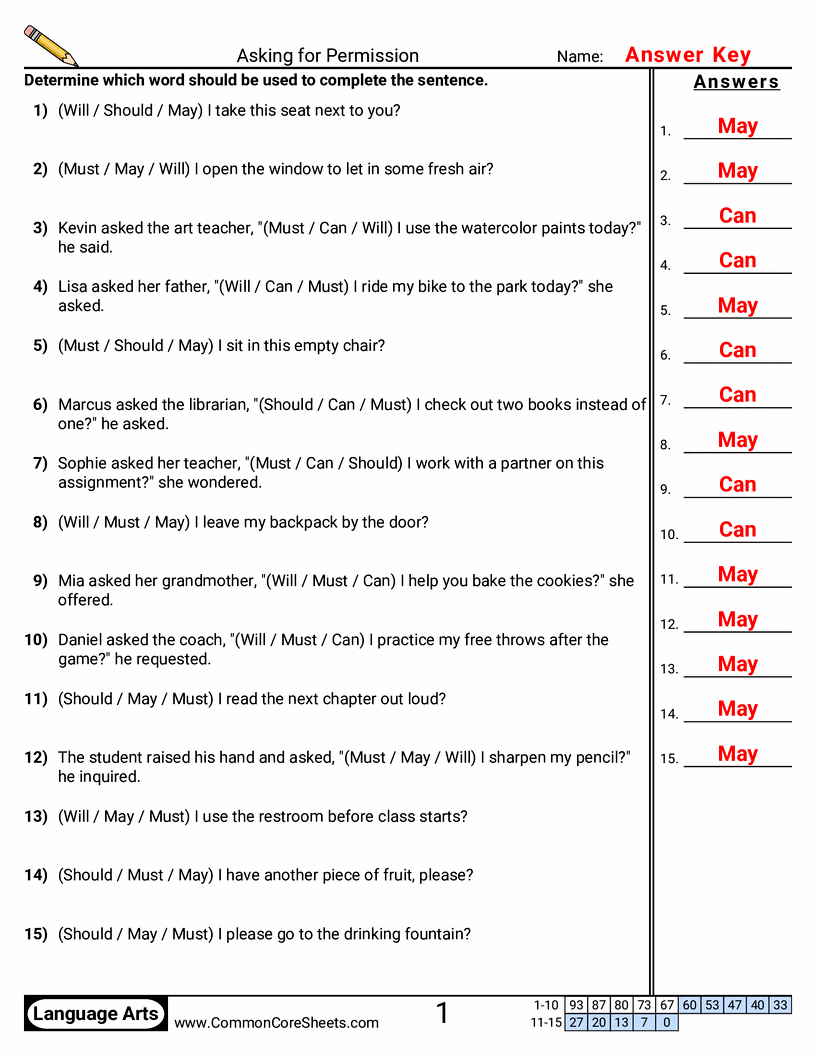
Learn to use words like can, may, could, and would to ask for permission Choose the most polite word to make a request Understand how modal verbs change the tone of a question Complete sentences that ask permission correctly
L.4.1.c
Learn what modal verbs like can, could, may, might, must, should, and would mean Choose the modal verb that fits the meaning of a sentence Understand how modal verbs show ability, permission, or possibility Practice using modal verbs correctly in complete sentences
L.4.1.c
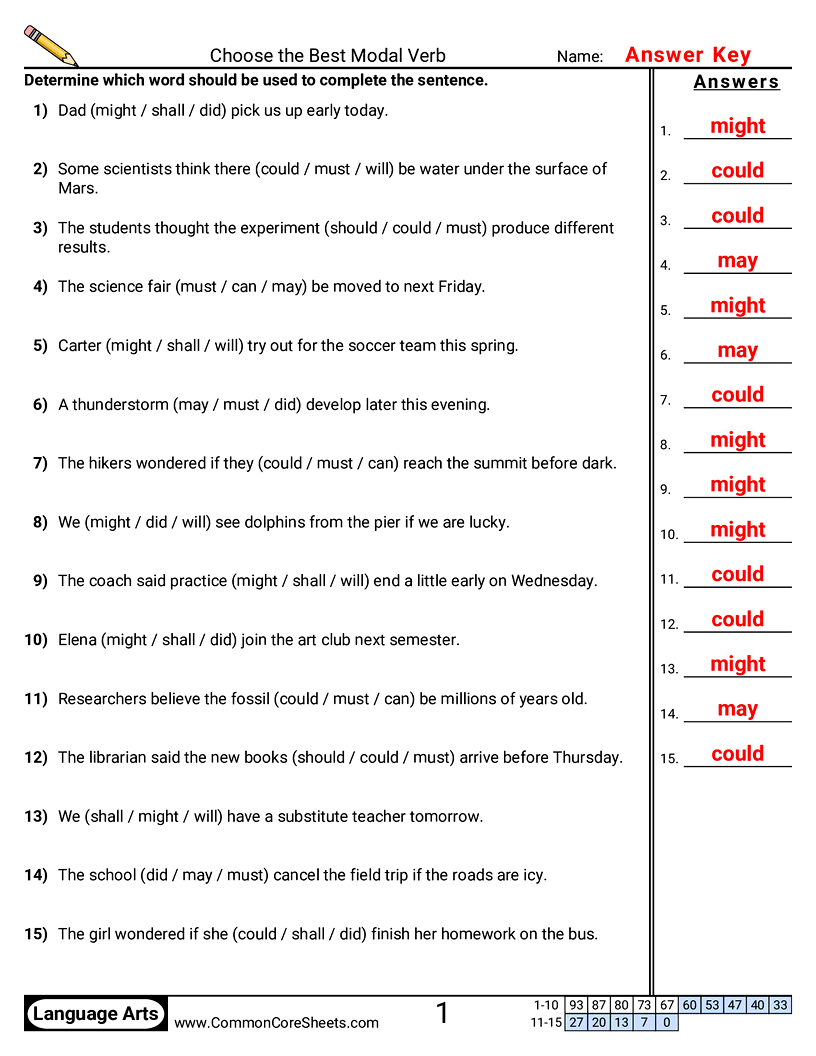
Pick the modal verb that best fits a sentence Understand how modals like can, must, and should change meaning Tell the difference between modals showing ability, permission, and obligation Practice using modal verbs correctly in complete sentences
L.4.1.c
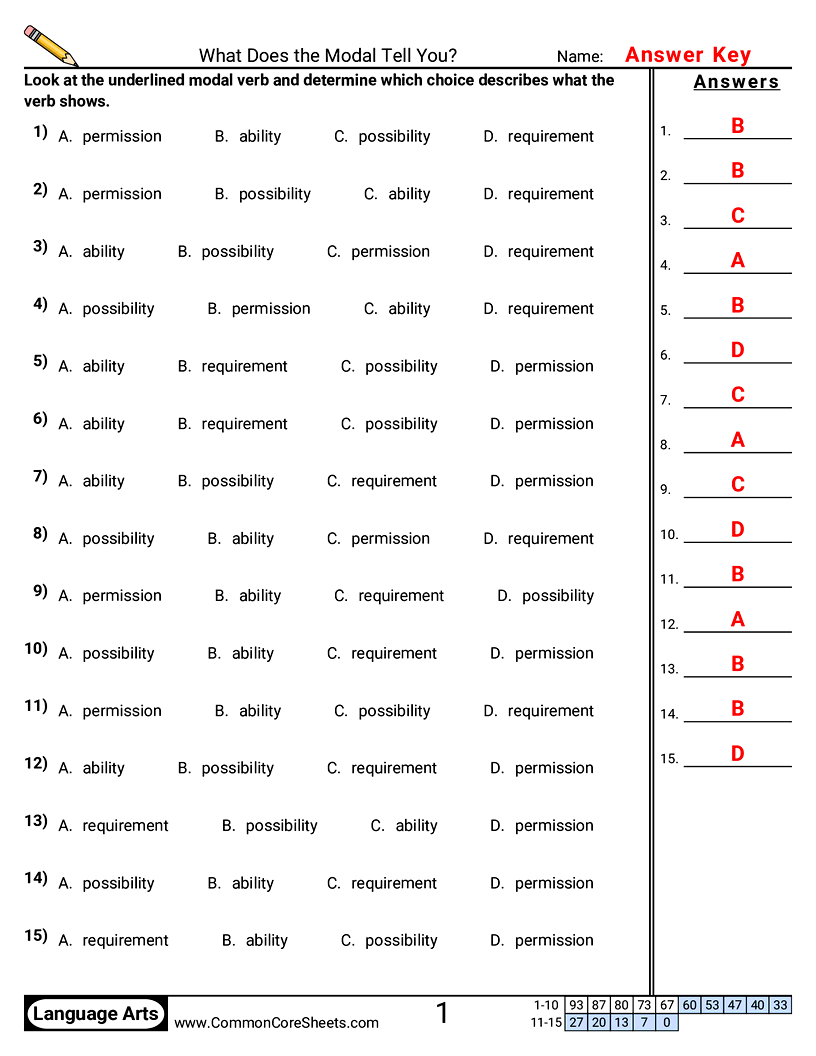
Recognize modal verbs like can, could, may, might, must, should, and will Understand what each modal verb tells you about a sentence Tell the difference between ability, permission, possibility, and obligation Choose the right modal to match a meaning in a sentence
L.4.1.c
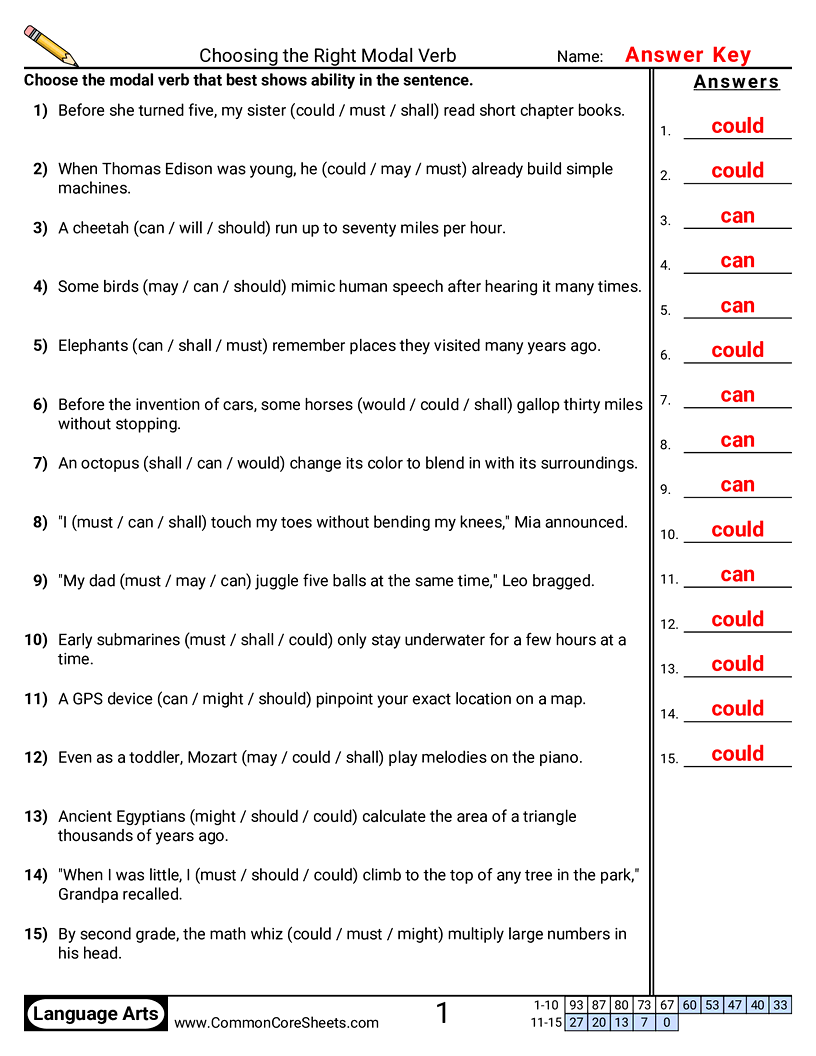
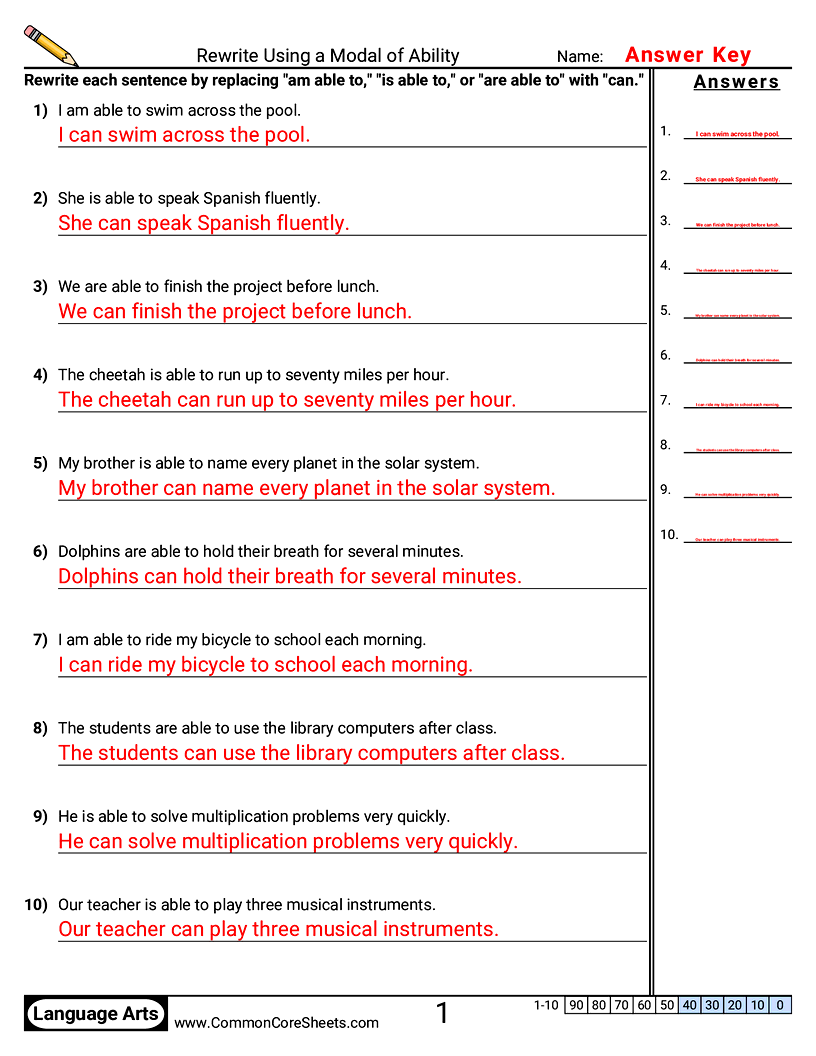
Practice using 'can' and 'could' to show ability Rewrite sentences to say what someone is able to do Choose the correct modal verb for present and past ability Understand how modals like 'be able to' express ability
L.4.1.a
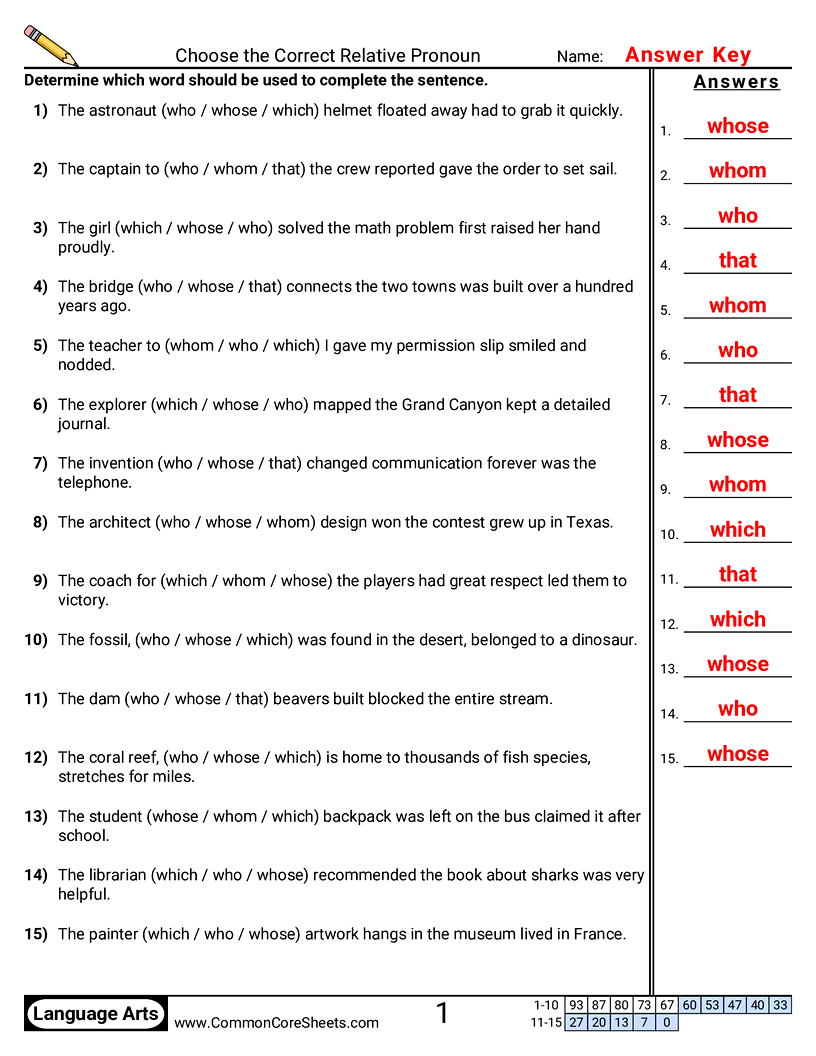
Pick the right relative pronoun to fill in a sentence Know when to use who, whom, and whose Choose between which and that when describing things Connect two parts of a sentence with the correct pronoun
L.4.1.a
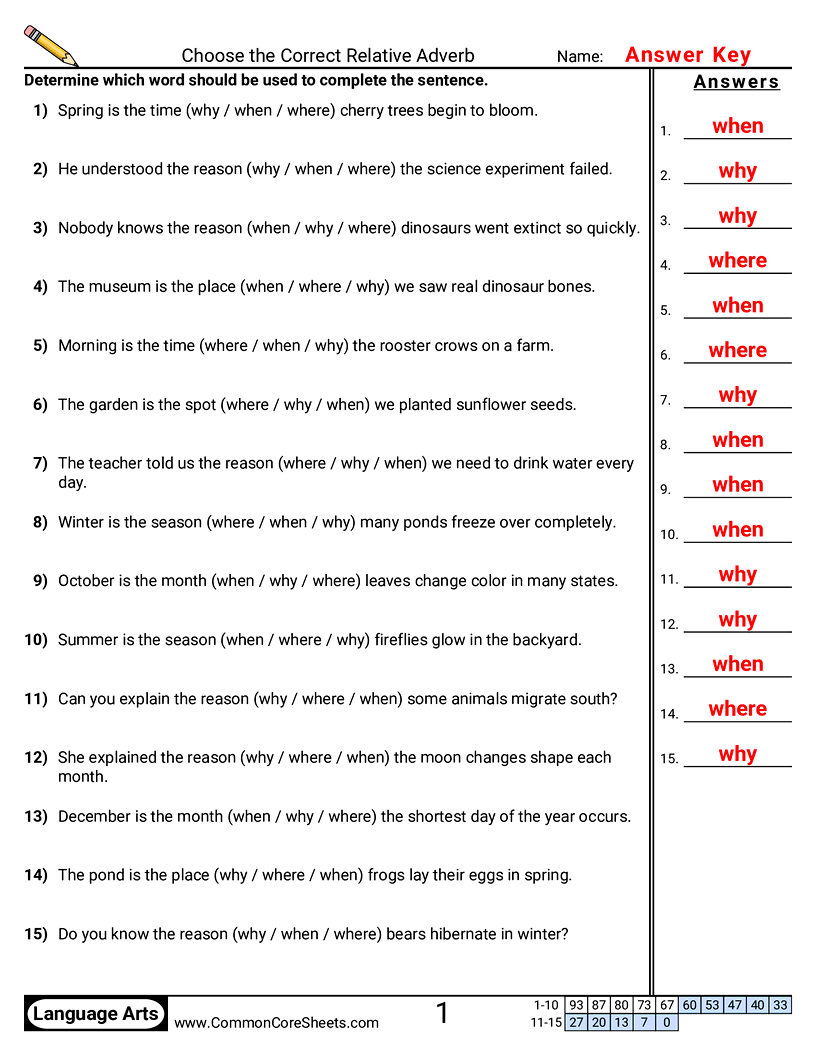
Learn to use the words where, when, and why to connect ideas in a sentence Practice picking the right relative adverb based on whether a sentence talks about a place, time, or reason Understand how relative adverbs join two parts of a sentence together Build sentences that sound correct and make sense
L.4.1.a
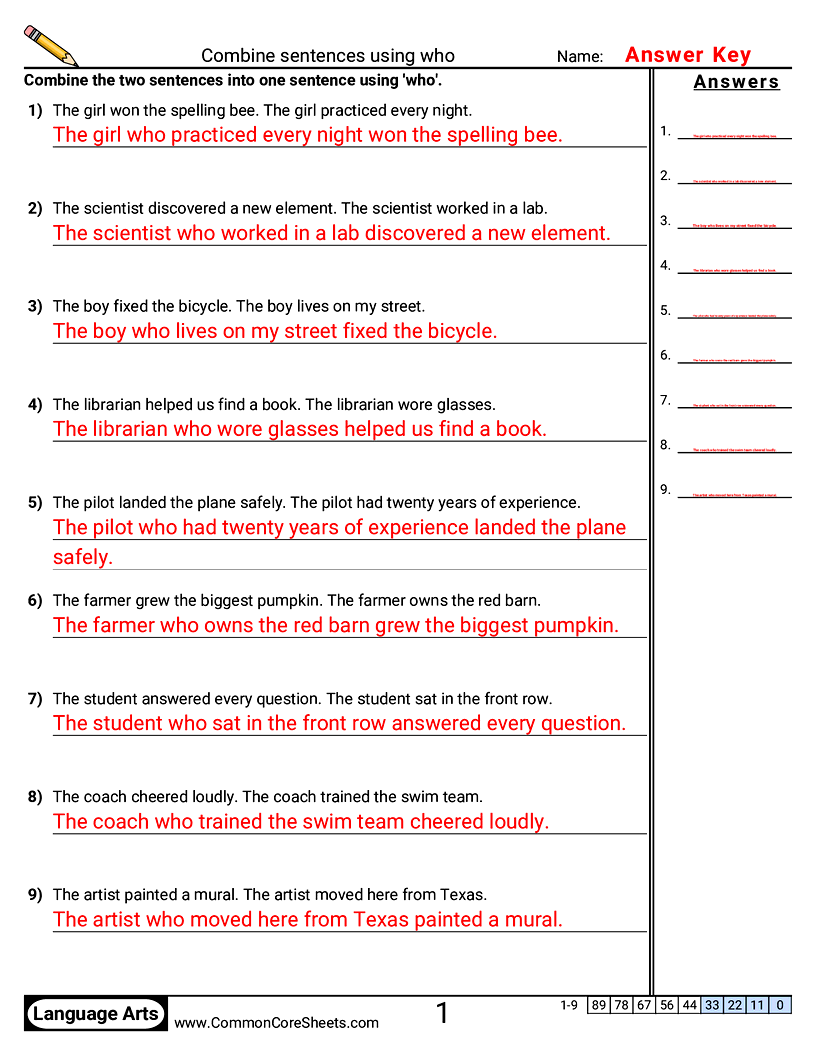
Join two short sentences about a person into one longer sentence Use the word "who" to connect information about people Practice writing clearer sentences without repeating words Understand how relative pronouns link ideas together
L.4.1.a
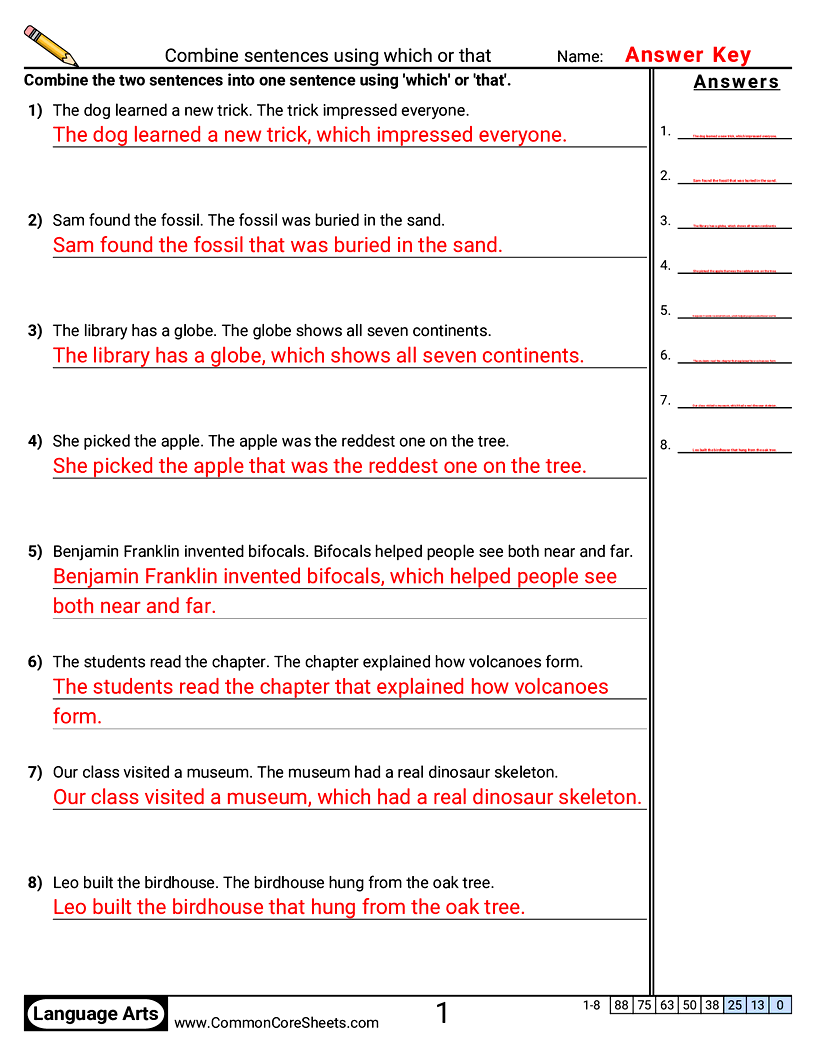
Practice joining two sentences into one using 'which' or 'that' Learn when to use 'which' versus 'that' in a sentence Practice adding extra detail to a sentence with a relative clause Write smoother sentences by avoiding short, choppy ones
L.4.1.a
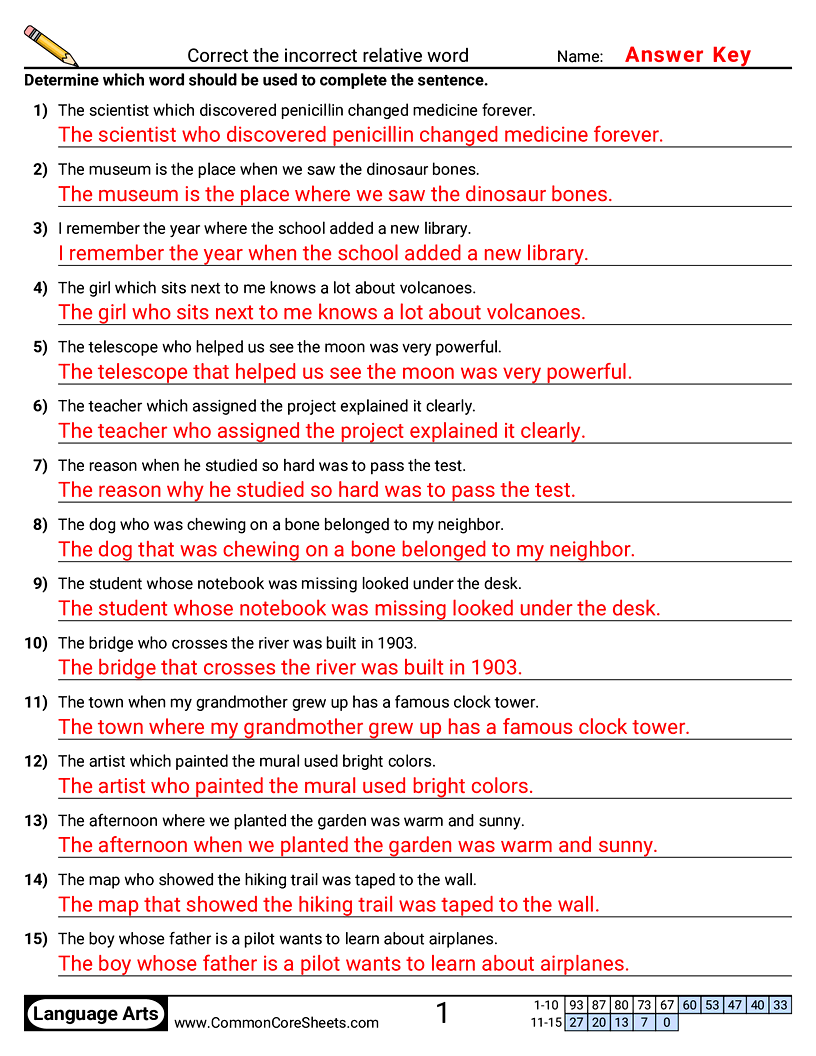
Choose the right relative word like who, which, or that for a sentence Fix sentences that use the wrong relative pronoun Tell the difference between words that refer to people and words that refer to things Rewrite sentences so they read correctly and make sense
L.4.1.a
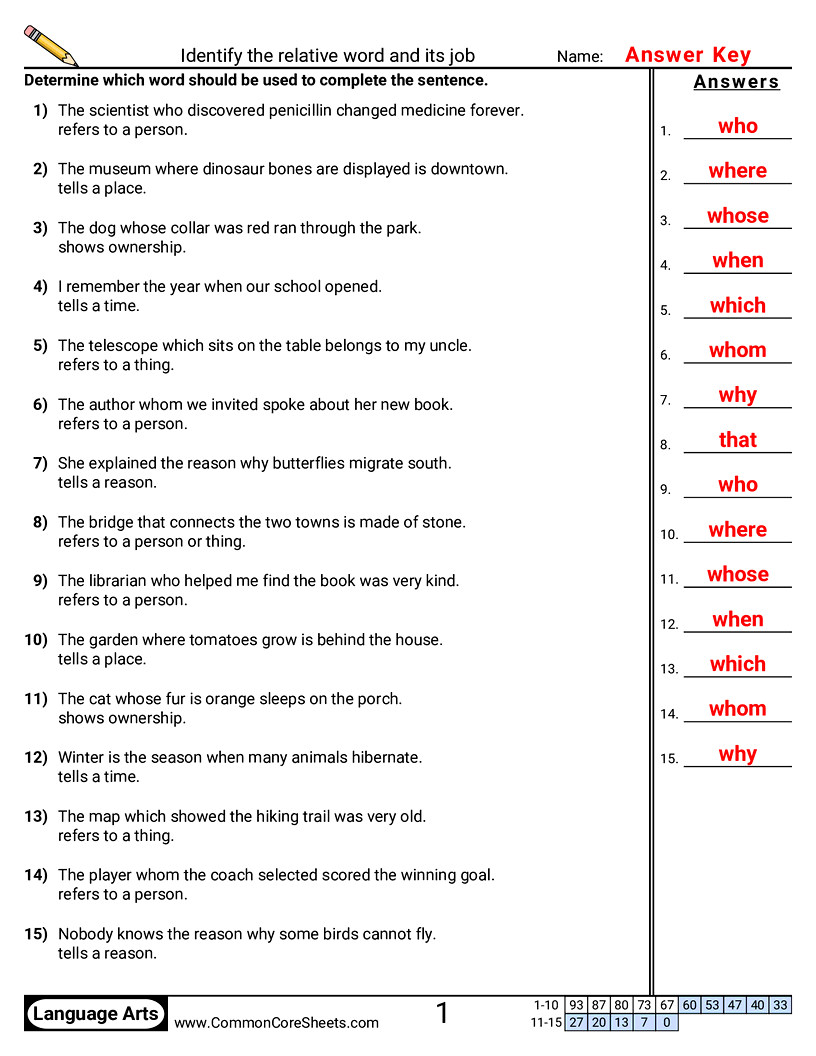
Spot relative words like who, which, that, whose, where, and when in a sentence Tell whether a relative word acts as a pronoun or an adverb Understand how a relative word connects two parts of a sentence Match each relative word to the noun or idea it refers to
L.1.1.g
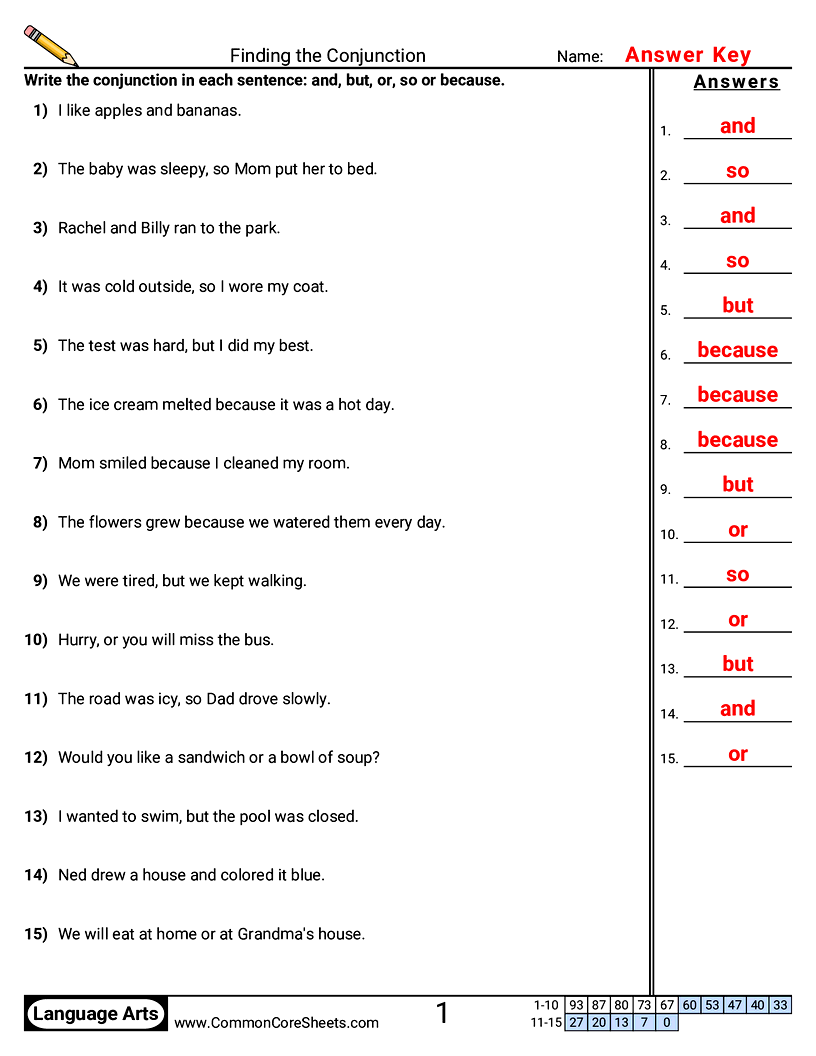
Know that a conjunction joins words or ideas Find the conjunction in a sentence Recognize and, but, or, so and because Notice what each conjunction tells the reader
L.1.1.g L.3.1.h
Use and to add an idea Use but to show a difference Use or to give a choice Use so to tell a result
L.3.1.h
Name the seven coordinating conjunctions Choose a conjunction that shows how two ideas connect Use nor after a negative idea Tell for (because) from so (as a result)
L.3.1.h
Tell coordinating from subordinating conjunctions Remember the FANBOYS conjunctions Recognize common subordinating conjunctions Notice that a subordinating conjunction can start a sentence
L.3.1.h
Know common subordinating conjunctions Choose a conjunction that shows time, reason or condition Use although to show a surprise Use unless and until correctly
L.5.1.e
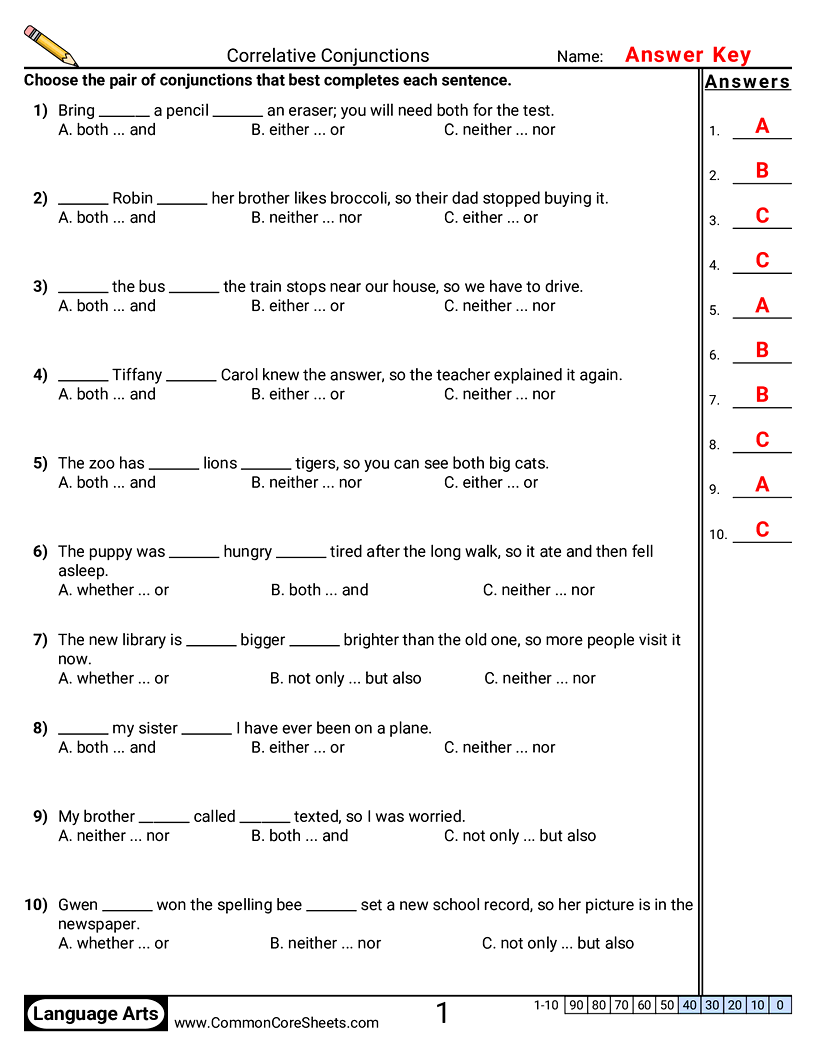
Know the common correlative conjunction pairs Use either ... or for a choice Use neither ... nor for two negatives Match the verb to the pair (neither ... nor likes, both ... and like)
L.K.1.e
Use position words to tell where something is Tell in from on, and on from above Use between, behind and in front of Read a short sentence with a position word
L.1.1.i
Know that a preposition connects a noun to the rest of a sentence Find the preposition in a sentence Recognize prepositions of place and time Use prepositions in your own sentences
L.1.1.i
Use in for months, years, seasons and inside spaces Use on for days, dates and surfaces Use at for clock times and exact places Choose the right preposition of time or place
L.4.1.e
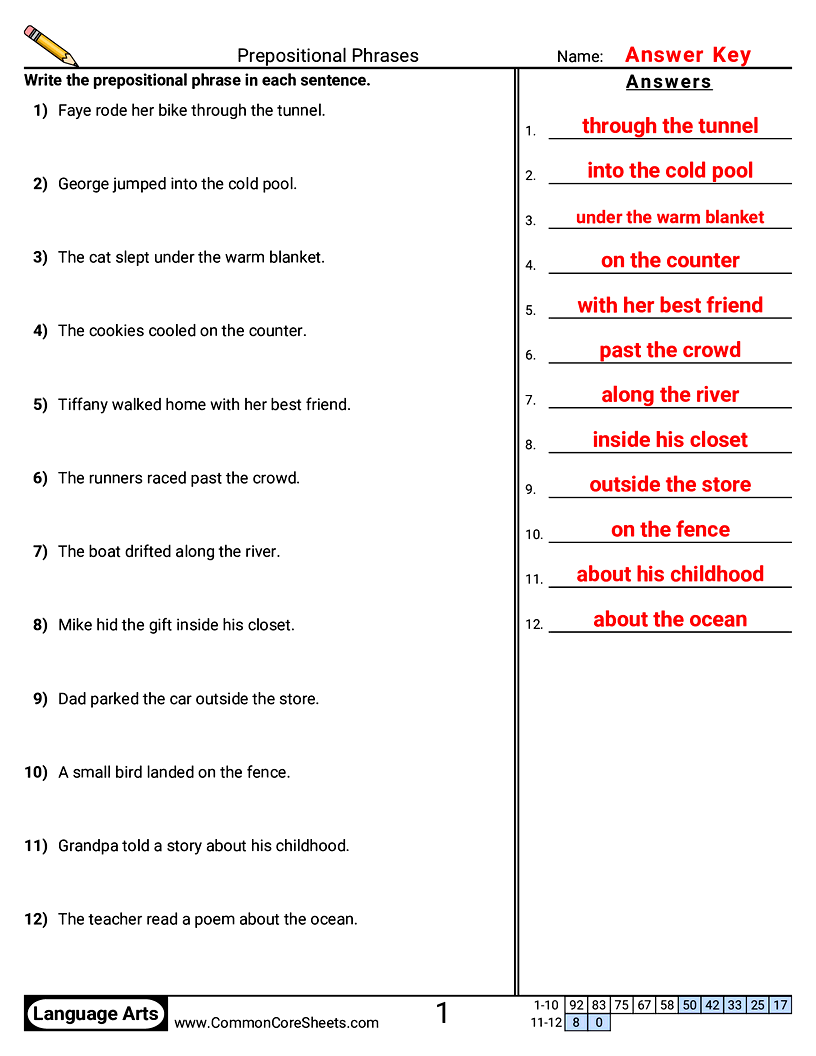
Know that a prepositional phrase starts with a preposition and ends with a noun Find the prepositional phrase in a sentence Include every word of the phrase Use prepositional phrases to add detail to writing
L.3.1.f
Find the subject of a sentence Know that the subject is never in a prepositional phrase Match a singular subject with a singular verb Match a plural subject with a plural verb
L.3.1
Know that an interjection shows a sudden feeling Find the interjection in a sentence Notice the punctuation after an interjection Use interjections in your own writing
L.3.1
Match an interjection to a feeling Use interjections to make writing lively Read a sentence for clues about feeling Punctuate interjections correctly
L.3.1
Tell when a word is used as an interjection Know that one word can be different parts of speech Use punctuation as a clue to an interjection Read words in context
L.4.1
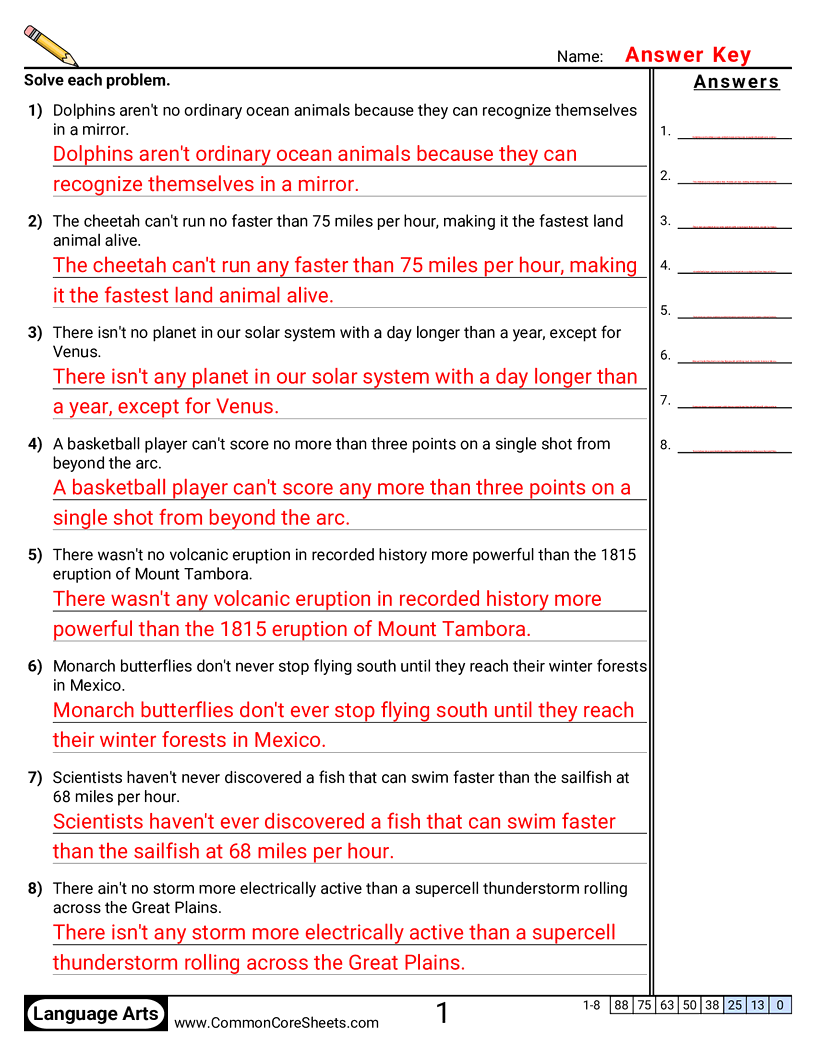
Spot two negative words used together in a sentence Rewrite a sentence to remove the double negative Understand how two negatives can change a sentence's meaning Choose the correct positive wording to fix a sentence
L.4.1
Practice identifying correct grammar and word usage Build vocabulary through reading and word activities Practice writing clear and complete sentences Improve reading comprehension by answering questions
L.3.1.f
Spot when a sentence names the same subject twice, like 'My mom she cooks' Rewrite sentences to use only one subject Choose between the noun or the pronoun when both are used Make sentences sound clear and correct when speaking or writing
L.4.1.g
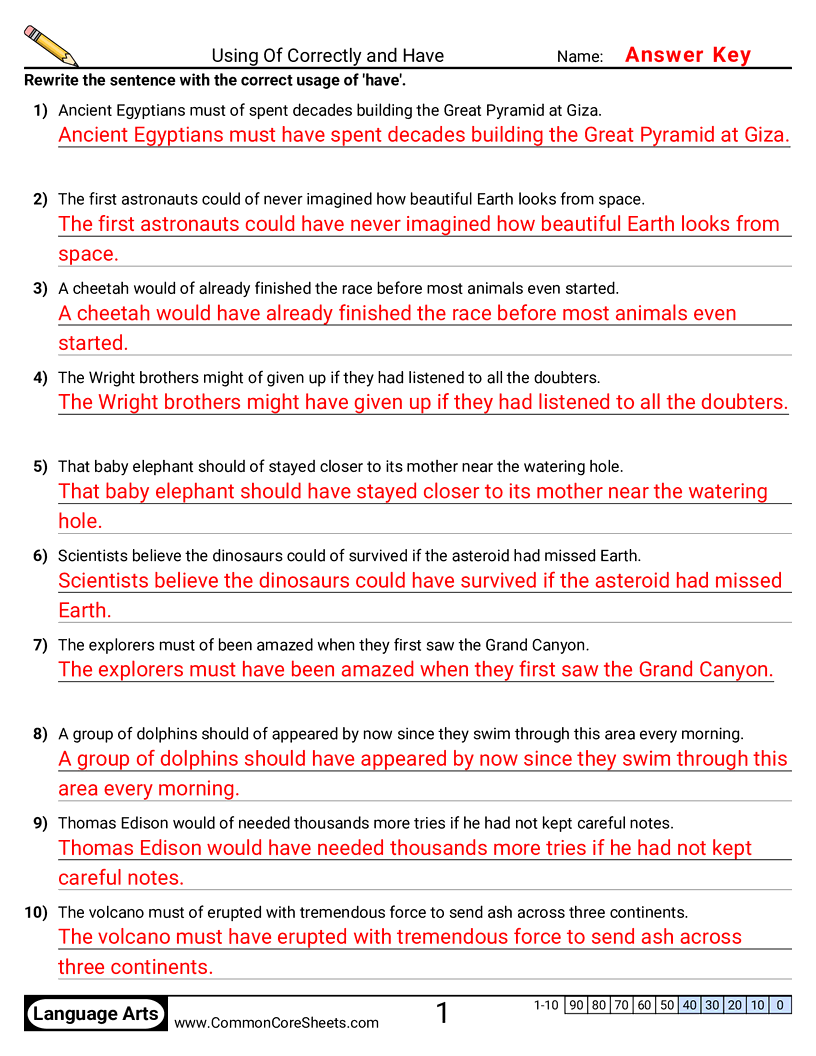
Know the difference between the words "of" and "have" Fix common mistakes like writing "should of" instead of "should have" Pick the right word to complete a sentence correctly Understand why "have" follows words like could, would, and should
Advertisement