Reading Skills Worksheets
Grow confident readers with free reading skills worksheets targeting context clues, core comprehension skills, and fact versus opinion. Students use surrounding text to unlock unfamiliar words, practice finding the main idea and supporting details, and learn to tell what a text says from what its author believes. Every worksheet is a printable PDF with an answer key - no login or account needed - and modified versions help developing readers. These pages complement the animal reading comprehension passages and suit 2nd through 6th grade.
More about these worksheets ▾ Show less ▴
×
L.2.4.a L.3.4.a
Use the words around a new word to figure out its meaning Find the clue in a sentence Read on when a word is new
L.4.4.a L.5.4.a
Use context as a clue to the meaning of a word Notice cause and effect and contrast clues Build vocabulary while reading
L.4.4.a
Practice figuring out what a word means by reading the sentences around it Learn to spot hints in a paragraph that point to a word's meaning Build vocabulary by working out unfamiliar words without a dictionary Practice reading carefully to understand the whole passage
L.4.4.a
Figure out what an unfamiliar word means using the rest of the sentence Look for hints and clues in nearby words to define a word Understand new vocabulary without stopping to look it up Choose the best meaning of a word based on how it is used
L.4.4.a L.5.4.a
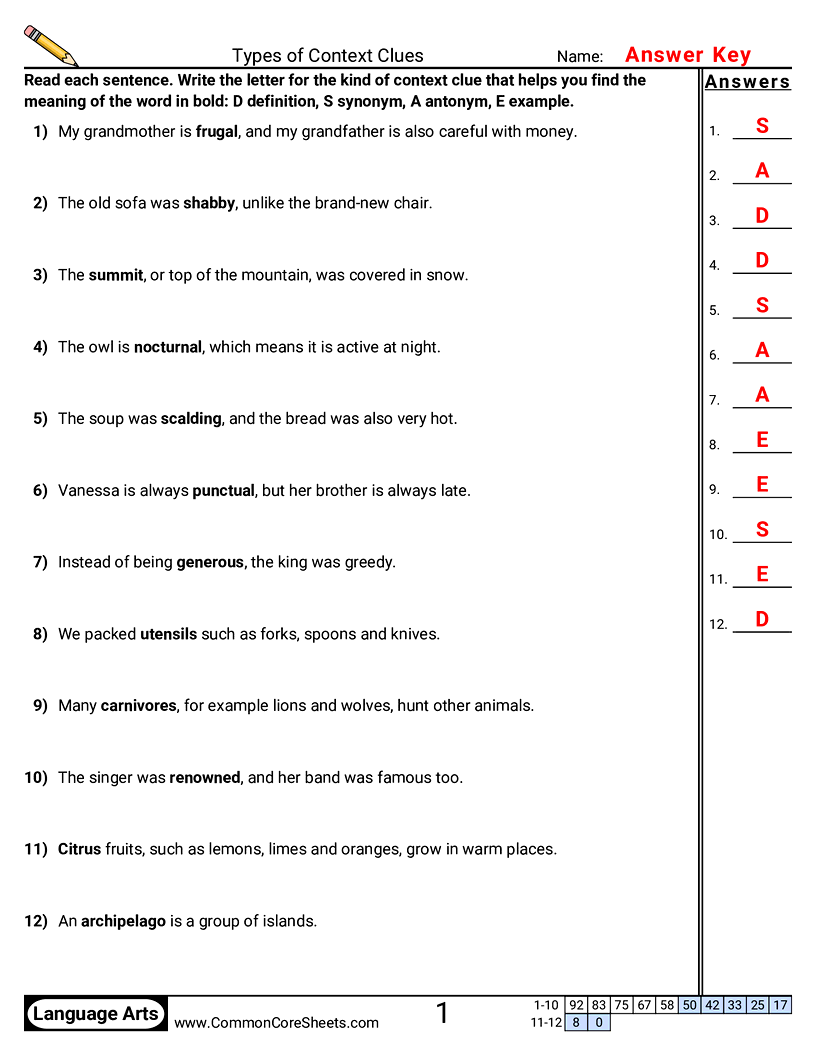
Recognize definition, synonym, antonym and example clues Notice signal words like which means, but, unlike and such as Choose the right strategy for a new word
L.4.4.a L.5.4.a
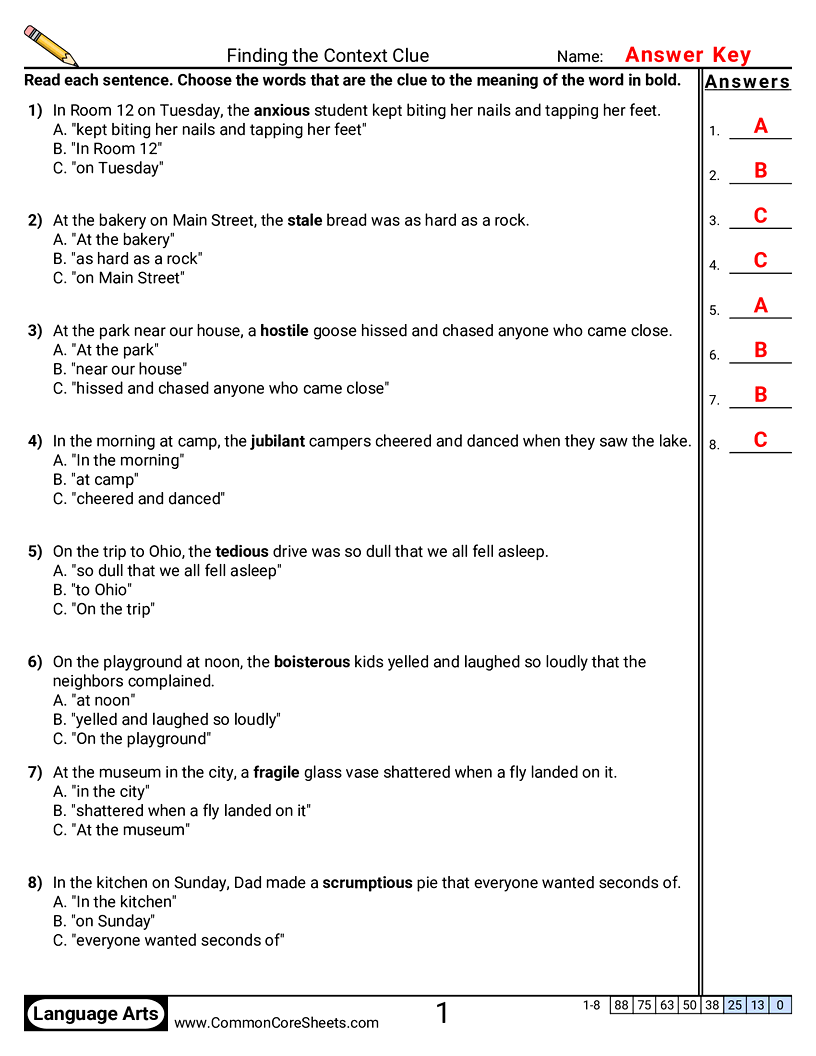
Find the words that explain a new word Tell clue words from other details Explain how a clue shows meaning
L.6.4.a L.7.4.a L.8.4.a
Use context across sentences to find the meaning of a word Connect details in a paragraph Build academic vocabulary
RI.3.3 RI.4.3
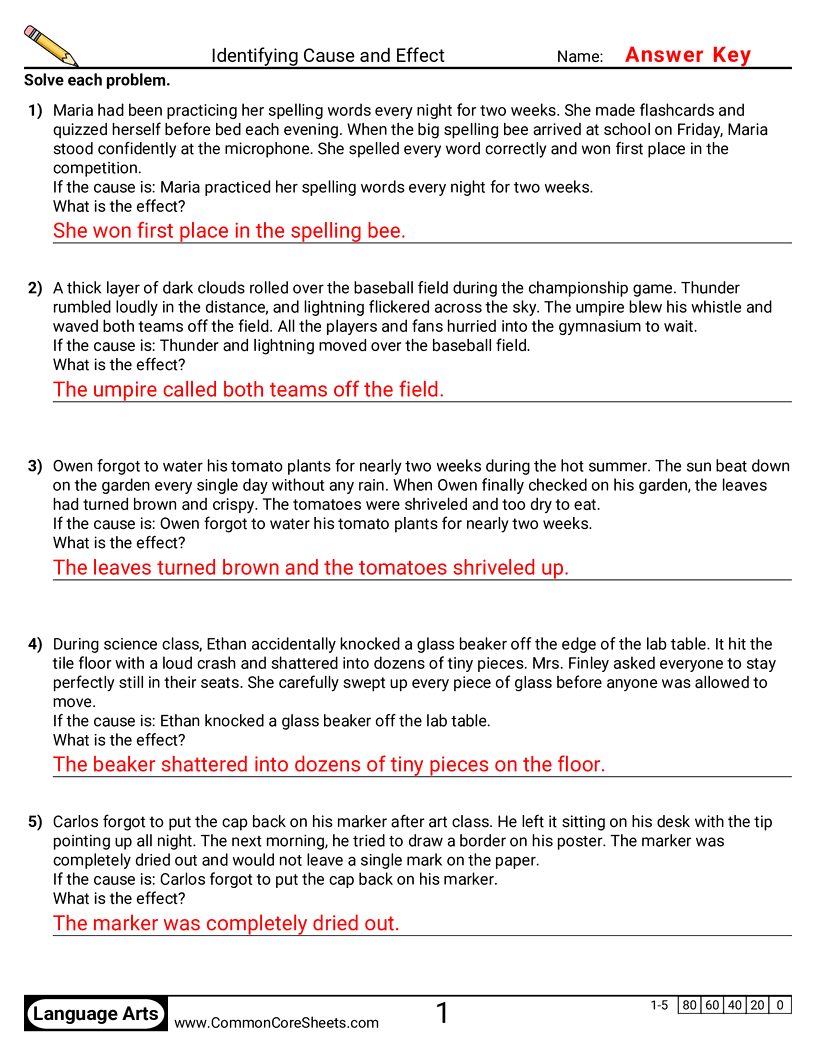
Figure out what happened (the effect) and why it happened (the cause) Match a cause to its matching result in a short passage Practice spotting cause-and-effect relationships in reading Explain how one event leads to another
RI.4.1
Read a paragraph carefully to find specific facts Answer questions using details stated in the text Locate the exact sentence that supports an answer Understand what a paragraph is telling you
RI.1.2
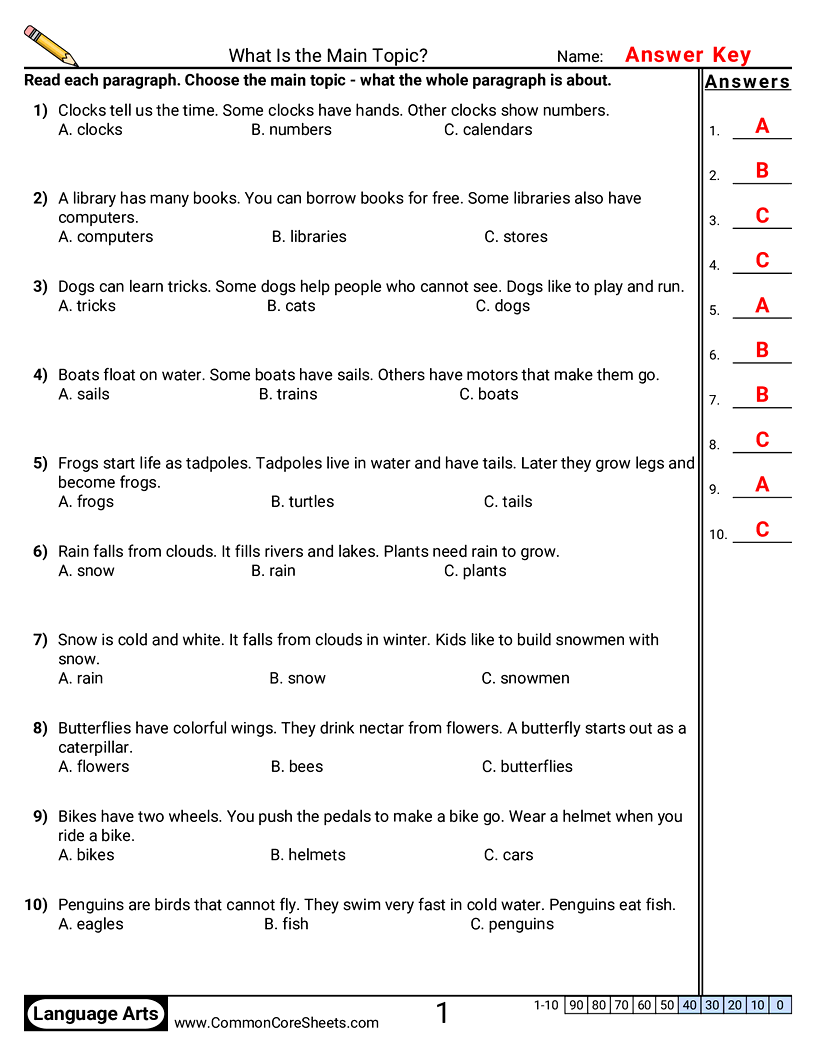
Know that the main topic is what a whole text is about Tell the main topic from a detail Use key details to find the main topic Retell a short text by its topic
RI.2.2
Know the difference between a main idea and a detail Find the sentence that sums up the others See how details support a main idea Build a paragraph from a main idea and details
RI.3.2 RI.4.2
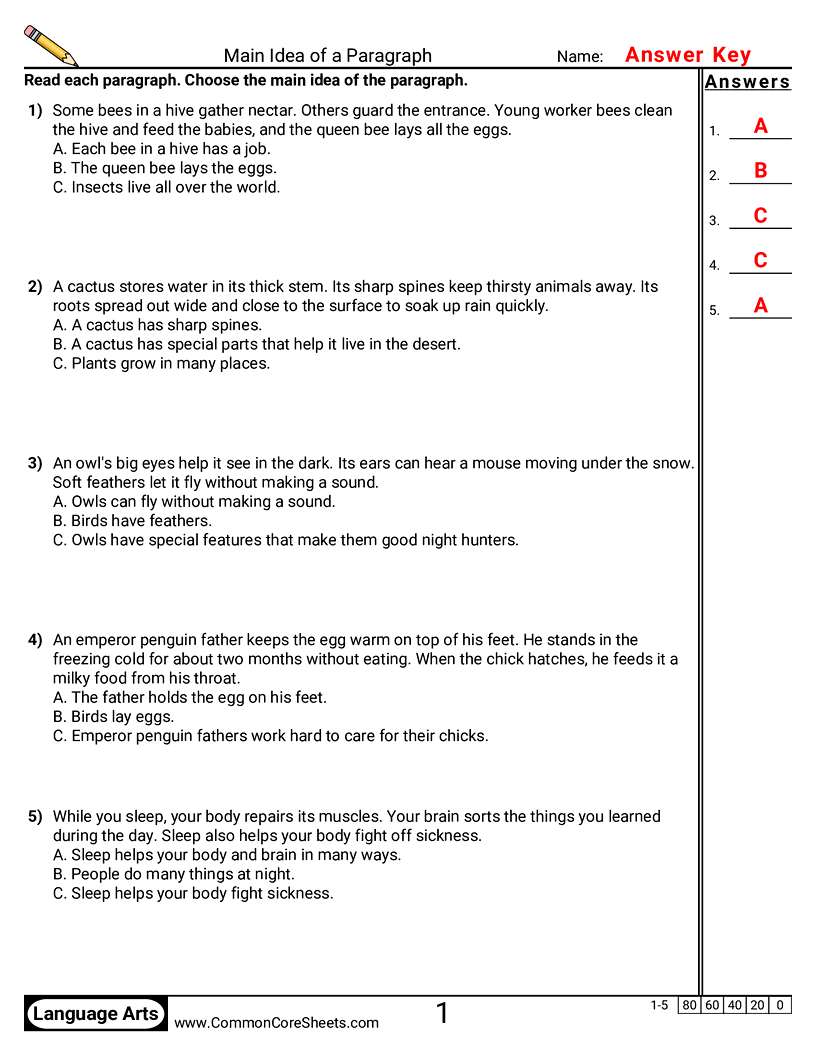
Find the main idea of an informational paragraph Tell a main idea from a detail Tell a main idea from a statement that is too broad Use the details to work out an unstated main idea
RI.3.2 RI.4.2
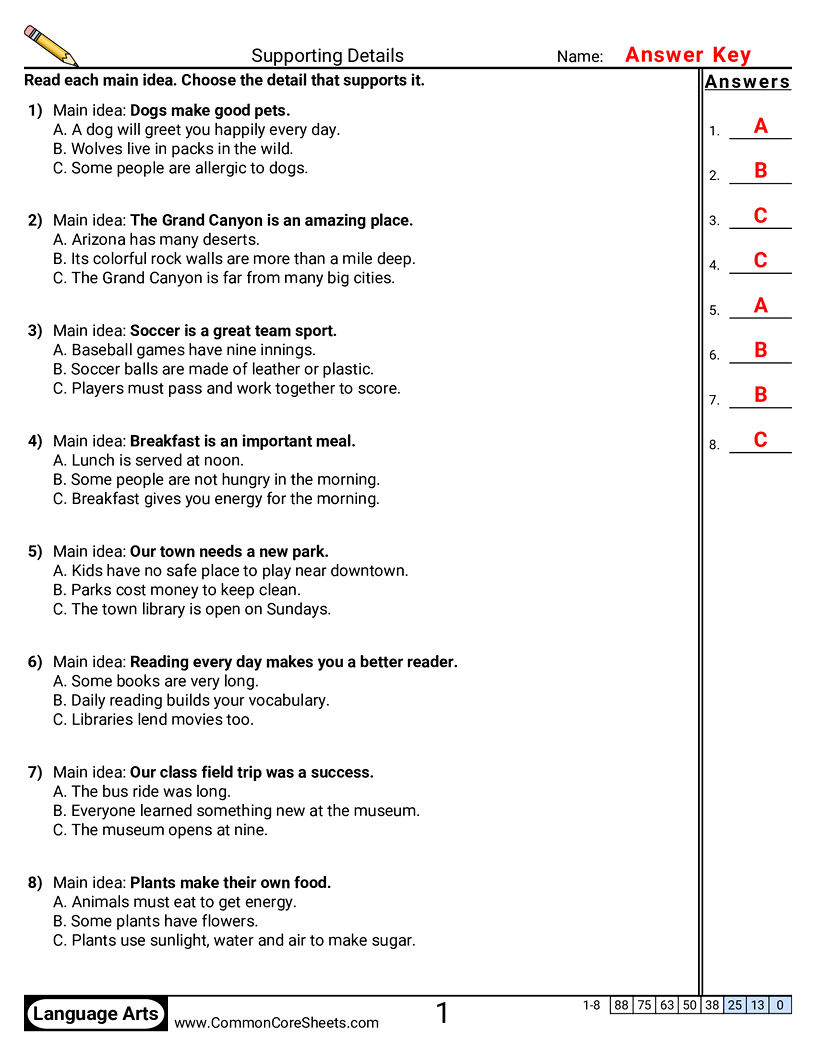
Know that supporting details explain or prove a main idea Choose a detail that supports a main idea Tell a supporting detail from one on a different idea Notice when a true fact does not support the point
RI.6.2 RI.7.2
Determine the central idea of an informational text Tell the central idea from a supporting detail Recognize claims the text does not support Track how details build the central idea
RL.2.5
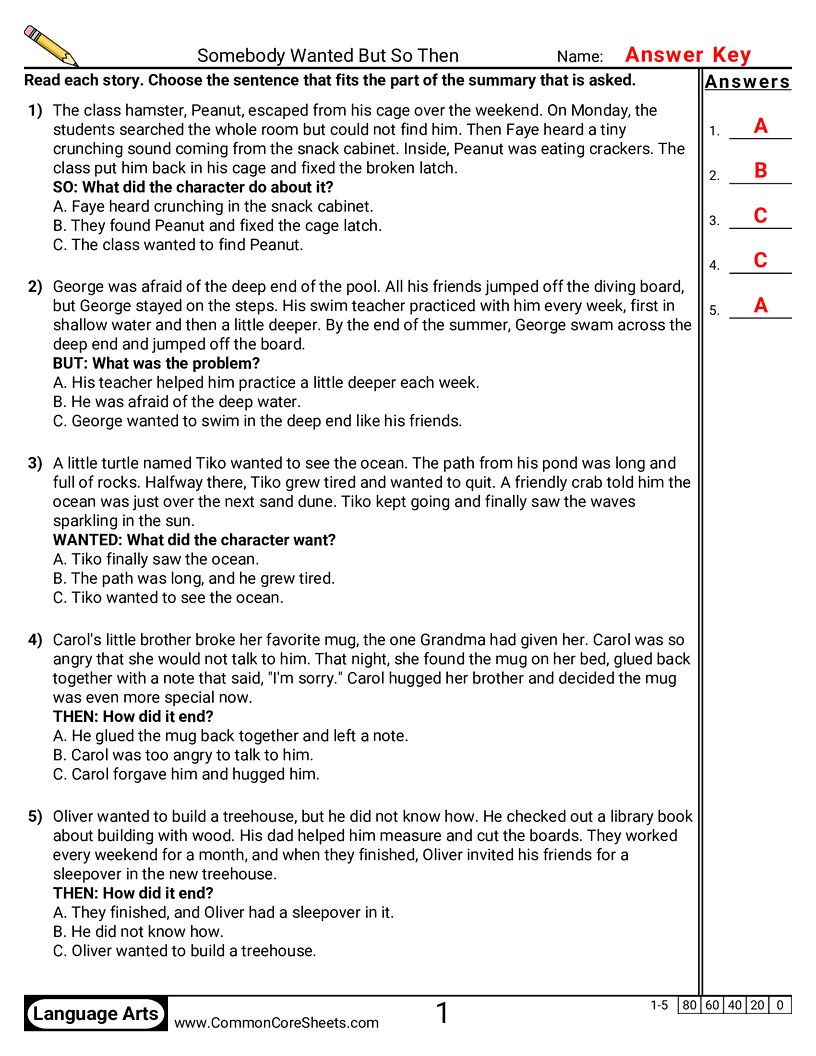
Summarize a story with Somebody Wanted But So Then Find what a character wants and the problem in the way Tell how the problem is solved and how the story ends Retell a story in a few sentences
RL.3.2 RL.4.2
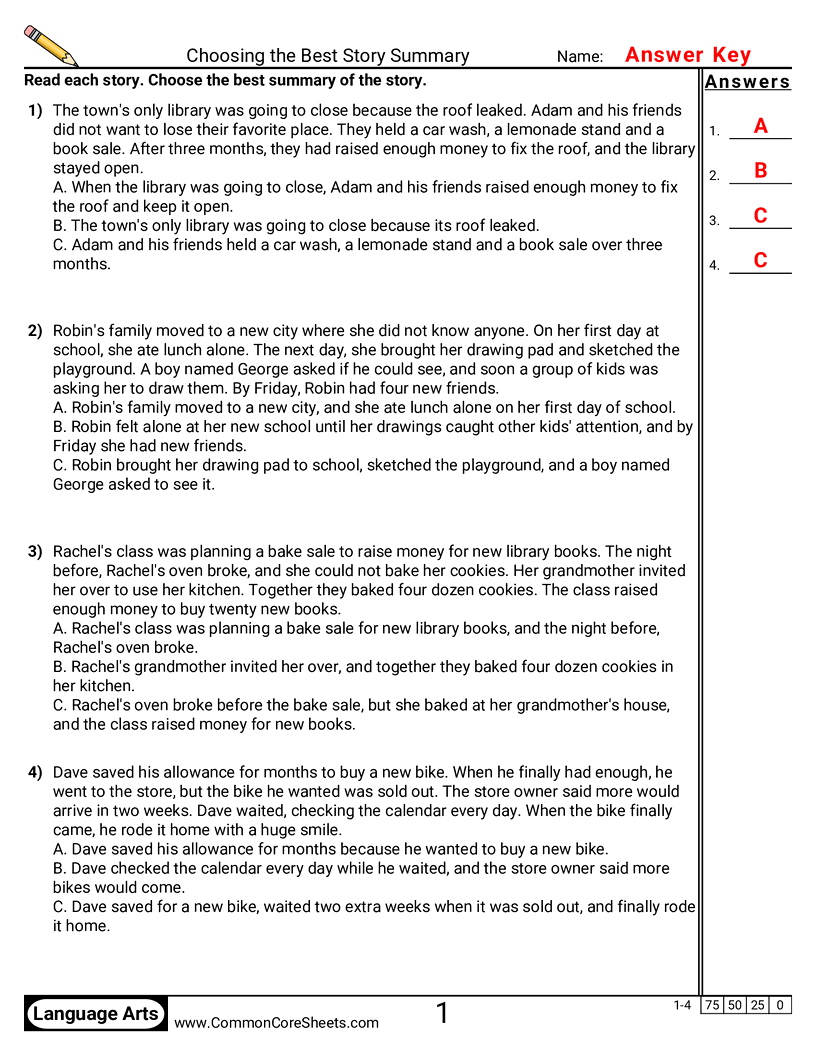
Know that a summary tells the most important parts briefly Include the beginning, the problem and the end Leave out small details Choose the summary that covers the whole story
RI.4.2
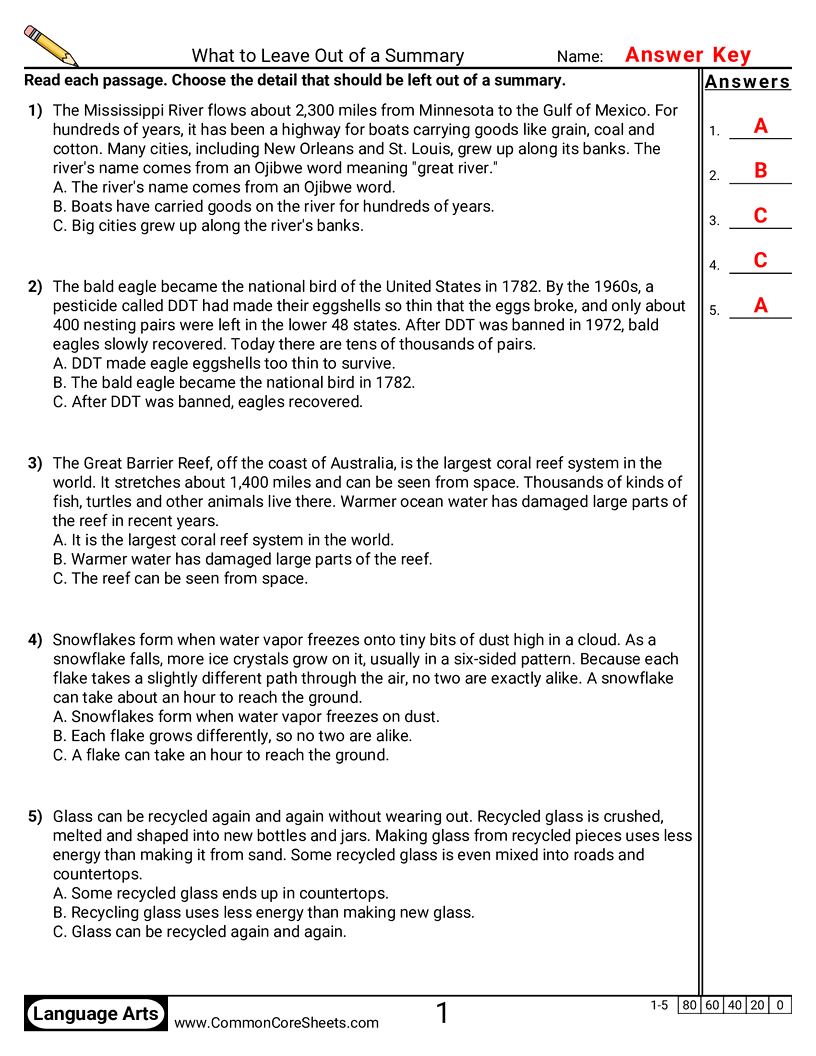
Tell important points from minor details Decide what belongs in a summary Keep a summary short and focused Connect important details to the main idea
RI.4.2 RI.5.2
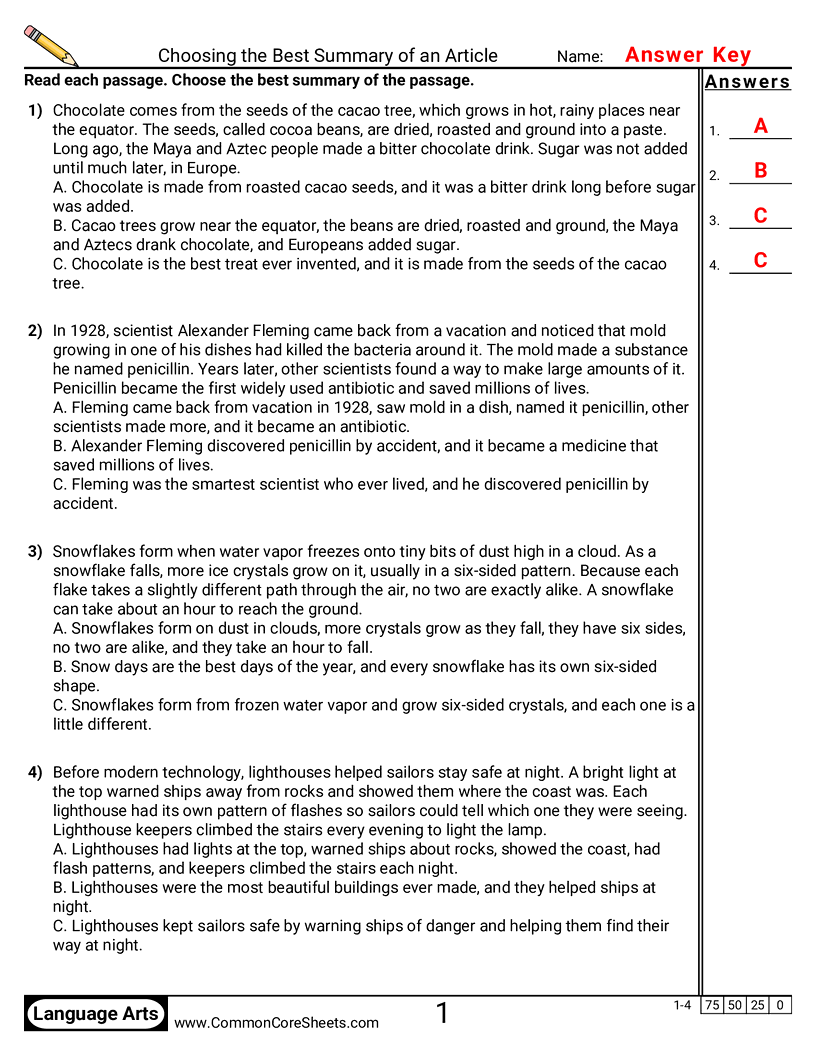
Summarize an informational text in a sentence or two Keep the main points and leave out minor details Keep opinions out of a summary Tell a summary from a retelling
RI.6.2 RI.7.2
Provide a summary distinct from personal opinions Represent different viewpoints in a text fairly Check a summary against the facts of the text Spot loaded or judgemental words
RL.1.3
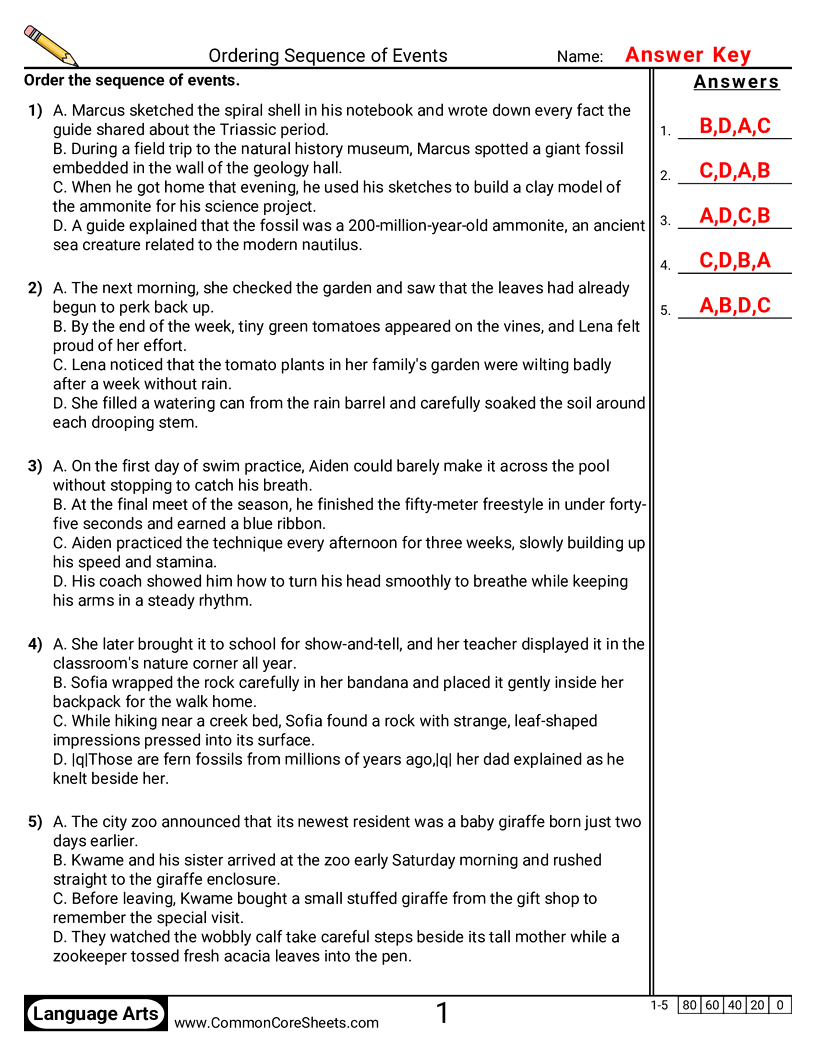
Use the words first, next and last Put three events in a sensible order Think about what has to happen before something else Retell a short story in order
W.2.3 W.3.3.c
Use time-order words to show the order of events Tell before from after and while from until Use finally and meanwhile correctly Make writing easy to follow with transitions
RI.2.3 RI.3.3
Put the steps of a process in order Tell which step must come before another Read how-to and science texts carefully Explain a process in your own words
RI.3.3
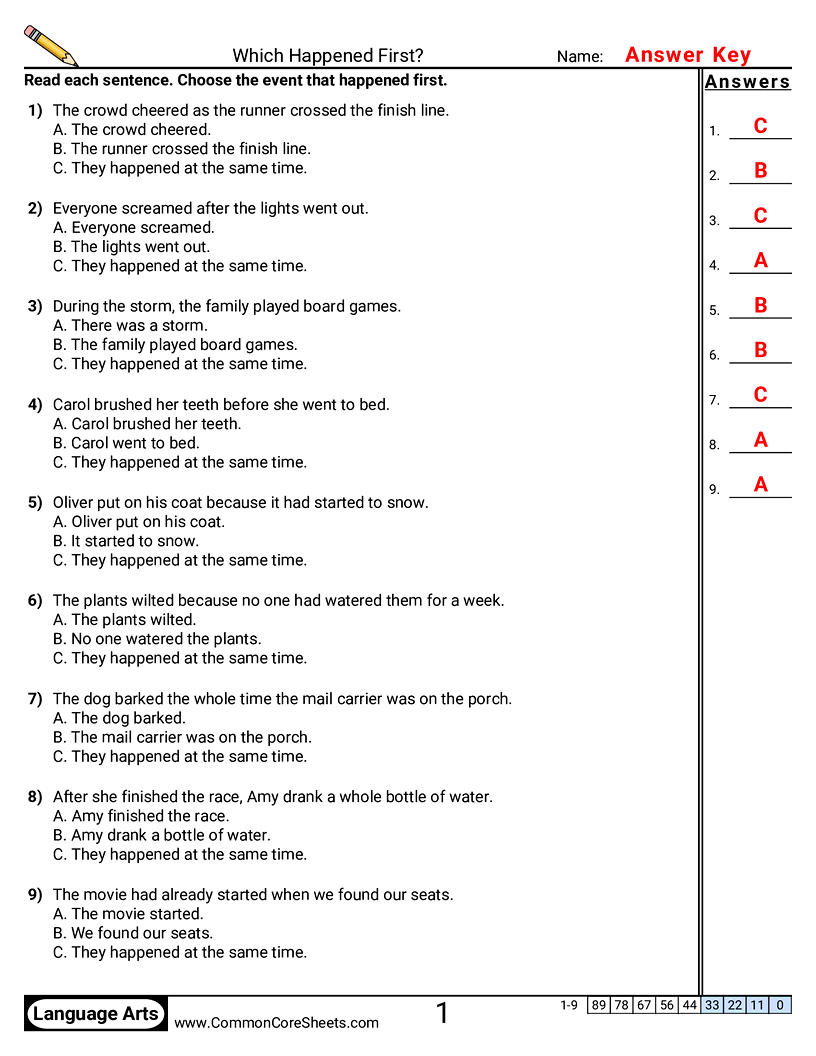
Use before, after, until and because to find what happened first Recognize while, as and during as at the same time Notice when events are not told in order Read carefully instead of going by word order
RI.4.3 RI.5.3
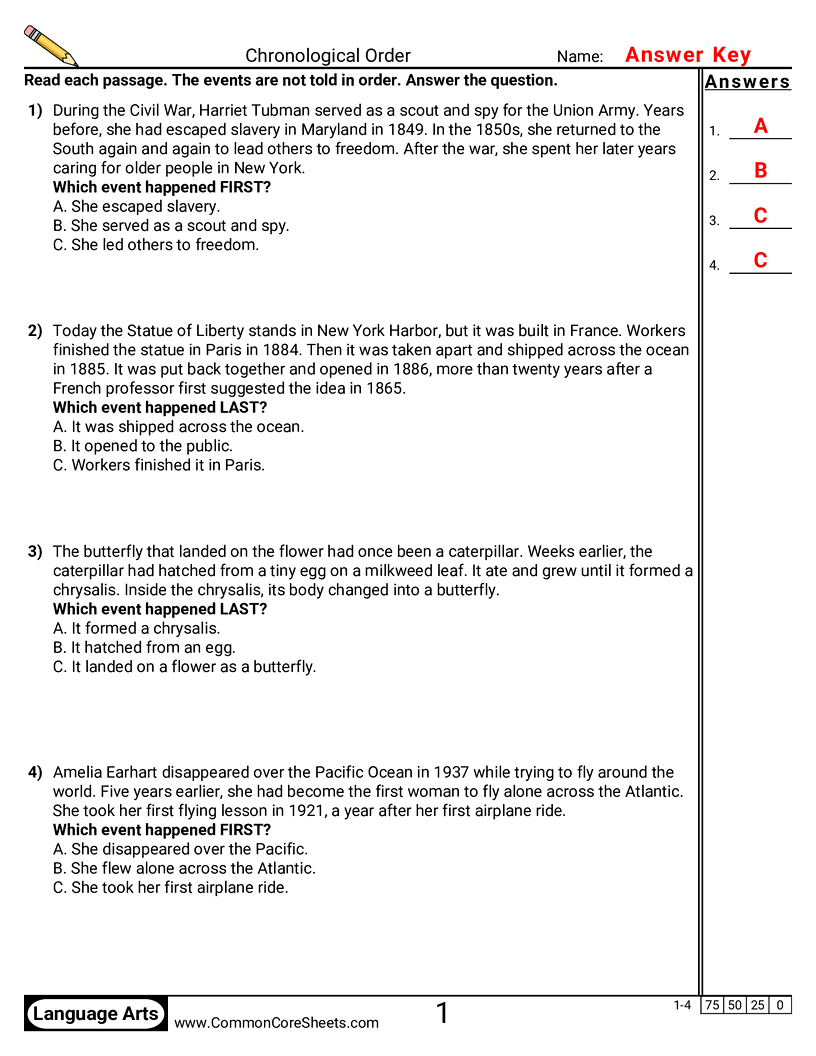
Put historical events in chronological order Use dates and time words to track order Recognize when a text is not told in order Build a timeline from a passage
RI.2.5 RI.3.5
Name common nonfiction text features Tell what each text feature is used for Tell a glossary from an index and a heading from a caption Use text features to find information quickly
RI.1.5 RI.2.5
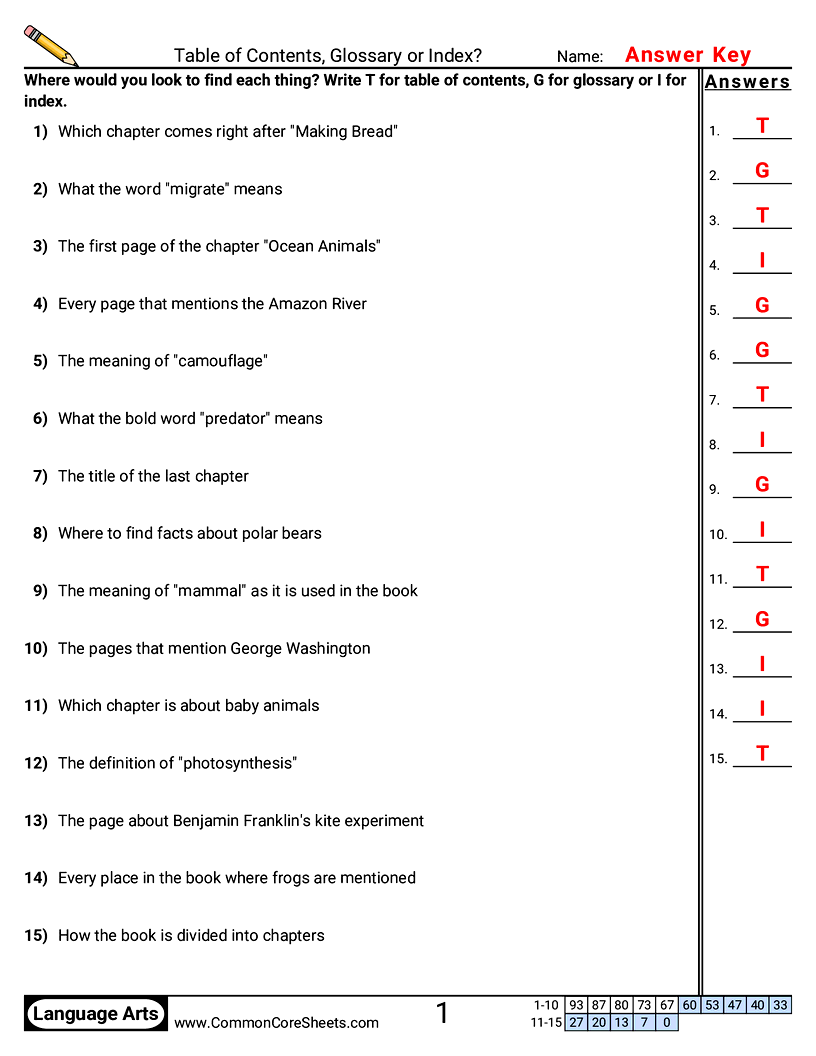
Know what a table of contents, glossary and index are for Choose the right feature to find information Tell a glossary from an index Find information in a book quickly
RI.1.5 RI.2.5
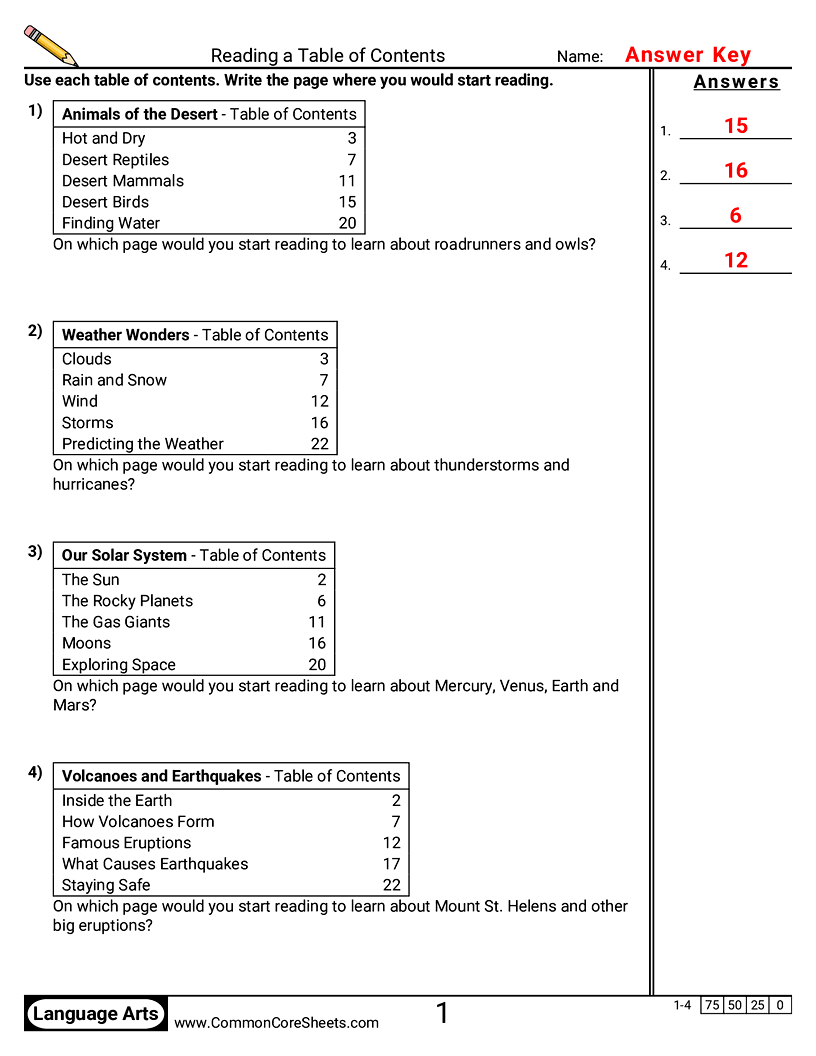
Read a table of contents Match a topic to the chapter that covers it Find the page a chapter starts on Use text features to locate information
RI.4.5 RI.5.5
Name the five common text structures Identify the structure of a nonfiction paragraph Tell cause and effect from problem and solution Use text structure to understand and remember what you read
RI.3.8 RI.4.5
Know the signal words for each text structure Use signal words to predict how a text is organized Tell cause-and-effect words from compare-and-contrast words Use signal words in your own writing
RL.1.3 RL.3.1
Use details to infer where something takes place Notice sights, sounds and smells that describe a place Connect clues to places you know Explain which clues point to the answer
RL.2.3 RL.3.3
Infer a character's feelings from actions and body language Learn words for many different feelings Use clues instead of looking for the feeling word Describe how characters respond to events
RL.3.1 RL.4.1
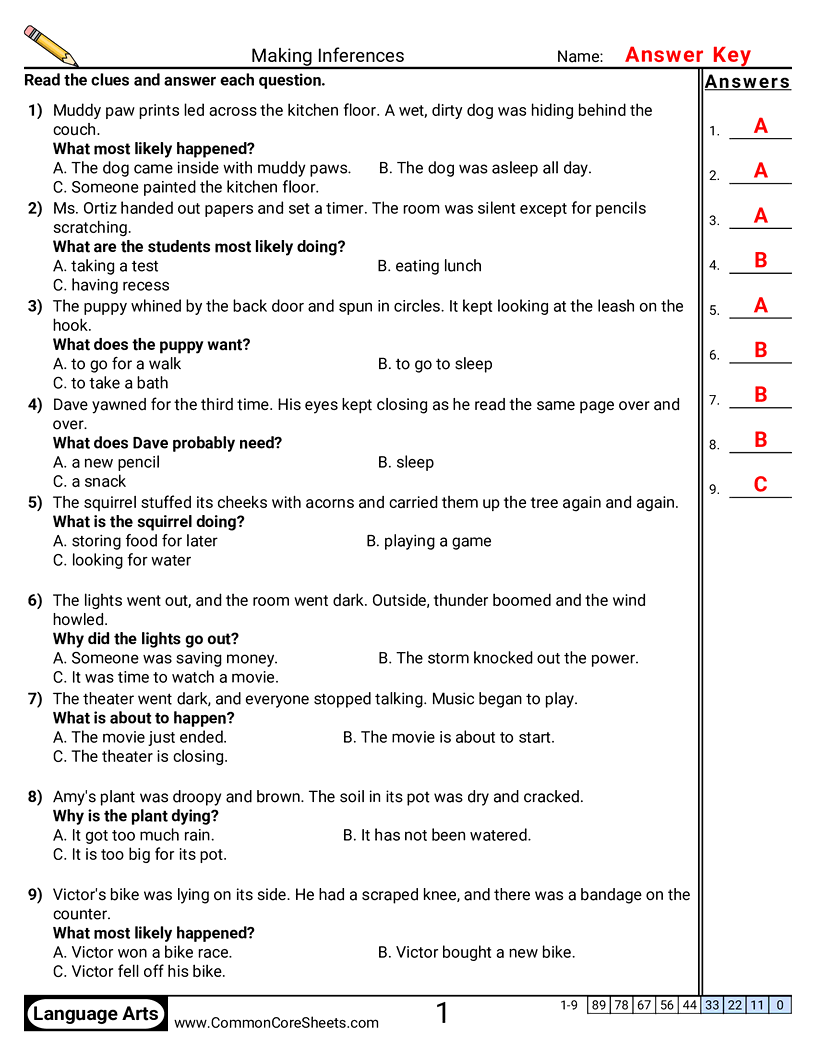
Use clues from a text to figure out something it does not say Tell what a text says directly from what it suggests Combine clues with what you already know Choose the inference the clues support best
RI.4.1 RL.4.1
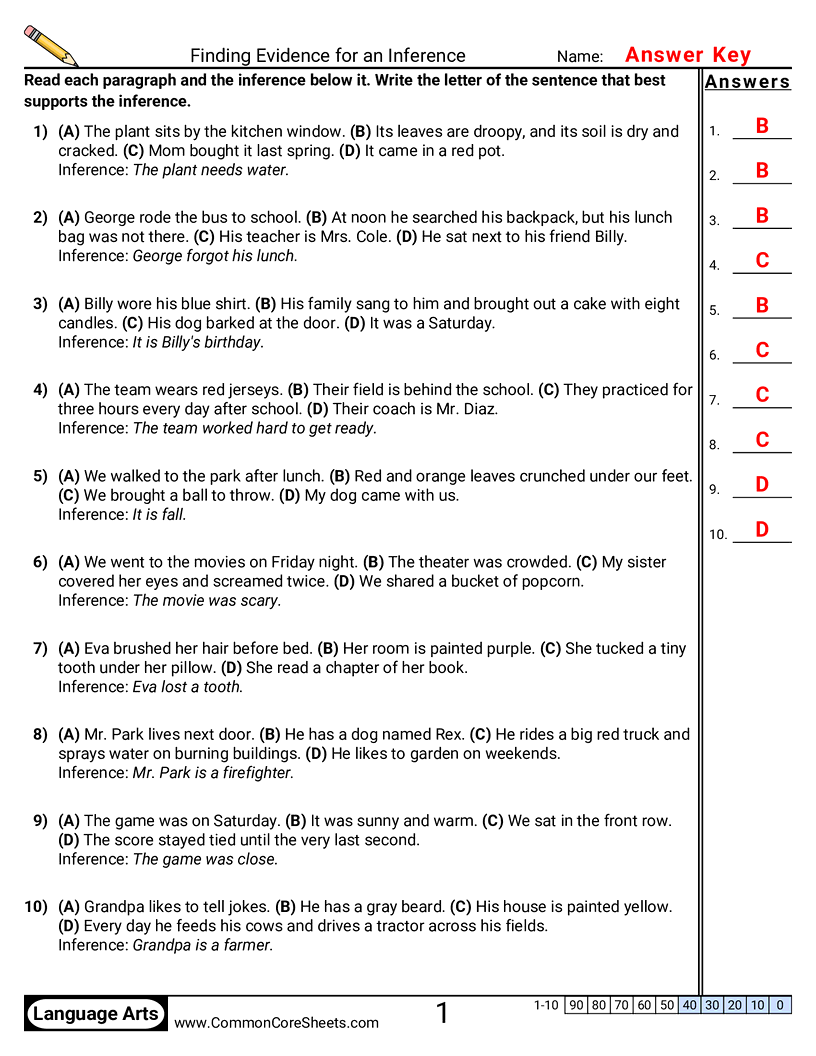
Find the detail in a text that supports an inference Tell supporting evidence from details that do not help Explain an inference by pointing to the text Cite evidence when answering questions about a text
RI.4.1
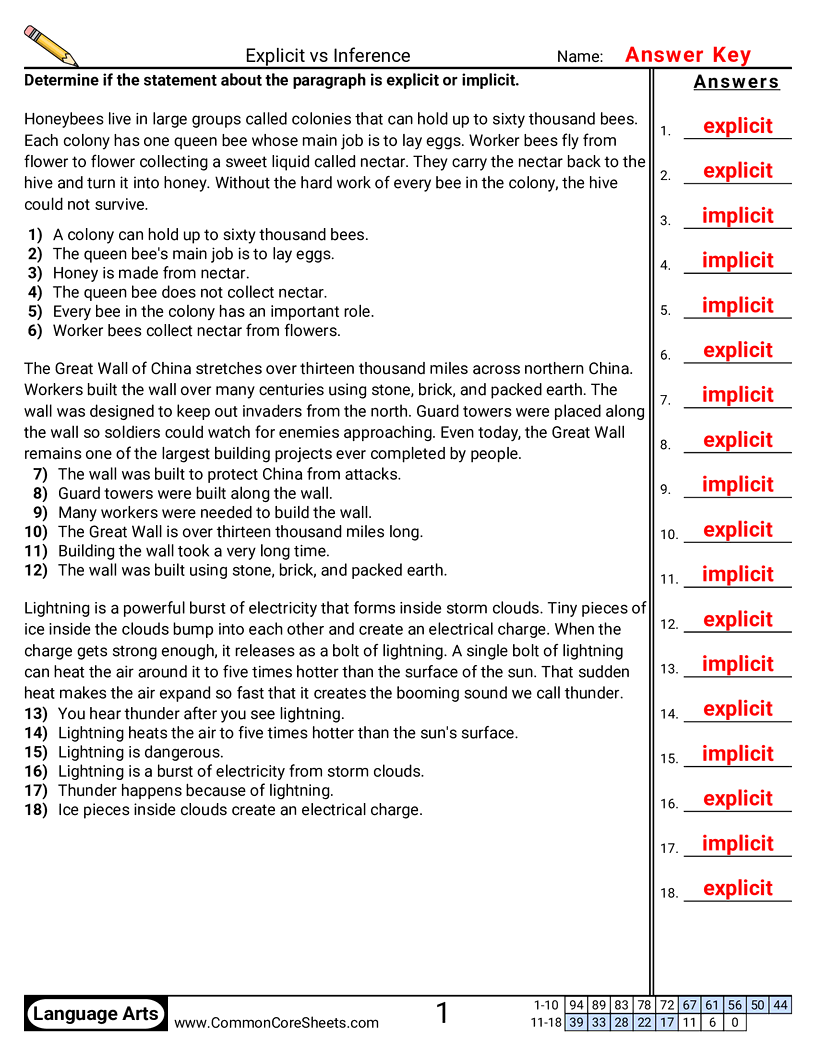
Tell the difference between an answer stated directly in the text and one you have to figure out Find facts that are clearly written in a passage Use clues in a passage to make a reasonable inference Explain why an answer is explicit or inferred
RL.1.6
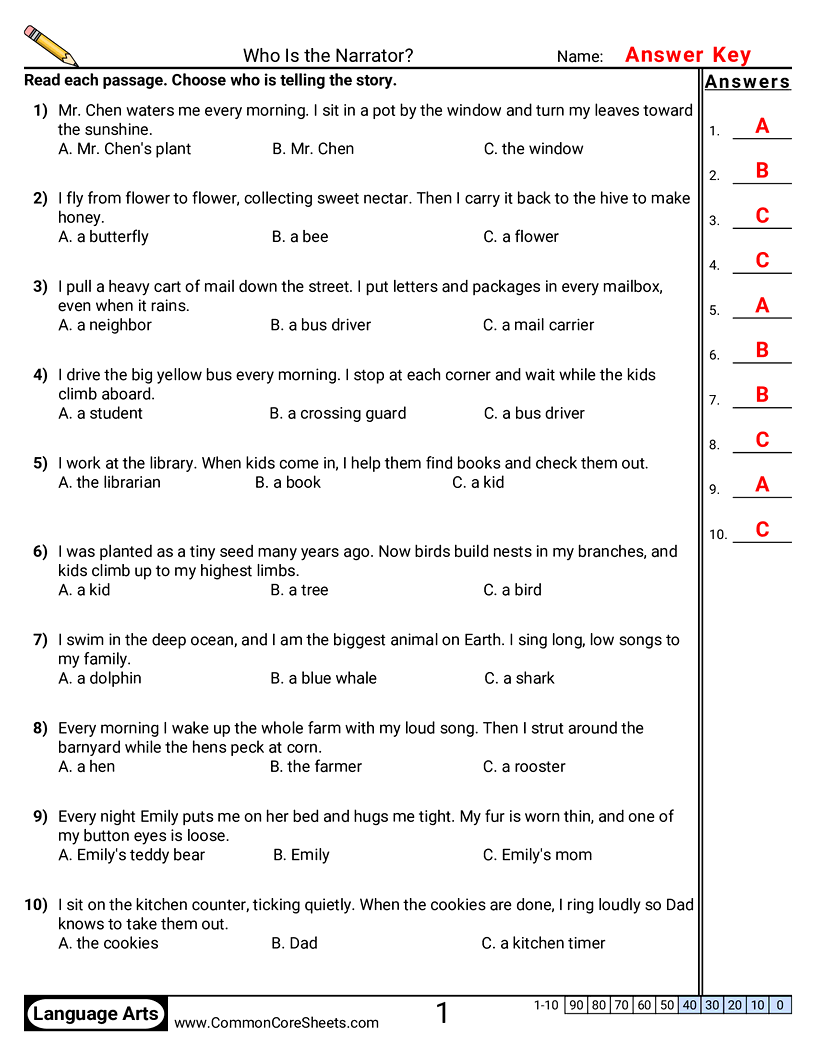
Know that the narrator is the one telling the story Use clues in the text to identify the narrator Tell the narrator apart from other characters Notice when a story is told by an animal or object
RL.4.6
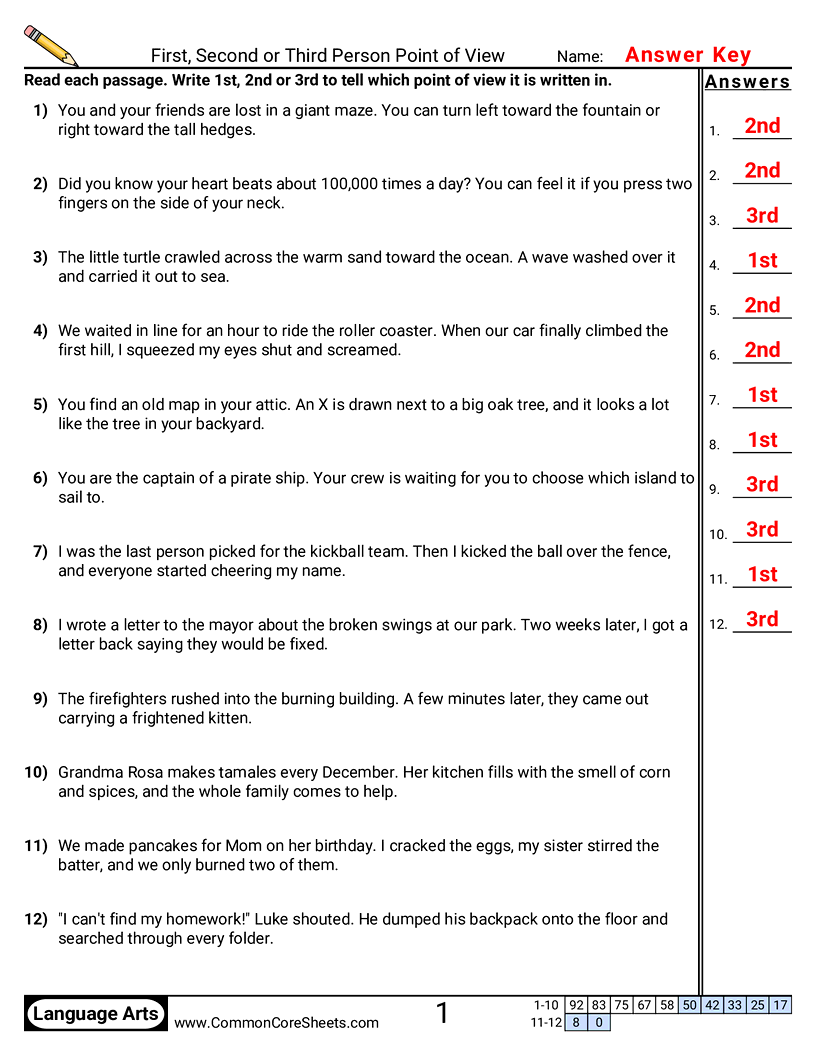
Know the pronouns that signal first, second and third person Tell first, second and third person writing apart Look at the narration, not the dialogue, to find the point of view Explain how point of view changes what a reader learns
RI.4.6
Know what makes an account firsthand or secondhand Ask whether the writer was there when it happened Notice that "I" does not always mean firsthand Compare what each kind of account can tell a reader
RI.3.6 RI.6.6
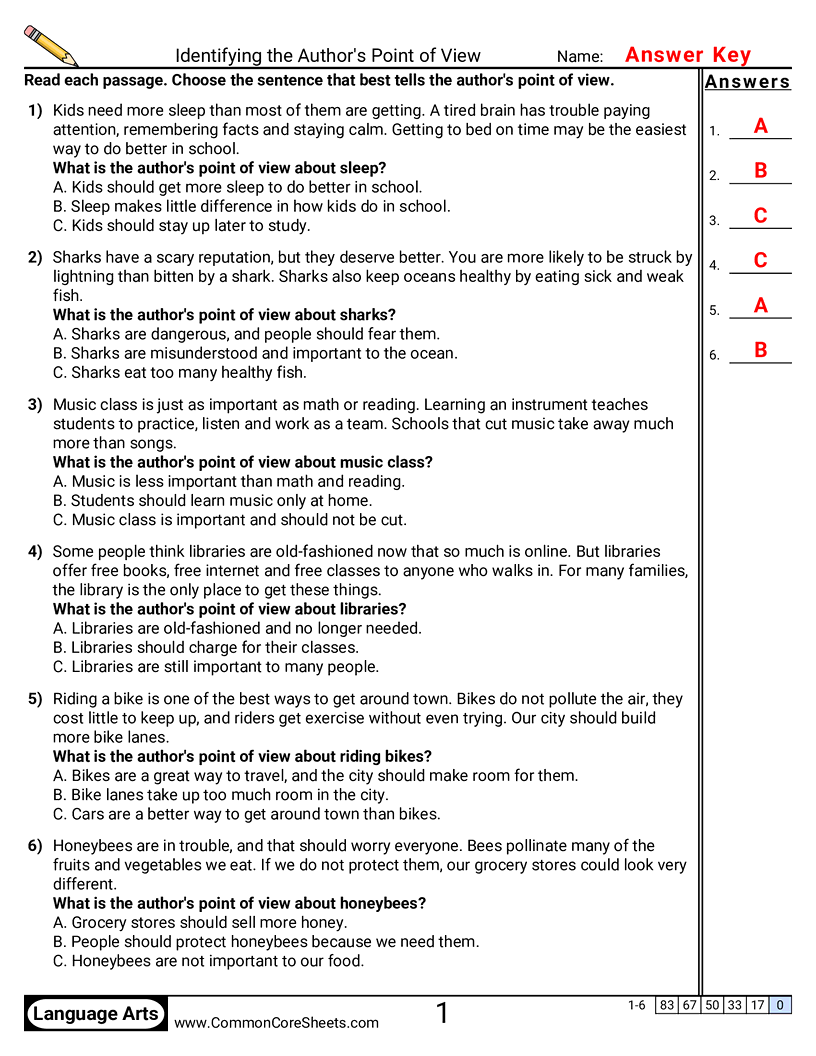
Know that an author's point of view is what the author thinks about a topic Find the words that show how the author feels Tell the author's view from the other side of the argument Separate the author's point of view from the details used to support it
RL.6.6
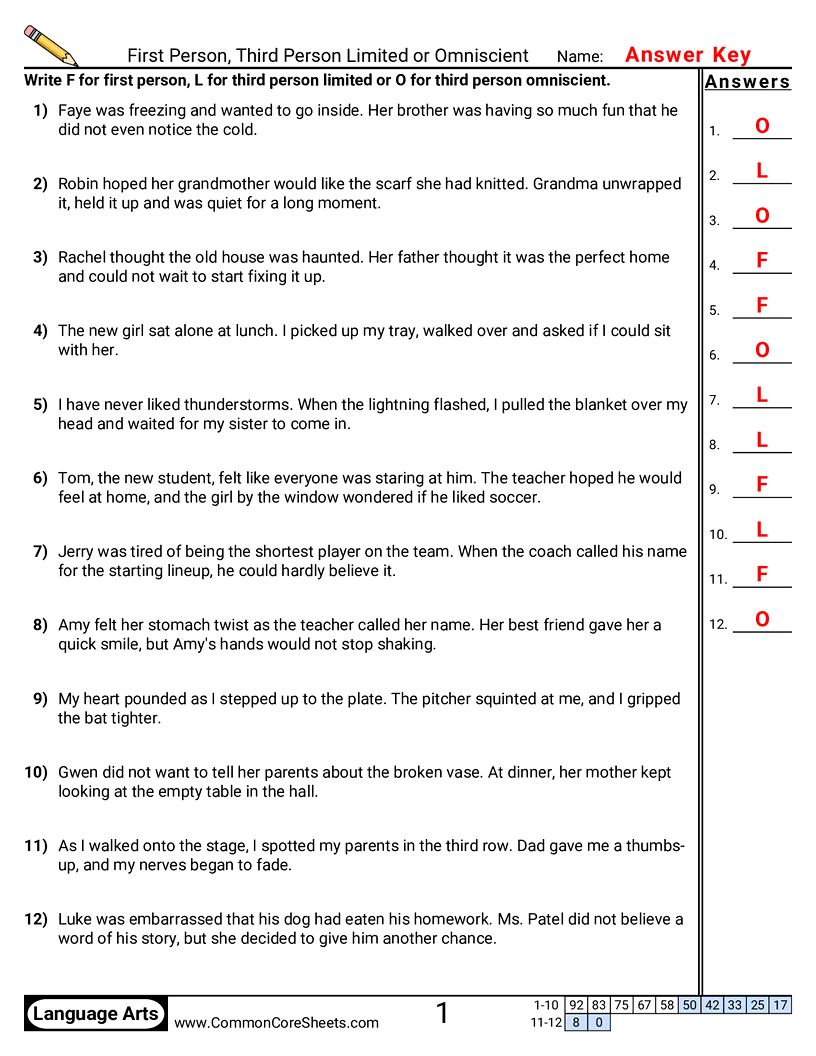
Tell first person narration from third person Tell third person limited from omniscient narration Notice whose thoughts and feelings the narrator reveals Explain how point of view shapes what the reader knows
RL.1.3
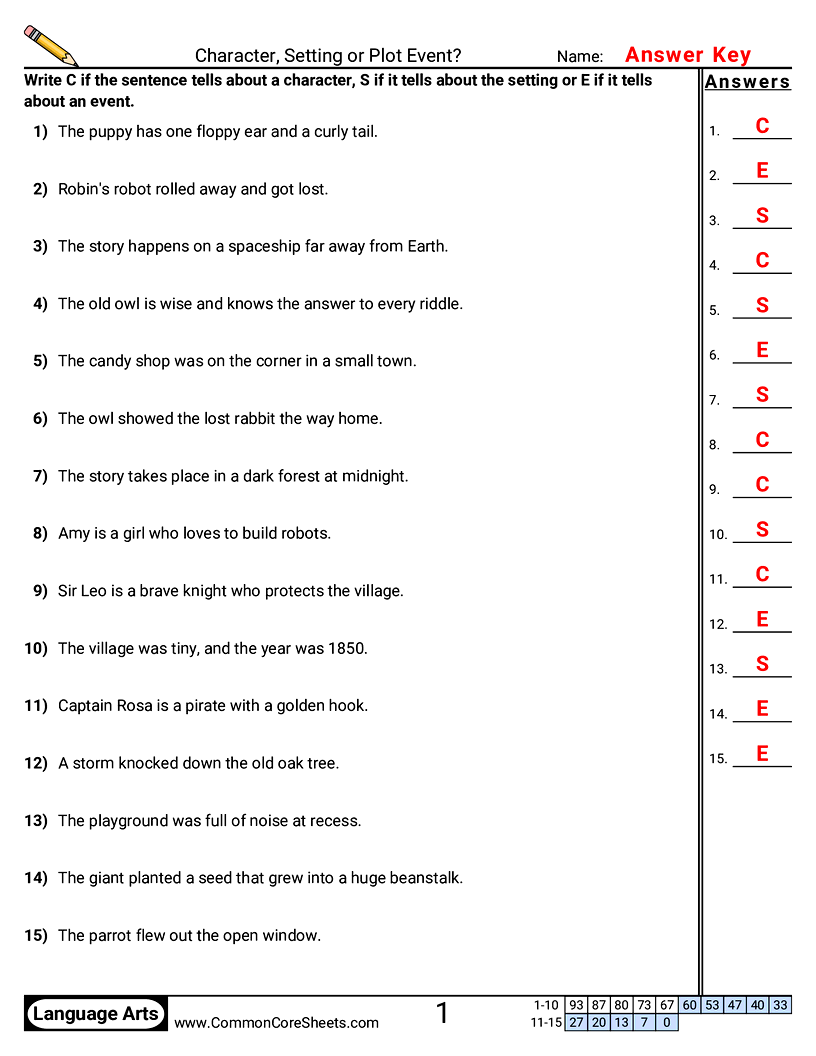
Name the main story elements Tell a character from the setting Recognize an event in the plot Use story elements to retell a story
RL.3.3
Know that a trait is what a character is like Use a character's actions to find a trait Tell a trait from a feeling Back up a trait with details from the text
RL.2.5
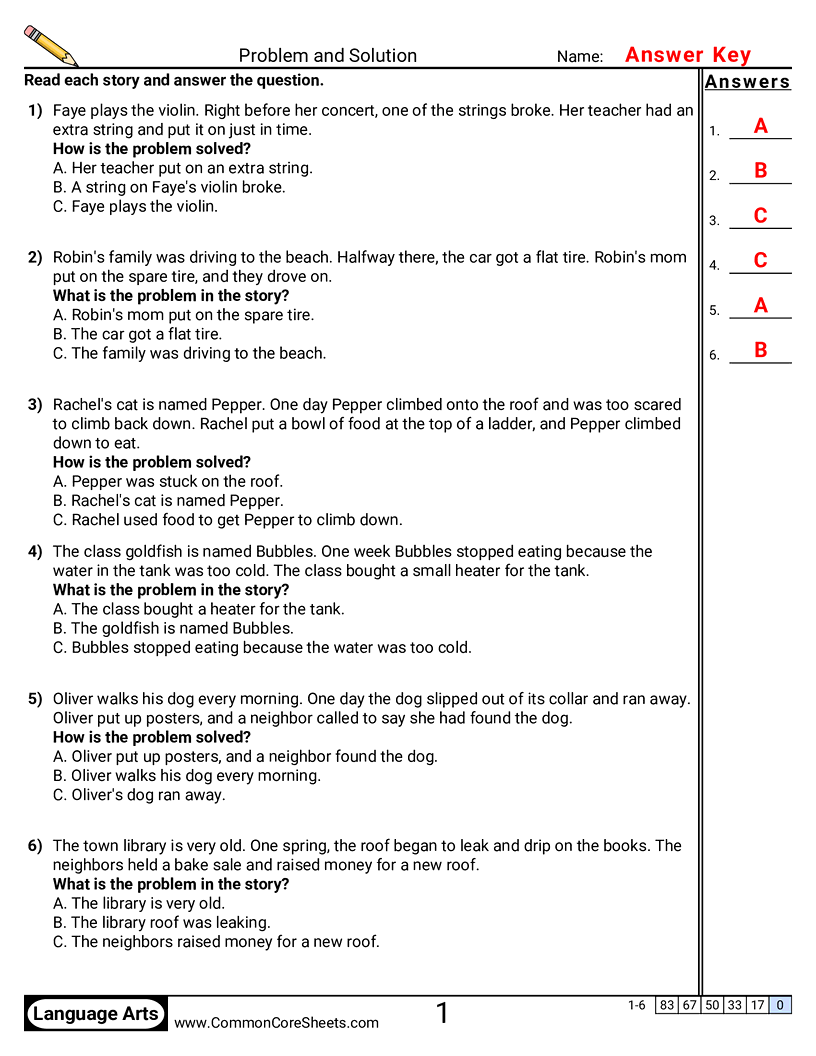
Find the problem in a story Find how the problem is solved Tell a problem from a background detail Retell a story by its problem and solution
RL.3.2 RL.4.2
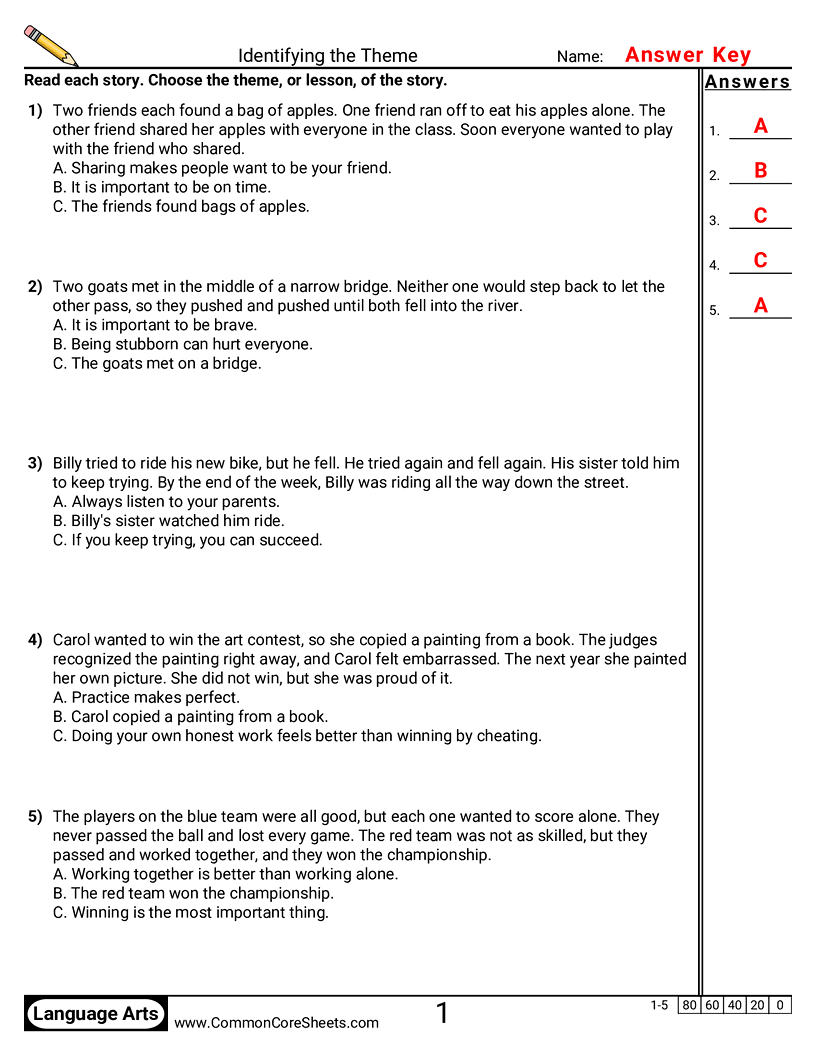
Know that a theme is the lesson or message of a story Find the theme of a fable or short story Tell a theme from a detail in the story Explain how the characters' actions show the theme
RL.6.3
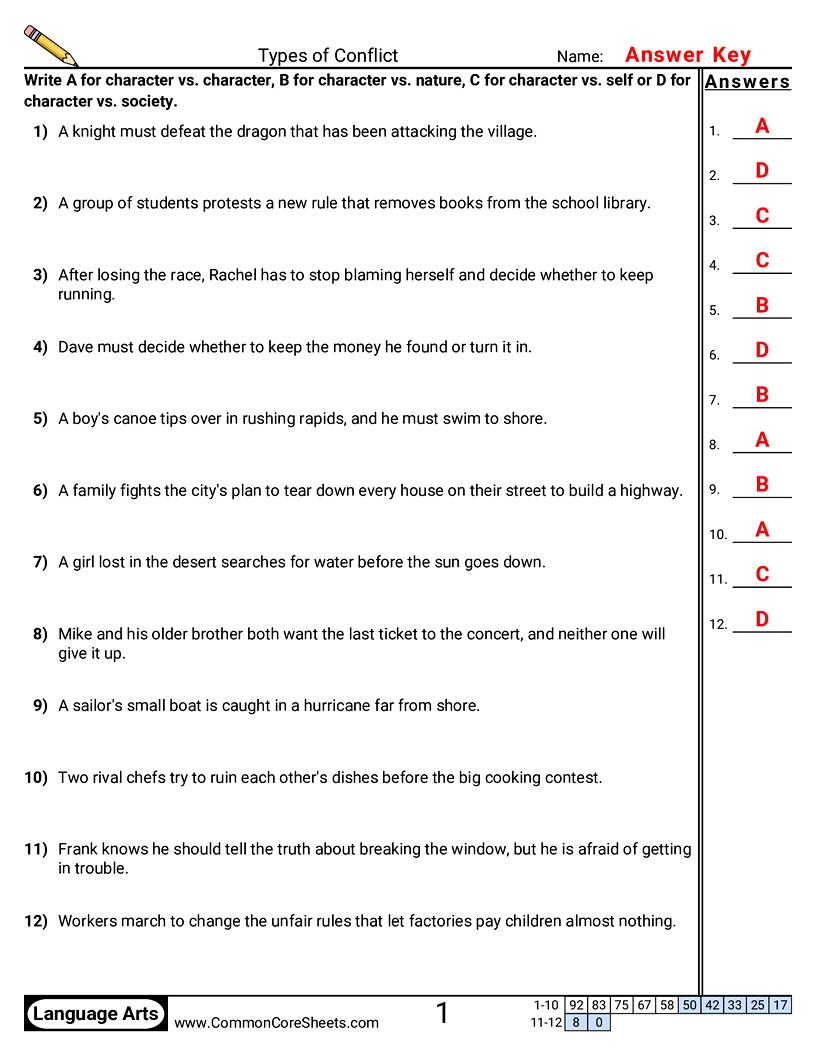
Know the four main types of conflict Tell an outside conflict from an inside one Tell a conflict with a person from a conflict with society Explain how conflict drives a story's plot
RL.2.5
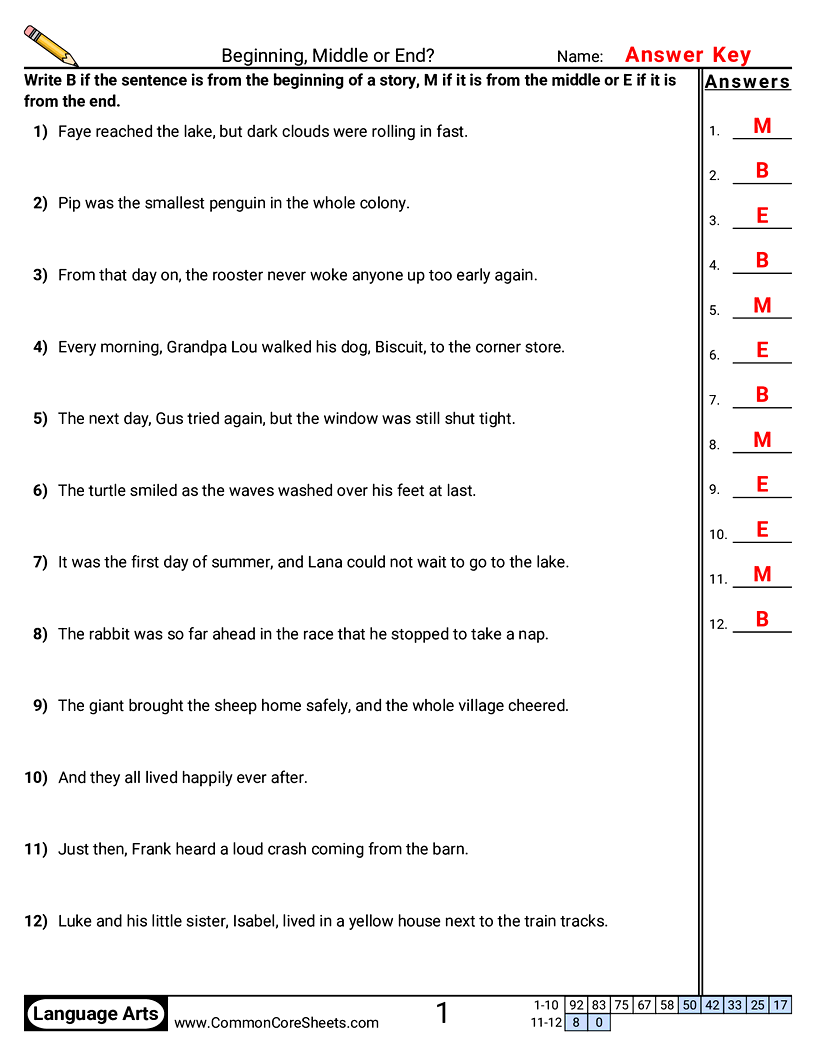
Know that a story has a beginning, a middle and an end Tell how the beginning introduces a story Find the problem in the middle of a story Tell how the ending wraps up a story
RL.3.5
Name the five parts of a plot Know what happens in each part Find the climax, or turning point, of a story Read a plot diagram
RL.5.5
Find the exposition, climax and resolution of a story Tell rising action from falling action Describe a story by the parts of its plot Explain how each event moves the plot along
RL.5.5 RL.6.3
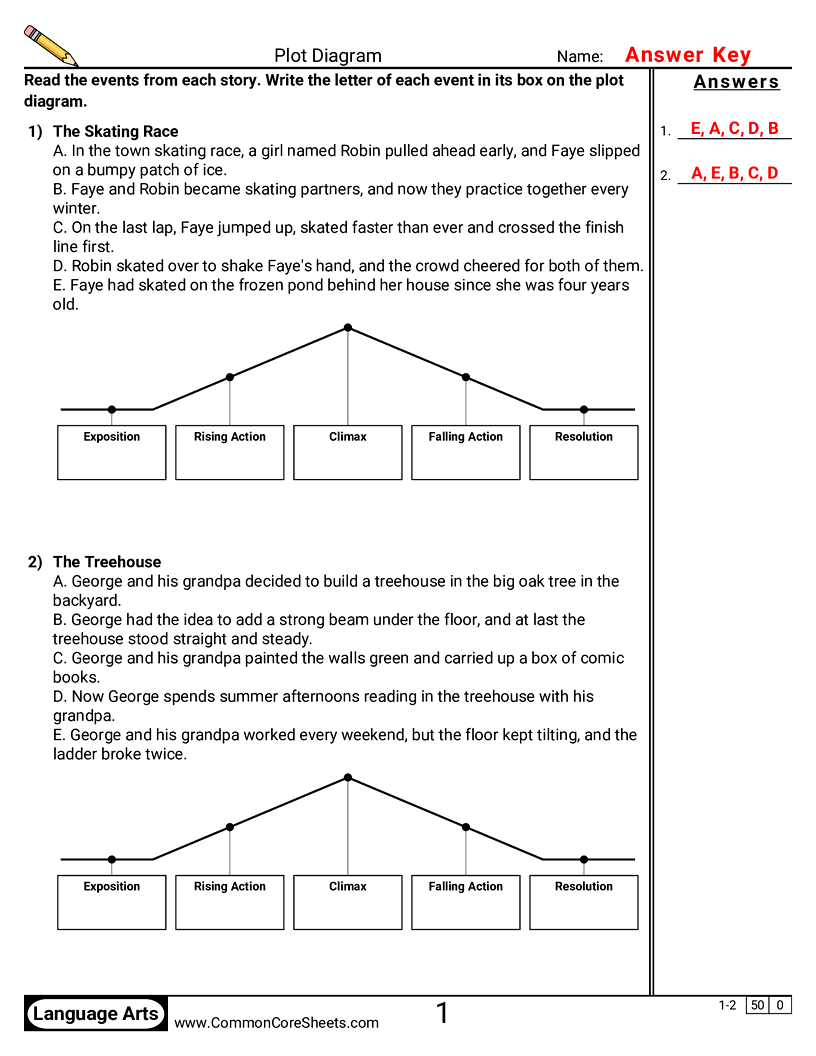
Read and fill in a plot diagram Put the events of a story in order Find the turning point of a story Tell how the events before and after the climax differ
RL.5.5
Map the plot of a story Find the climax of a book Retell a story by its five plot parts Use a graphic organizer while reading
W.3.3.a W.5.3.a
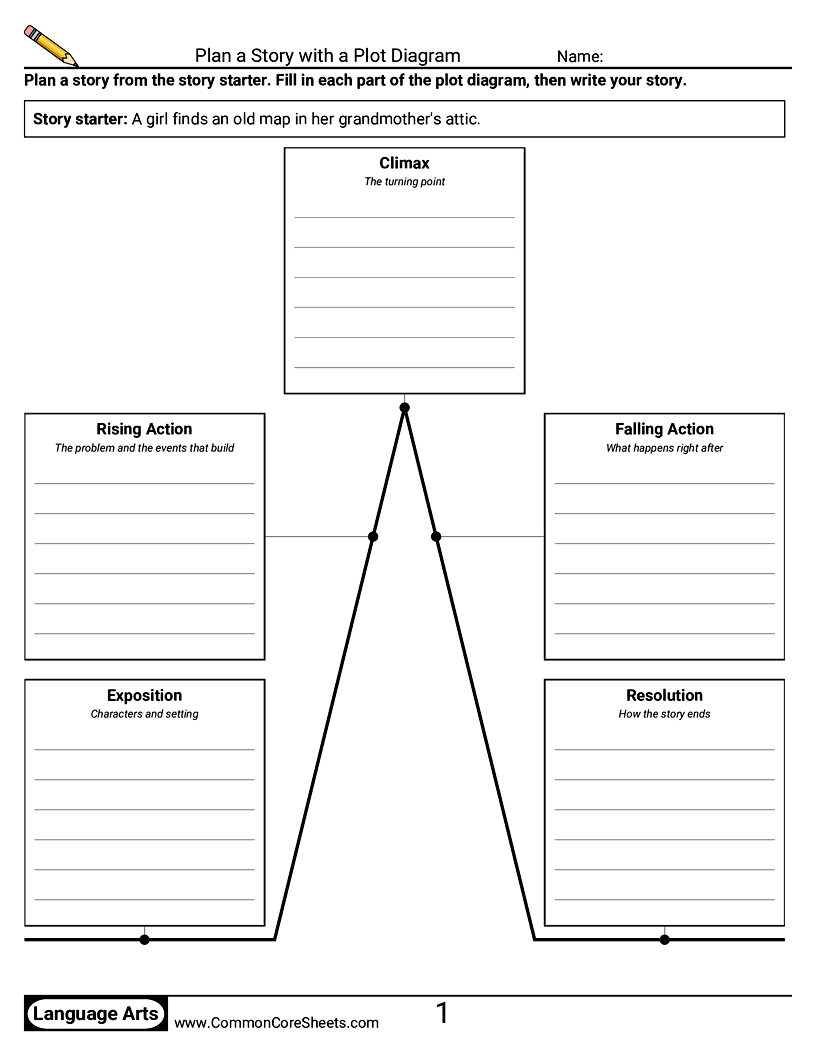
Plan a story before writing it Build a problem up to a climax Give a story a clear ending Organize events so they unfold naturally
RL.2.2 RL.3.2
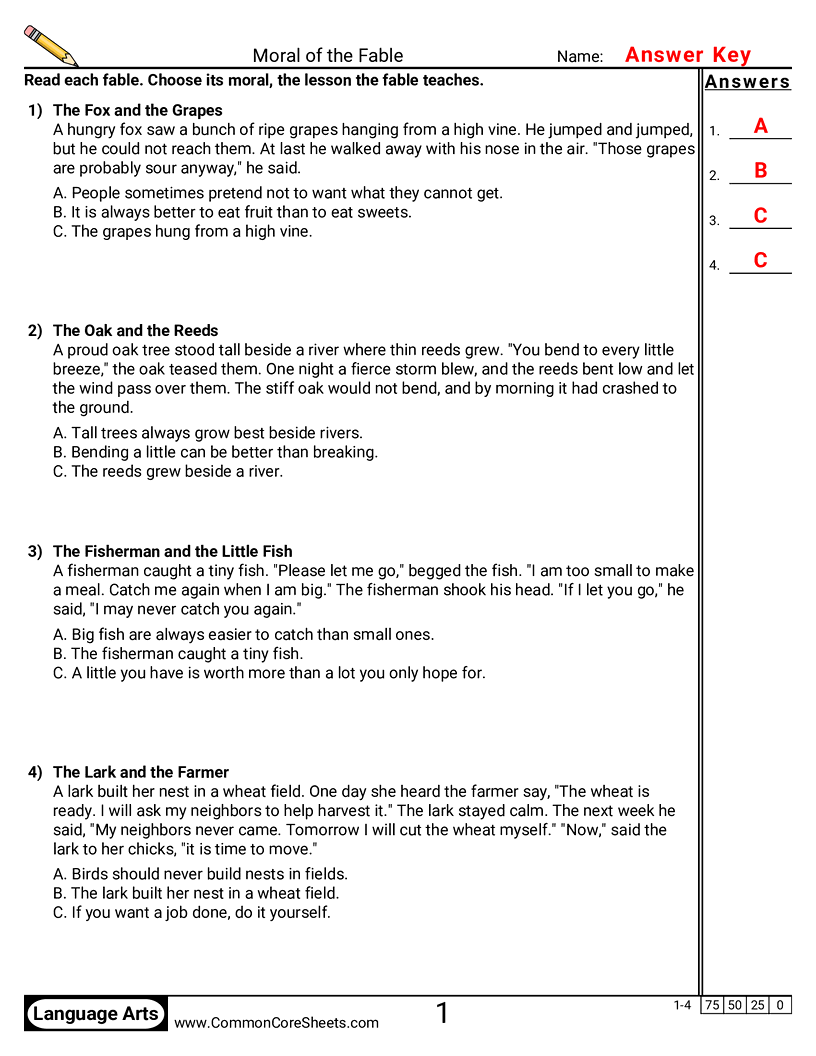
Know that a fable is a short story that teaches a lesson Find the moral of a fable Tell a moral from an event in the story Explain how the characters' actions show the moral
RL.3.2
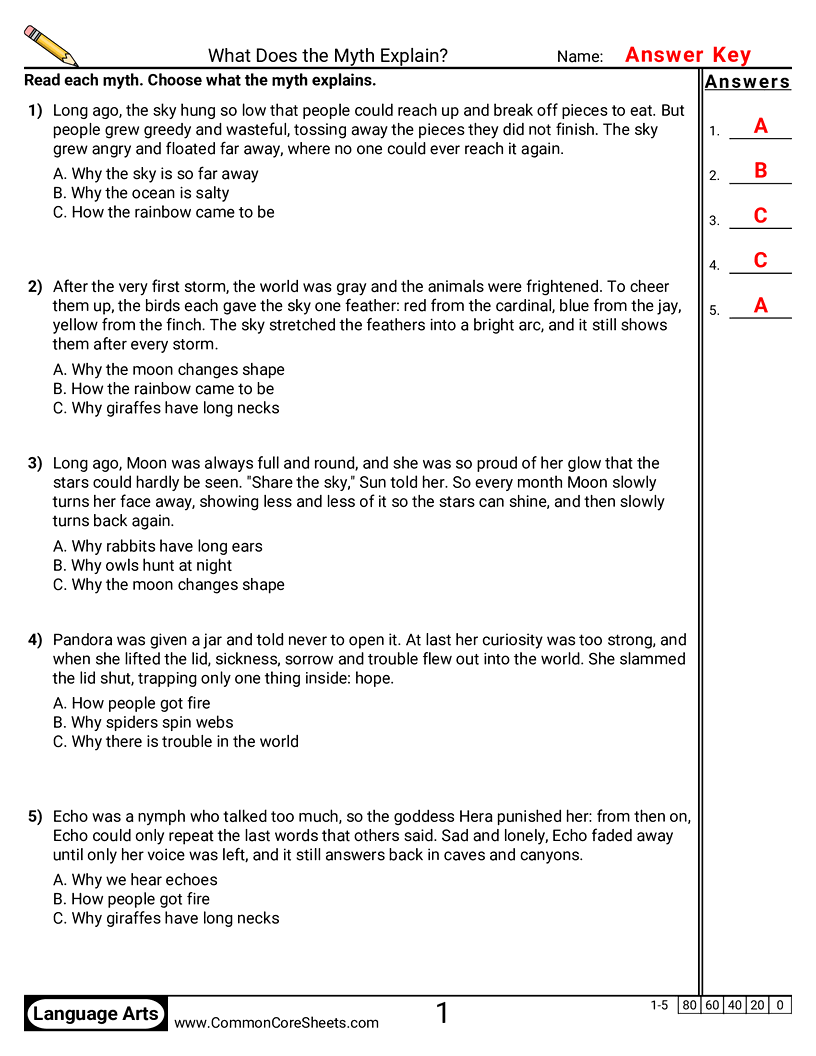
Know that myths explain things in nature Find what a myth explains Read Greek myths and pourquoi tales Compare myths from different places
RL.3.2 RL.4.9
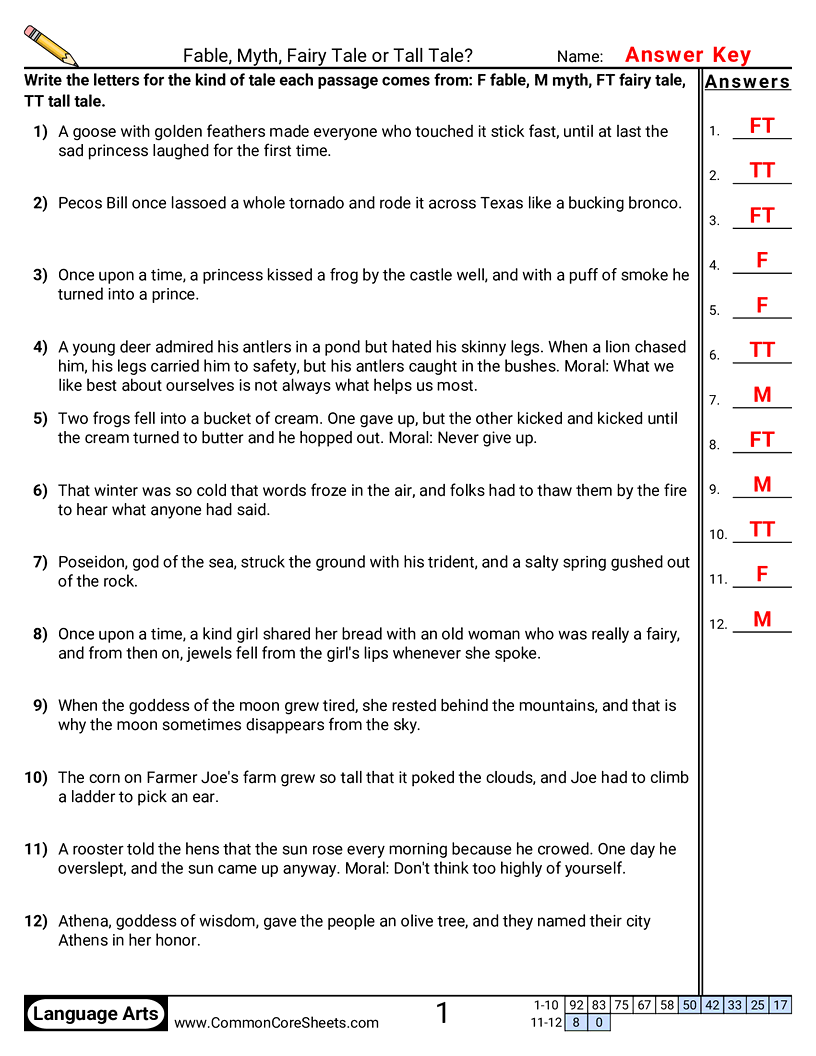
Know the features of fables, myths, fairy tales and tall tales Tell the four kinds apart Notice the patterns in traditional stories Compare stories from different times and places
RL.1.5
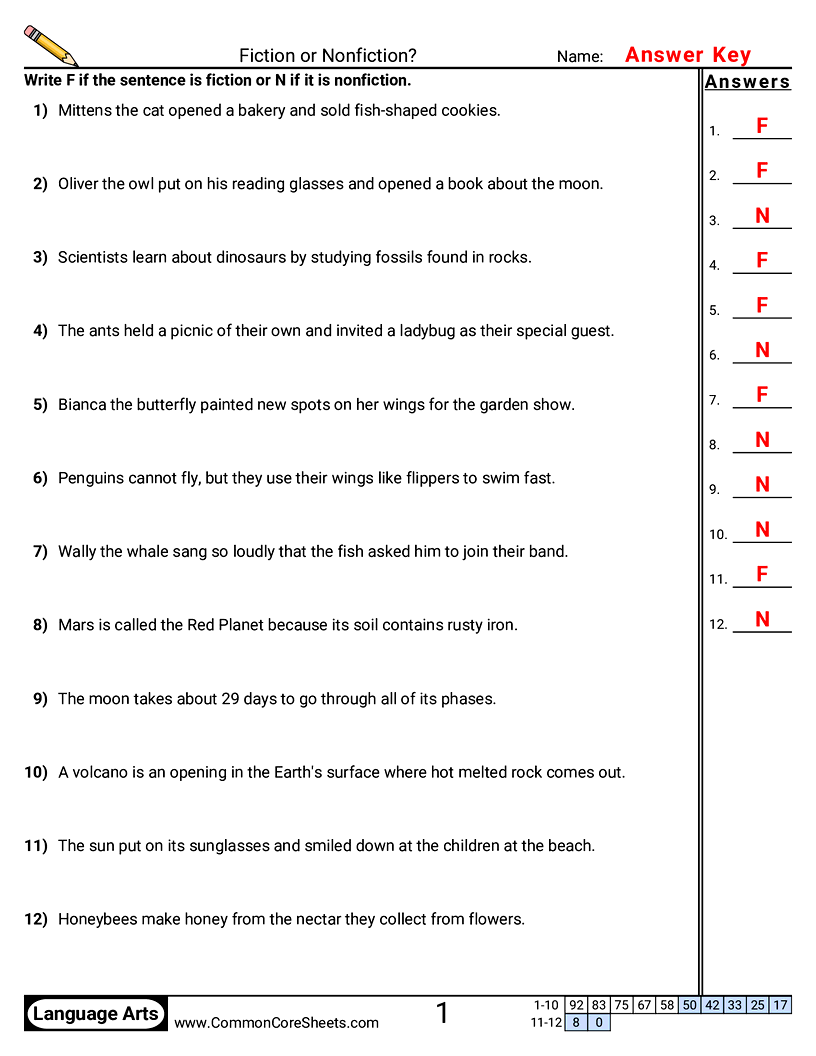
Tell a made-up story from real information Know that fiction is made up and nonfiction is true Notice clues like talking animals Choose the right kind of book for a purpose
RL.5.9
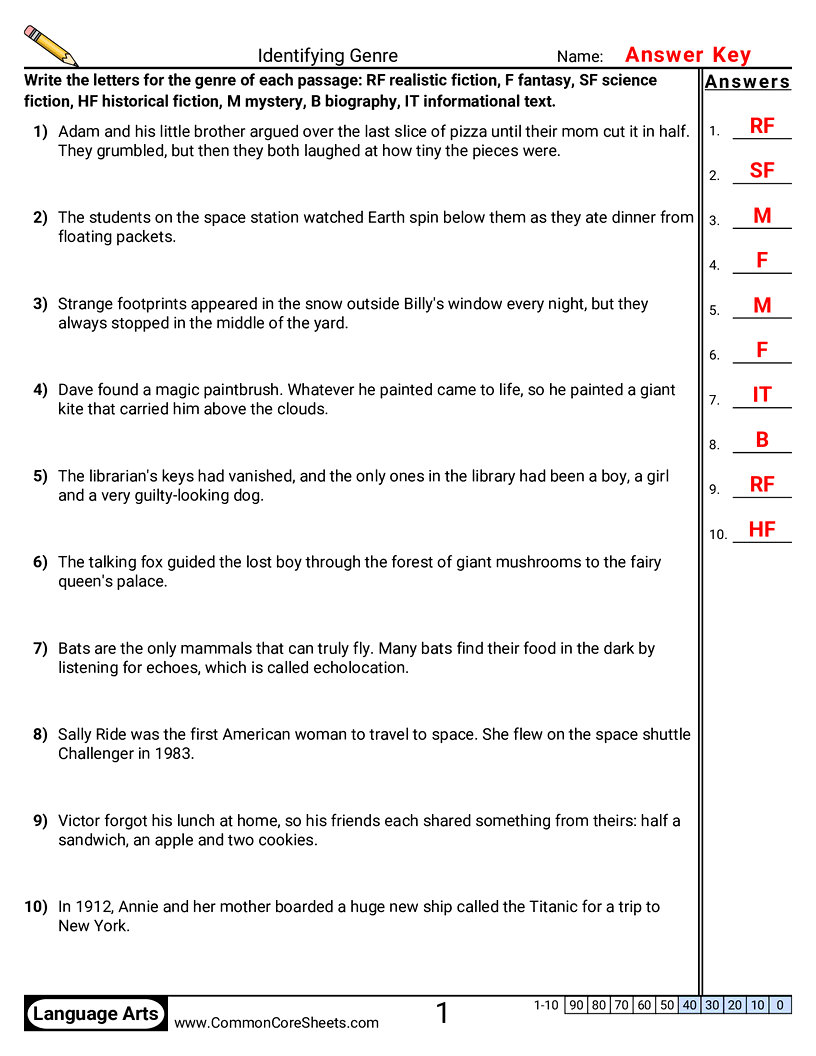
Name seven reading genres Use clues to find a passage's genre Tell fantasy from science fiction Tell fiction from biography and informational text
RI.1.9 RL.1.9
Compare two things Tell how two things are the same Tell how two things are different Use details from what you read
RI.3.8
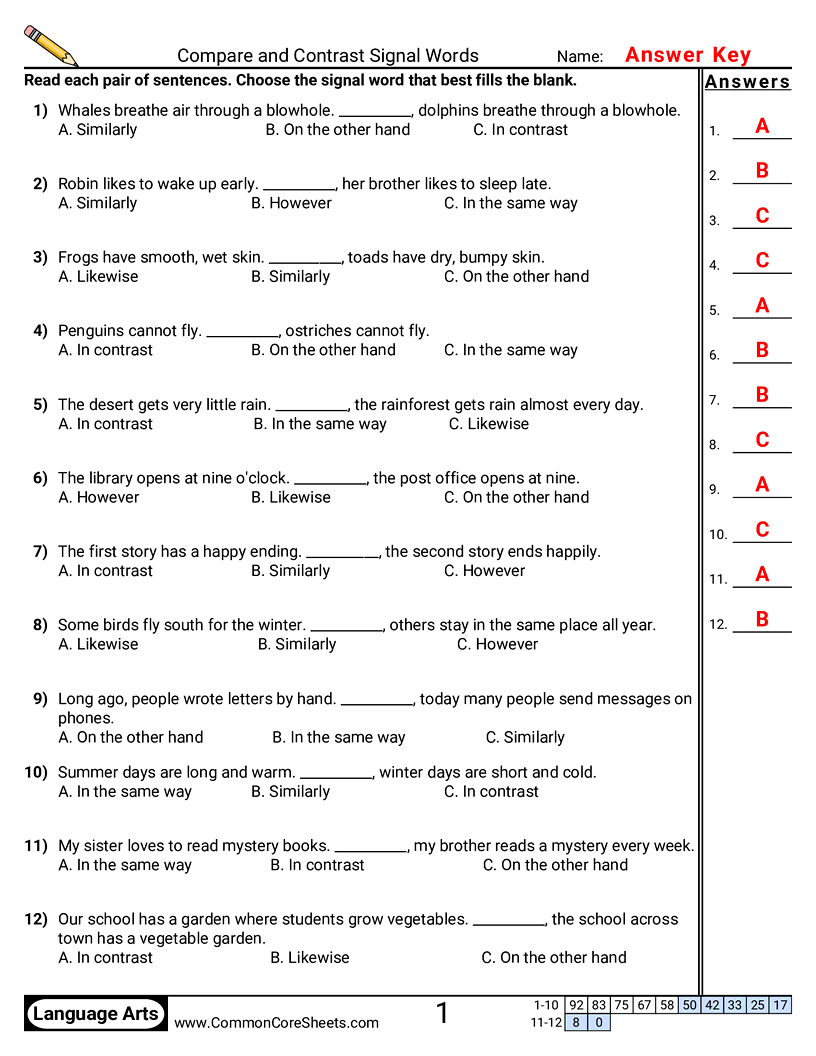
Know the signal words for comparing and contrasting Decide if two sentences show a likeness or a difference Use signal words to connect ideas Notice compare and contrast text structure
RL.3.3 RL.5.3
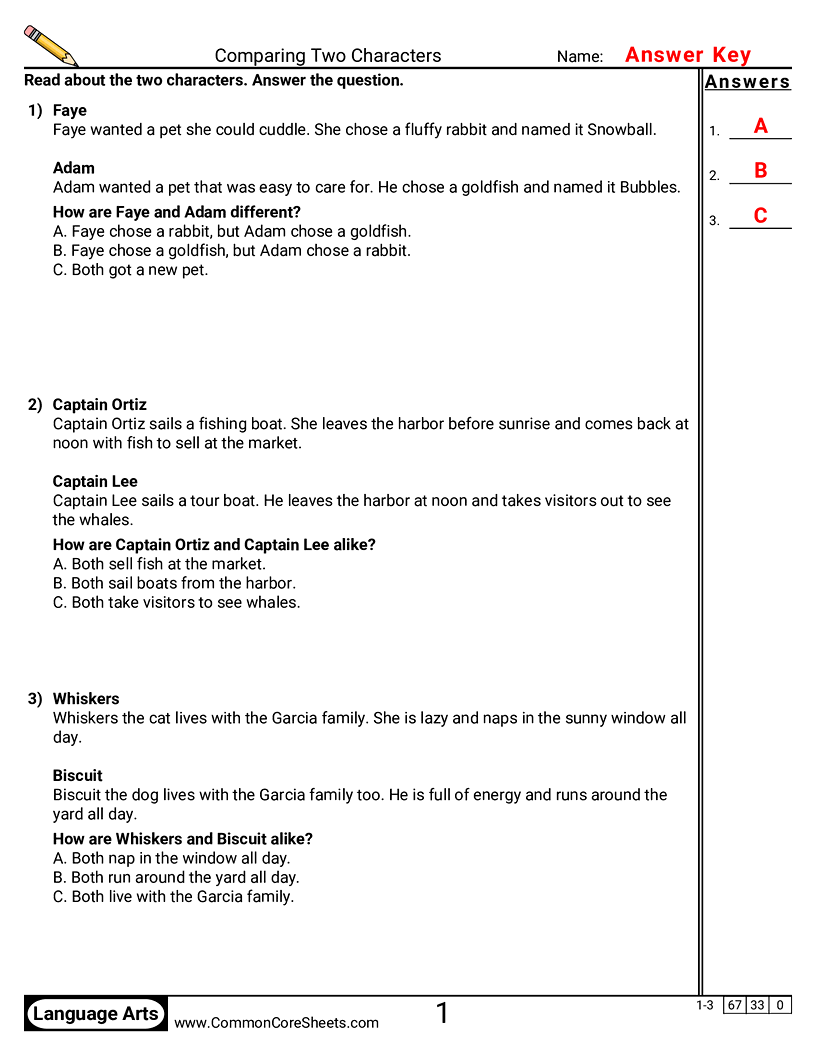
Compare two characters Contrast two characters Use details from the text to support a comparison Check a claim against both passages
RL.2.9
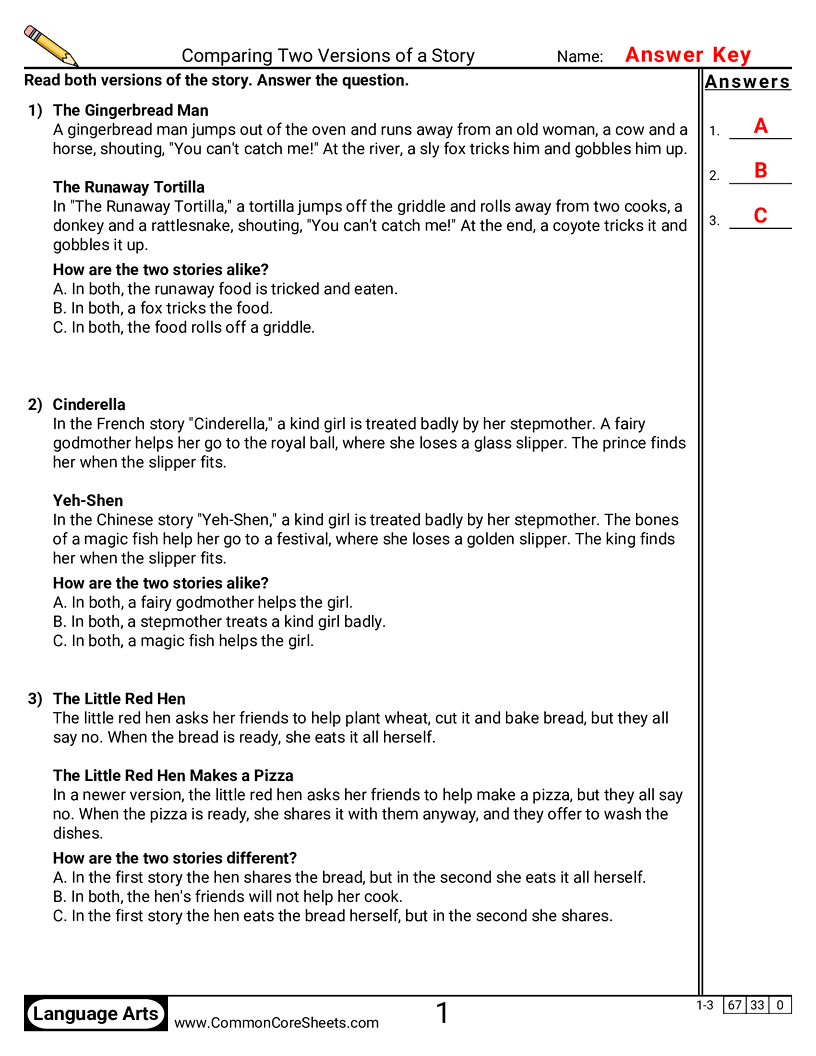
Compare two versions of the same story Find what stays the same across versions Find what changes from one version to another Notice how stories change from culture to culture
RI.3.9
Compare two texts on the same topic Find details that appear in both texts Find details that appear in only one text Combine information from two sources
RI.3.9 RL.3.9
Compare two topics Tell how two things are alike and different Organize ideas before writing Compare two characters or texts
RL.7.1 RL.7.4
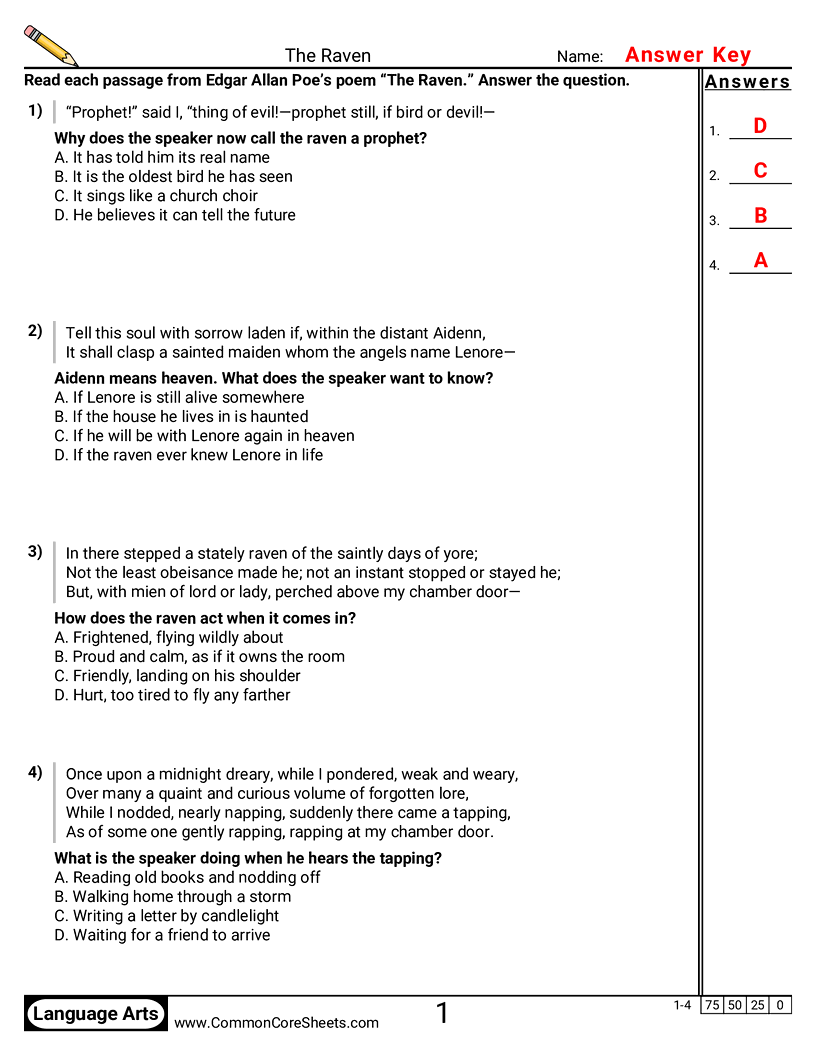
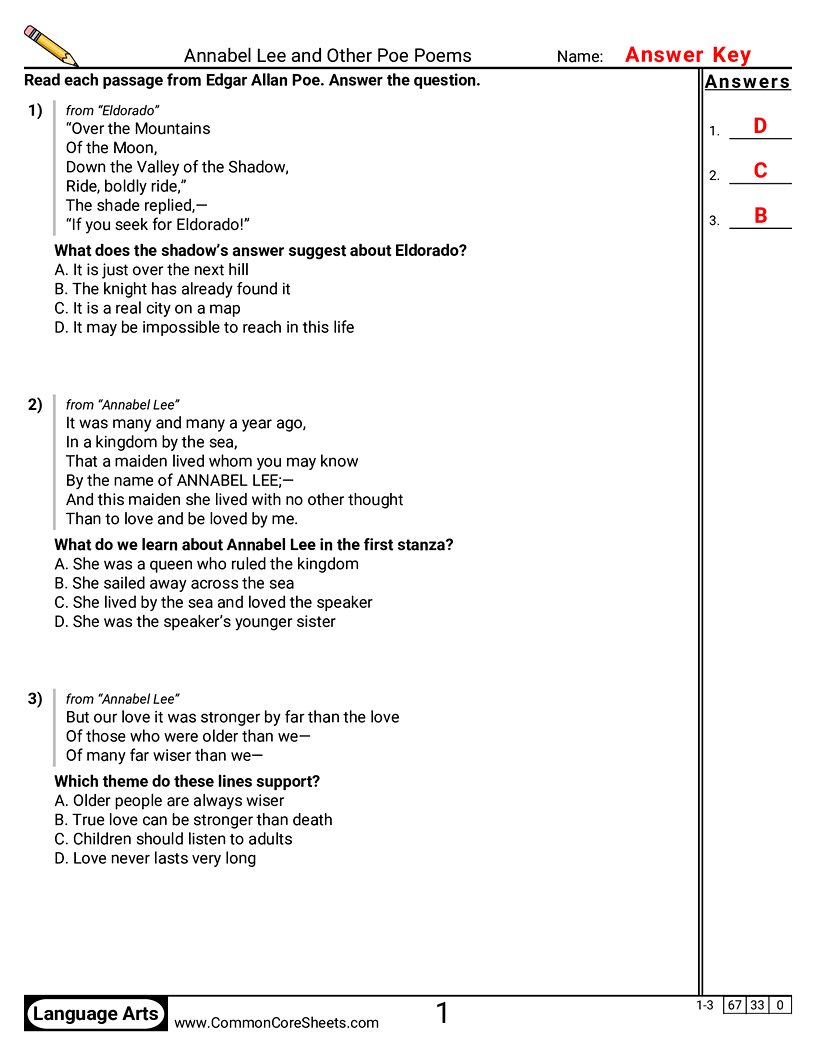
Follow the events of a narrative poem Work out the meaning of old or unusual words Explain how a refrain builds meaning Describe how the speaker’s feelings change
RL.6.4 RL.7.4
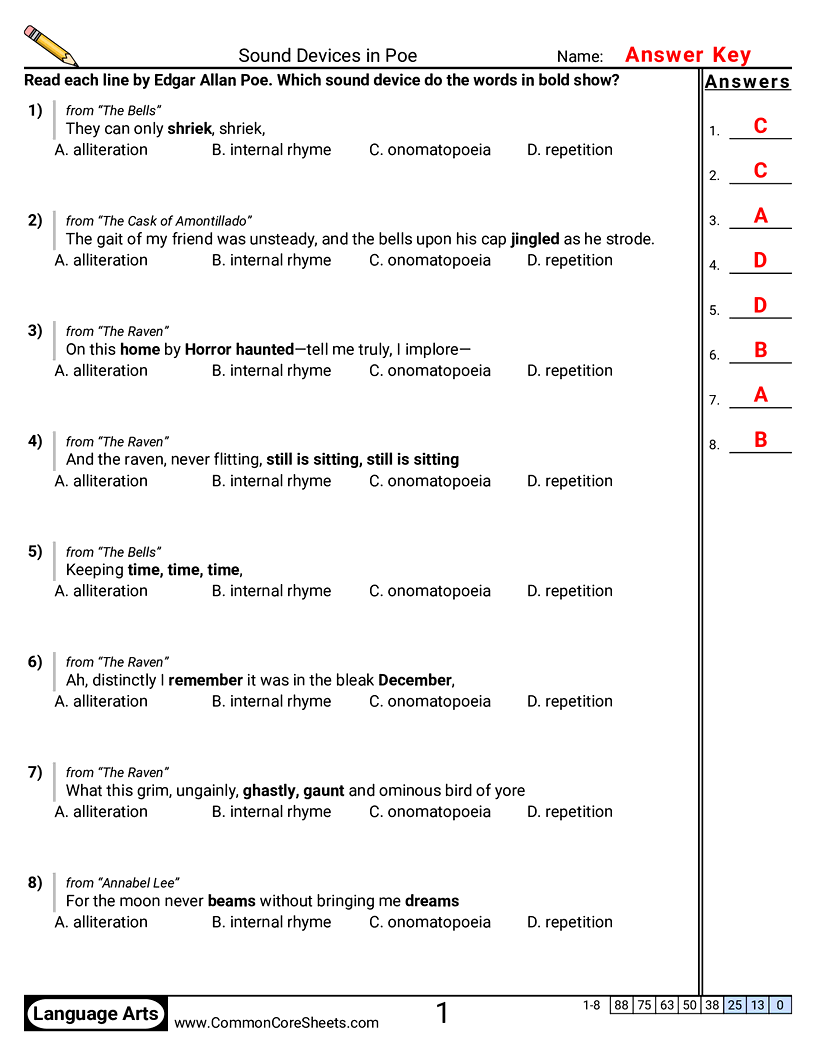
Recognize alliteration, internal rhyme, onomatopoeia and repetition Tell the devices apart in the same line Notice how sound adds to a poem
RL.7.2 RL.8.2
Explain what a stanza means Find the theme a poem supports Interpret symbols and figurative lines Describe how mood changes in a poem
RL.7.6 RL.8.6
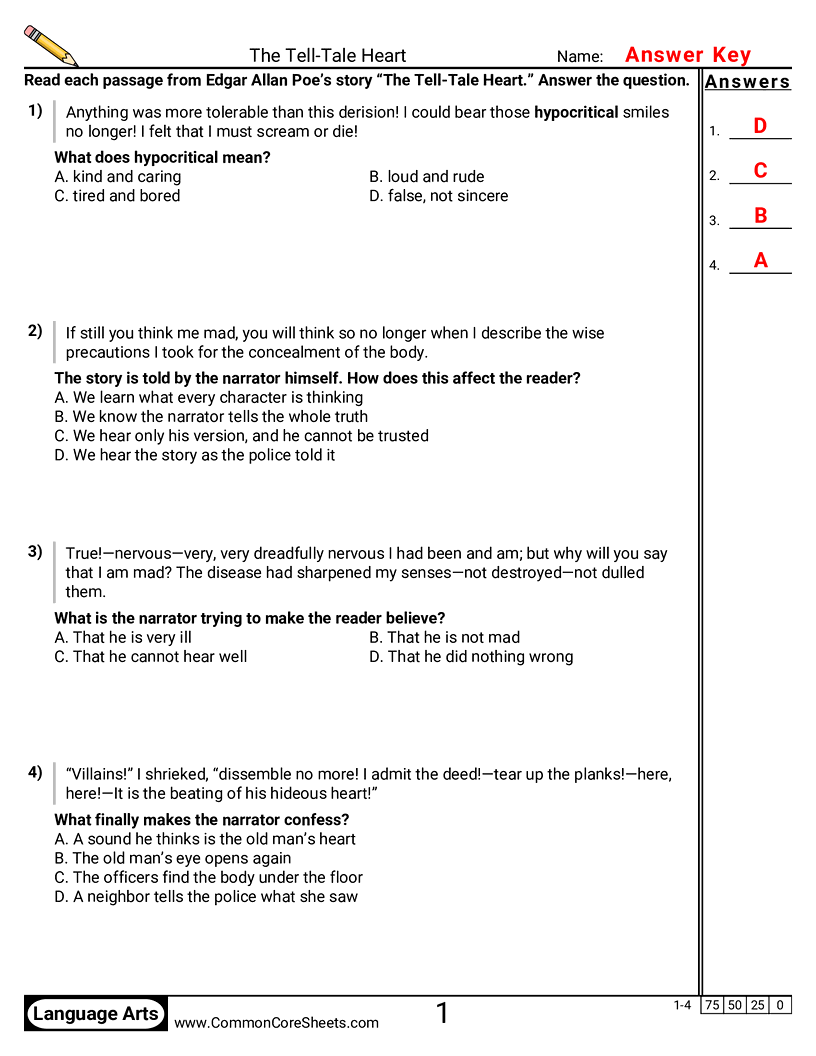
Explain how a first-person narrator shapes a story Recognize an unreliable narrator Identify dramatic irony Explain how an author builds suspense
RL.8.3 RL.8.6
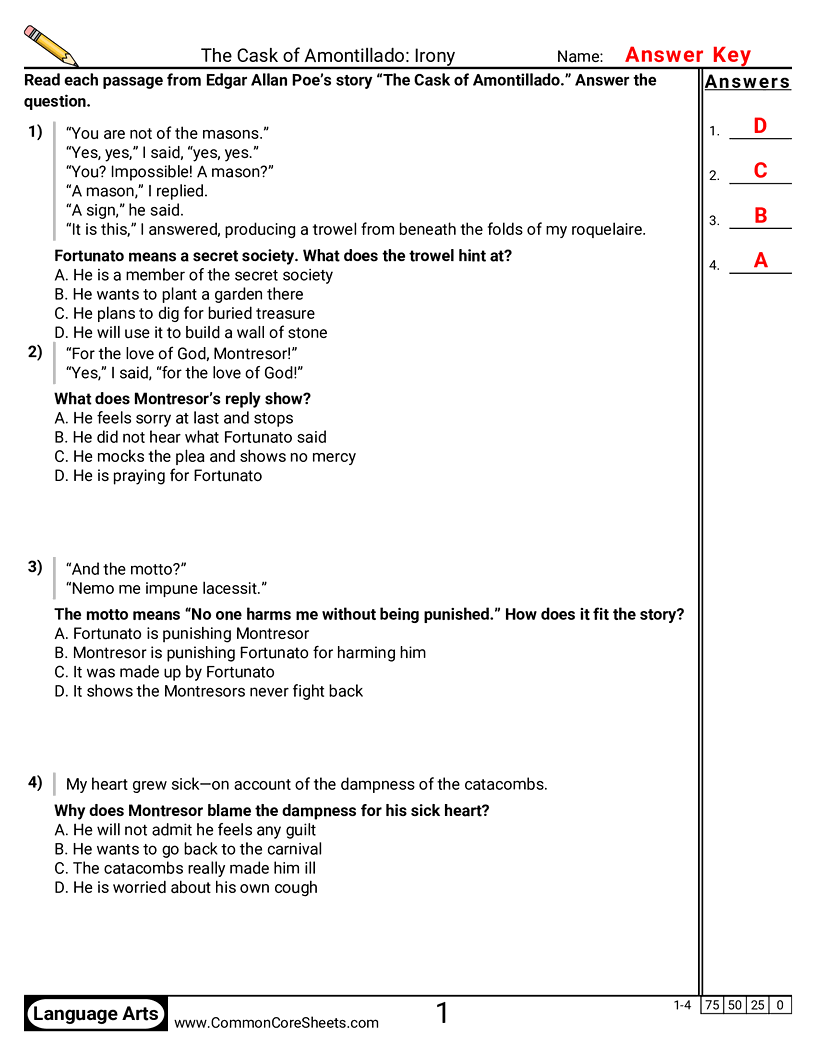
Identify verbal, dramatic and situational irony Explain the gap between what a character says and means Find clues an author plants for the ending Explain how dialogue reveals character
RL.7.4 RL.8.4
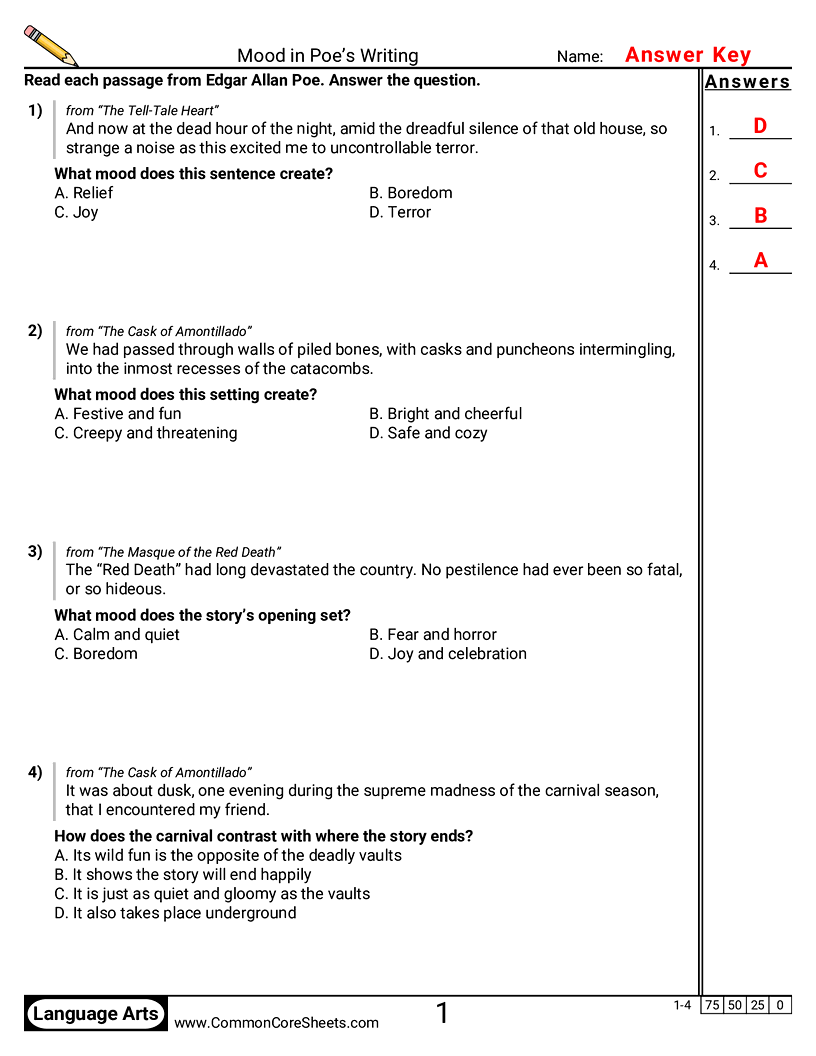
Identify the mood of a passage Find the words that create a mood Explain how contrast affects mood
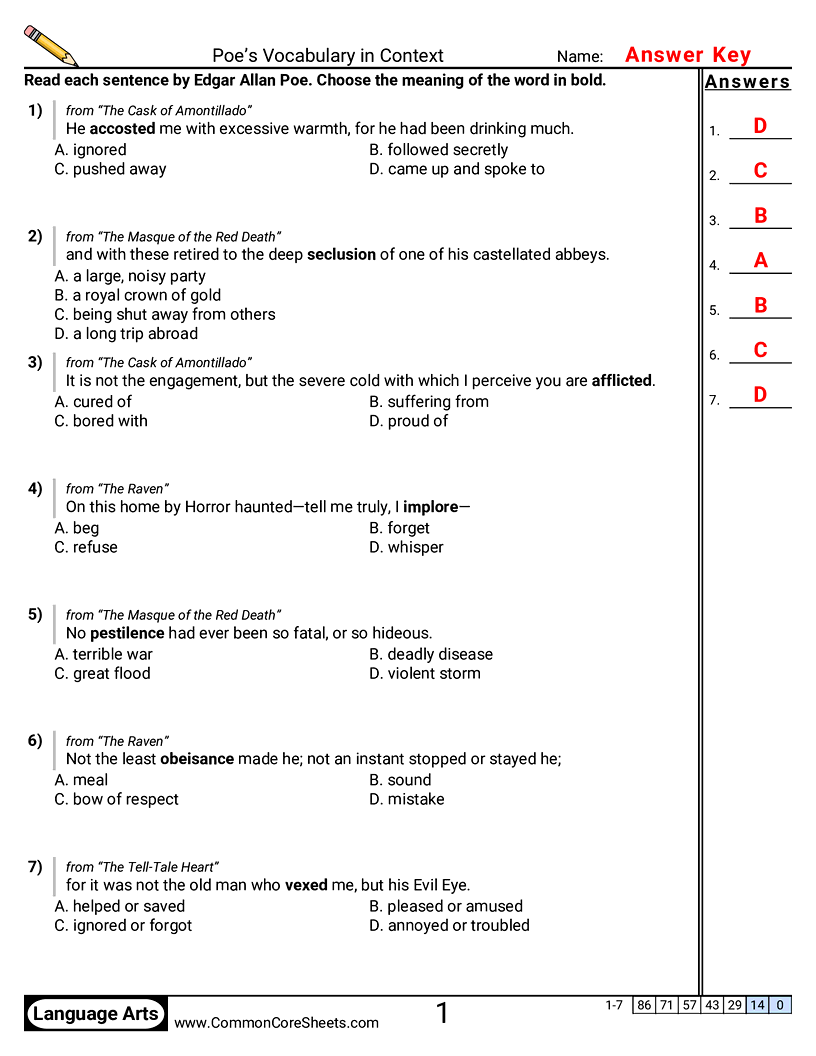
L.7.4.a L.8.4.a
Use context to find the meaning of a word Learn words that appear in classic literature Check a meaning against the sentence
RI.4.8
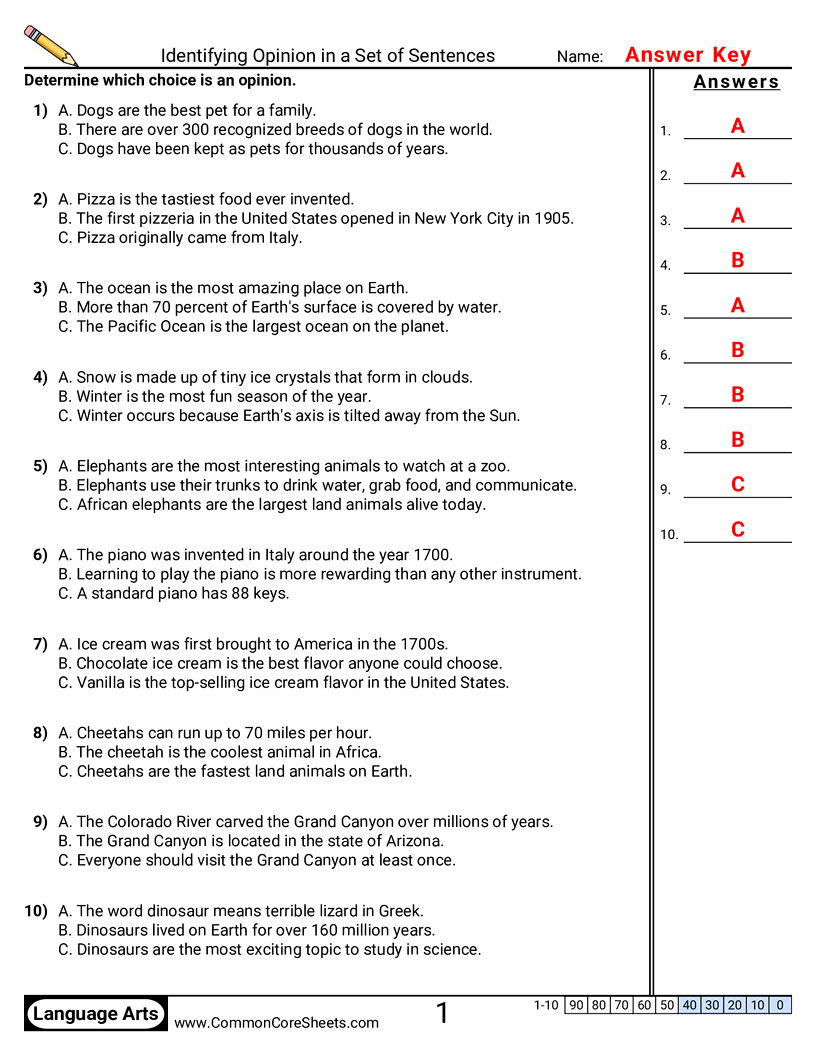
Tell the difference between a statement of fact and a statement of opinion Spot opinion words like 'best', 'should', or 'I think' in a sentence Explain why a sentence is an opinion instead of a fact Read carefully to judge whether a claim can be proven or not
RI.4.8
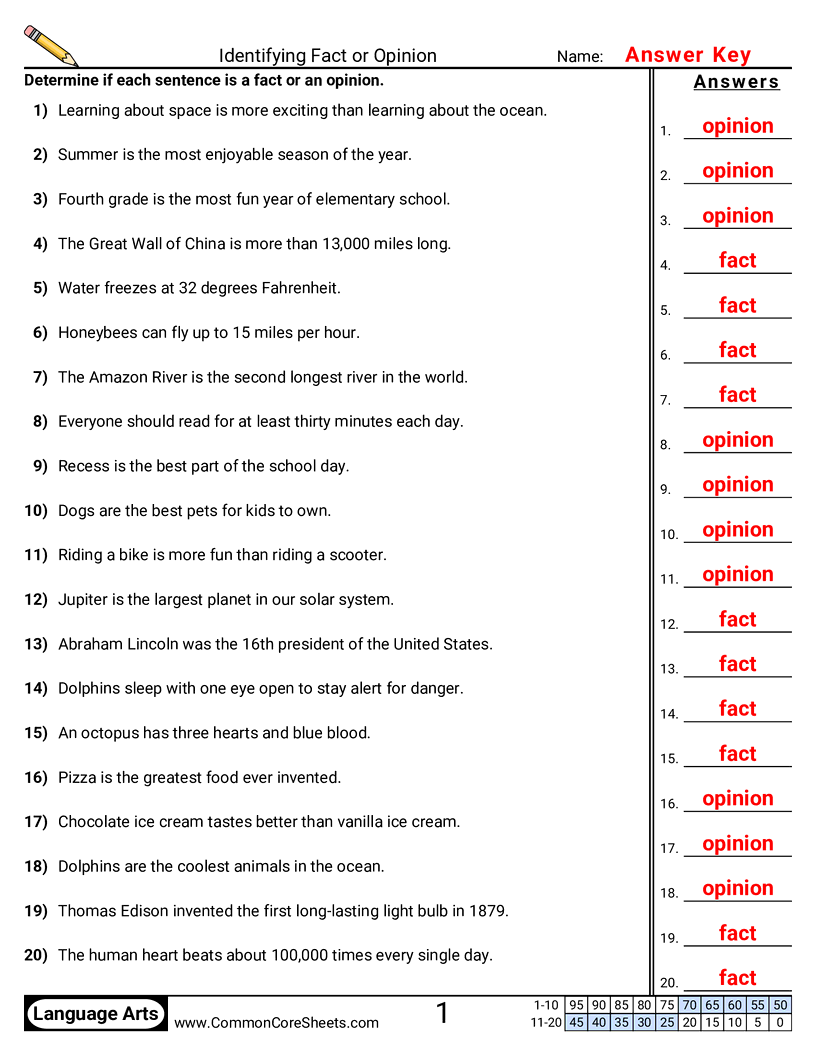
Tell the difference between a fact and an opinion Recognize words that signal an opinion like 'best', 'worst', or 'should' Understand that opinions show what someone feels or believes Read a sentence carefully and decide if it can be proven true
RI.4.8
Tell the difference between a fact and an opinion Recognize that facts can be proven or checked Spot opinion words that show how someone feels or thinks Explain why a statement is a fact or an opinion
Advertisement