Vocabulary Worksheets
Expand word knowledge with free vocabulary worksheets on compound and hyphenated words, homographs, and synonyms. Students build words from smaller parts, sort out words that are spelled alike but mean different things, and strengthen word choice by matching synonyms. Each worksheet prints as a PDF with an answer key - no login or account needed - and modified pages give struggling students fewer problems per page. Ideal for 3rd through 6th grade word study and vocabulary centers.
More about these worksheets ▾ Show less ▴
×
L.2.4.d
Tell the difference between compound words and hyphenated words Recognize when two words join to form one word without a hyphen Understand how a hyphen connects words in a hyphenated word Sort words into compound and hyphenated groups
L.2.4.d
Recognize when two smaller words join to make one compound word Tell the difference between a compound word and two separate words Understand the meaning of a compound word from its two parts Practice reading and comparing word pairs carefully
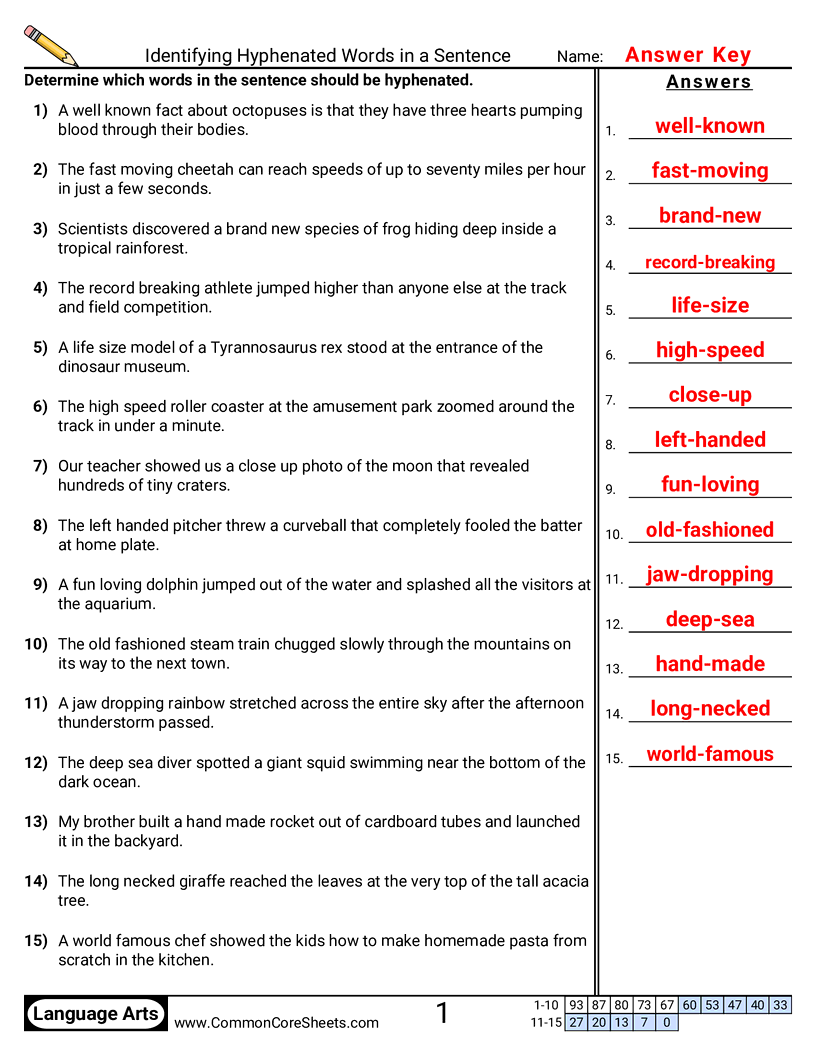
Recognize when two or more words are joined together with a hyphen Spot hyphenated words while reading a full sentence Understand that a hyphen connects words to form one meaning Tell the difference between hyphenated words and regular words
L.4.4.a
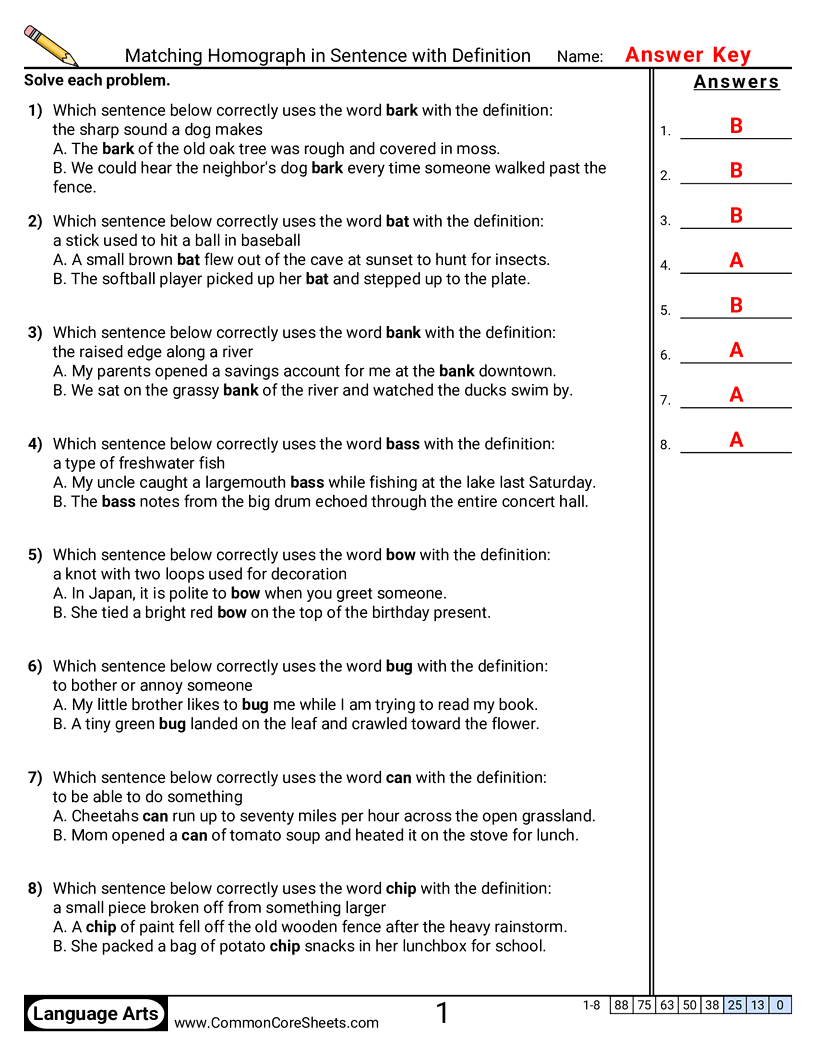
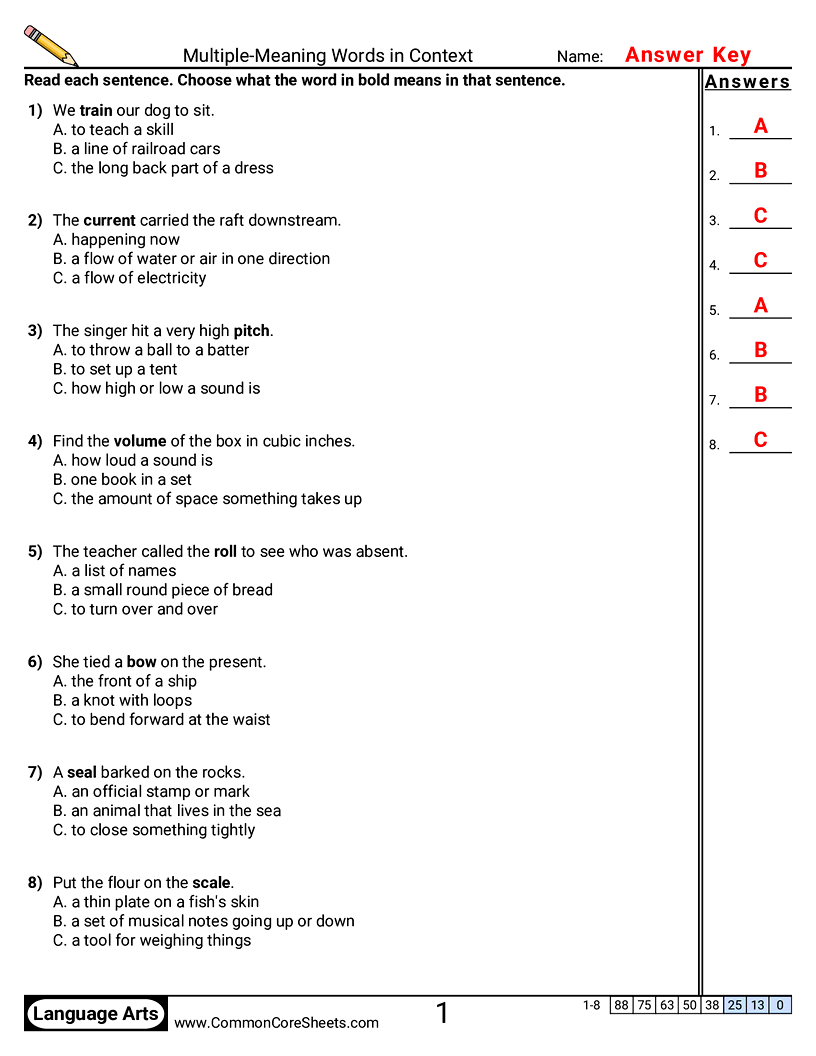
Figure out which meaning a word has by reading the whole sentence Recognize that words spelled the same can mean different things Match a word used in a sentence to its correct definition Use context clues to pick the right meaning
L.4.5.c
Recognize words that have the same or similar meanings Pick the best synonym to fit the meaning of a sentence Replace a word with a synonym without changing what the sentence means Build a larger vocabulary by learning different words for the same idea
L.1.4.a L.2.4.a L.3.4.a
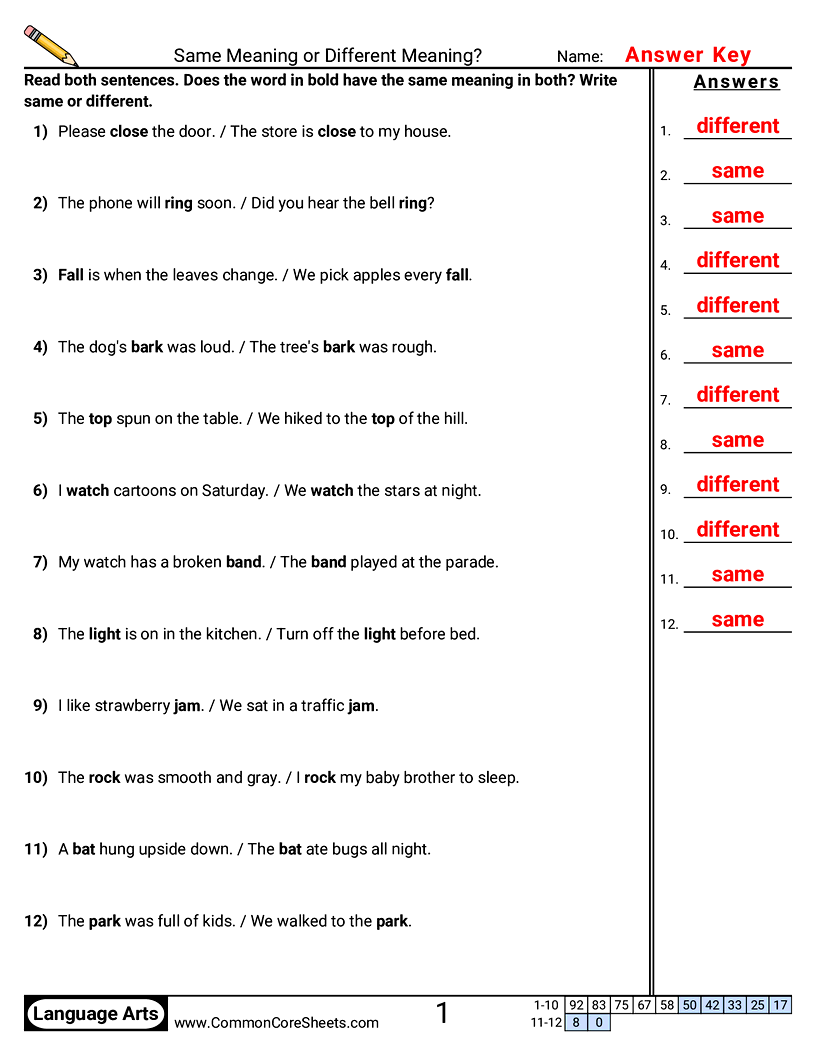
Know that one word can have more than one meaning Use the sentence as a clue to the meaning of a word Read familiar words in new ways
L.2.4.a L.3.4.a
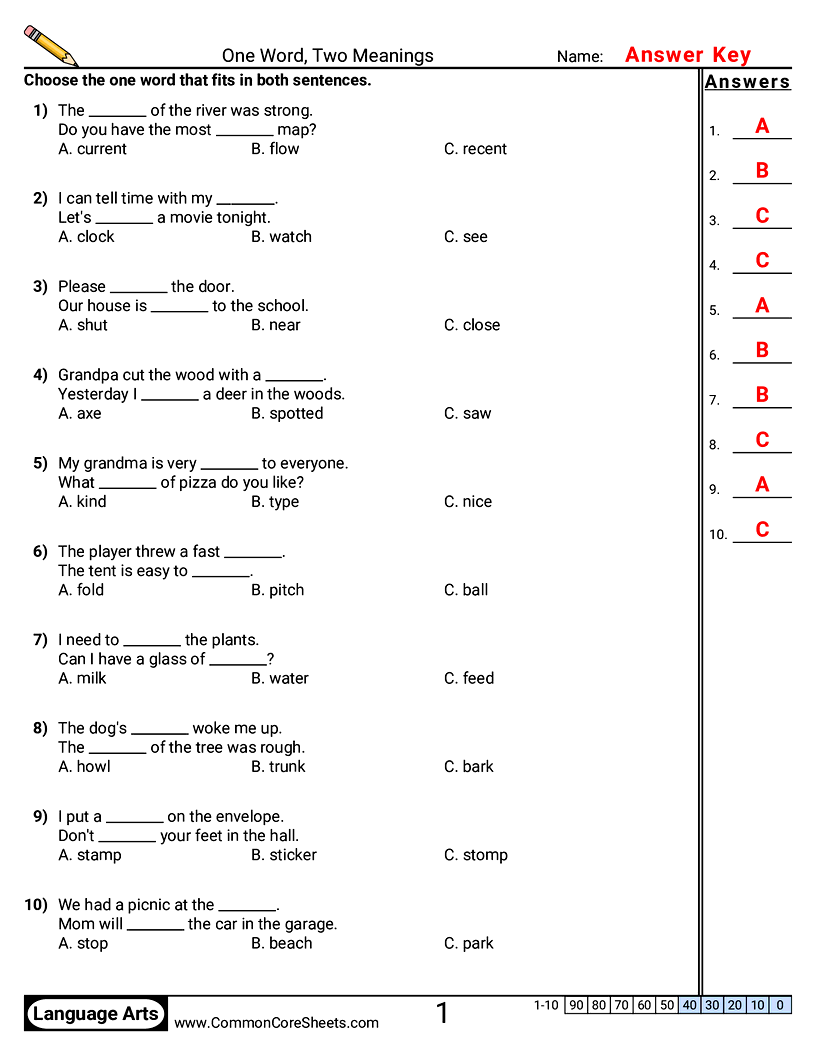
Recognize that a word can have two meanings Use each sentence as a clue to a different meaning Check a word in both sentences before choosing
L.3.4.a L.4.4.a
Compare the meaning of a word in two sentences Use context to tell when a word changes meaning Notice when a word changes its part of speech
L.4.4.a L.5.4.a
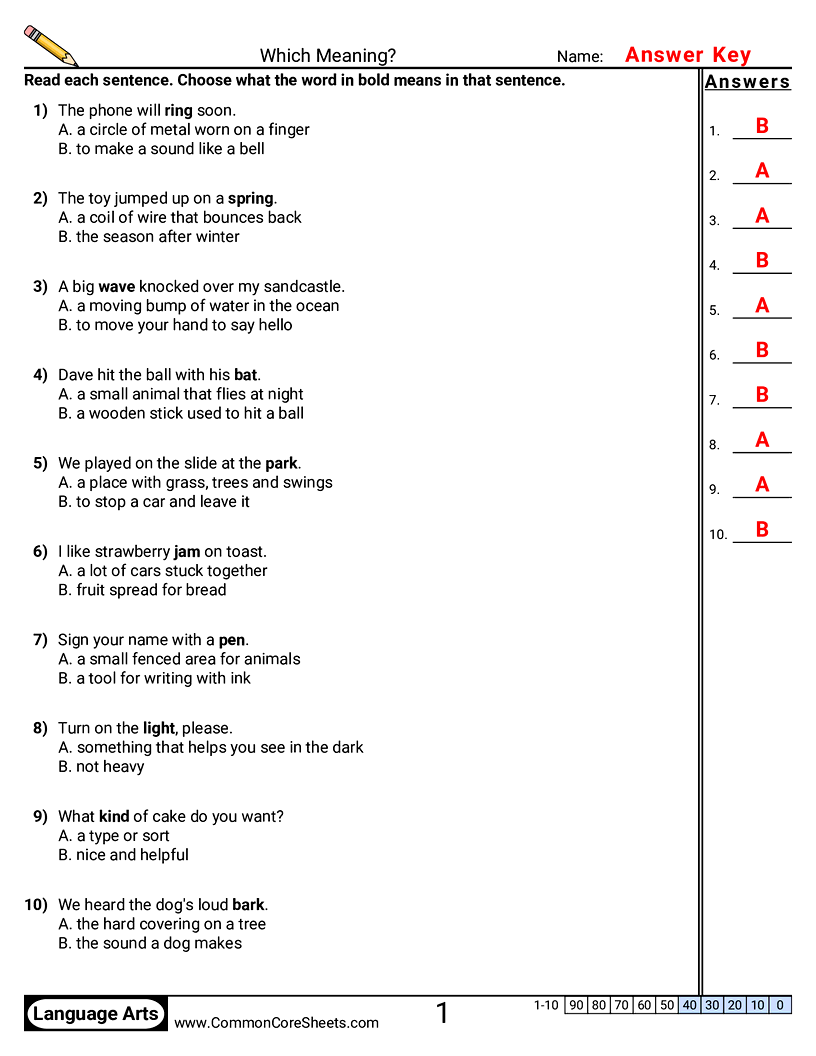
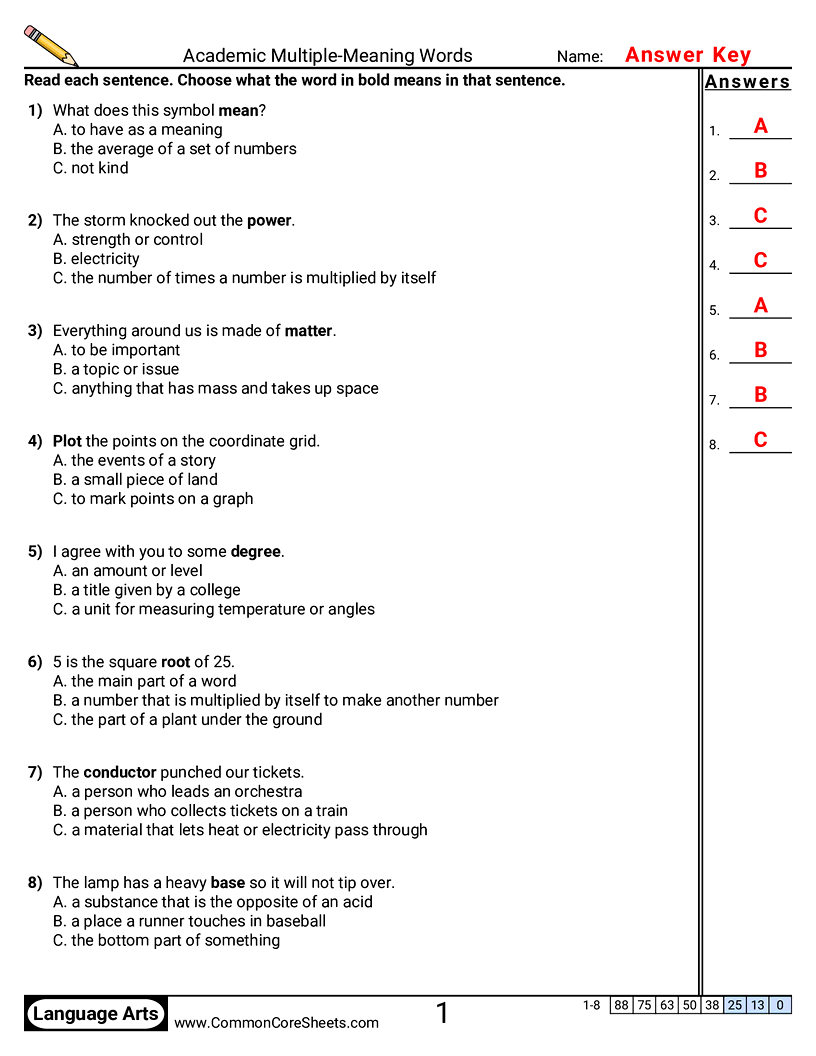
Use context to choose the meaning of a multiple-meaning word Know several meanings of common words Explain which words in a sentence point to the meaning
L.6.4.a L.7.4.a L.8.4.a
Use context to choose the meaning of a word Know the subject-area meanings of common words Tell an everyday meaning from an academic one
L.2.2.d L.3.2.e
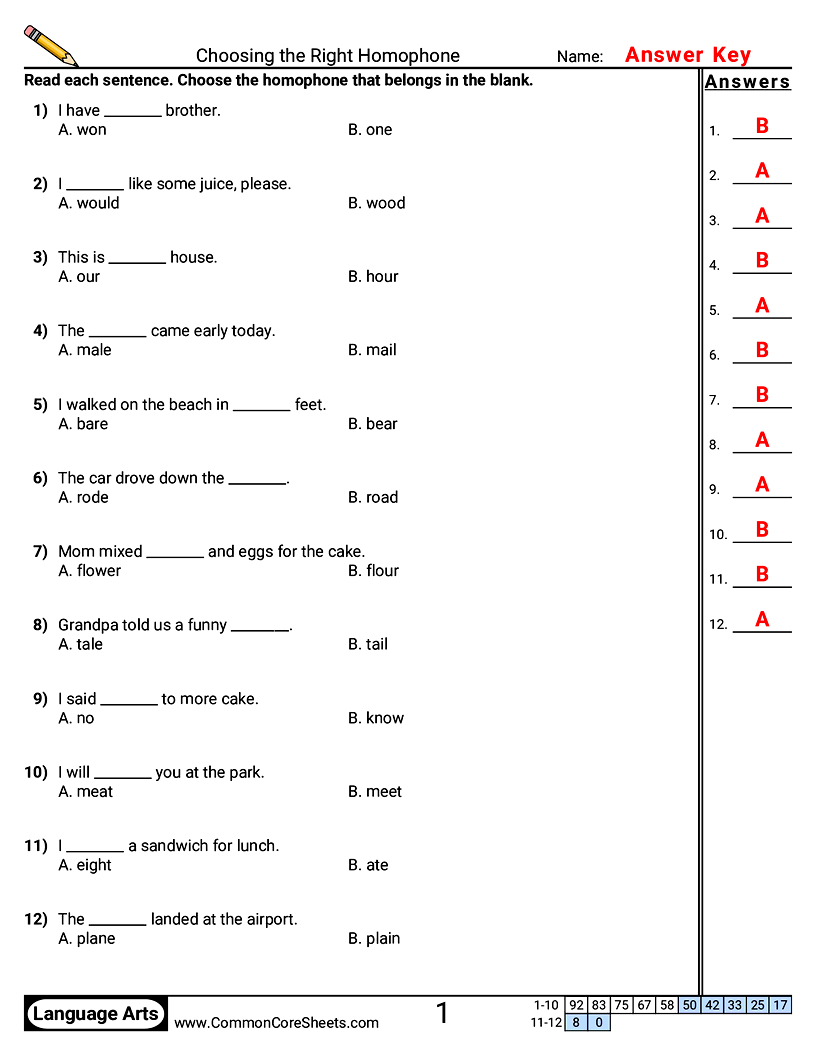
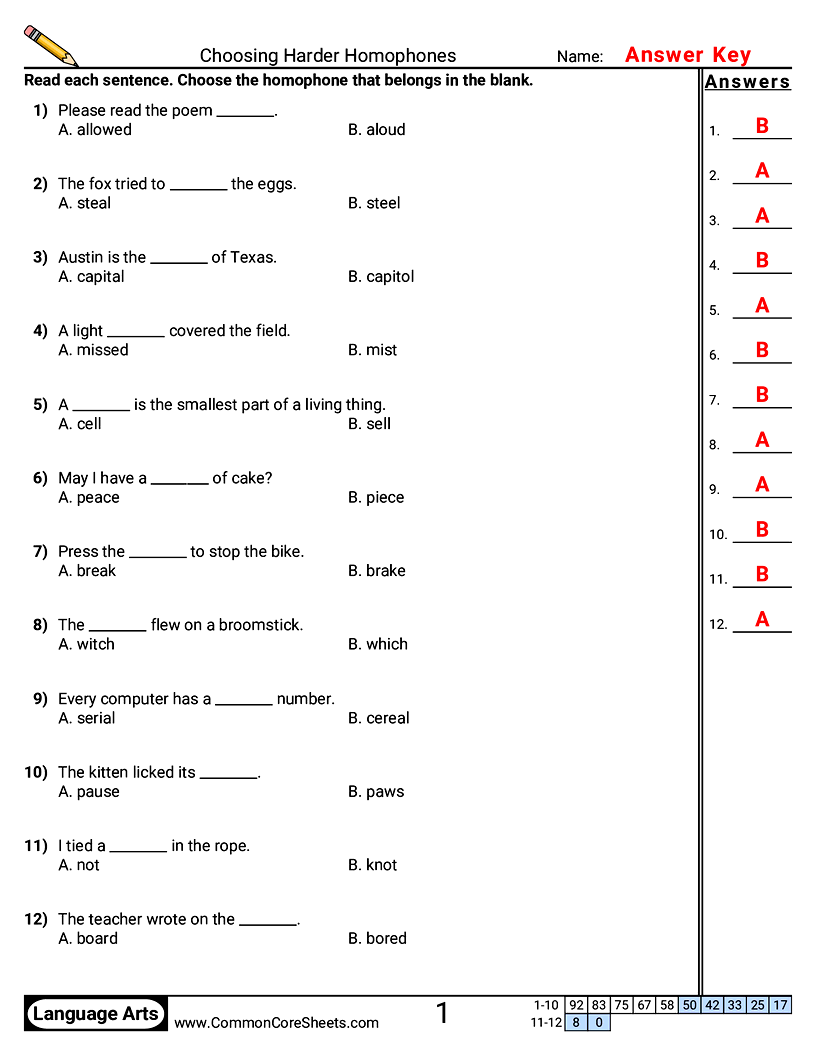
Know what homophones are Choose the right spelling of a word that sounds like another Use the sentence to decide which word fits
L.4.1.g L.5.2.e
Correctly use frequently confused words Spell homophones correctly Use context to decide which word fits
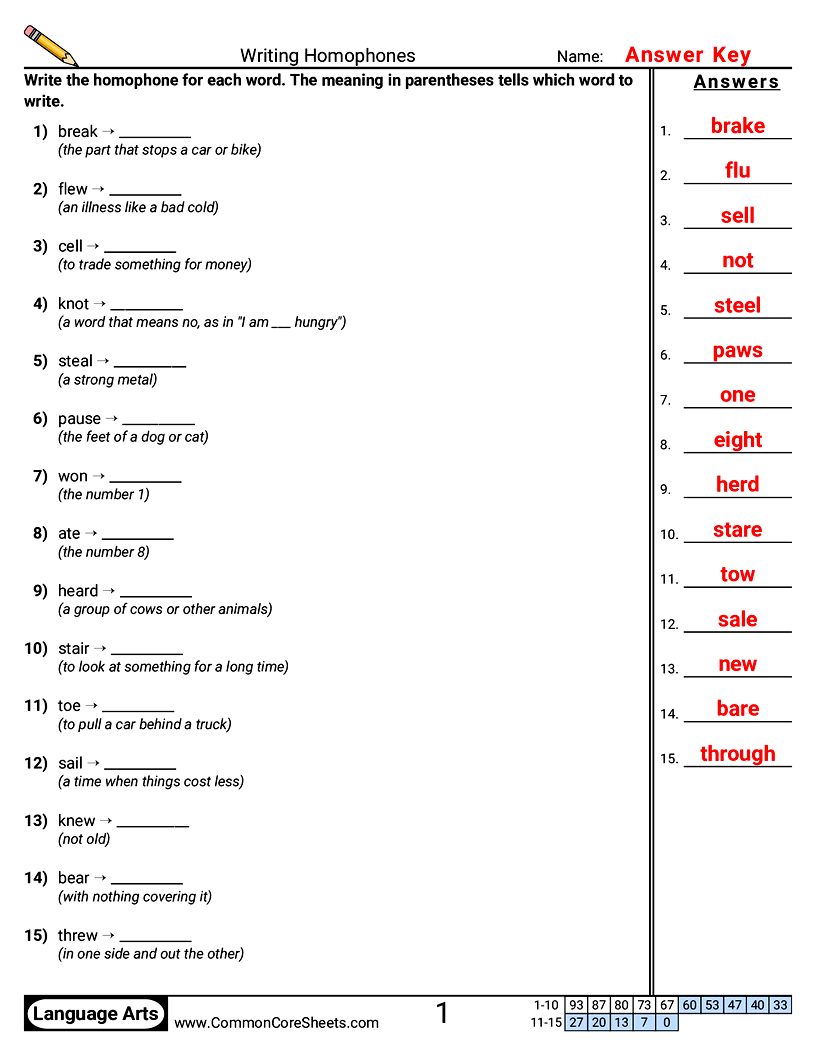
L.2.2.d L.3.2.e
Write the homophone of a word Match a spelling to a meaning Spell common homophones correctly
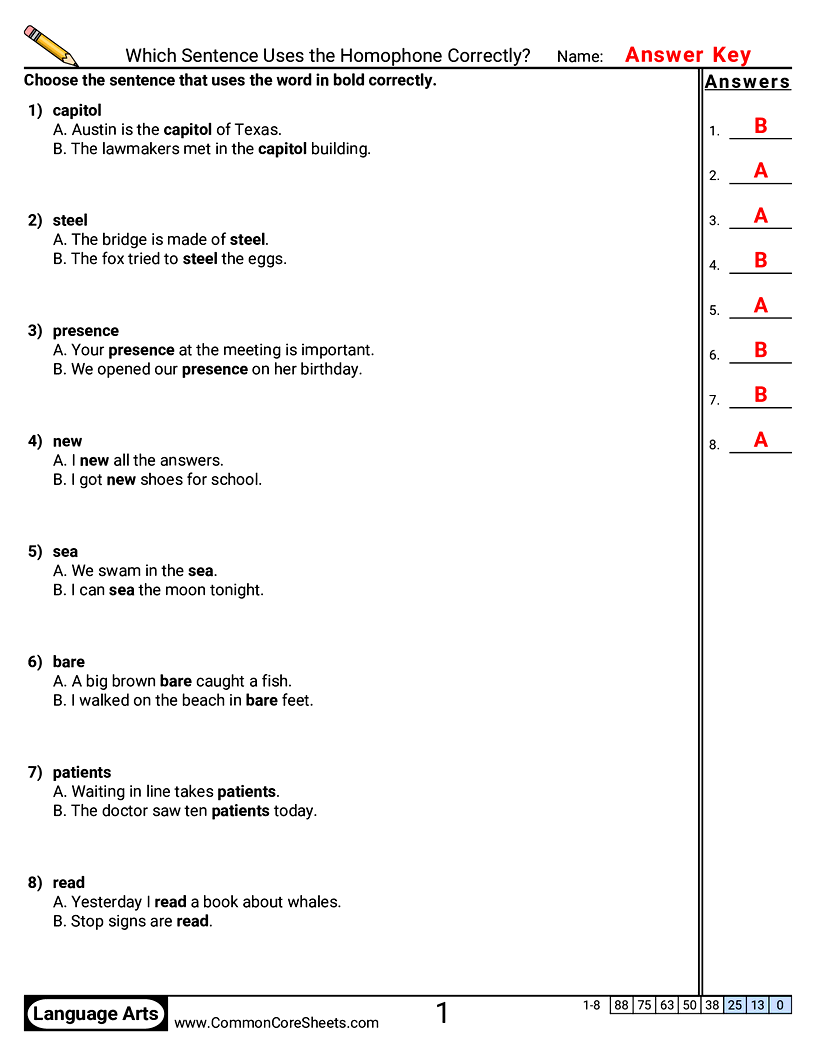
L.3.2.e L.4.1.g
Recognize a homophone used correctly Notice when the wrong homophone is used Know the meanings of common homophones
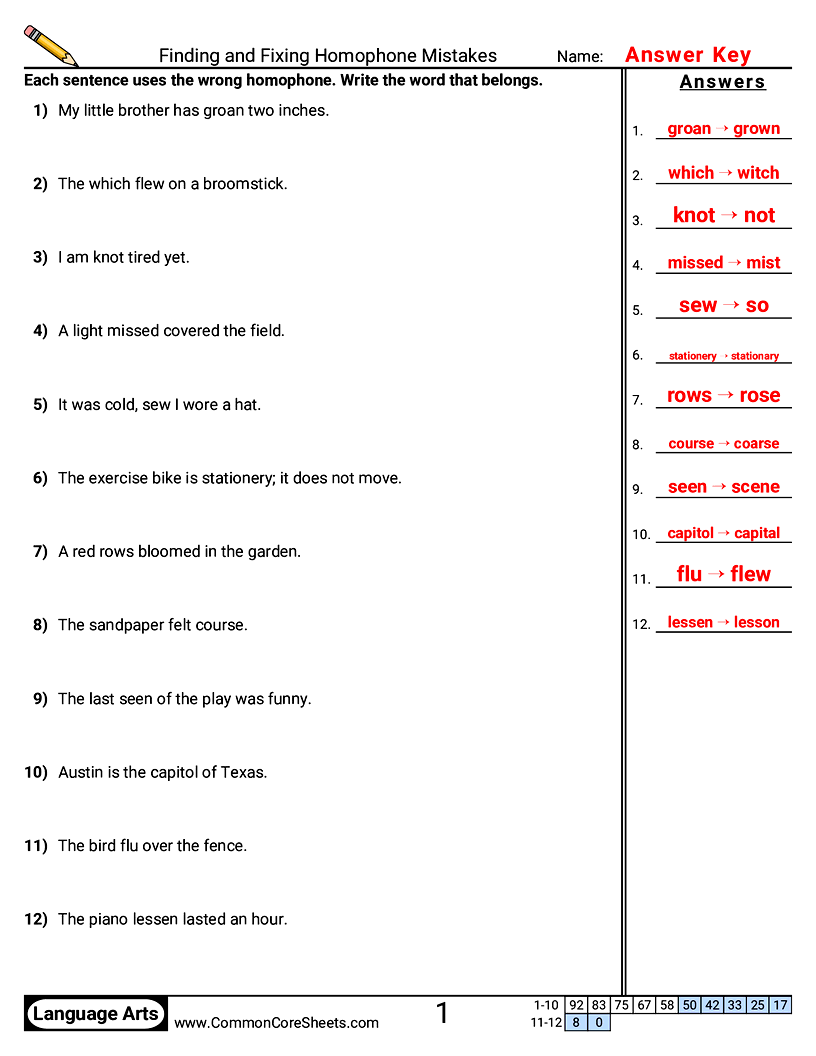
L.4.1.g L.4.2.d
Find a homophone used in the wrong place Correct frequently confused words Proofread for mistakes spell-check misses
L.4.5.a
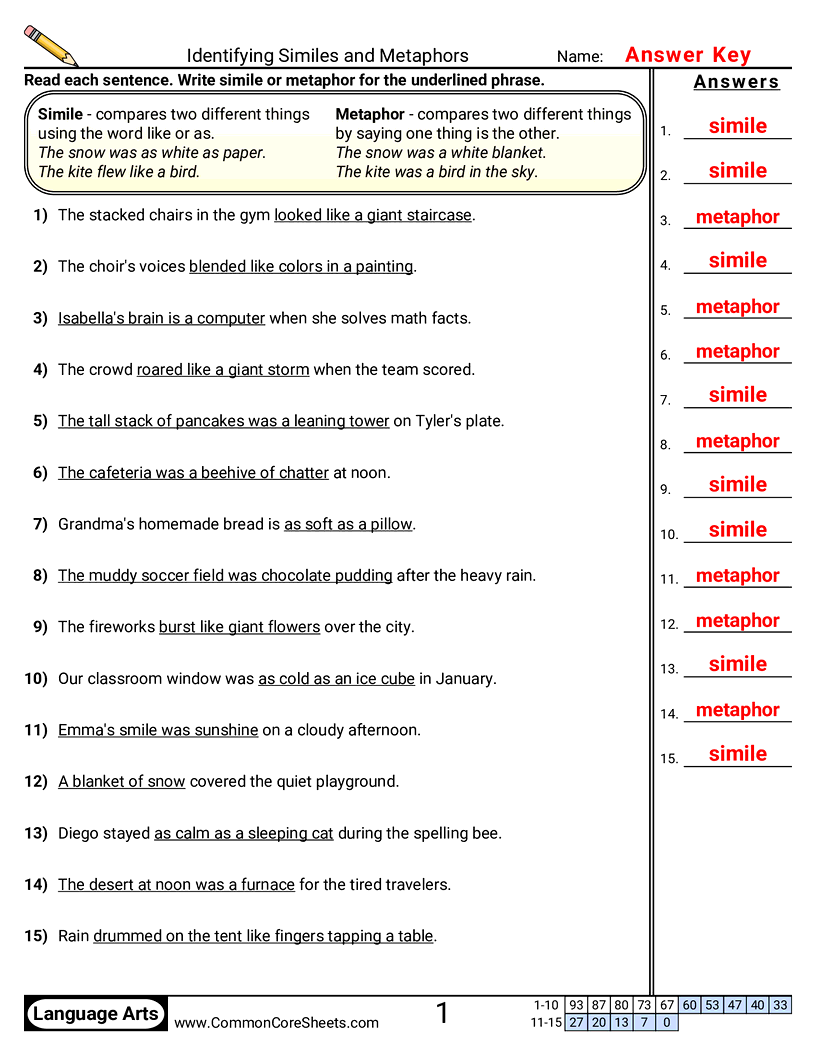
Recognize that a simile compares two things using like or as Recognize that a metaphor compares by saying one thing is another Tell a simile from a metaphor in a sentence Notice comparisons writers use to describe things
L.4.5.a L.5.5.a
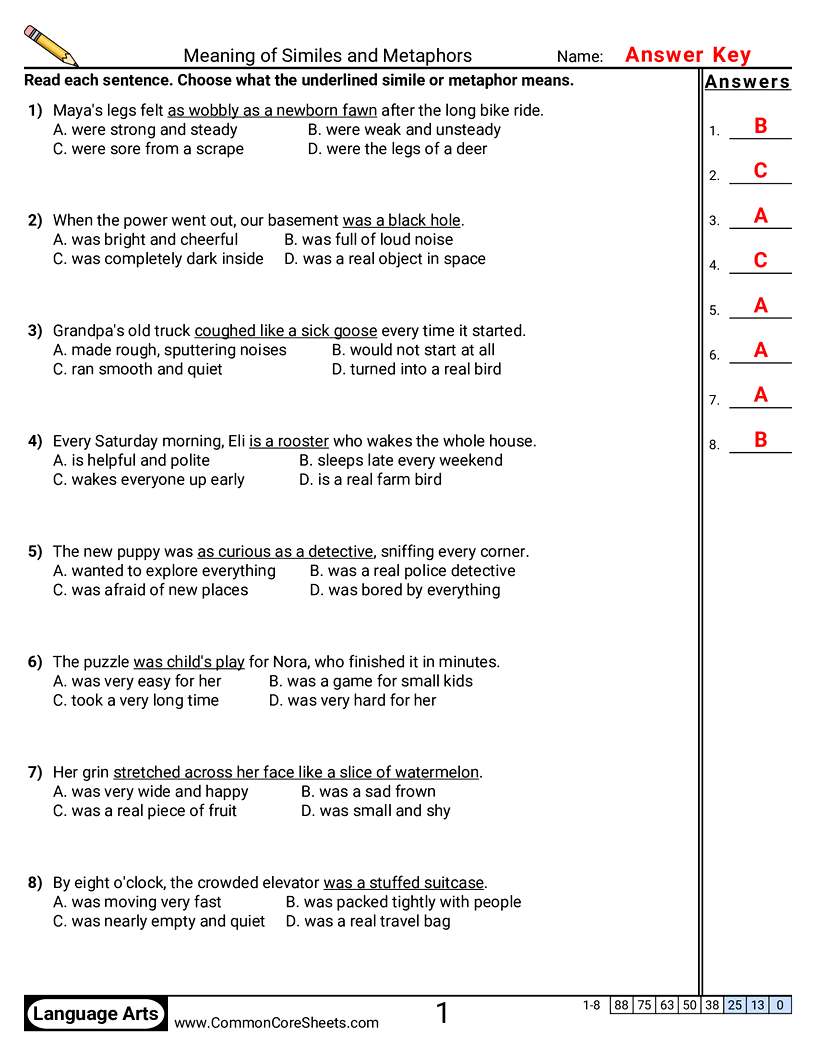
Explain the meaning of a simile or metaphor in context Tell figurative meaning from the literal meaning of the words Use the rest of the sentence as a clue to the meaning Understand why writers use comparisons
L.5.5 L.6.5.a
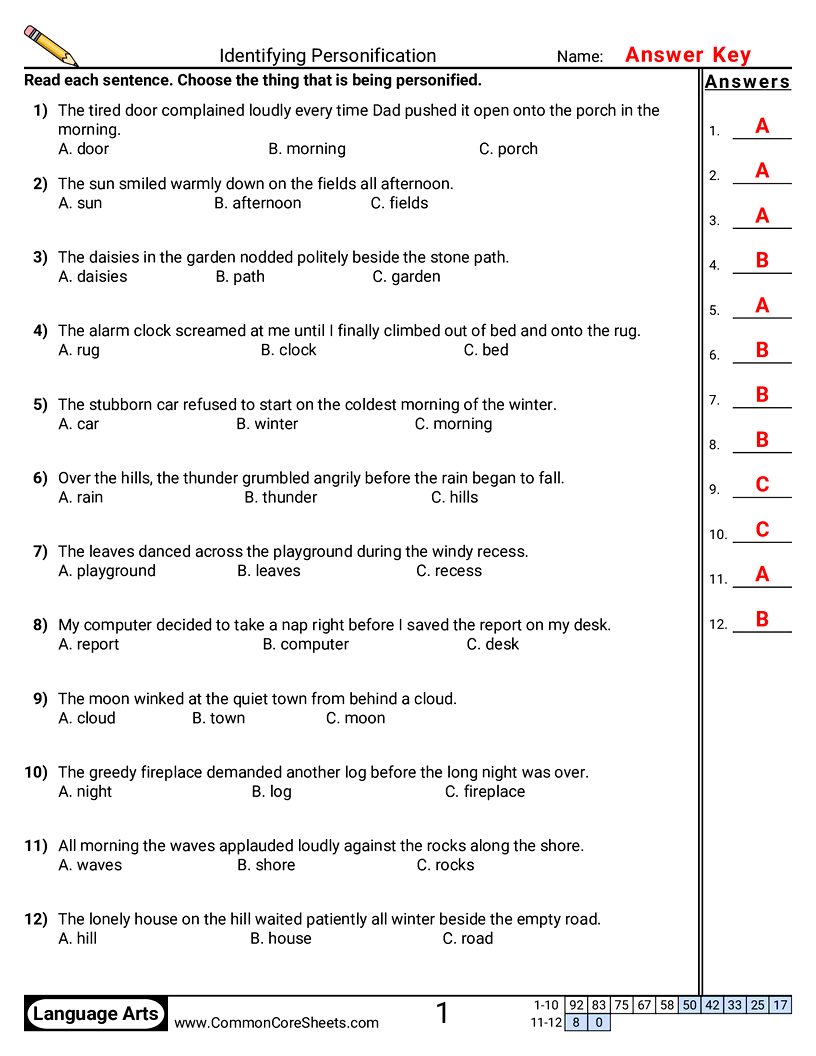
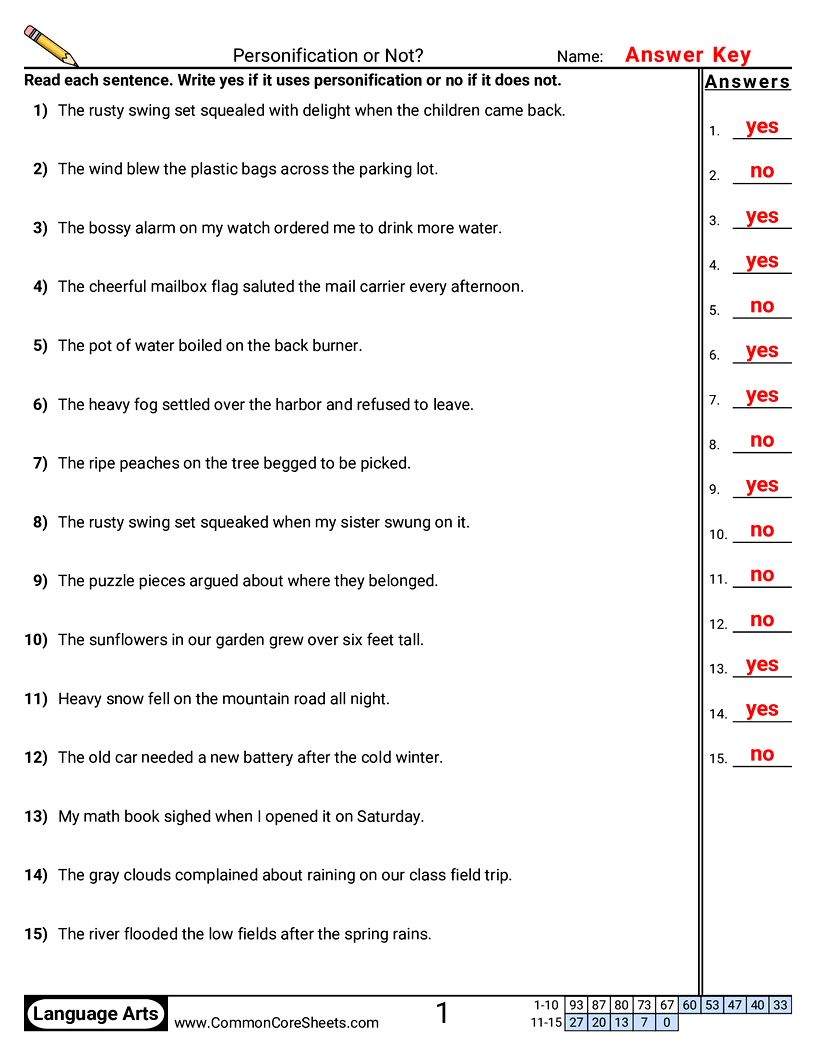
Recognize personification in a sentence Find the non-human thing that is given human actions Tell which words show the human action Understand how personification helps a reader picture a scene
RL.2.4
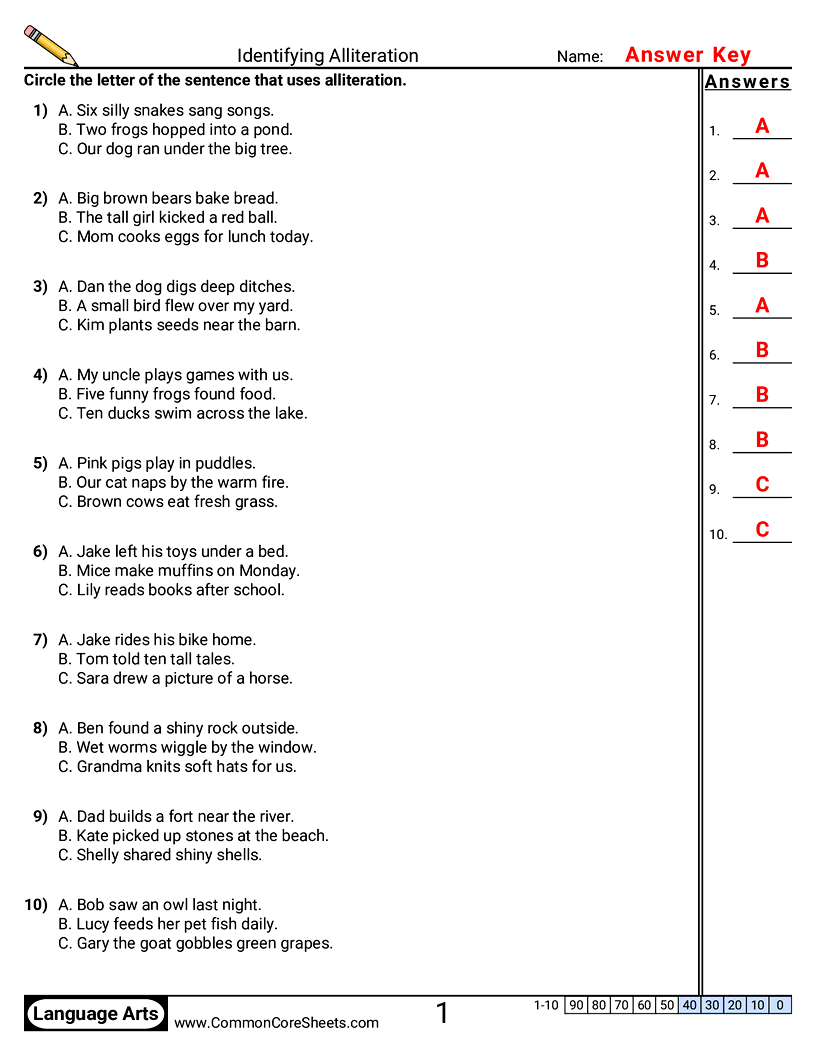
Recognize alliteration in a sentence Listen for words that begin with the same sound Tell a sentence with alliteration from one without Notice how alliteration makes writing fun to read aloud
L.5.5.a
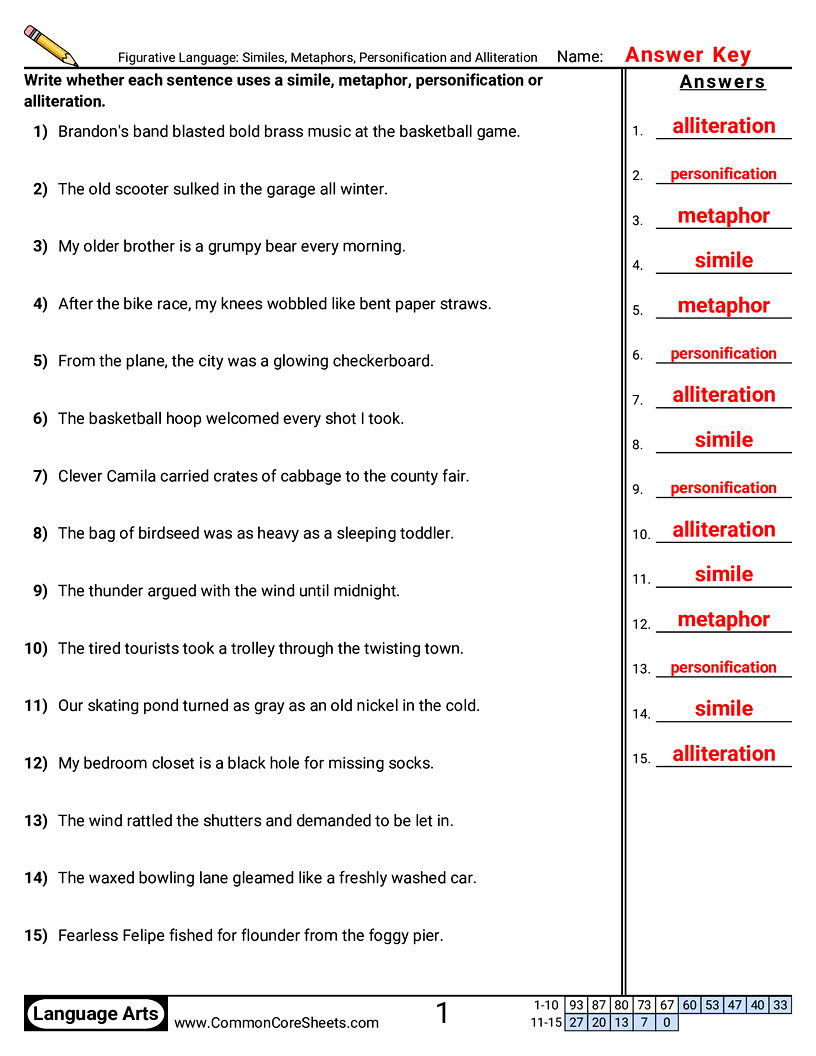
Identify similes, metaphors, personification and alliteration Tell the four kinds of figurative language apart Explain the clue that shows which kind a sentence uses Notice figurative language while reading
L.3.5.a L.4.5.a
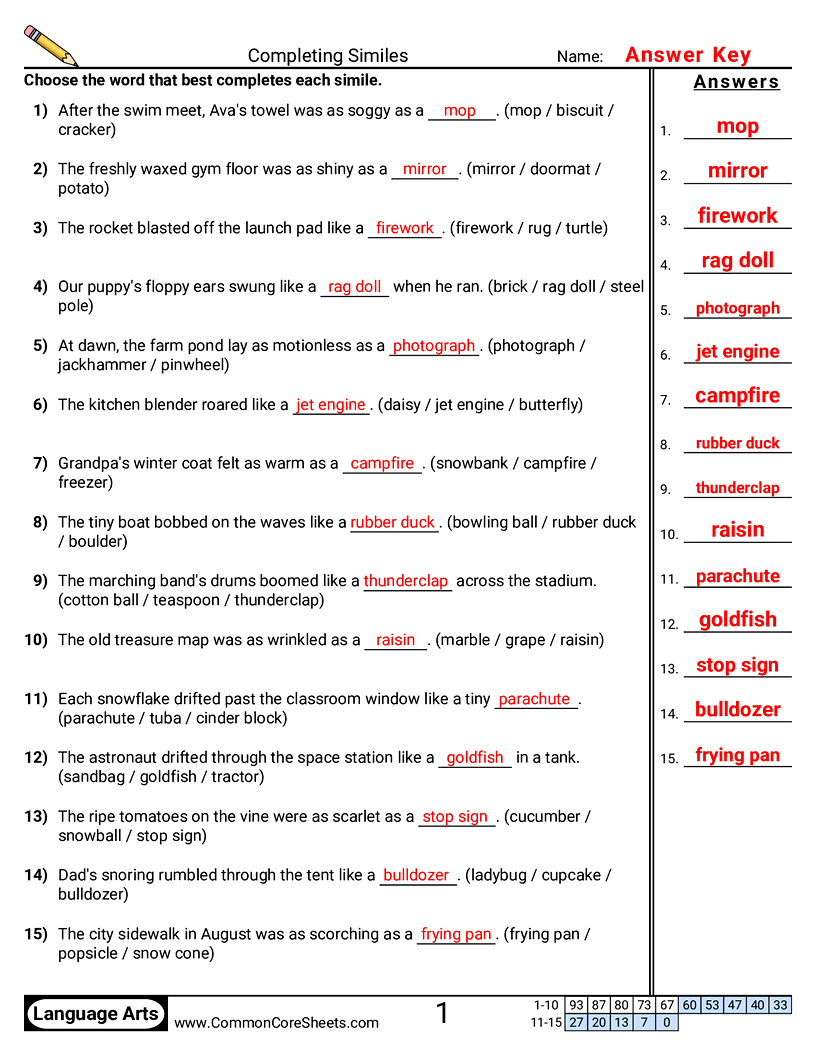
Complete a simile with a fitting comparison Think about the quality two things share Recognize similes that use like or as Choose words that make writing more vivid
L.4.5.a
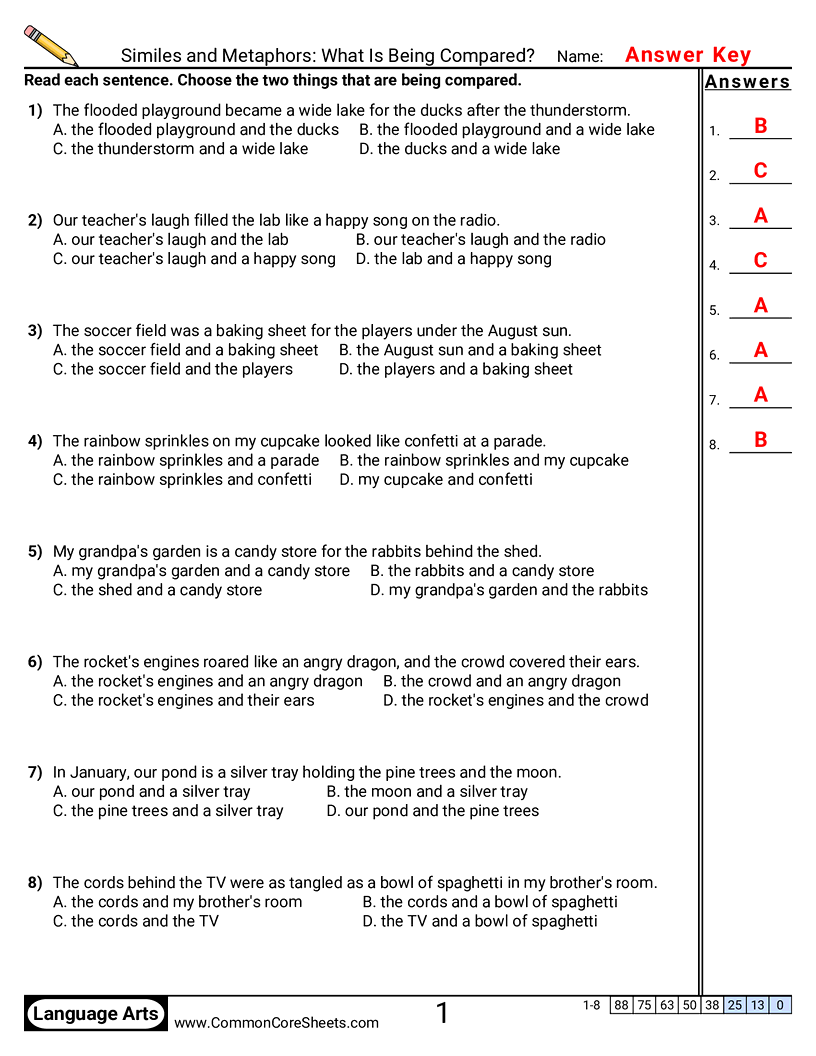
Find the two things compared in a simile or metaphor Tell the subject of a comparison from what it is compared to Read similes and metaphors closely Explain why a writer chose a comparison
L.5.5 L.6.5.a
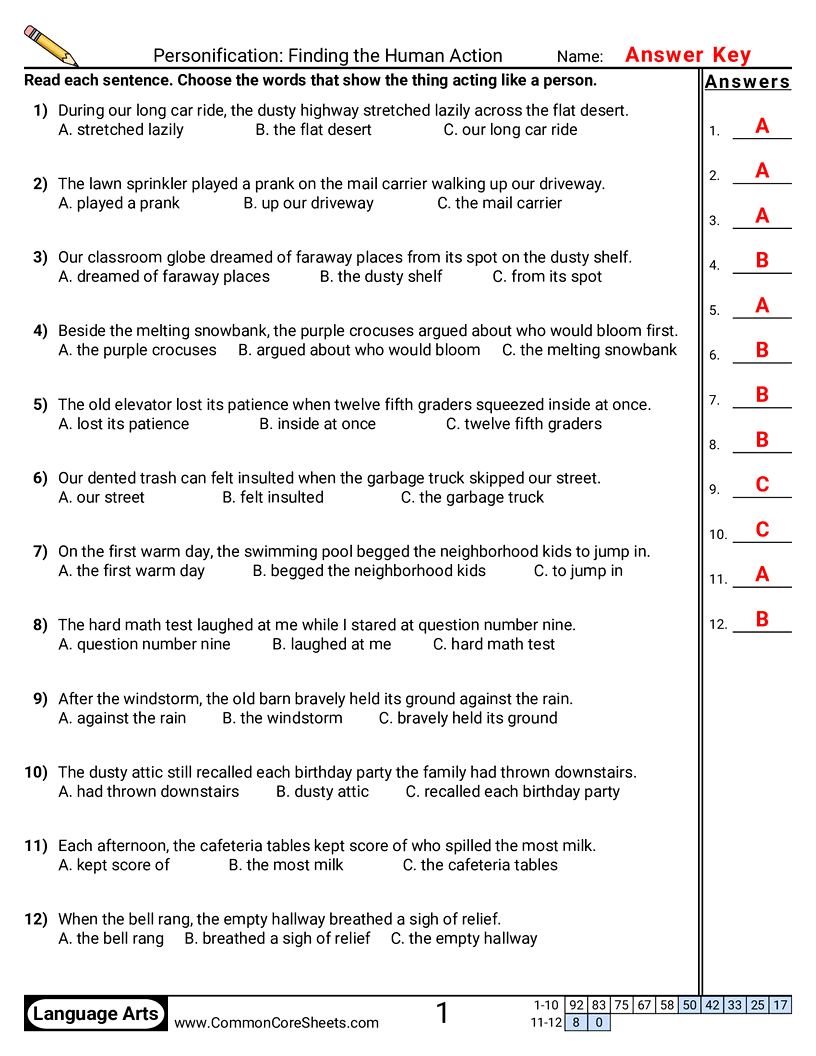
Find the words that create personification Tell human actions from ordinary actions Understand how verbs bring things to life Explain how personification helps a reader picture a scene
L.5.5
Recognize personification in a sentence Tell figurative language from literal language Notice when a thing is given a human action Read verbs carefully
RL.2.4
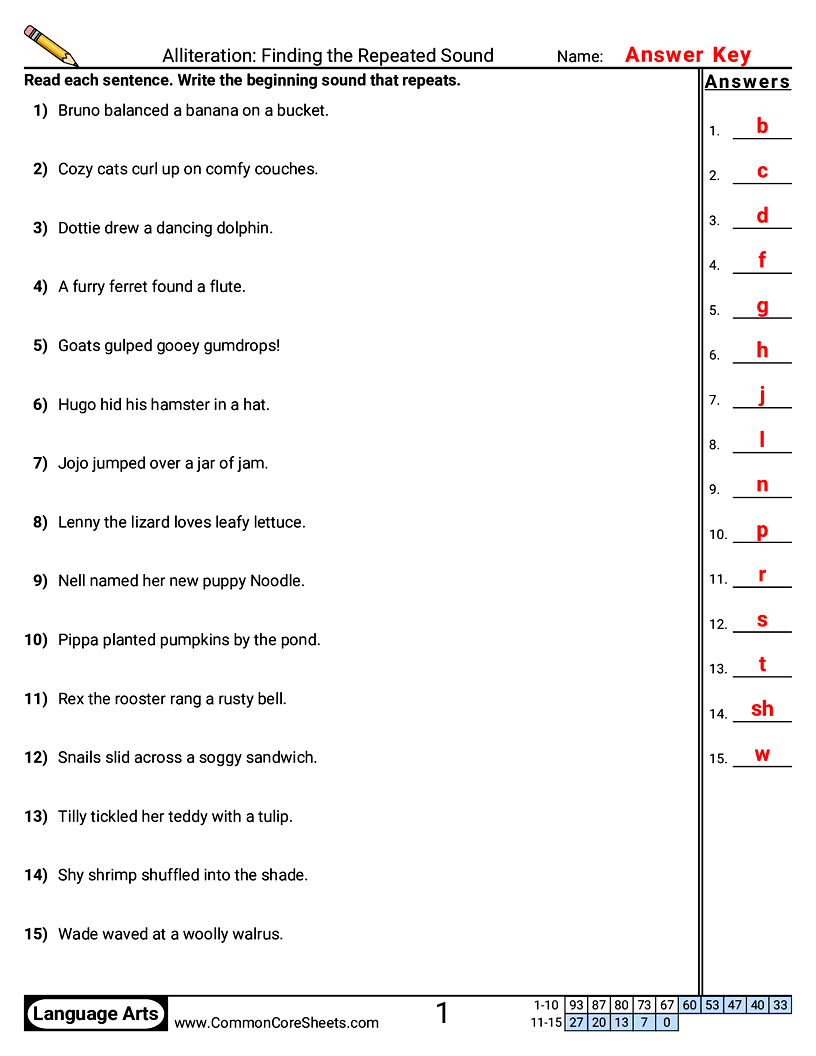
Hear the repeated beginning sound in alliteration Match a sound to its letter or letters Recognize alliteration in a sentence Enjoy the sound of words read aloud
RL.2.4
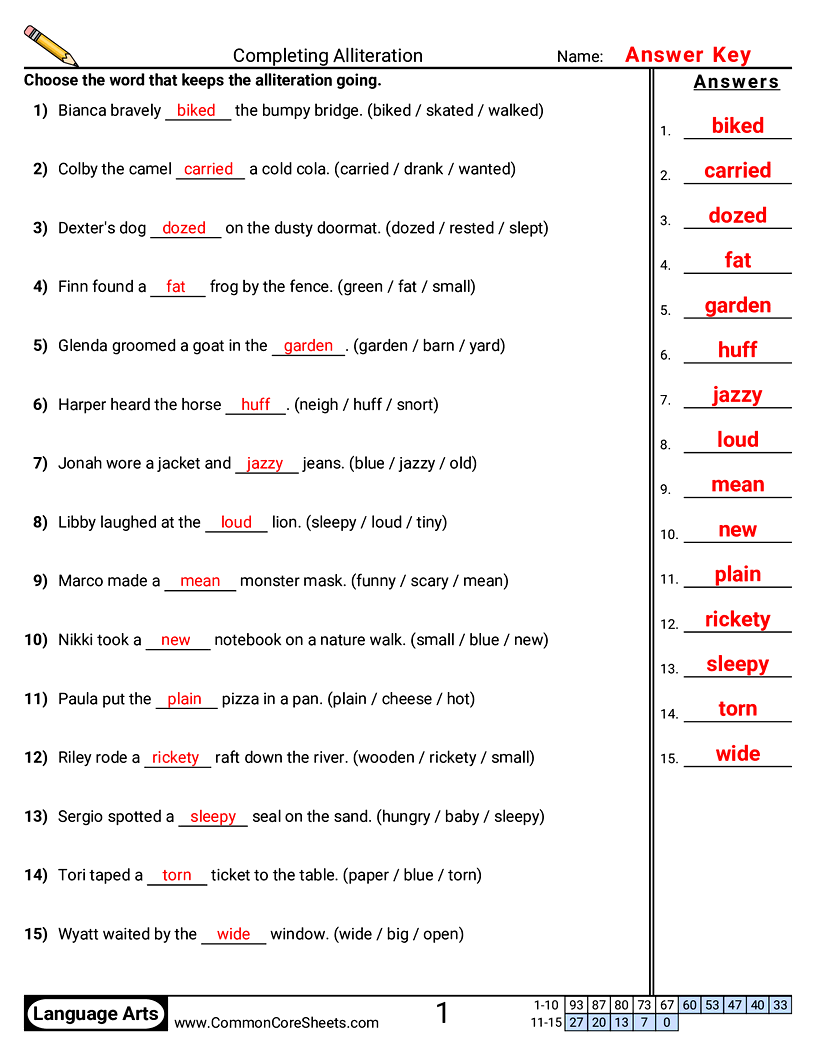
Complete a sentence so it uses alliteration Listen for the repeated beginning sound Choose a word by its beginning sound Write playful sentences
RL.2.4
Know what onomatopoeia is Find sound words in a sentence Hear how sound words help a reader imagine Use onomatopoeia in writing
L.5.5.a
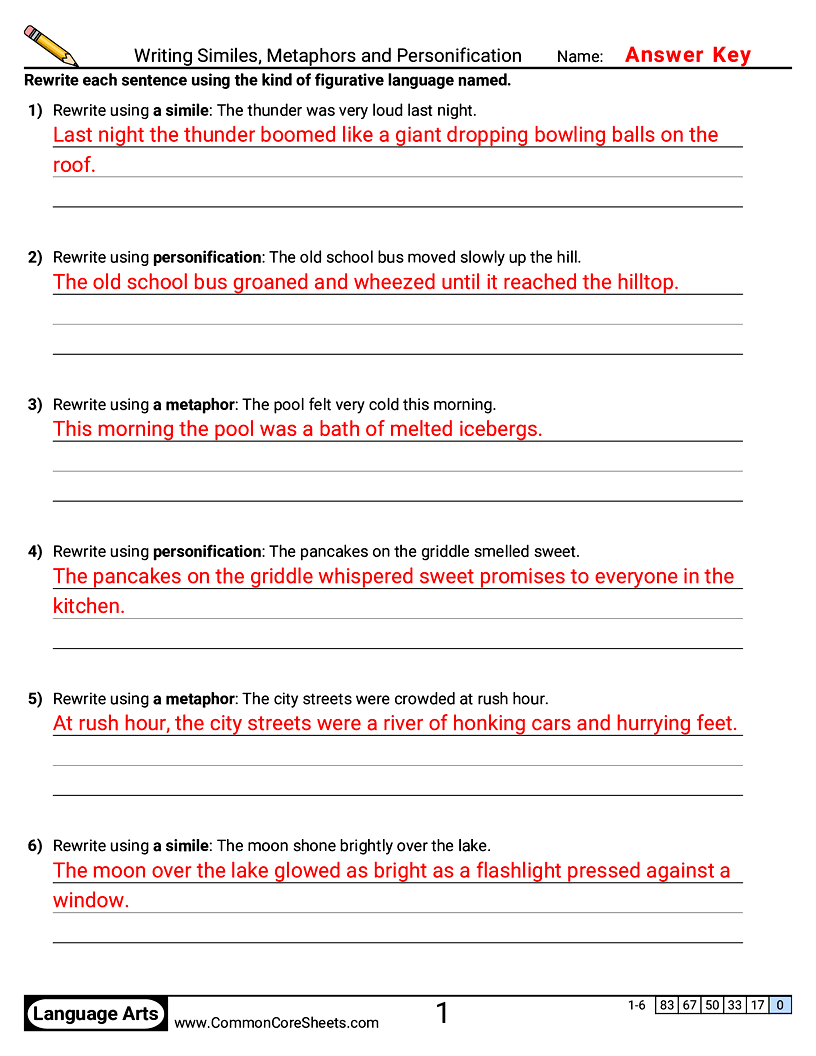
Write a simile, a metaphor and personification Turn a plain sentence into a vivid one Choose a fitting comparison Use figurative language in their own writing
L.5.5 L.6.5.a
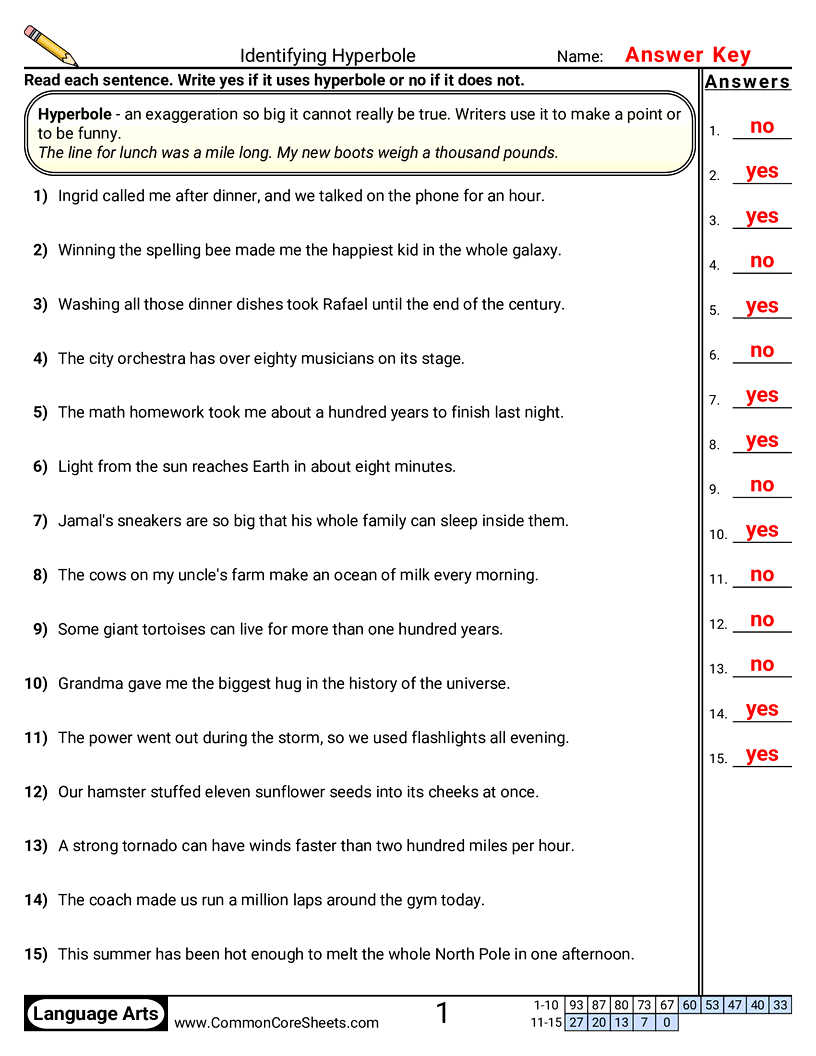
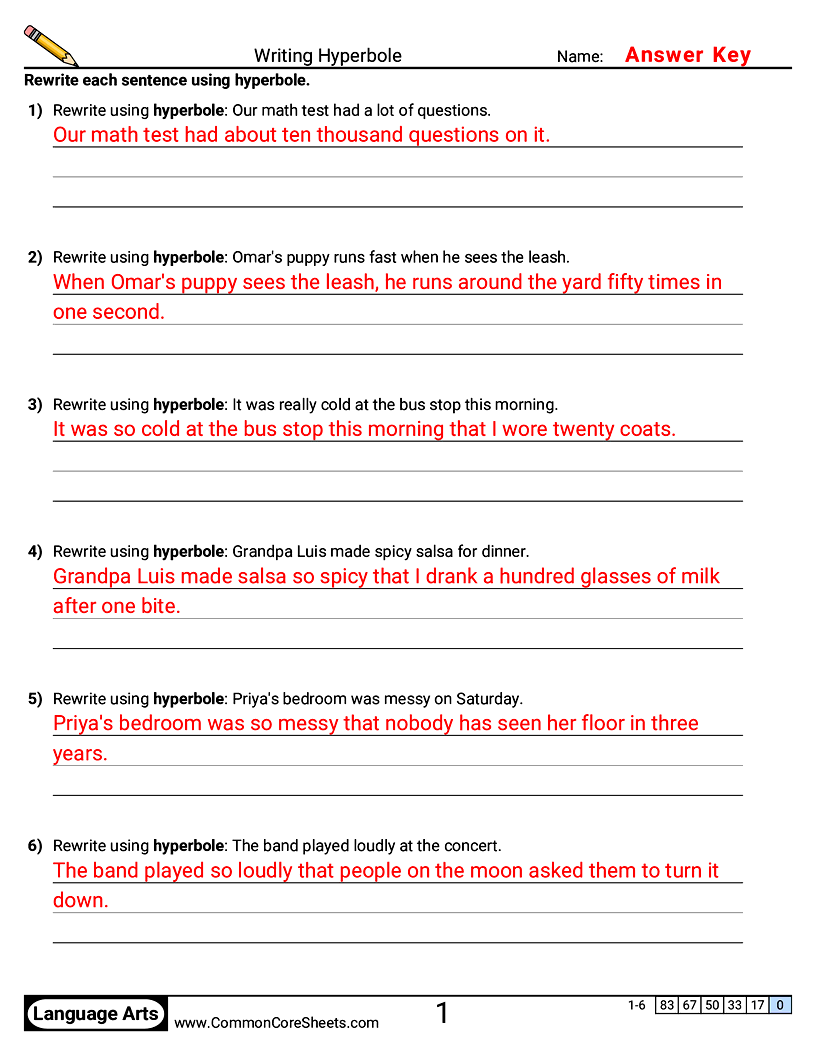
Recognize hyperbole in a sentence Tell an exaggeration from a statement that is really true Notice that a big number is not always hyperbole Understand why writers exaggerate
L.4.5 L.5.5
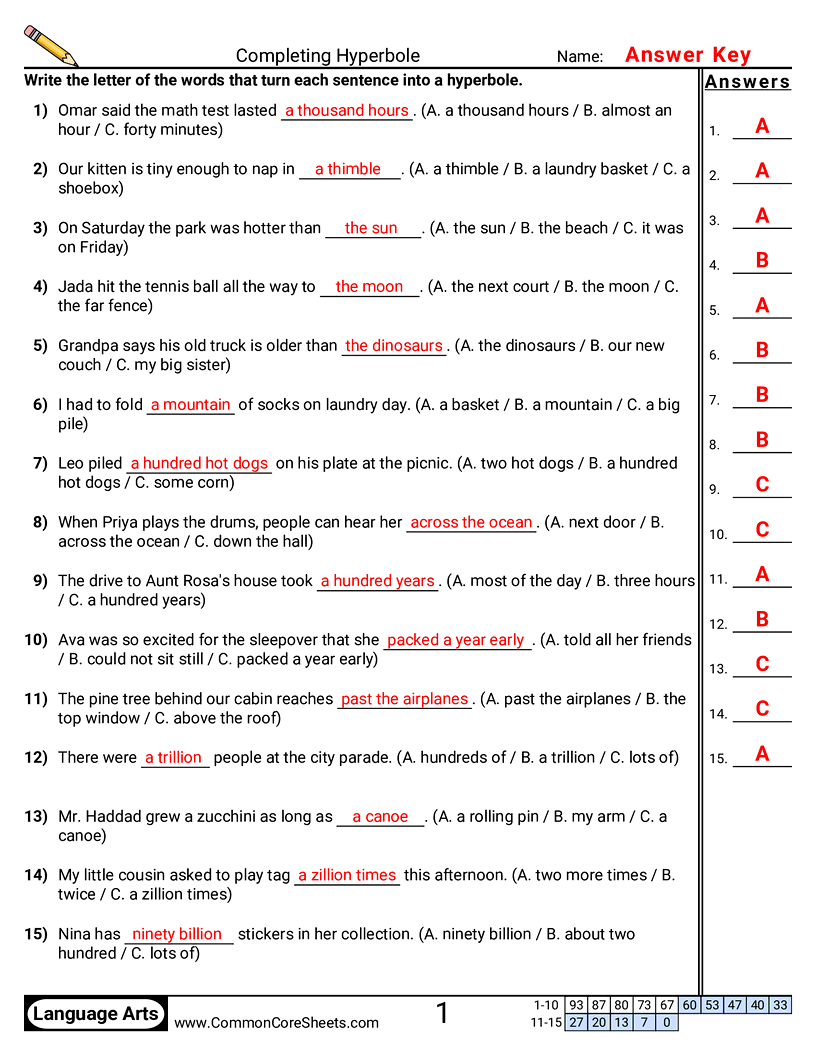
Complete a sentence so it uses hyperbole Tell an exaggeration from a believable detail Recognize the words that make a sentence a hyperbole Choose words that make writing lively
L.5.5 L.6.5.a
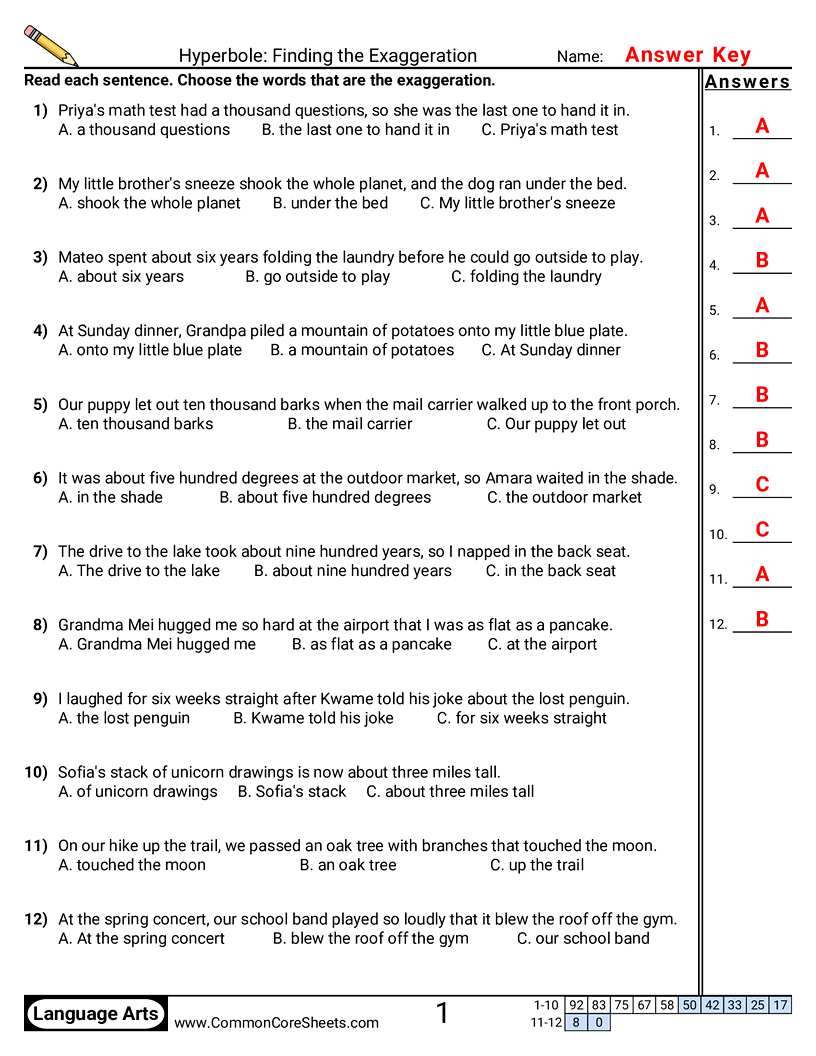
Find the hyperbole in a sentence Tell the exaggerated words from the literal ones Read each part of a sentence closely Explain what makes a statement an exaggeration
L.5.5 L.6.5.a
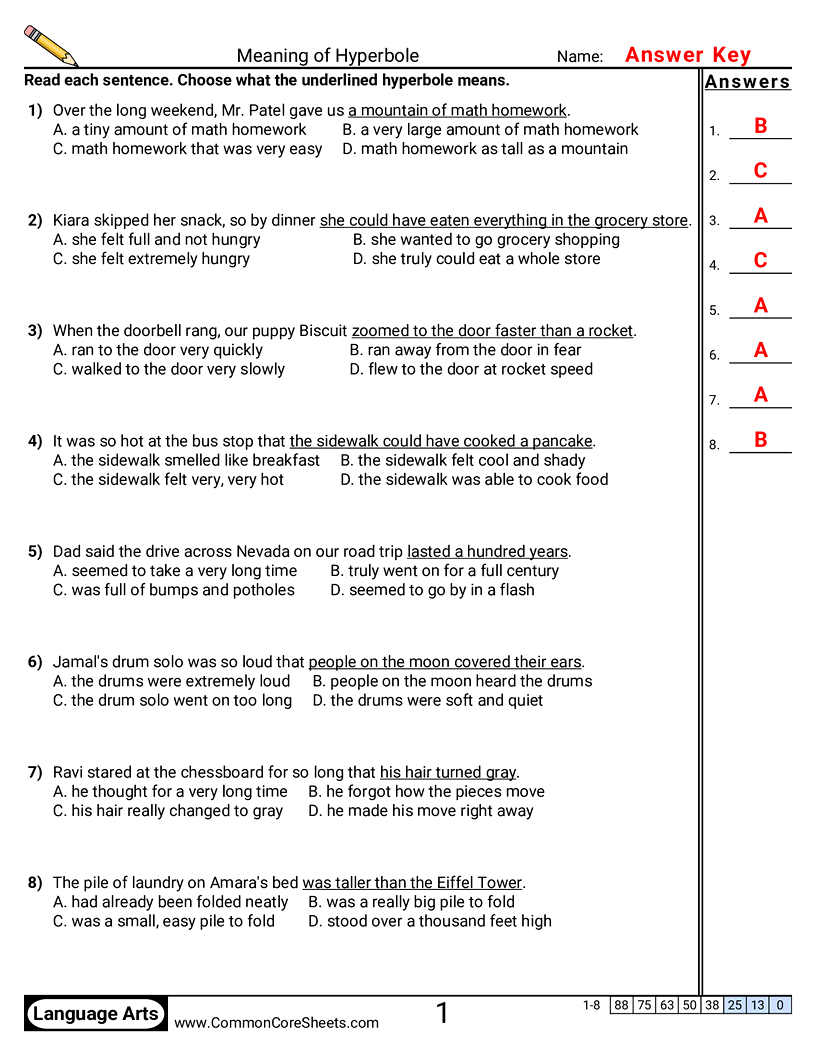
Explain the meaning of a hyperbole in context Tell the real meaning from the literal meaning of the words Use the rest of the sentence as a clue Understand why writers exaggerate
L.5.5
Write a hyperbole Turn a plain sentence into a lively one Choose an exaggeration that fits the meaning Use hyperbole in their own writing
L.4.5.b L.5.5.b
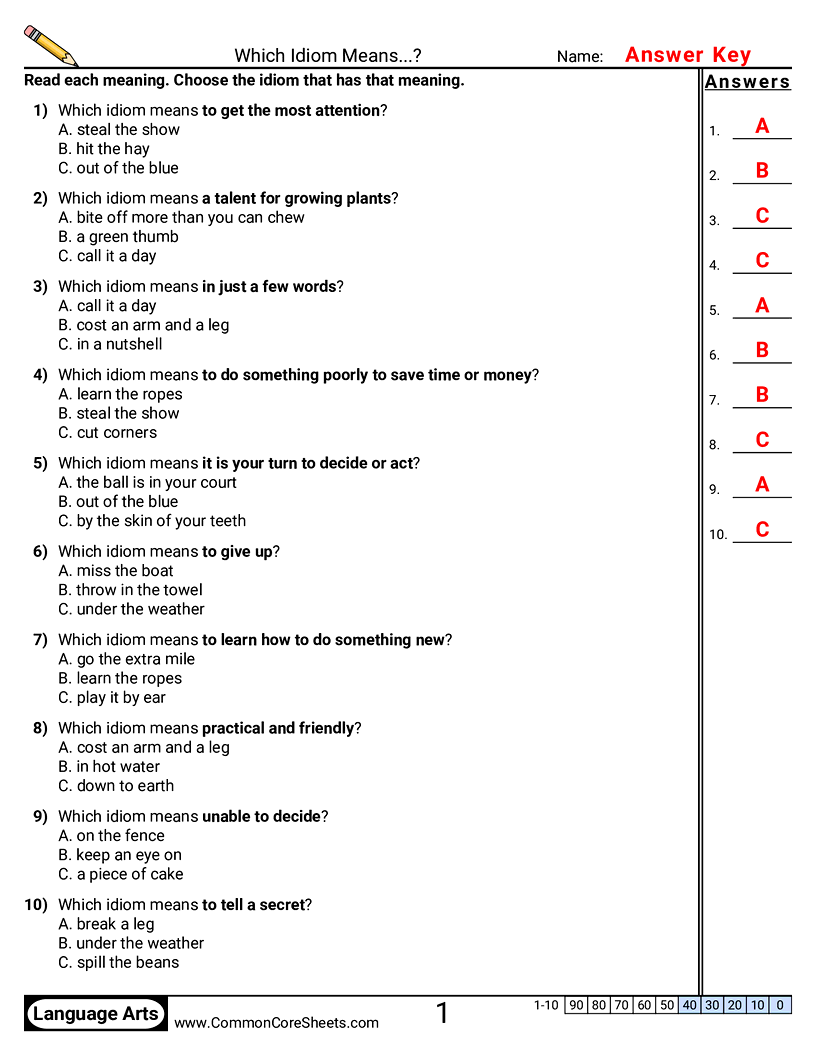
Explain the meaning of common idioms Tell an idiom's meaning from its literal meaning Use the sentence to figure out an idiom
L.3.5.a
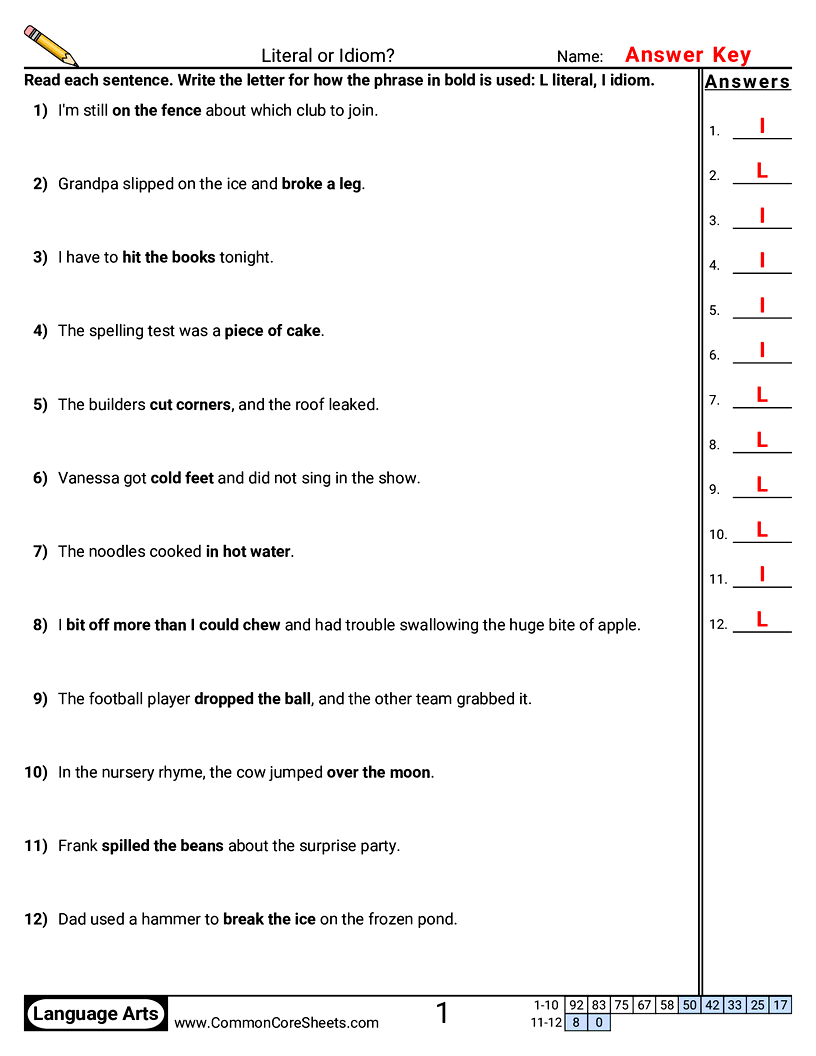
Tell literal and nonliteral meanings apart Recognize common idioms in sentences Use context to decide what a phrase means
L.4.5.b L.5.5.b
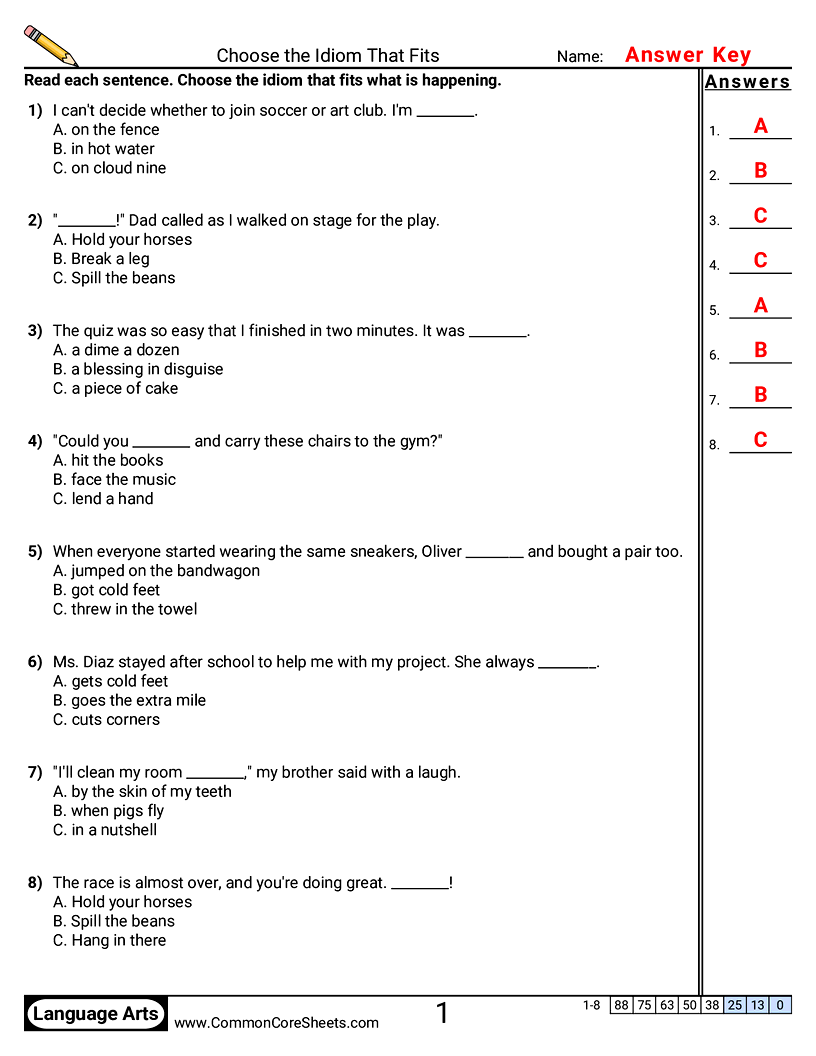
Use common idioms correctly Match an idiom to a situation Explain what an idiom means
L.4.5.b L.5.5.b
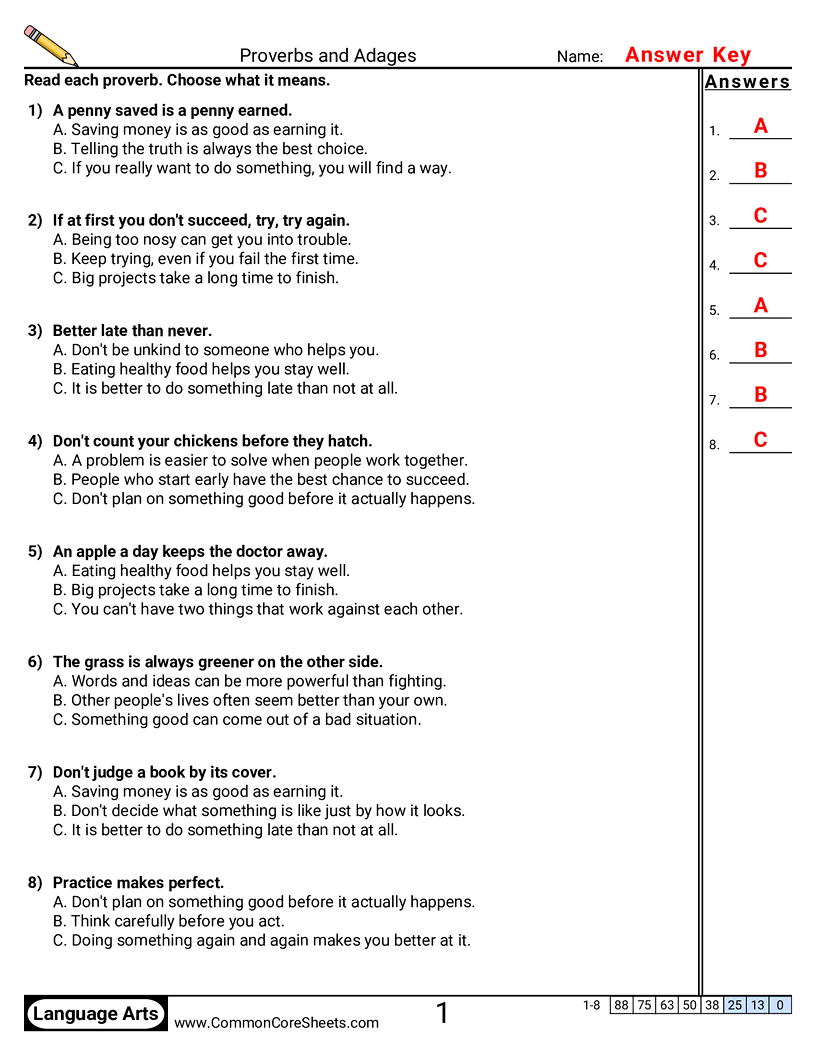
Explain the meaning of common proverbs and adages Connect a saying to the advice it gives Tell similar proverbs apart
L.4.5.b
Recall common idioms from their meanings Explain the meaning of common idioms Choose an idiom to say something in a new way
L.4.5.c
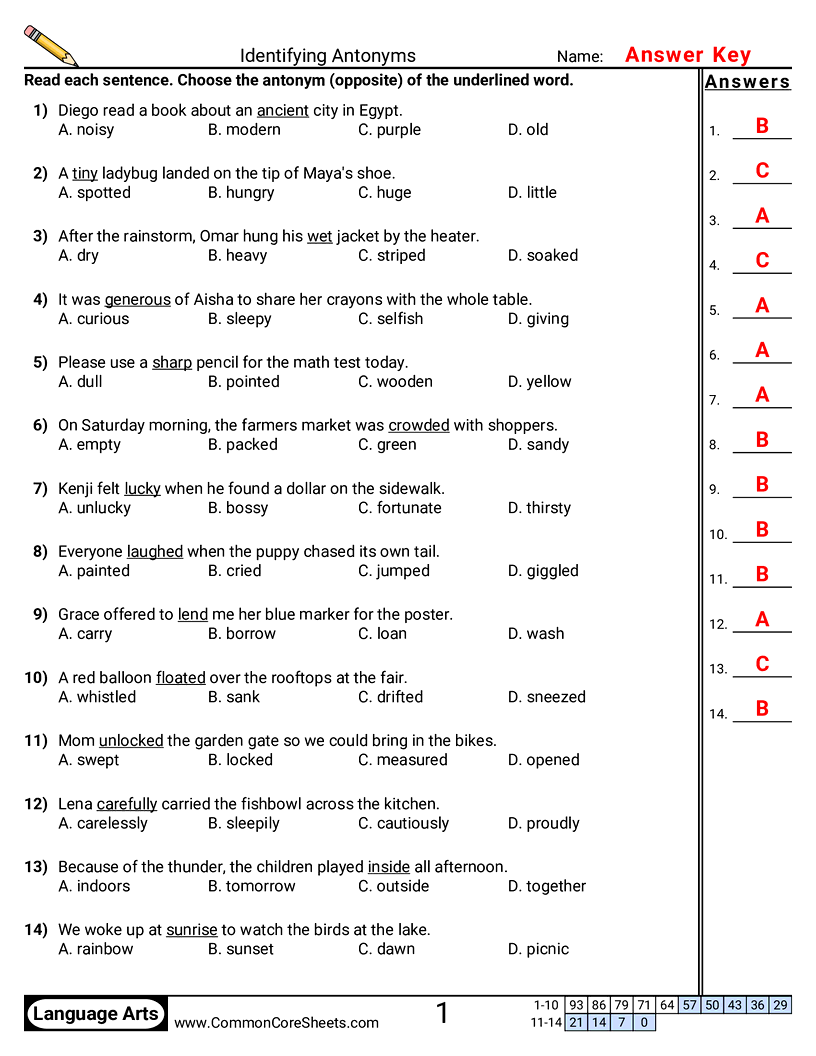
Identify the antonym of a word Tell antonyms from synonyms Use the sentence to understand the meaning of a word Build vocabulary by learning words in pairs
L.4.5.c L.5.5.c
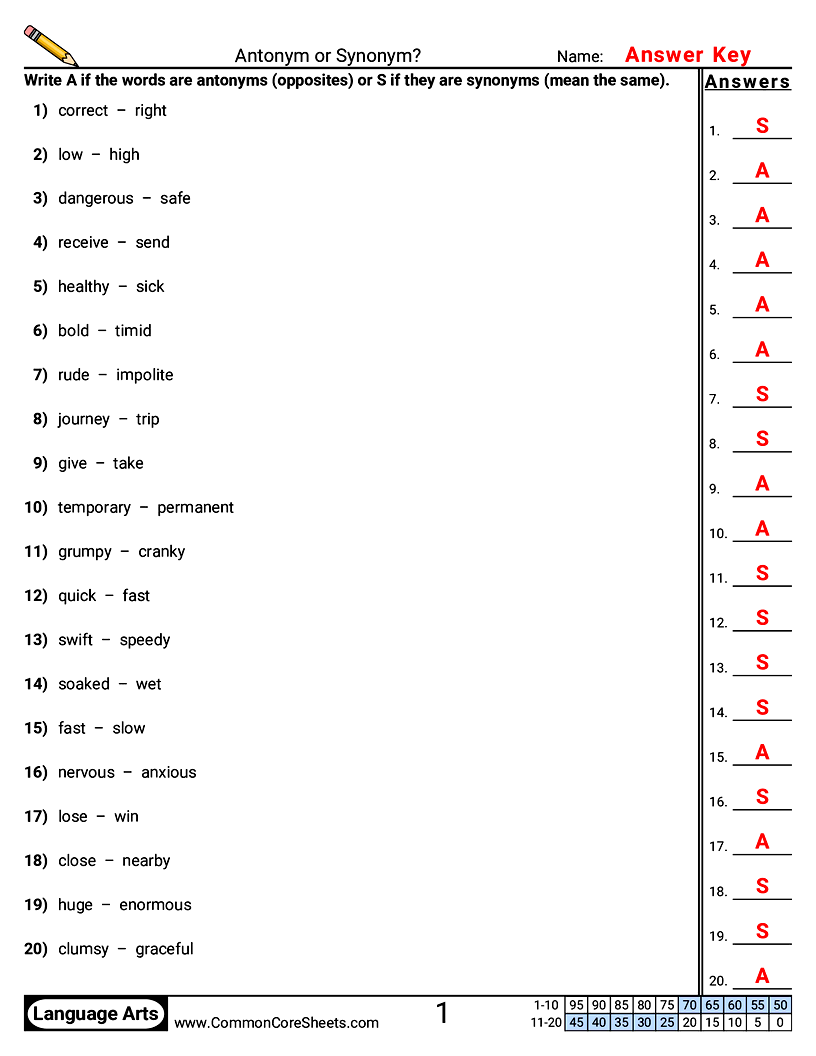
Recognize antonyms as words with opposite meanings Recognize synonyms as words with the same or nearly the same meaning Tell antonyms and synonyms apart Learn new words by connecting them to words they know
L.4.5.c L.K.5.b
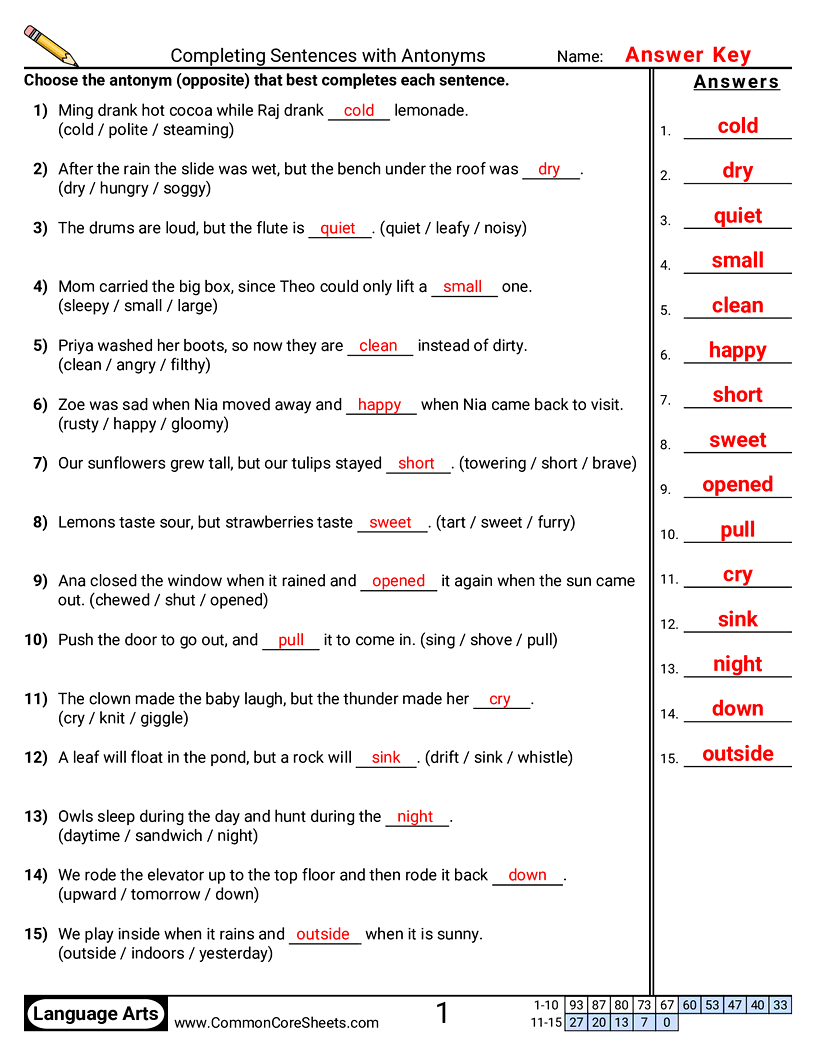
Understand that antonyms are words with opposite meanings Use a contrast in a sentence to find the missing word Choose the antonym of a word in context Use words like but and while to compare ideas
L.3.4.b
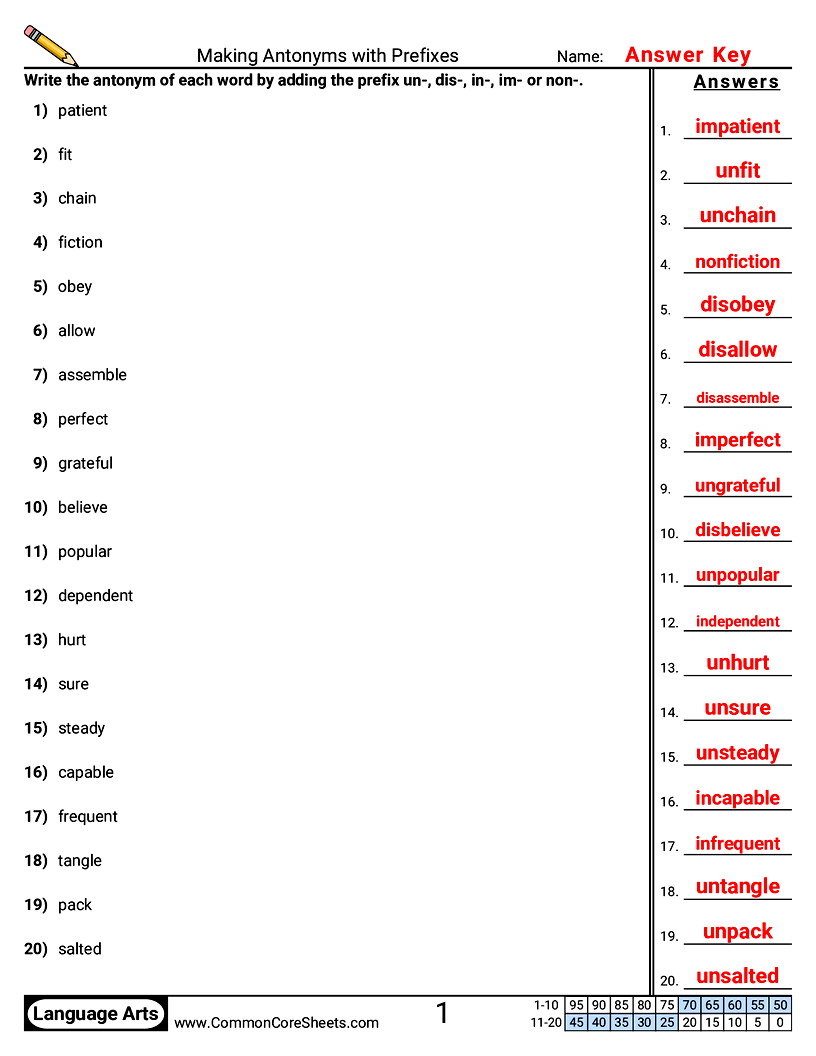
Know that the prefixes un-, dis-, in-, im- and non- can mean not Make an antonym by adding a prefix to a known word Figure out the meaning of a new word with a prefix Spell words with prefixes correctly
L.4.5.c
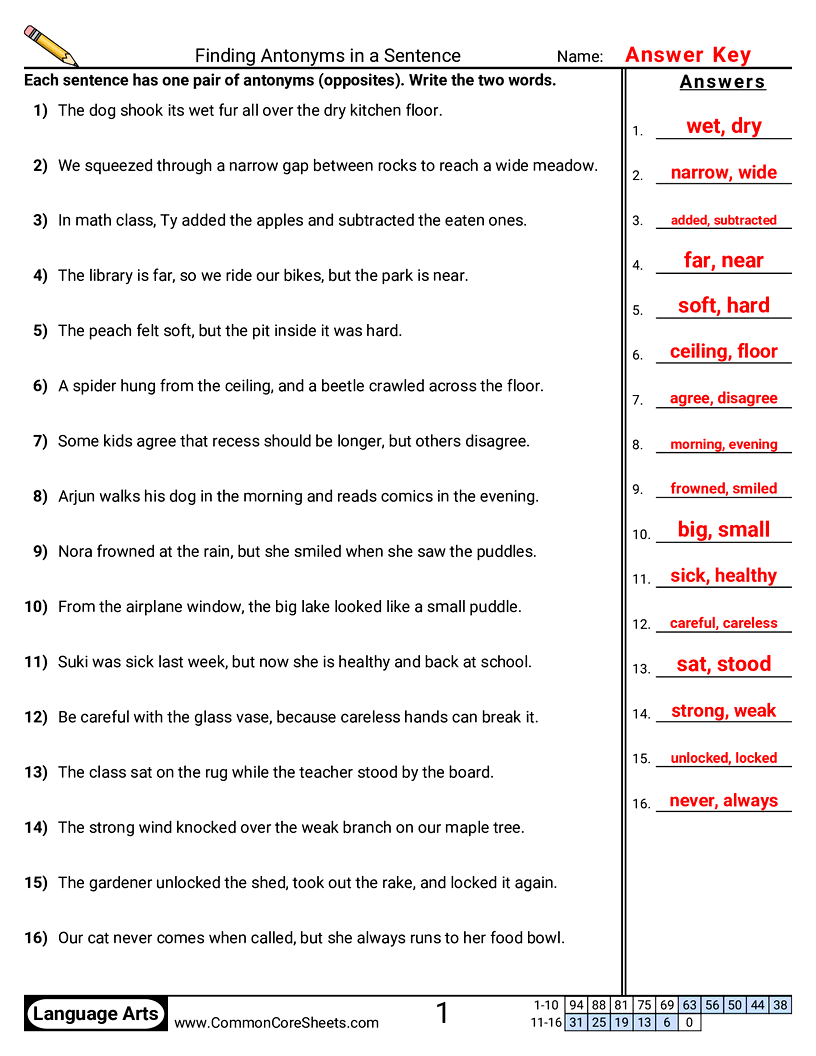
Find a pair of antonyms in a sentence Understand that antonyms are words with opposite meanings Read closely to compare the words in a sentence Notice how writers use opposites to show a contrast
L.6.5.c
Know the difference between denotation and connotation Tell positive and negative connotations apart Notice how word choice shows feelings
L.6.5.c L.7.5.c L.8.5.c
Choose words with the right connotation Use context to tell how a writer feels Distinguish words with similar denotations
L.6.5.c L.7.5.c L.8.5.c
Distinguish among the connotations of words with similar denotations Keep a word's meaning while changing its feeling Tell synonyms from words that only share a feeling
L.2.5.b L.3.5.c
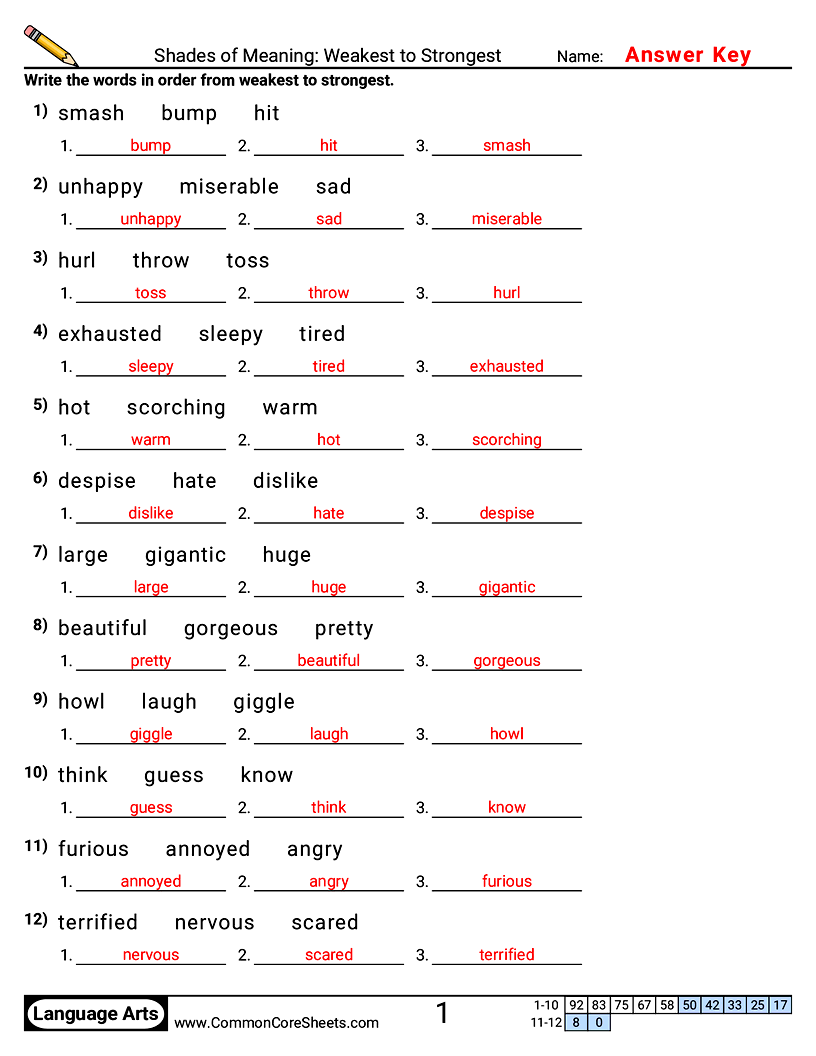
Tell shades of meaning among related words Order words by how strong they are Choose stronger or weaker words when writing
L.2.5.b L.3.5.c
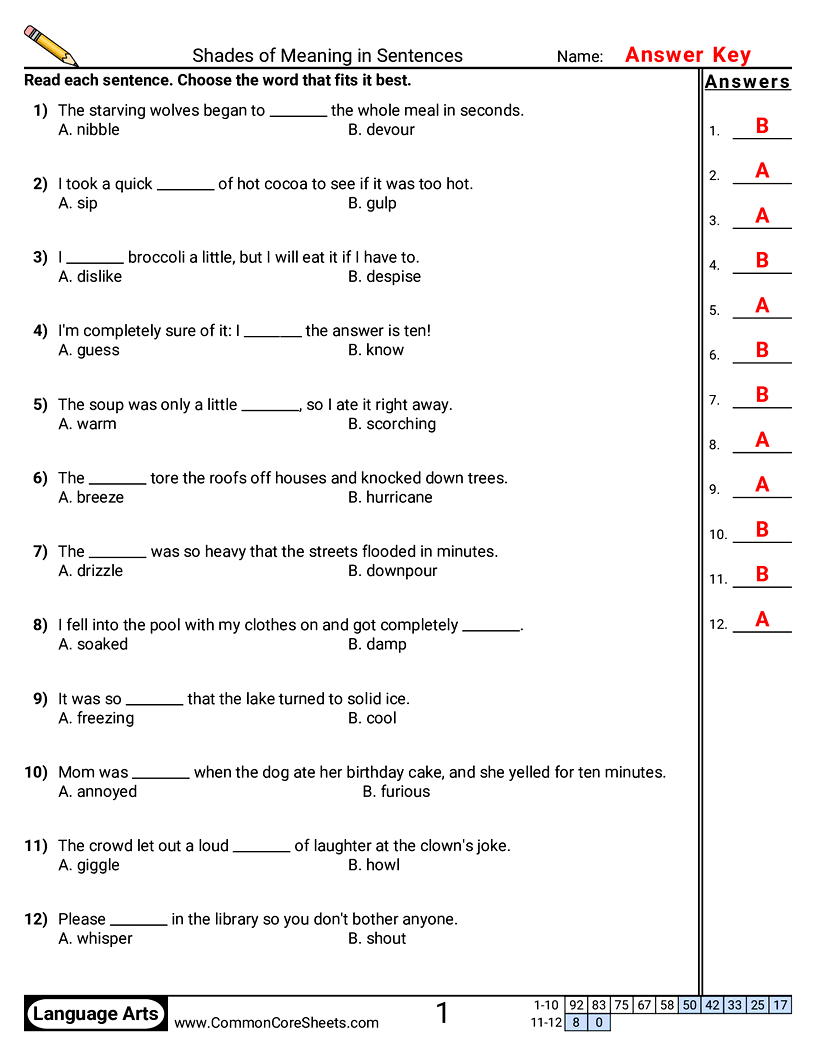
Use context to choose between related words Notice clue words like only a little and so much that Pick words that show the right amount
L.K.5.c
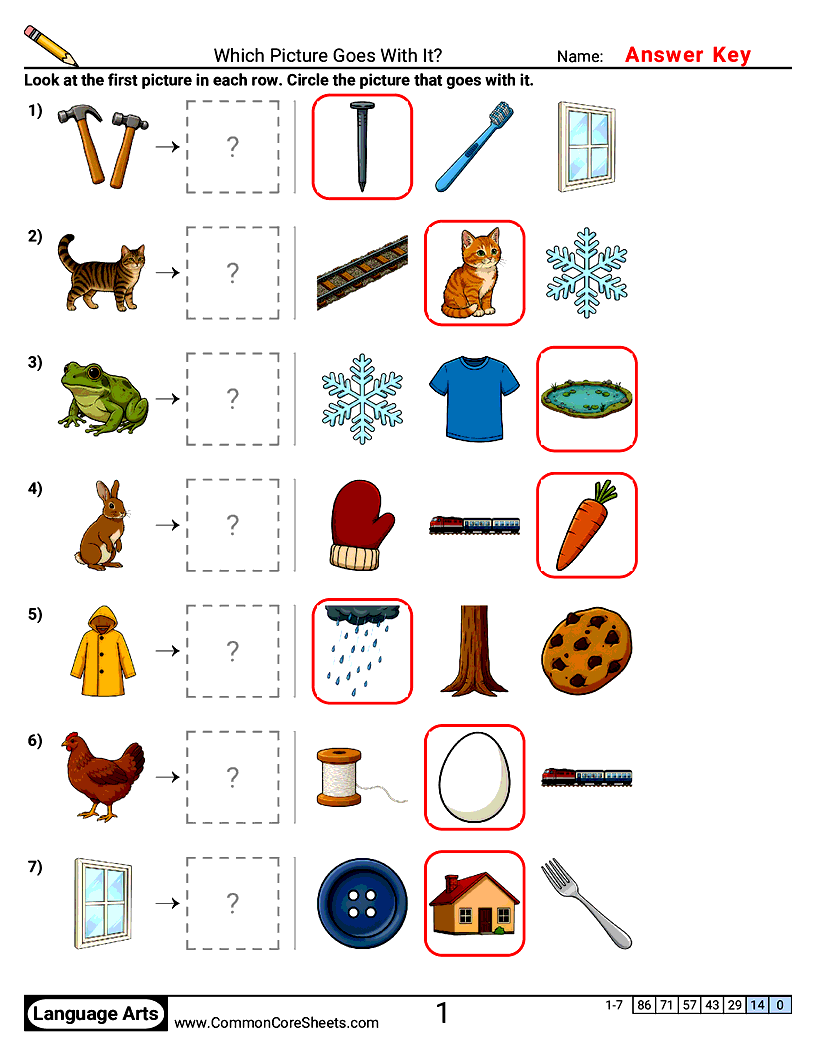
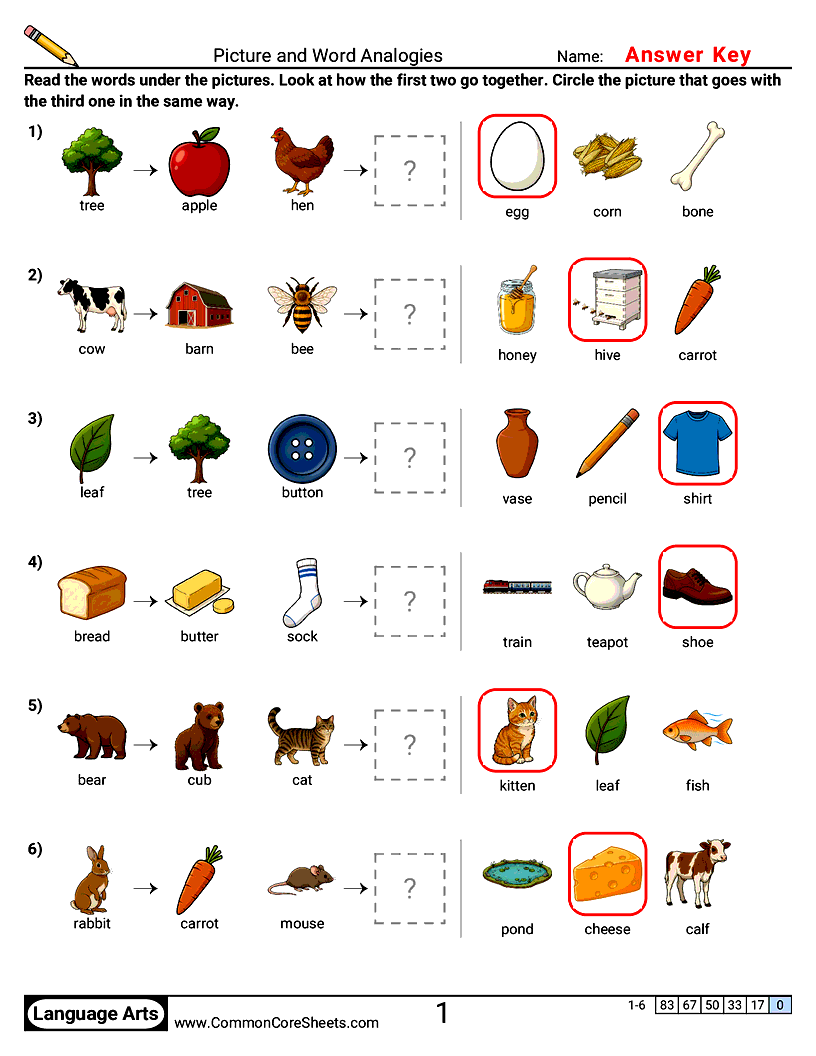
Find the picture that goes with another picture Say how two things go together Get ready to complete picture analogies
L.1.5.c L.K.5.c
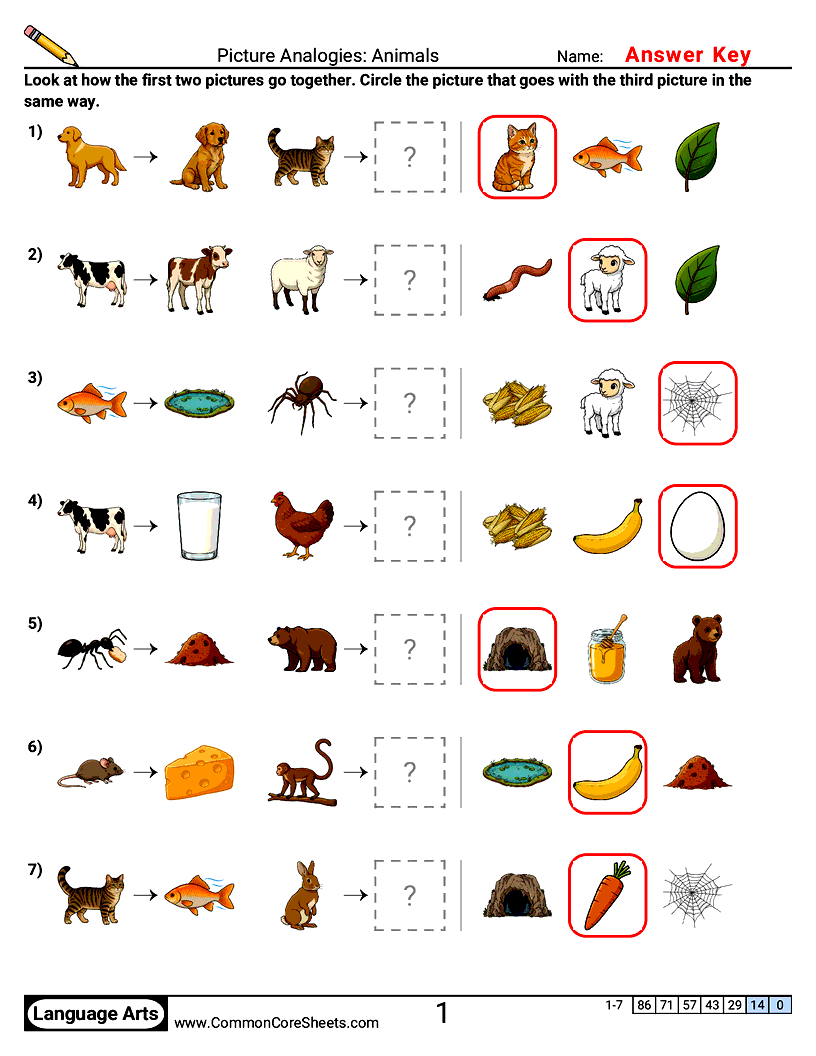
Complete picture analogies about animals Know where animals live, what they eat and their babies Explain how two pictures go together
L.1.5.c L.K.5.c
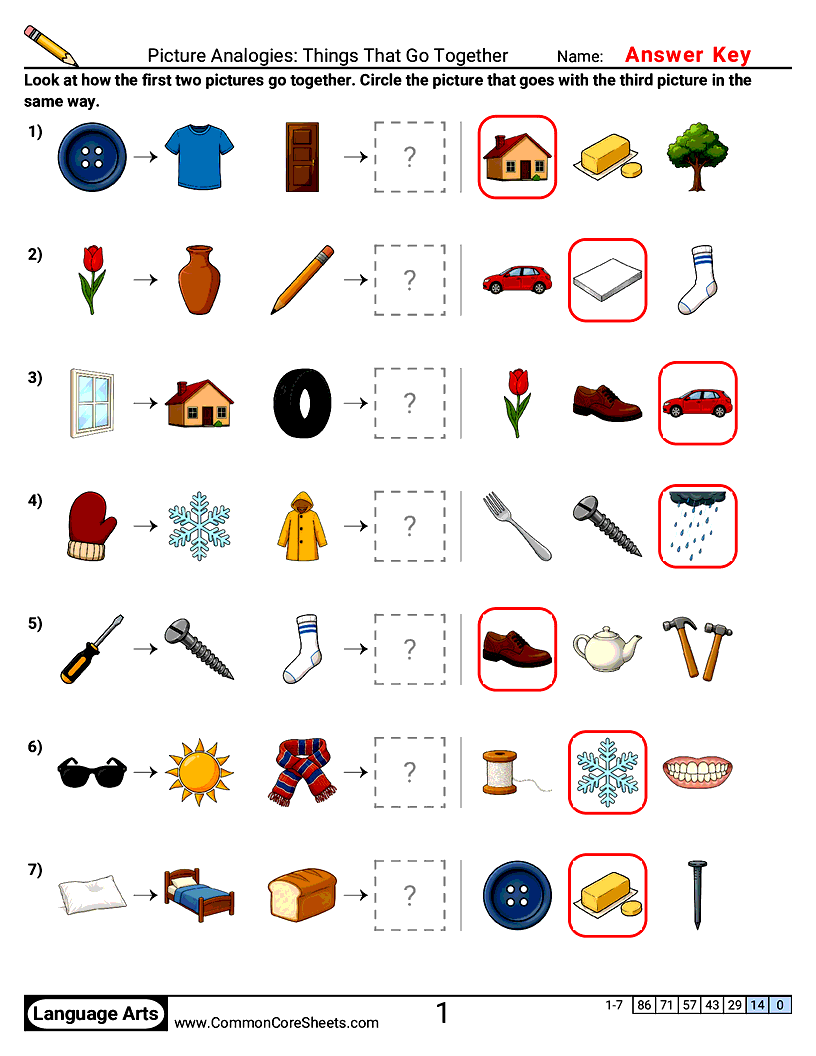
Complete picture analogies about everyday things Match things that are used together Find the whole that a part belongs to
L.1.5.c
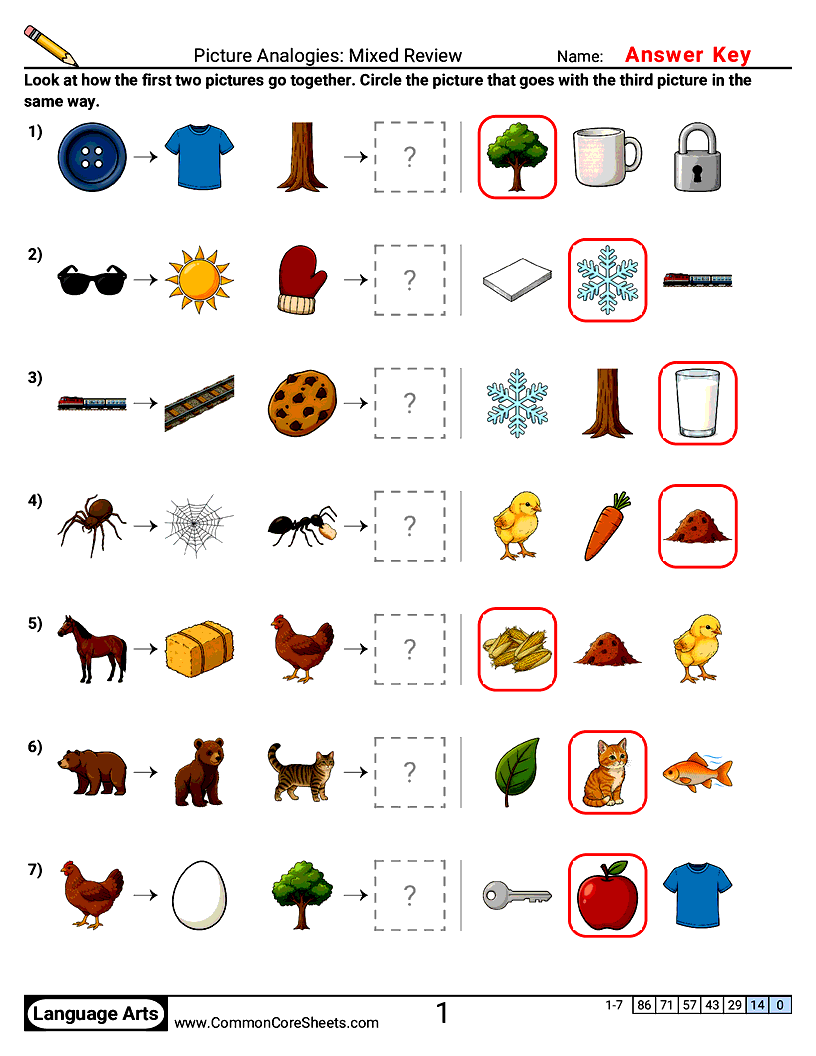
Complete picture analogies of different kinds Work out how two pictures go together Use the same relationship for a new pair
L.1.5.c
Read the words in a picture analogy Complete an analogy with the matching picture Get ready for written analogies
L.2.5.a L.3.5.b
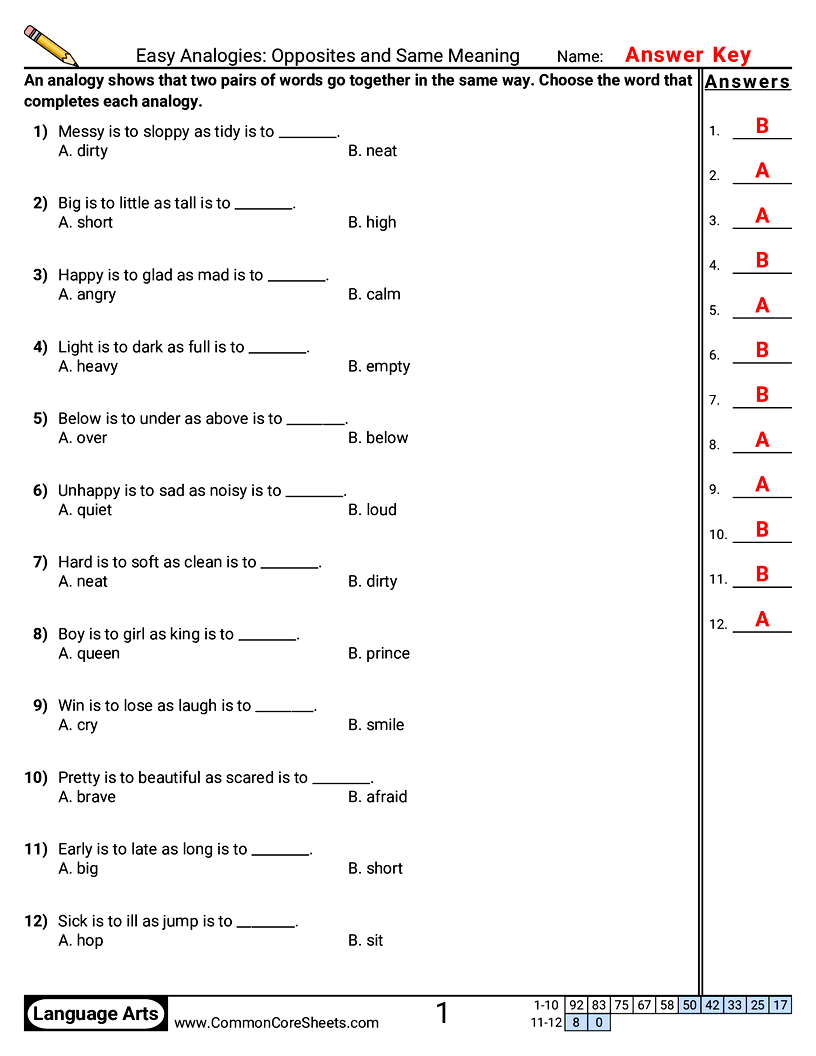
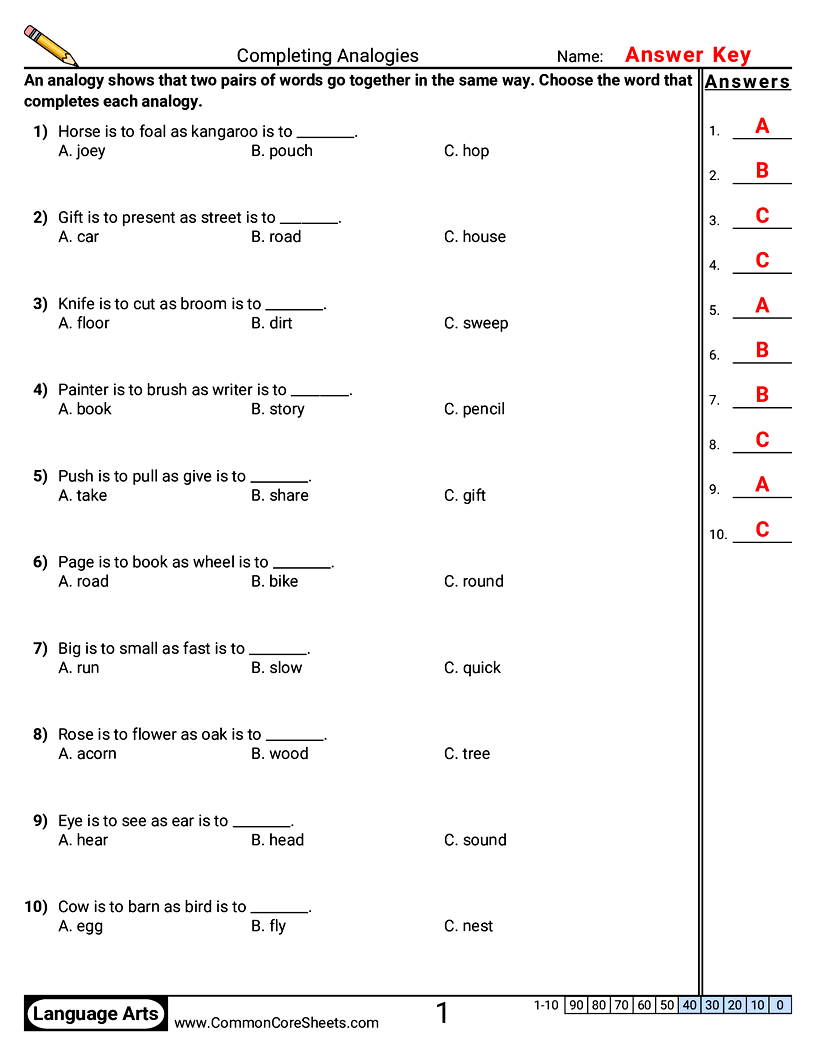
Tell whether two words are opposites or mean the same Complete an analogy with the right kind of word Read analogies written as "is to" and "as"
L.2.5.a L.3.5.b
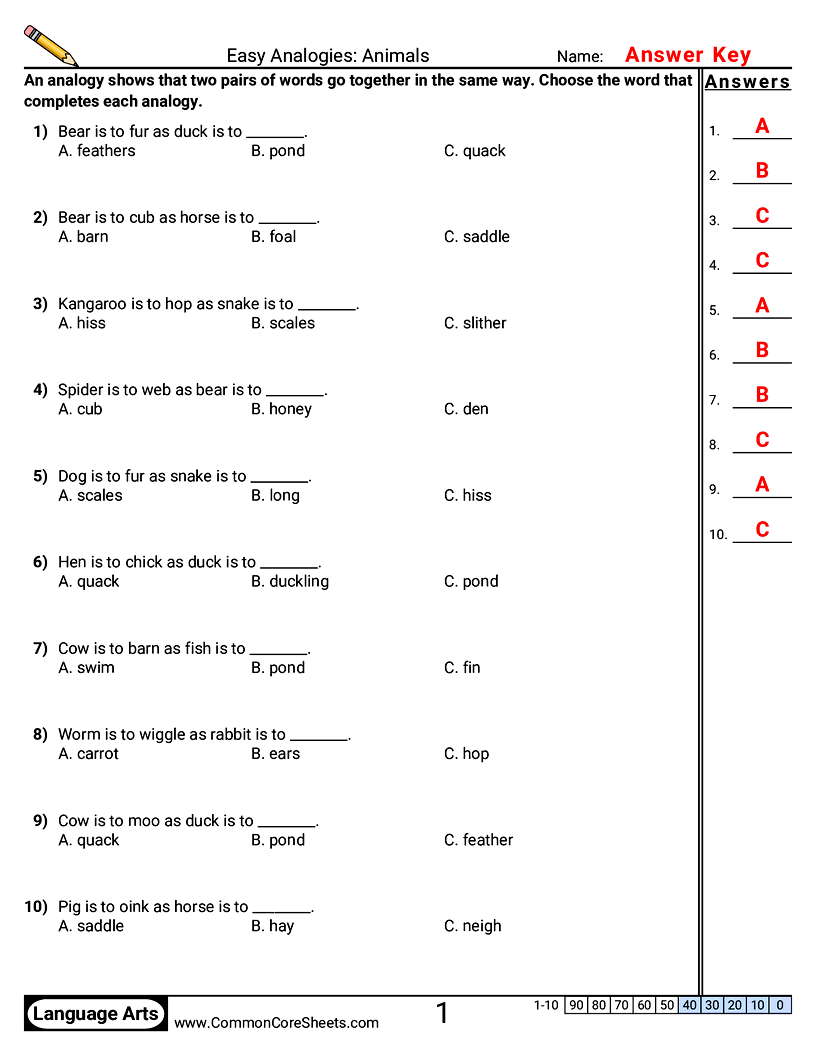
Complete analogies about animals Know animal babies, homes and sounds Find the word that matches the relationship
L.2.5.a L.3.5.b
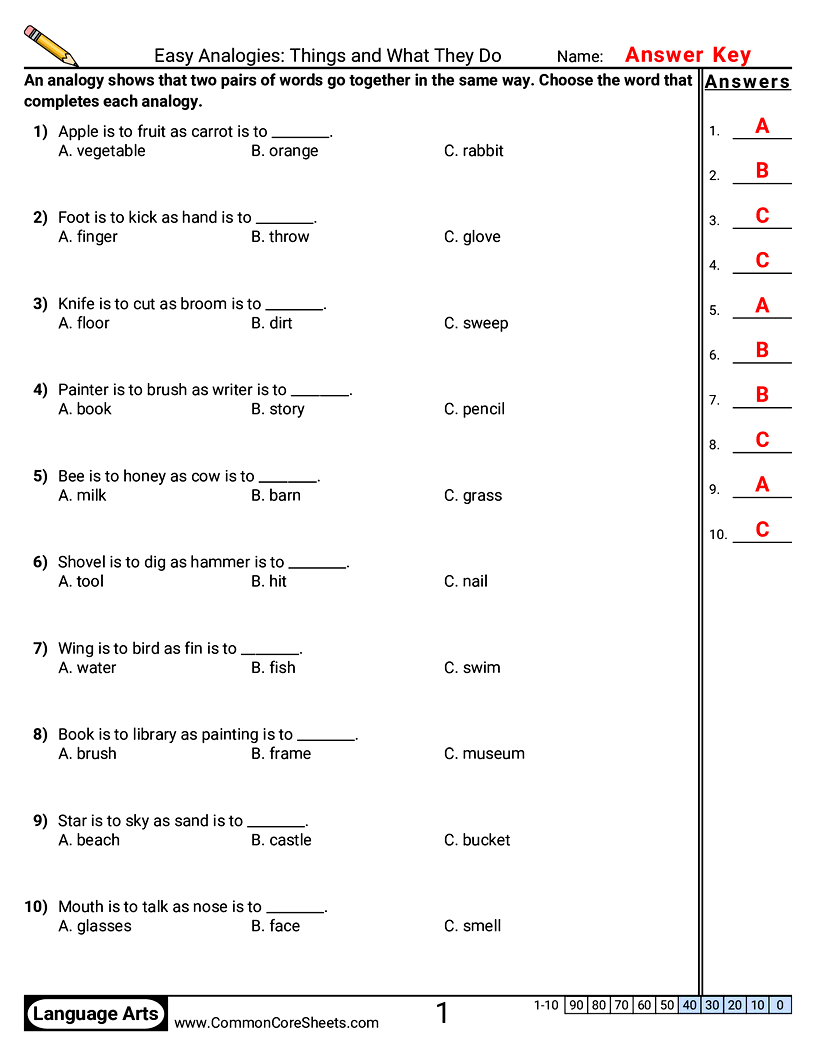
Complete analogies about everyday things Connect objects to their uses Find the word that matches the relationship
L.2.5.a L.3.5.b
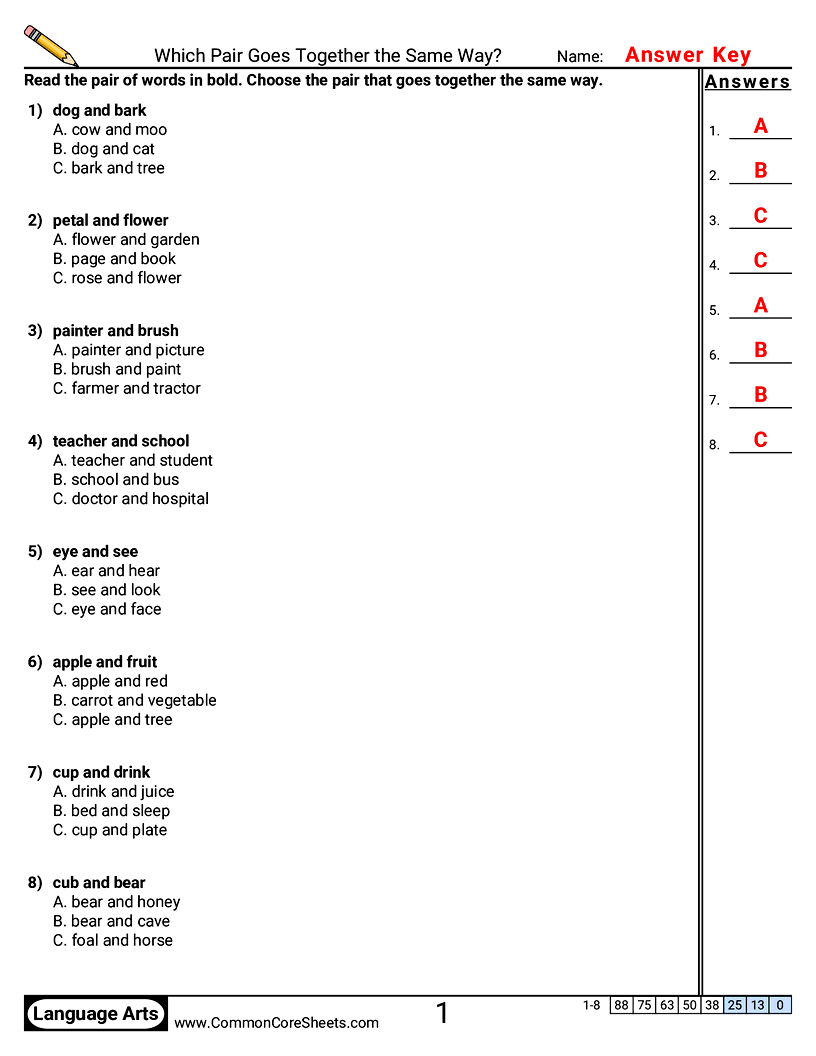
Figure out how two words go together Find another pair with the same relationship Notice pairs that share a topic but not a relationship
L.2.5.a L.3.5.b
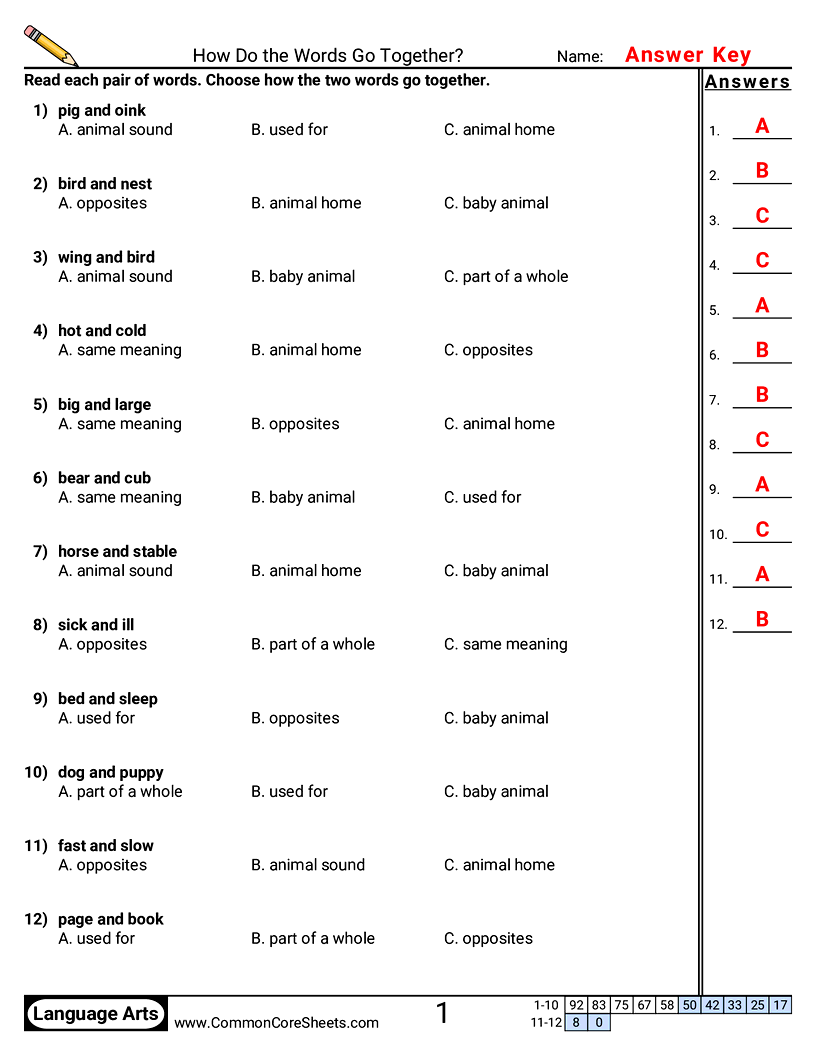
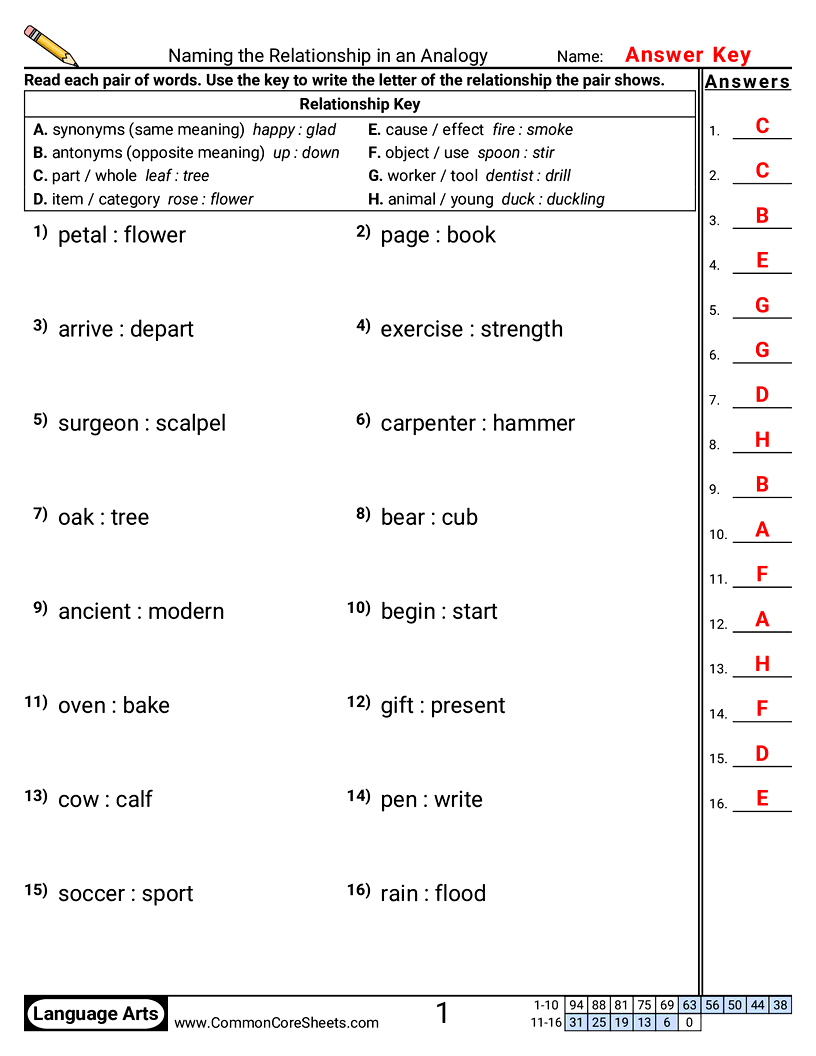
Name the relationship between two words Tell opposites from words that mean the same Get ready to complete analogies
L.4.5.c L.5.5.c
Tell how the two words in a pair are related Complete an analogy with a word that has the same relationship Use synonyms, antonyms and part-whole relationships Read analogies written as "is to" and "as"
L.5.5.c L.6.5.b
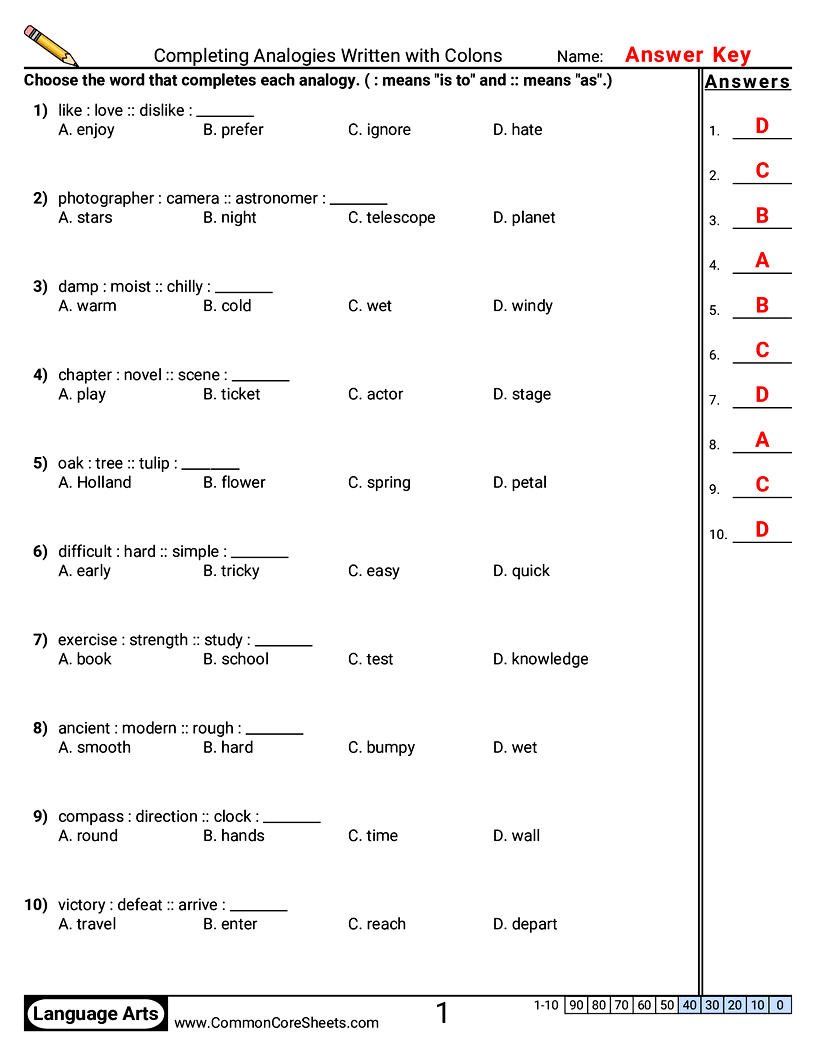
Read analogies written with colons Name the relationship between two words Complete an analogy with a word that has the same relationship Tell cause and effect, part and whole, and item and category apart
L.5.5.c L.6.5.b
Name the relationship between two words Tell cause and effect, part and whole, and item and category apart Recognize synonyms and antonyms Get ready to complete analogies
L.6.5.b L.7.5.b L.8.5.b
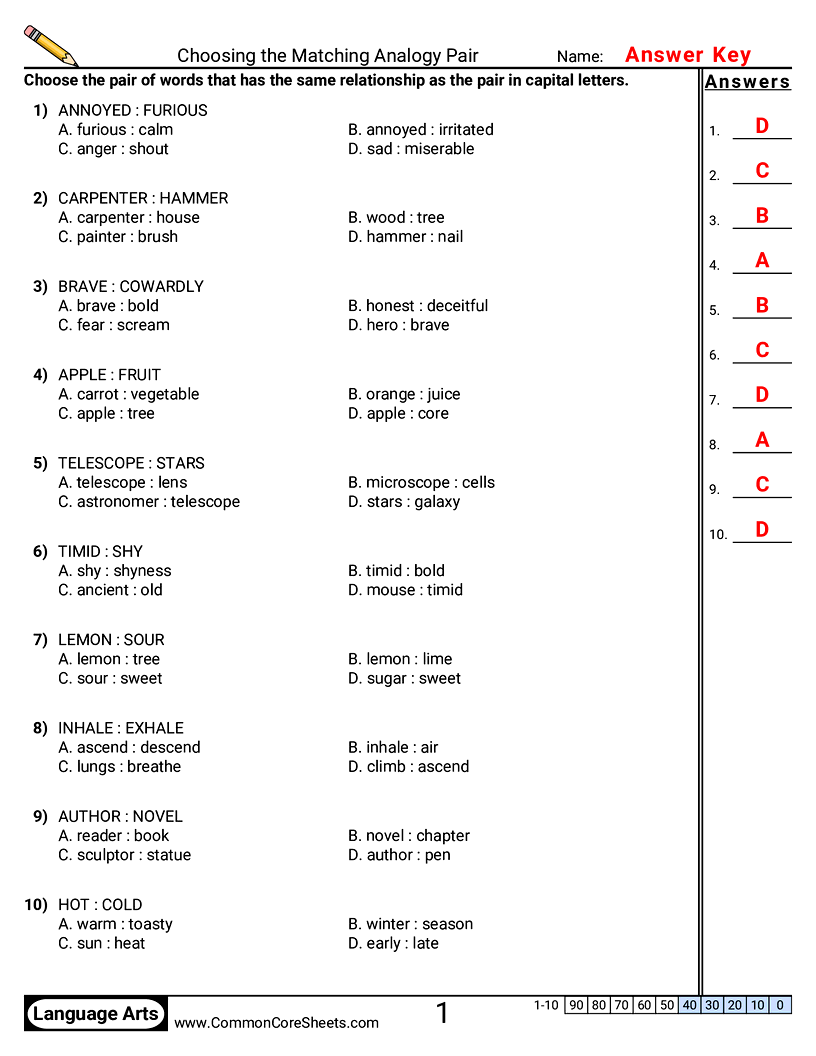
Name the relationship between two words Find another pair with the same relationship Notice the order of the words in a pair Rule out pairs that share a topic but not a relationship
L.7.5.b L.8.5.b
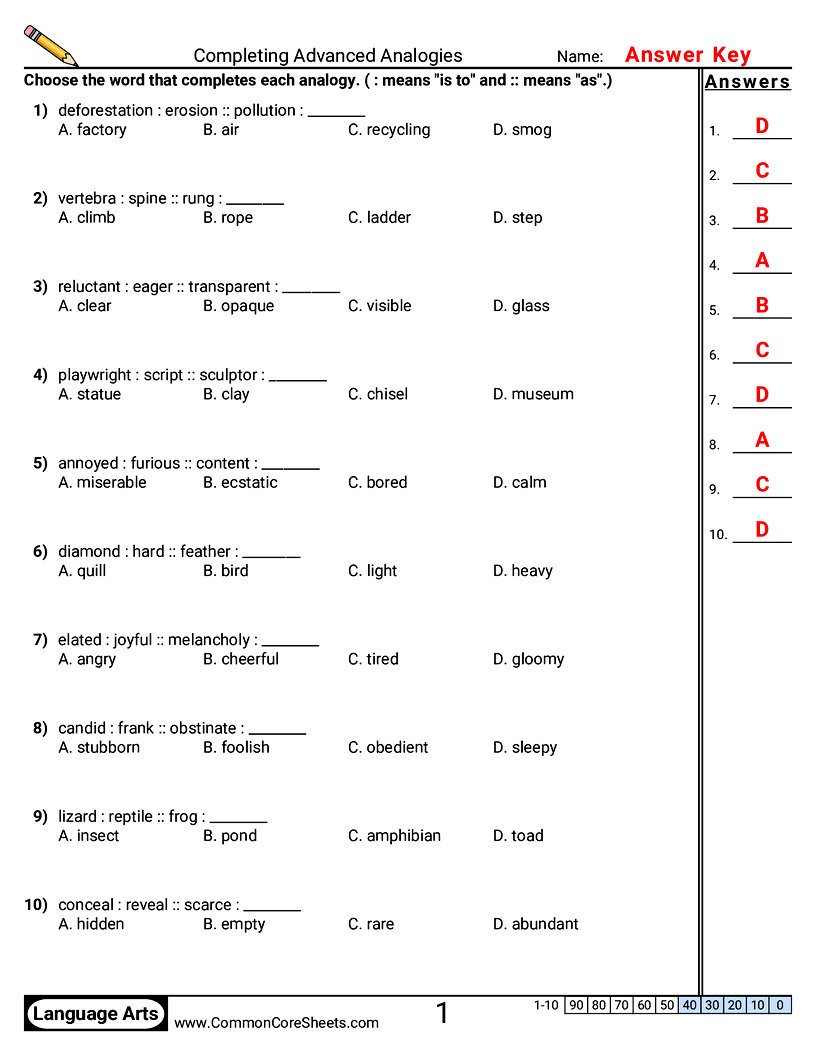
Complete analogies that use grade-level vocabulary Name the relationship between two words Tell degree, synonym and antonym relationships apart Use a word relationship to work out a word you do not know
L.2.4.b L.3.4.b
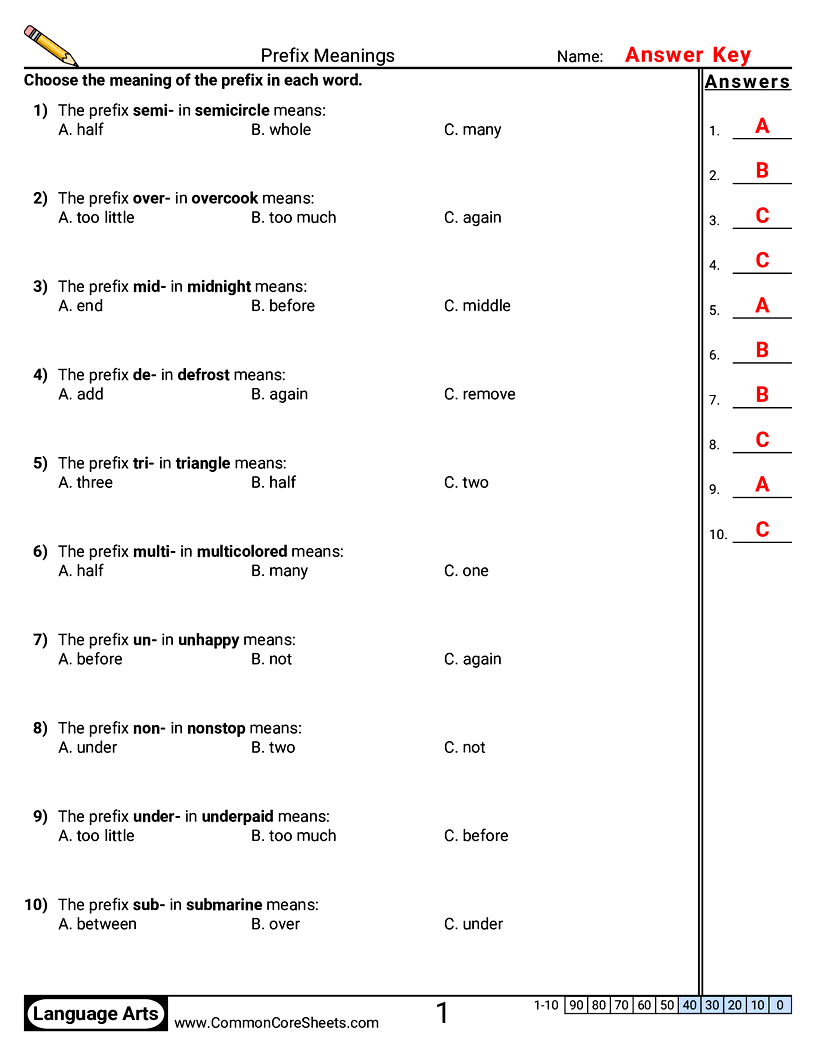
Know the meanings of common prefixes Use a prefix to figure out a word's meaning Tell prefixes that mean "not" from ones that mean "again" or "before" Build new words with prefixes
L.2.4.b
Add a prefix to make a new word Choose a prefix by its meaning Use context clues to pick the right word Spell words with prefixes
L.3.4.b
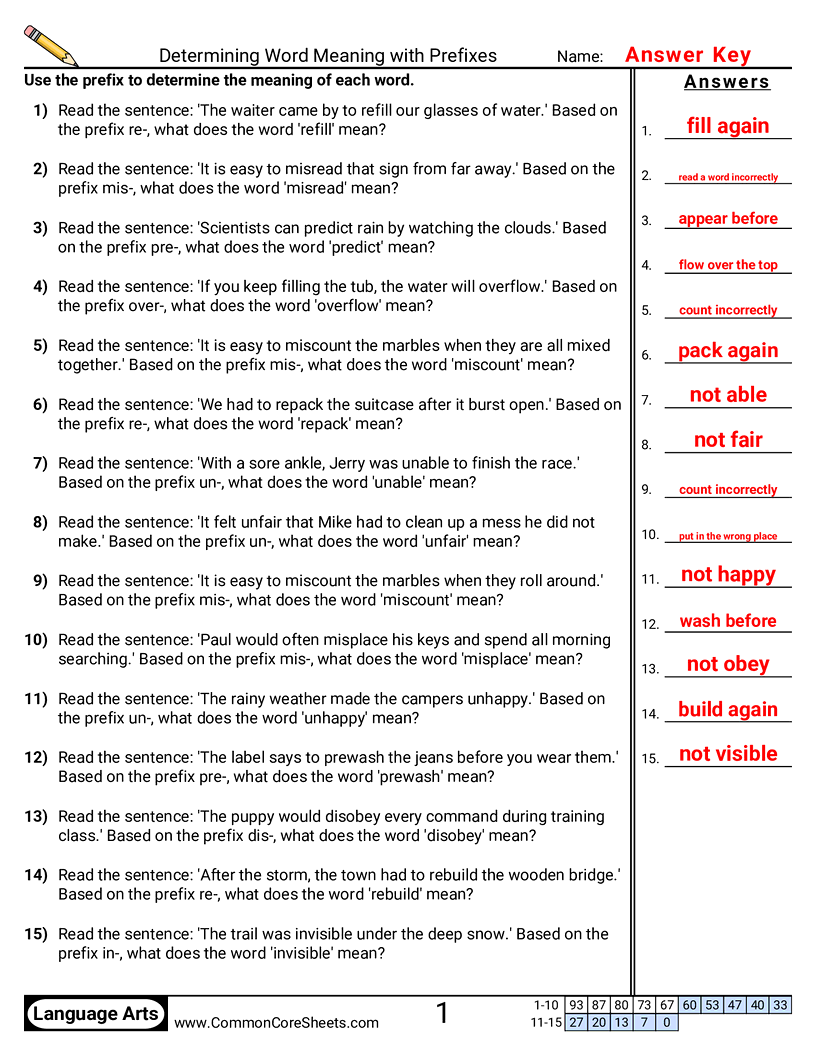
Use a known prefix to work out the meaning of a new word. Recognize common prefixes like un-, re-, pre-, dis-, and mis-. Check a word's meaning against how it is used in a sentence.
RF.3.3.a
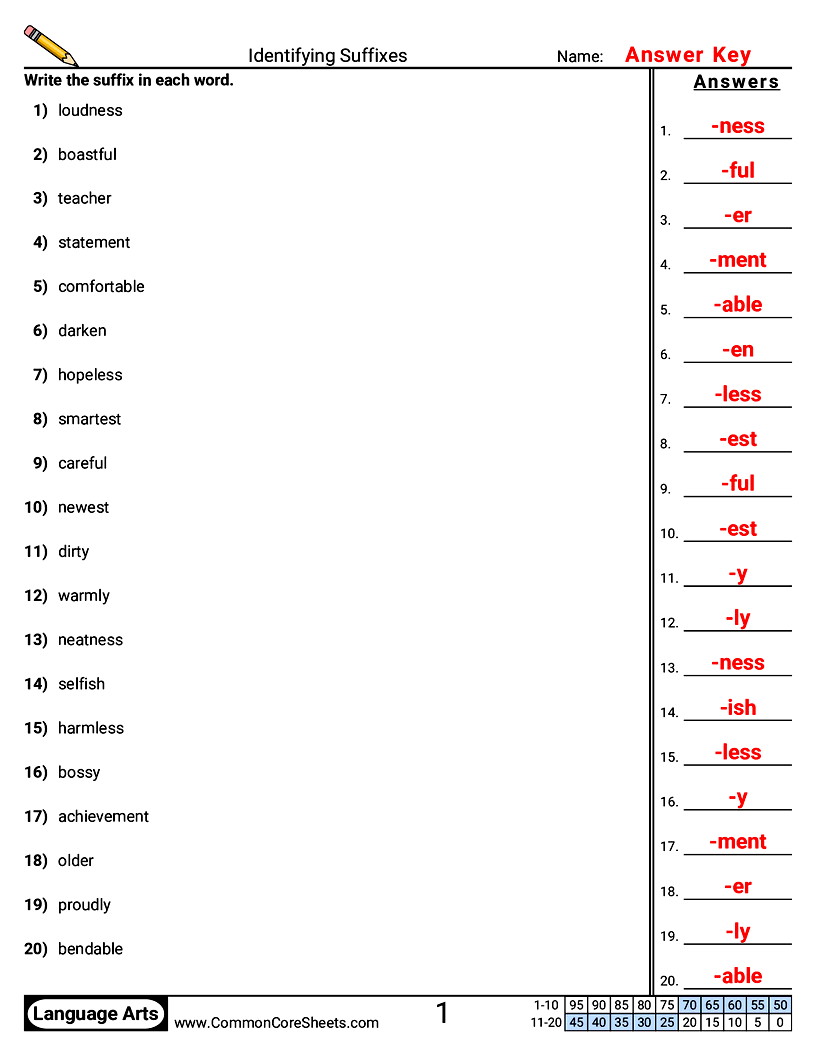
Know that a suffix is a word part added to the end of a base word Identify common suffixes in words Separate a word into its base word and suffix Read longer words by finding their parts
L.3.4.b
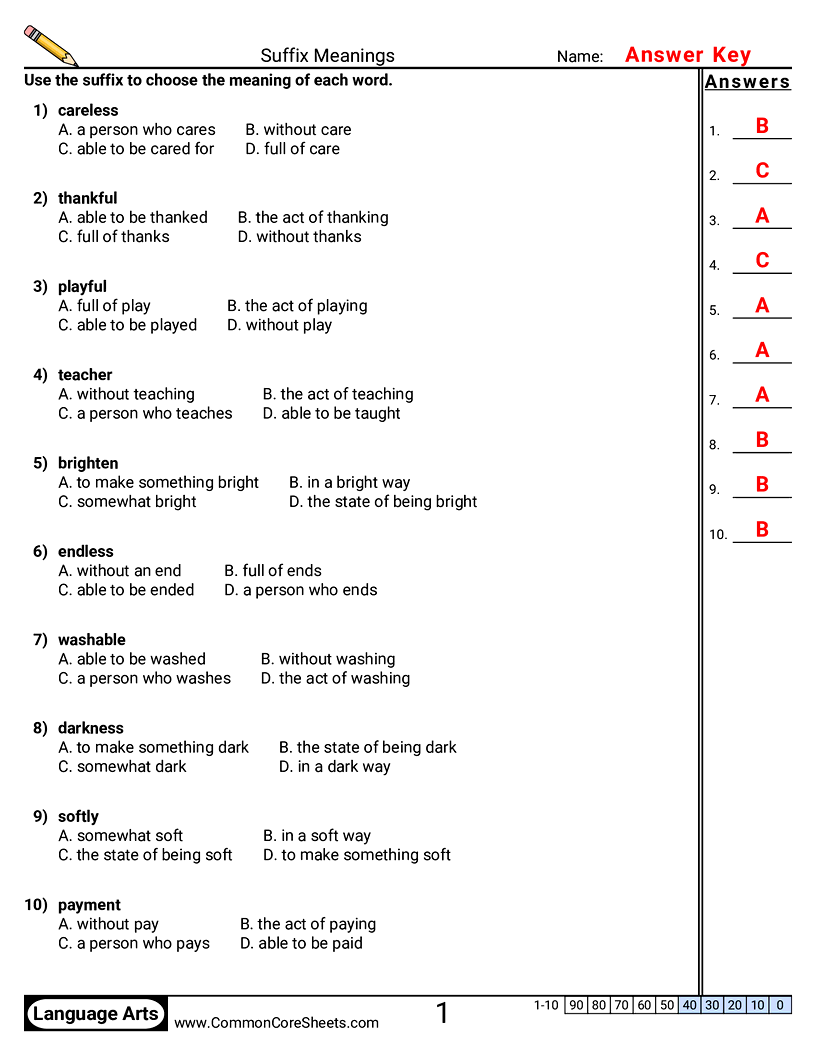
Know the meanings of common suffixes such as -less, -ful, -er and -ness Use a suffix to figure out the meaning of a word Tell apart words with the same base word and different suffixes Learn new words by breaking them into parts
L.3.4.b
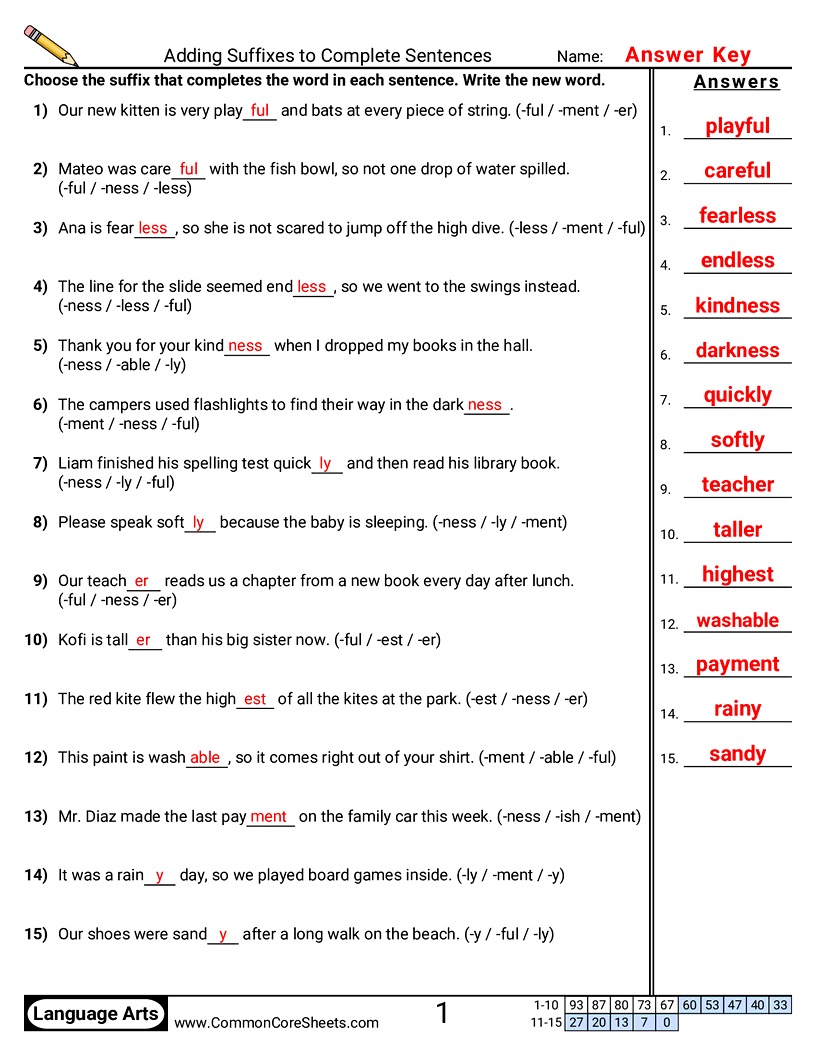
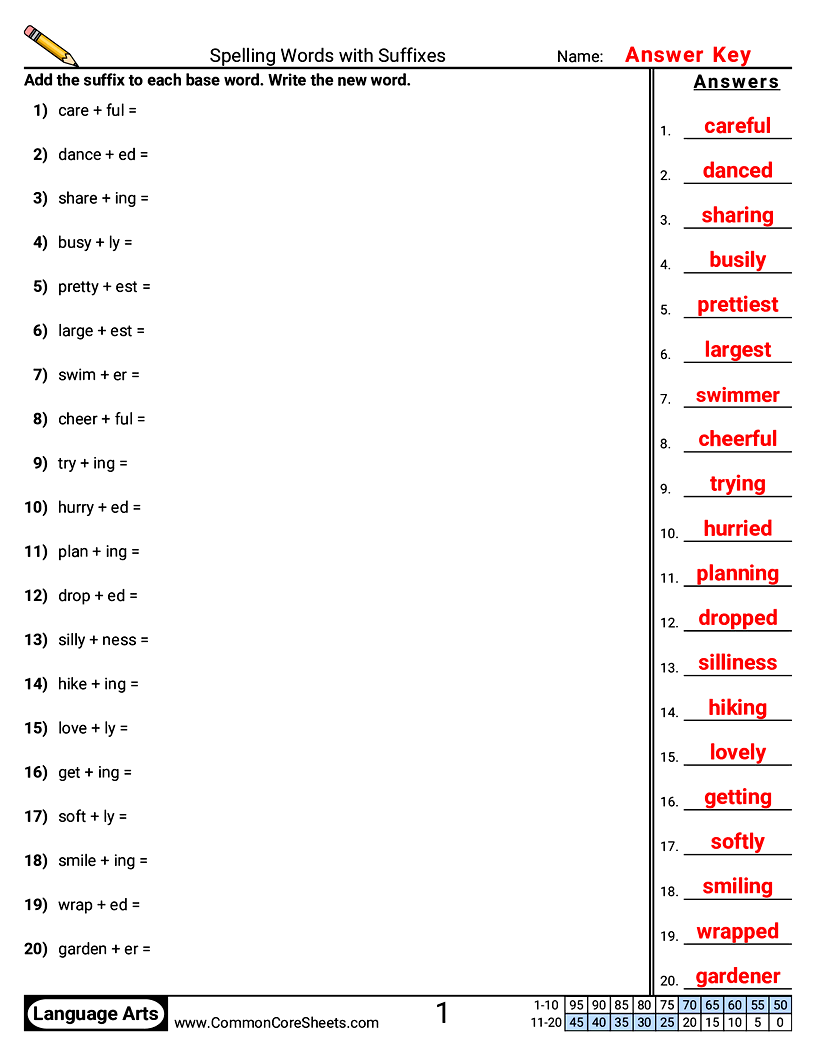
Add a suffix to a base word to make a new word Use the sentence to decide which suffix fits Understand how a suffix changes the meaning of a word Spell words with suffixes
L.3.2.e
Drop the silent e before a suffix that starts with a vowel Double the final consonant after a short vowel Change y to i before most suffixes Know when a base word does not change
L.3.4.c RF.3.3.a
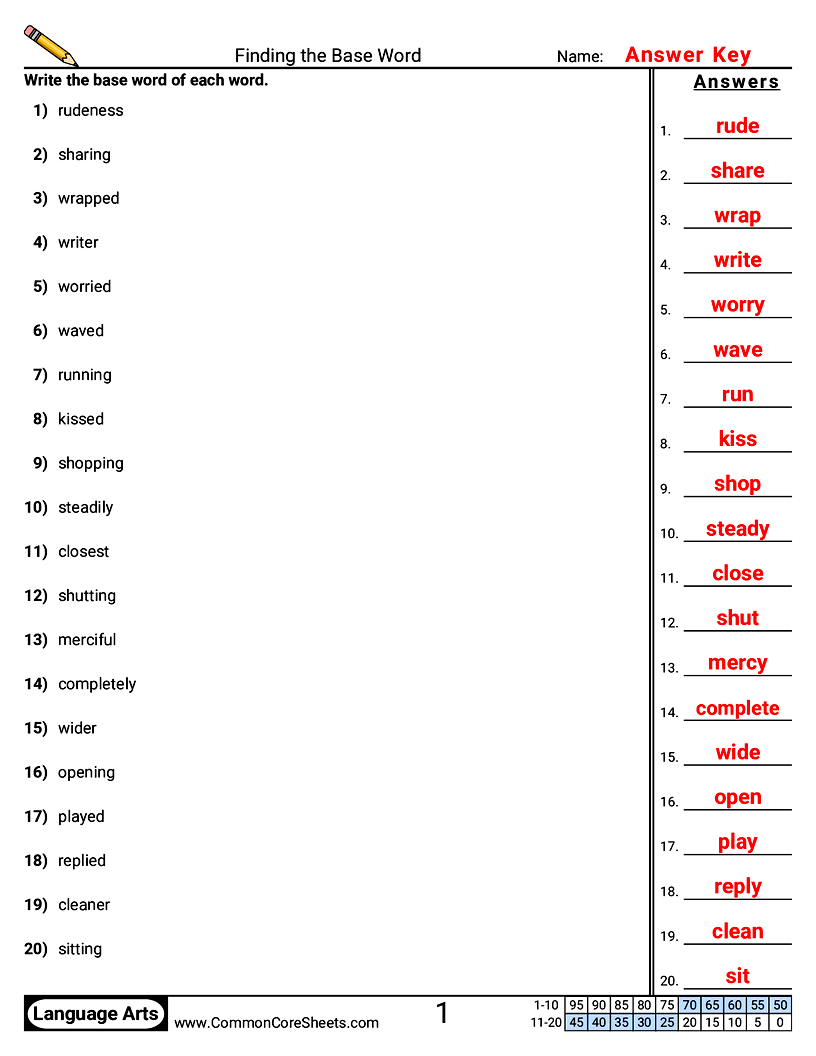
Find the base word in a word with a suffix Undo the spelling changes made when a suffix was added Use the base word to understand a longer word Read and spell words with suffixes
L.4.4.b L.5.4.b
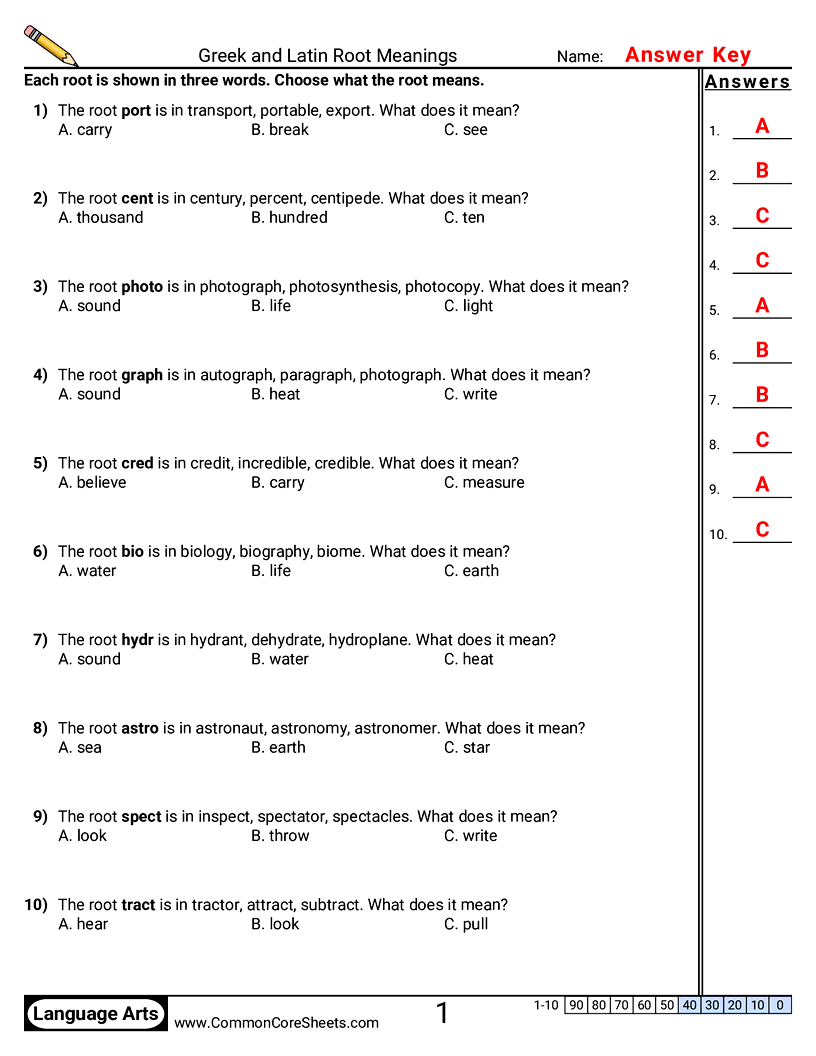
Know the meanings of common Greek and Latin roots Find a root shared by several words Use roots to figure out unfamiliar words Build vocabulary in science and social studies
L.4.4.b L.5.4.b
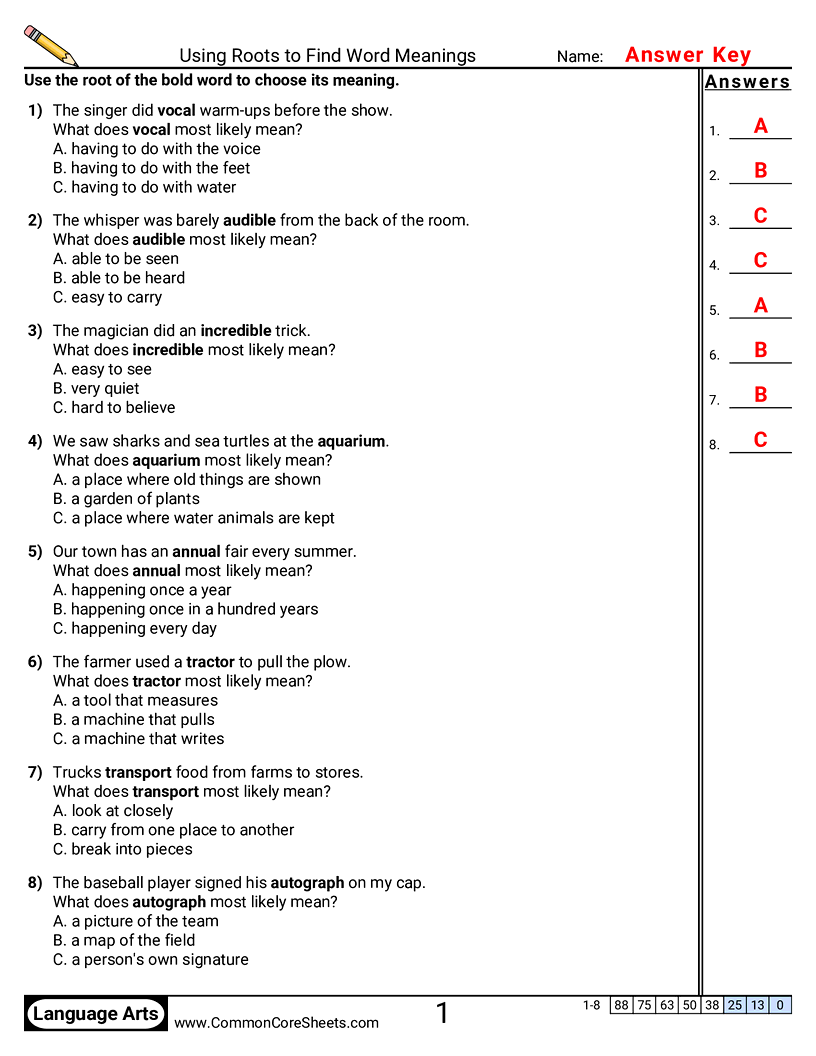
Use Greek and Latin roots to find word meanings Combine root meanings, as in micro + scope Check a meaning against the sentence Learn new words through their roots
L.5.4.b L.6.4.b
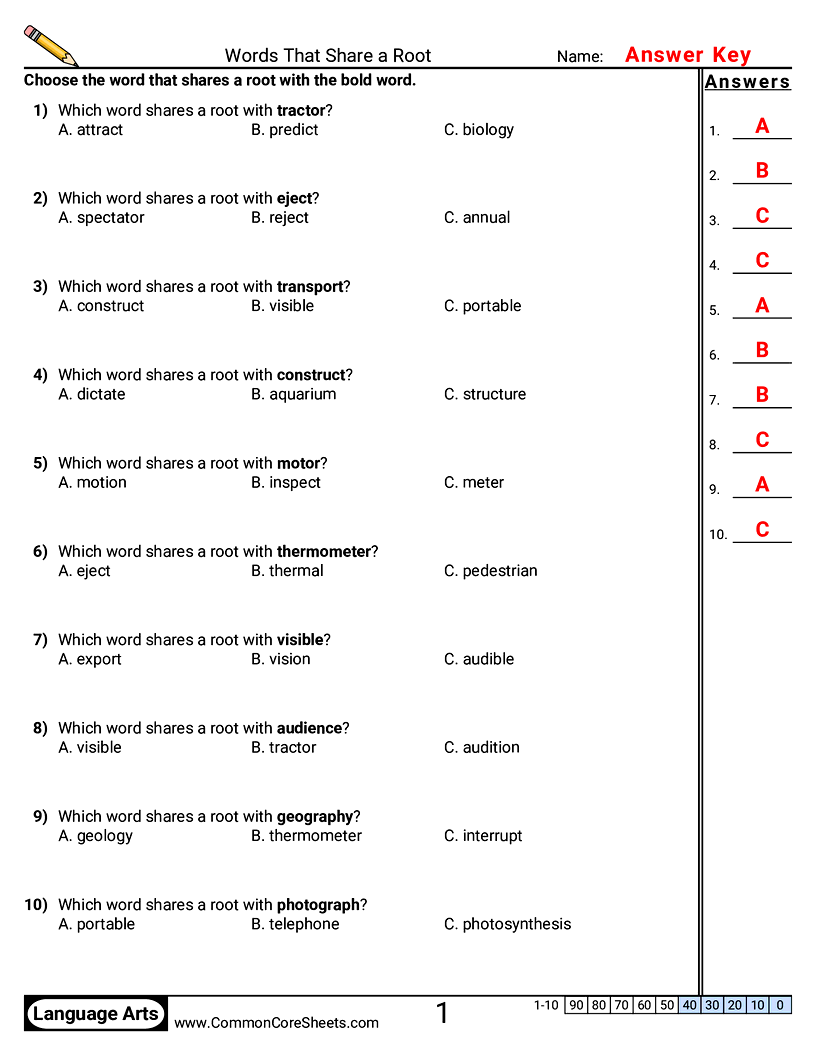
Recognize words that share a Greek or Latin root Tell a shared root from words that only look alike Group words into word families Use a known word to understand a new one
Advertisement