CCSS 2.MD.8 Worksheets
CCSS 2.MD.8 (Common Core, 2nd Grade): "Solve word problems involving dollar bills, quarters, dimes, nickels, and pennies, using $ and ¢ symbols appropriately. Example: If you have 2 dimes and 3 pennies, how many cents do you have?." The worksheets below practice this standard. Each one is a free printable PDF with an answer key, comes in multiple versions, and can also be assigned digitally - no login or account needed.
More about these worksheets ▾ Show less ▴
Measurement and Data
8 Solve word problems involving dollar bills, quarters, dimes, nickels, and pennies, using $ and ¢ symbols appropriately. Example: If you have 2 dimes and 3 pennies, how many cents do you have?
2md8
2md8
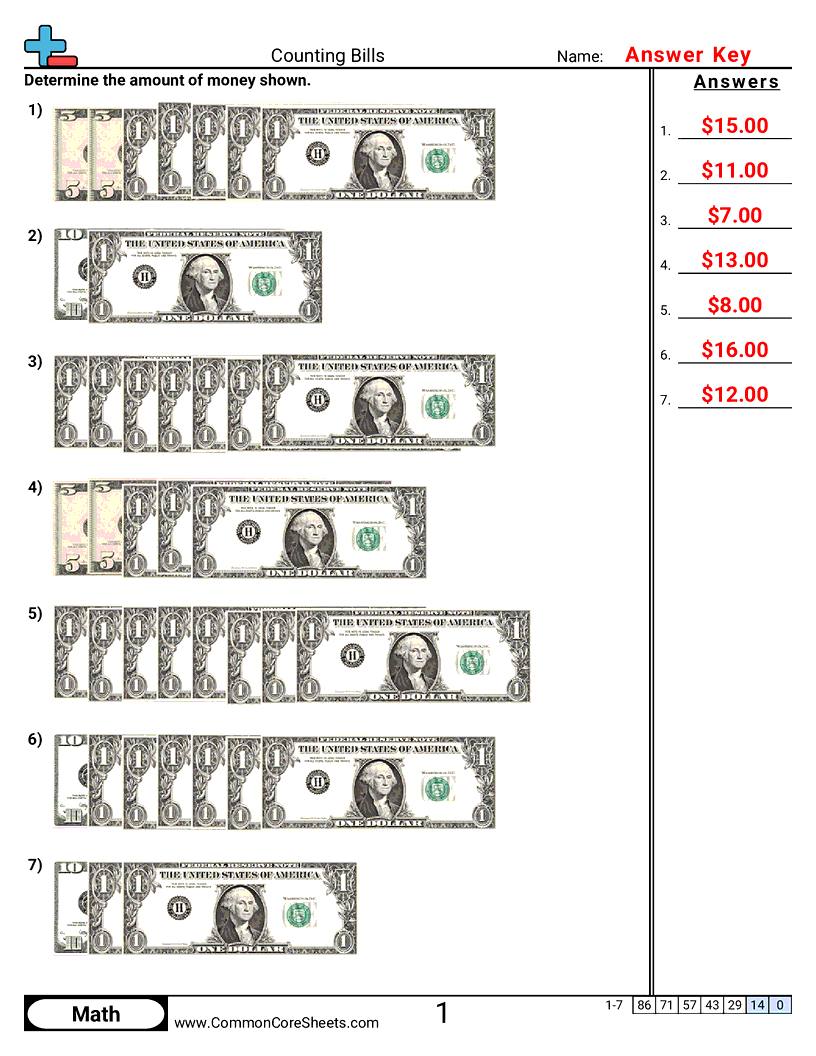
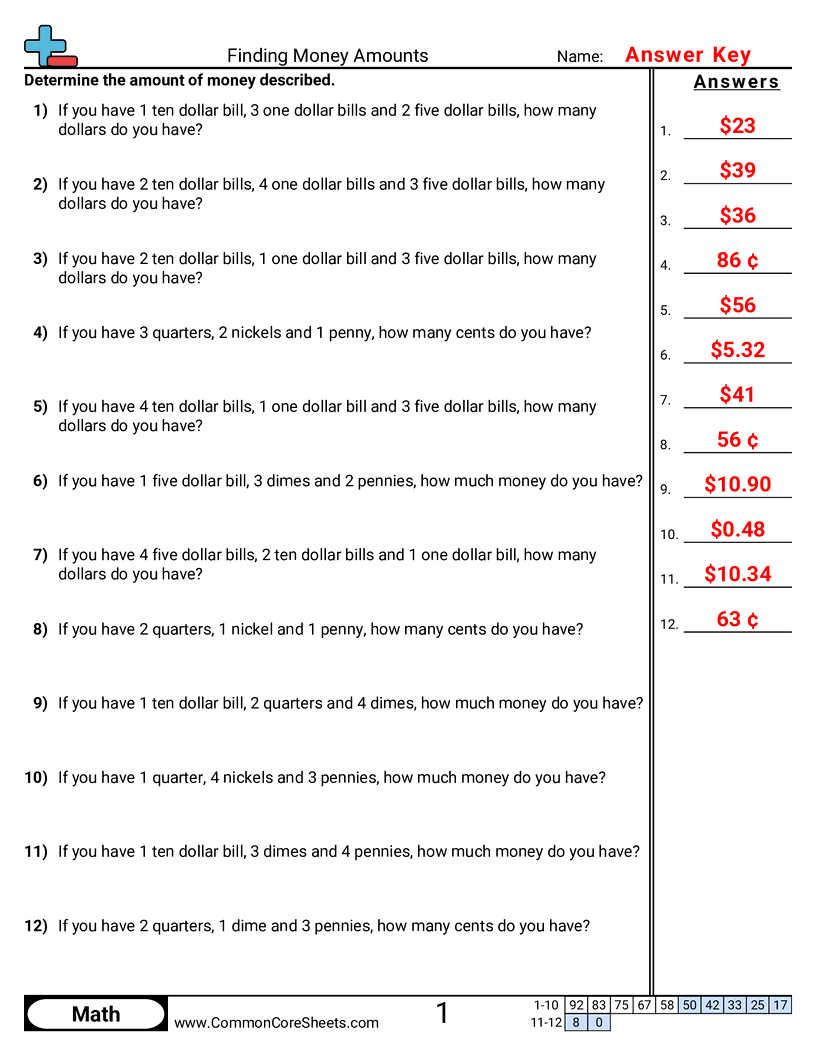
Count groups of dollar bills to find the total amount of money. Add the values of different bill types (ones, fives, tens, twenties) to get one total. Use skip-counting by 1s, 5s, 10s, and 20s to count money faster. Read and write the total in dollars using the $ sign.
2md8
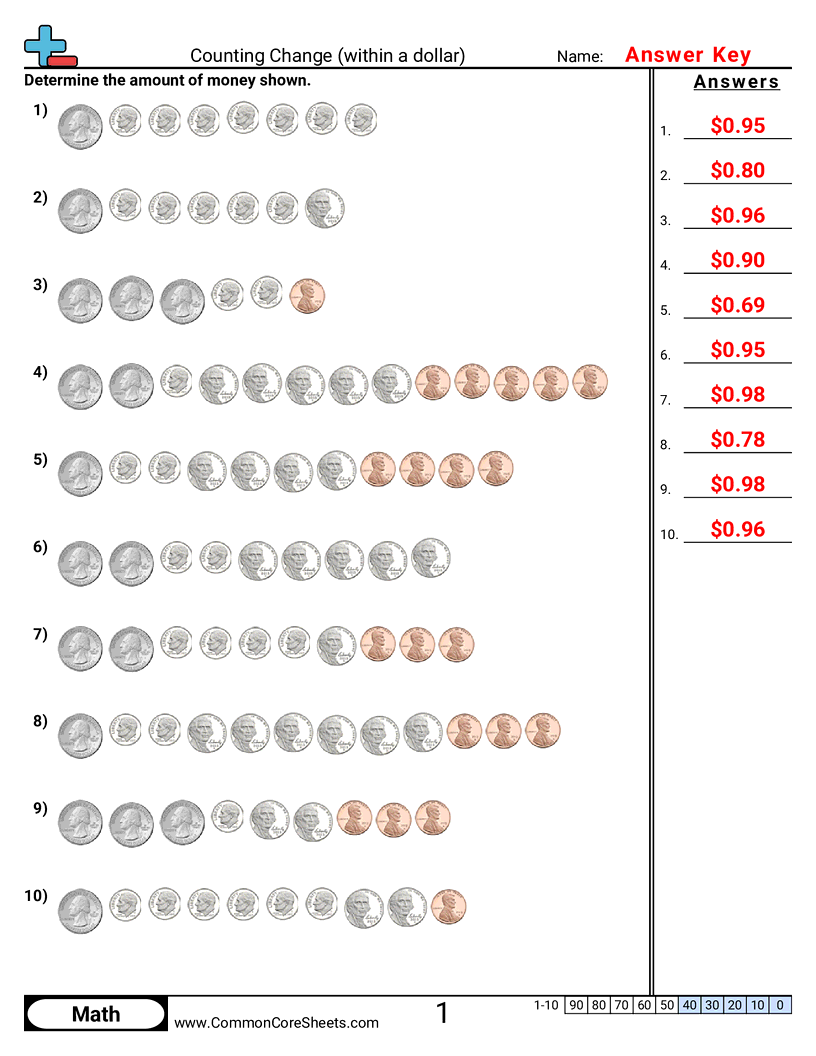
Count the total value of a group of quarters, dimes, nickels, and pennies. Skip-count by 25s, 10s, and 5s, then add on pennies to finish the total. Check that the total is under a dollar and write it in cents.
2md8
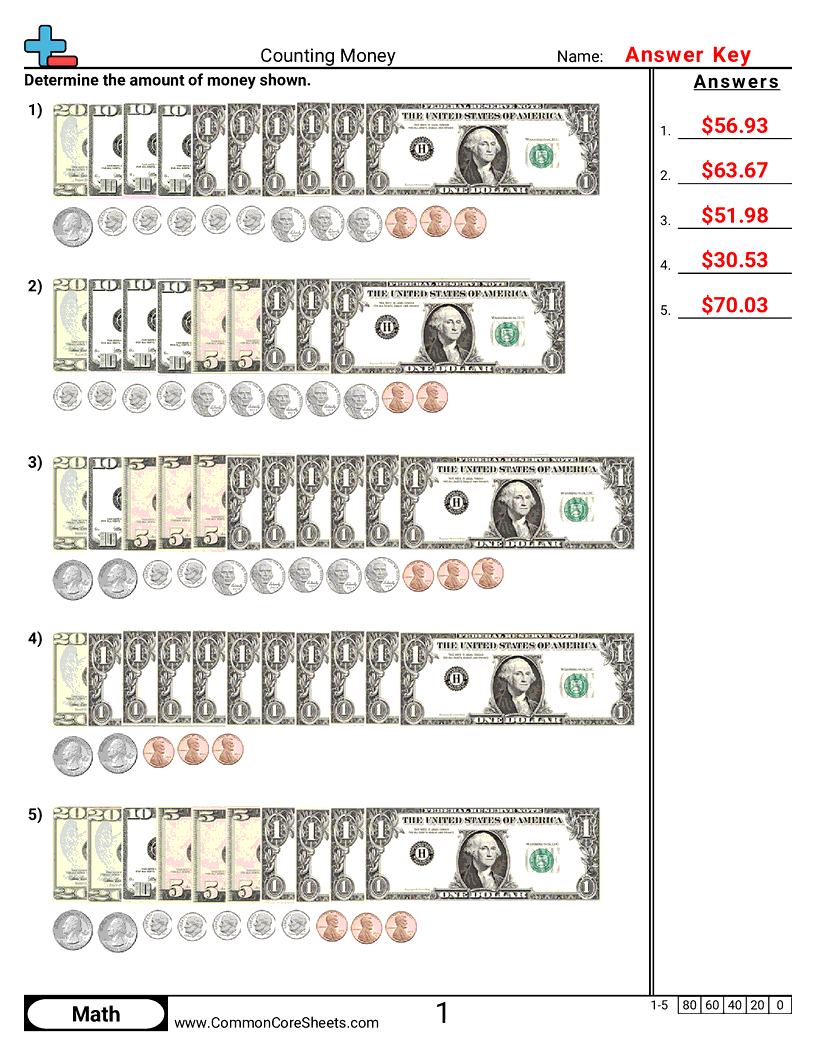
Count mixed coins and bills to find how much money there is altogether. Add dollar and cent amounts correctly using decimals. Combine different groups of money and write the total in standard money form (like $3.45). Recognize the value of common coins and bills and use them to make a total.
2md8
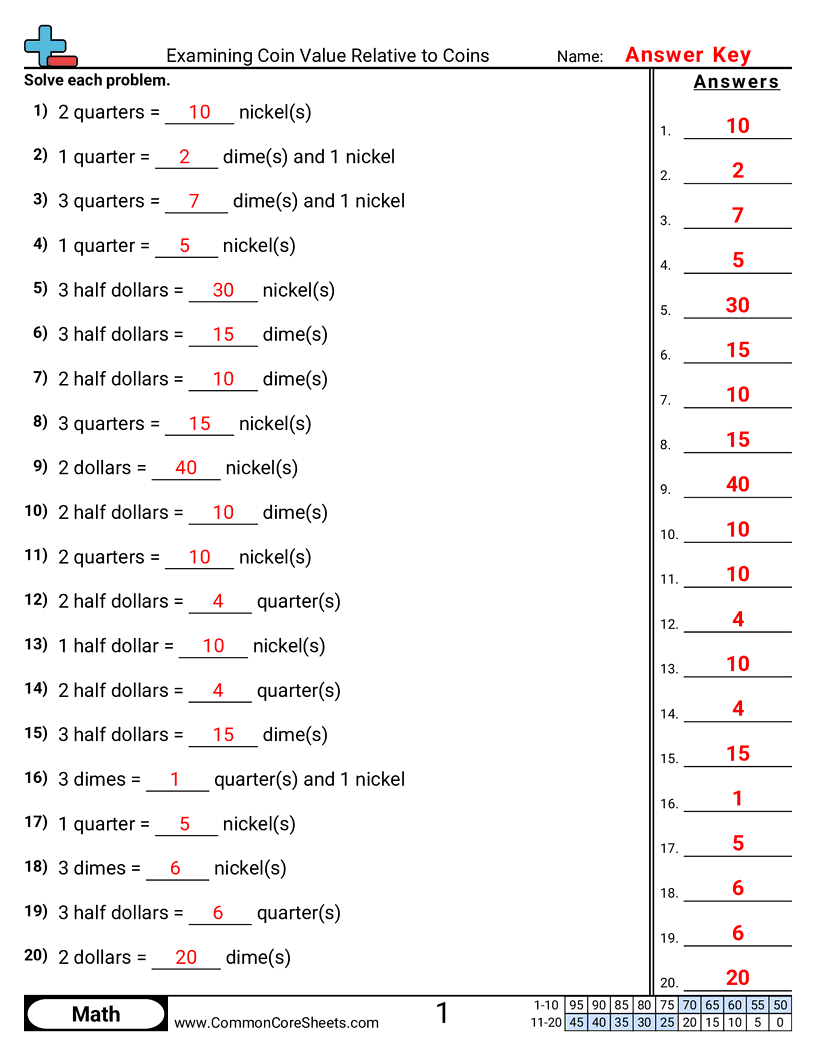
Figure out how much a group of coins is worth in cents. Recognize that different coin combinations can have the same value. Compare two sets of coins to see which is worth more or if they are equal.
2md8
Figure out the total value of a group of coins and bills. Read money amounts written without a dollar sign and decimal point and say how much they are worth. Add money amounts in dollars and cents to find a total. Keep dollars and cents lined up correctly when combining amounts.
2md8
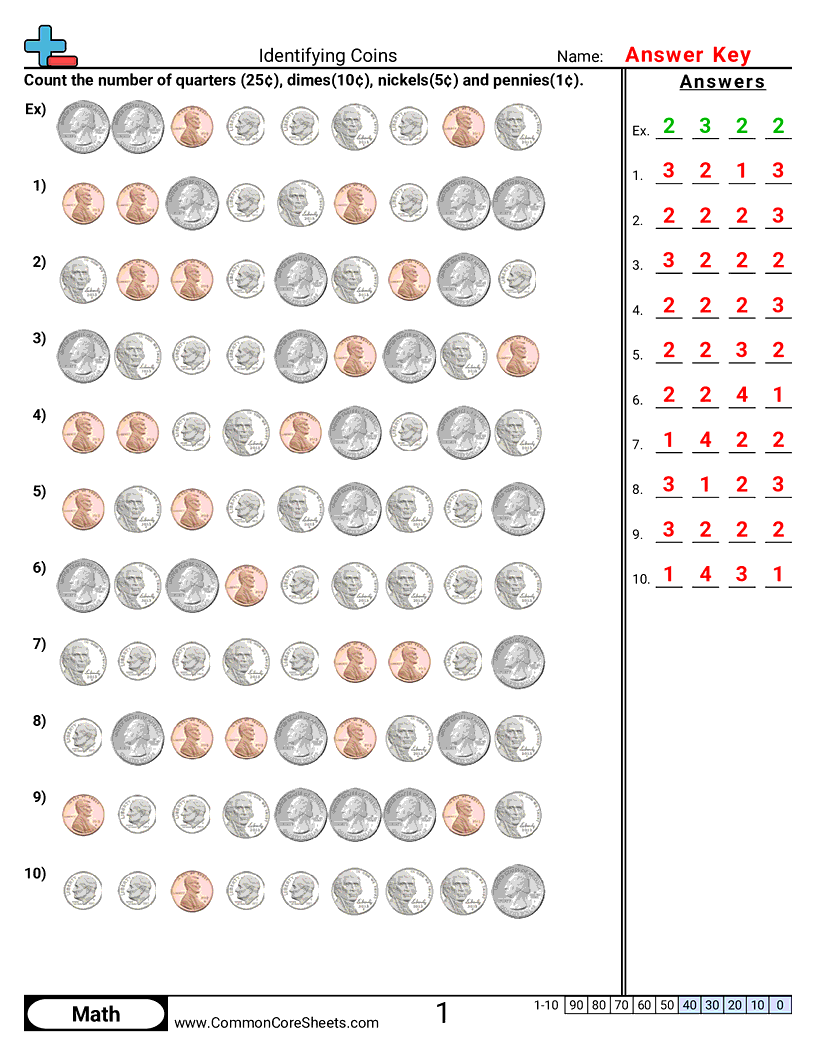
Recognize pennies, nickels, dimes, and quarters by what they look like.
2md8
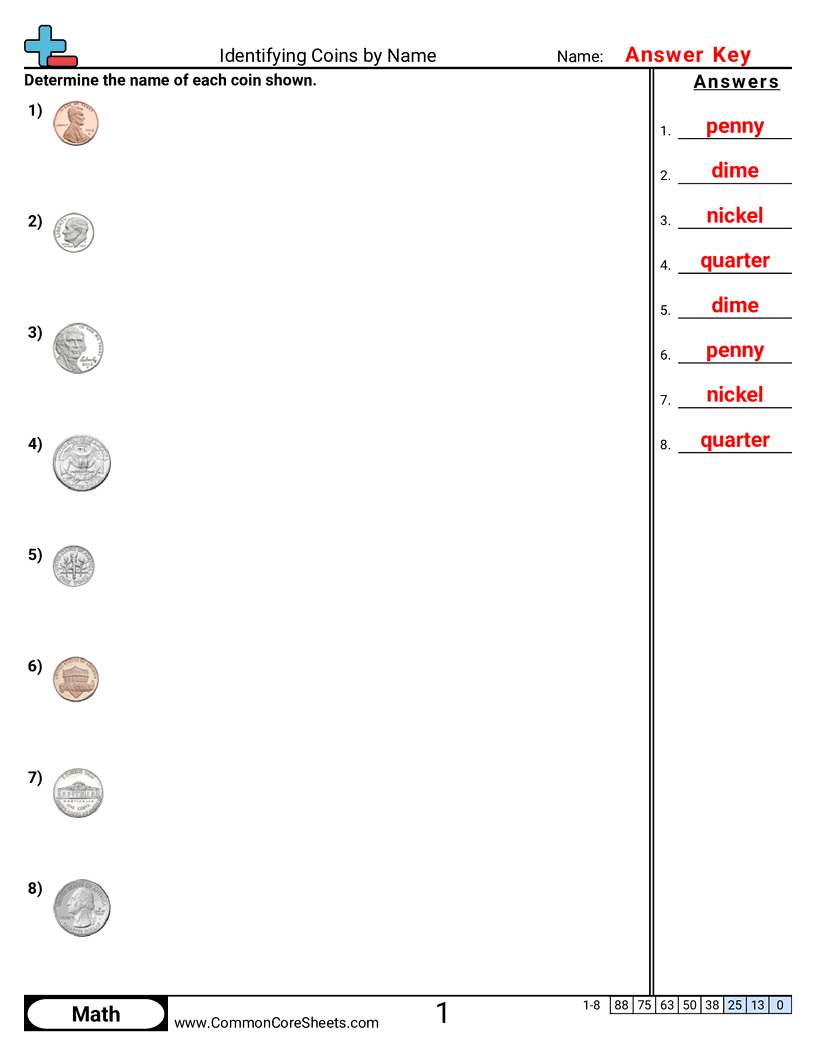
Learn to recognize a penny, nickel, dime, and quarter by name. Match a picture of a coin to the correct coin word. Notice key features on coins (like size and edge ridges) to tell similar coins apart. Use the correct coin names when talking about money.
2md8
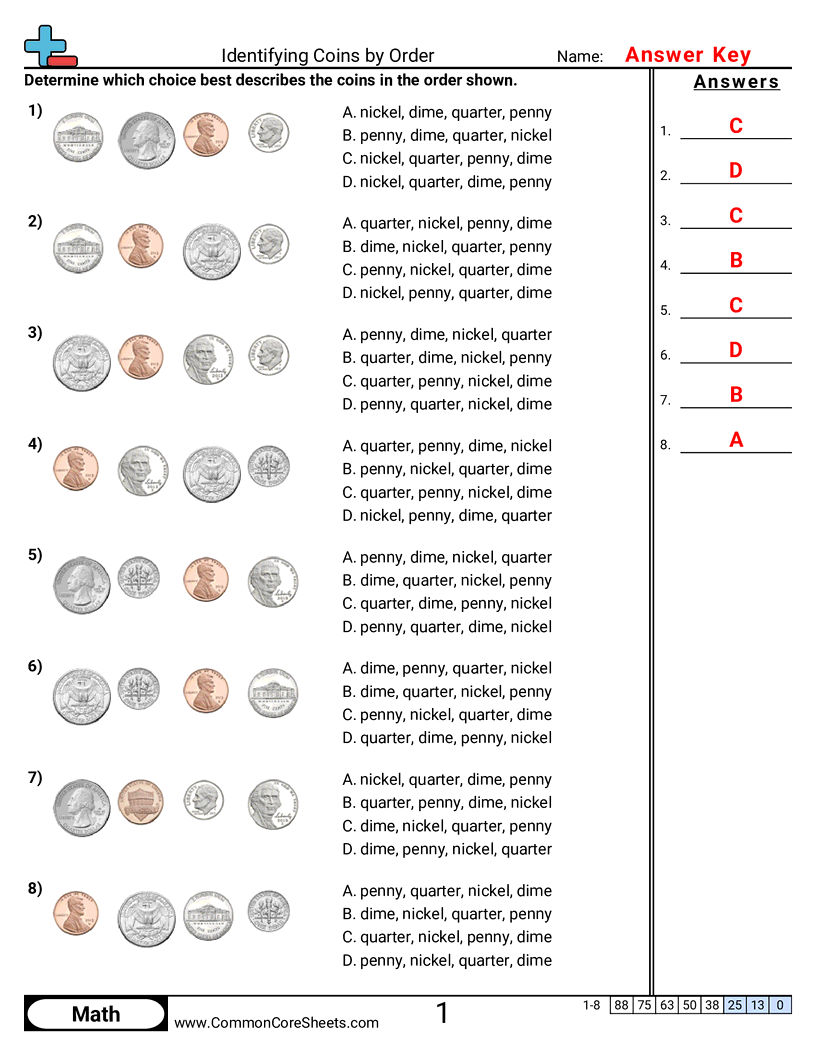
Recognize and name common U.S. coins (penny, nickel, dime, quarter).
2md8
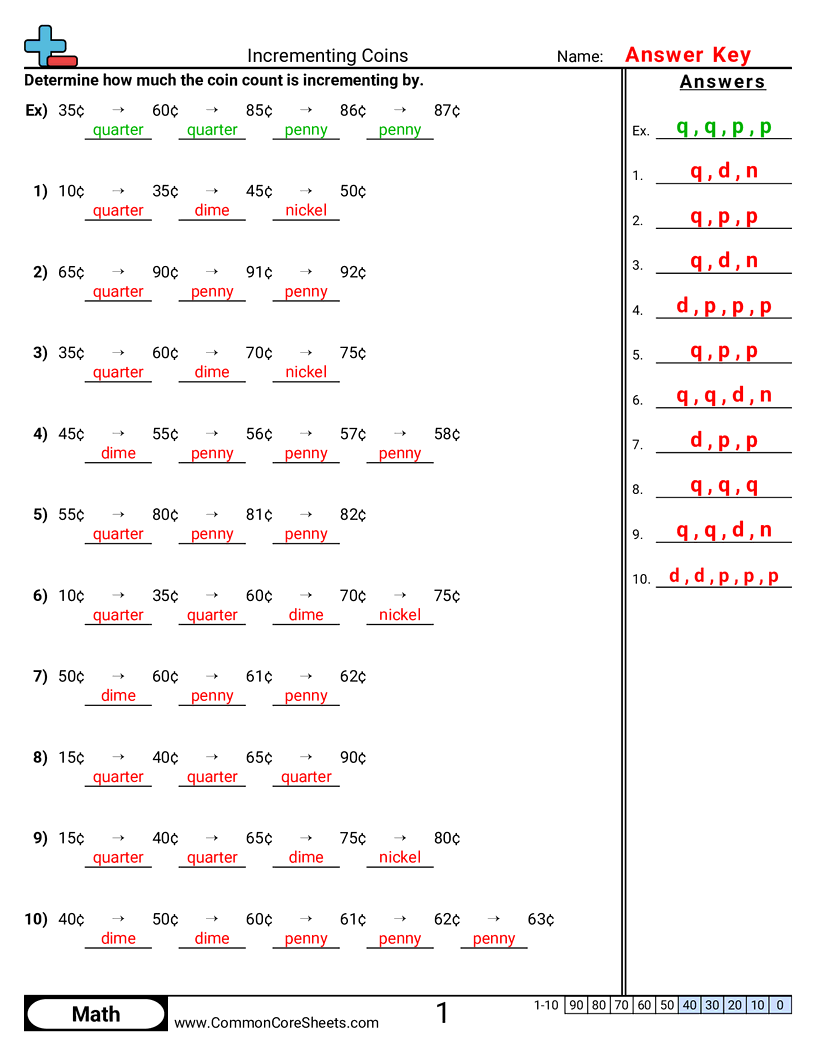
Figure out how much money you have after adding the next coin in a pattern. Skip-count by coin values to find the next amount in a money sequence. Recognize how different coins change the total by 1, 5, 10, or 25 cents.
2md8
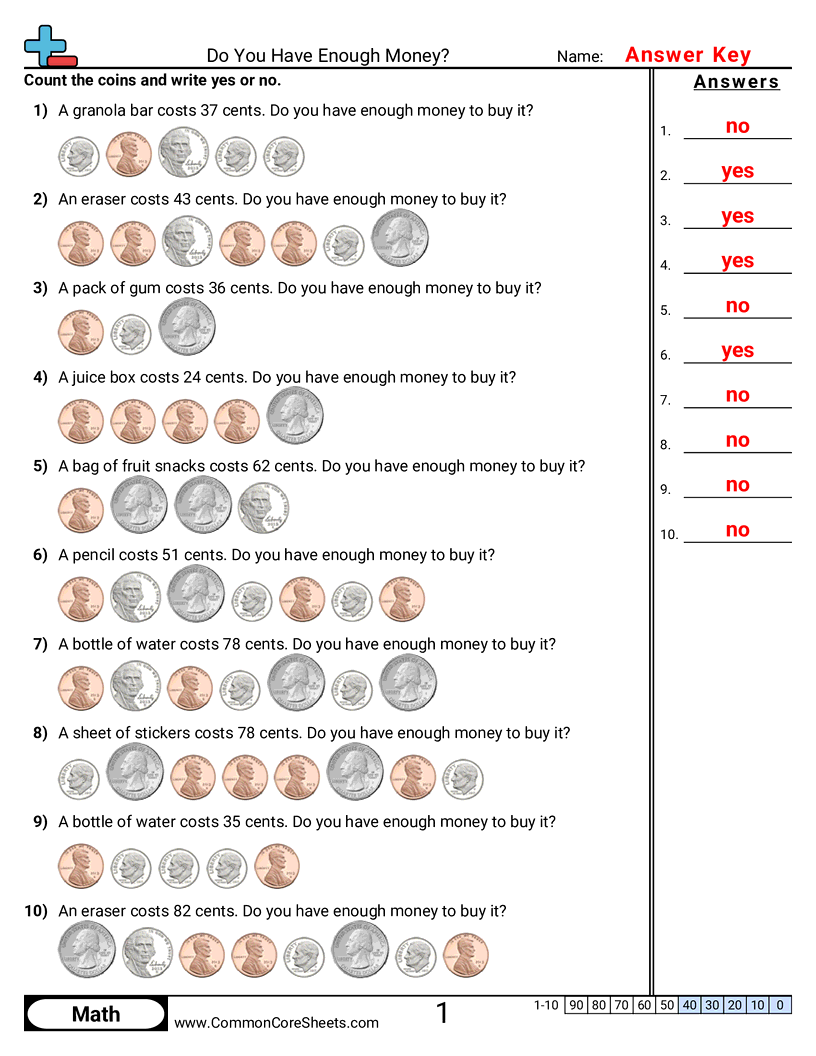
Add up the value of coins and bills to find a total amount Compare a money total to the price of an item Decide whether you have enough money to buy something Understand the value of pennies, nickels, dimes, quarters, and dollars
2md8
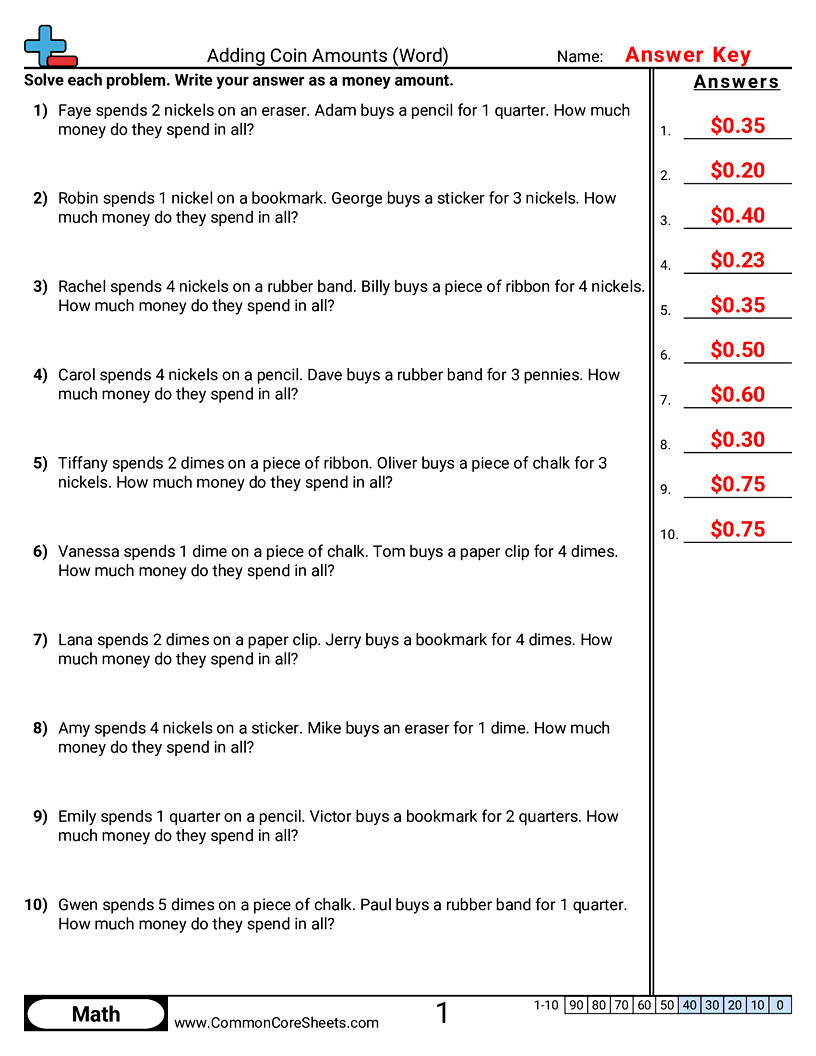
Practice adding the value of different coins together Learn to solve money word problems by finding a total Practice writing money amounts using dollar and cent symbols Recognize the value of pennies, nickels, dimes, and quarters
2md8
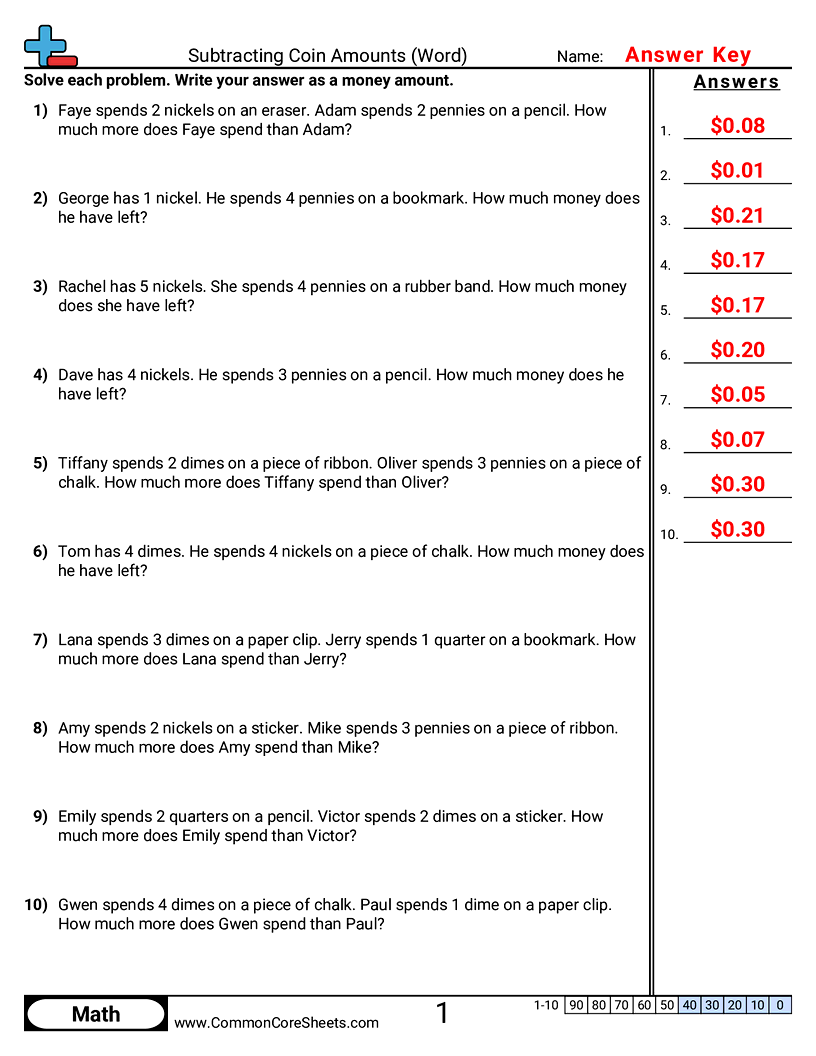
Practice subtracting amounts of money shown in cents Read a word problem and figure out what to subtract Find how much change or money is left after spending Work with quarters, dimes, nickels, and pennies in problems
2md8
Count and add the values of different dollar bills Write an addition number sentence for a group of bills Find the total dollar amount of mixed bills Recognize the values of $1, $5, $10, and $20 bills
2md8
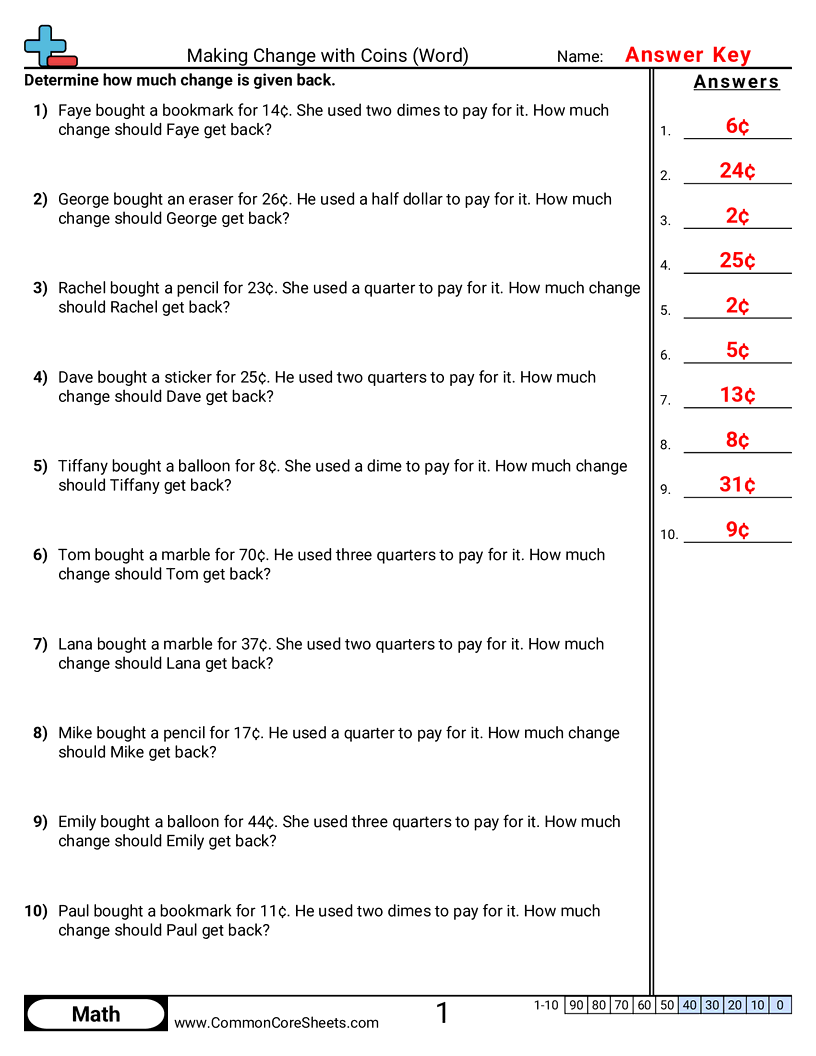
Subtract a price from the amount handed over to find the change Know the value of a quarter, dime and half dollar without being told Read a word problem and decide what to subtract Work with money amounts under one dollar written with the cent sign
2md8
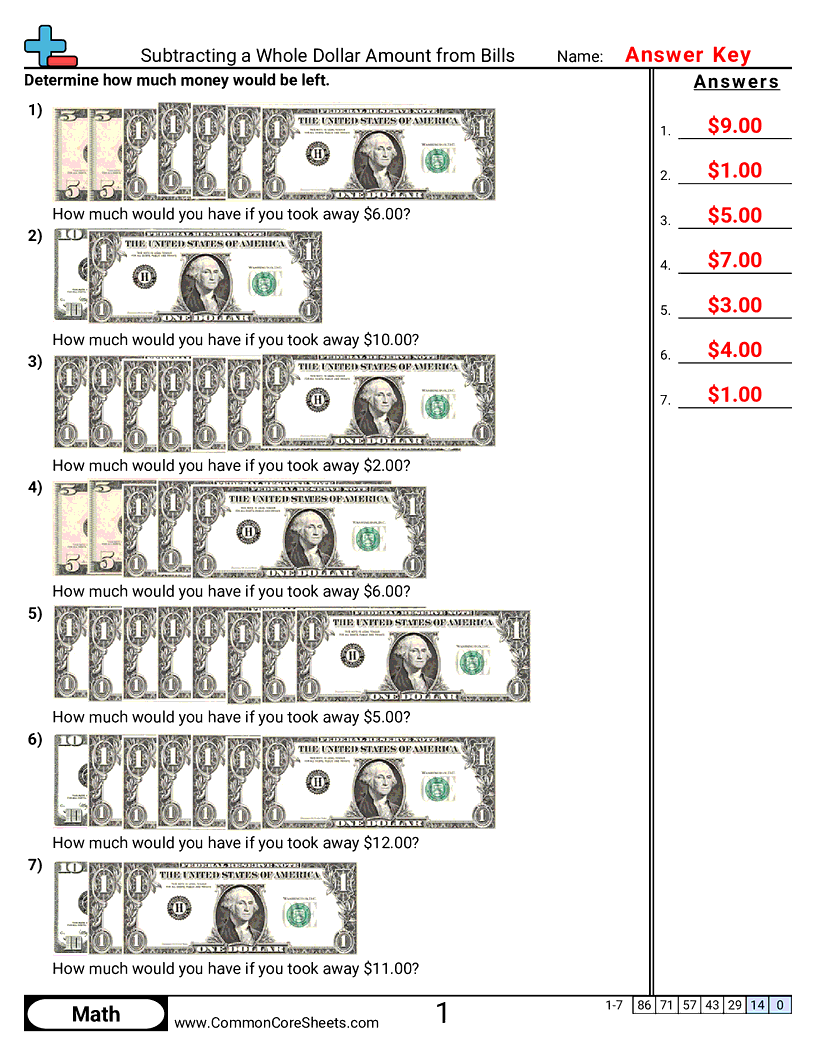
Find the value of a group of one, five, ten and twenty dollar bills Subtract a whole dollar amount from a money total Work in two steps: total the bills first, then take an amount away Write a money answer using the dollar sign and two decimal places
2md8
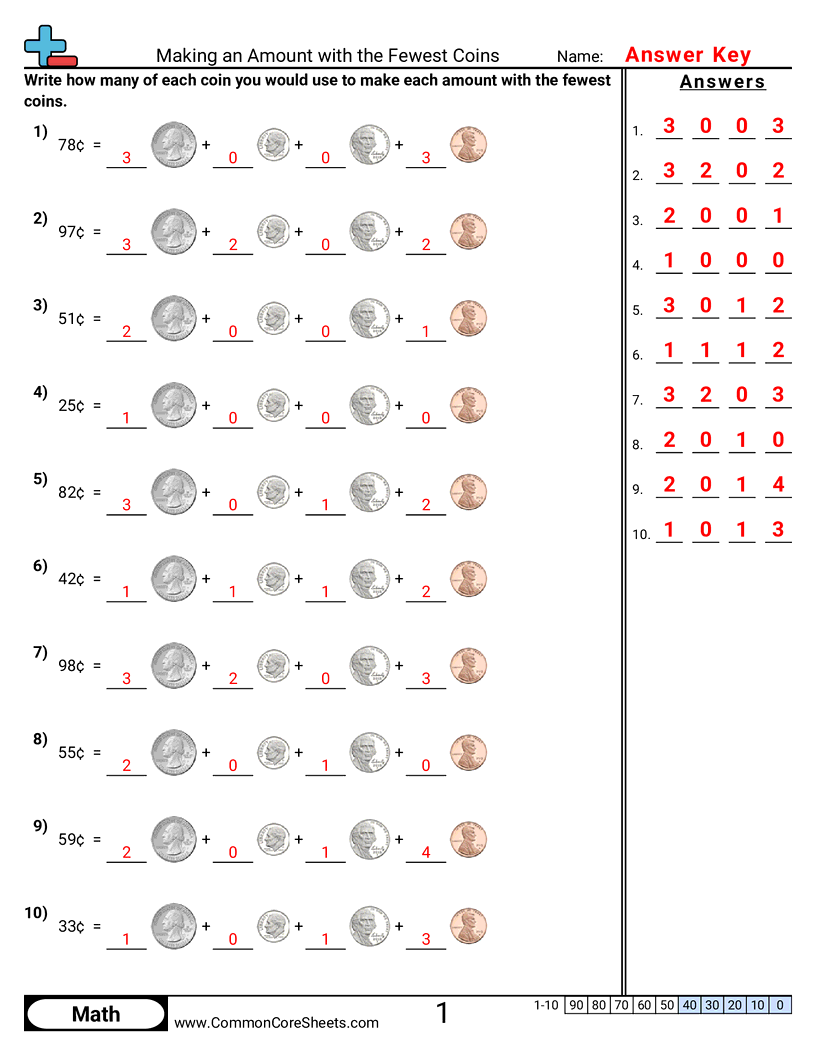
Make a given amount using the fewest coins possible. Recognize a quarter, dime, nickel and penny by sight. Take the largest coin that fits first, then work down to pennies.
Playwire Advertisement