2nd Grade Thanksgiving Reading Countdown
A free nonfiction reading passage for every day of November up to Thanksgiving, from cranberry bogs and wild turkeys to giant parade balloons and Korea's harvest festival. Each one comes at several reading levels, K to 8, with questions, an answer key and a coloring page. Below the passages: a thankful turkey, a thankful tree, draw-and-write pages and a thank-you note, plus Thanksgiving word searches, word scrambles and crosswords for grades 1-8.
More about these worksheets ▾ Show less ▴
Today · November 6
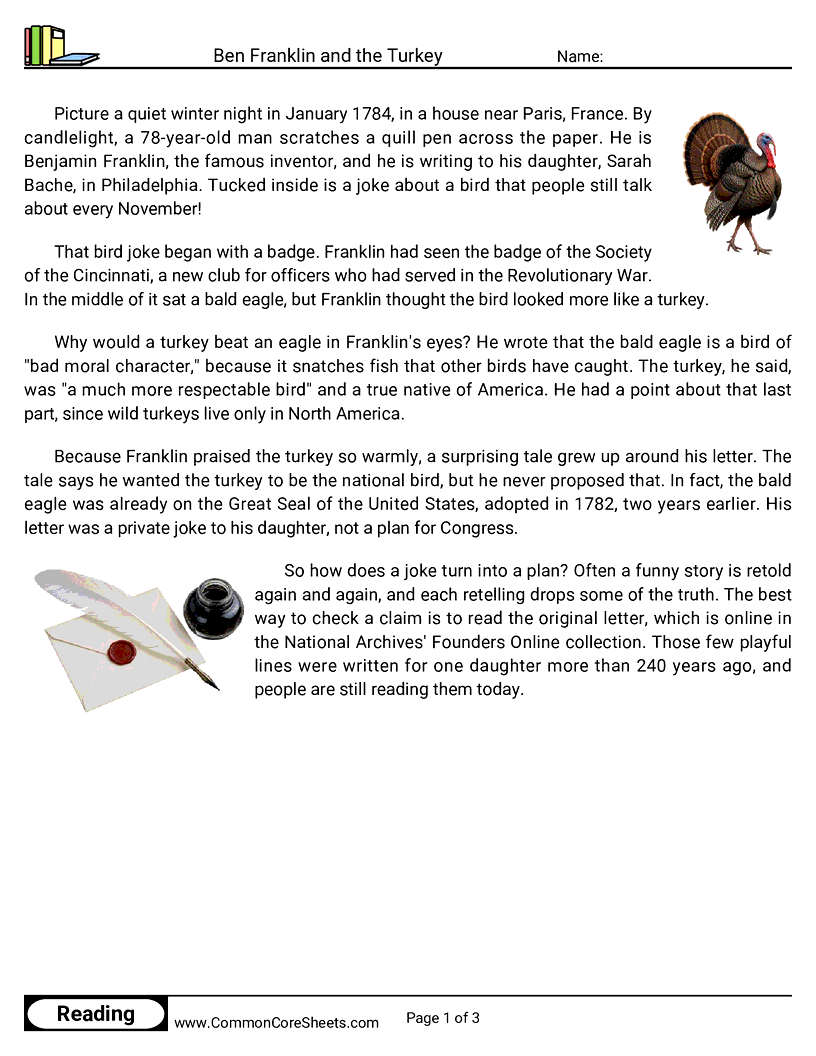
Picture a quiet winter night in January 1784, in a house near Paris, France. By candlelight, a 78-year-old man scratches a quill pen across the paper.
1 2 3 4 5 6 7 8 9 10 11 12 13 14 15 16 17 18 19 20 21 22 23 24 25 26 27
Grade & filters: 2nd Grade ▾
×
RI.2 RI.3 RI.4 RI.5 RI.6 RI.7 RI.8
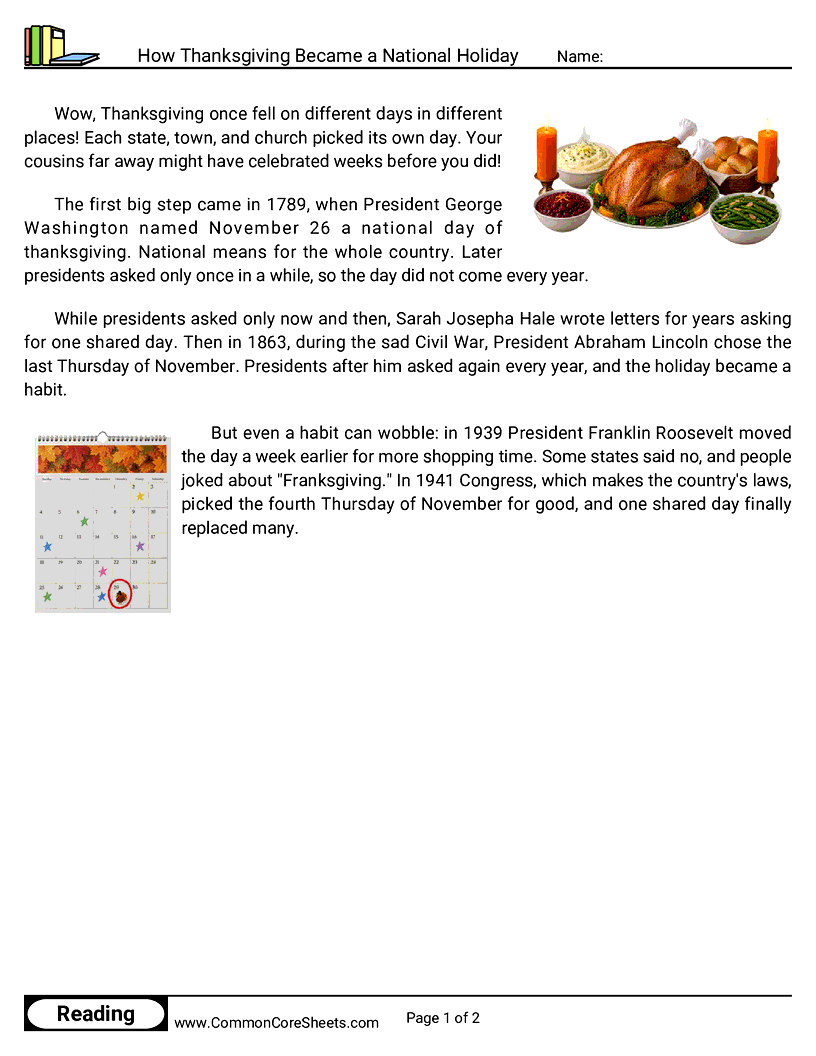
Read a passage about how Thanksgiving became a national holiday and identify the order of events from 1789 to 1941. Find details that explain why Thanksgiving dates were different in early America. Explain why President Roosevelt moved Thanksgiving in 1939 and how Congress settled the date in 1941. Use context clues to work out the meanings of words such as jumble.
RI.1 RI.2 RI.3 RI.4 RI.5 RI.6 RI.7 RI.8 RI.K
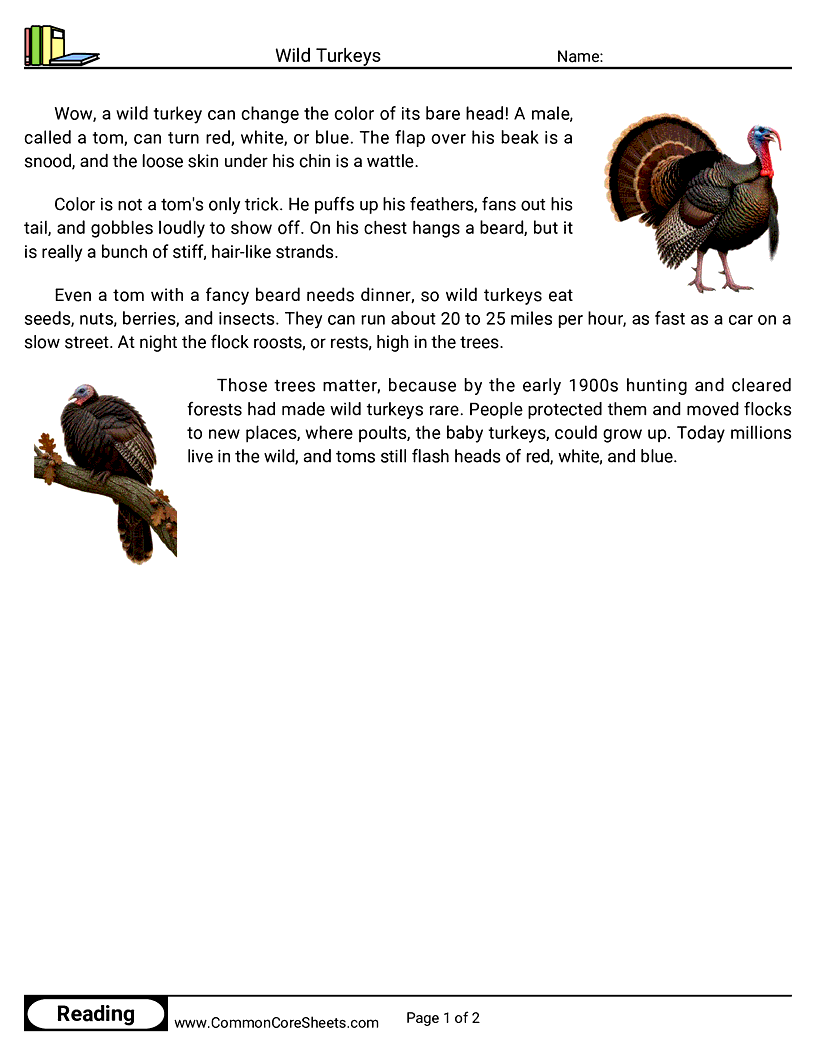
Read a nonfiction passage about wild turkeys and find details about how they live. Explain what caused wild turkeys to become rare and what helped them return. Find the meaning of words like snood and poults from the text. Describe how a paragraph is organized, such as by cause and effect.
RI.2 RI.3 RI.4 RI.5 RI.6 RI.7 RI.8
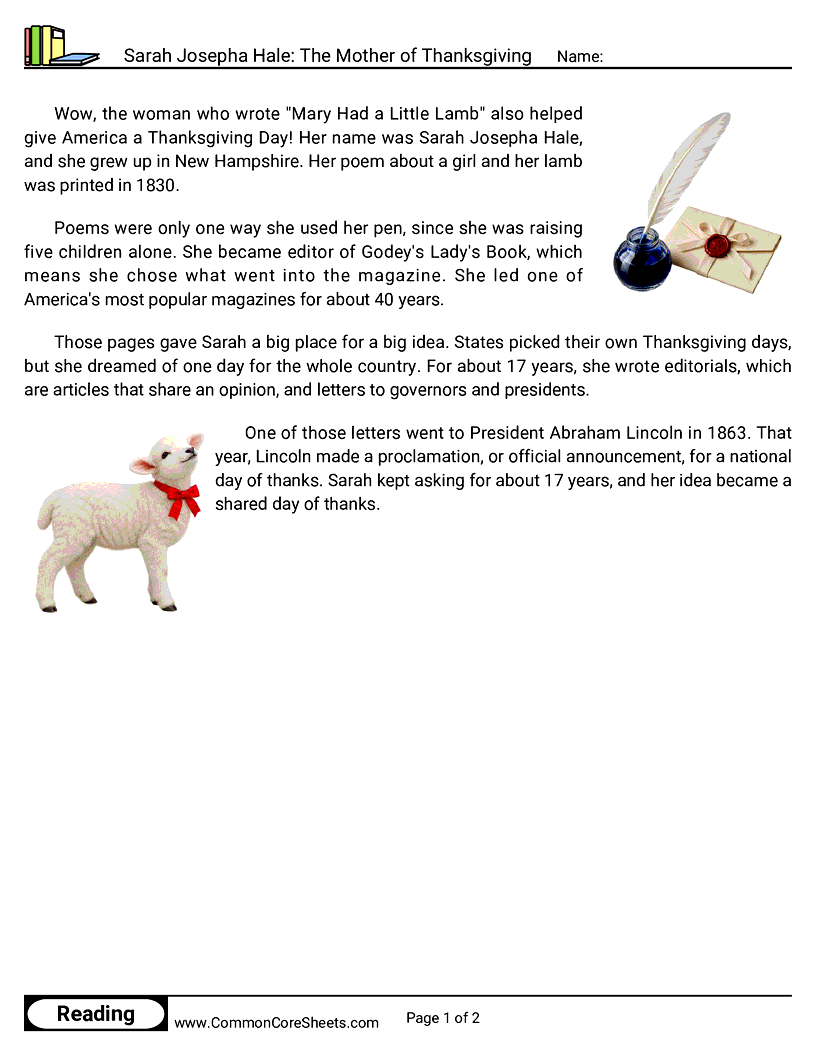
Read a passage about Sarah Josepha Hale and find details that show how she kept trying. Explain why states once gave thanks on different days and how Hale hoped to change that. Find the meaning of the word editorials from clues in the text. Describe how the author organizes a paragraph as a problem and a solution.
RI.1 RI.2 RI.3 RI.4 RI.5 RI.6 RI.7 RI.8 RI.K
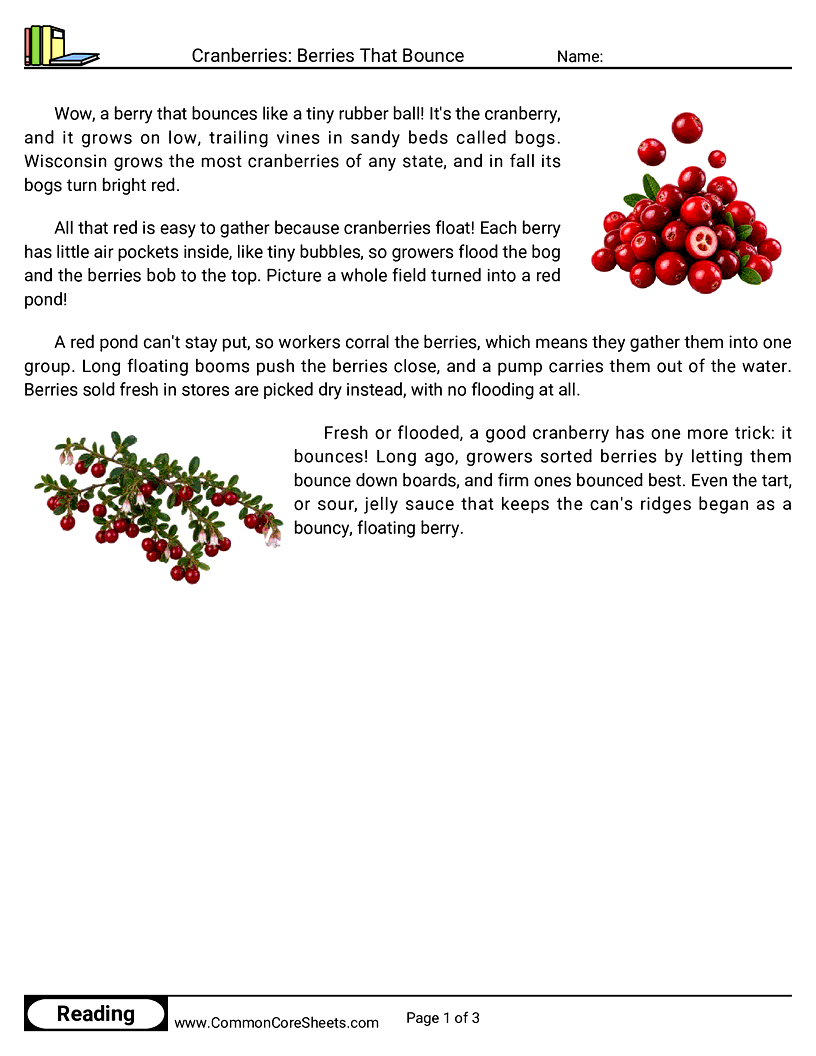
Read a nonfiction passage and explain why cranberries float during a wet harvest. Find details in the text that tell how fresh cranberries are picked. Explain the meaning of the word corral using clues from the sentence. Identify the main idea of a paragraph and the details that support it.
RI.1 RI.2 RI.3 RI.4 RI.5 RI.6 RI.7 RI.8 RI.K
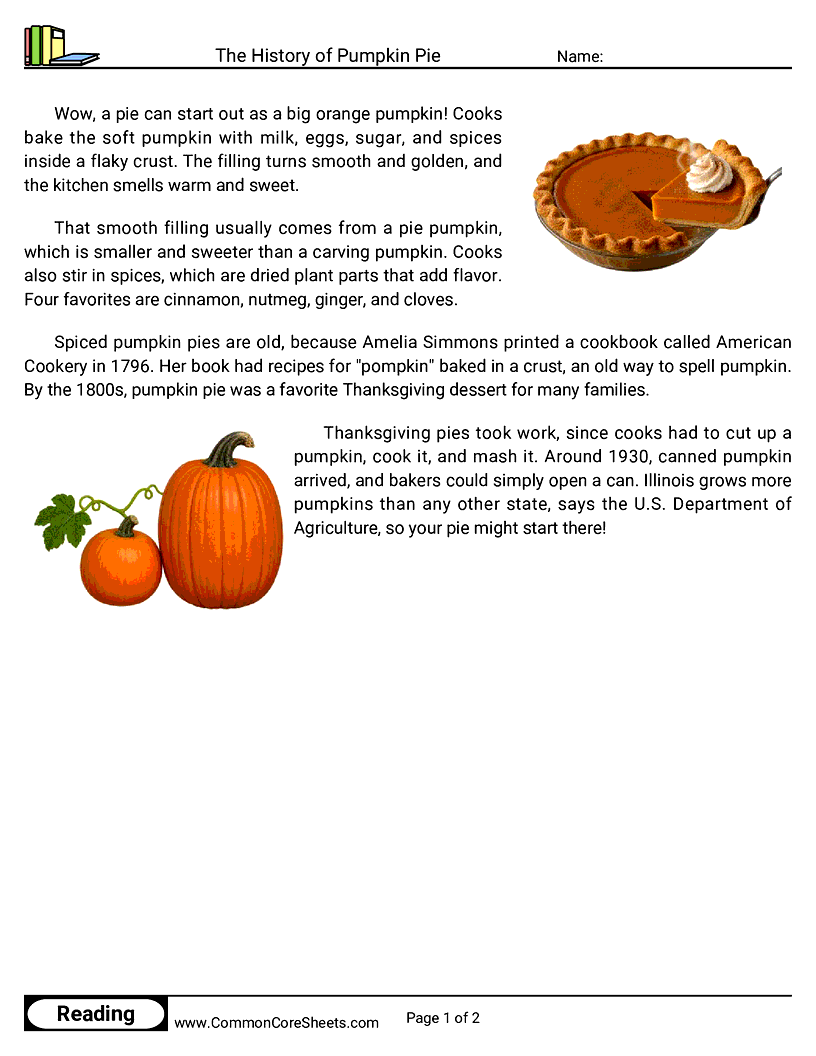
Read a nonfiction passage about the history of pumpkin pie and find details that answer questions. Explain how canned pumpkin changed the way people bake pie. Figure out the meaning of the phrase "from scratch" from its context. Describe how a paragraph is organized by comparing before and after.
RI.1 RI.2 RI.3 RI.4 RI.5 RI.K
Read a nonfiction passage and explain how it is organized around a problem and its solutions. Find the meaning of the words migration and hibernation using clues in the text. Explain why animals such as geese, bears, and deer behave the way they do before winter. Use details from the passage to answer questions about animals in November.
RI.1 RI.2 RI.3 RI.4 RI.5 RI.6 RI.7 RI.8
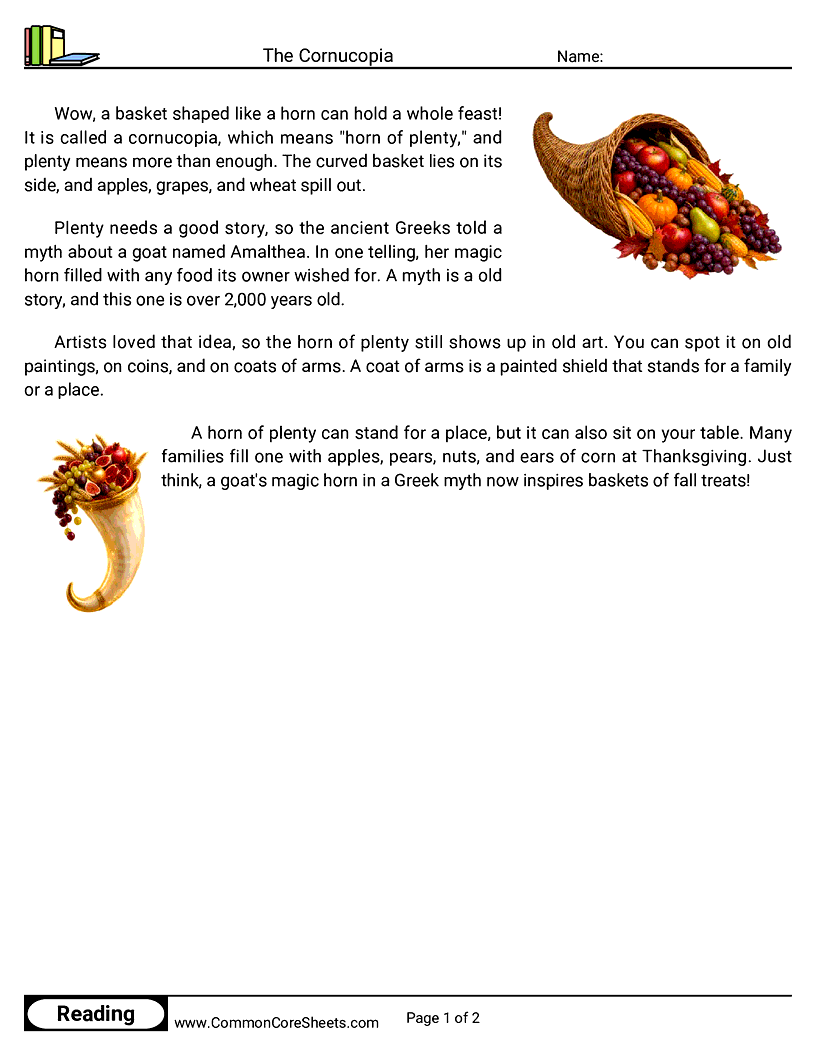
Read a passage about the cornucopia and explain what it stands for. Find details that show how the horn of plenty appears in myths, art, coins, and seals. Explain the meaning of words such as plenty and wicker using clues in the text. Describe how the passage is organized from an ancient myth to today.
RI.2 RI.3 RI.4 RI.5 RI.6 RI.7 RI.8
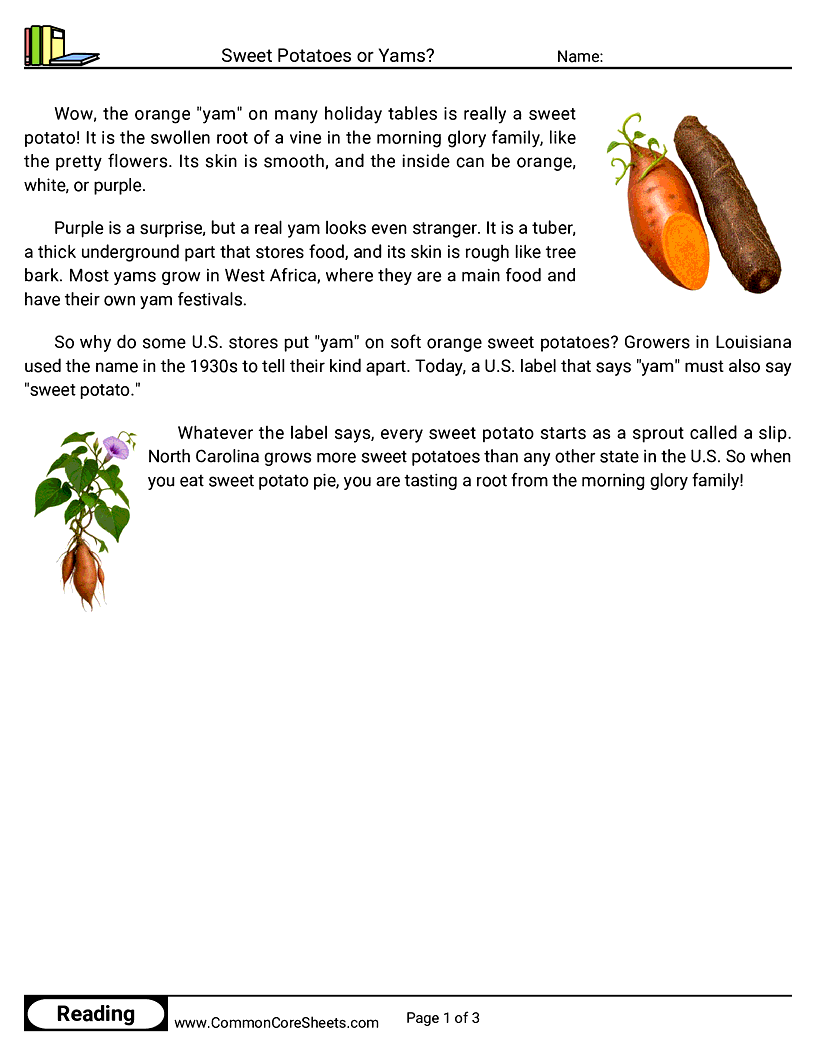
Read a nonfiction passage and compare sweet potatoes with true yams. Find details that explain why many stores use the word yam. Explain the meaning of science words like tuber and slip using clues in the text. Describe how an author organizes a paragraph by comparing two things.
RI.1 RI.2 RI.3 RI.4 RI.5 RI.6 RI.7 RI.8 RI.K
Read a passage about the wishbone and find details about how a furcula works in a bird. Explain how the author uses evidence, such as fossils, to show that birds are related to dinosaurs. Find the cause and effect that explains why a wishbone must dry before it is pulled. Use context clues to work out the meaning of the word merrythought.
RI.1 RI.2 RI.3 RI.4 RI.5 RI.6 RI.7 RI.8
Read a passage about harvest festivals and find details about foods, places and dates. Find the meanings of words like lunar calendar and sukkah from clues in the text. Explain how the author compares several festivals from different parts of the world. Explain the main idea of the passage using key details.
RI.1 RI.2 RI.3 RI.4 RI.5 RI.6 RI.7 RI.8
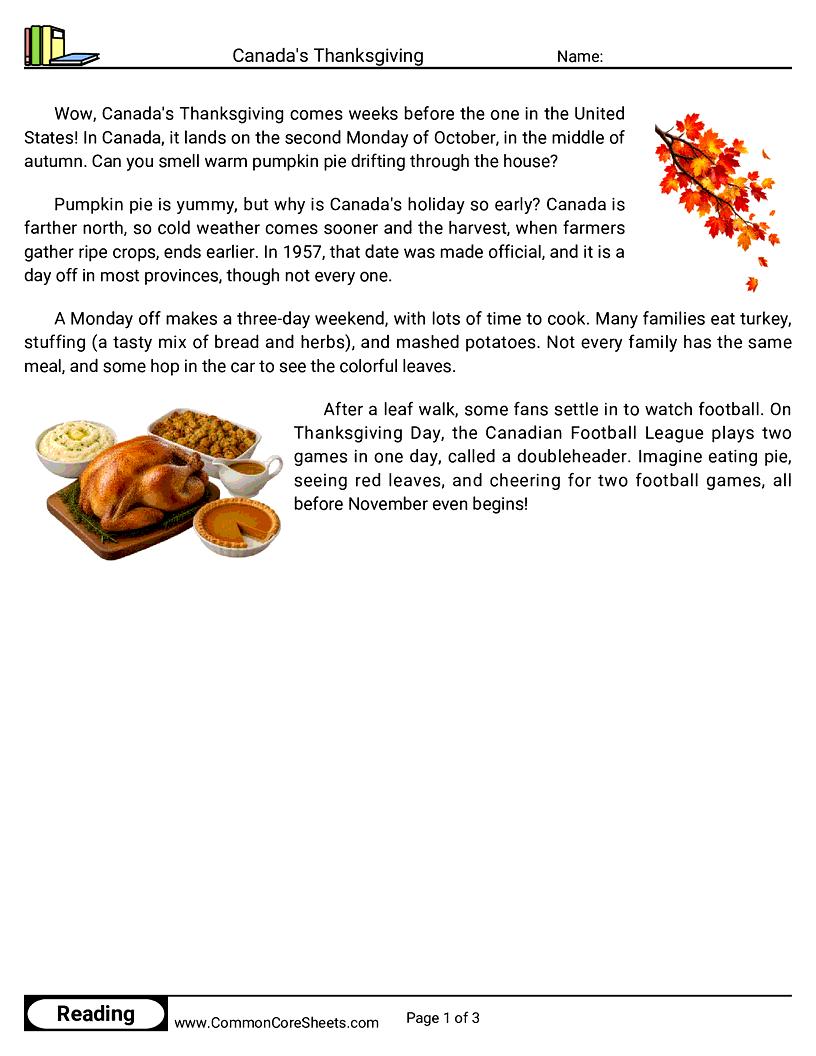
Read a nonfiction passage about Canada's Thanksgiving and find details that answer questions. Explain why Canada's Thanksgiving comes earlier in the year than Thanksgiving in the United States. Find the meaning of words like chlorophyll and doubleheader using clues in the text. Describe how the author compares two ideas and explains a cause in one paragraph.
RI.1 RI.2 RI.3 RI.4 RI.5 RI.6 RI.7 RI.8
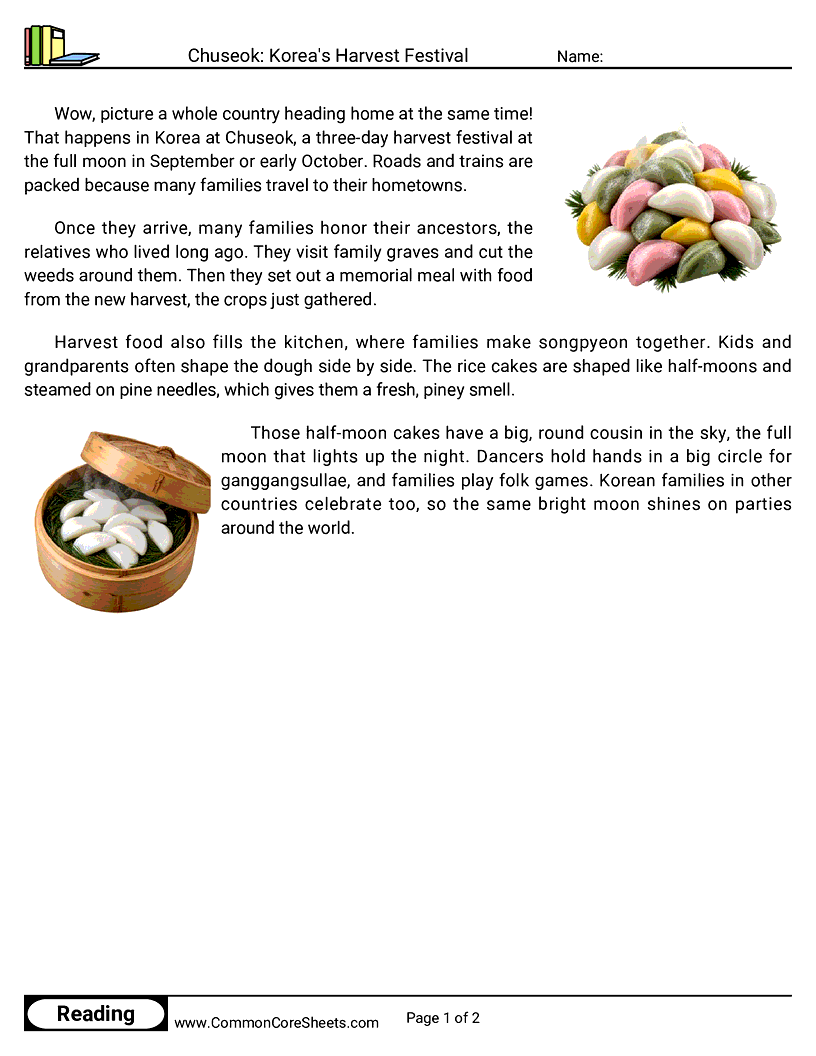
Read a nonfiction passage about Chuseok and find key details about its customs. Explain why families travel, honor ancestors, and share foods during the harvest festival. Find the meaning of new words such as charye and yunnori from context clues. Describe the order of events in a holiday celebration using the text.
RI.1 RI.2 RI.3 RI.4 RI.5 RI.K
Read a how-to passage and name the four parts of a thank-you note. Find details that explain why being specific makes a note better. Explain how the author uses a comparison to support a point. Use context clues to work out the meaning of the word keepsake.
RI.2 RI.3 RI.4 RI.5 RI.6 RI.7 RI.8
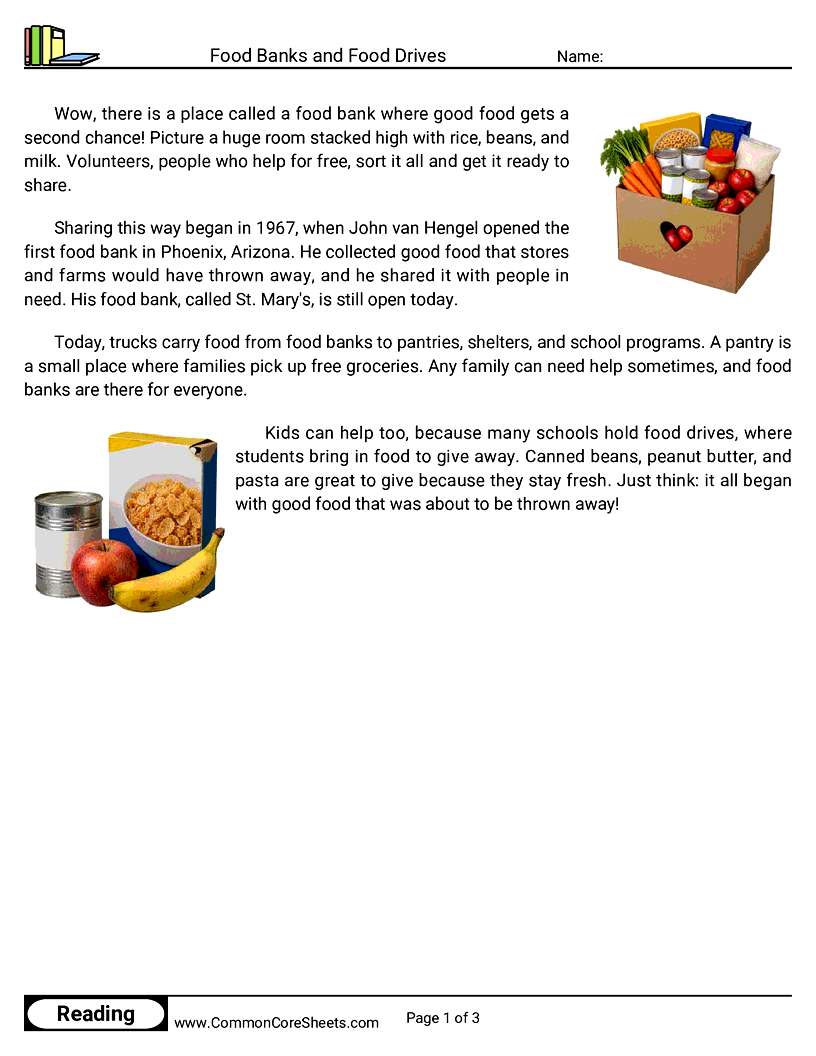
Read a passage about how food banks began and how they work today. Find details that tell how food travels from a food bank to families. Explain what the word "deposited" means in the passage. Explain why it helps to ask a food bank what it needs before a food drive.
RI.1 RI.2 RI.3 RI.4 RI.5 RI.6 RI.7 RI.8
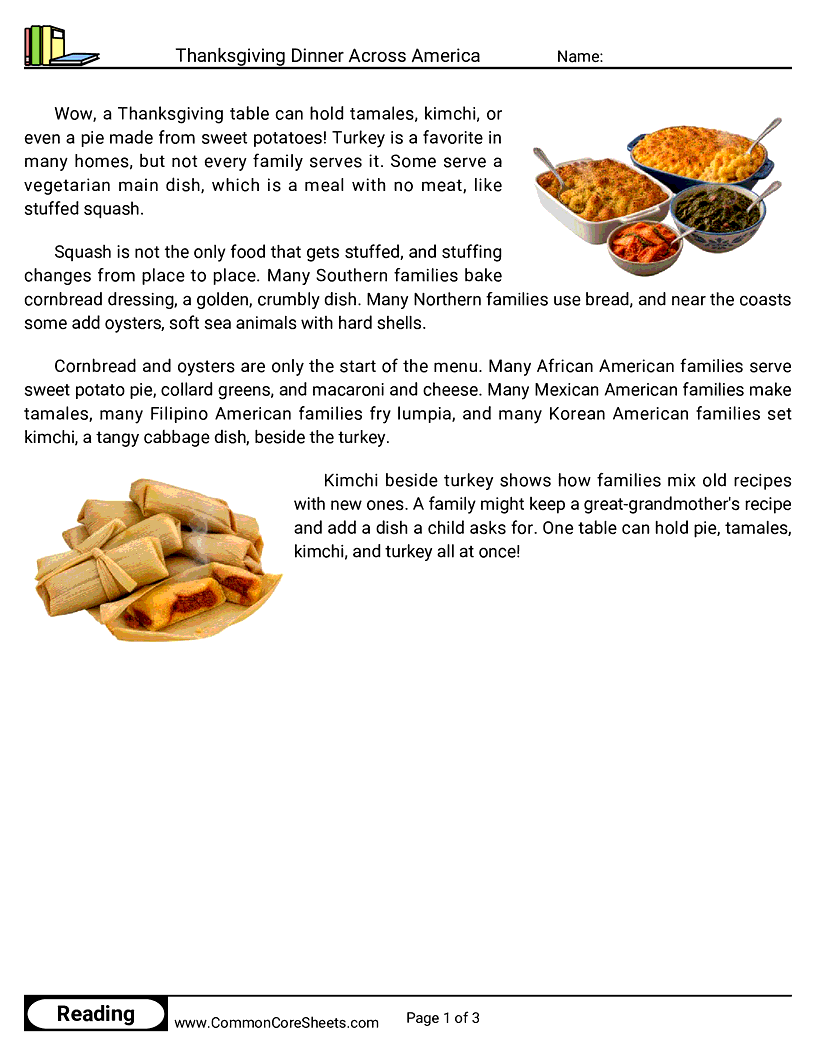
Read a nonfiction passage about foods families serve at Thanksgiving and find key details. Explain how the author compares dishes from different places and families. Figure out the meaning of new words such as tamalada from the text around them. Find the main idea and explain how details support it.
RI.2 RI.3 RI.4 RI.5 RI.6 RI.7 RI.8
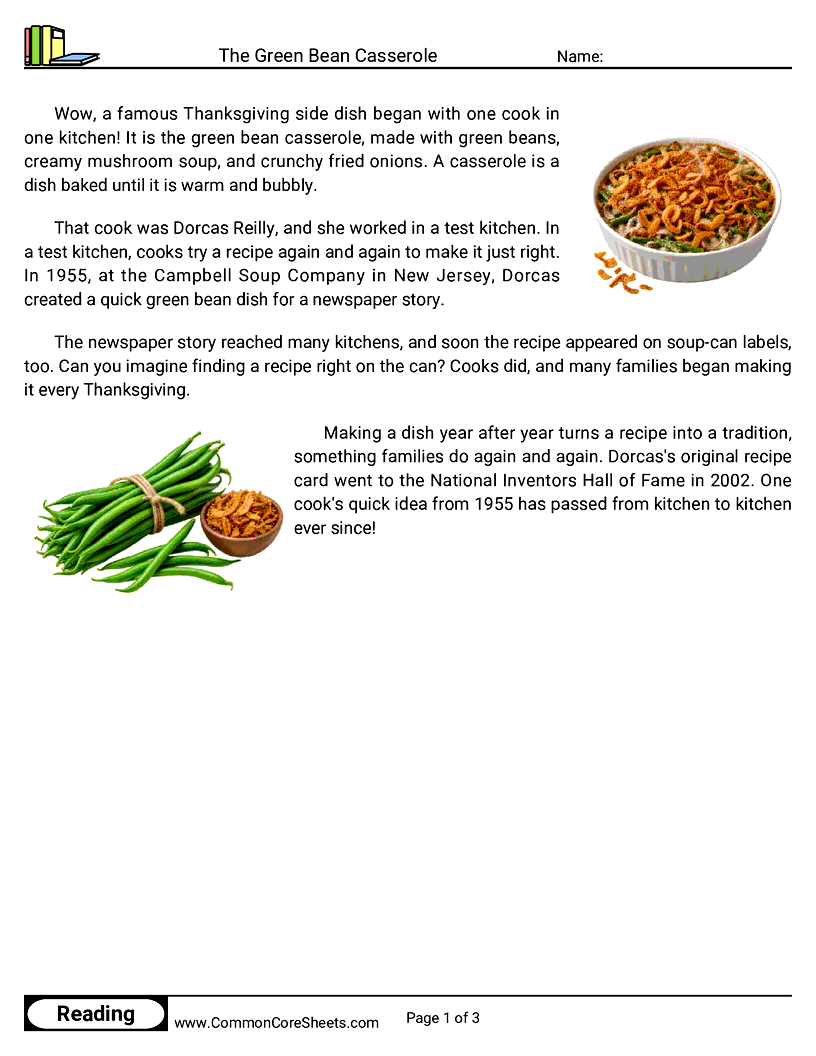
Read a nonfiction passage about how the green bean casserole was invented and explain what a test kitchen does. Find the sentences that tell when, where, and by whom the recipe was created. Explain how a recipe can turn into a family tradition using details from the text. Identify the time-order structure of the passage and determine the meaning of the word tradition.
RI.1 RI.2 RI.3 RI.4 RI.5 RI.6 RI.7 RI.8
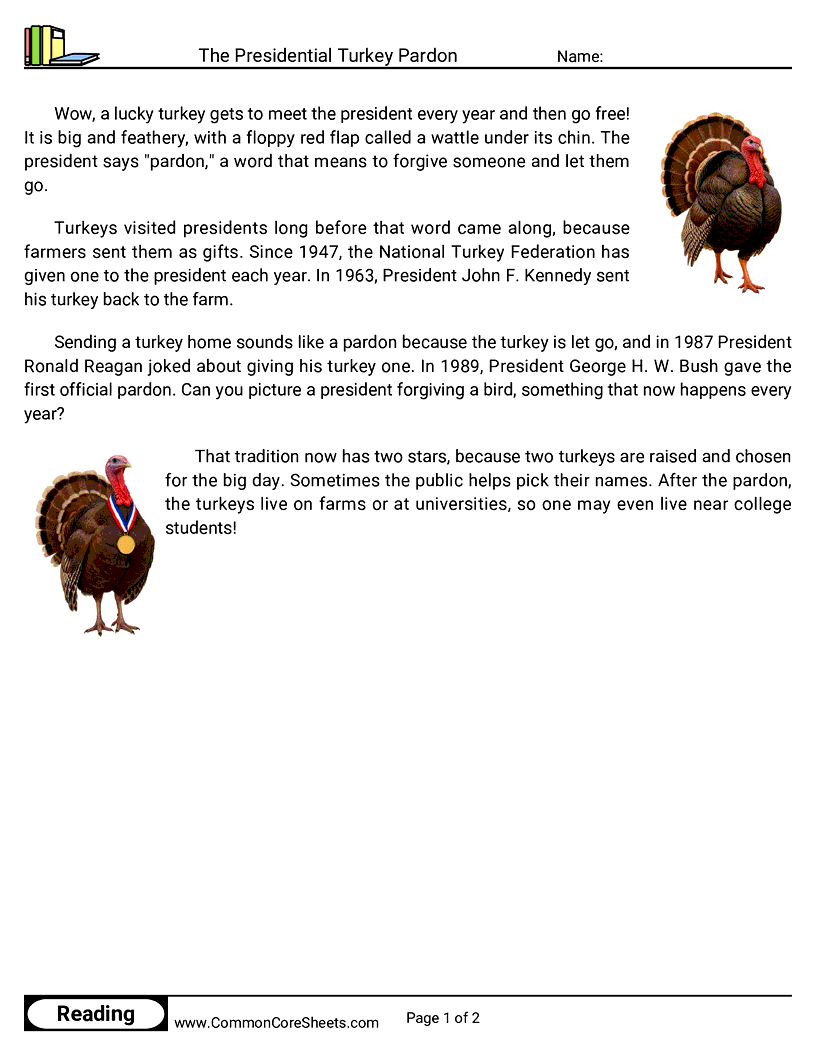
Read a passage about the history of the presidential turkey pardon. Find the years and events that show how the tradition changed over time. Explain how a text is organized by the order of events. Use details from the text to answer questions about the pardon.
RI.2 RI.3 RI.4 RI.5 RI.6 RI.7 RI.8
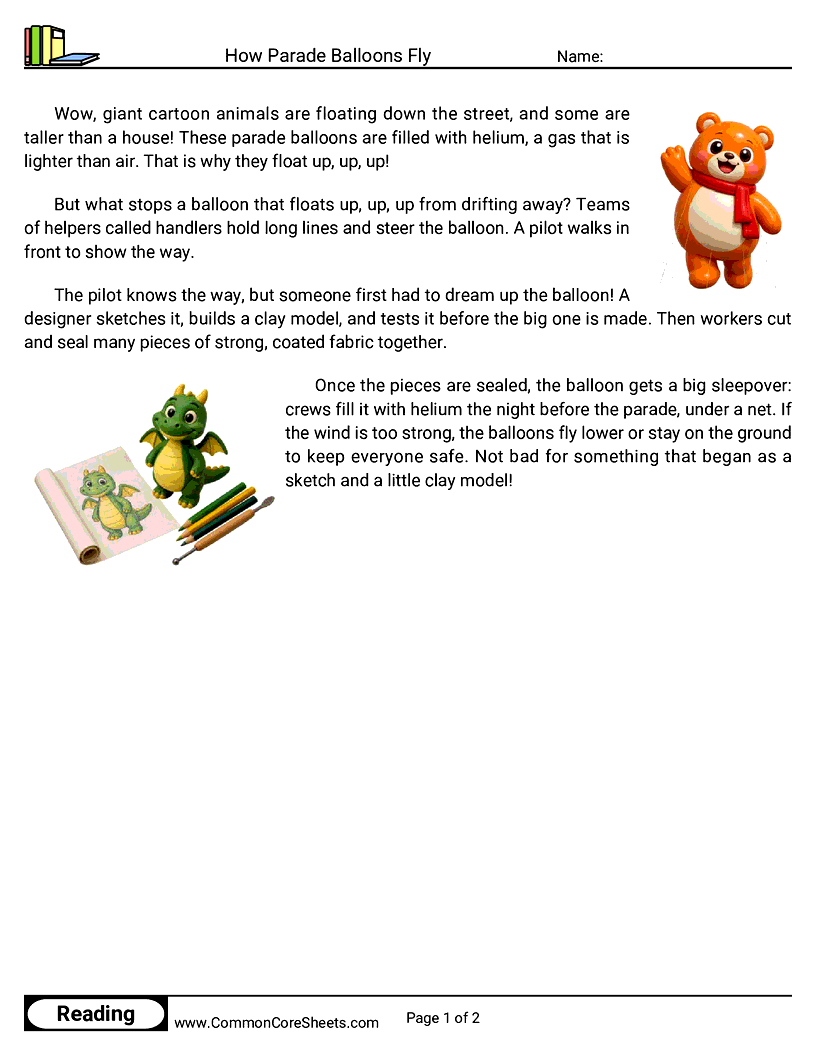
Read a nonfiction passage about how giant parade balloons are made and flown. Find details that explain why helium makes a balloon float. Explain the order of steps in building a balloon, from sketch to finished fabric. Explain how a safety rule about wind is connected to past accidents.
RI.1 RI.2 RI.3 RI.4 RI.5 RI.6 RI.7 RI.8 RI.K
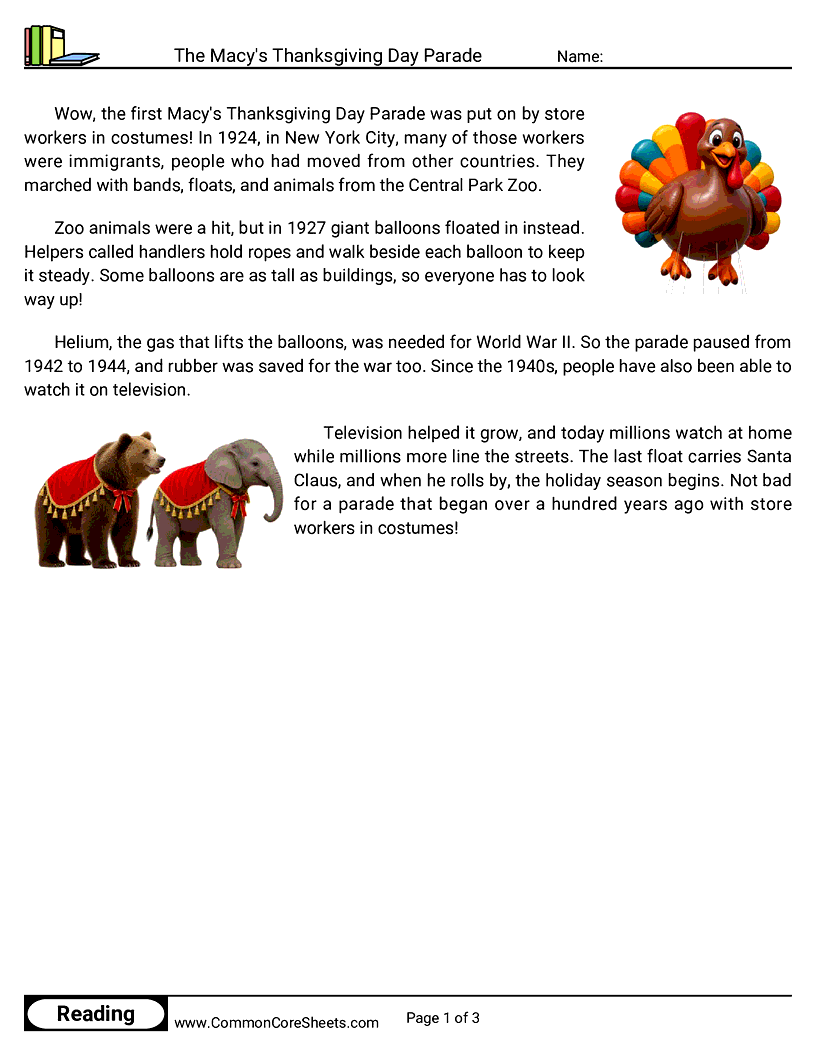
Read a passage about how the Macy's Thanksgiving Day Parade changed over time. Find details that explain why balloons replaced zoo animals and why the parade paused during World War II. Explain how the passage is organized in time order. Use context clues to work out the meanings of words such as immigrants and helium.
RI.1 RI.2 RI.3 RI.4 RI.5 RI.6 RI.7 RI.8
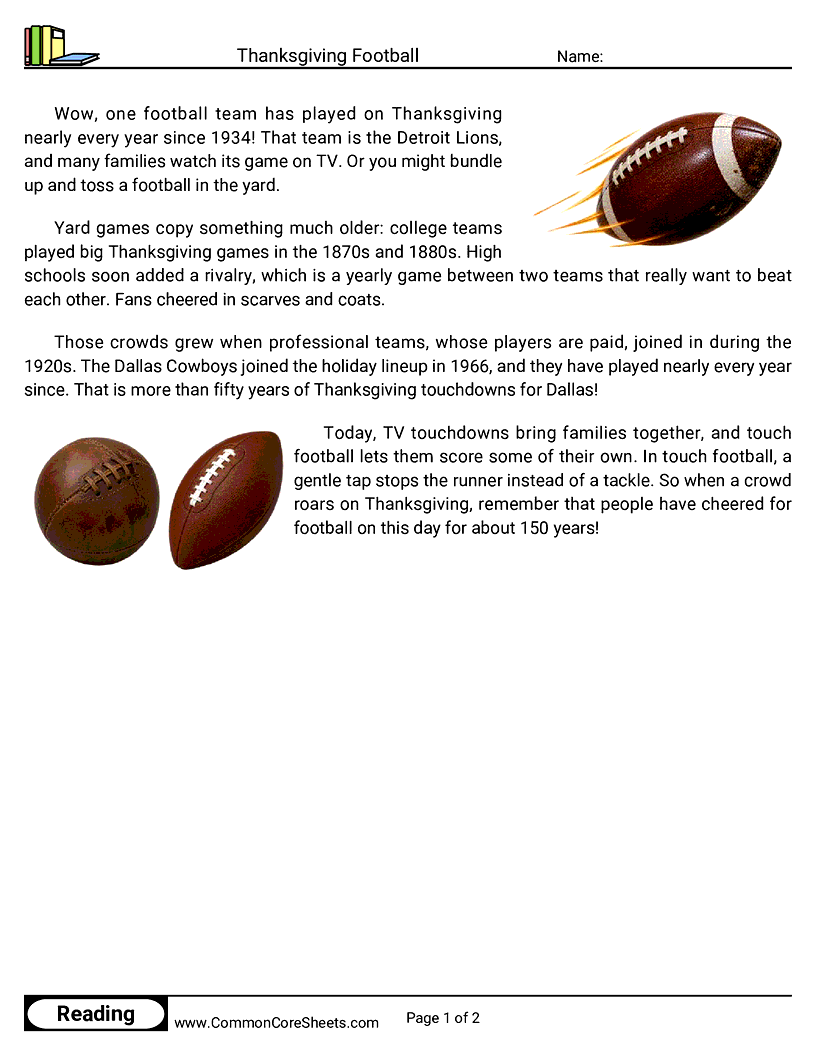
Read a nonfiction passage about the history of Thanksgiving football and name the order in which events happened. Find details that show how long football has been a Thanksgiving tradition. Explain the meaning of words such as tradition and rivalry using clues in the text. Explain why high school and professional teams chose to play on the holiday.
RI.1 RI.2 RI.3 RI.4 RI.5 RI.6 RI.7 RI.8
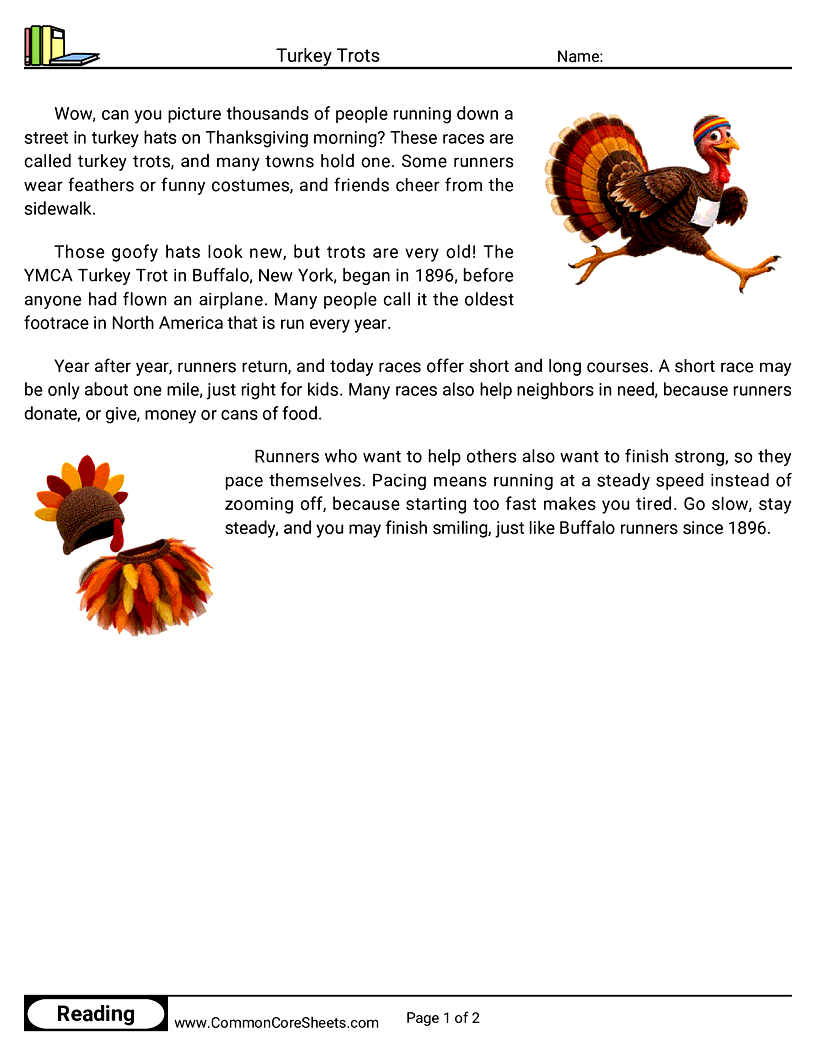
Read a passage about turkey trot races and find the main idea. Find details that tell how long different races are and why races help others. Explain what it means to pace yourself in a race. Describe how the author organizes information by comparing and explaining.
RI.2 RI.3 RI.4 RI.5 RI.6 RI.7 RI.8
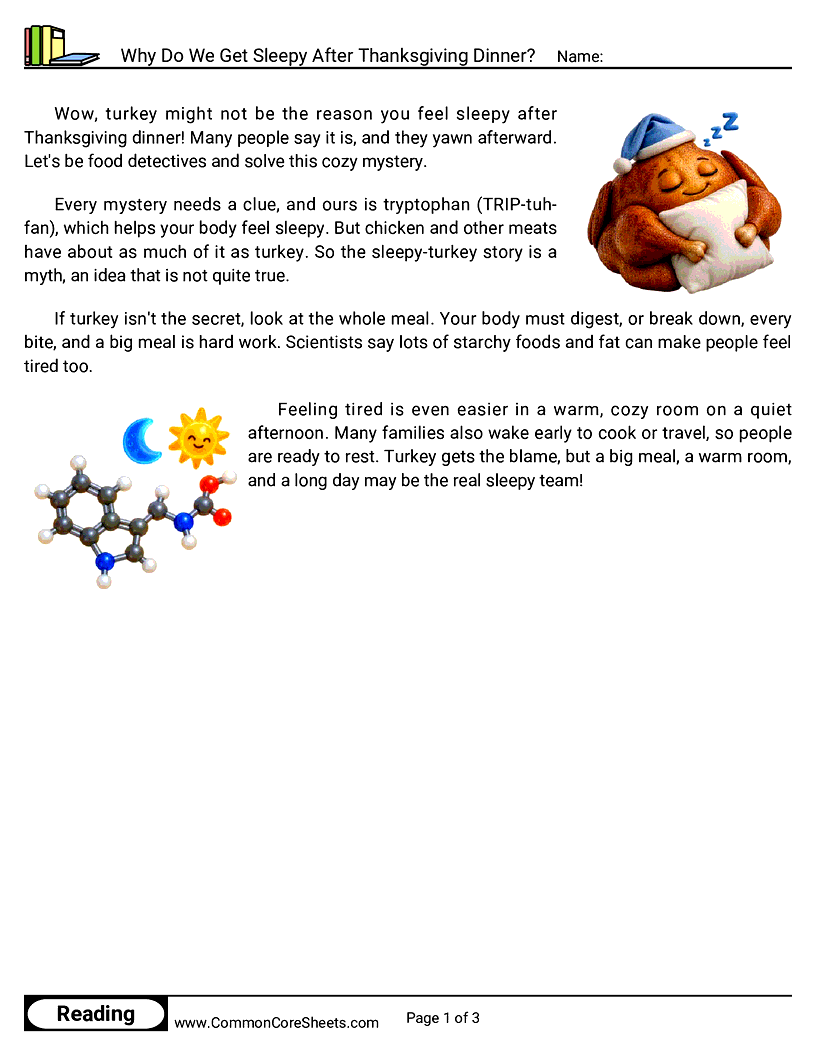
Read a science passage and identify the claim it tests and the evidence it uses. Find details that explain why tryptophan from turkey may not make people sleepy. Explain how several causes together can lead to afternoon sleepiness. Use context clues to work out the meaning of the word suspects.
RI.1 RI.2 RI.3 RI.4 RI.5 RI.6 RI.7 RI.8 RI.K
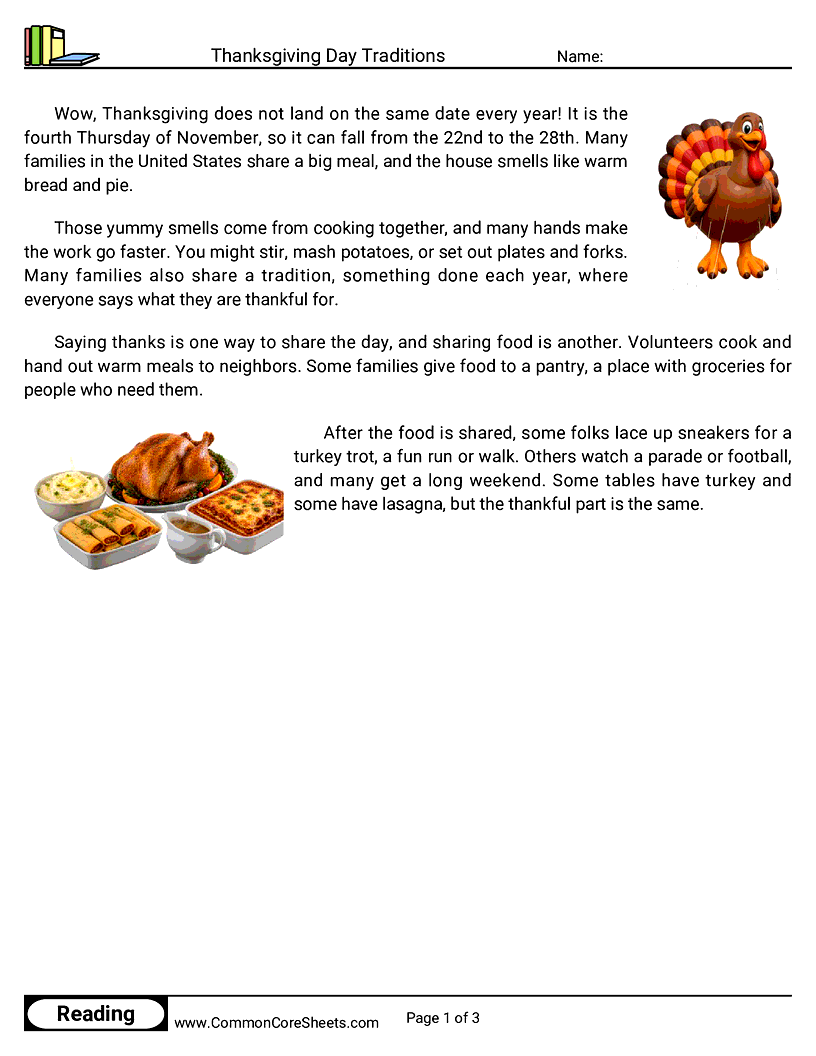
Read a nonfiction passage about Thanksgiving Day traditions and find key details. Explain the meaning of words like tradition and turkey trot using context clues. Identify the main idea of a paragraph and the way the passage is organized. Explain why some turkey trots and community dinners help others.
RI.2 RI.3 RI.4 RI.5 RI.6 RI.7 RI.8
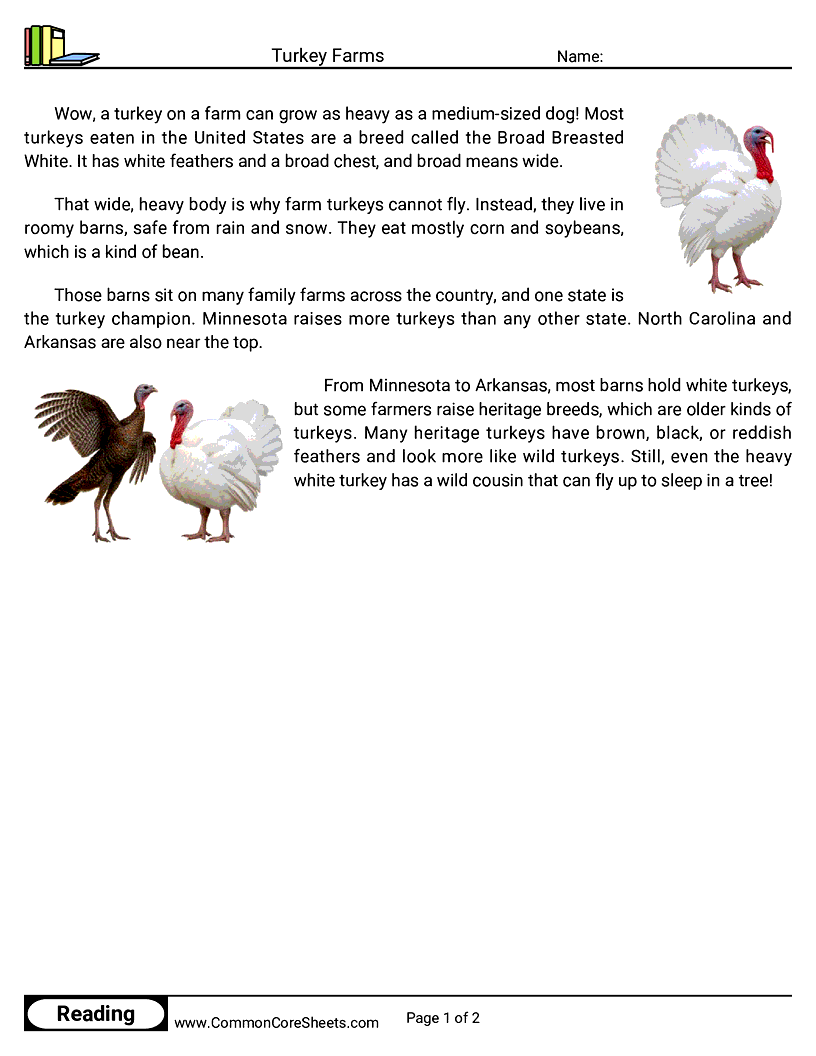
Read a nonfiction passage about how turkeys are raised on farms. Find details that compare farm turkeys with wild turkeys. Explain why a farm turkey cannot fly. Use context to work out the meaning of the word poults.
RI.1 RI.2 RI.3 RI.4 RI.5 RI.6 RI.7 RI.8
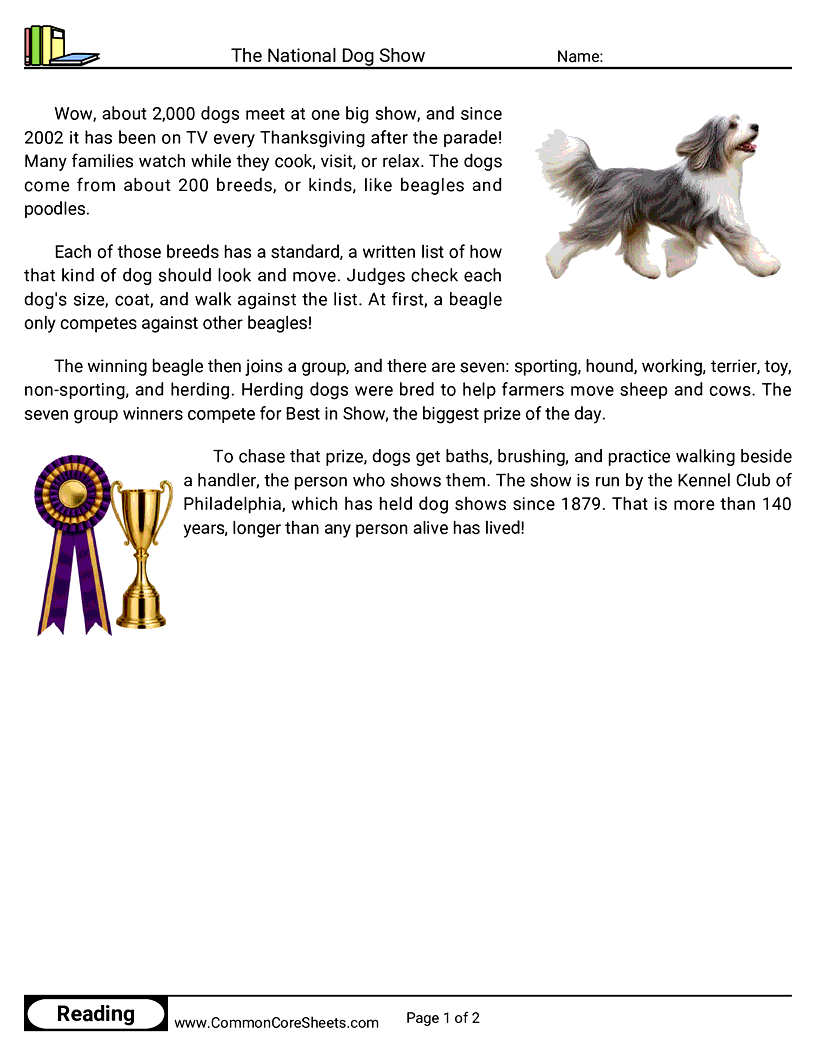
Read a nonfiction passage about the National Dog Show and identify key facts about when and how it is held. Explain how a judge uses a breed standard to choose a winner. Describe the steps a dog takes from winning its breed to competing for Best in Show. Determine the meaning of the domain-specific word standard from context.
RI.1 RI.2 RI.3 RI.4 RI.5 RI.6 RI.7 RI.8
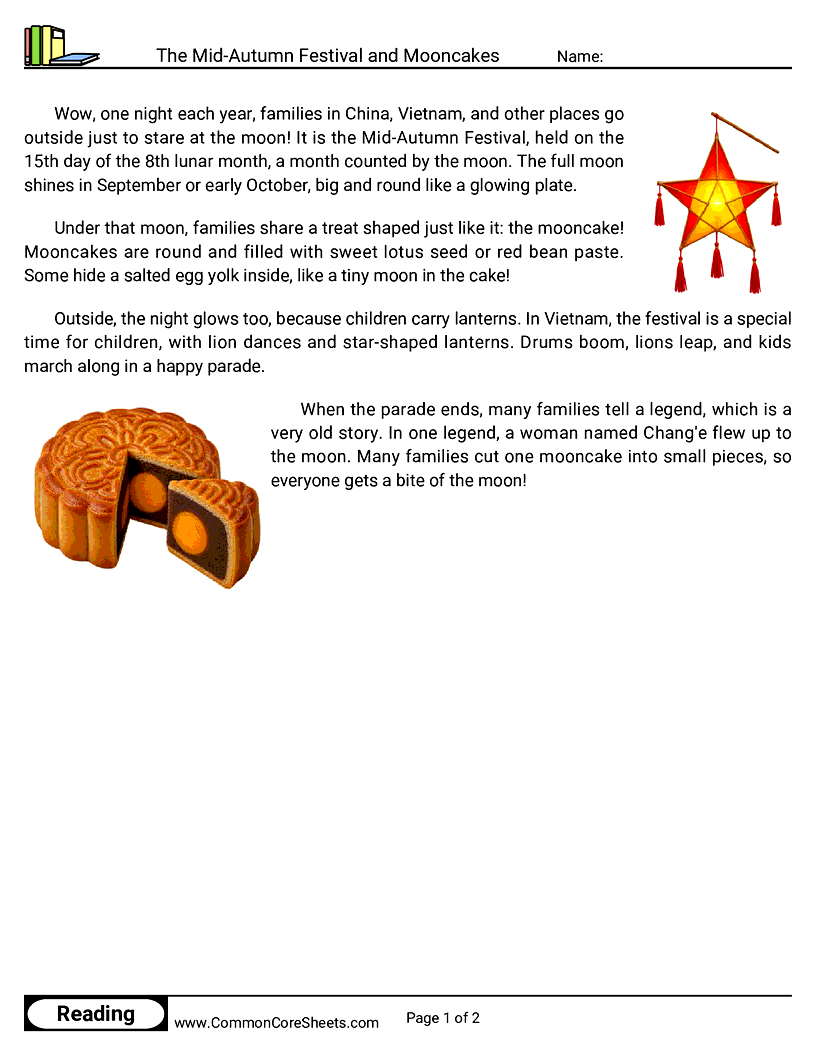
Read a passage about the Mid-Autumn Festival and find details about mooncakes and lanterns. Explain why mooncakes are round and why the festival date changes each year. Find the meaning of a word using clues in the text. Describe how a paragraph is organized.
RI.2 RI.3 RI.4 RI.5 RI.6 RI.7 RI.8
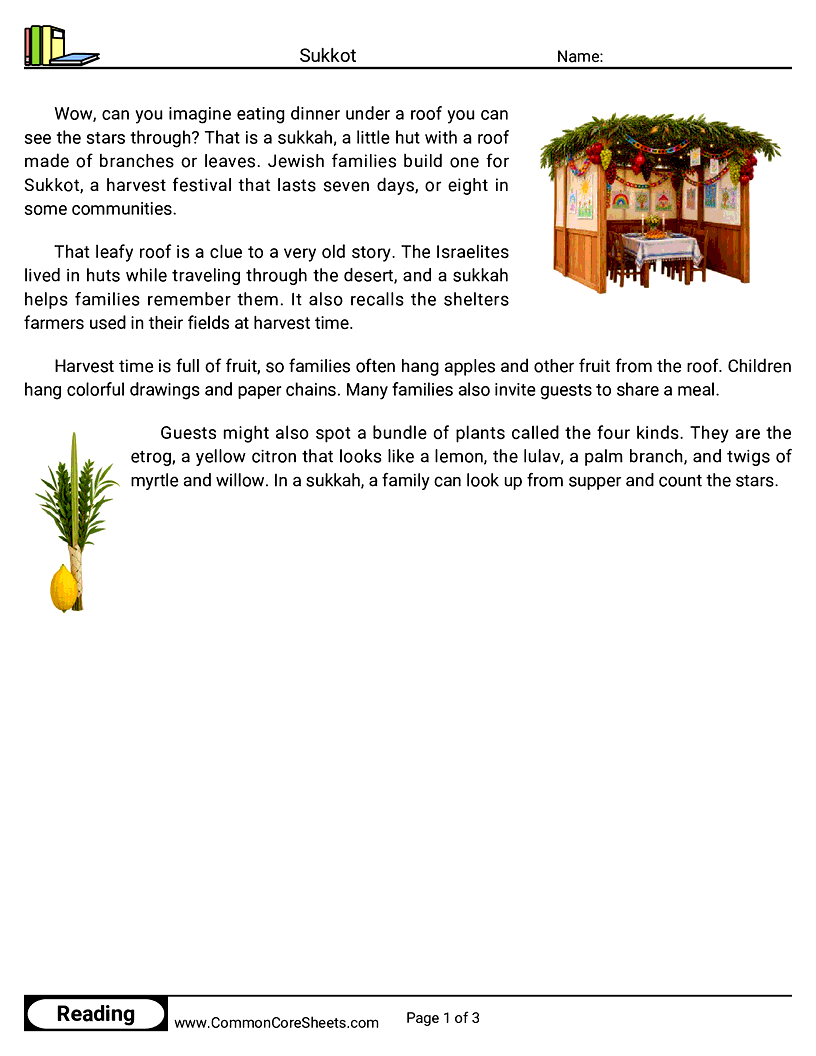
Read a nonfiction passage about the Jewish harvest festival of Sukkot. Find details that tell what a sukkah is and how families use it. Explain why families build a sukkah and what the four kinds are. Use context clues to work out the meaning of the word temporary.
RI.1 RI.2 RI.3 RI.4 RI.5 RI.K
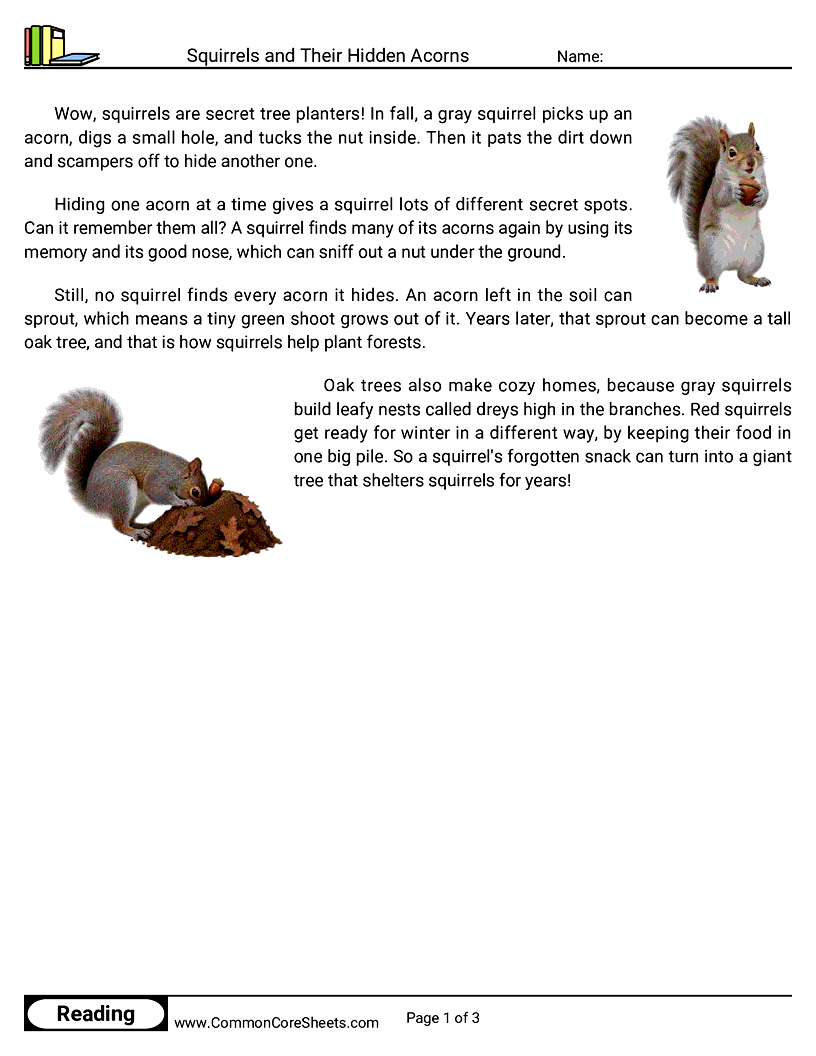
Read a nonfiction passage about how squirrels store food for winter. Explain how gray squirrels and red squirrels store food differently. Find the meaning of words such as hoard and midden using clues in the text. Explain how forgotten acorns can grow into oak trees.
RI.2 RI.3 RI.4 RI.5 RI.6 RI.7 RI.8
Read a nonfiction passage about the Pongal harvest festival and find key details. Explain the meaning of words such as pongal, jaggery, and kolam from the text. Describe how the passage is organized by the four days of the festival. Explain why the festival's customs show thanks for the sun, rain, and animals.
RI.2 RI.3 RI.4 RI.5 RI.6 RI.7 RI.8
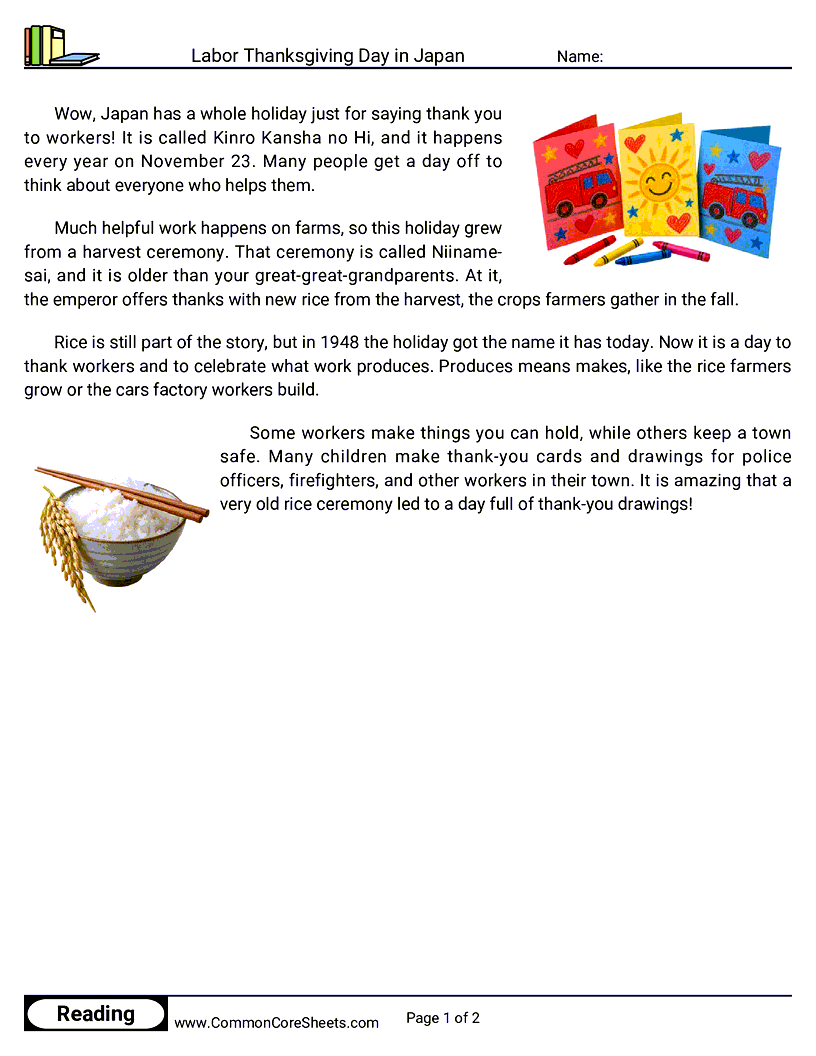
Read a passage about a Japanese holiday and find the details that tell when and why it is celebrated. Explain how Labor Thanksgiving Day changed from a harvest ceremony to a day for thanking workers. Use context clues to figure out the meaning of words such as harvested. Identify how a text is organized by time and by cause and effect.
RI.1 RI.2 RI.3 RI.4 RI.5 RI.K
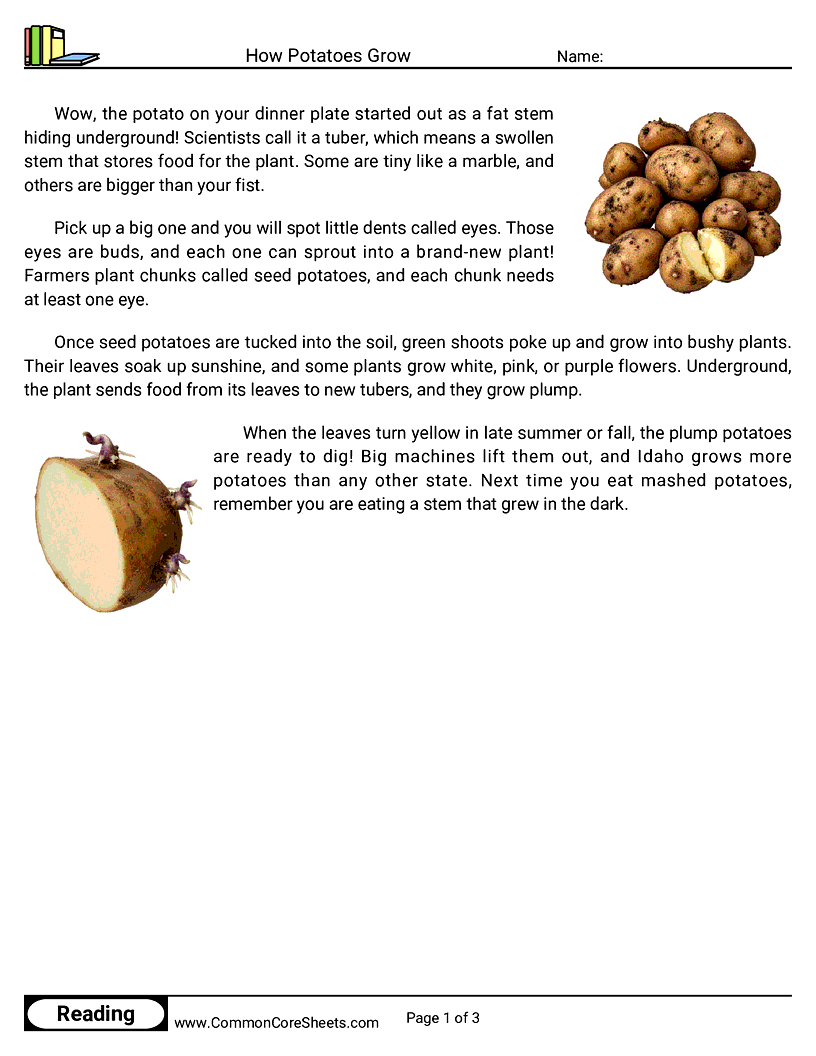
Read a nonfiction passage to learn how a potato plant grows from planting to harvest. Find details that explain what a tuber is and why potato eyes matter. Explain how the article is organized in order from field to kitchen. Determine the meaning of science words such as tuber and buds from context.
RI.1 RI.2 RI.3 RI.4 RI.5 RI.6 RI.K
Read a nonfiction passage about Canada geese and explain what migration means. Find details that explain why flying in a V saves energy and why geese take turns leading. Explain how honking and family teamwork help a flock travel together. Identify cause and effect in the text, such as mild winters and geese staying in one place.
RI.1 RI.2 RI.3 RI.4 RI.5 RI.6
Read a passage about how apple cider is made and name the steps in order. Find details that explain why cider looks cloudy and apple juice looks clear. Explain why most cider is pasteurized and what that word means. Use context to figure out the meaning of words like pressed and pasteurized.
RI.1 RI.2 RI.3 RI.K
Read a short passage about how people say thank you in different languages. Find the words gracias, merci and arigato and tell what they mean. Explain one way to show thanks without saying a word. Tell how your own family says thank you.
You are only seeing2nd Grade
See all grades
7 more worksheets in this section
Advertisement