6th Grade Exponents & Order Of Operations Worksheets
6th Grade Exponents & Order of Operations: evaluate powers and expressions using the order of operations. Every worksheet is free, prints as a PDF with an answer key, and can be assigned online. The ones teachers open most are first.
More about these worksheets ▾ Show less ▴
6ee2c
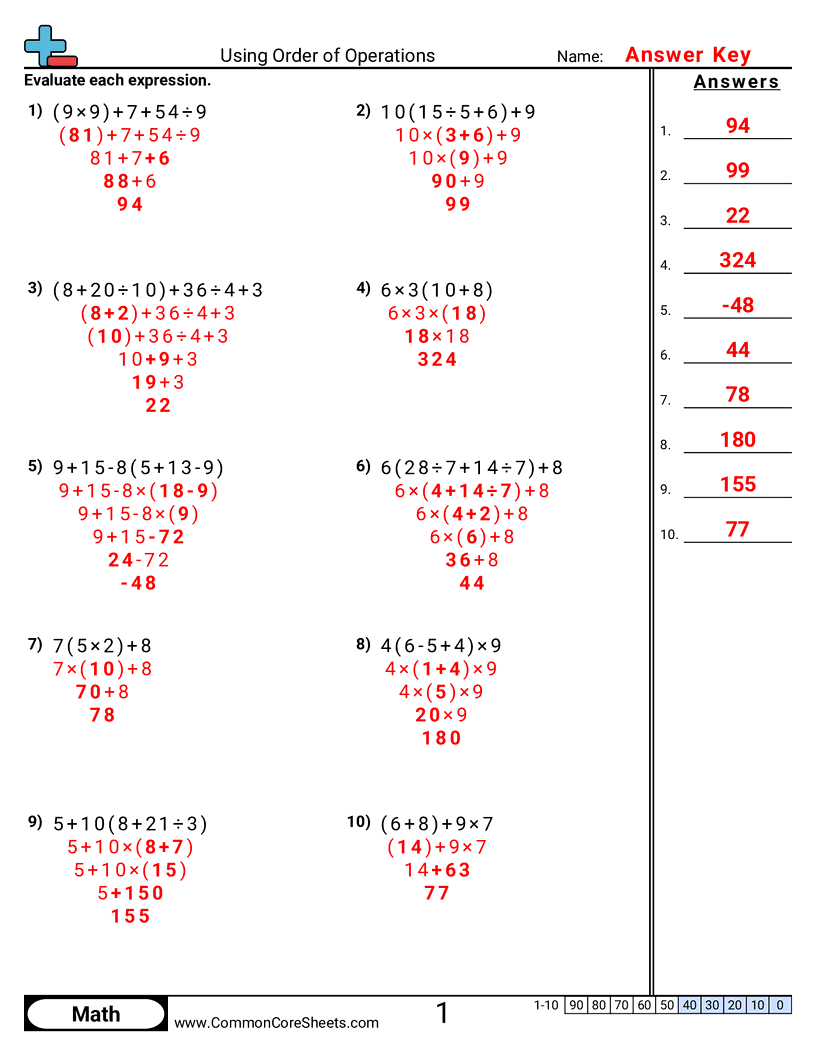
Follow the order of operations to evaluate expressions with more than one operation. Use parentheses or brackets first, then multiply and divide, then add and subtract. Work through mixed-operation problems step by step without changing the order.
6ee1
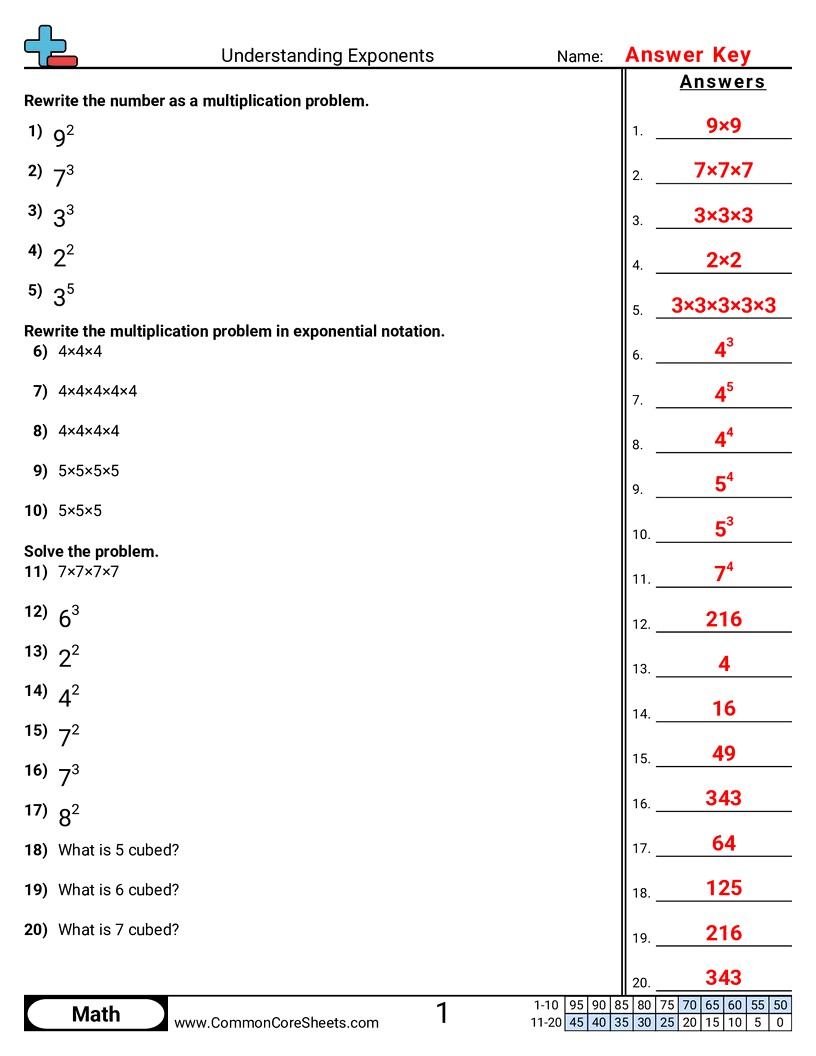
Read exponent notation and say what the base and exponent mean. Rewrite powers as repeated multiplication (expanded form). Evaluate simple powers to find the value of an expression. Convert between exponent form and expanded multiplication form.
6ee2c
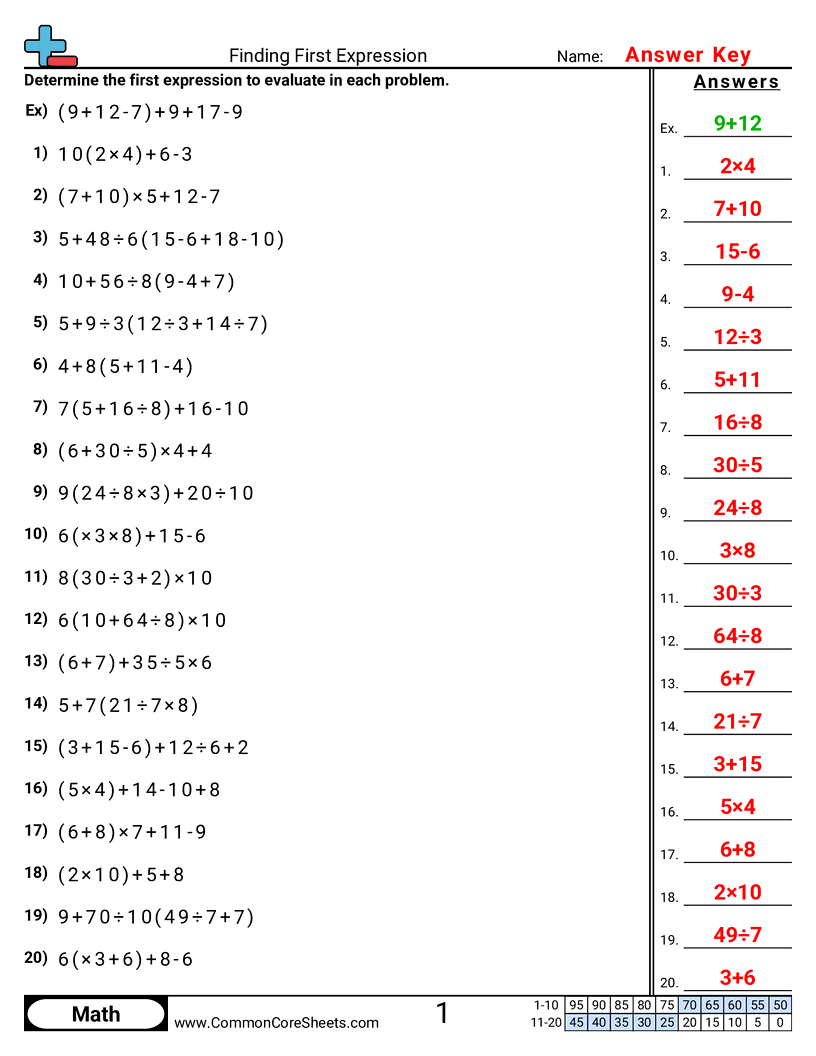
Identify which part of a multi-step number expression should be done first using order of operations. Spot parentheses and know that work inside them comes before anything else. Recognize when to do multiplication or division before addition or subtraction. Choose the correct first operation when an expression has several different operations.
6ee2c
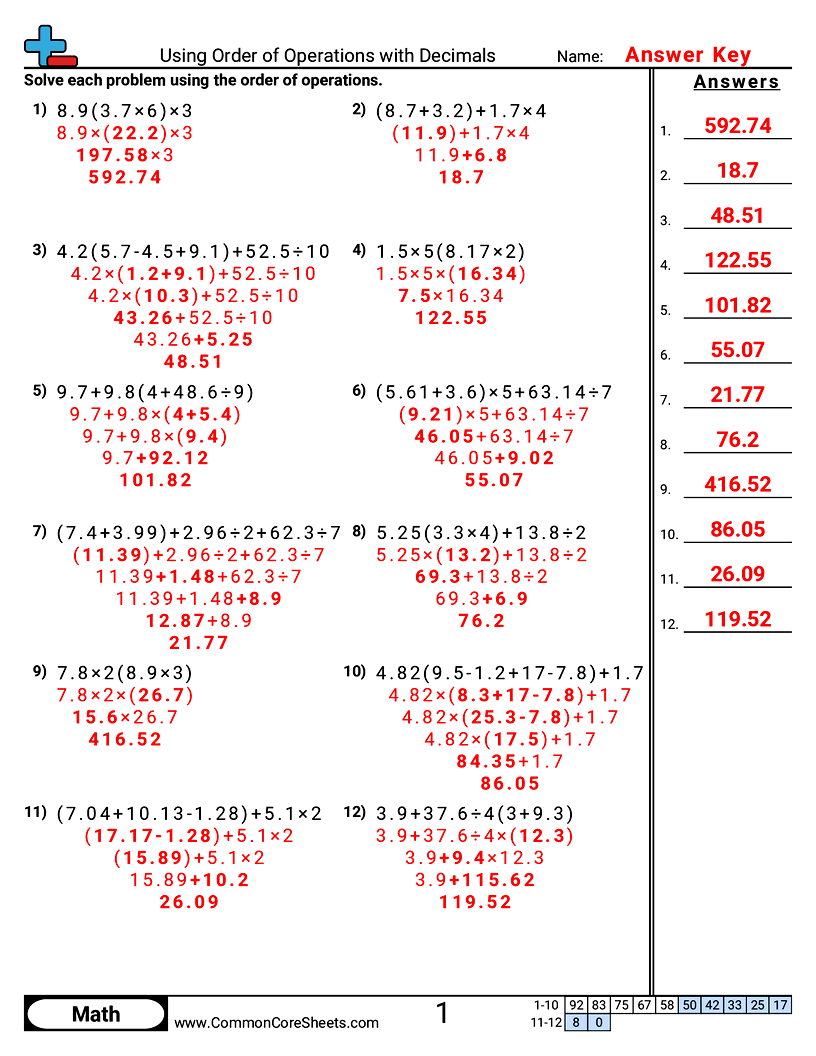
Work an expression in the correct order when the numbers are decimals. Keep a running decimal value accurate through several steps. Recognize that the order does not change when the numbers do.
6ee1
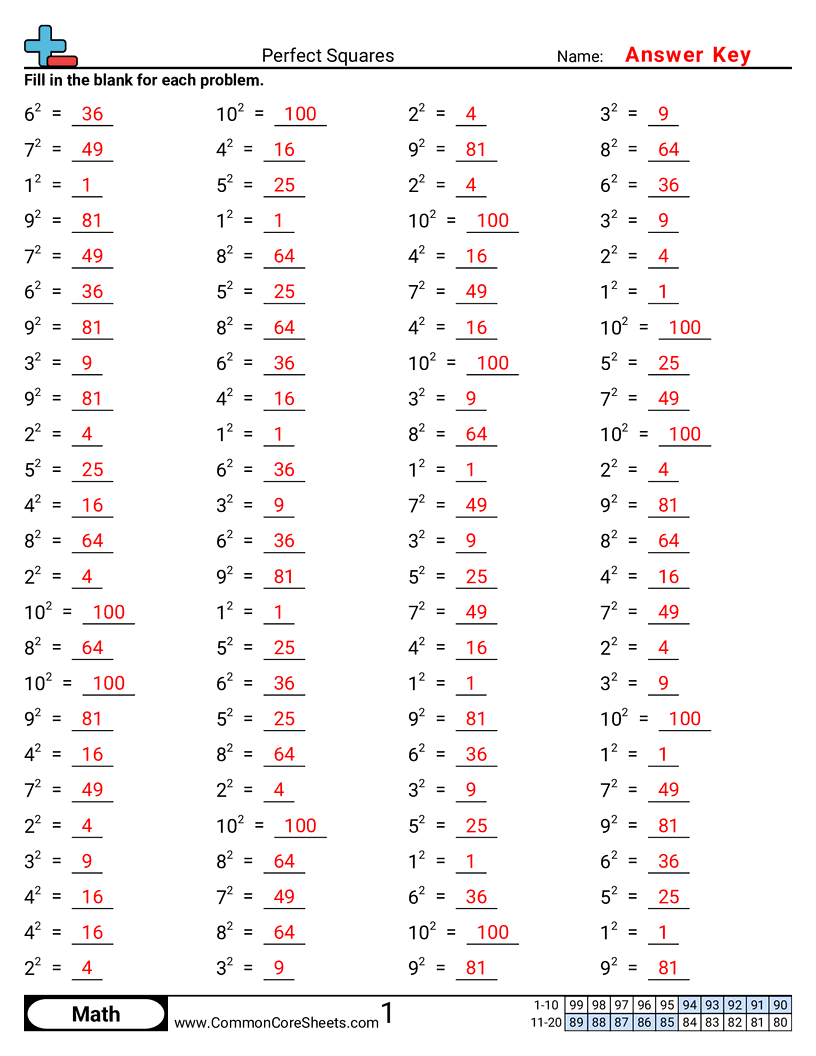
Recognize which numbers are perfect squares (like 1, 4, 9, 16, 25, and 36). Find the square of a whole number (multiply a number by itself).
6ee2c
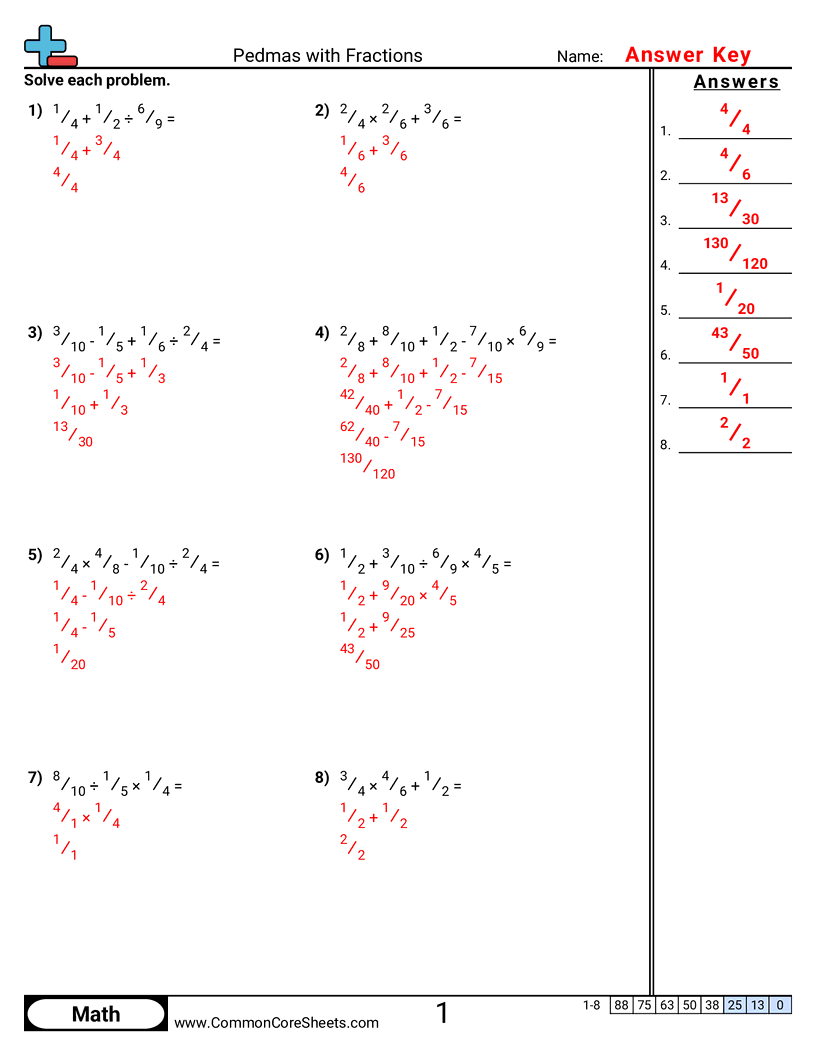
Practice following the order of operations with fraction expressions Add, subtract, multiply, and divide fractions within a single problem Work through parentheses and exponents before other operations Simplify fraction answers after solving each step
6ee2c
Substitute a value for a variable. Evaluate an expression with one or two operations. Respect parentheses when evaluating.
6ee1
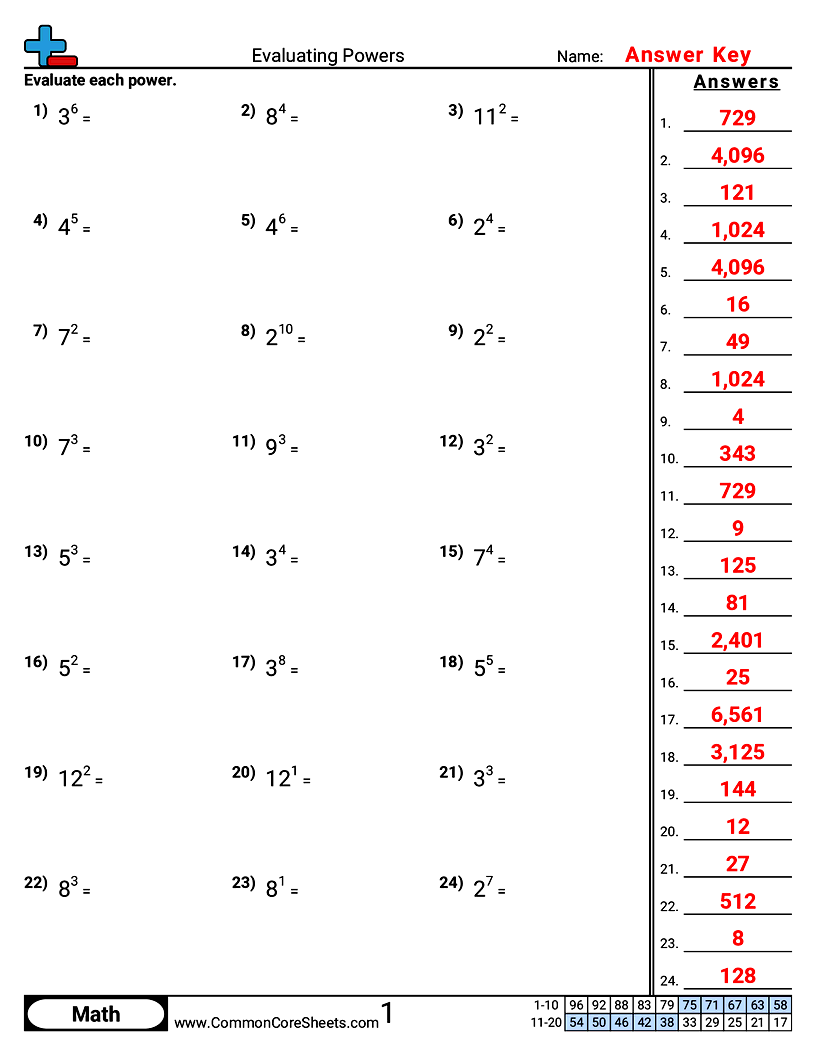
Evaluate a power with a whole-number base and exponent. Recognize that an exponent of 1 leaves the base unchanged. Work beyond squares and cubes.
6ee2c
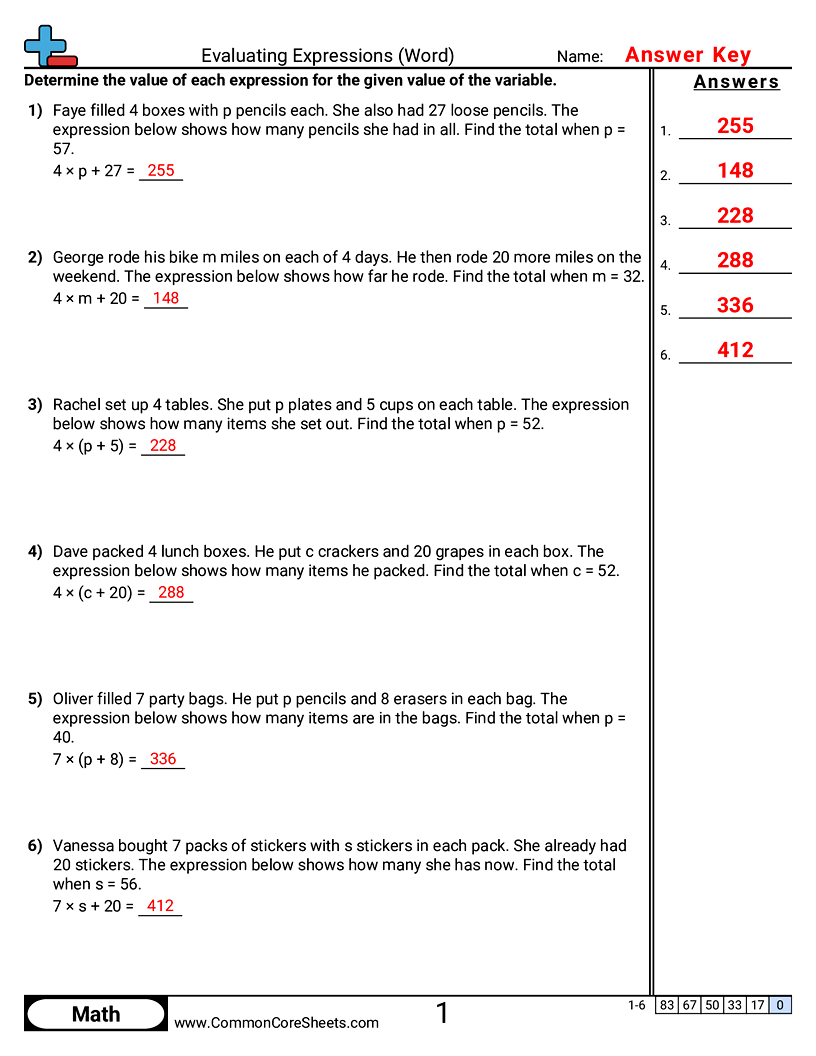
Evaluate an expression that describes a situation. Substitute a value into a two-step expression. Connect a story to an expression.
6ee1
Decide whether a number is a perfect square. Recall the squares up to 400. Reject a number that is close to a square but is not one.
6ee1
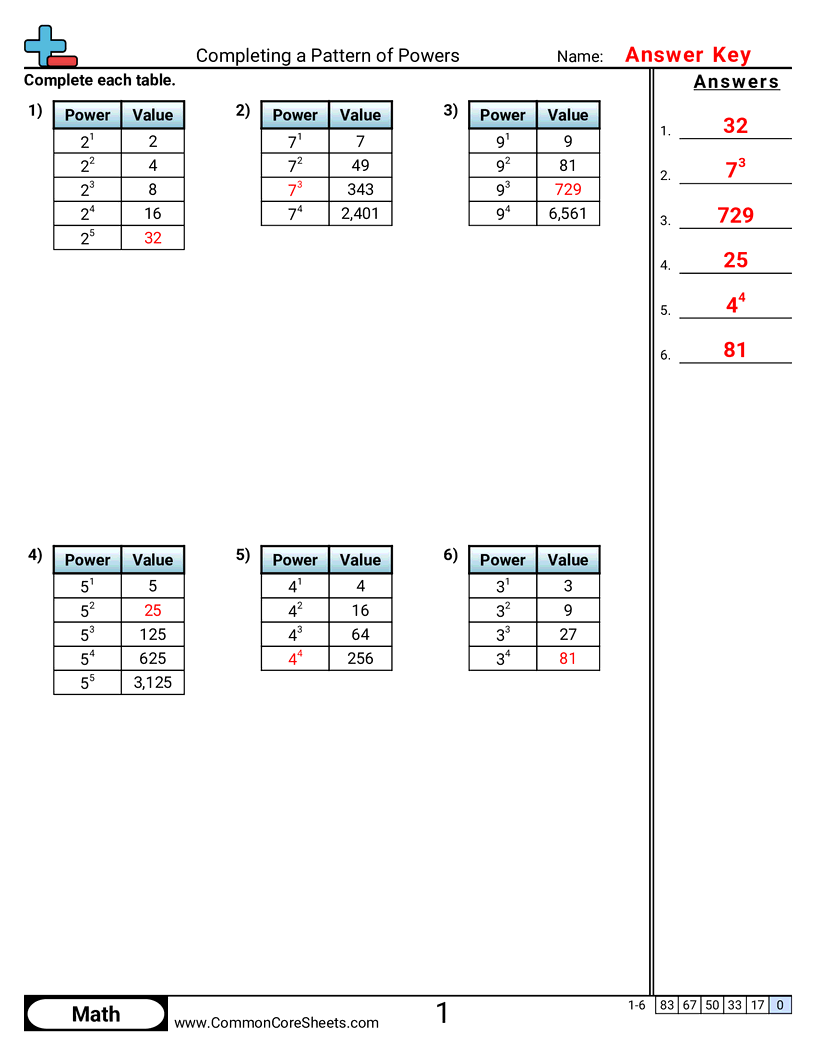
Continue a pattern of consecutive powers. Write a number as a power of a given base. See that a power pattern multiplies rather than adds.
5oa1 6ee2c
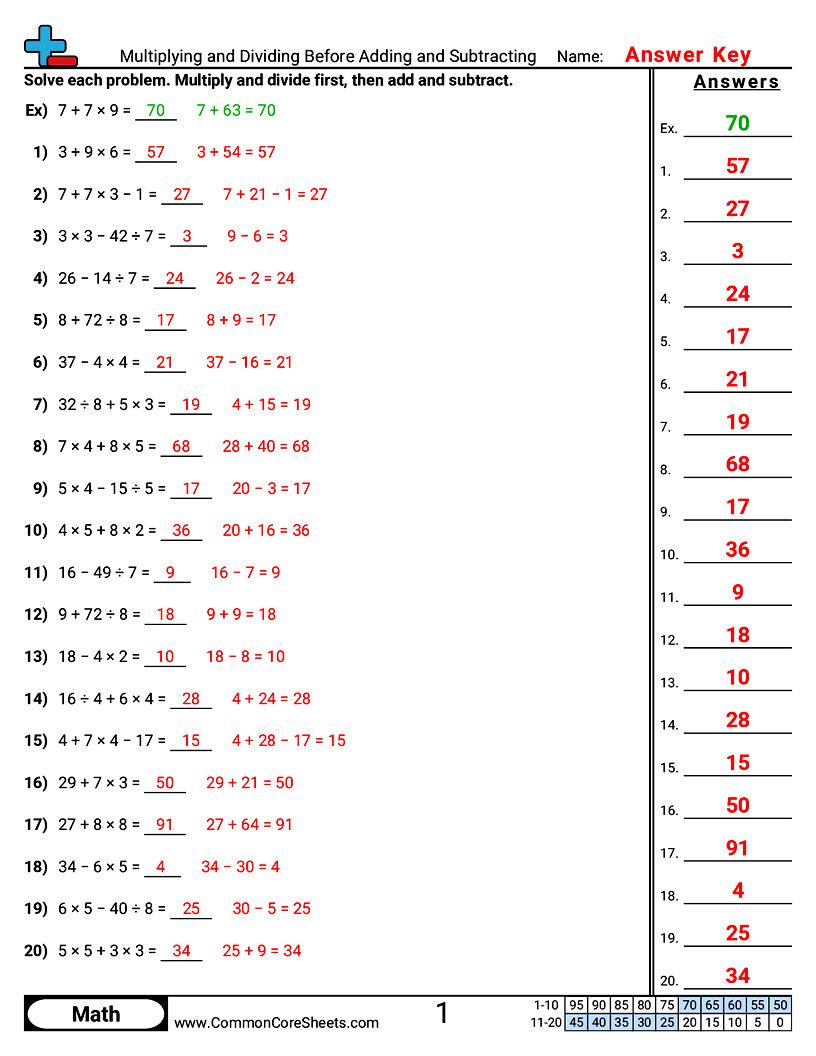
Multiply and divide before adding and subtracting Evaluate expressions with no parentheses Explain why 6 + 3 × 4 is 18, not 36
5oa1 6ee2c
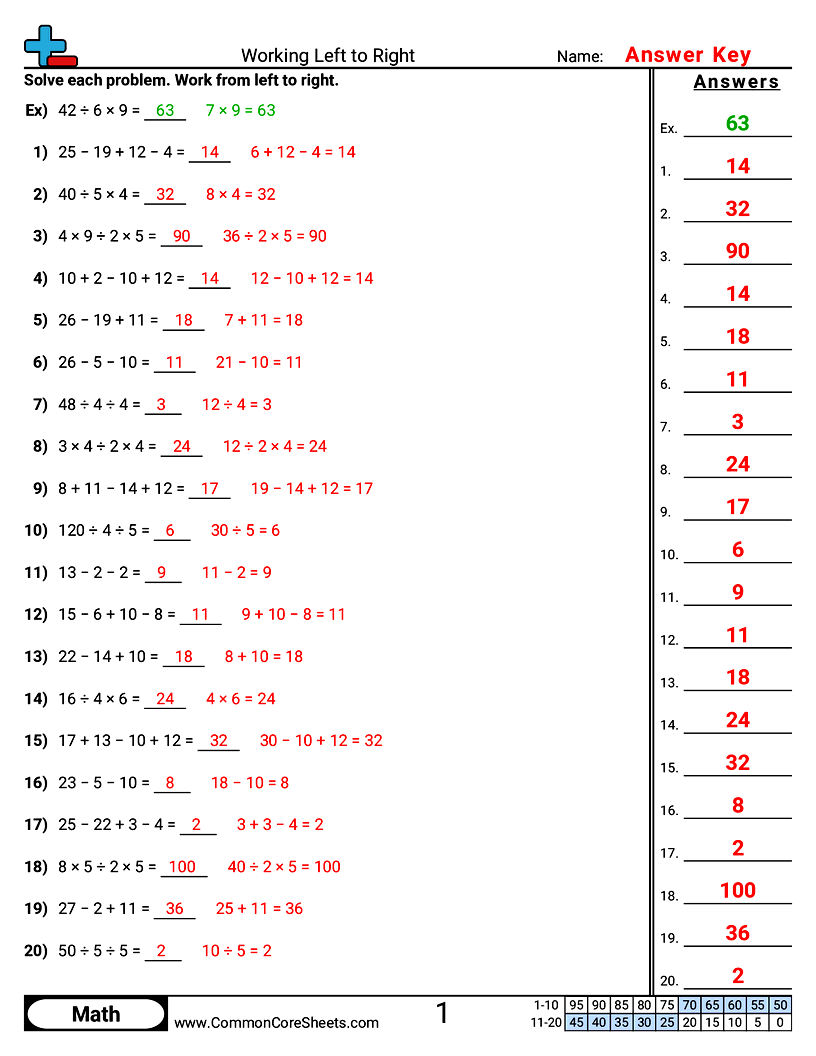
Do multiplication and division in order from left to right Do addition and subtraction in order from left to right Explain why 24 ÷ 4 × 2 is 12, not 3
More 6th grade topics
Advertisement