4th Grade Lines, Angles & Polygons (Oklahoma) Worksheets
4th Grade Lines, Angles & Polygons: identify rays, segments and parallel lines, and classify quadrilaterals and polygons. Every worksheet is free, prints as a PDF with an answer key, and can be assigned online. The ones teachers open most are first.
More about these worksheets ▾ Show less ▴
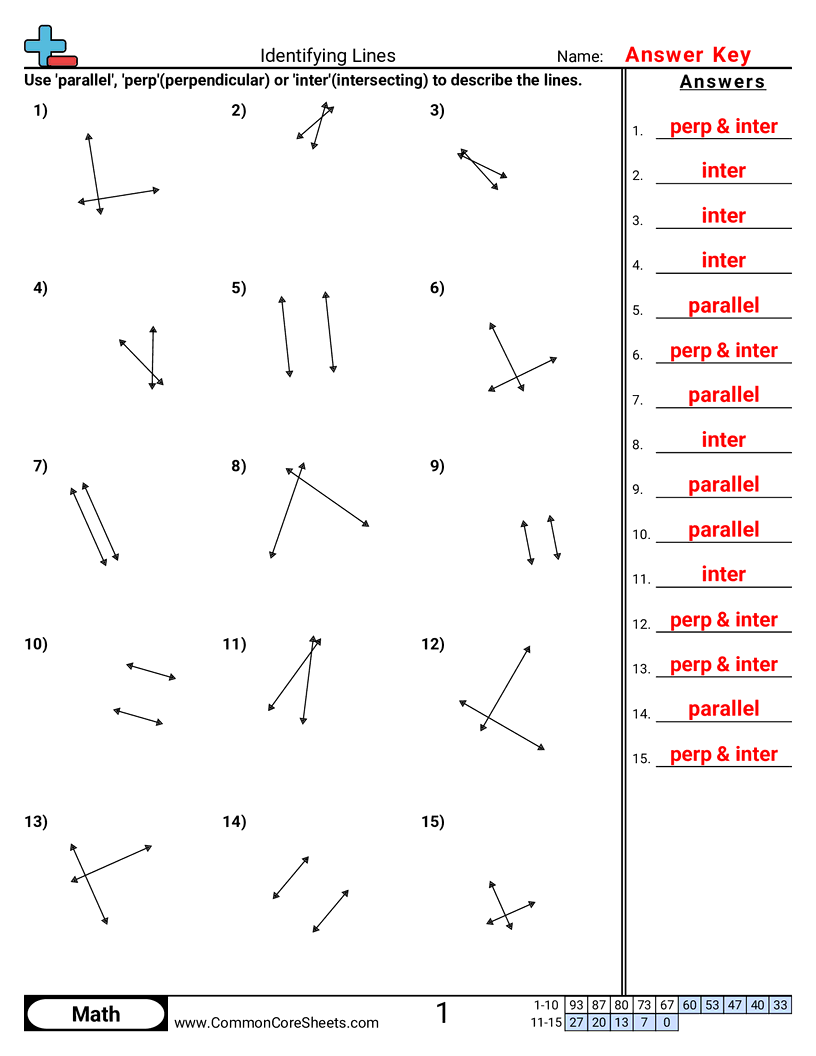
4g1
Tell whether two lines are parallel, perpendicular, or intersecting by looking at a picture or graph. Spot right angles to recognize when lines are perpendicular. Notice when lines never meet to identify parallel lines. Describe where two lines cross and name that point as an intersection.
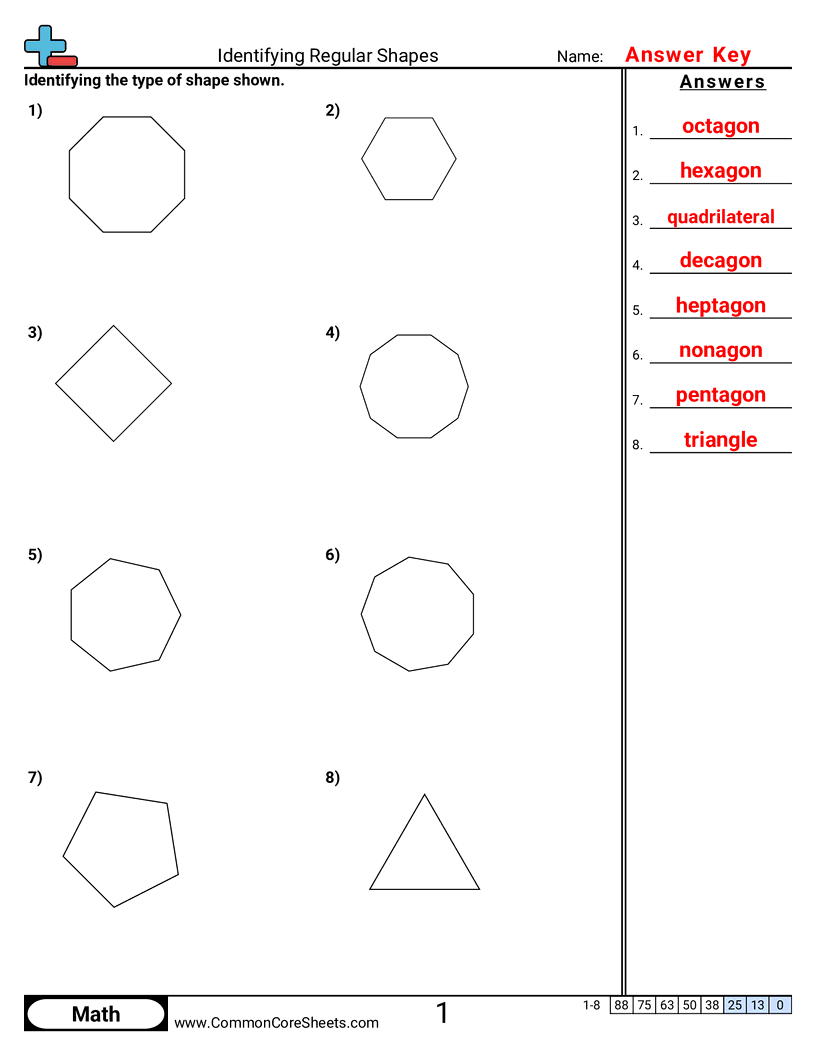
3g1
Name a regular polygon by counting its sides (triangle through decagon). Use the words triangle, quadrilateral, pentagon, hexagon, heptagon, octagon, nonagon, and decagon correctly. Tell that a shape is regular by noticing its equal sides and equal angles. Count sides and vertices carefully to avoid mixing up similar-looking polygons.
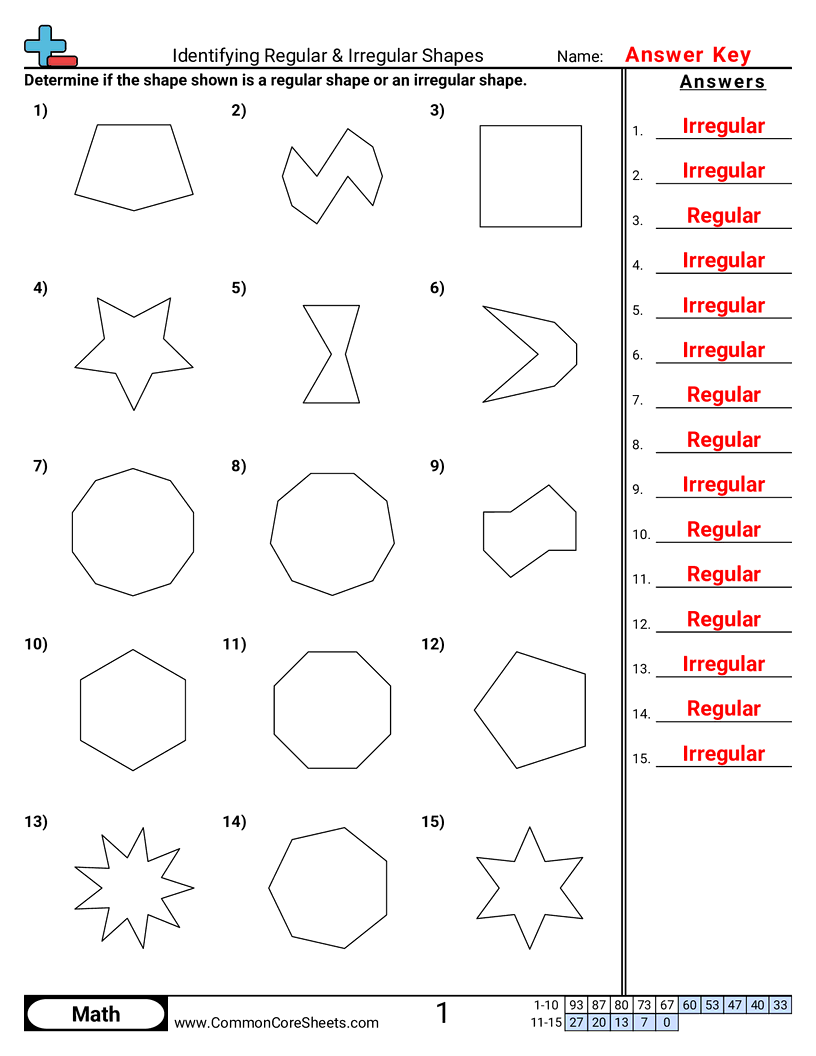
3g1
Decide whether a polygon is regular or irregular by checking if all sides and angles match. Spot shapes that look similar but are irregular because one side or angle is different. Use words like side, angle, and vertex to describe why a shape is regular or irregular. Compare different polygons and sort them into regular and irregular groups.
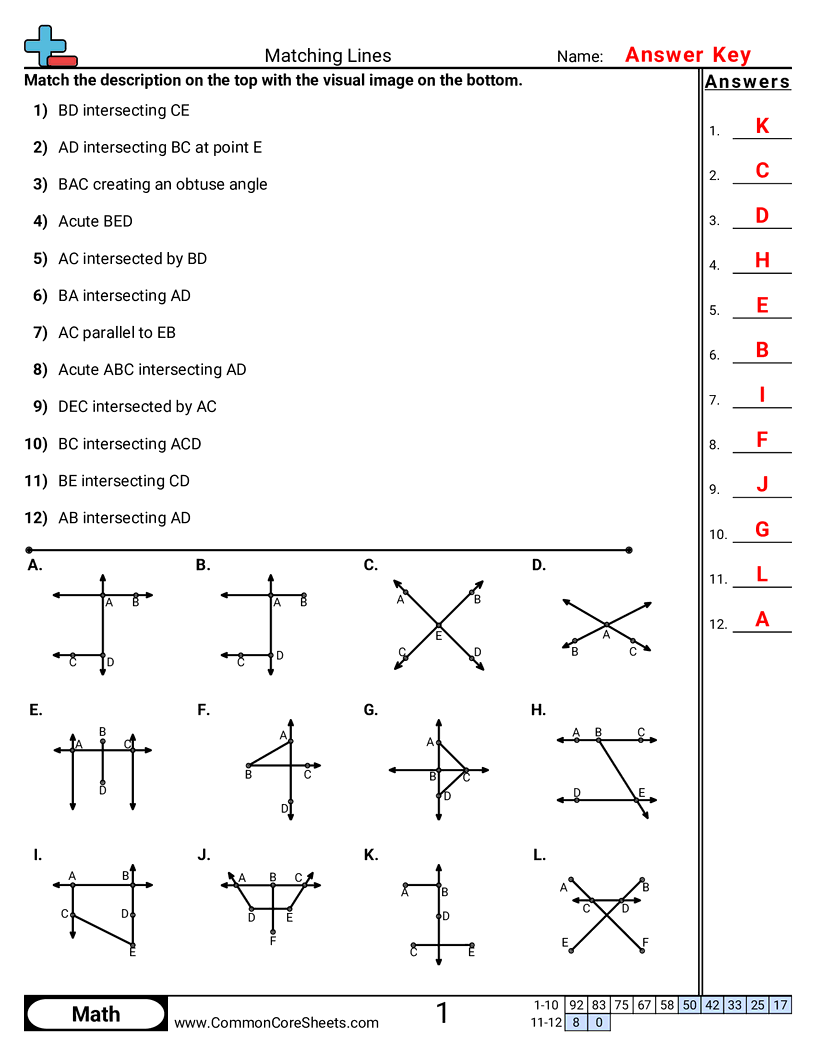
4g1
Identify whether two lines are parallel, perpendicular, or intersecting. Match a written description of line relationships to the correct picture.
3g1
Identify common polygons by name when you read a short word problem. Count and match the number of sides to the correct shape. Use shape clues in a sentence (like “has 8 sides”) to choose the right polygon.
3g1
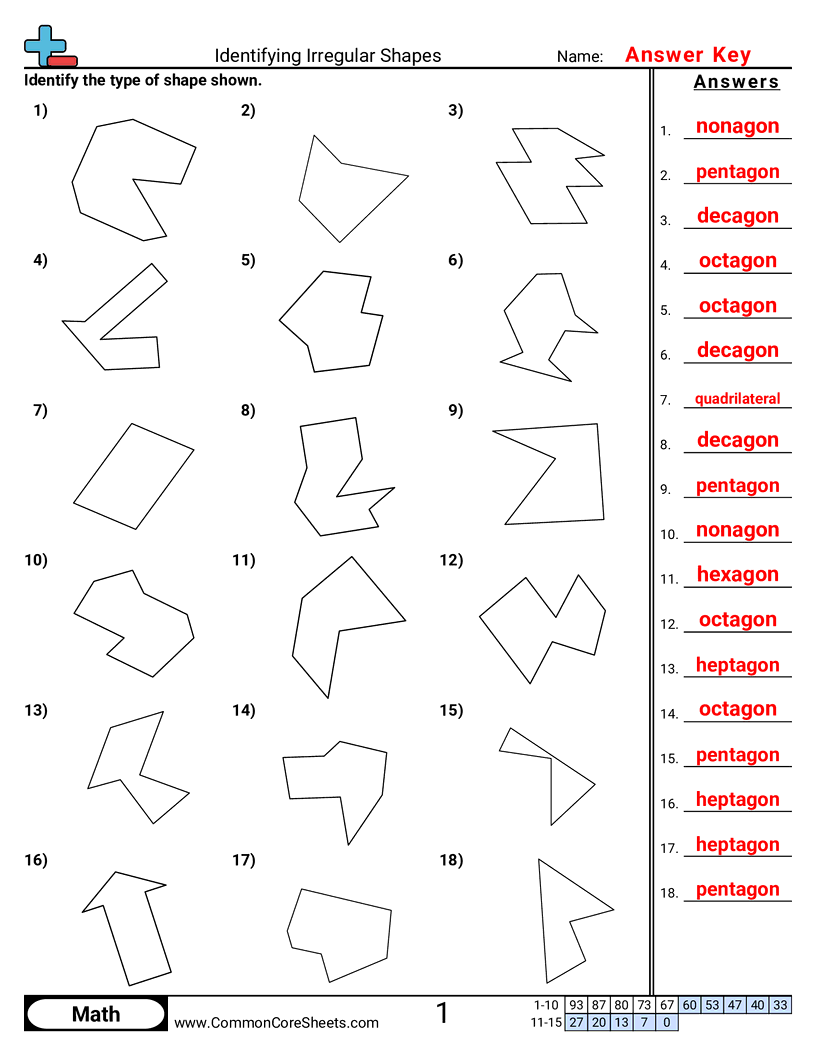
Count the sides and corners (vertices) of a polygon to figure out what it is. Name irregular polygons as quadrilaterals, pentagons, hexagons, heptagons, octagons, nonagons, or decagons. Use shape clues like sides, angles, and vertices to choose the correct polygon name.
4g1
Identify whether a drawing shows a line, ray, or line segment. Use points and arrowheads to tell where a line or ray starts and which direction it goes. Name and classify angles as acute, right, obtuse, or straight. Compare angles to decide which one is larger or smaller based on how wide they open. Describe where lines, rays, segments, and angles are located in a diagram using points and intersections.
4g1
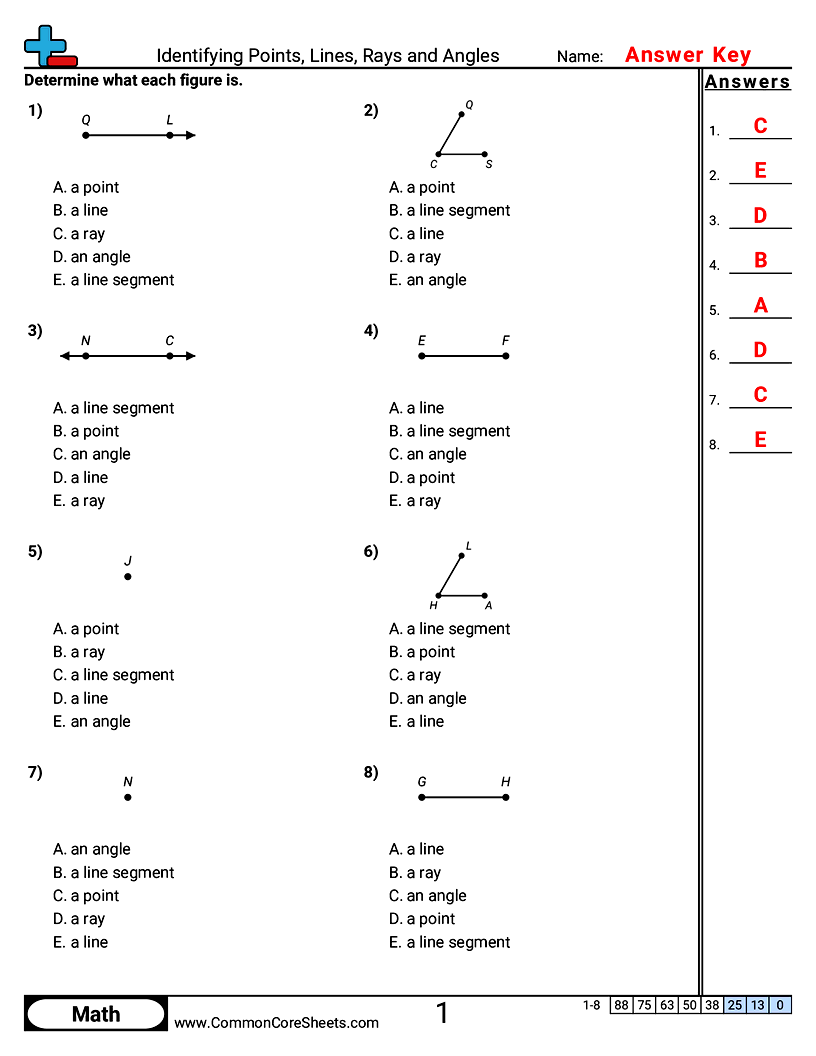
Tell a point, line segment, ray, line and angle apart. Use the ends of a figure to decide what it is. Recognize that a ray has one endpoint and a line has none.
4g2 5g3
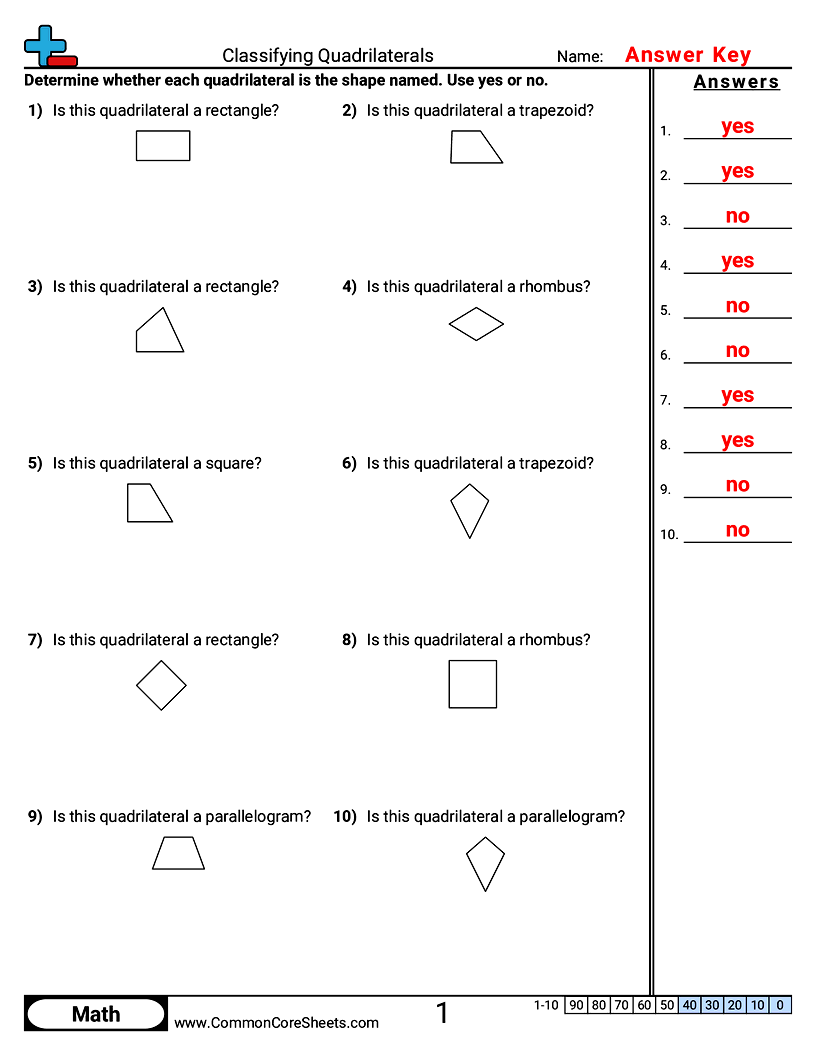
Decide whether a quadrilateral is a square, rectangle, rhombus, parallelogram, trapezoid or kite. Use side lengths, parallel sides and right angles to classify a shape. Recognize that a square is also a rectangle, a rhombus and a parallelogram.
3g1
Identify polygons by counting how many sides they have (5 to 10). Match each shape name to the correct picture (pentagon through decagon). Tell the difference between similar-looking polygons by checking the number of sides and corners.
4g2 5g3
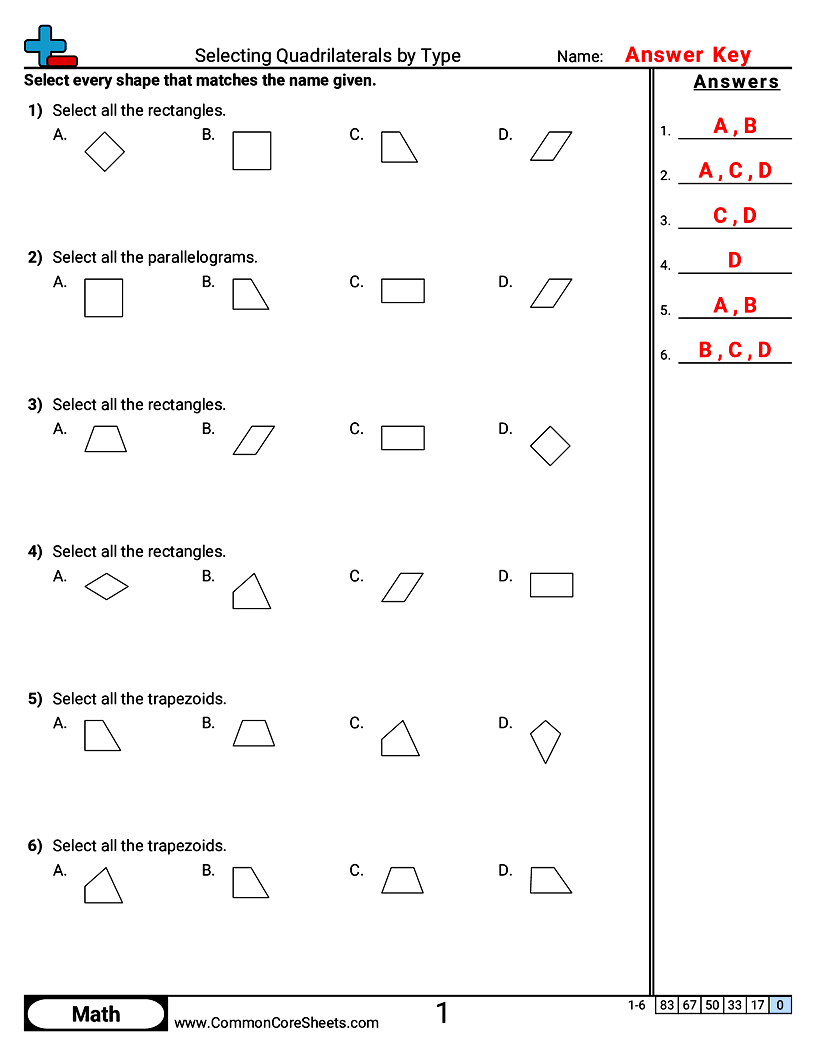
Select every shape of a named type from a group of quadrilaterals. Hold a definition against several figures at once. Recognize that more than one shape in a group can share a name.
4g1
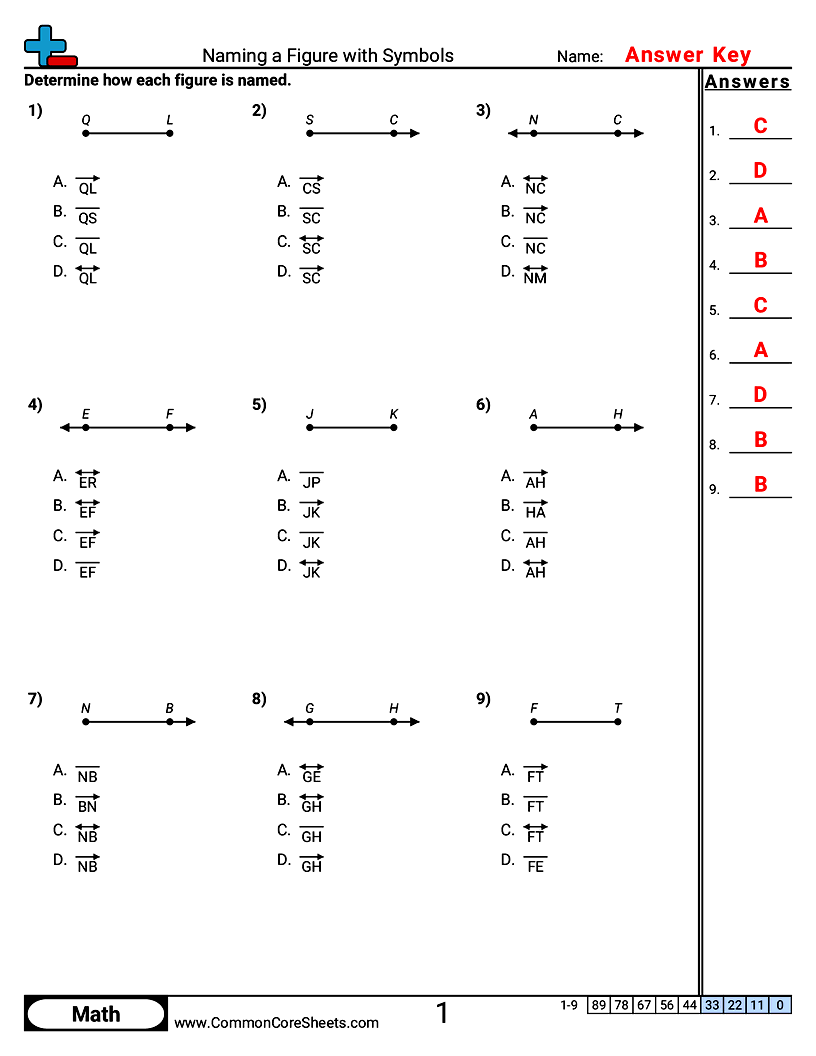
Write a line segment, ray or line using the correct symbol. Know that the order of the letters matters for a ray but not for a segment or line. Match the letters in a name to the labeled points on the figure.
2g1
Compare two solid figures by their attributes Count the faces, edges and vertices of a solid figure Know how many bases a prism and a pyramid have Judge whether a statement about two figures is true or false
More 4th grade topics
Advertisement