4th Grade Measurement & Conversions (Oklahoma) Worksheets
4th Grade Measurement & Conversions: measure with rulers, convert customary and metric lengths, and choose sensible units. Every worksheet is free, prints as a PDF with an answer key, and can be assigned online. The ones teachers open most are first.
More about these worksheets ▾ Show less ▴
4md1
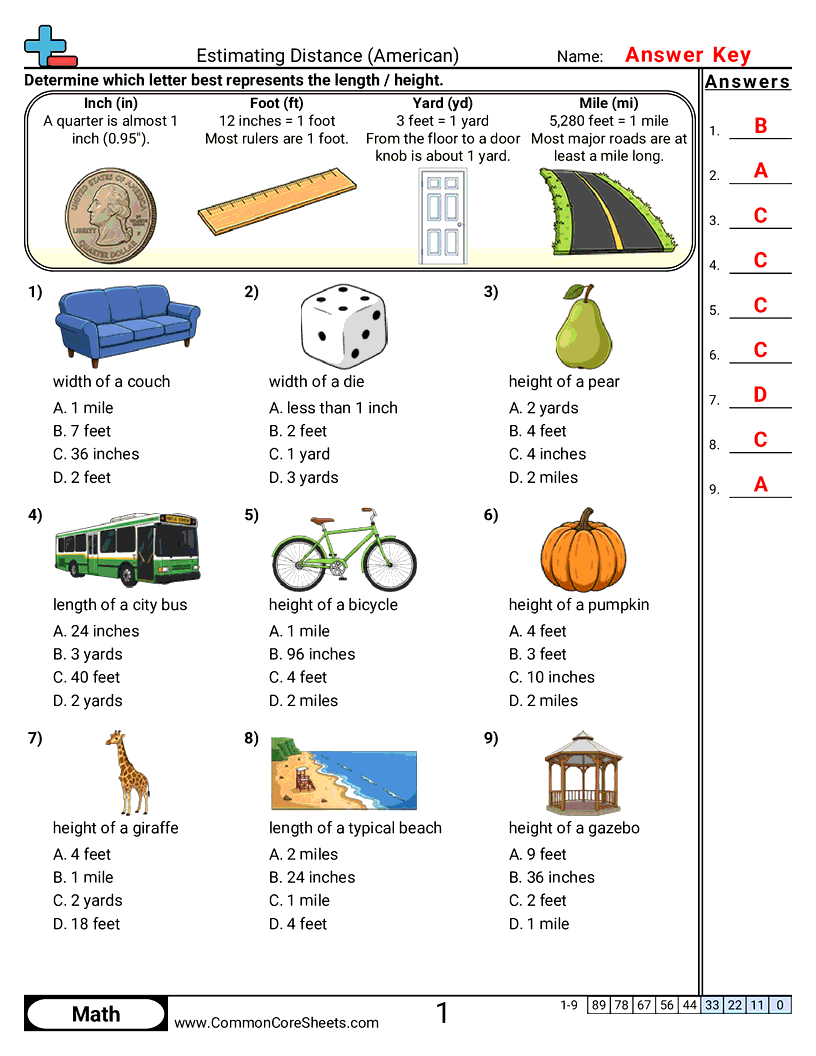
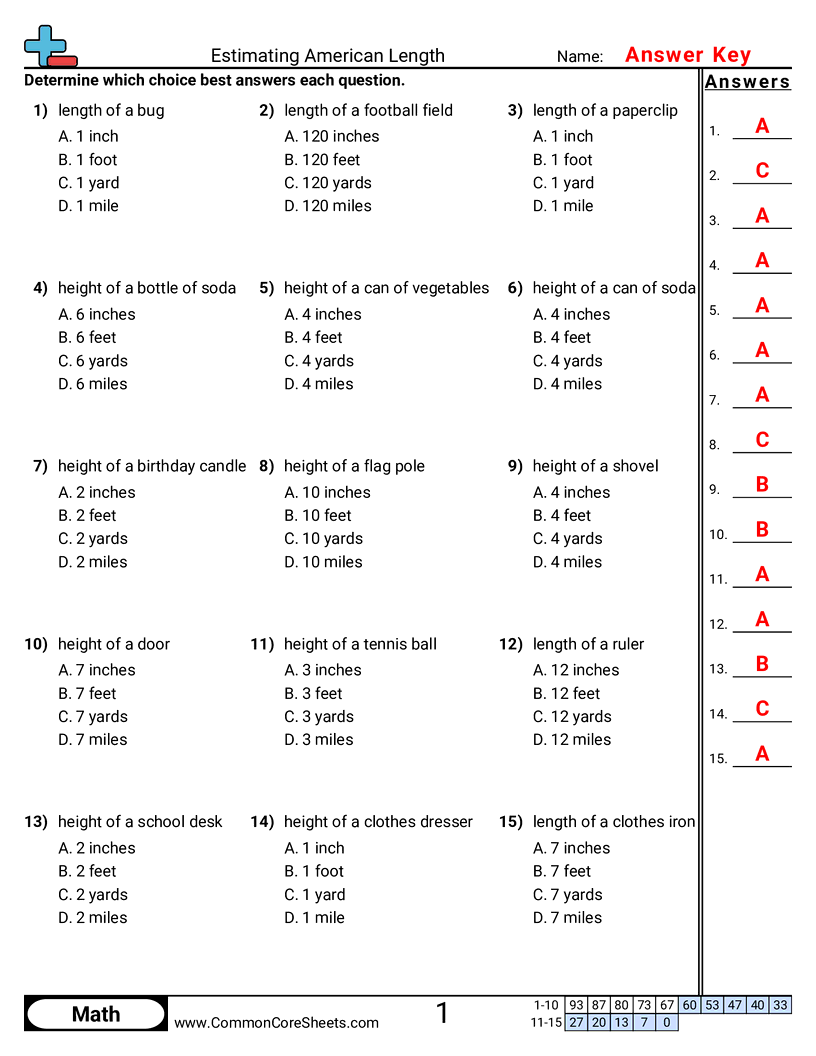
Get better at making a reasonable guess for how long an object is without measuring it. Choose the best length from a few options by comparing what you see to familiar sizes (like an inch, foot, or yard). Decide which unit makes sense for an object’s length (inches, feet, or yards). Use benchmark lengths to tell when an estimate is too short or too long.
5md1
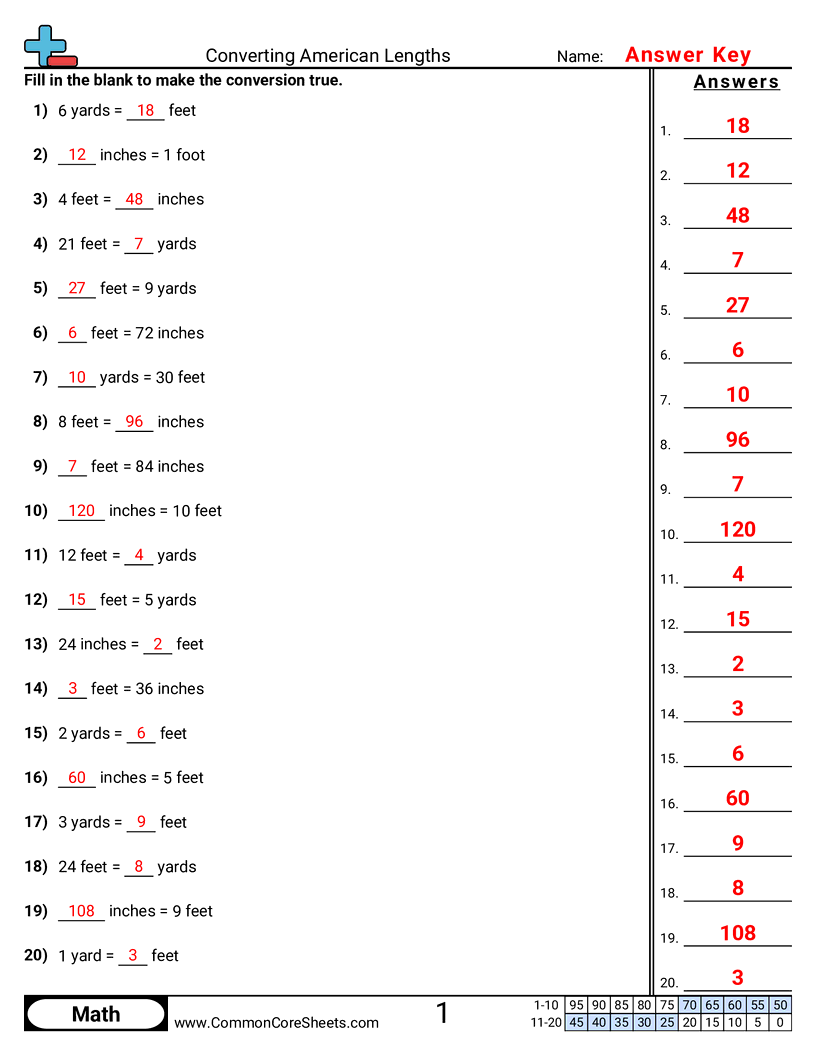
Convert between inches, feet, yards, and miles using the right conversion facts. Multiply or divide by conversion factors to change a measurement to a different unit.
4md1
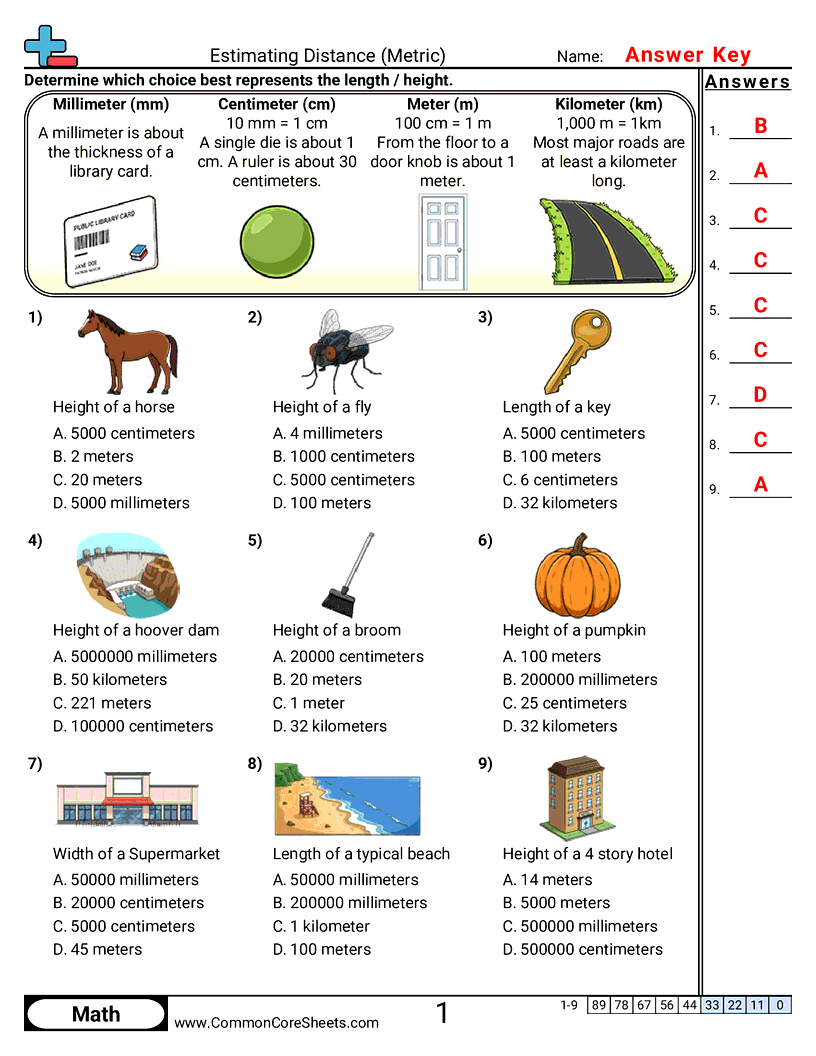
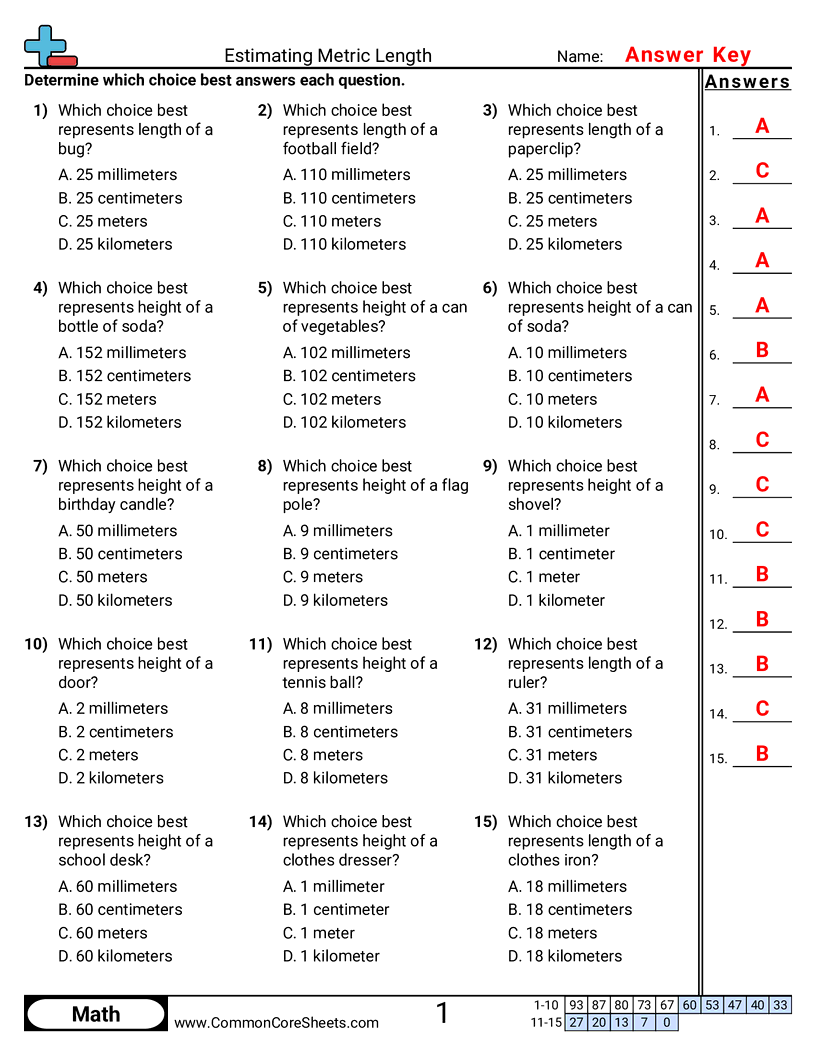
Practice making a reasonable guess about how long something is using metric units. Learn to choose the best unit for a length (millimeters, centimeters, meters, or kilometers). Compare a few possible lengths and pick the one that makes the most sense for the object shown. Use what you know about common objects to judge about how long something is without measuring.
4md1
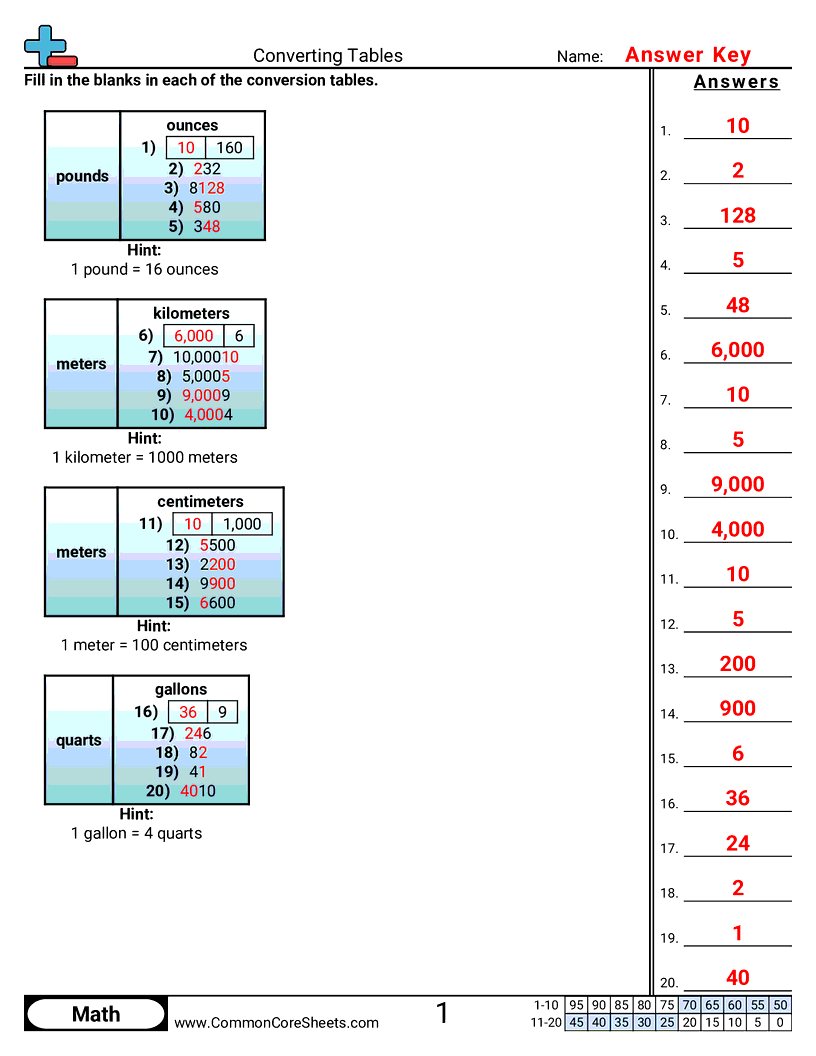
Convert between larger and smaller units of length, weight, and liquid volume. Use a conversion table to find the matching value in a different unit. Multiply or divide by a conversion factor to fill in missing measurements.
4md1
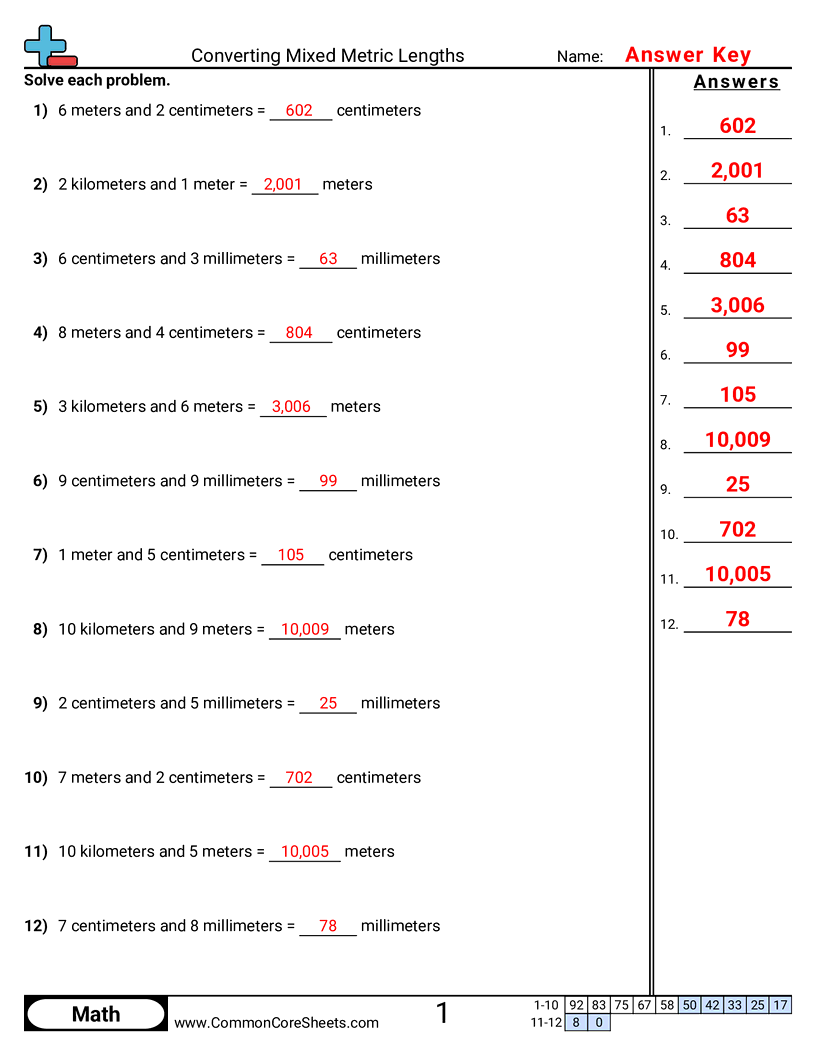
Convert a mixed metric length (like meters and centimeters) into just the smaller unit. Use the metric relationships (10, 100, 1,000) to move between kilometers, meters, centimeters, and millimeters. Combine the converted parts correctly to write one total measurement in a single unit.
4md1
Choose whether inches, feet, yards, or miles makes the most sense for a given distance. Use what you know about common objects and places to make a reasonable estimate of a length. Explain why one unit is more appropriate than another for measuring a specific distance.
4md1
Choose the best metric unit to describe how long something is. Tell when millimeters, centimeters, meters, or kilometers make the most sense for an item. Compare a few unit choices and pick the one that matches a reasonable real-world size. Read a short description of an object and decide which metric measurement fits.
4md1
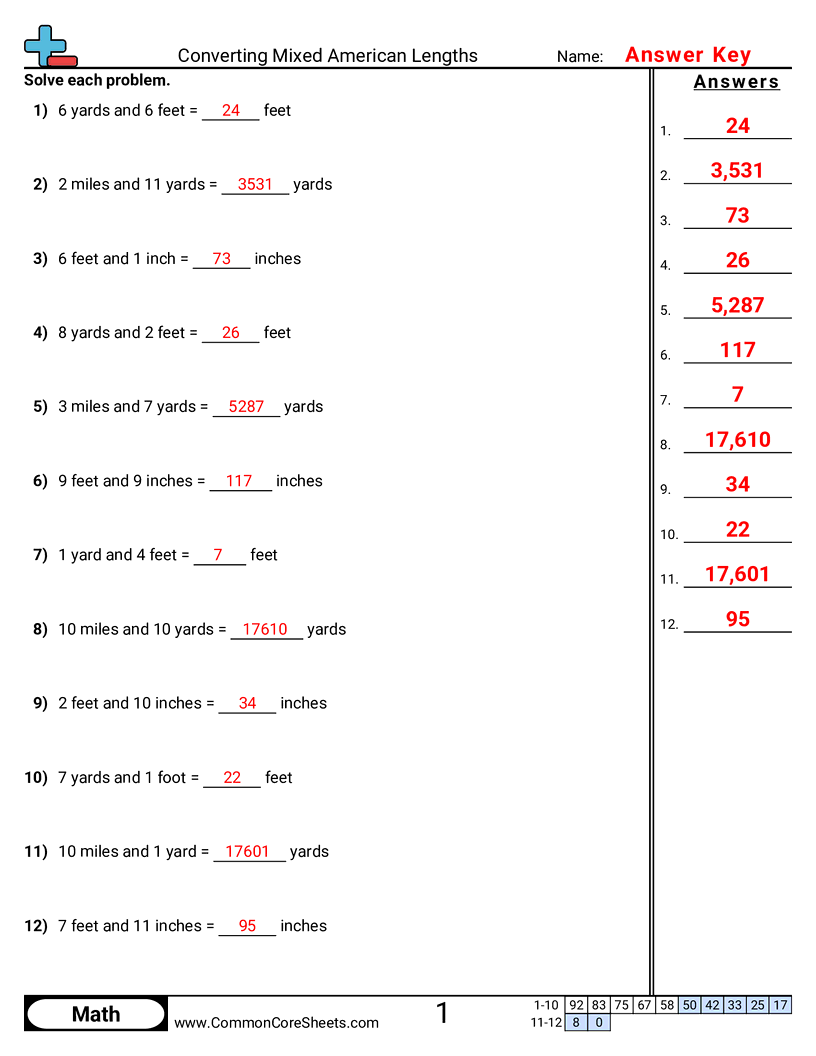
Convert a measurement written in mixed units (like feet and inches) into just the smaller unit. Use the correct conversion facts between inches, feet, yards, and miles.
4md1
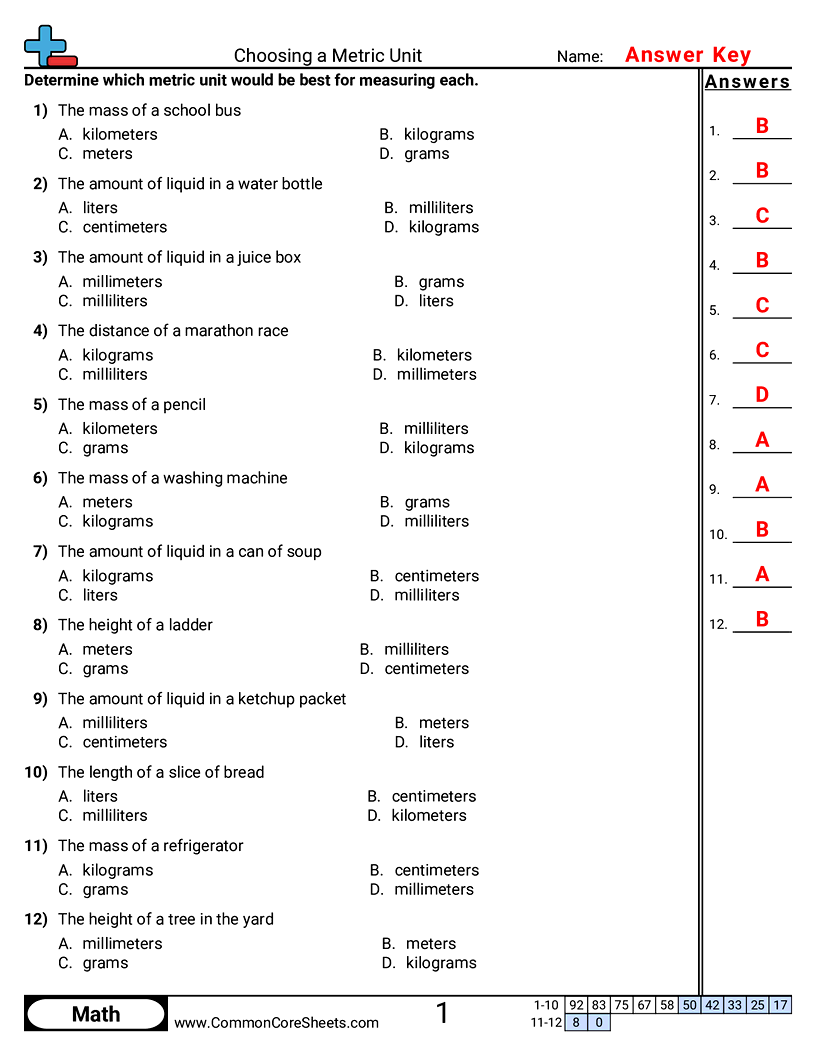
Choose the metric unit that best fits what is being measured. Tell length, mass and liquid volume apart from the situation alone. Use the largest unit that still gives a number of at least 1.
2md1
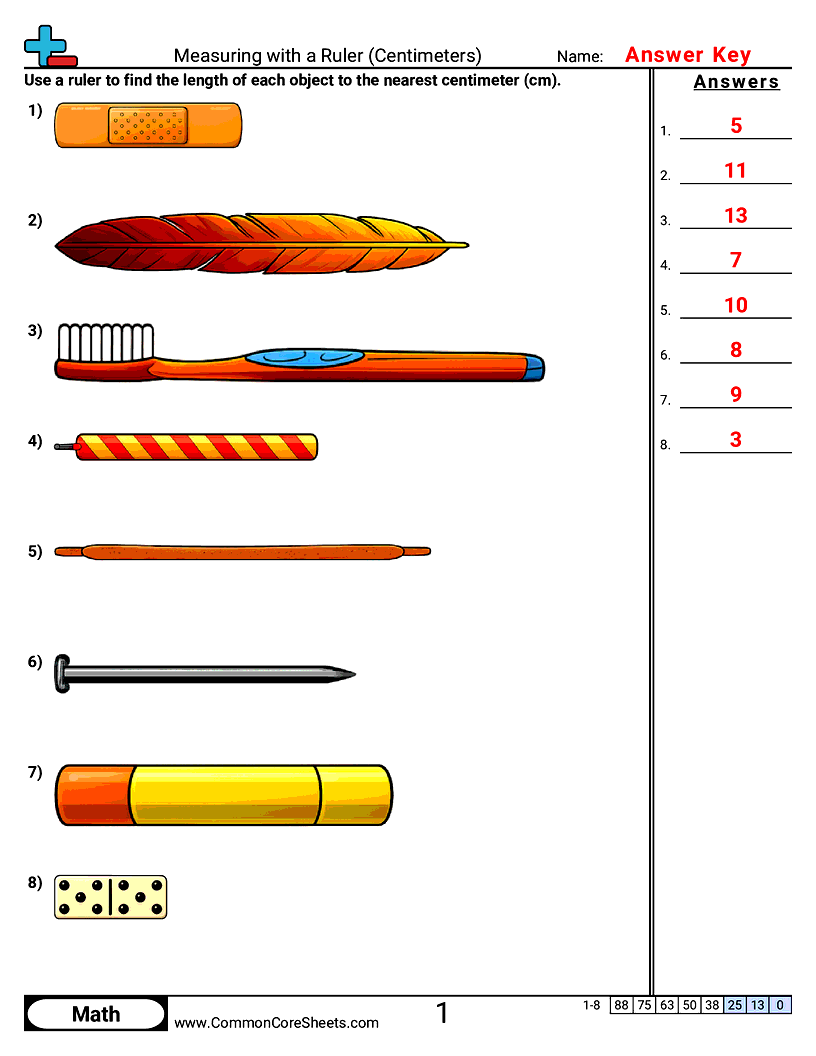
Line a ruler up with the end of an object before reading it. Measure a real object to the nearest centimeter. Read a ruler that is not already positioned for you.
4md1
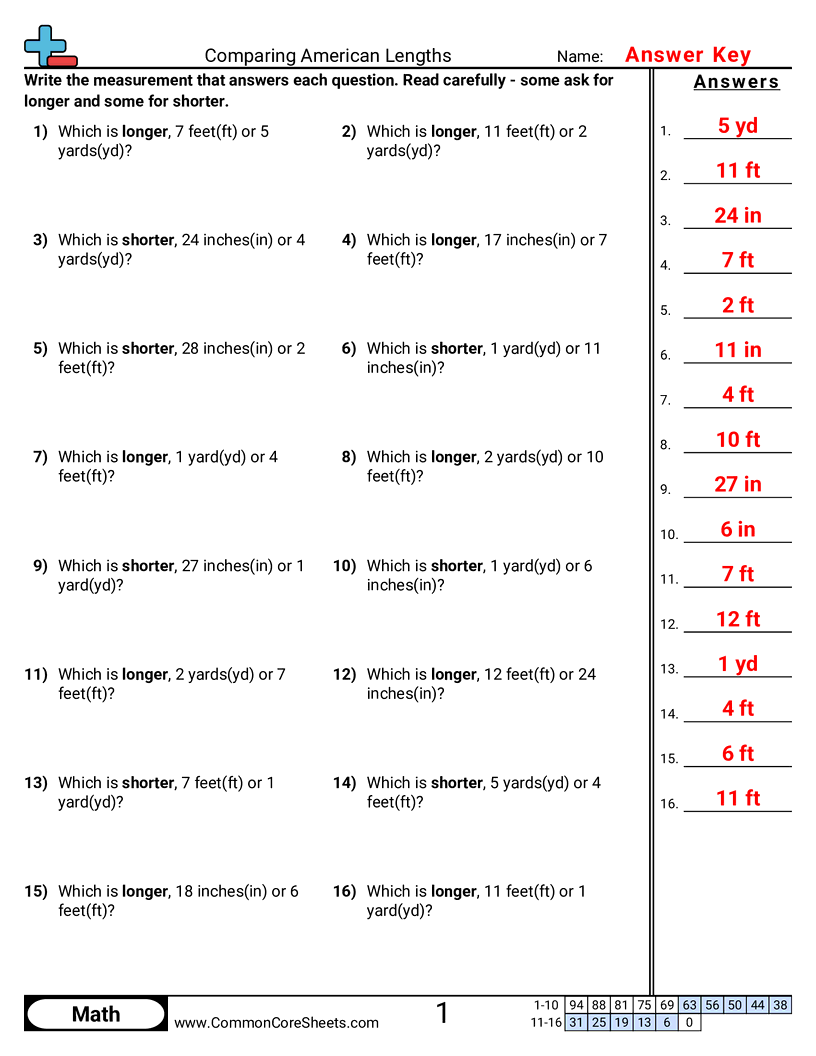
Decide which of two lengths is longer or shorter when the units differ. Convert to a common unit before comparing. Recognize that the larger number is not always the longer length.
4md1
Decide which of two lengths is longer or shorter when the units differ. Convert to a common unit before comparing. Recognize that the larger number is not always the longer length.
2md1
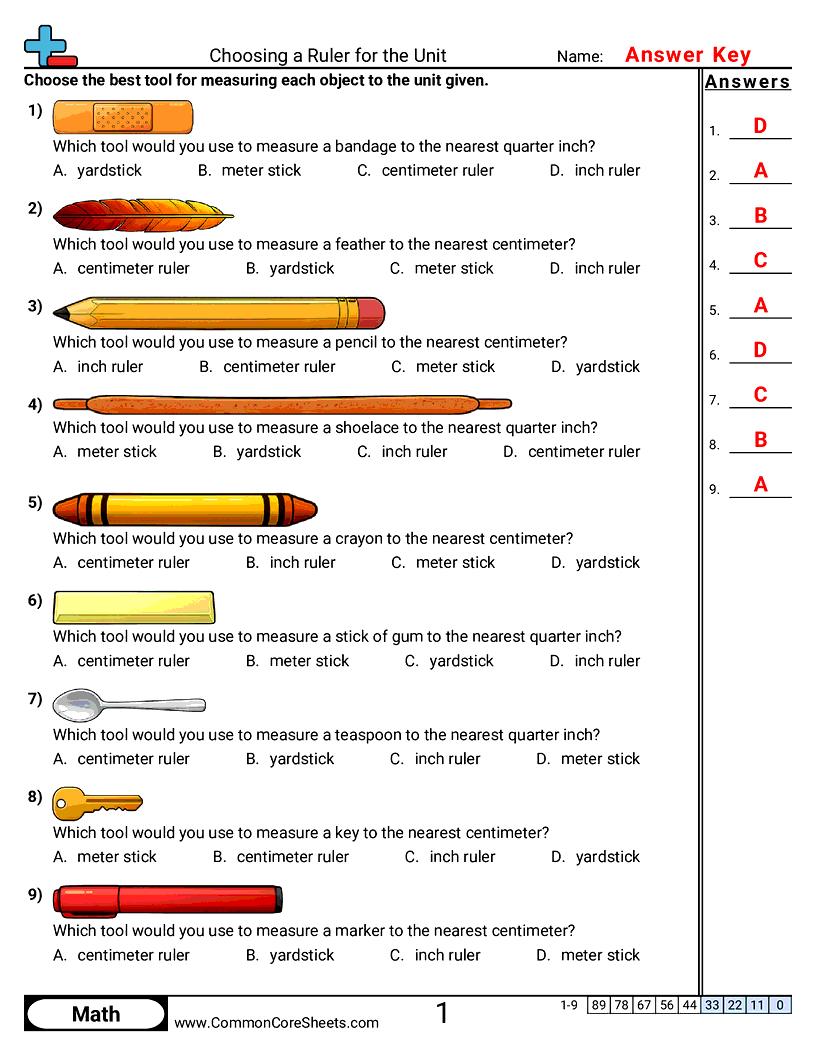
Choose a ruler that measures in the unit the question asks for. Recognize that a centimeter ruler cannot give an answer in inches. Rule out a tool that is the wrong length as well as one in the wrong unit.
2md1
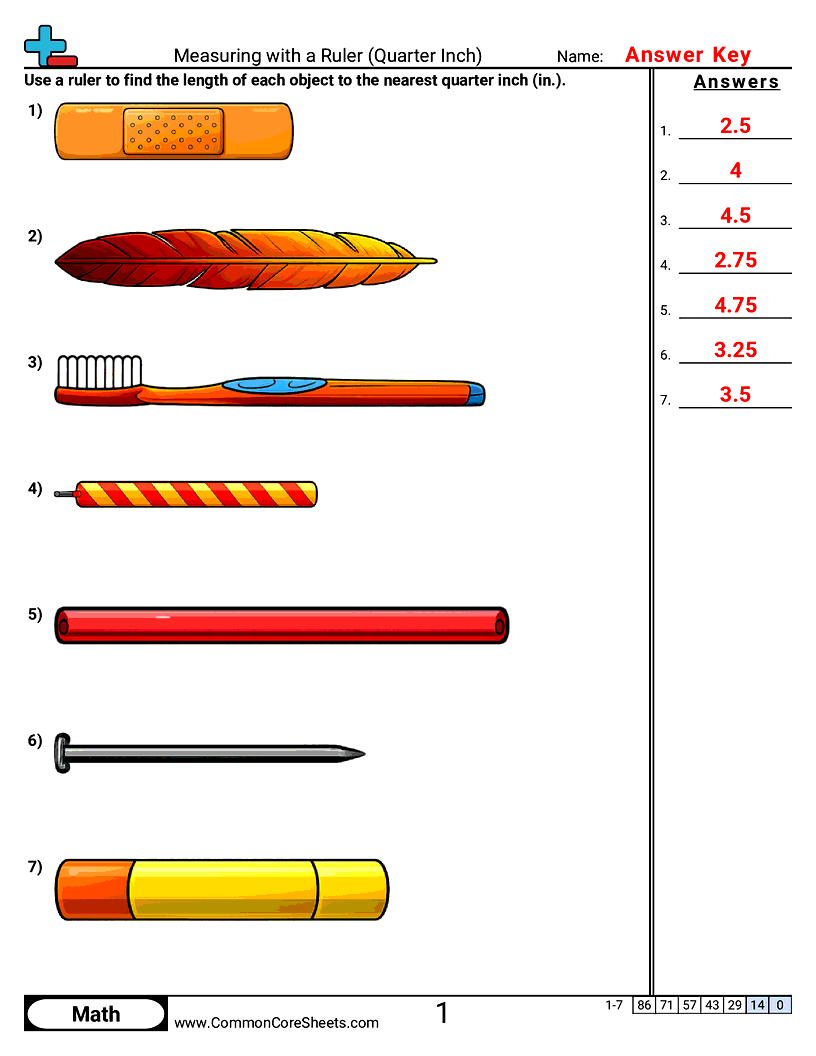
Line a ruler up with the end of an object before reading it. Measure a real object to the nearest quarter inch. Read a ruler that is not already positioned for you.
4md1
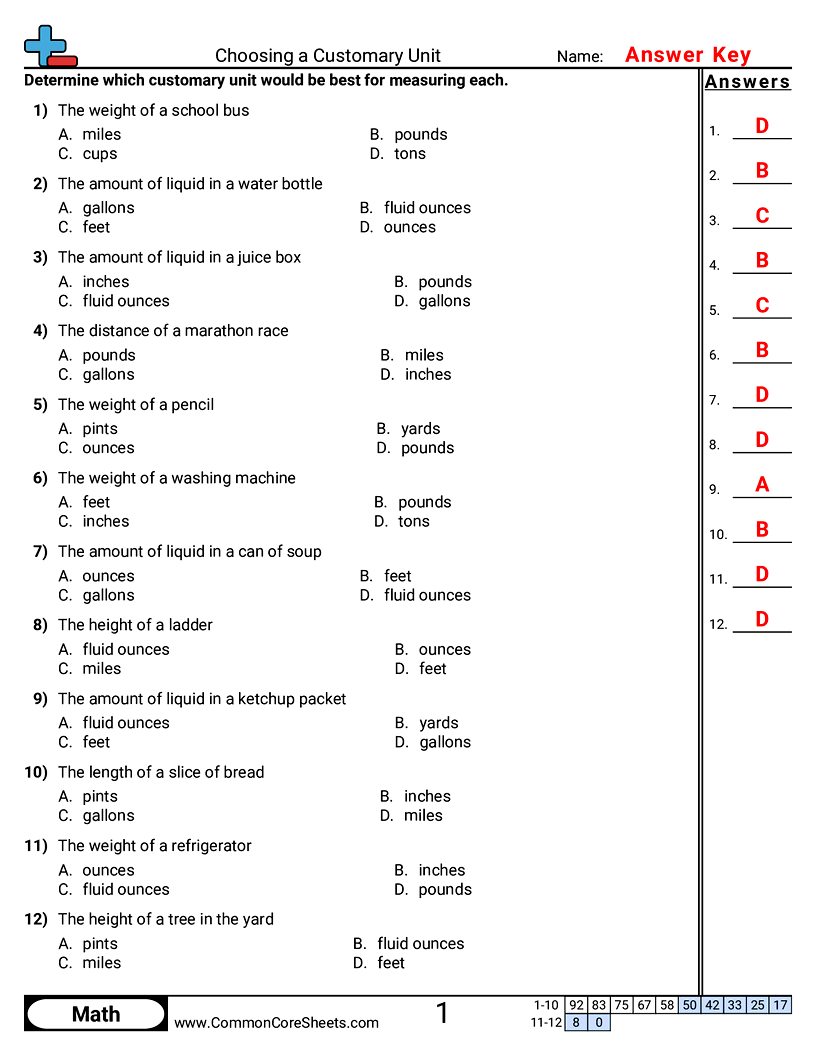
Choose the customary unit that best fits what is being measured. Tell length, weight and liquid volume apart from the situation alone. Use the largest unit that still gives a number of at least 1.
4md1
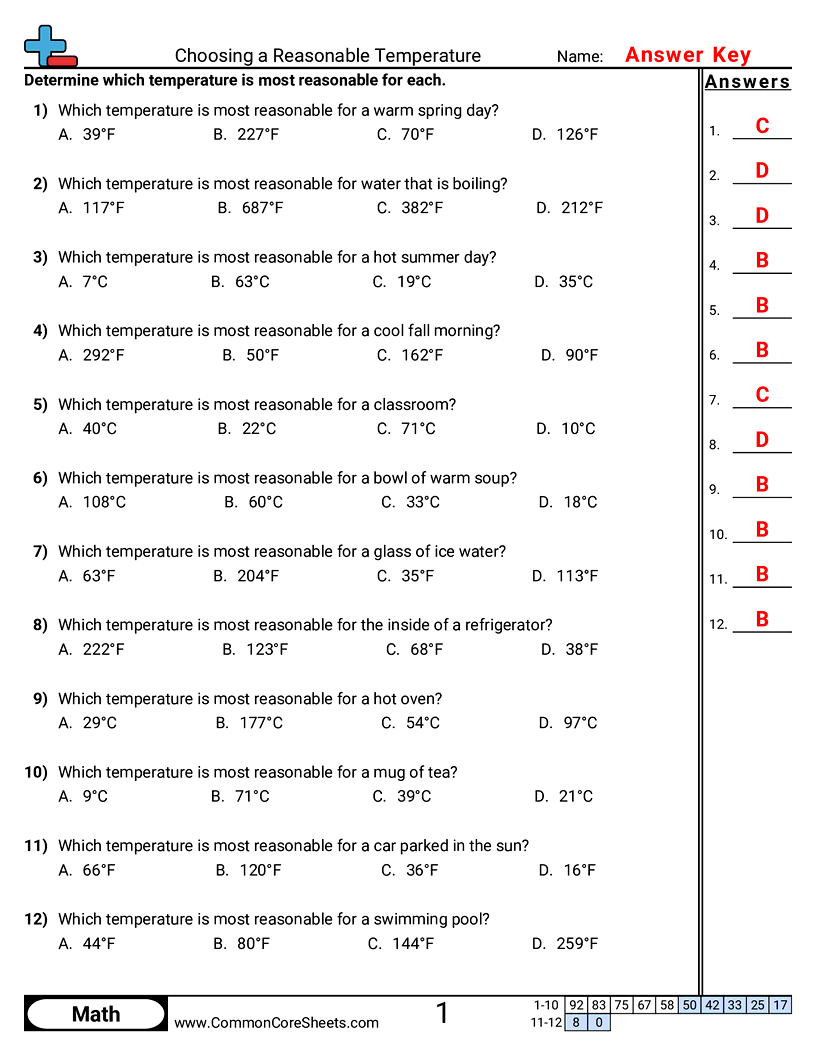
Choose a reasonable temperature for an everyday situation. Read a temperature against the scale it is written in. Compare Fahrenheit and Celsius values for the same situation.
4md1
Judge whether a stated measurement is sensible for the situation. Recognize a measurement that uses the wrong unit. Recognize a measurement that uses the right unit but the wrong amount.
More 4th grade topics
Advertisement