4th Grade Lines, Angles & Classifying Shapes Worksheets
4th Grade Lines, Angles & Classifying Shapes: identify rays, segments, parallel and perpendicular lines, and classify triangles. Every worksheet is free, prints as a PDF with an answer key, and can be assigned online. The ones teachers open most are first.
More about these worksheets ▾ Show less ▴
4g1
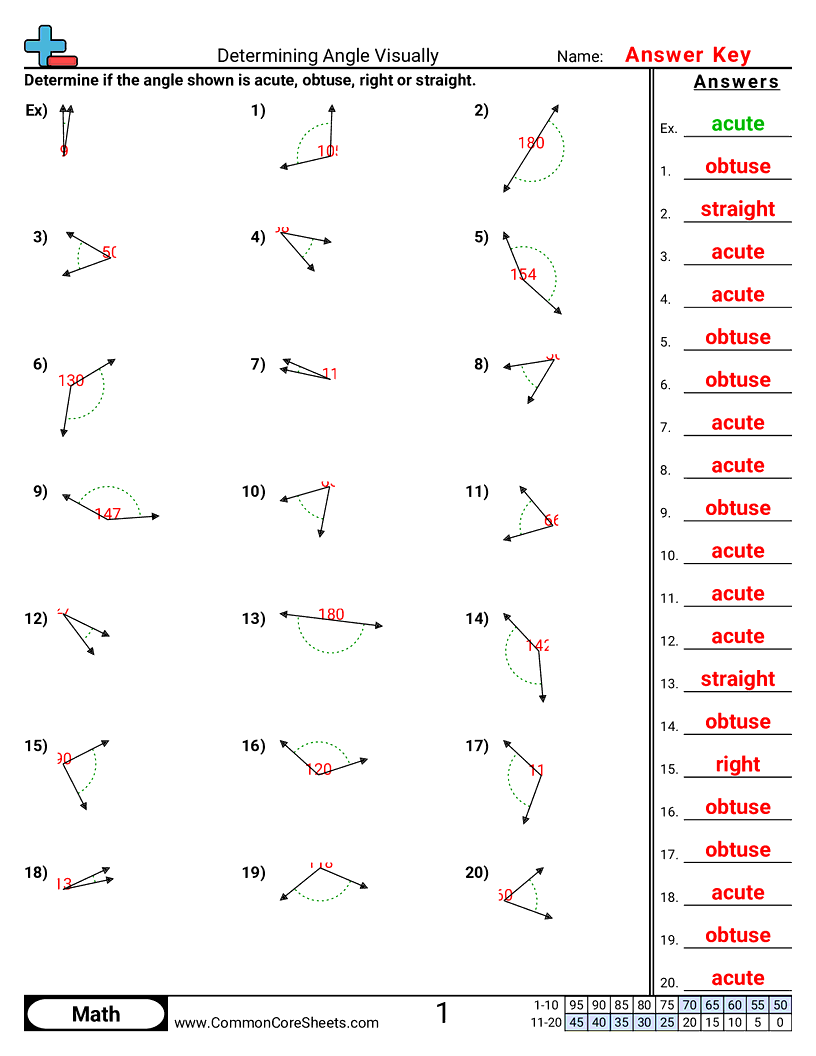
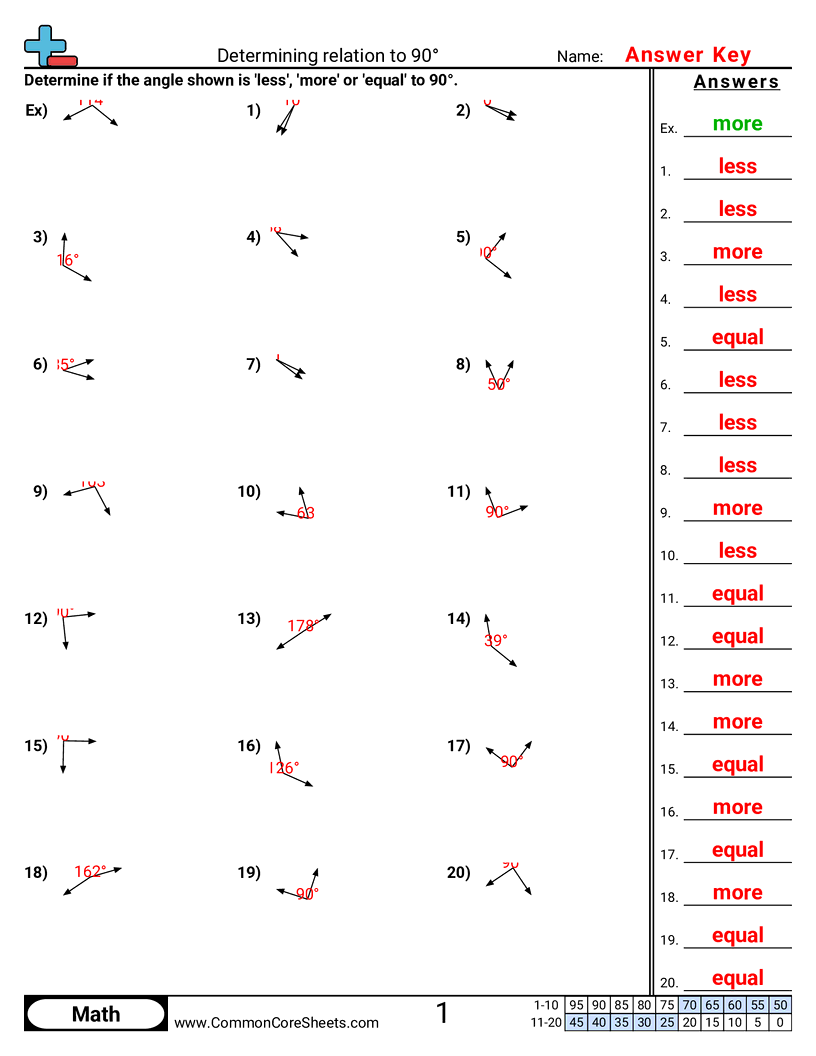
Identify whether an angle is acute, right, obtuse, or straight by looking at it. Compare an angle to a right angle as a quick visual benchmark. Notice when an angle is smaller than 90°, exactly 90°, between 90° and 180°, or exactly 180°. Use the shape and direction of the rays to classify angles even when they are rotated.
4g1
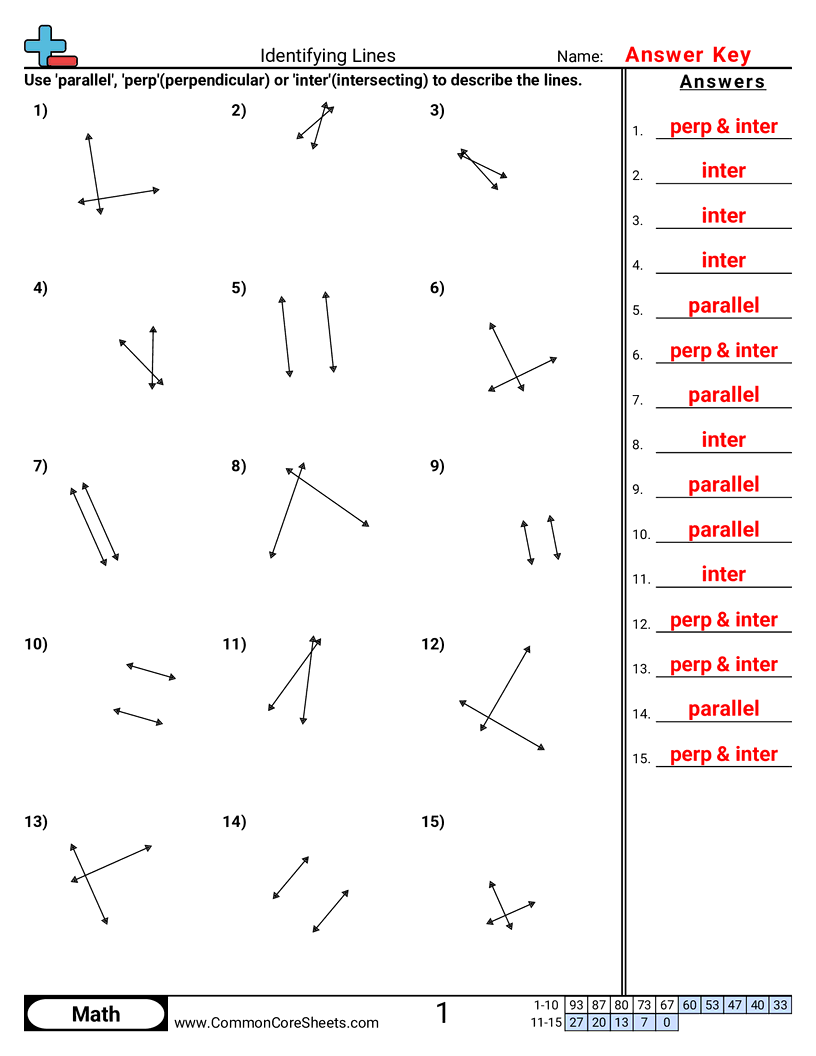
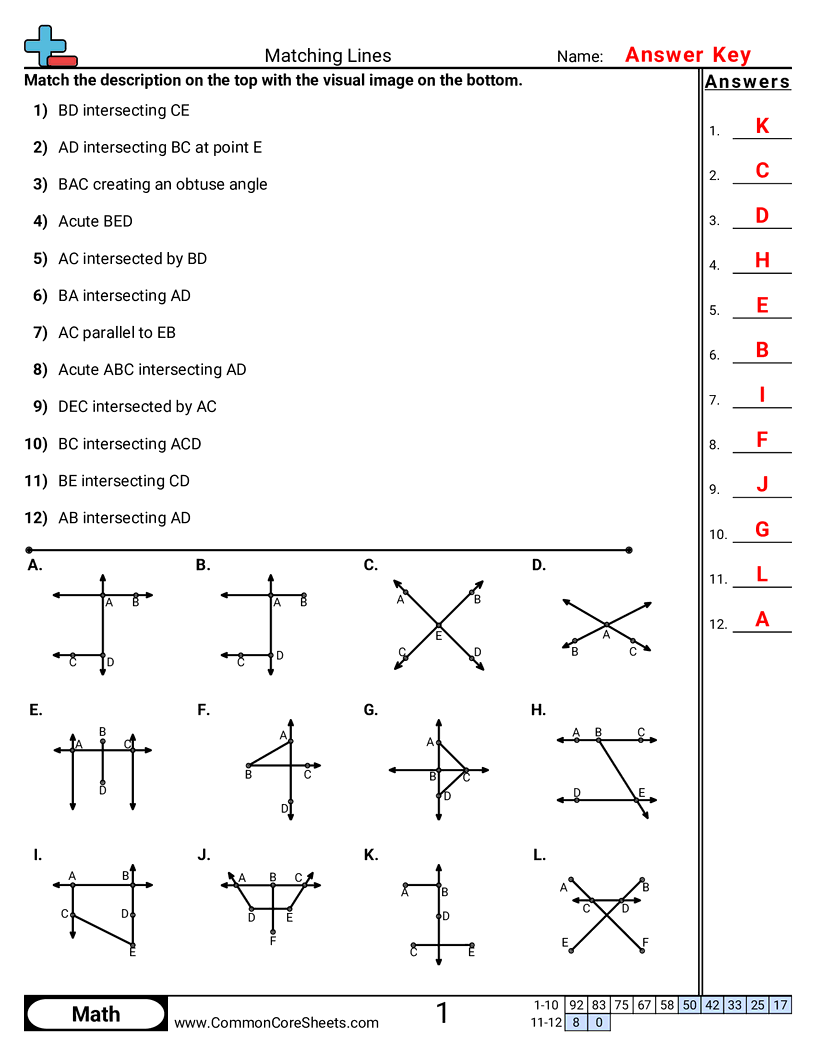
Tell whether two lines are parallel, perpendicular, or intersecting by looking at a picture or graph. Spot right angles to recognize when lines are perpendicular. Notice when lines never meet to identify parallel lines. Describe where two lines cross and name that point as an intersection.
4g2
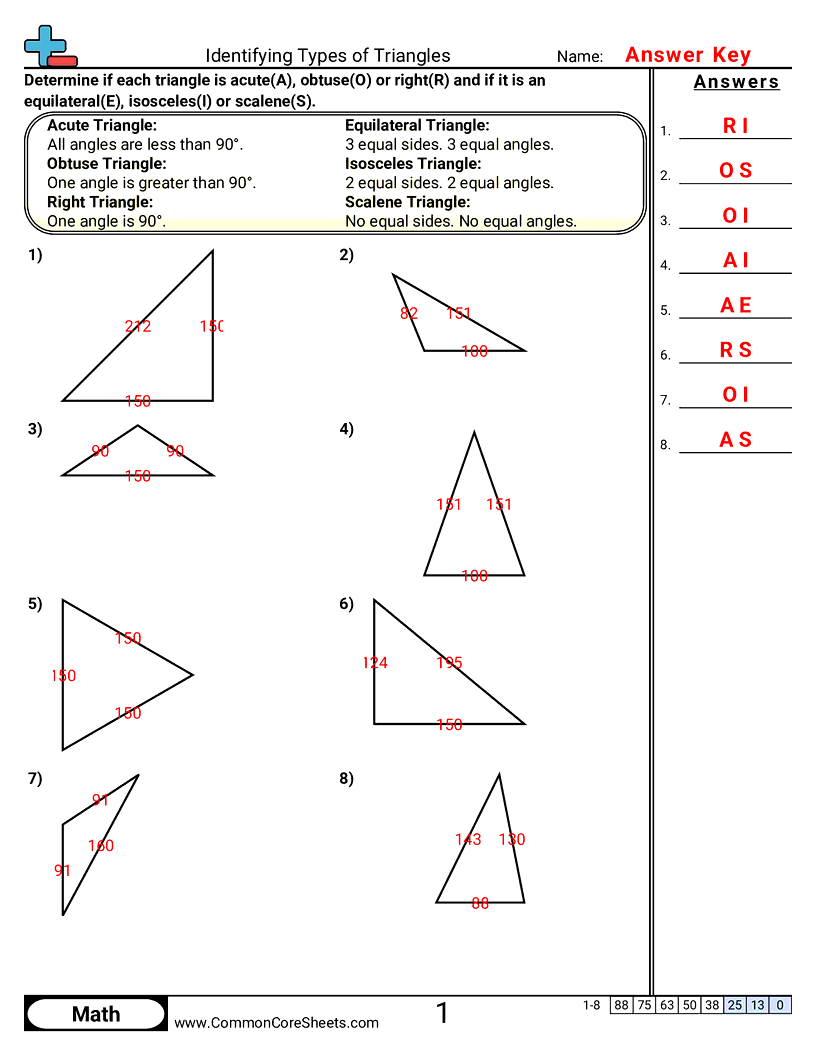
Decide whether a triangle is acute, right, or obtuse by looking at its angles. Decide whether a triangle is equilateral, isosceles, or scalene by comparing its side lengths. Use angle and side clues together to classify the same triangle in two different ways.
4g2
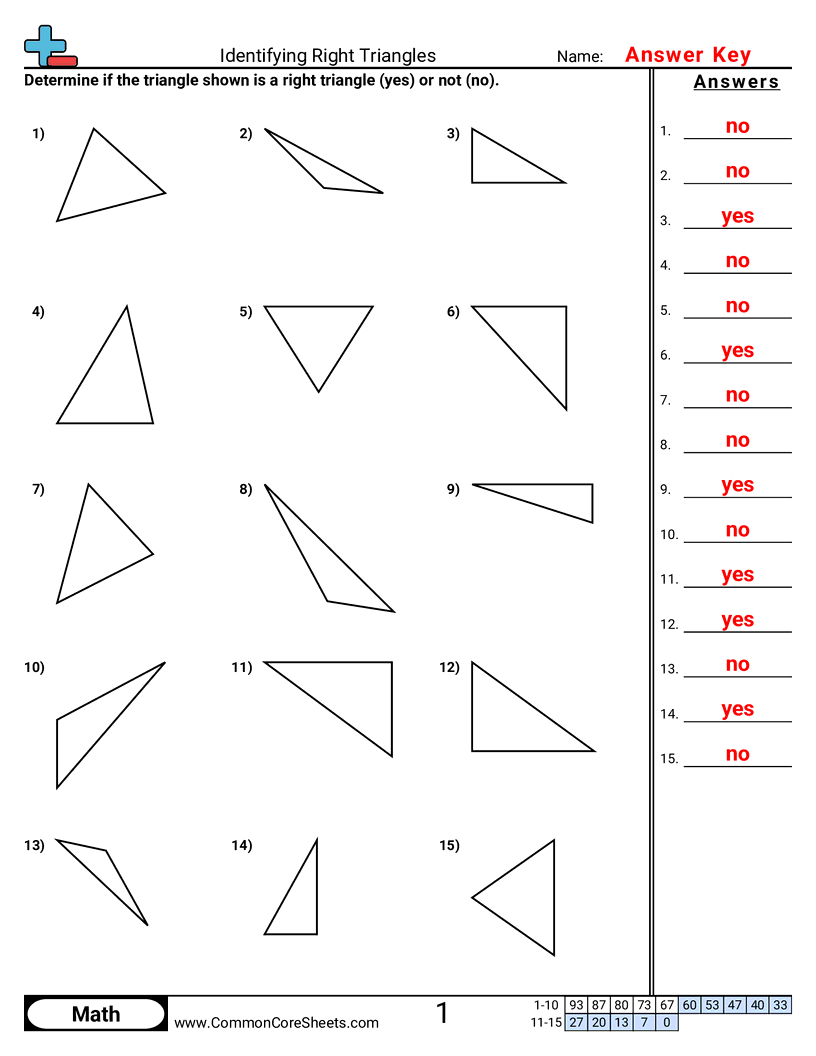
Spot whether a triangle has a square corner (a 90° angle). Tell the difference between right triangles and triangles that have no 90° angle.
4g1
Decide whether an angle shown is a right angle (90°). Tell the difference between right angles and angles that are smaller (acute) or larger (obtuse). Recognize that perpendicular lines meet to make a 90° angle.
4g1
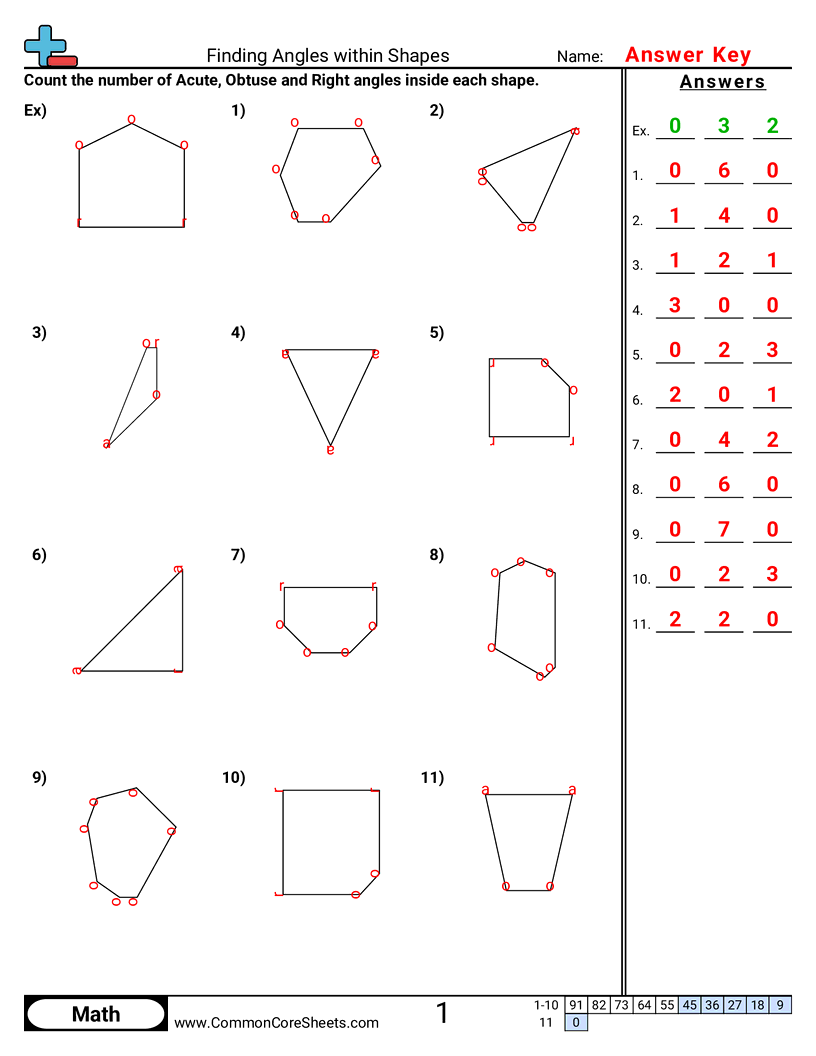
Spot and name acute, right, and obtuse angles in different shapes. Count how many of each type of angle a shape has. Use the corners (vertices) of a polygon to decide where the angles are.
4g1
Identify whether two lines are parallel, perpendicular, or intersecting. Match a written description of line relationships to the correct picture.
4g1
Identify whether a drawing shows a line, ray, or line segment. Use points and arrowheads to tell where a line or ray starts and which direction it goes. Name and classify angles as acute, right, obtuse, or straight. Compare angles to decide which one is larger or smaller based on how wide they open. Describe where lines, rays, segments, and angles are located in a diagram using points and intersections.
4g1 4md6
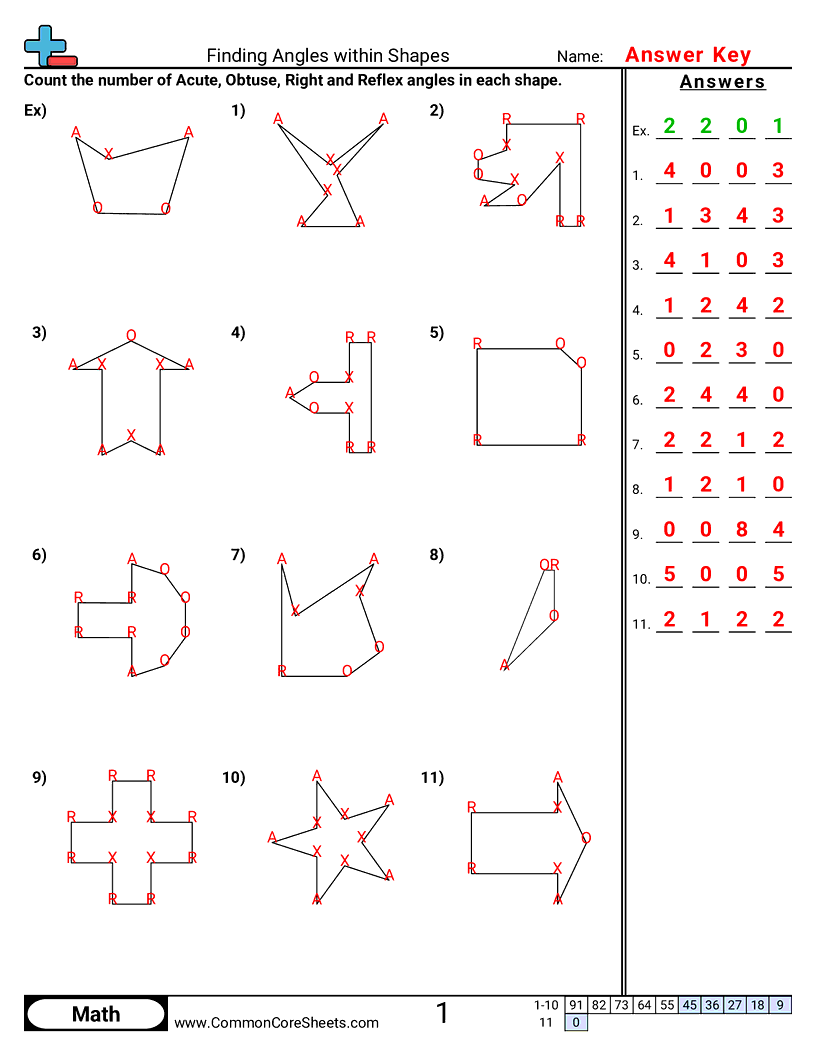
Identify acute, right, obtuse, and reflex angles in a drawing. Count how many of each type of angle a shape has. Use angle size clues (smaller than 90°, exactly 90°, between 90° and 180°, greater than 180°) to sort angles correctly. Pay attention to where the angle is formed at a vertex so you don’t count the wrong corner.
4g1
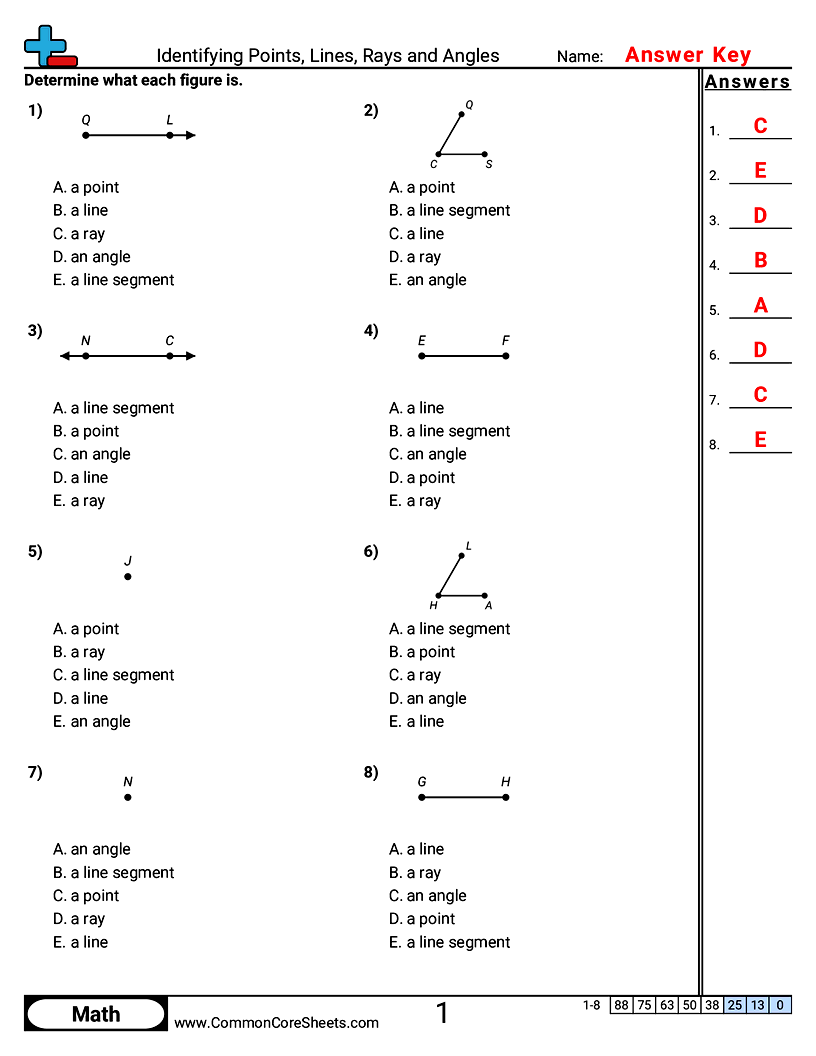
Tell a point, line segment, ray, line and angle apart. Use the ends of a figure to decide what it is. Recognize that a ray has one endpoint and a line has none.
4g2 5g3
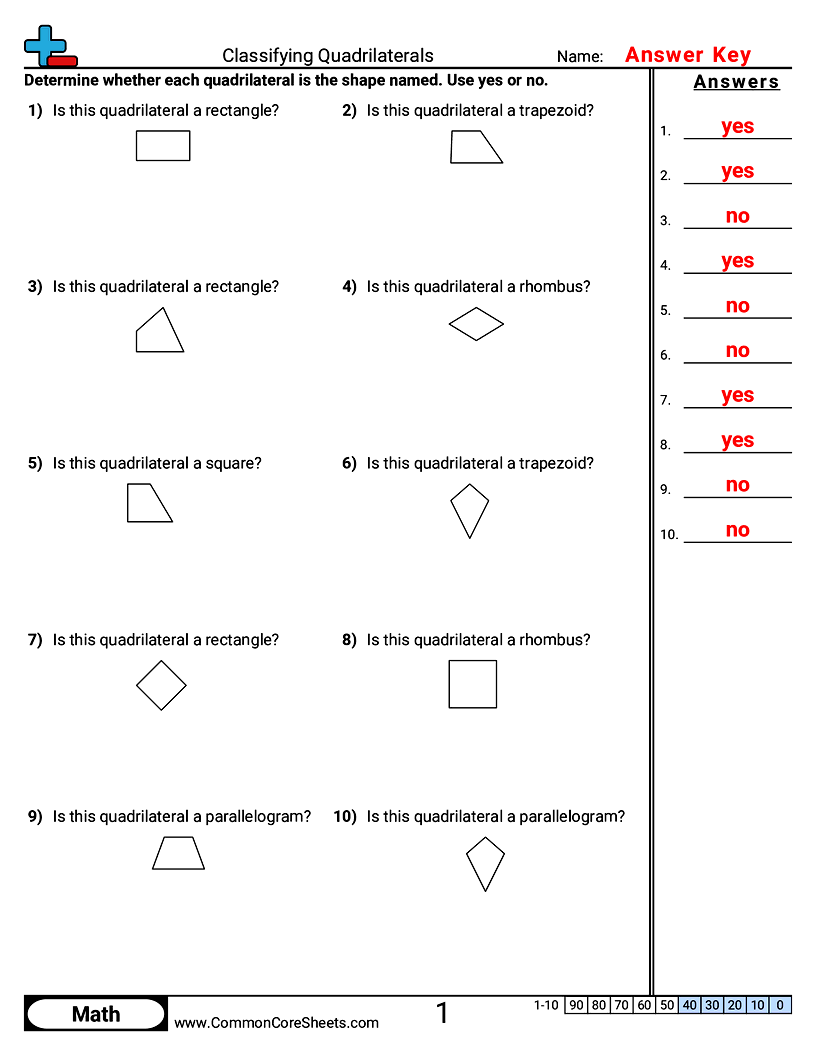
Decide whether a quadrilateral is a square, rectangle, rhombus, parallelogram, trapezoid or kite. Use side lengths, parallel sides and right angles to classify a shape. Recognize that a square is also a rectangle, a rhombus and a parallelogram.
4g1
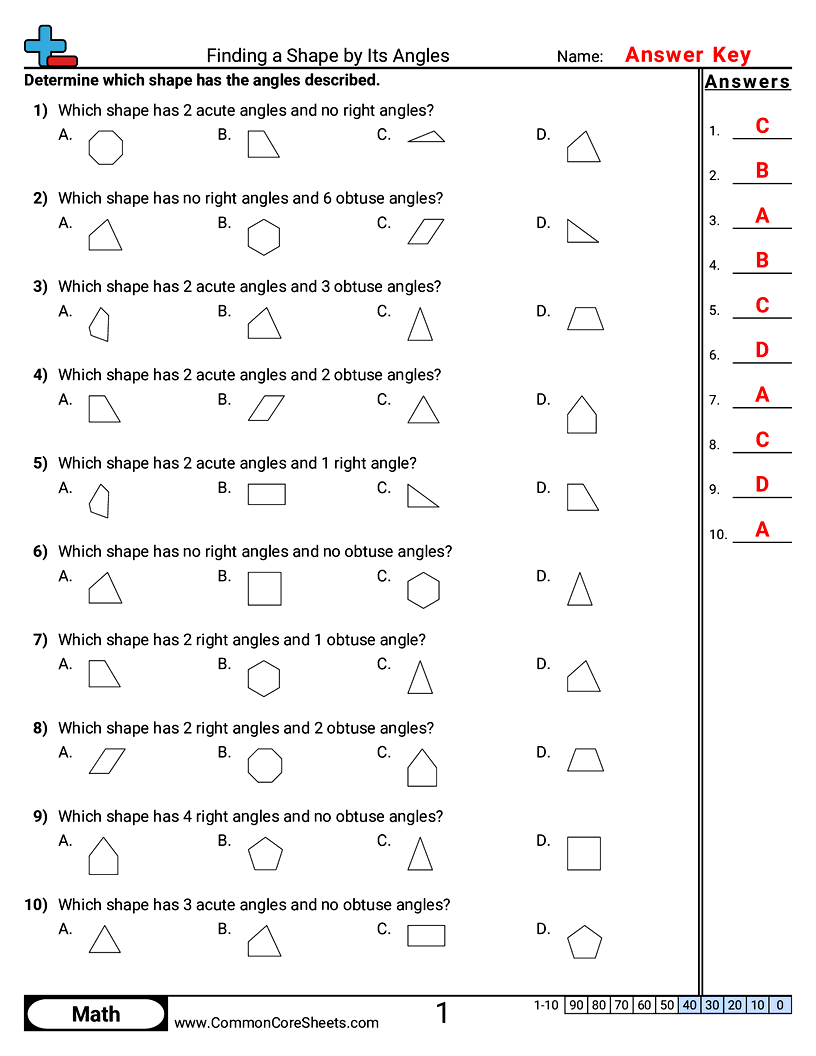
Classify the angles inside a polygon as acute, right or obtuse Judge a whole shape by the mix of angles it contains Recognize that a shape can hold all three kinds of angle at once Rule out a shape by finding the kind of angle it is missing
4g2 5g3
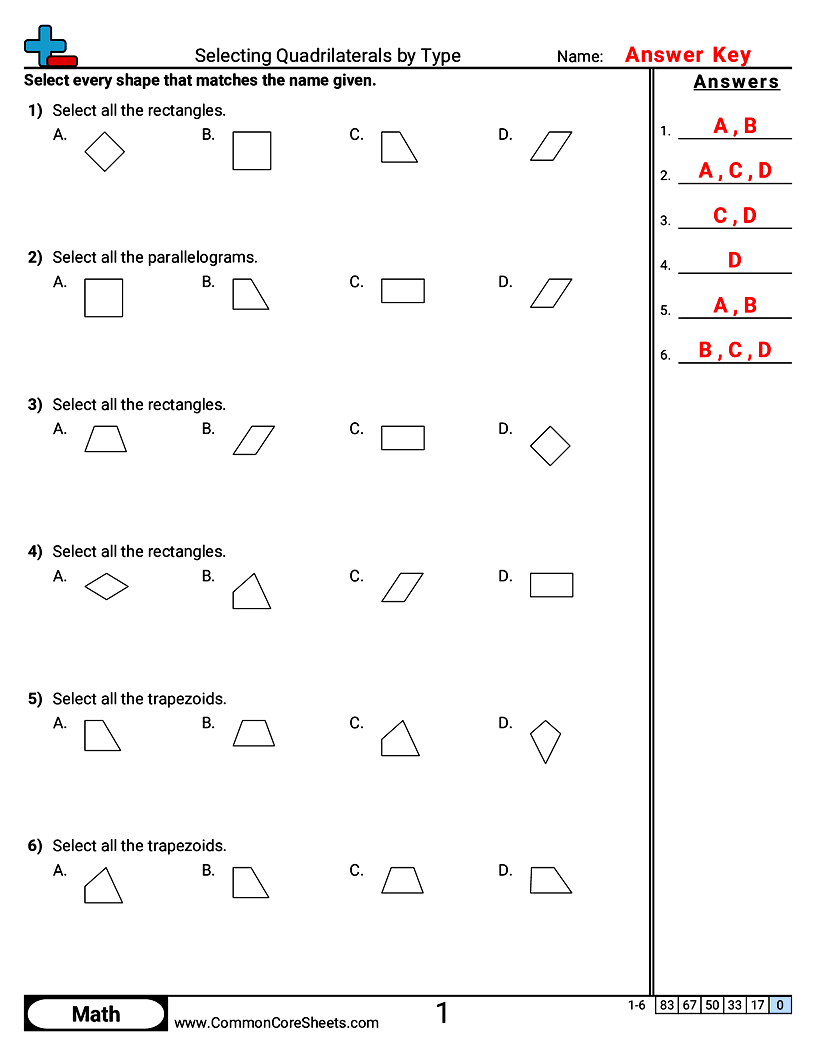
Select every shape of a named type from a group of quadrilaterals. Hold a definition against several figures at once. Recognize that more than one shape in a group can share a name.
4g1
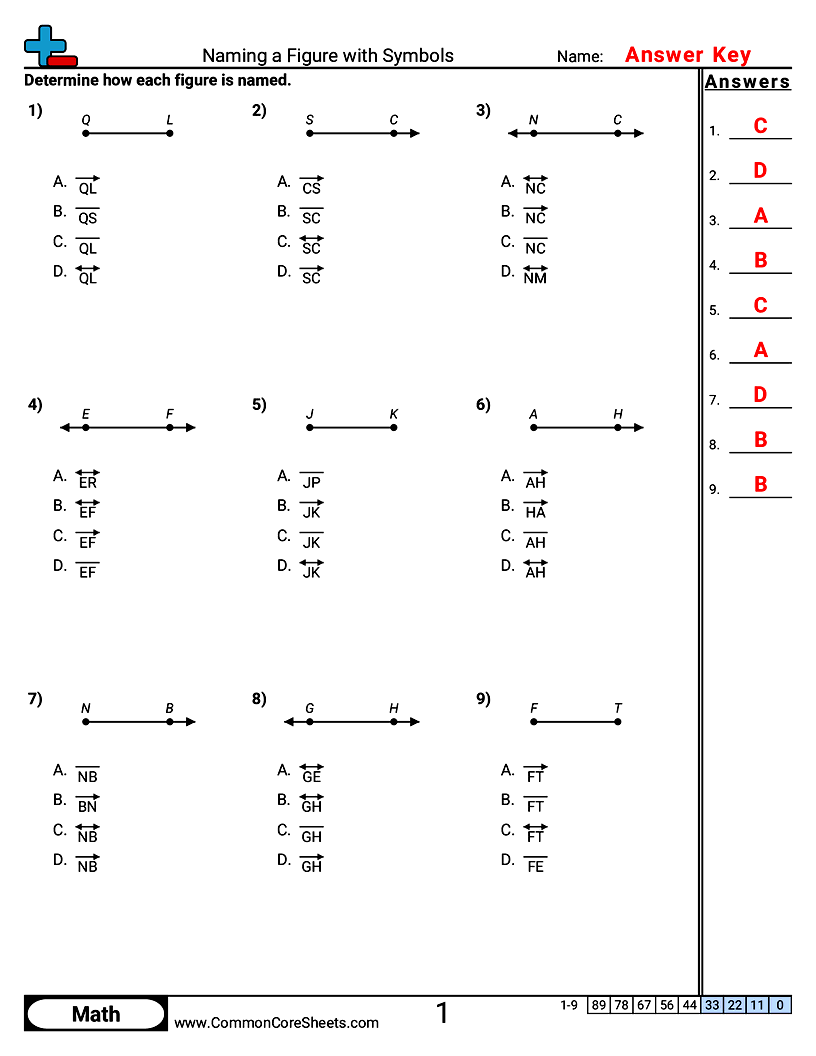
Write a line segment, ray or line using the correct symbol. Know that the order of the letters matters for a ray but not for a segment or line. Match the letters in a name to the labeled points on the figure.
4g1
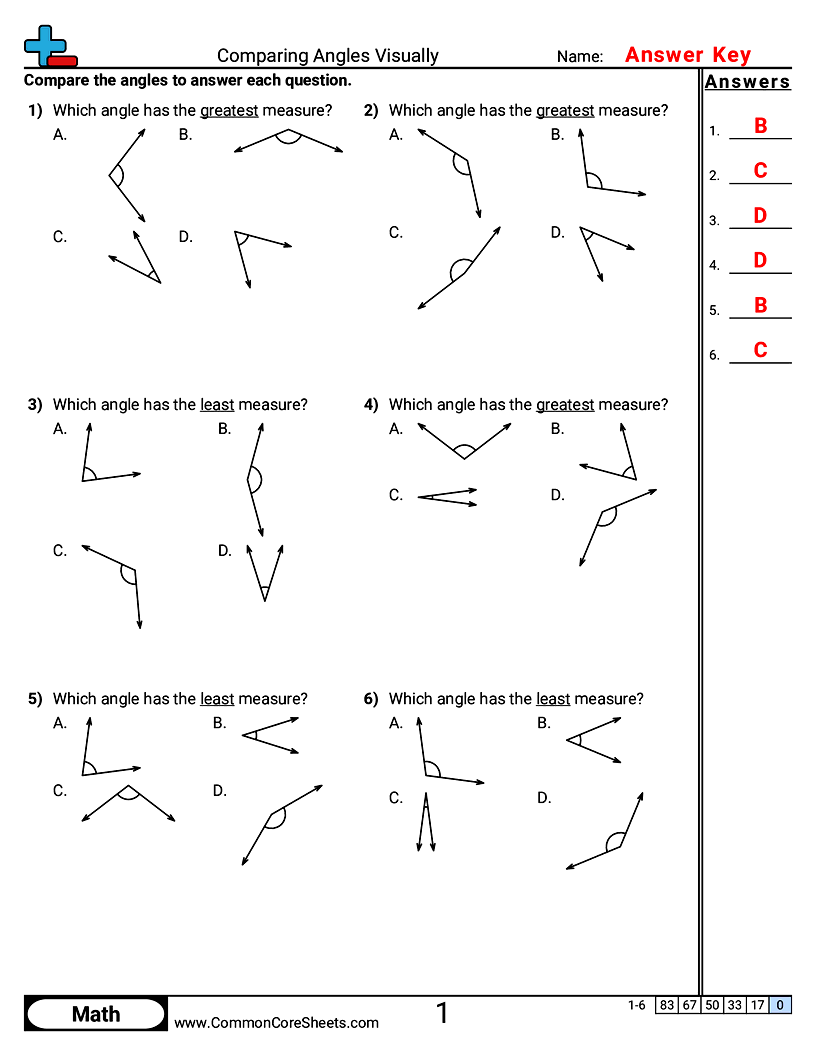
Compare angles by how far they are opened Understand that ray length does not change an angles measure Recognize a right angle from its square marker Order angles from least to greatest by sight
More 4th grade topics
Playwire Advertisement