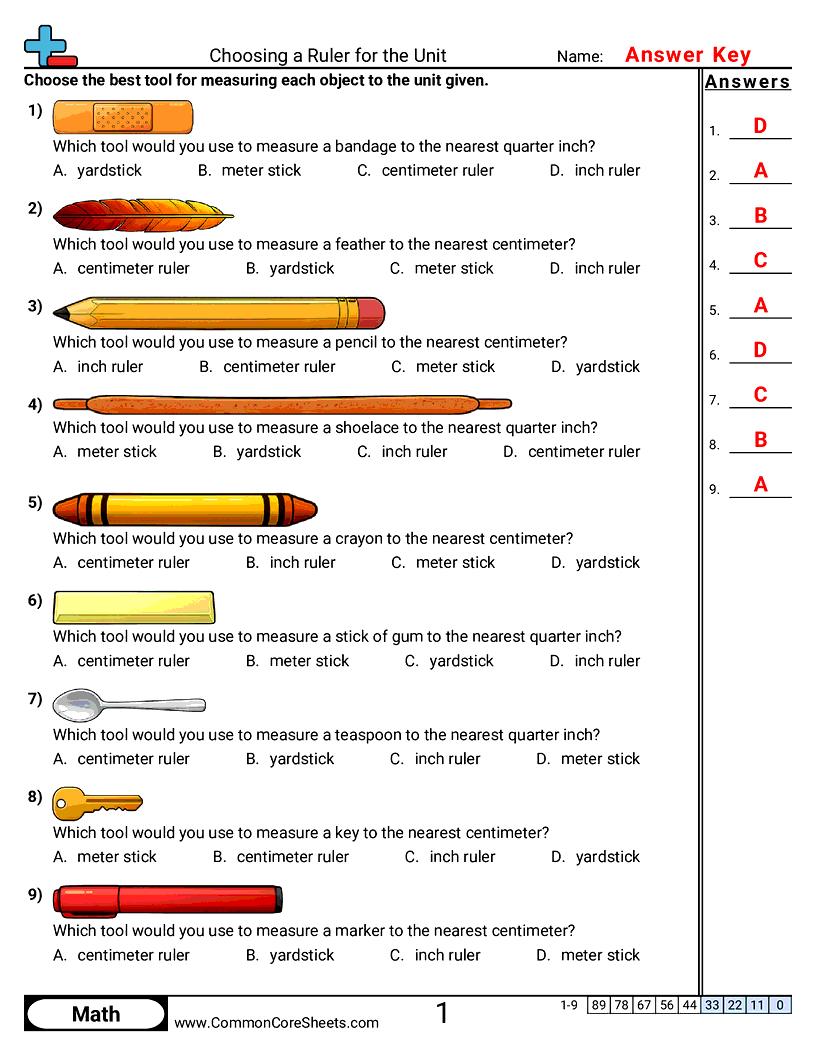
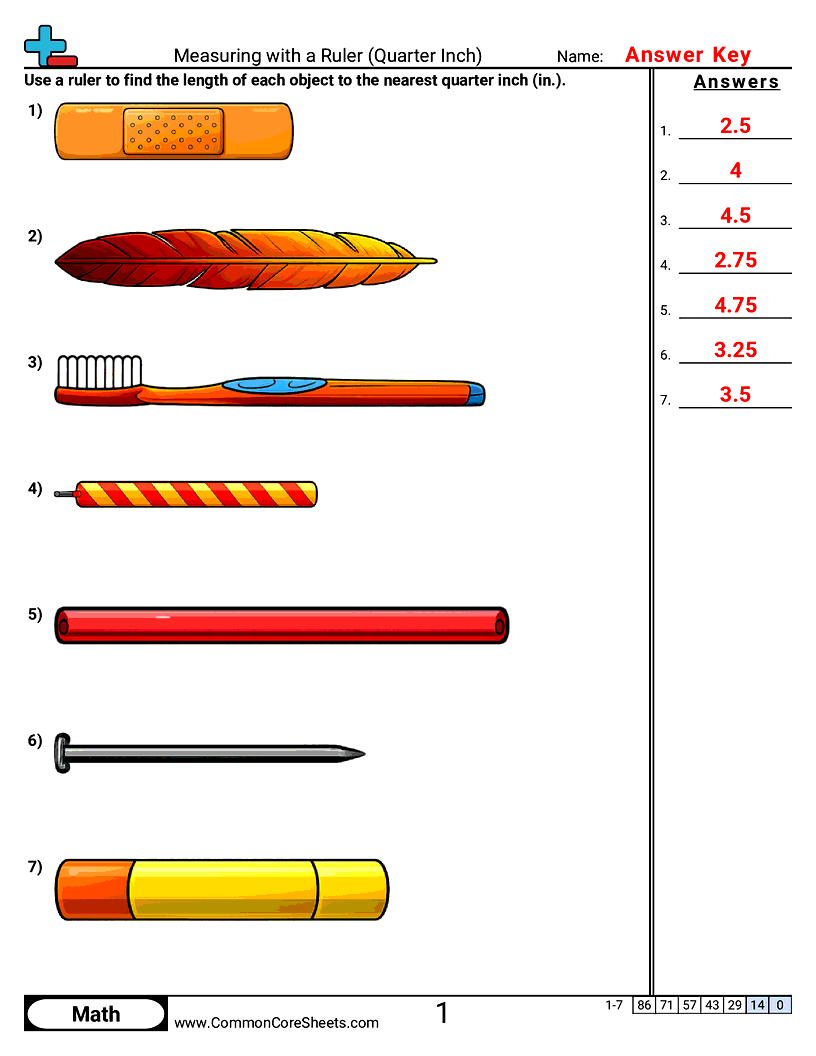
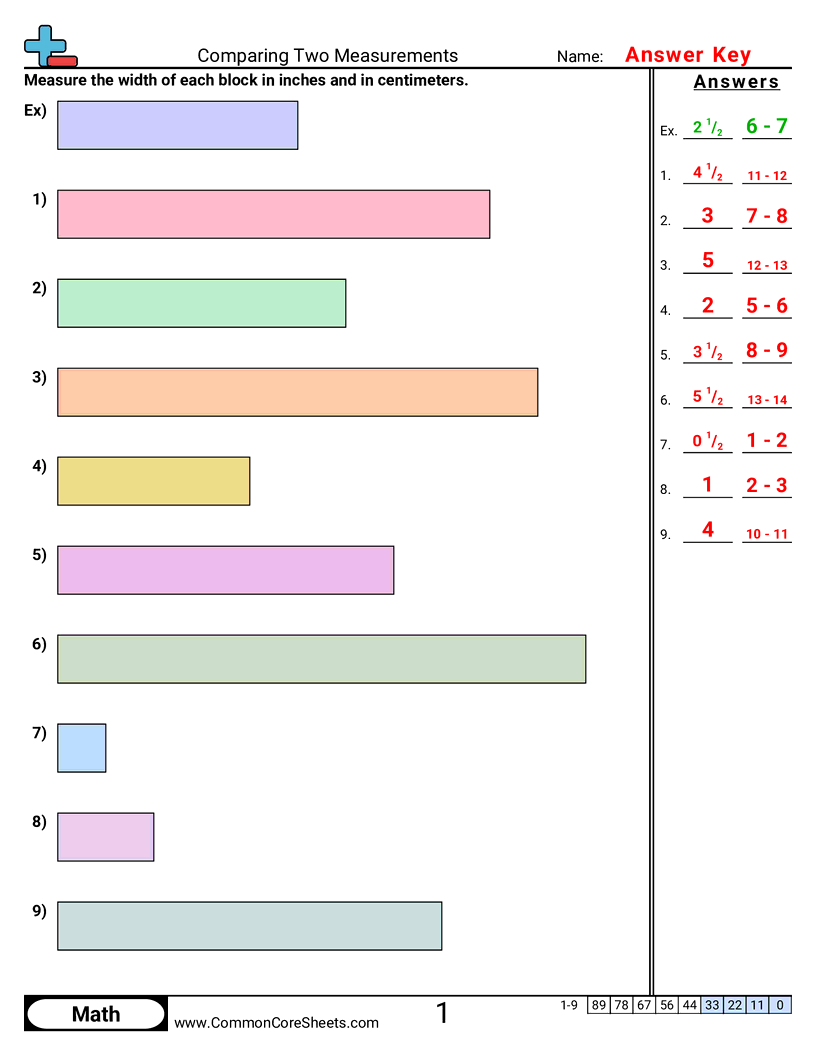
Our Visual Measurement Worksheets provide hands-on practice with measuring objects using rulers, comparing lengths and widths, and creating data plots. These visual problems help students develop measurement skills through interactive exercises with both American and metric units, making abstract concepts more concrete and easier to understand.
These worksheets introduce basic measurement concepts for early learners. Students compare the lengths of objects to determine which is longest or shortest and use non-standard units to measure objects by lining up equal-sized units end to end. Aligned with first grade measurement standards.
Students practice measuring lengths using American customary units. Worksheets include reading rulers in inches, estimating distances, choosing appropriate units, converting between inches, feet, yards, and miles, adding and subtracting measurements in feet and inches, and working with mixed unit conversions. Resources span second through fifth grade standards.
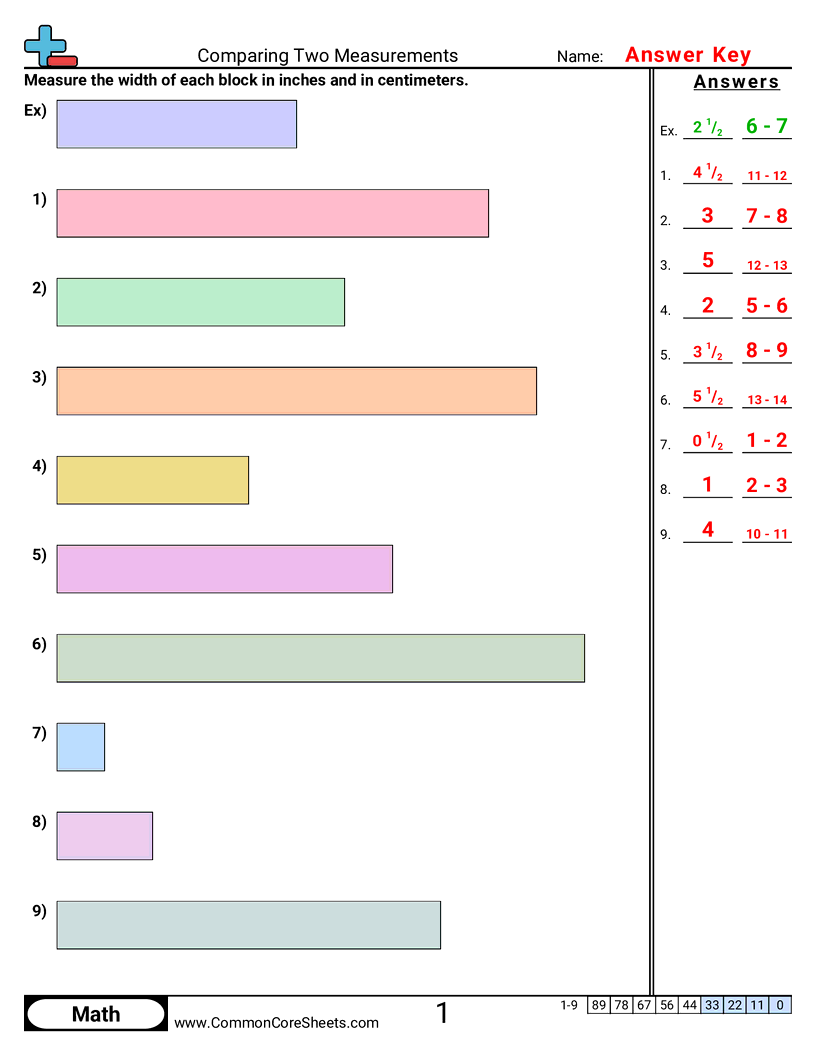
Students work with both American customary and metric measurement systems side by side. Worksheets include measuring objects in both inches and centimeters, estimating lengths using both systems, filling in conversion tables, and balancing equations with mixed units. These activities help students see the relationship between the two measurement systems. Aligned with second through fourth grade.