Adding & Subtracting Decimals Worksheets
Our Adding & Subtracting Decimals worksheets help 5th grade students master decimal operations through diverse practice formats. Students work with vertical and horizontal problems, use number lines and helper grids for visualization, solve word problems, and add multiple decimal addends while learning proper place value alignment.
More about these worksheets ▾ Show less ▴
×
Adding & Subtracting Decimals
About these worksheets
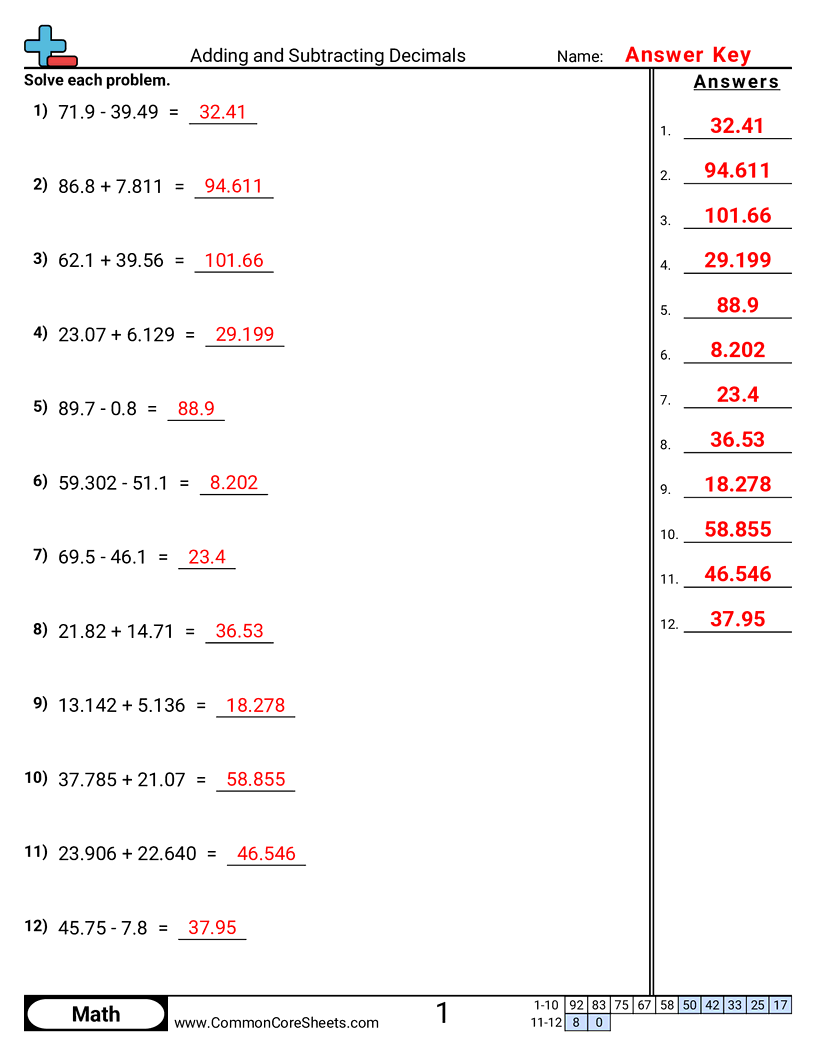
These worksheets provide practice adding and subtracting decimal numbers. Activities include vertical and horizontal computation, using number lines and helper grids to visualize operations, and adding multiple decimal addends. Students learn to line up decimal points by place value and regroup when needed. Aligned with fifth grade standards.
5nbt7
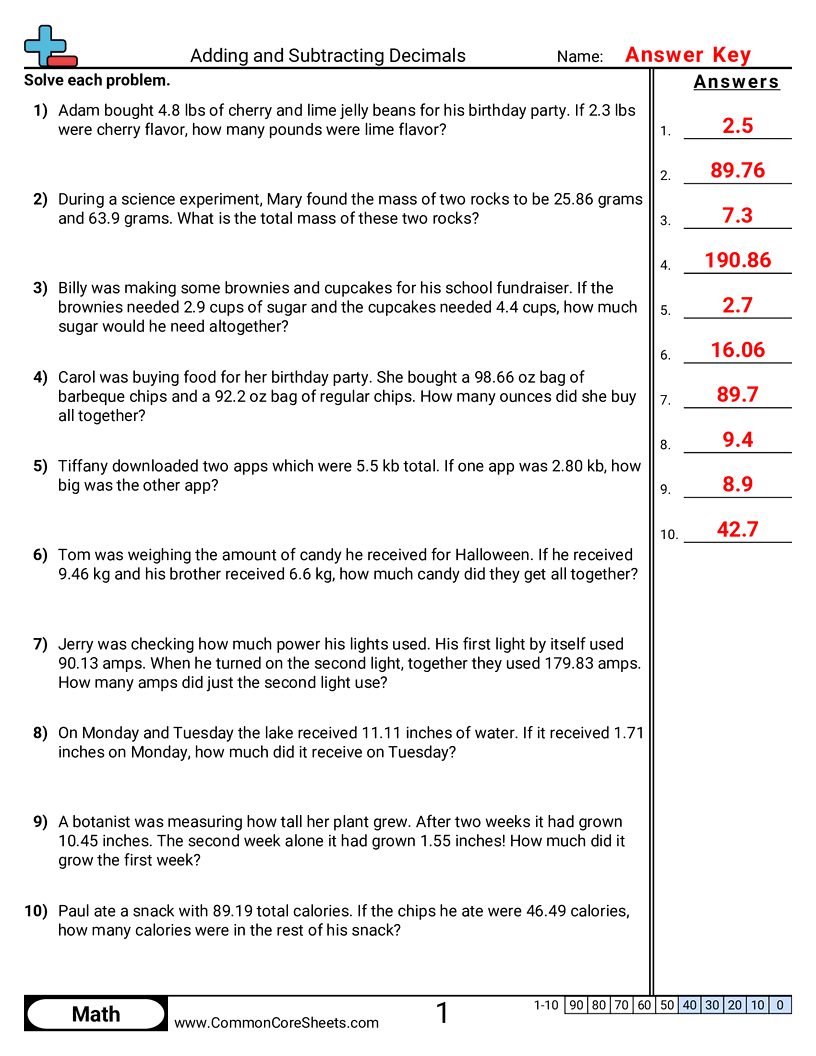
Add decimals to find a total when numbers include tenths and hundredths. Subtract decimals to find how much more or how much is left. Line up decimal points so each place value stays in the right column. Read word problems and decide whether to add or subtract to solve them. Write the answer with the decimal in the correct place.
5nbt7
Add decimals accurately, including when you need to regroup (carry). Subtract decimals accurately, including when you need to regroup (borrow). Keep track of place value (ones, tenths, hundredths, thousandths) to write the correct sum or difference.
5nbt7
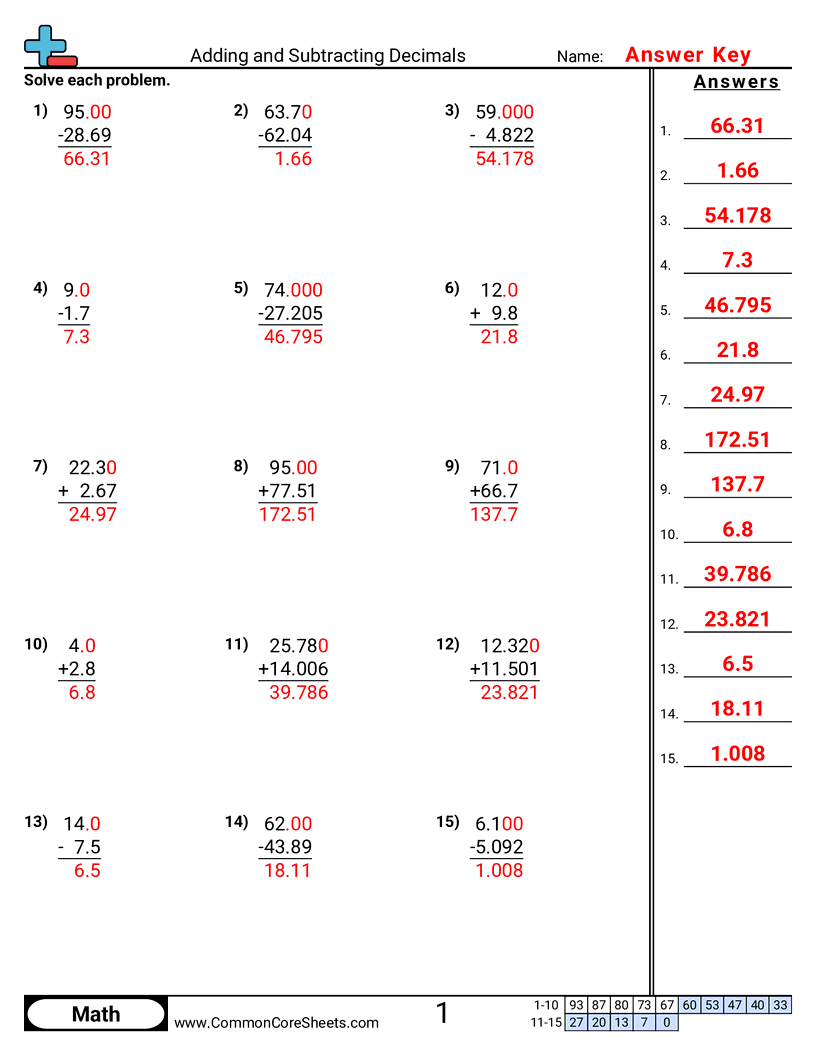
Line up decimals by place value before adding or subtracting. Add decimals accurately, including when you need to regroup. Subtract decimals accurately, including when you need to borrow. Keep track of the decimal point in the answer.
5nbt7
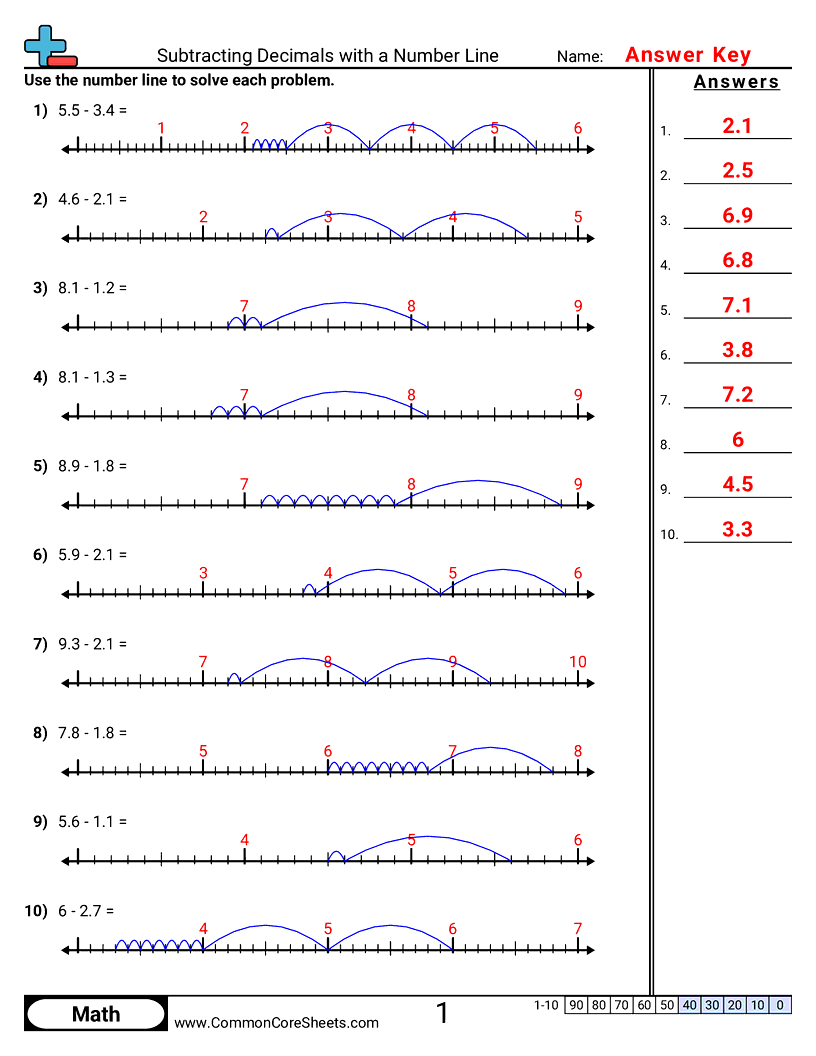
Use a number line to subtract one decimal from another by jumping backward the right amount. Read and place decimals on a number line so you can start and end at the correct points. Break a decimal subtraction into smaller steps (like tenths and hundredths) to keep track of each jump. Find the difference between two decimals and write the answer with the decimal point in the right place.
5nbt7
Add two decimal numbers by starting at the first number and making jumps on a number line. Use tenths marks to keep track of how far each jump moves. Read and write the decimal you land on as the sum.
5nbt7
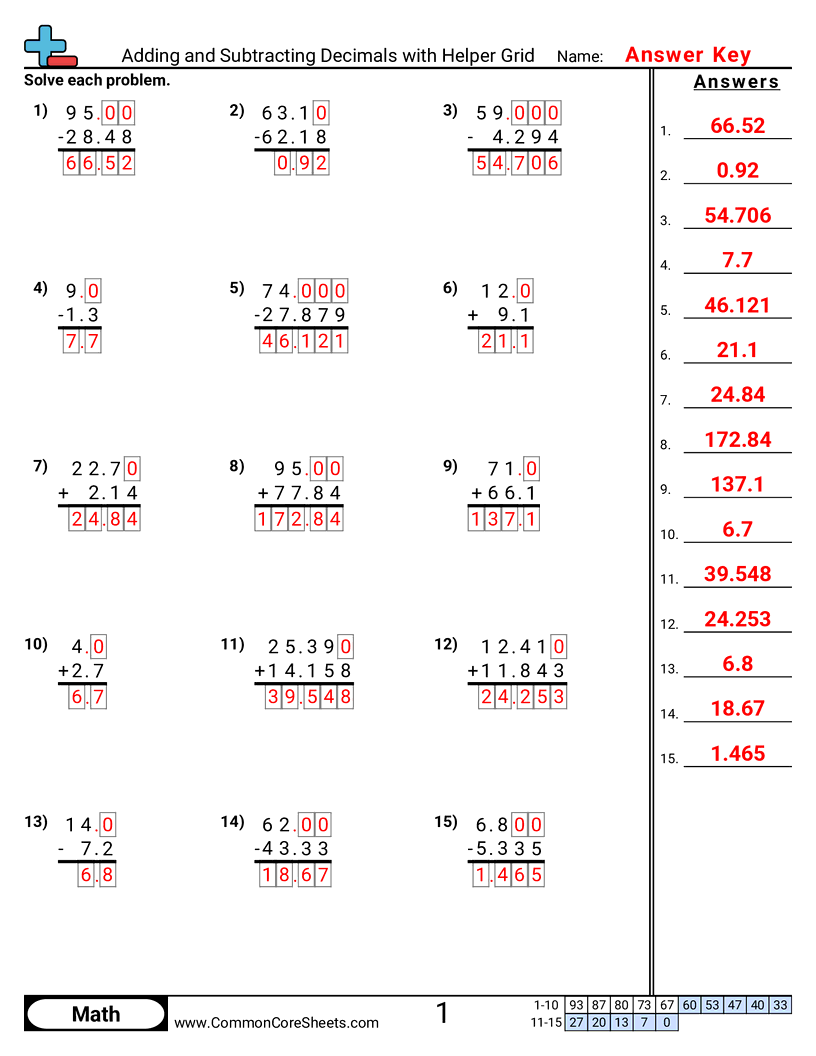
Line up decimals by place value using a helper grid so the digits match up correctly. Add decimals accurately, including when you need to regroup. Subtract decimals accurately, including when you need to regroup. Keep the decimal point in the right place when writing the final answer.
5nbt7
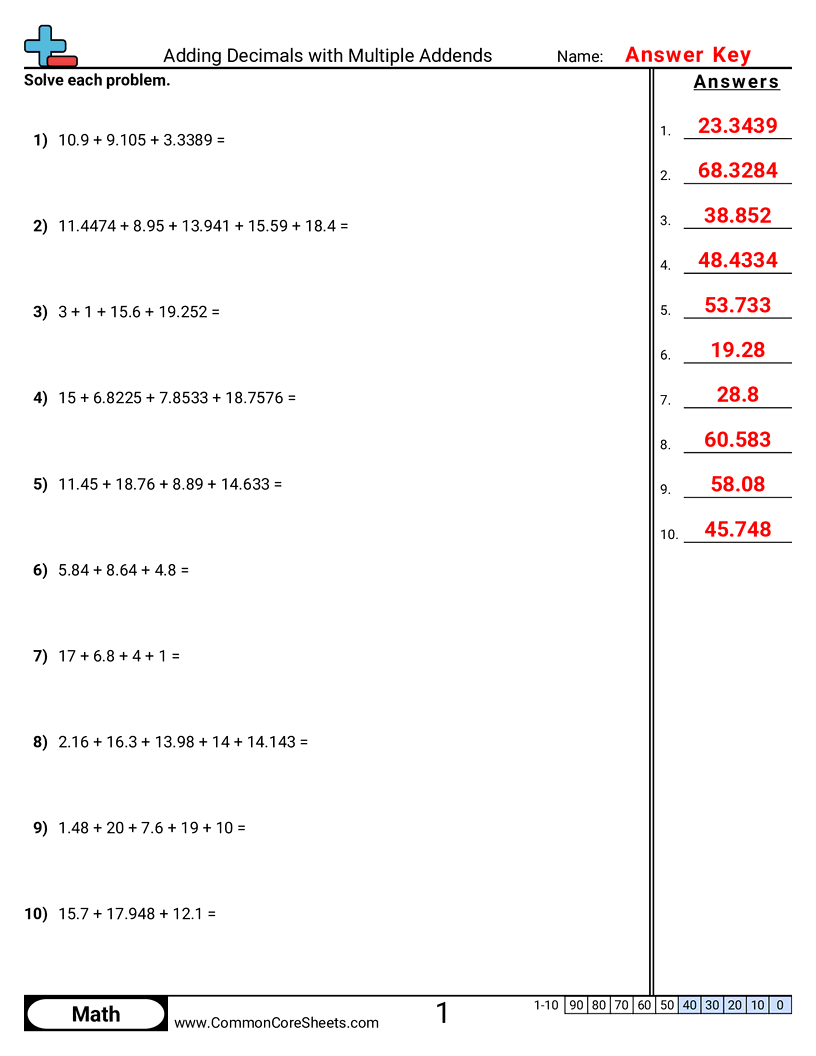
Add several decimal numbers to find one total. Line up decimal points so each place value is added in the right column. Regroup when the digits in a column add to 10 or more. Keep track of tenths and hundredths so the decimal ends up in the correct spot in the sum.
5nbt7
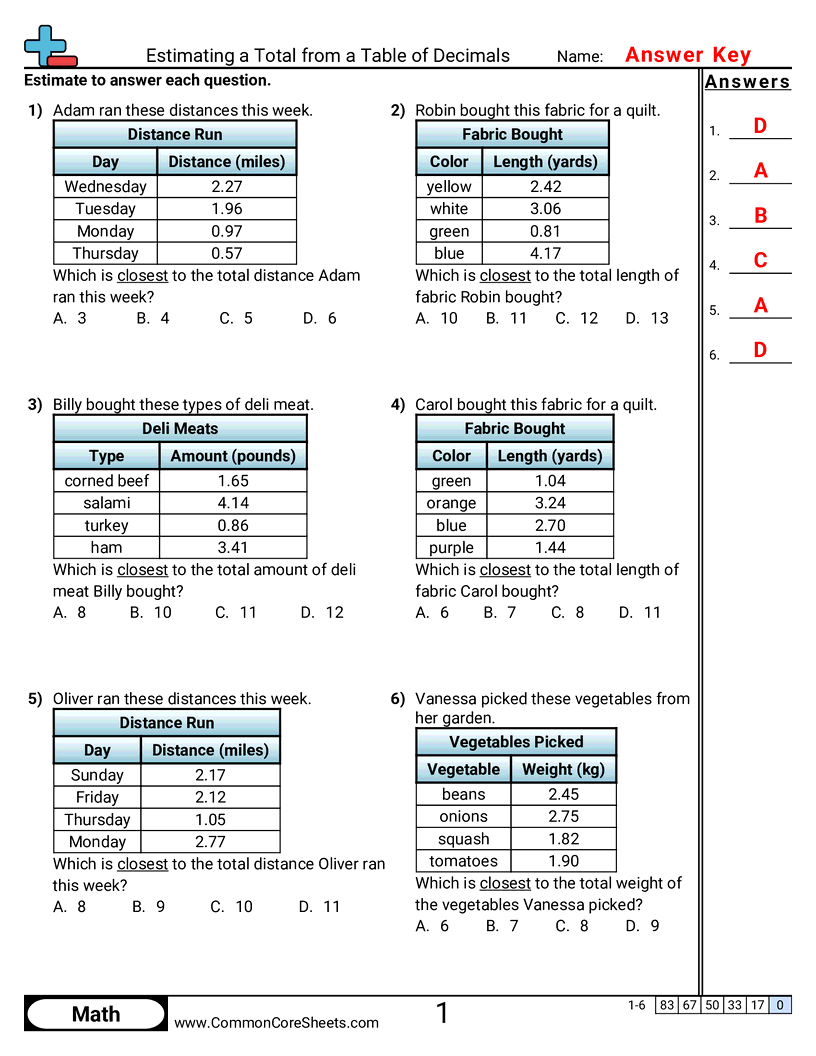
Round decimals to the nearest whole number Estimate a sum of several decimals Judge whether a total is reasonable Read amounts out of a table
5nbt7
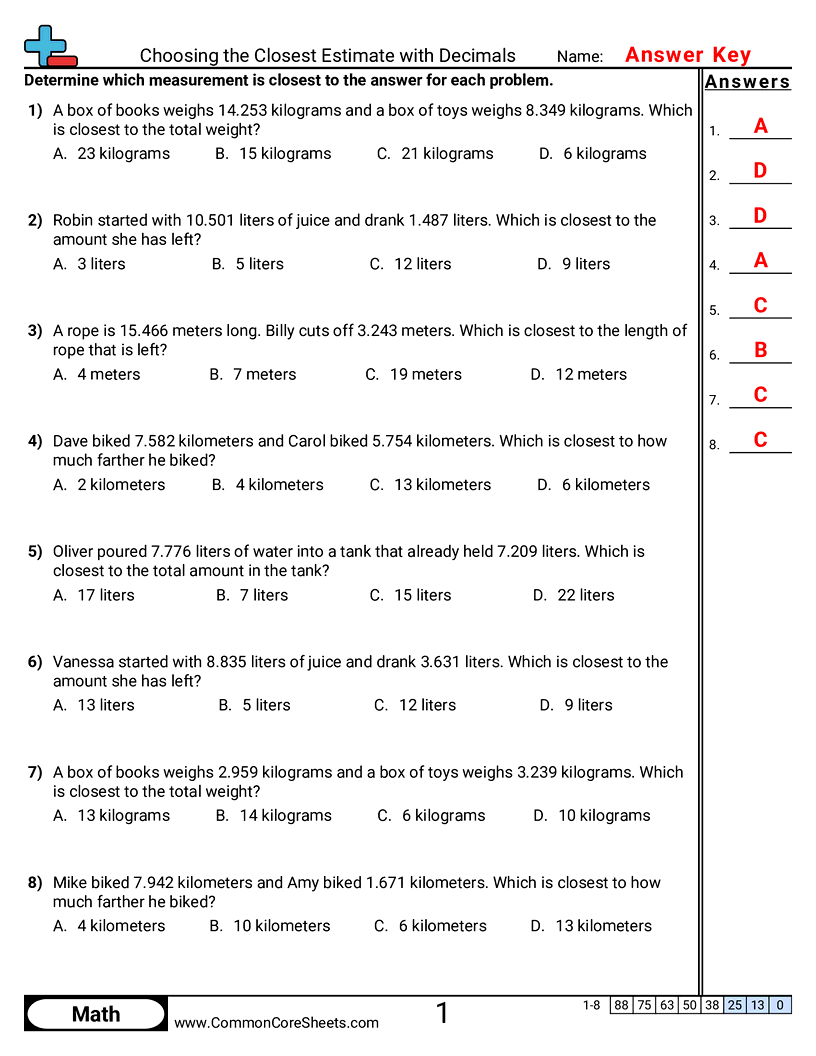
Estimate a sum or difference of decimals. Choose the amount closest to an answer. Judge the size of a decimal answer without calculating.
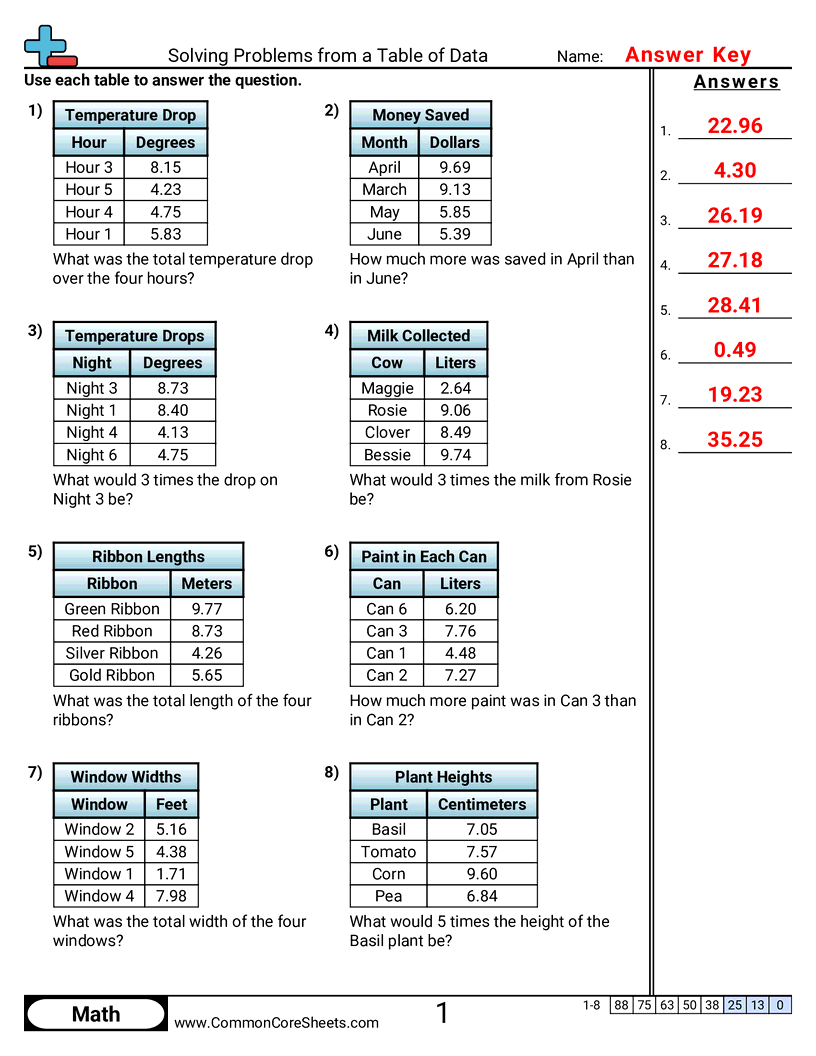
Read decimal values from a table. Decide which rows a question is about. Find a total, a difference or a multiple.
Playwire Advertisement