OAS 6.N.1.2 Worksheets
OAS 6.N.1.2 (Oklahoma, 6th Grade): "Compare and order positive rational numbers, represented in various forms, or integers using the symbols "<", ">", and "="." The worksheets below practice this standard. Each one is a free printable PDF with an answer key, comes in multiple versions, and can also be assigned digitally - no login or account needed.
More about these worksheets ▾ Show less ▴
Numbers & Operations (N)
6.N.1 Read, write, and represent rational numbers expressed as integers, fractions, decimals, percents, and ratios; use these representations in real-world and mathematical situations.6.N.1.2 Compare and order positive rational numbers, represented in various forms, or integers using the symbols "<", ">", and "=".
6.N.1.2
4nf7
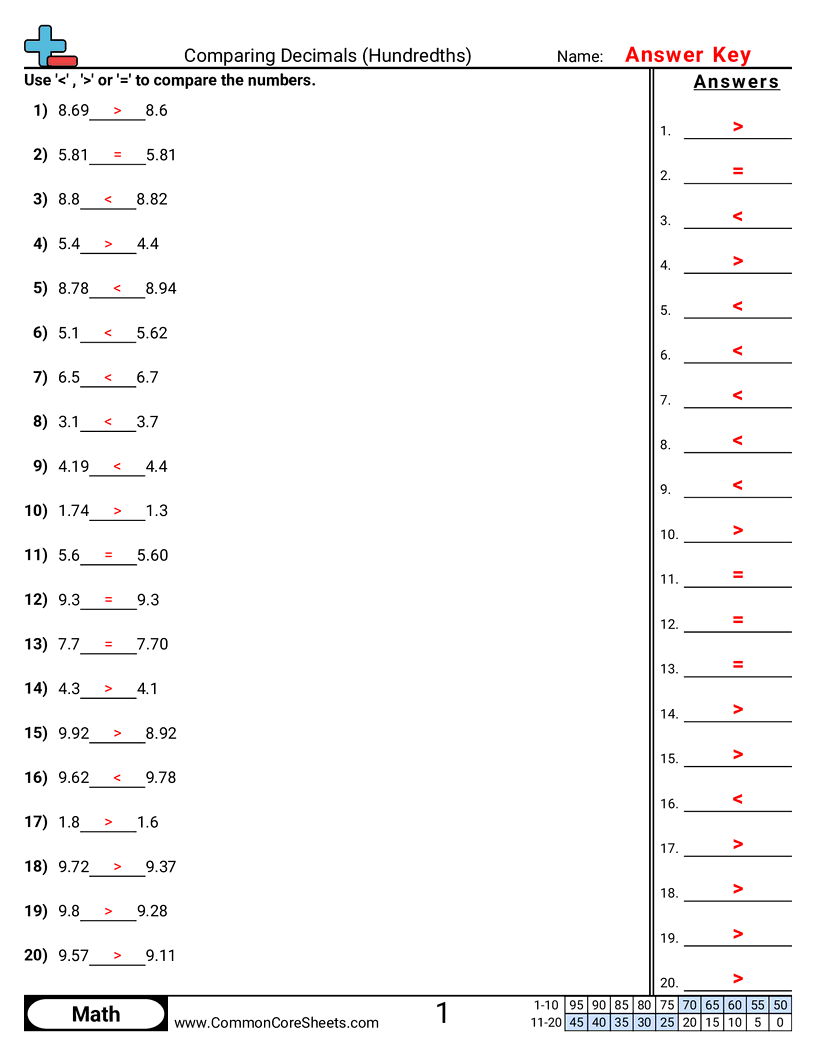
Compare two decimals to see which one is greater, less, or if they are equal. Use place value (ones, tenths, hundredths) to decide which decimal is bigger. Line up decimal points and add zeros when needed so two decimals are easy to compare. Choose the correct symbol (<, >, or =) to show the comparison.
5nbt3b
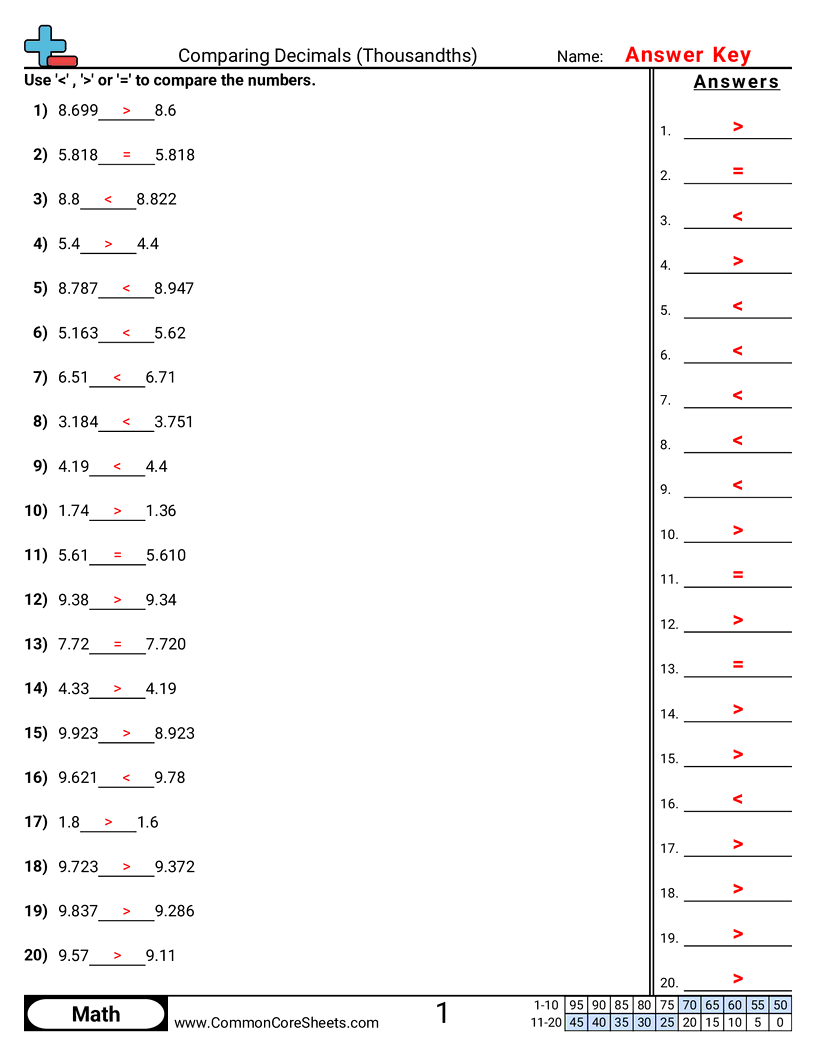
Compare two decimal numbers up to the thousandths place and decide which one is larger or smaller. Use place value to compare decimals by checking digits from left to right (ones, tenths, hundredths, thousandths). Line up decimal points so the place values match before comparing. Choose the correct symbol (<, >, or =) to show the comparison.
4nf6
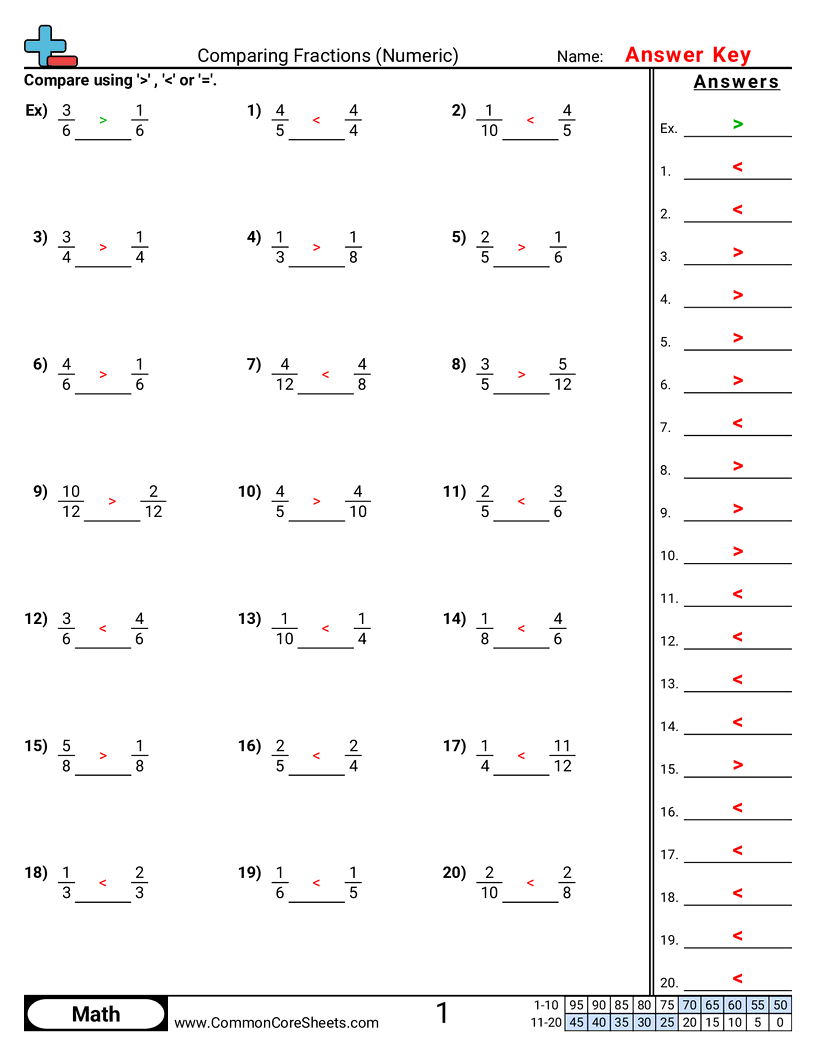
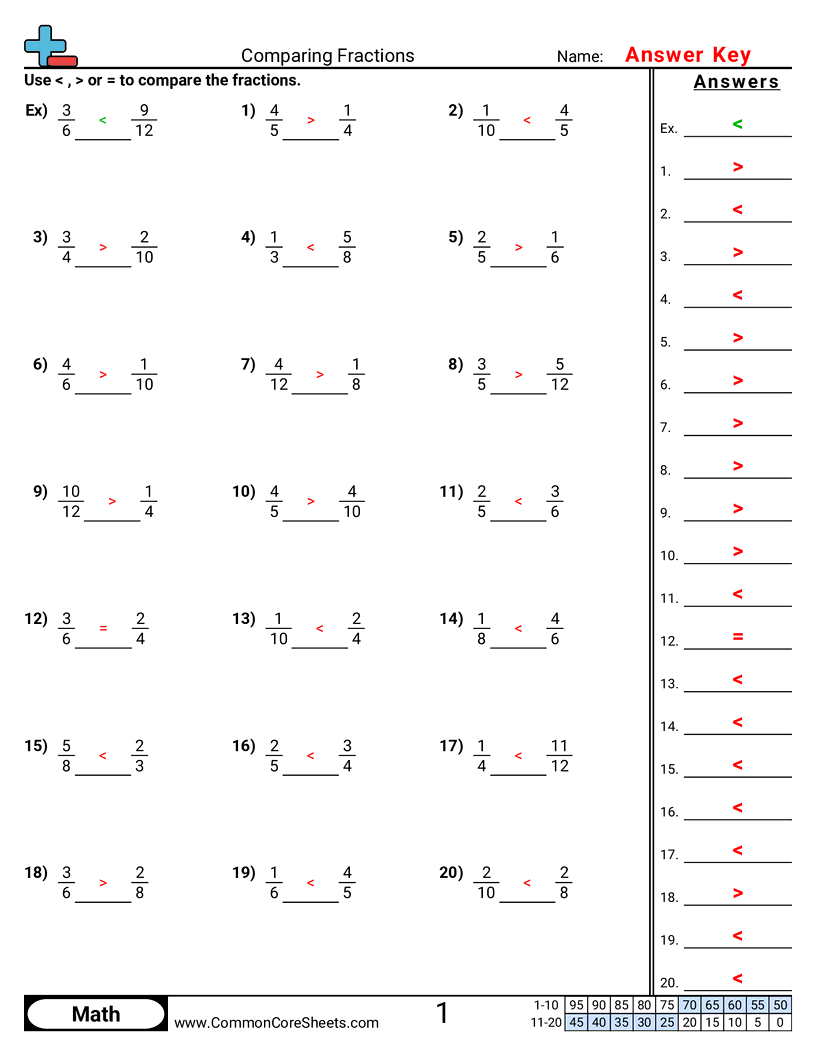
Decide which of two fractions is greater, less, or if they are equal. Compare fractions even when they have different denominators. Use equivalent fractions or common denominators to make comparisons easier.
4nf6
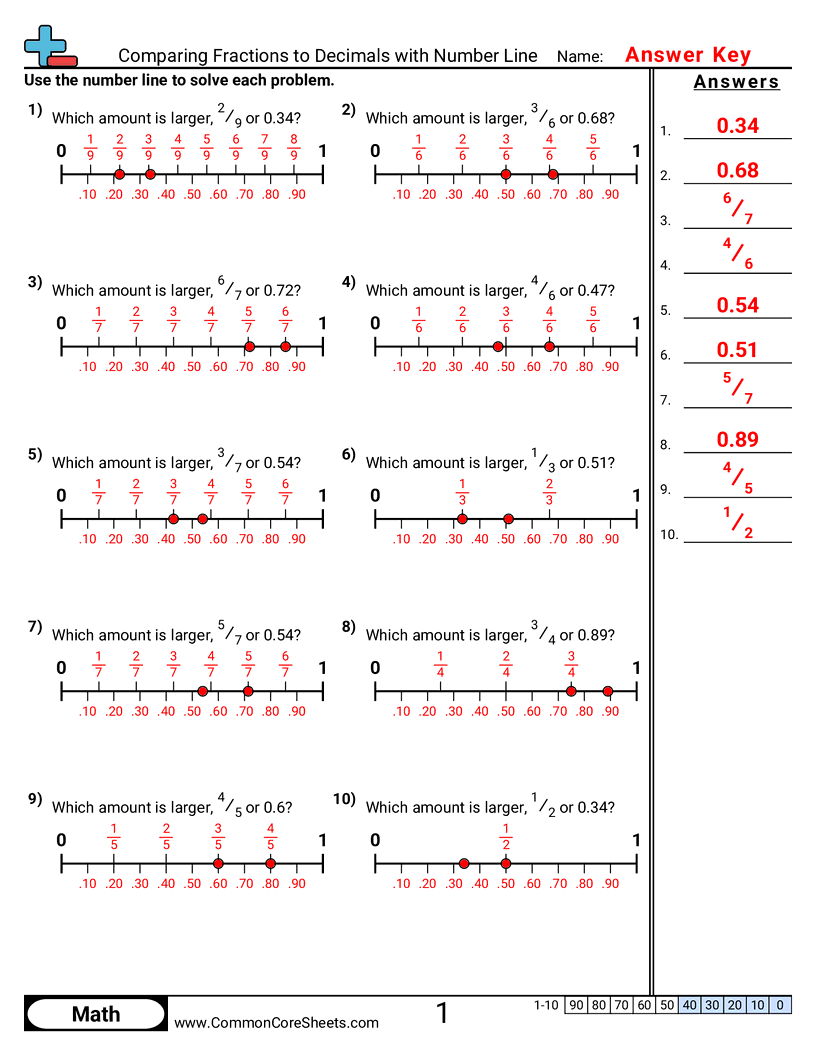
Compare a fraction and a decimal to decide which one is larger. Use a number line to see where each value falls between 0 and 1 (or between whole numbers). Use benchmark values like 0, 0.5, and 1 to judge which number is closer to the right side of the number line.
4nf2
Compare two fractions that have different denominators and decide which one is greater or less. Use equivalent fractions (common denominators) to make unlike fractions easier to compare.
4nf2
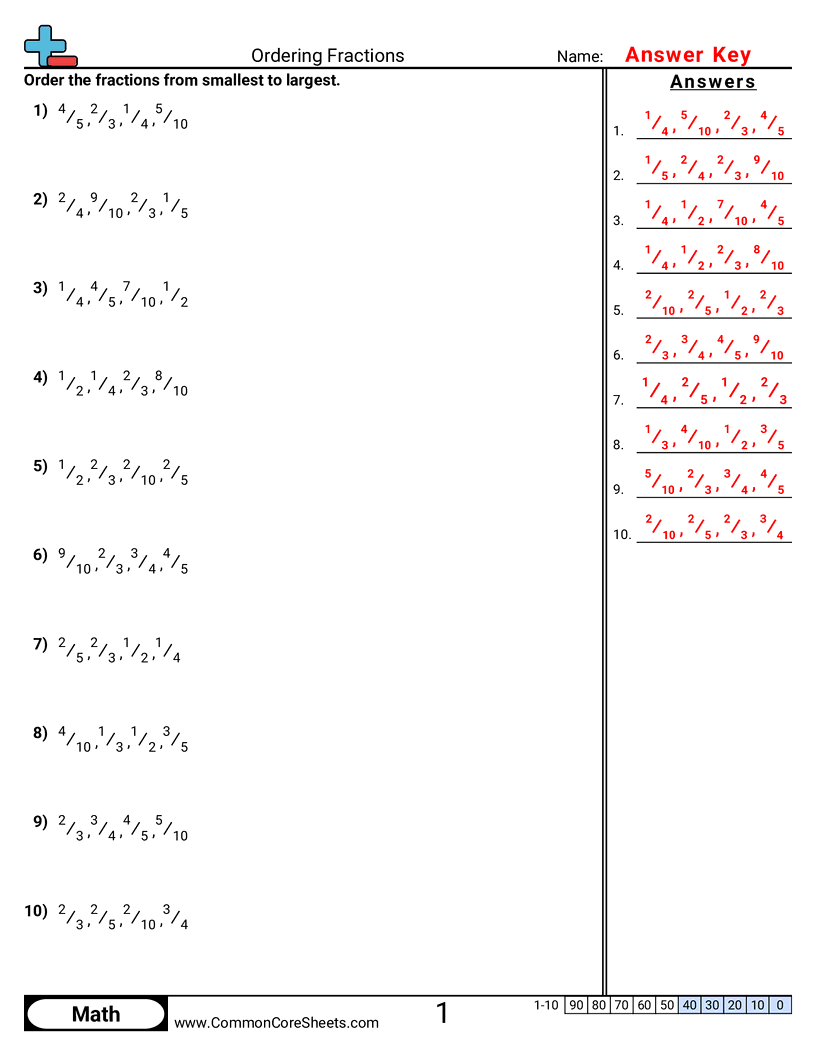
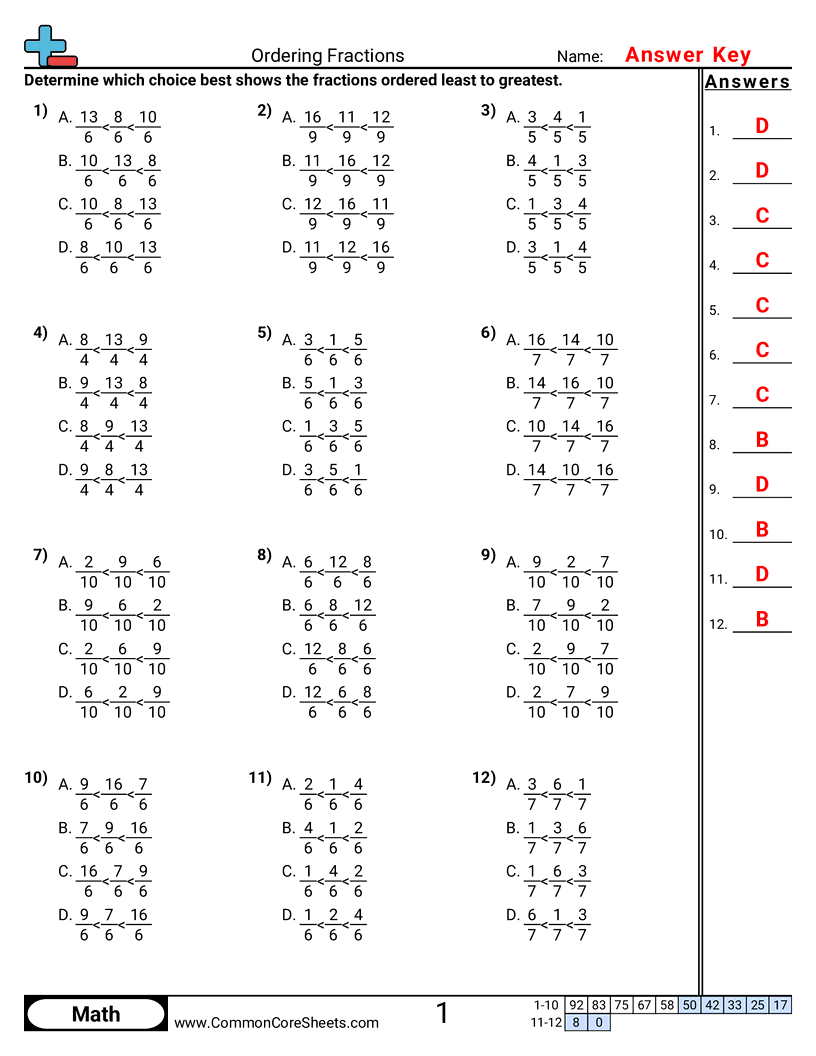
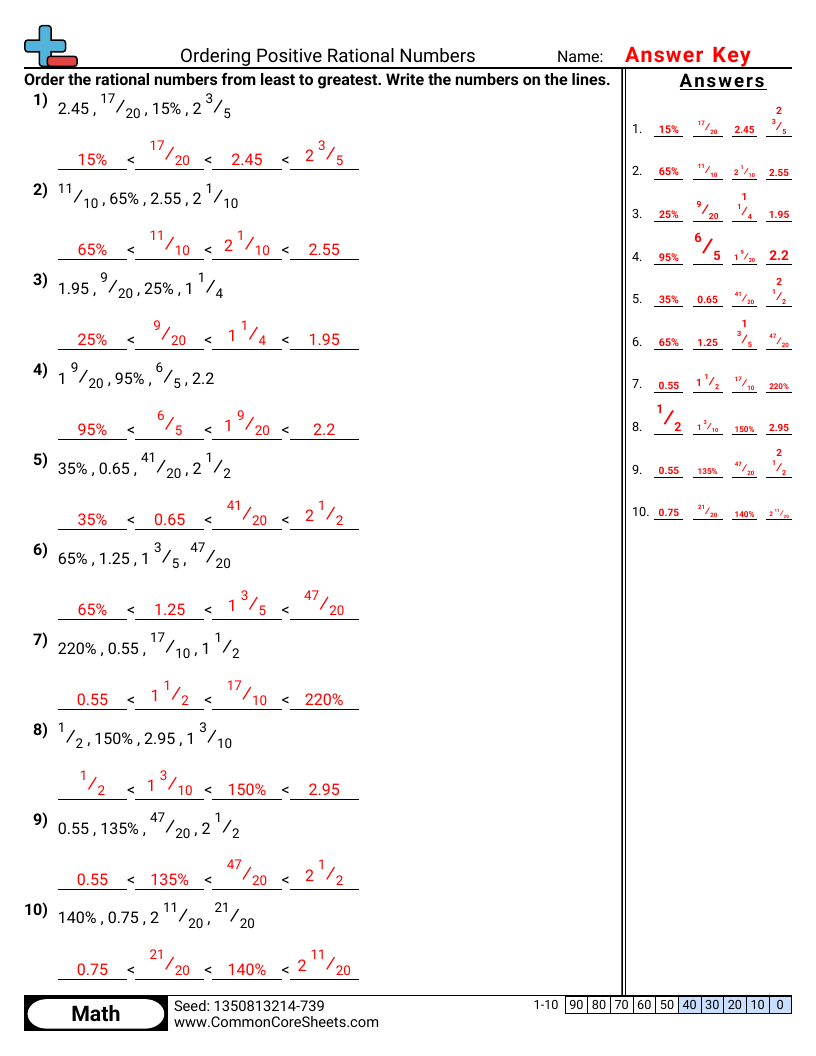
Put fractions in order from least to greatest. Compare fractions that have different denominators like 2, 3, 4, 5, and 10. Use equivalent fractions to make fair comparisons (like changing 1/2 into 5/10). Decide which fraction is bigger or smaller by thinking about the size of the pieces.
3nf3d
Put a set of fractions in order from least to greatest. Compare two fractions to decide which one is larger or smaller. Use benchmark fractions like 0, 1/2, and 1 to judge fraction size.
6ns7a
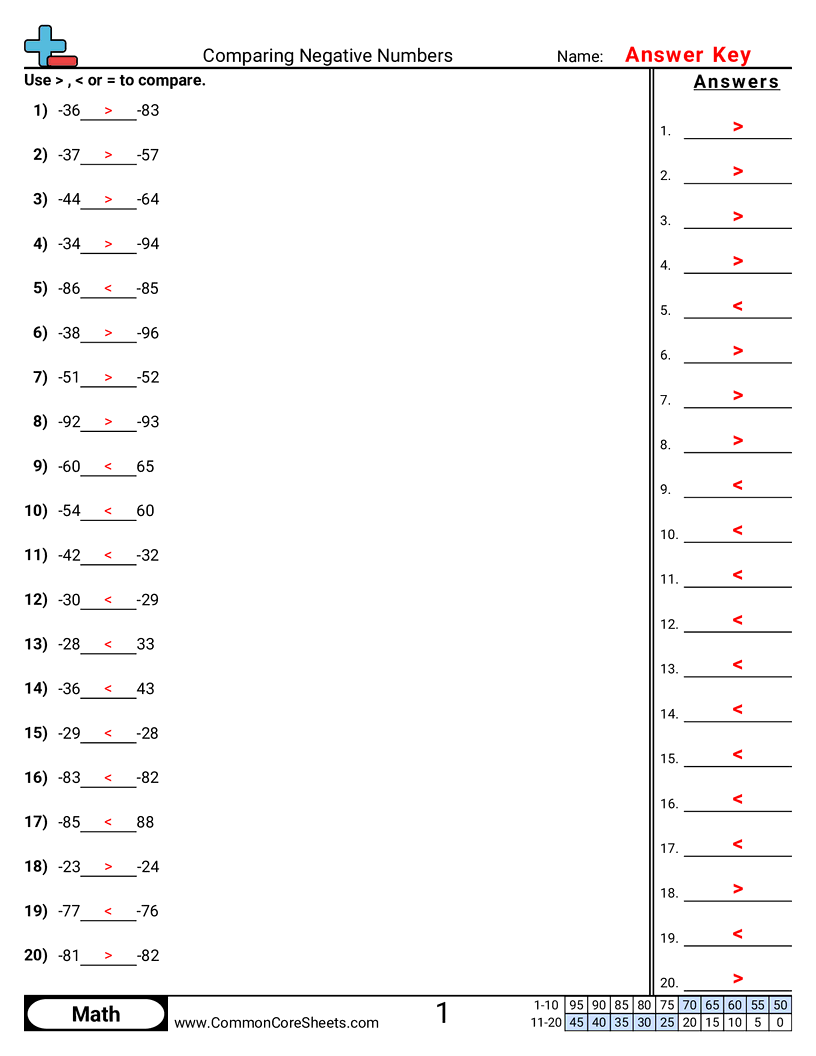
Decide which of two negative numbers is greater or less. Use the idea that numbers closer to zero are greater when both numbers are negative. Write the correct comparison symbol (>, <, or =) between two negative numbers.
6ns7a
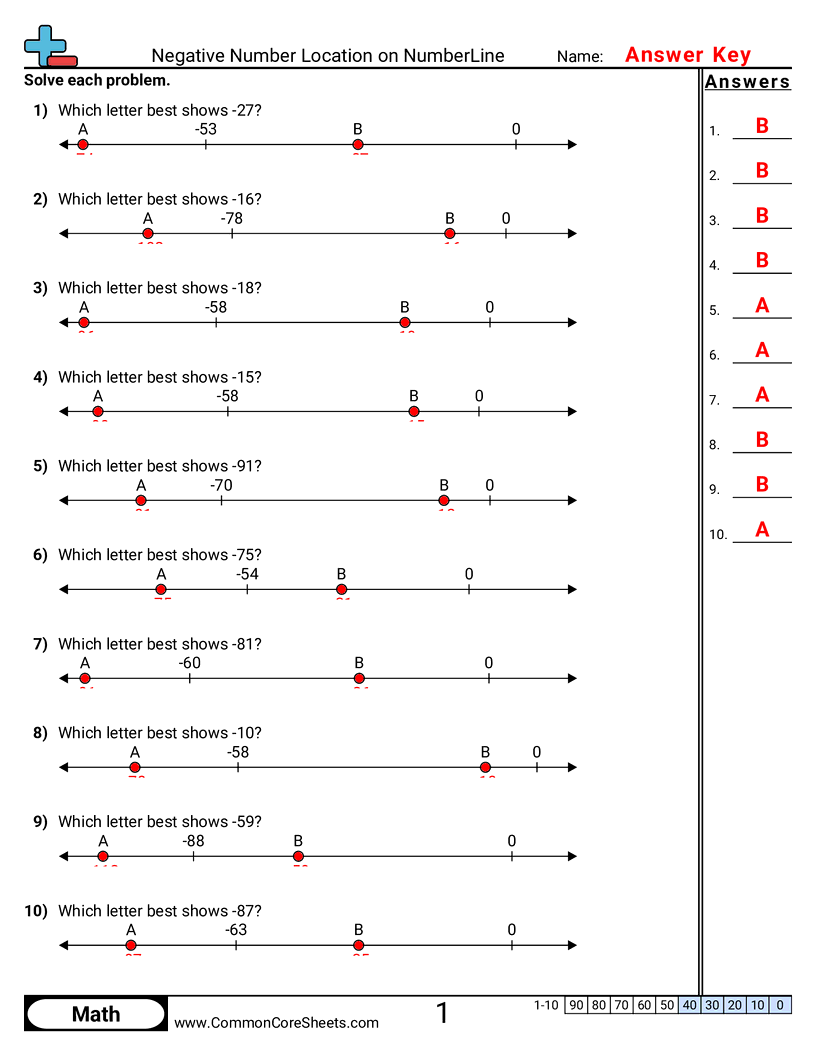
Find where a negative number belongs on a number line. Use 0 as a reference point to tell whether a number is to the left or right of zero.
Playwire Advertisement