CCSS 2.NBT.2 Worksheets
CCSS 2.NBT.2 (Common Core, 2nd Grade): "Count within 1000; skip-count by 5s, 10s, and 100s." The worksheets below practice this standard. Each one is a free printable PDF with an answer key, comes in multiple versions, and can also be assigned digitally - no login or account needed.
More about these worksheets ▾ Show less ▴
Number and Operations in Base Ten
2 Count within 1000; skip-count by 5s, 10s, and 100s.
2nbt2
2nbt2
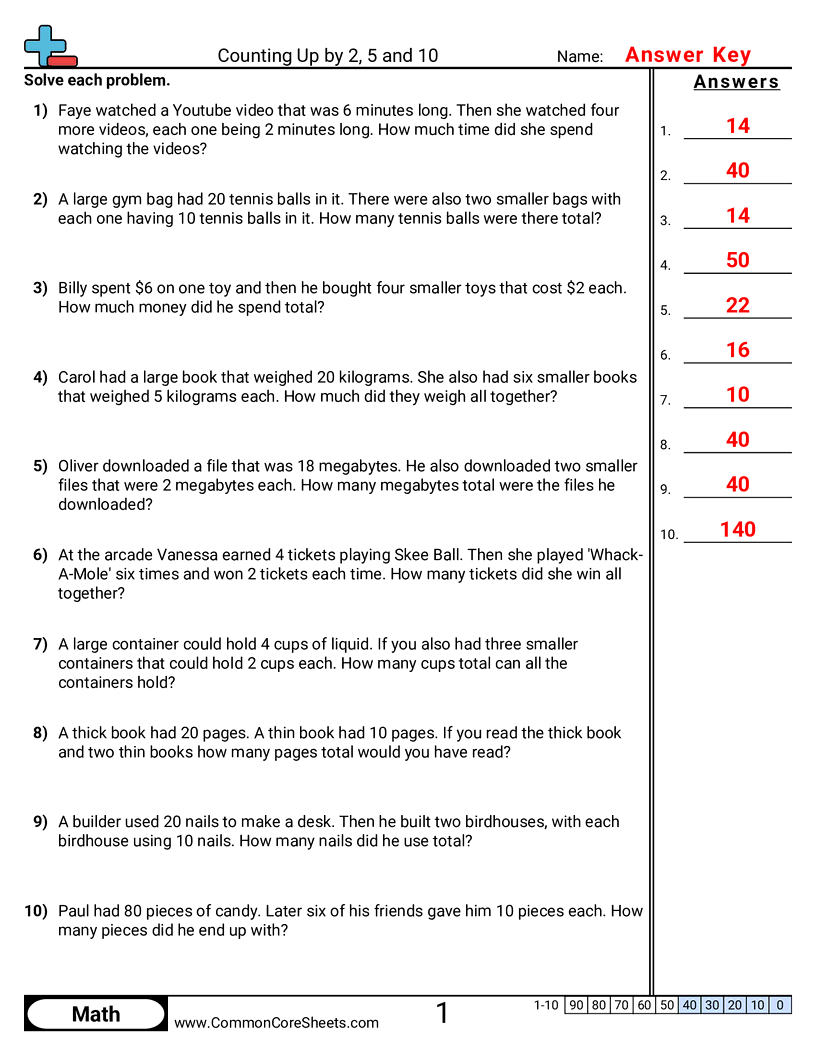
Practice counting forward by 2s, 5s, and 10s starting from different numbers. Find the next numbers in a skip-counting pattern and keep the sequence going. Use repeated addition to understand what it means to add the same amount each time.
2nbt2
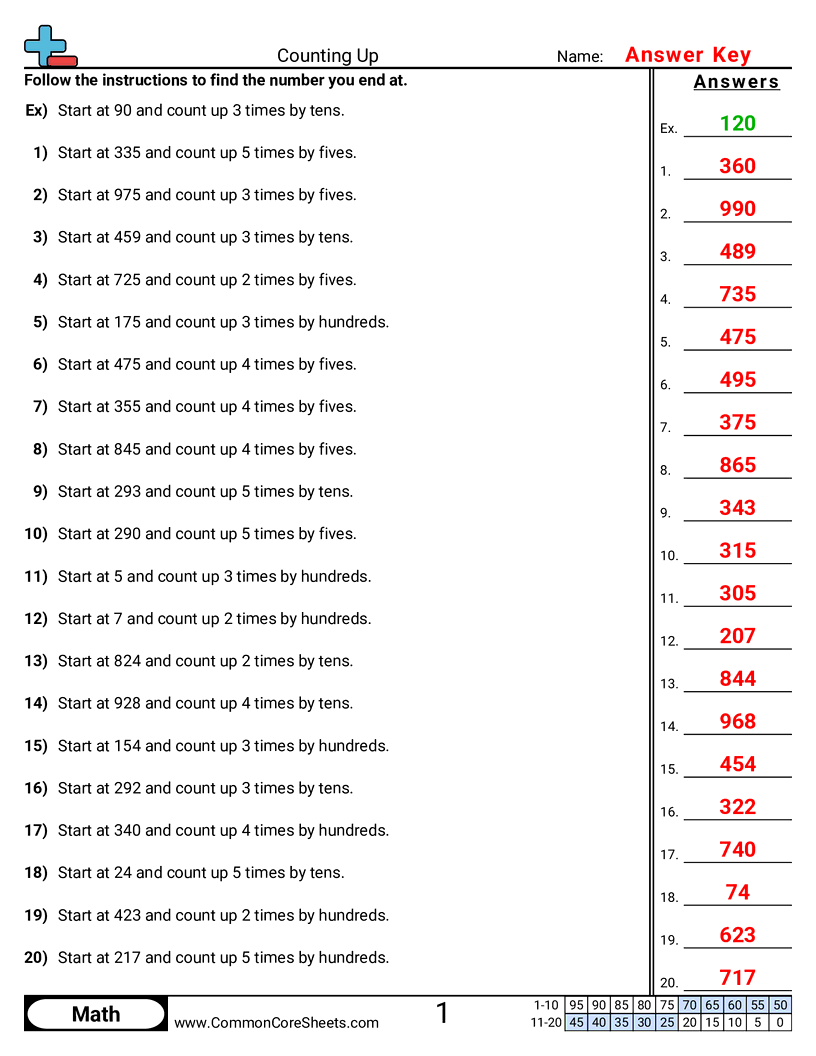
Count forward from a given number to find what comes next. Continue a number sequence by adding the same amount each time. Use patterns in ones, tens, and hundreds to keep counting without starting over.
2nbt2
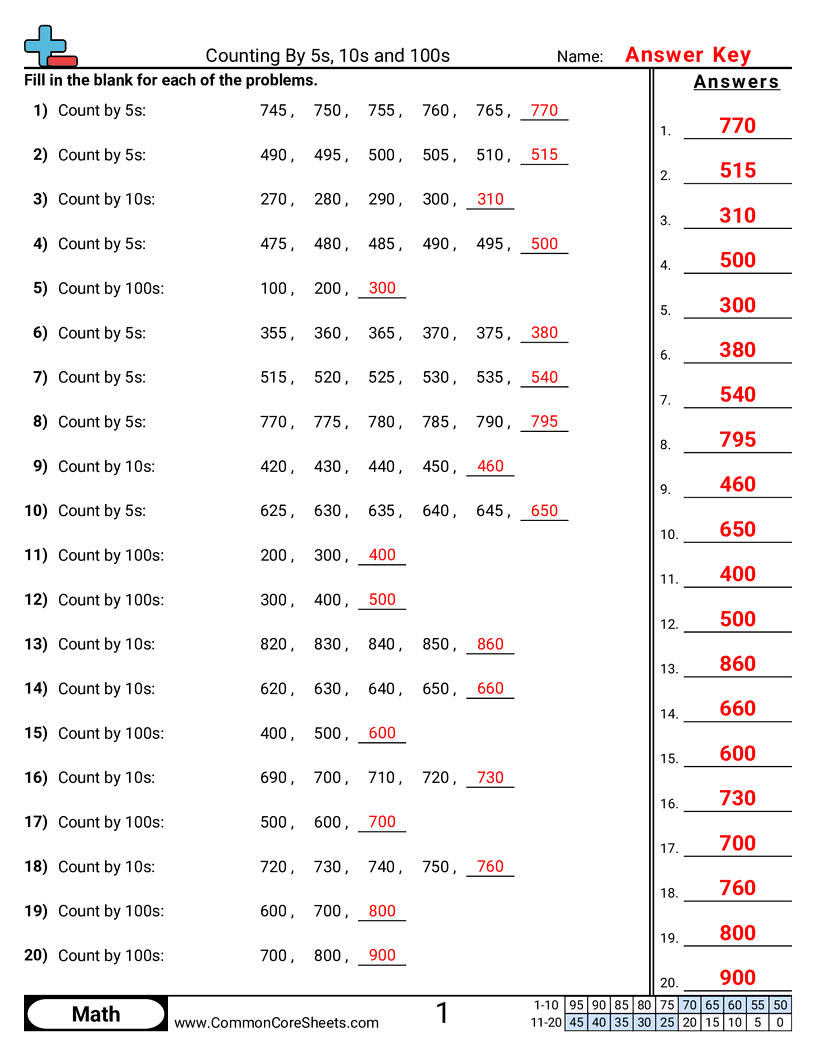
Count forward by 5s, 10s, and 100s to continue a number pattern. Find the missing number in a skip-counting sequence. Use what you know about place value to see how the digits change when you add 5, 10, or 100. Recognize that skip counting lands on multiples of 5, 10, and 100.
2nbt2
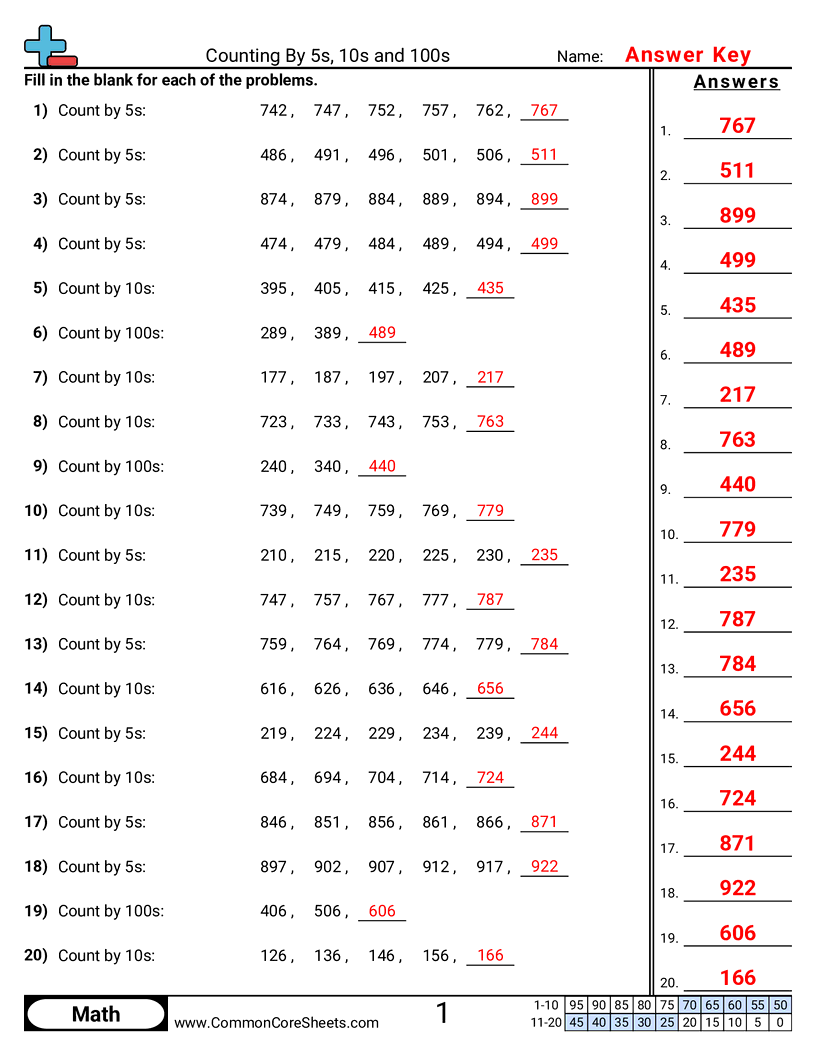
Count forward by 10s and 100s starting from different numbers. Spot the pattern in a number sequence and choose the next number. Use place value to explain why the numbers change the way they do when you add 10 or 100.
2nbt2
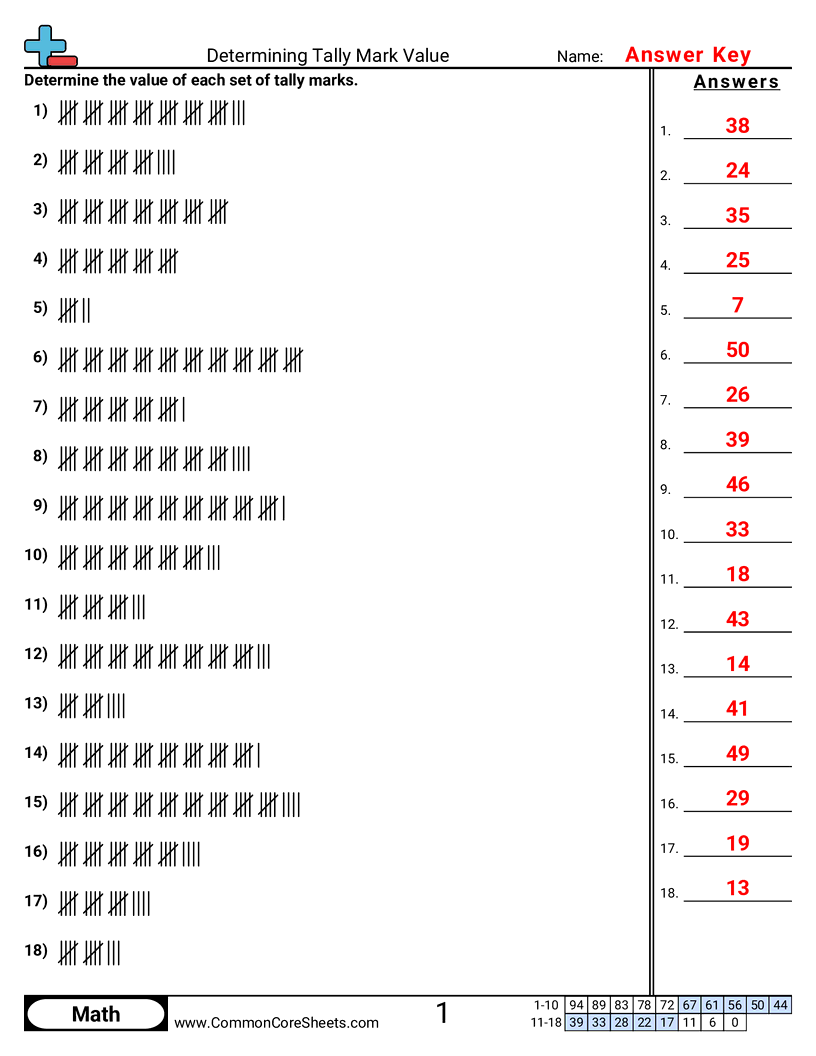
Read tally marks and say what number they show. Count tallies by grouping in fives and adding the extra marks. Keep track of your count when there are several groups of five in one set of tallies.
2nbt2
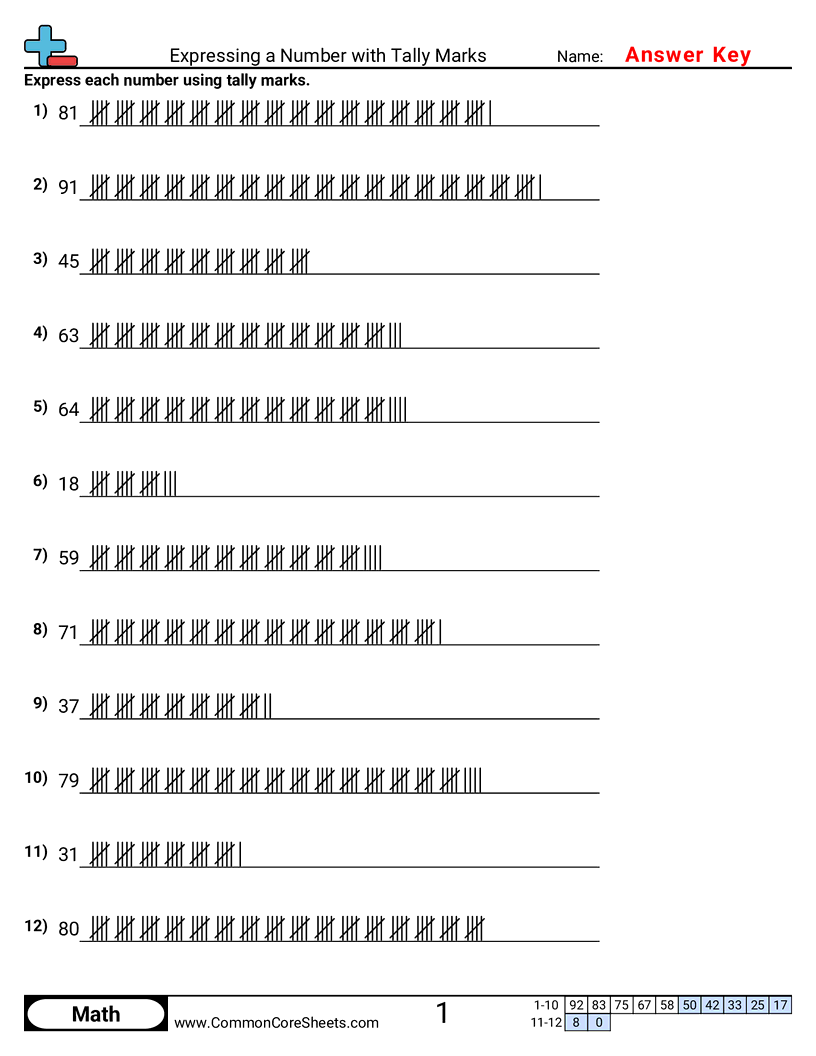
Practice showing a number using tally marks. Learn to group tally marks in fives to make counting easier.
2nbt2
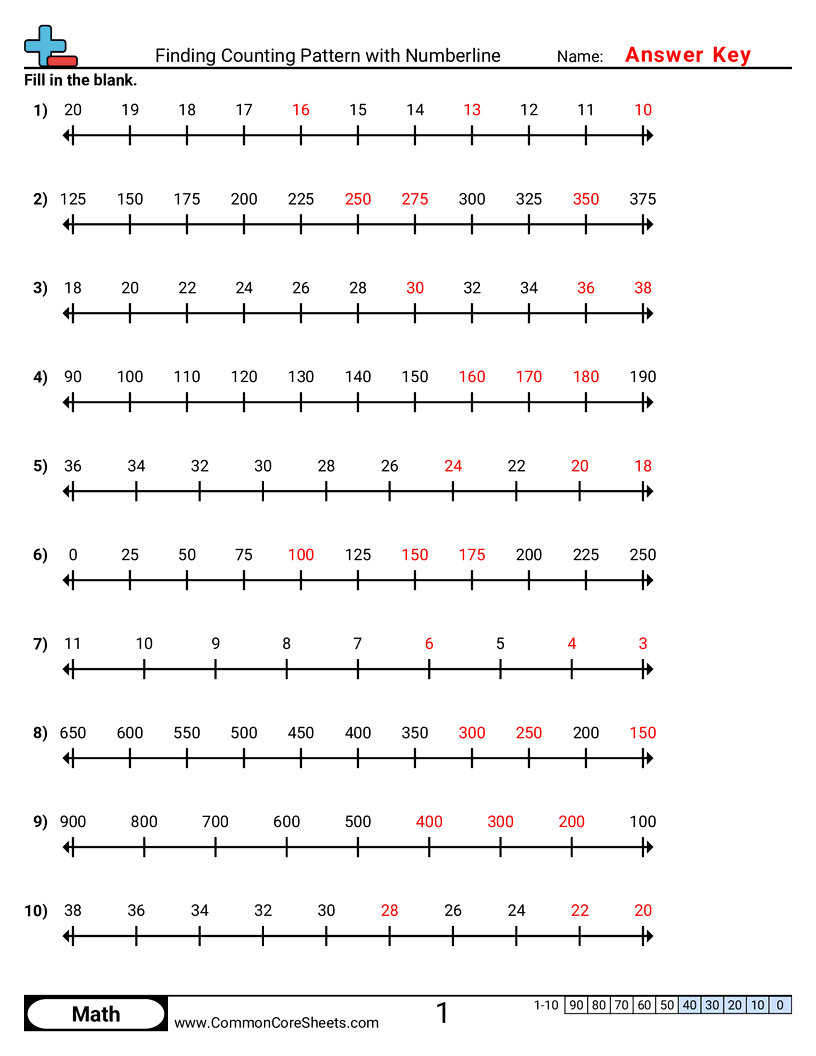
Figure out the counting rule on a number line (like counting by 2s, 5s, or 10s). Use the pattern to find the missing number that comes next or in between. Keep track of equal jumps on a number line to stay on the pattern.
2nbt2
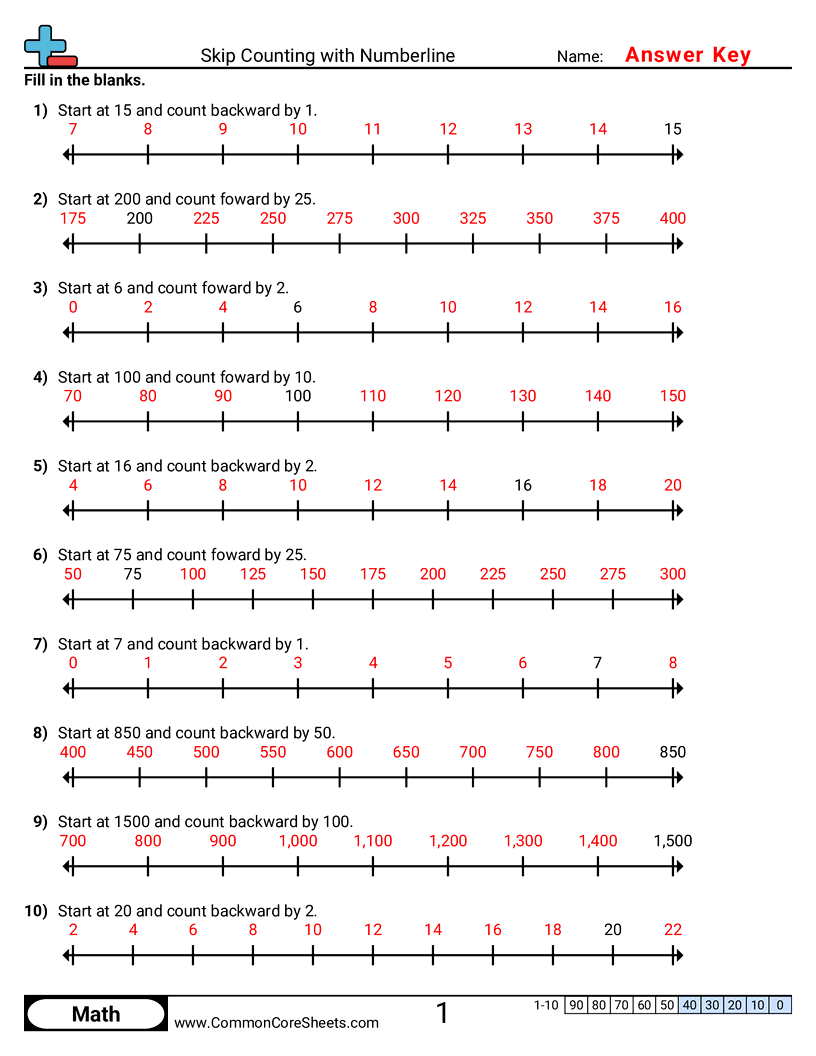
Count forward by equal jumps (like 2s, 5s, 10s, or 100s) to find the next numbers in a pattern. Use a number line to see how skip counting moves you ahead by the same amount each time. Fill in missing numbers in a skip-counting sequence by figuring out the repeating step size. Start at different numbers and keep the skip-counting pattern going correctly.
Playwire Advertisement