Milipedes Worksheet Download
Free reading worksheets on Milipedes. Each worksheet has 20 problems with an answer key and are ideal for teachers and homeschooling. You can download the PDF, create a set of flash cards or set it up for online learning.


Sheet Information >
Available at 2nd grade, 3rd grade, 4th grade, 5th grade and 6th grade reading levels.
Read the passage
Hey kids, let's learn about millipedes, those fascinating little creatures with so many legs! Millipedes come in different sizes and colors, but they usually have a long, slender body with many pairs of legs. These little crawlers can be found all over the world, living under rocks, in the soil, or under the leaves in forests and gardens.
Now, let's talk about what millipedes eat and their life cycle. Millipedes are nature's little helpers, as they eat dead leaves and plant matter, helping to break it down and recycle nutrients back into the soil. Their life cycle is pretty interesting, as they start as tiny eggs, hatch into small versions of themselves, and grow by shedding their skin and adding more body segments and legs as they get older.
Lastly, let's explore millipedes' relationship with humans, other insects, and their defenses. Although millipedes might look a bit scary to some people, they are actually harmless and can even be helpful in gardens by breaking down dead plants. When millipedes feel threatened, they can curl up into a tight spiral or release a smelly, non-toxic fluid to keep predators away.
Aren't millipedes amazing creatures? Remember, they're our little friends who help keep our environment clean and healthy.
Hey there, let's talk about millipedes, fascinating little creatures that you might have seen crawling around in your garden. They have long, segmented bodies with numerous legs, usually two pairs per segment, which makes them look like tiny, wiggly ladders. Millipedes are vegetarians and love to munch on decaying leaves, rotting wood, and even some fruits and vegetables. Did you know that there are over 12,000 species of millipedes found all around the world?
Now, let's explore the life of a millipede, from birth to adulthood. Their life cycle starts with their eggs, which are laid in damp soil, and then hatch into tiny, legless creatures called 'larvae'. As they grow, they shed their skin and gain more legs with each molt, eventually becoming fully grown millipedes. These fascinating creatures can live up to 7 years, depending on their species and environment.
Finally, let's discover how millipedes interact with humans, other insects, and their environment. Millipedes are great neighbors to have in your garden, as they help break down dead plant material and recycle nutrients back into the soil. Their main defense mechanism is curling up into a tight spiral to protect themselves, and some species can even release a smelly and sometimes toxic liquid to deter predators. Although they might look similar to centipedes, millipedes are more peaceful and slower moving, while centipedes are carnivorous and quite fast.
In conclusion, millipedes are truly fascinating creatures with their unique appearance, life cycle, and interactions with the world around them. So the next time you see one of these little critters, take a moment to appreciate all the amazing things they do.
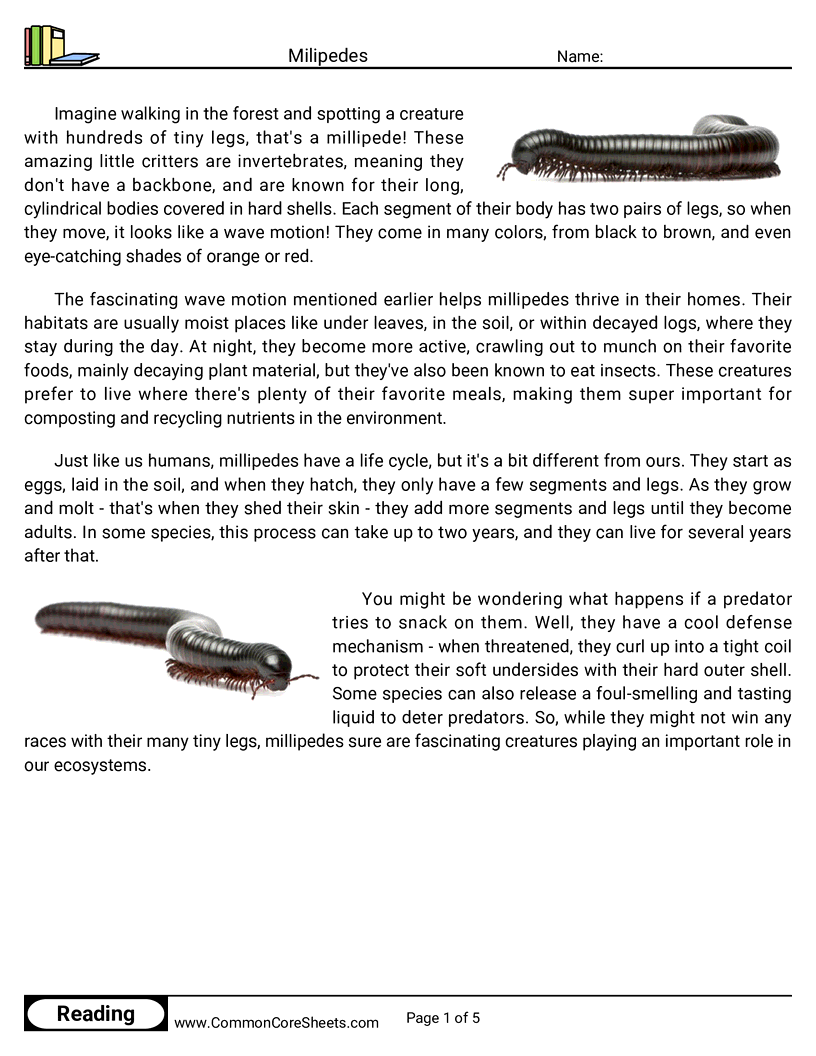
Imagine walking in the forest and spotting a creature with hundreds of tiny legs, that's a millipede! These amazing little critters are invertebrates, meaning they don't have a backbone, and are known for their long, cylindrical bodies covered in hard shells. Each segment of their body has two pairs of legs, so when they move, it looks like a wave motion! They come in many colors, from black to brown, and even eye-catching shades of orange or red.
The fascinating wave motion mentioned earlier helps millipedes thrive in their homes. Their habitats are usually moist places like under leaves, in the soil, or within decayed logs, where they stay during the day. At night, they become more active, crawling out to munch on their favorite foods, mainly decaying plant material, but they've also been known to eat insects. These creatures prefer to live where there's plenty of their favorite meals, making them super important for composting and recycling nutrients in the environment.
Just like us humans, millipedes have a life cycle, but it's a bit different from ours. They start as eggs, laid in the soil, and when they hatch, they only have a few segments and legs. As they grow and molt - that's when they shed their skin - they add more segments and legs until they become adults. In some species, this process can take up to two years, and they can live for several years after that.
You might be wondering what happens if a predator tries to snack on them. Well, they have a cool defense mechanism - when threatened, they curl up into a tight coil to protect their soft undersides with their hard outer shell. Some species can also release a foul-smelling and tasting liquid to deter predators. So, while they might not win any races with their many tiny legs, millipedes sure are fascinating creatures playing an important role in our ecosystems.
Let's explore the fascinating world of millipedes, creatures with many legs and a lot to learn about! These small, long-bodied arthropods are known for their many legs, which can range from 30 to 400 depending on the species. While they may look a bit creepy to some, millipedes are actually quite harmless and interesting. Read on to discover more about their unique features, where they live, and how they interact with humans and other insects.
First, let's take a look at the diet and habitat of these intriguing creatures. Millipedes are decomposers, which means they eat dead plants and animals, helping to break them down and recycle nutrients back into the soil. They can be found in various environments, including forests, grasslands, and gardens, where they prefer to live in damp, dark places like under rocks or in rotting logs. In fact, they are considered beneficial to the environment because they help to maintain healthy soil.
Now, let's examine the life cycle of a millipede. Millipedes lay their eggs in the soil, and when they hatch, the tiny, legless larvae begin to grow and develop. As they grow, they molt (shed their exoskeleton) several times, gaining more legs with each molt. Eventually, they reach adulthood and can live for several years, continuing to grow and molt throughout their lives.
How do millipedes interact with humans and other insects? Millipedes are generally harmless to humans and are not known to bite or sting. However, some species can release a defensive chemical that can cause skin irritation or be toxic to small animals if ingested. As for other insects, millipedes may share their habitat with creatures like centipedes, but they have different diets and habits, so they usually don't compete for resources.
Lastly, let's uncover some cool facts and differences between millipedes and other species. One interesting fact is that millipedes are actually more closely related to crustaceans, like crabs and lobsters, than to insects! In comparison to centipedes, millipedes have two pairs of legs per body segment while centipedes have only one pair. Furthermore, millipedes move slowly and deliberately, while centipedes are fast and agile predators.
In conclusion, millipedes are fascinating, harmless creatures that play an important role in our ecosystems. By learning more about their diet, habitat, life cycle, and interactions with humans and other species, we can appreciate their unique beauty and importance in nature.
Meet the fascinating world of millipedes, some of the coolest crawlers on the planet! These long, slender creatures are often mistaken for worms, but they actually belong to the arthropod family. Millipedes can be found in various colors, like brown, black, and even red, and they have many tiny legs that help them move around. Their name means "thousand feet," but most millipedes actually have between 30 and 400 legs. Let's dive deeper into the world of millipedes and learn what makes them so unique!
First, let's talk about the diet of these interesting creatures. Millipedes are decomposers, which means they help break down decaying plant material like leaves, wood, and even some fruits. They play a vital role in the ecosystem by recycling nutrients and keeping the soil healthy. Sometimes, they also munch on dead insects, but their primary food source is decaying plants. So, if you see a millipede in your garden, remember it's doing important work!
Now, let's explore where millipedes call home. These creatures prefer damp, dark environments, so you can often find them under rocks, logs, or leaf litter. They live in various habitats, including forests, grasslands, and even your backyard! Some millipedes dig burrows in the soil to lay their eggs and protect them from predators. So, if you're out exploring nature, keep an eye out for these cool crawlers!
The life cycle of a millipede is another intriguing aspect of their existence. Millipedes go through a process called metamorphosis, which means they change as they grow. They start as eggs, which hatch into tiny, legless larvae. As they grow, they molt (shed their skin) and develop more body segments and legs. Eventually, they become fully grown adults, living up to several years depending on the species.
Finally, let's discuss millipedes' relationship with humans and other insects. While they might seem a bit creepy, millipedes are generally harmless to humans and can even be beneficial in gardens. They do have a few defense mechanisms, like curling into a tight spiral or releasing a foul-smelling liquid, but they rarely bite. Millipedes are often confused with centipedes, but centipedes have fewer legs, are faster, and can be venomous to their prey. So, it's important to know the difference between these two amazing arthropods.
About this worksheet
Students read a short informational passage about millipedes and answer questions about the key details and facts presented in the text.
This worksheet is designed to enhance children's reading skills whilst exploring fascinating facts about millipedes. It offers 20 multiple-choice questions covering topics like millipedes' physical characteristics, habitats, feeding habits, defense mechanisms, and life cycle. Suitable for distance learning, it can also be customized according to the educator's needs or converted into flashcards for interactive learning activities.
Student objectives
- Read a nonfiction passage and understand what it says about millipedes
- Find and recall specific facts from the text to answer questions
- Learn new vocabulary about insects and bugs
- Practice using details from the reading to support answers
Everyday practice
- Read a fact sheet at a zoo or nature center about an animal you spot
- Look up information about a bug you find in the backyard
- Explain to a friend what you learned about an animal from a book
- Answer questions about something you just read in a science article