Earwigs Worksheet Download
Free reading worksheets on Earwigs. Each worksheet has 20 problems with an answer key and are ideal for teachers and homeschooling. You can download the PDF, create a set of flash cards or set it up for online learning.


Sheet Information >
Available at 2nd grade, 3rd grade, 4th grade, 5th grade and 6th grade reading levels.
Read the passage
Earwigs are fascinating little insects that can be found all around the world. They have a pair of pincers at the end of their body, which they use for defense and catching prey. These insects come in various colors and sizes, but most of them are brown and about 1-2 inches long.
These creepy crawlies have an interesting life cycle and eating habits. Earwigs start as eggs, then hatch into nymphs, and eventually grow into adults. They eat plants, fruits, and other insects, making them both helpful and harmful to humans.
Earwigs have some unique features that set them apart from other insects. Their pincers can be used to protect themselves from predators or to catch their dinner. Did you know that some earwigs can even fly? Now that's an exciting fact about these tiny creatures!
Let's learn about earwigs, fascinating little insects with pincers on their back! Earwigs are often found in gardens, under rocks, and in other damp, dark places. These small creatures have a pair of forceps-like pincers on their abdomen, which they use for hunting and self-defense. They come in various sizes and colors, but most earwigs are brownish and around 1 to 2 centimeters long.
Earwigs have a unique life cycle and relationship with humans and other insects. They usually eat plants, decaying leaves, and sometimes other insects. Earwigs don't harm humans, but they can be a nuisance when they get into homes or eat garden plants. They are also known to help keep other insects in check, making them helpful in gardens.
Finally, let's explore some interesting facts and differences between earwigs and other insect species. One cool defense mechanism earwigs have is their ability to produce a foul-smelling liquid to scare away predators. Unlike many insects, earwigs take care of their eggs and young, providing them with food and protection. Now you know more about these intriguing insects, and how they play a part in our world!
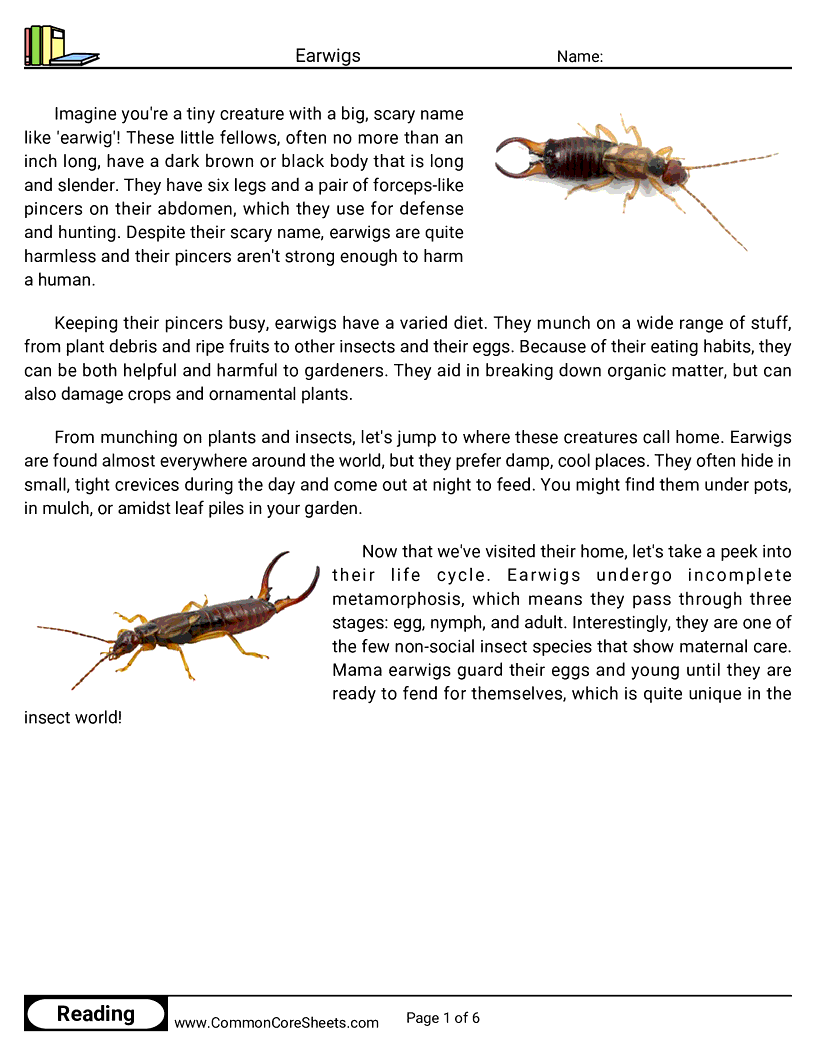
Imagine you're a tiny creature with a big, scary name like 'earwig'! These little fellows, often no more than an inch long, have a dark brown or black body that is long and slender. They have six legs and a pair of forceps-like pincers on their abdomen, which they use for defense and hunting. Despite their scary name, earwigs are quite harmless and their pincers aren't strong enough to harm a human.
Keeping their pincers busy, earwigs have a varied diet. They munch on a wide range of stuff, from plant debris and ripe fruits to other insects and their eggs. Because of their eating habits, they can be both helpful and harmful to gardeners. They aid in breaking down organic matter, but can also damage crops and ornamental plants.
From munching on plants and insects, let's jump to where these creatures call home. Earwigs are found almost everywhere around the world, but they prefer damp, cool places. They often hide in small, tight crevices during the day and come out at night to feed. You might find them under pots, in mulch, or amidst leaf piles in your garden.
Now that we've visited their home, let's take a peek into their life cycle. Earwigs undergo incomplete metamorphosis, which means they pass through three stages: egg, nymph, and adult. Interestingly, they are one of the few non-social insect species that show maternal care. Mama earwigs guard their eggs and young until they are ready to fend for themselves, which is quite unique in the insect world!
Earwigs are fascinating little insects that you might find in your backyard. They have long, slender bodies with dark brown or black colors and can measure up to 25 millimeters in length. These insects are easily recognizable by their unique, pincer-like appendages at the end of their abdomen, called cerci. Despite their slightly scary appearance, earwigs are generally harmless to humans.
Earwigs can be found in a variety of habitats, including gardens, forests, and fields. They prefer dark, damp places and often hide under rocks, logs, or leaf litter during the day. At night, earwigs become more active and search for food. When temperatures drop, they might even sneak into your house to find a warm place to stay.
These insects are known for their diverse diet, which includes both plants and other insects. Earwigs eat decaying leaves, fungi, fruits, and even small insects like aphids. Their varied diet makes them both helpful and harmful to gardens, as they can help control pests but also damage plants. However, their positive impact usually outweighs any potential harm.
The life cycle of an earwig consists of four main stages: egg, nymph, sub-adult, and adult. Female earwigs lay their eggs in a small nest and guard them until they hatch. Once hatched, the nymphs go through several molts, shedding their exoskeleton as they grow. It usually takes a few weeks for nymphs to develop into fully-grown adults.
Earwigs have several interesting adaptations that help them defend themselves and survive. Their pincers, or cerci, are used for both offense and defense, helping them catch prey and fend off predators. Some earwig species even have wings and can fly, although they prefer to walk or run. Additionally, they are known for their ability to emit a foul-smelling substance to deter predators.
In conclusion, earwigs are intriguing insects with unique features and behaviors that make them an important part of our ecosystem.
Earwigs are fascinating little insects that you may have seen in your garden or under rocks. They are easily recognizable by their long, pincer-like appendages at the end of their abdomen called cerci. These unique insects can range in size from 5 to 50 millimeters and are usually brown or black in color. There are over 2,000 species of earwigs, each with different characteristics and habitats. In this article, we will explore the world of earwigs and learn some interesting facts about them.
Earwigs are nocturnal creatures, which means they are active during the night and prefer to hide during the day. They can be found in a variety of environments, such as gardens, forests, and even inside homes. Earwigs are attracted to damp and dark places, so they often make their homes under rocks, logs, and piles of leaves. Some species of earwigs are known to live in trees or burrow into the ground. These insects are quite adaptable and can survive in different climates and conditions.
The diet of an earwig mainly consists of plant material and other insects. They are omnivorous, which means they eat both plants and animals, including aphids, spiders, and insect eggs. Earwigs also feed on decaying organic matter, such as leaves and rotting fruits. Although they can be beneficial to gardens by eating pests, they can also cause damage to plants and crops by feeding on their leaves and flowers. It is important to remember that earwigs are a natural part of our ecosystem and play a significant role in controlling pest populations.
The life cycle of an earwig is quite fascinating and consists of three main stages: egg, nymph, and adult. Female earwigs lay their eggs in small burrows in the ground and protect them until they hatch. Once hatched, the young earwigs, called nymphs, look like smaller versions of the adults and go through several molts as they grow. During the molting process, the earwigs shed their exoskeleton and grow a new, larger one. Earwigs typically live for about one year, but some species can live up to two years.
Earwigs have several interesting features that make them unique among insects. Their pincer-like cerci are used for defense against predators and for capturing prey. Although they may look a bit scary, earwigs are not harmful to humans and rarely use their cerci against us. Another interesting fact is that some species of earwigs have wings and are capable of flying, although they rarely do so. Now that you know more about these captivating creatures, you might find yourself looking at earwigs in a whole new light.
About this worksheet
Students read a short informational passage about earwigs and answer comprehension questions about the insect's features and behavior.
This worksheet is designed to enhance children's reading skills via 20 intriguing questions based on Earwigs. It outlines key concepts such as their color, size, diet, habitat, maternal care, and unique life cycle. Furthermore, this versatile tool can be customized, transformed into flashcards or incorporated in distance learning for an engaging educational experience.
Student objectives
- Read a nonfiction passage about earwigs and understand the main idea
- Find and recall facts stated directly in the text
- Learn new vocabulary words related to insects
- Answer questions using details from what you read
Everyday practice
- Reading a fact sheet about a bug you found outside to learn what it is
- Understanding an animal description at a zoo or nature center
- Looking up whether an insect you saw in the garden is harmful
- Sharing interesting facts about bugs with family or friends