Comparing Results with the Known Probability Worksheet Download
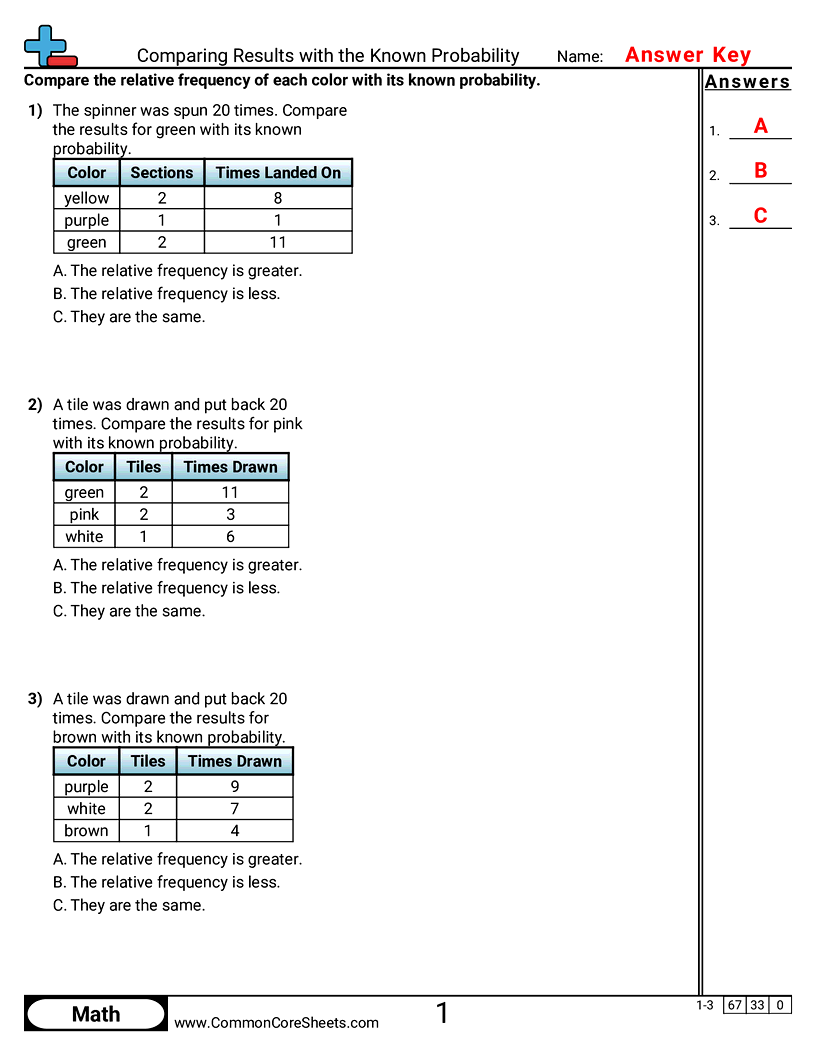
Free 6th Grade math worksheets on Comparing Results with the Known Probability. Each worksheet has 5 problems with an answer key and are ideal for teachers and homeschooling. You can download the PDF, create a set of flash cards or set it up for online learning.
Select a Different Activity
>


Sheet Information >
About this worksheet
Each worksheet has 6 problems deciding whether the relative frequency of a color is greater than, less than, or the same as its known probability.
This standard had no worksheets at all, and the two nearest ones each do half of it and stop: one predicts how many times an outcome should occur, the other works out an experimental probability from recorded results. Neither puts the two numbers next to each other, which is what the standard asks for. Here the table carries both - the sections column is where the known probability comes from and the results column is where the relative frequency comes from - so the comparison is drawn rather than described. Twenty trials with a section count that divides it keeps the expected number whole, so the comparison is between two counts rather than two fractions with unlike denominators. Sheets can be customized, turned into flash cards, or assigned for online learning.
Student objectives
- Work out how many times an outcome should happen.
- Read how many times it actually happened.
- Say whether the results came out above or below the known probability.
Everyday practice
- Flip a coin twenty times and count the heads.
- Ask whether results have to match a probability exactly.
- Compare what happened with what was expected.