converting forms Balancing Equations Worksheets
These Converting Forms Balancing Equations Worksheets help students practice transforming and solving equations while maintaining balance. Students work with scales, fill-in-the-blank problems, and variable calculations to master the fundamental concept that both sides of an equation must remain equal.
About these worksheets
These worksheets use visual balance-scale models to introduce the concept of equality. Students determine what value keeps a scale balanced using addition and subtraction reasoning, building an intuitive understanding of equations before working with formal algebraic notation. These activities help younger students see the equals sign as meaning "the same amount on both sides."
About these worksheets
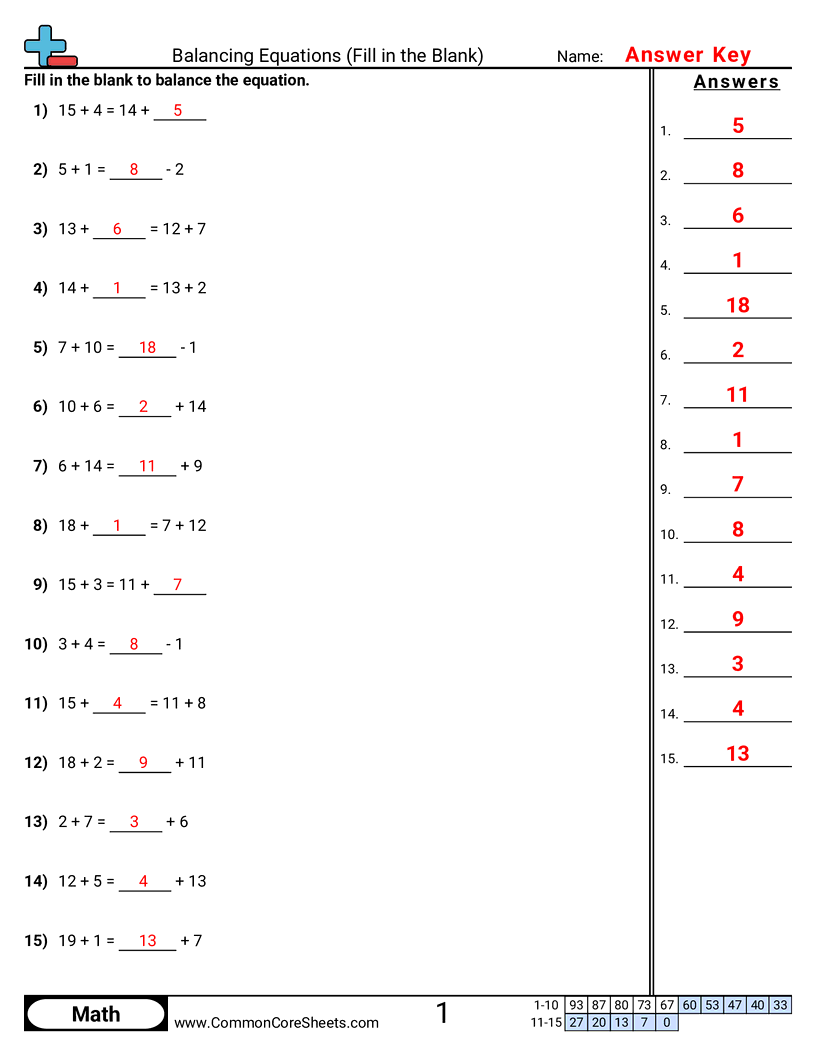
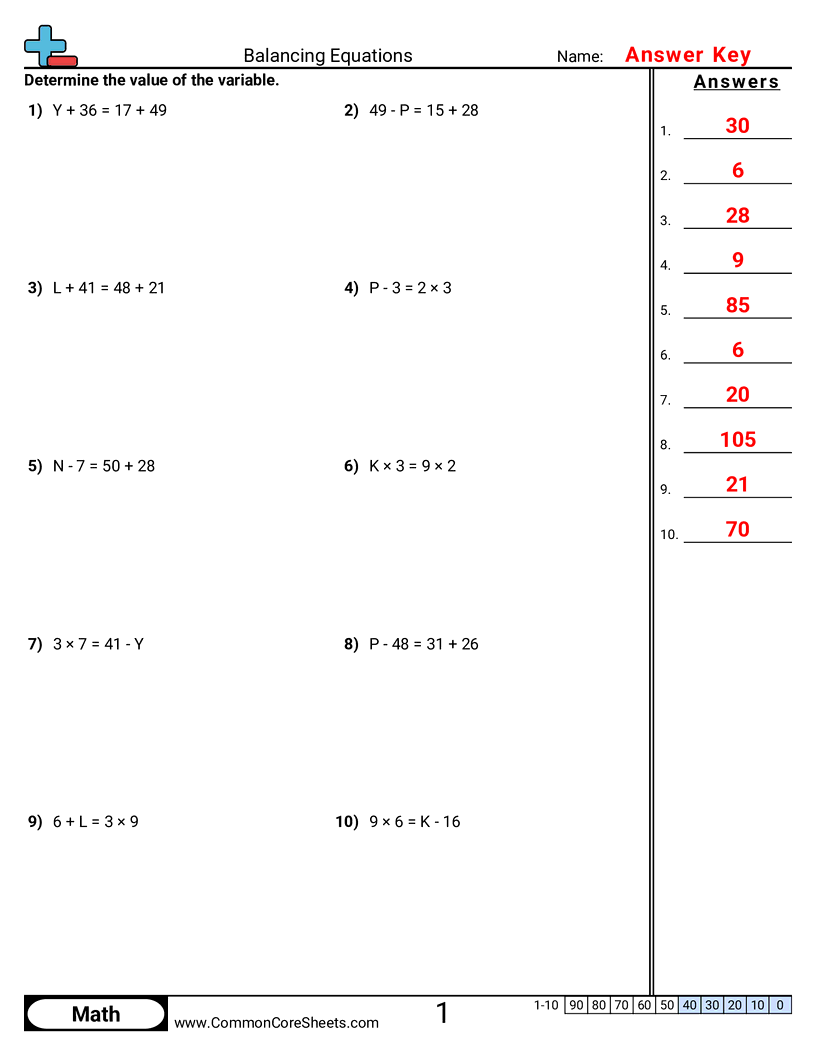
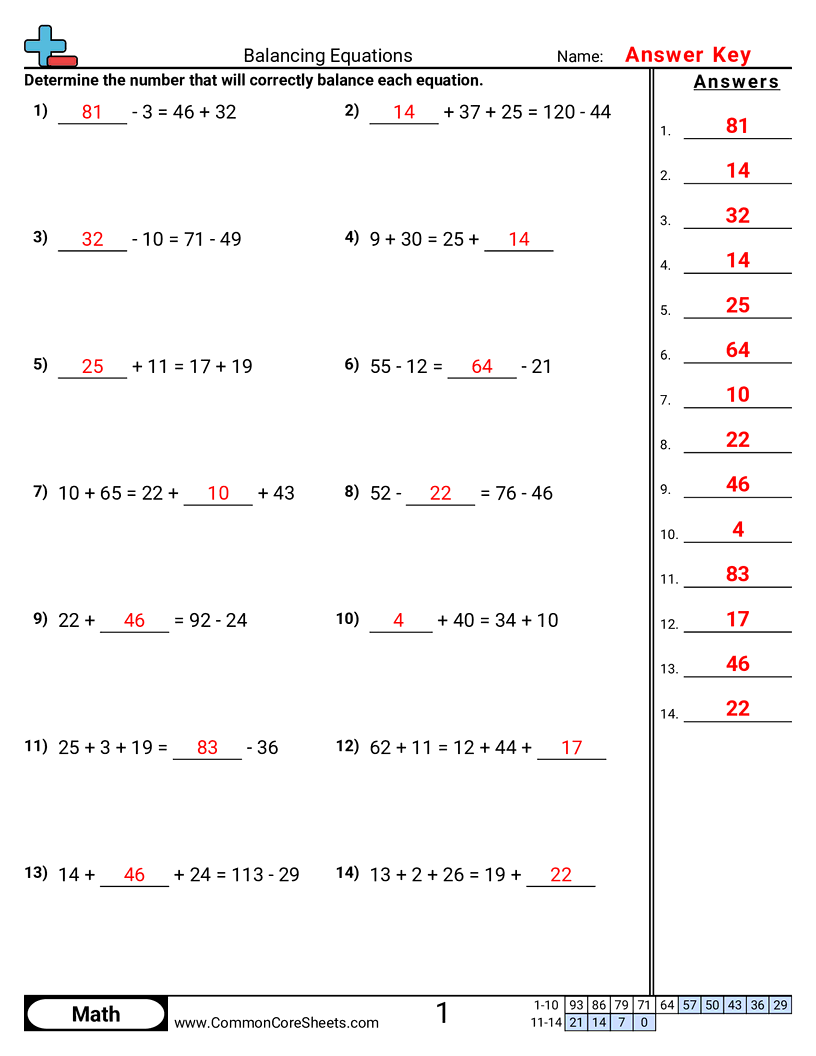
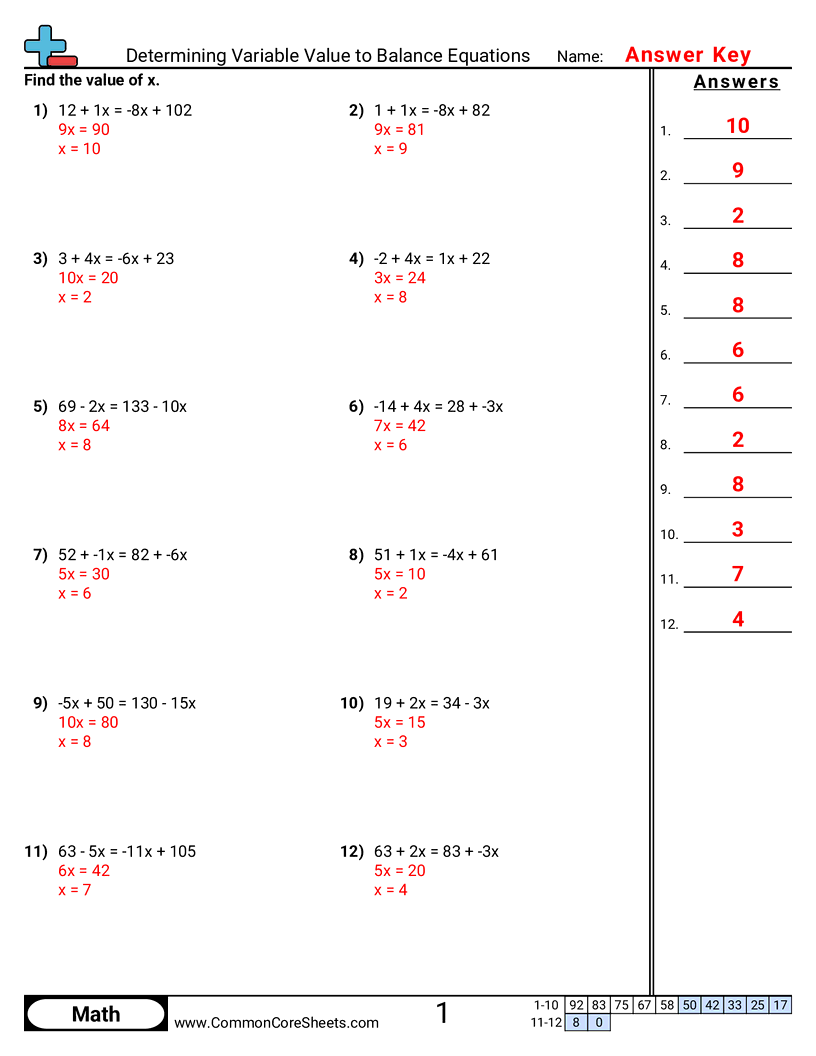
Students practice solving equations by finding the missing number that makes an addition, subtraction, multiplication, or division equation true. Worksheets progress from simple fill-in-the-blank equations to determining variable values that balance both sides. These resources build early algebraic thinking skills and reinforce the meaning of the equals sign.
Addition & Subtraction (Fill in the Blank)
- Find the missing number that makes an addition or subtraction equation true.
- Use what you know about addition and subtraction to figure out an unknown part of a number sentence.
- Check that both sides of the equation are equal after you fill in the blank.
Numeric Mixed Style
- Solve for the missing number that makes an addition or subtraction equation true.
- Use the equals sign correctly by keeping both sides of an equation balanced.
- Add and subtract whole numbers to figure out an unknown value.
- Work through equations written in different mixed styles (like the blank on either side of the equals sign).