Reading Angles Worksheets
This comprehensive collection of reading angles worksheets helps students in grades 4-7 master angle measurement and classification skills. Students practice using protractors to measure and create angles, identifying angle types (acute, obtuse, right, straight, reflex), and solving problems with complementary and supplementary angles.
More about these worksheets ▾ Show less ▴
×
About these worksheets
Students develop angle measurement and classification skills through a variety of hands-on activities. Worksheets cover using protractors to measure and create angles, identifying acute, obtuse, right, and reflex angles, finding missing angles in shapes and straight lines, and working with complementary and supplementary angle pairs. Topics also include estimating angles, finding angles in circles, and solving for variables in angle equations. These resources span fourth through seventh grade standards.
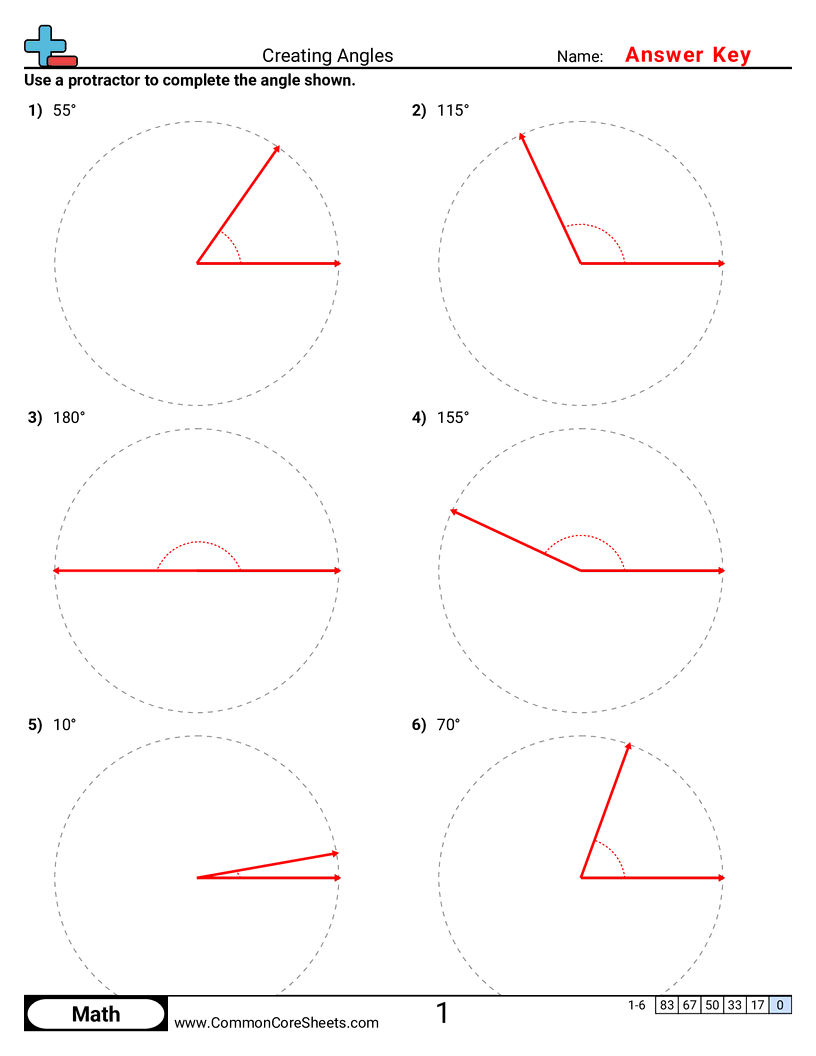
Each worksheet has 6 problems using a protractor to create an angle.
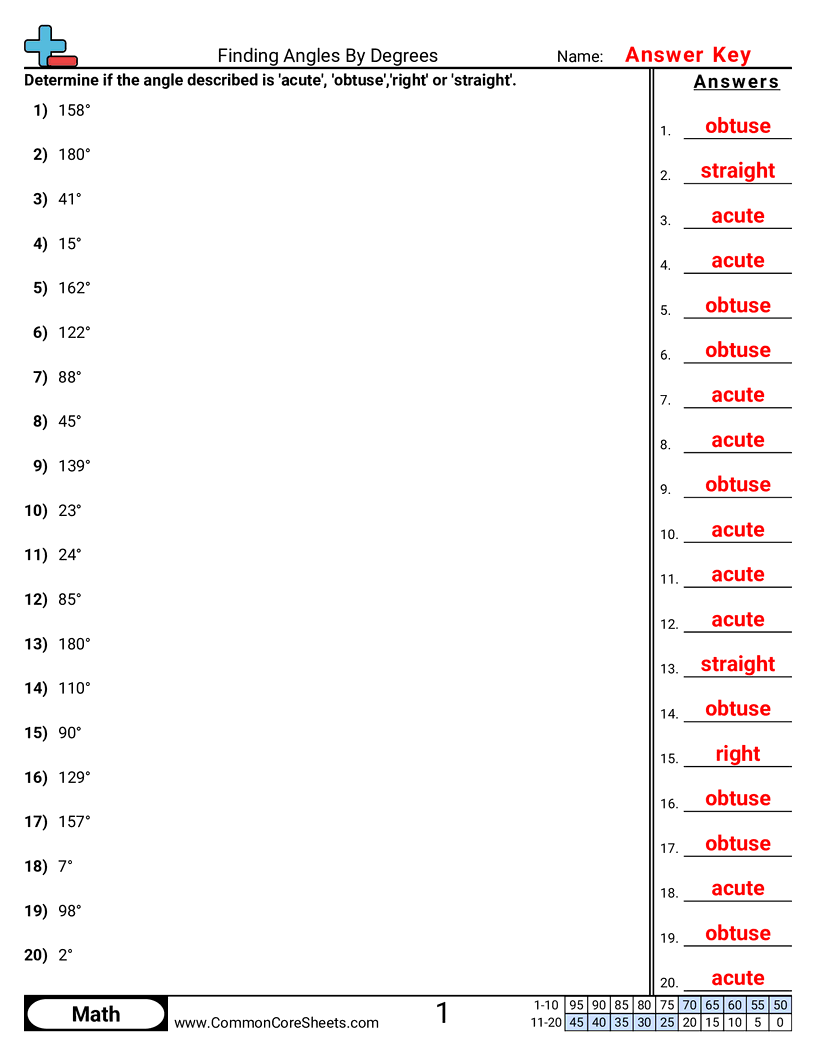
Determining Angles By Degree
Each Worksheet has 20 problems determining if the angle shown is acute, obtuse, right or straight.
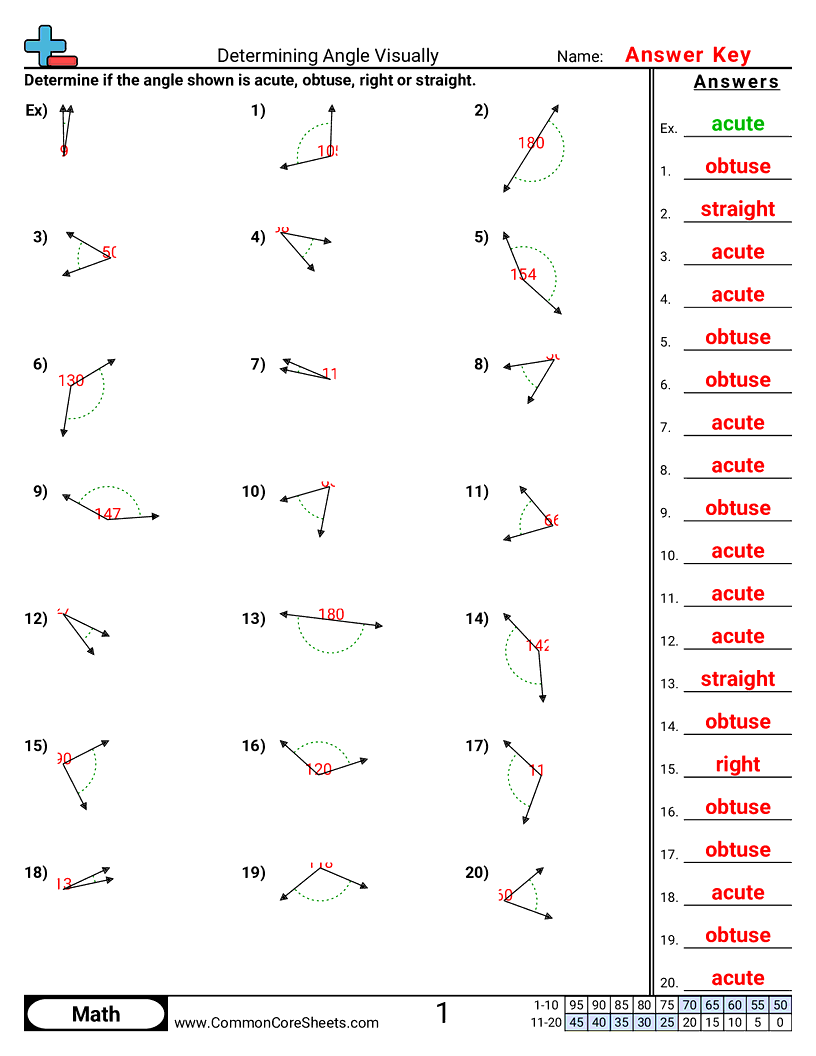
Each worksheet has 20 problems determining if an angle is acute, obtuse, straight or right.
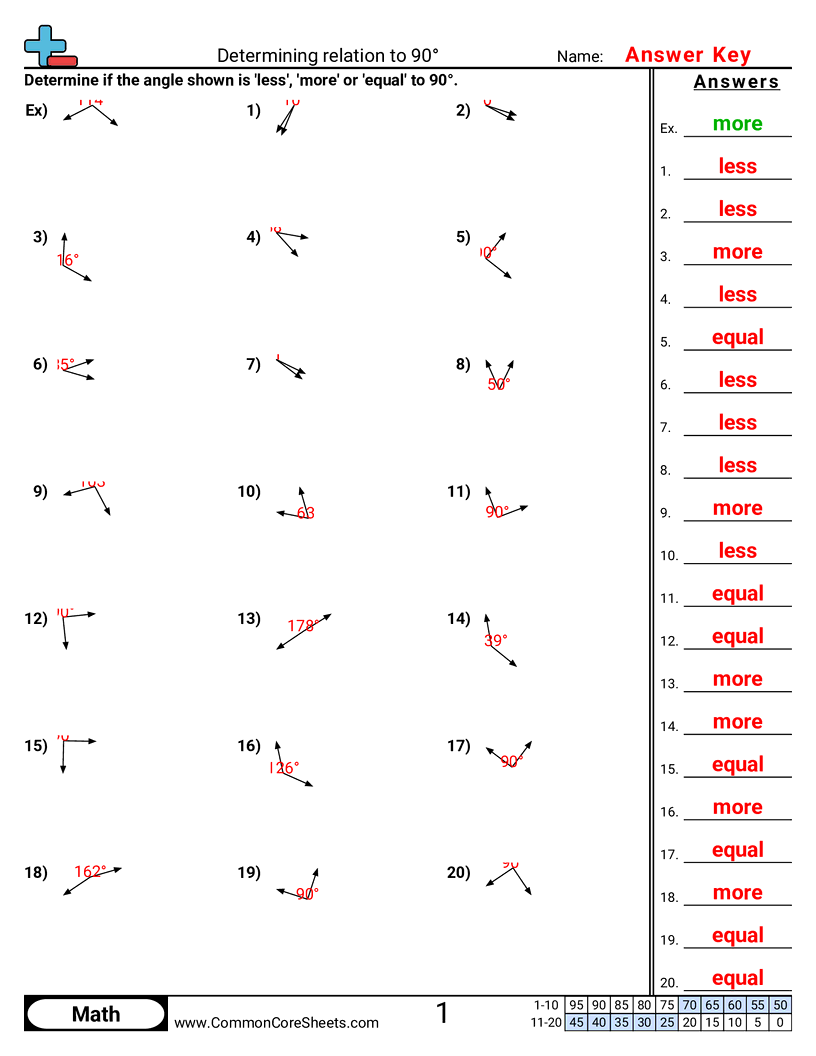
Each worksheet has 20 problems determining if the angle shown is 90°.
Determining Angles in Shapes
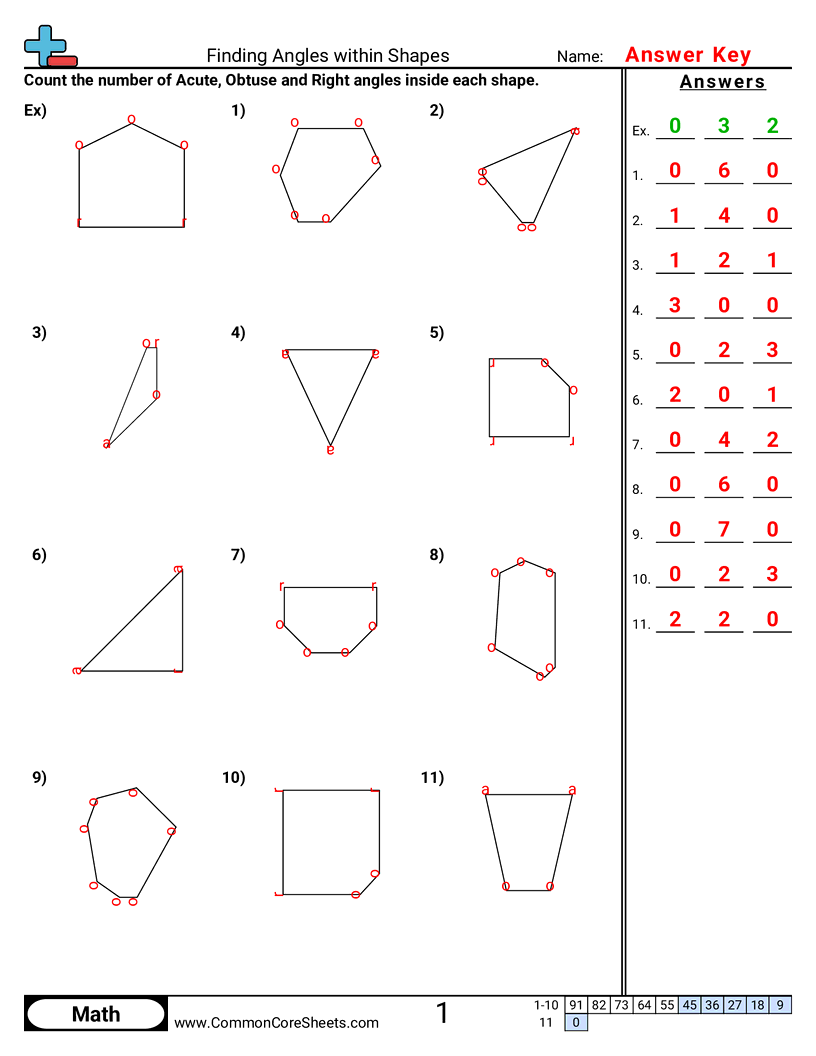
Each worksheet has 11 problems identifying the quantity of acute, obtuse or right angles in a shape.
Determining Angles in Shapes
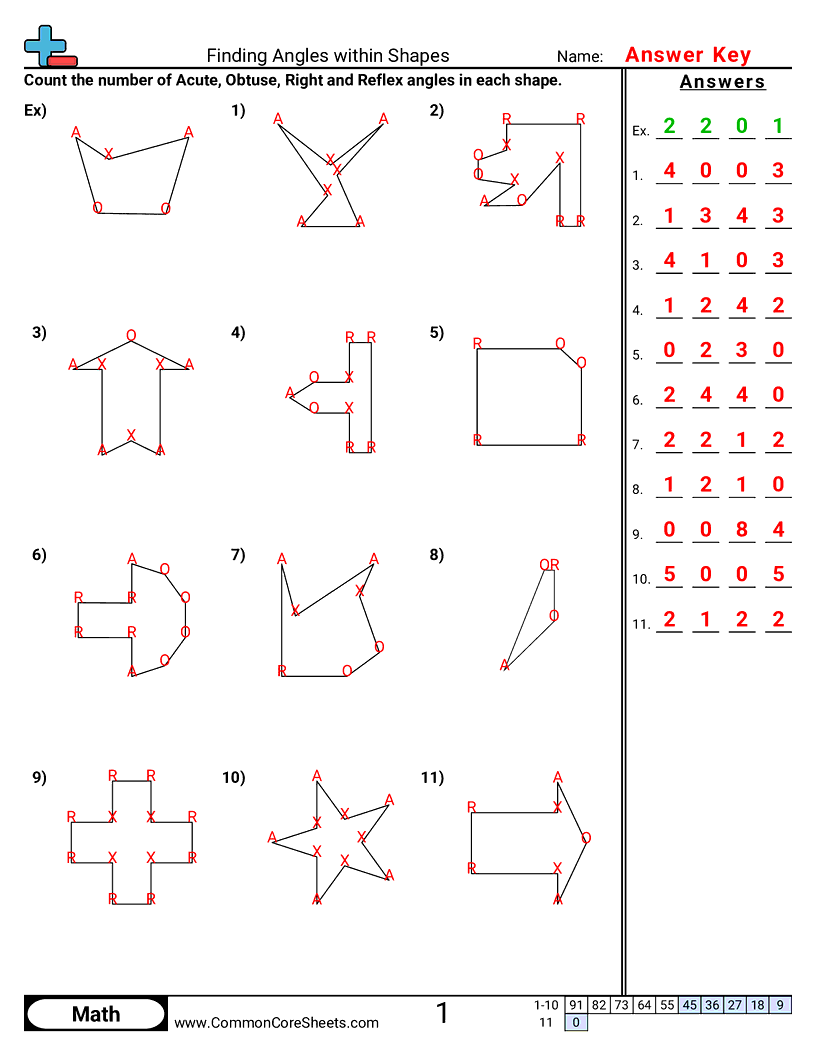
Each worksheet has 11 problems identifying the quantity of acute, obtuse right or reflex angles in a shape.
Finding a Shape by Its Angles
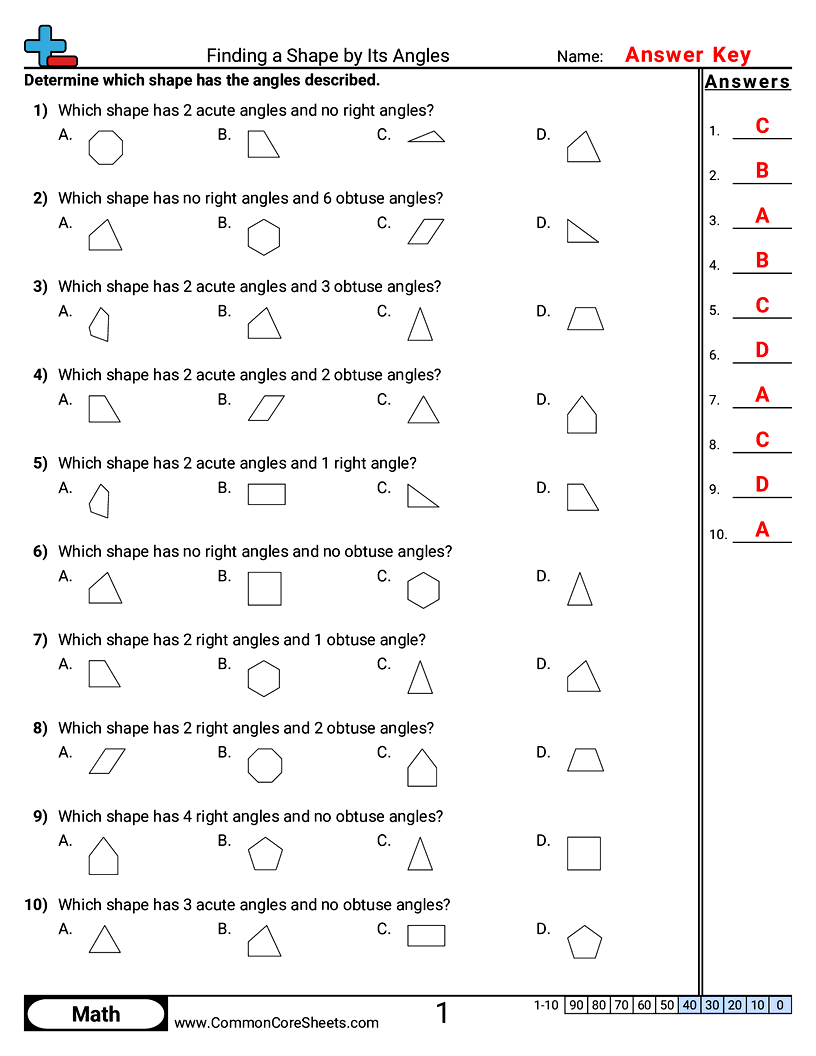
Students are given a number of acute, right or obtuse angles and choose which of four shapes has them.
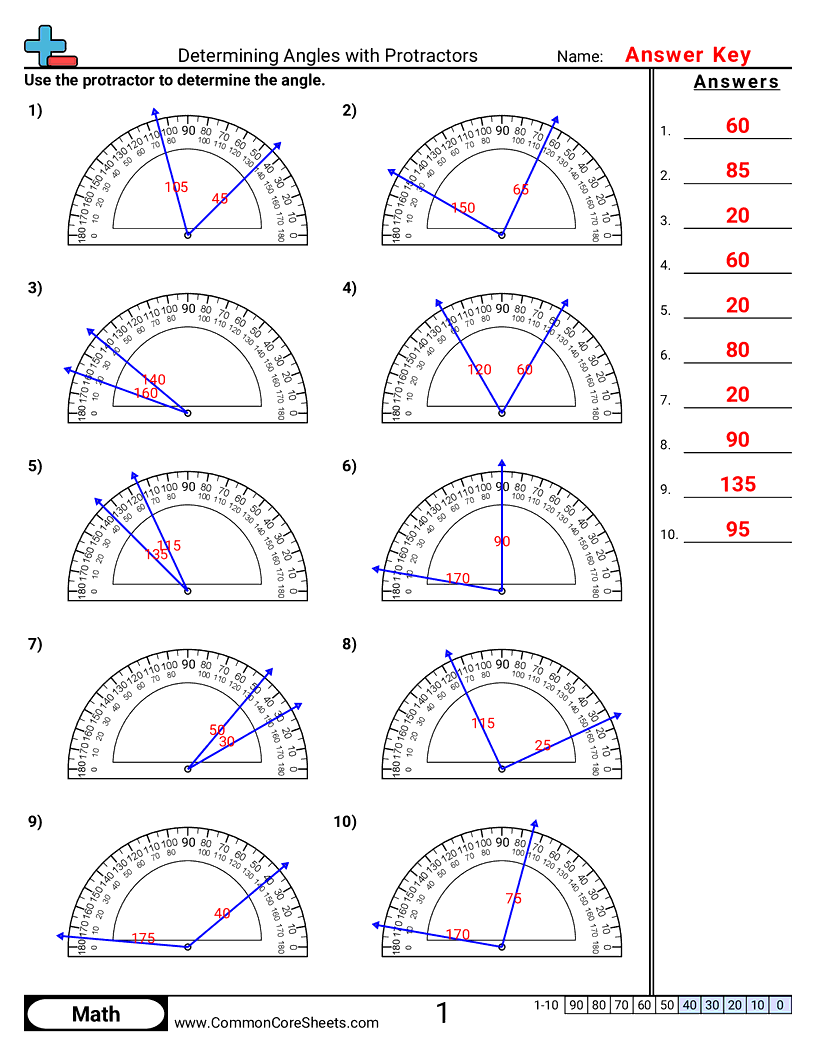
Determining Angles With Protractors
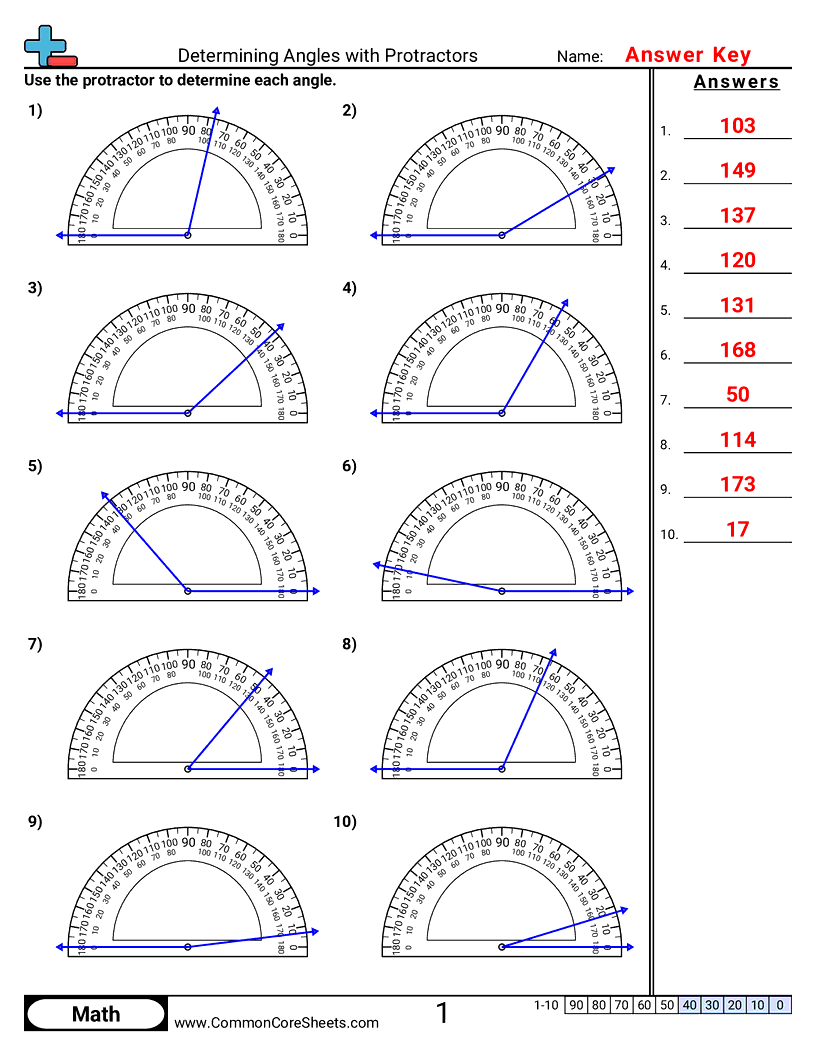
Each worksheet has 10 problems reading a protractor to find the angle.
Determining Angles With Protractors
Each worksheet has 10 problems reading a protractor to find the angle. Does not start at 0.
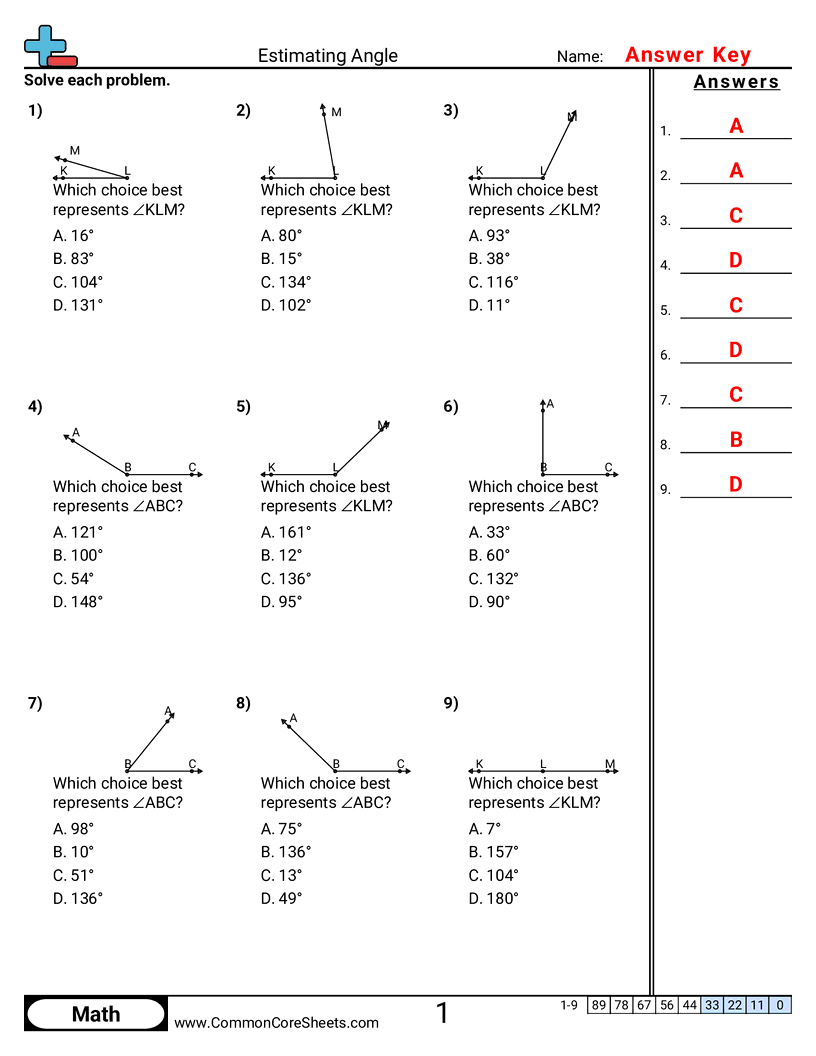
Each worksheet has 9 problems estimating the angle shown.
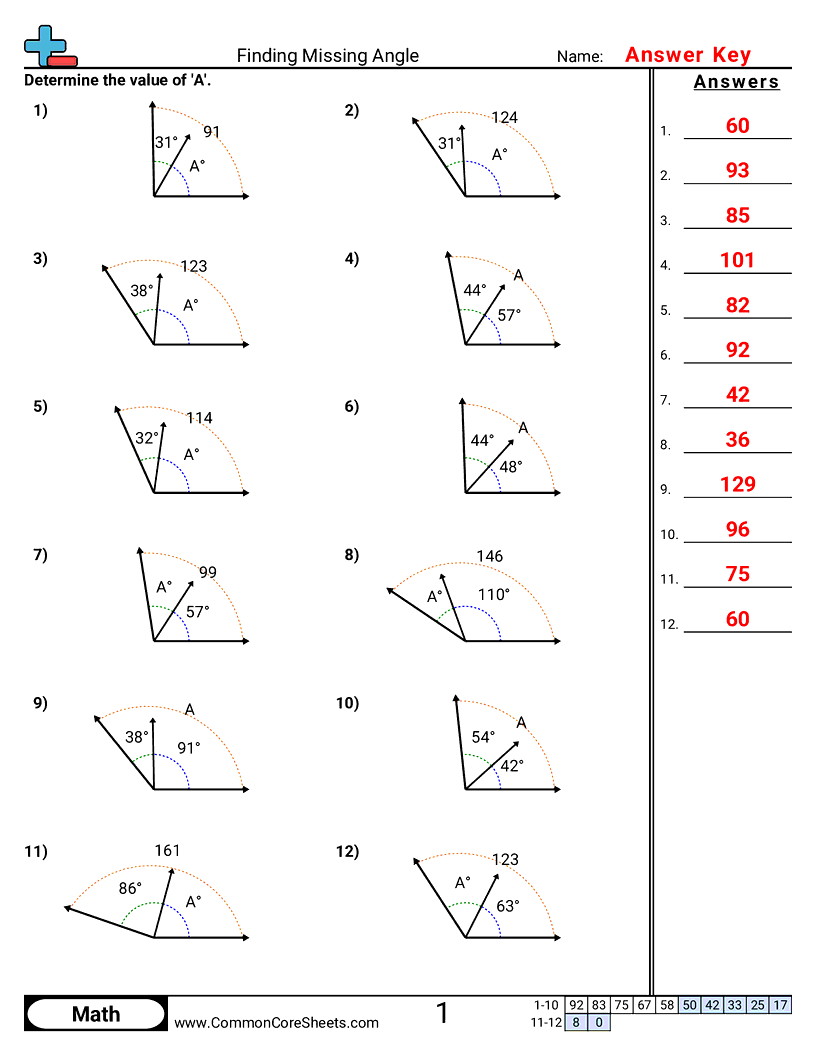
Each worksheet has 12 problems finding the missing angle.
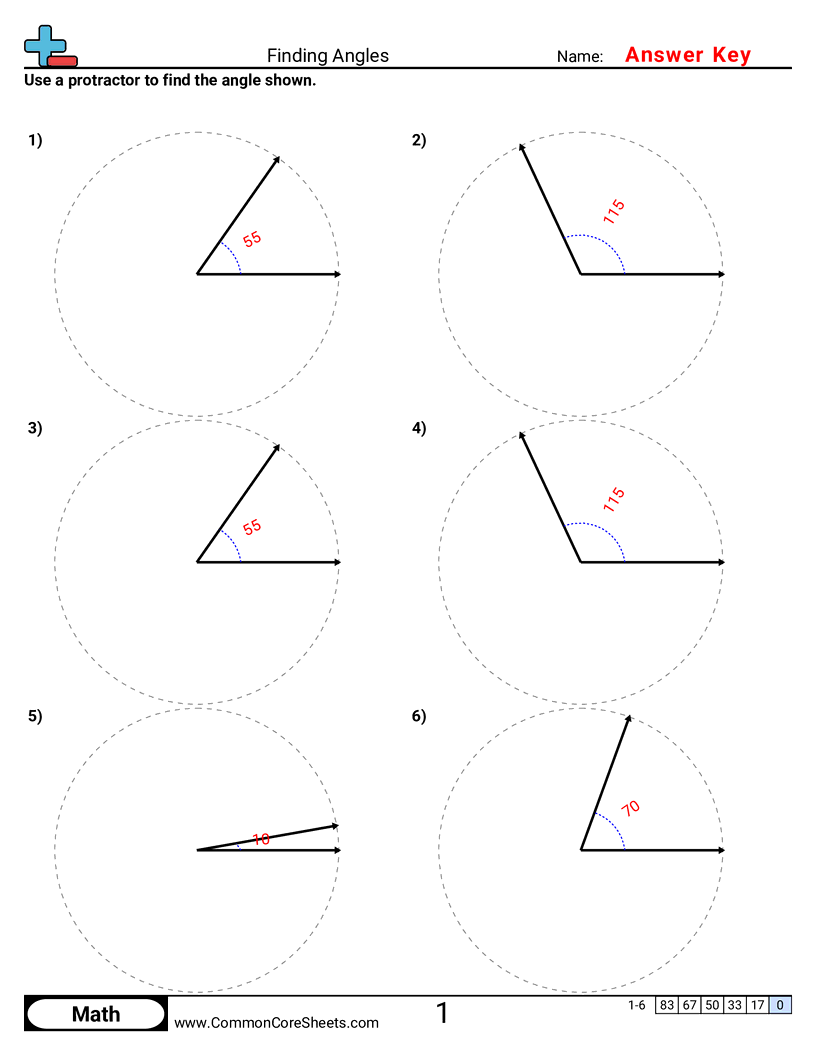
Finding Angle (Using Protractor)
Each worksheet has 6 problems using a protractor to find the angle.
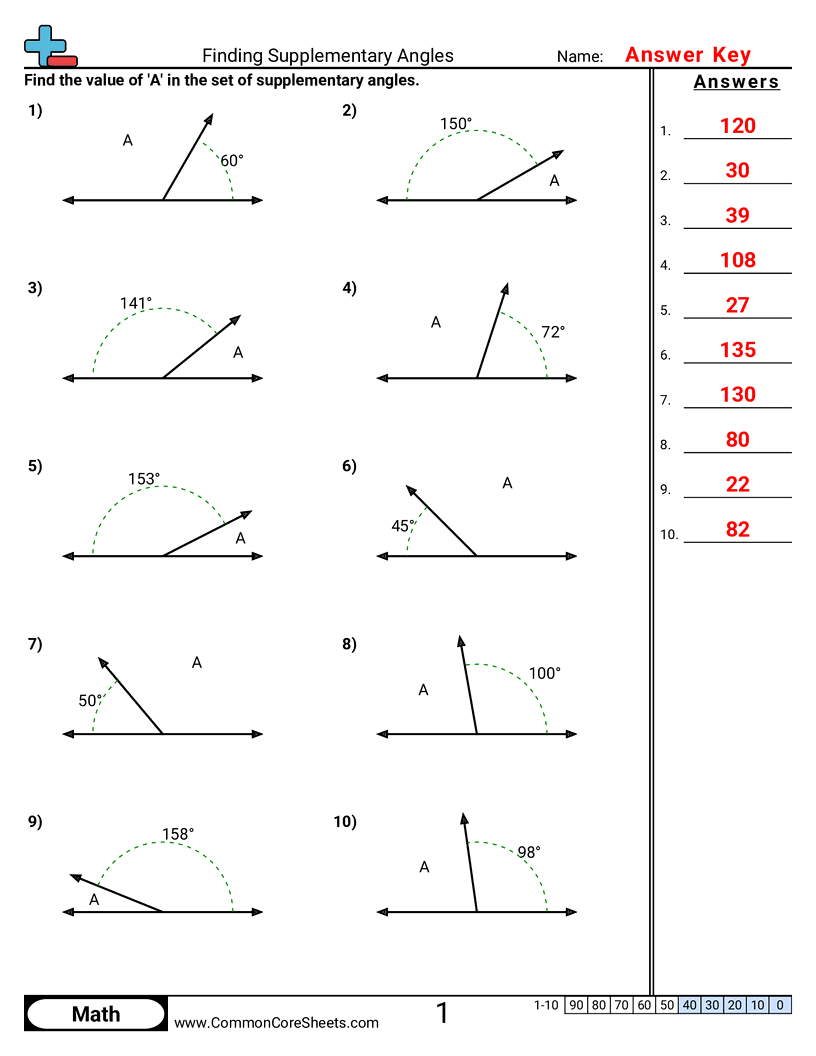
Finding Supplementary Angles
Each worksheet has 10 problems determining the value needed to make a set of supplementary angles.
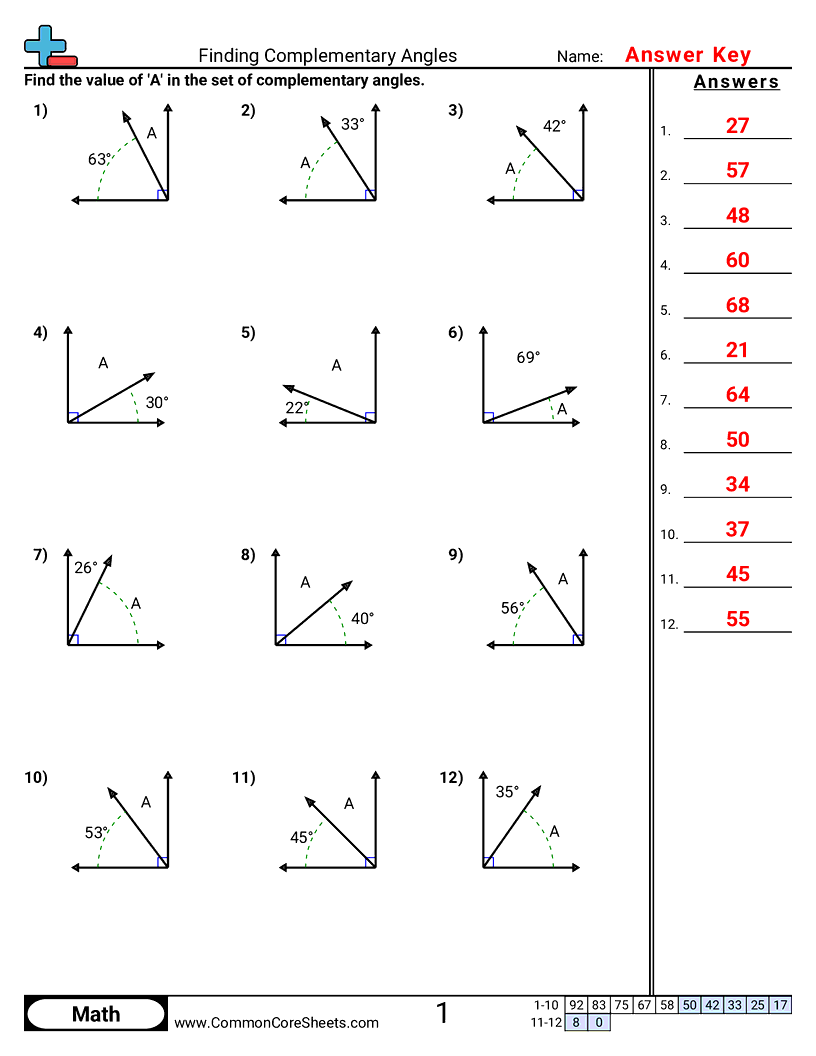
Finding Complementary Angles
Each worksheet has 12 problems determining the value needed to make a set of complementary angles.
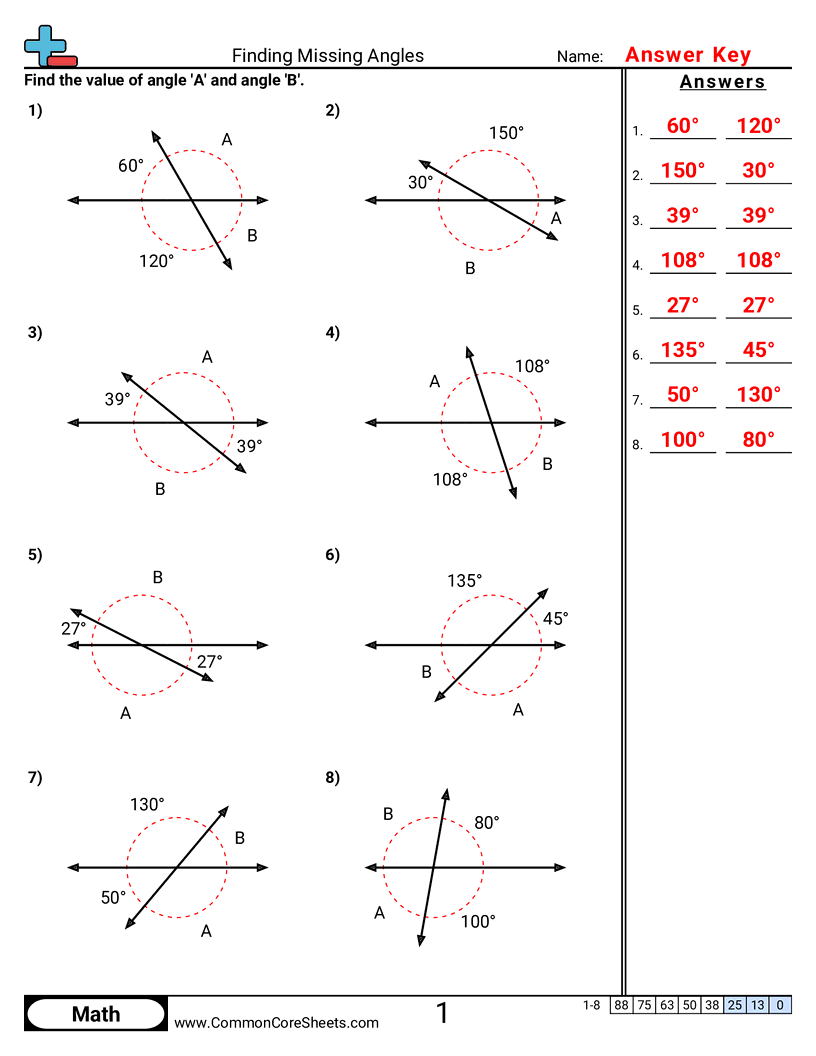
Each worksheet has 8 problems finding the missing angles.
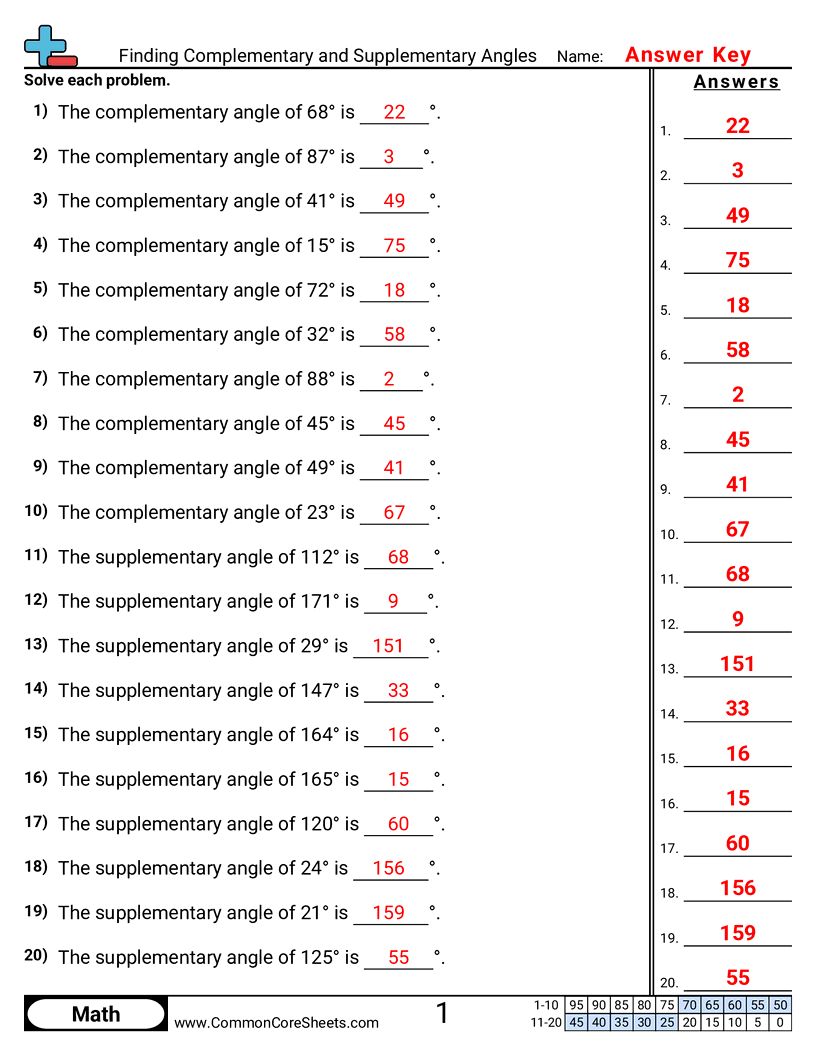
Finding Complementary and Supplementary Angles
Each worksheet has 20 problems finding the missing angle to make complementary or supplementary angle.
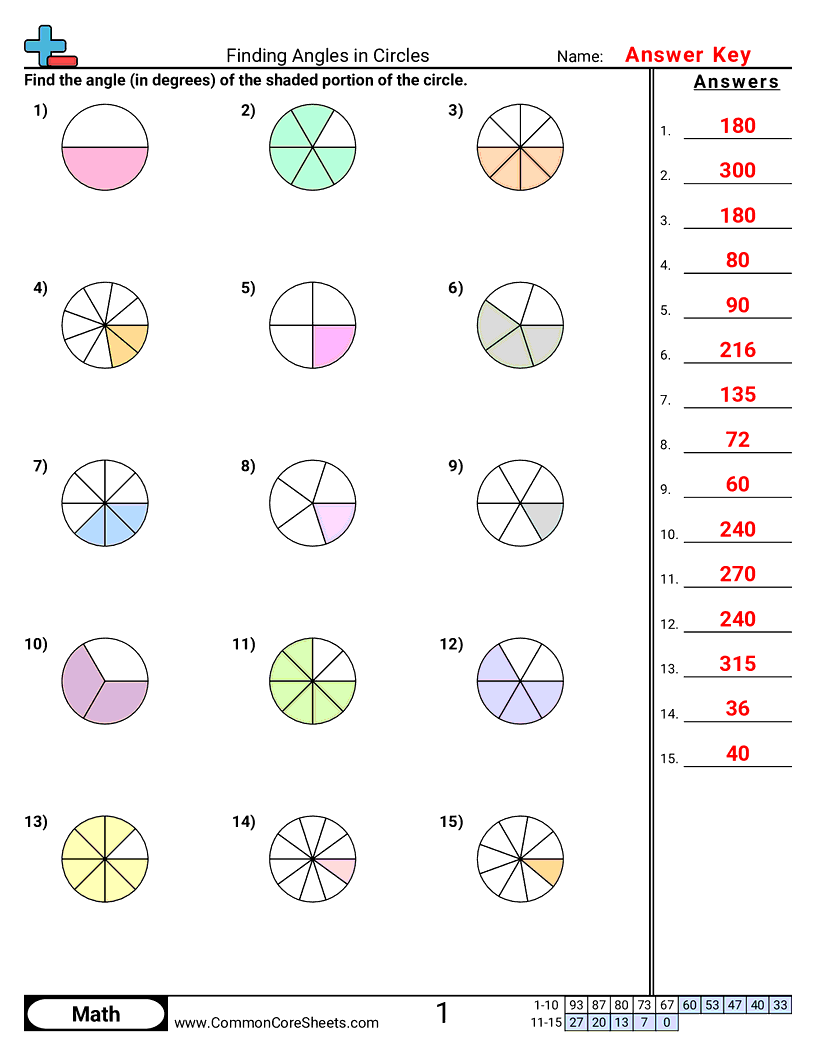
Finding Angles in Circles
Each worksheet has 15 problems finding the angle of the shaded portion of a circle.
Each worksheet has 8 problems creating a triangle from a set angle.
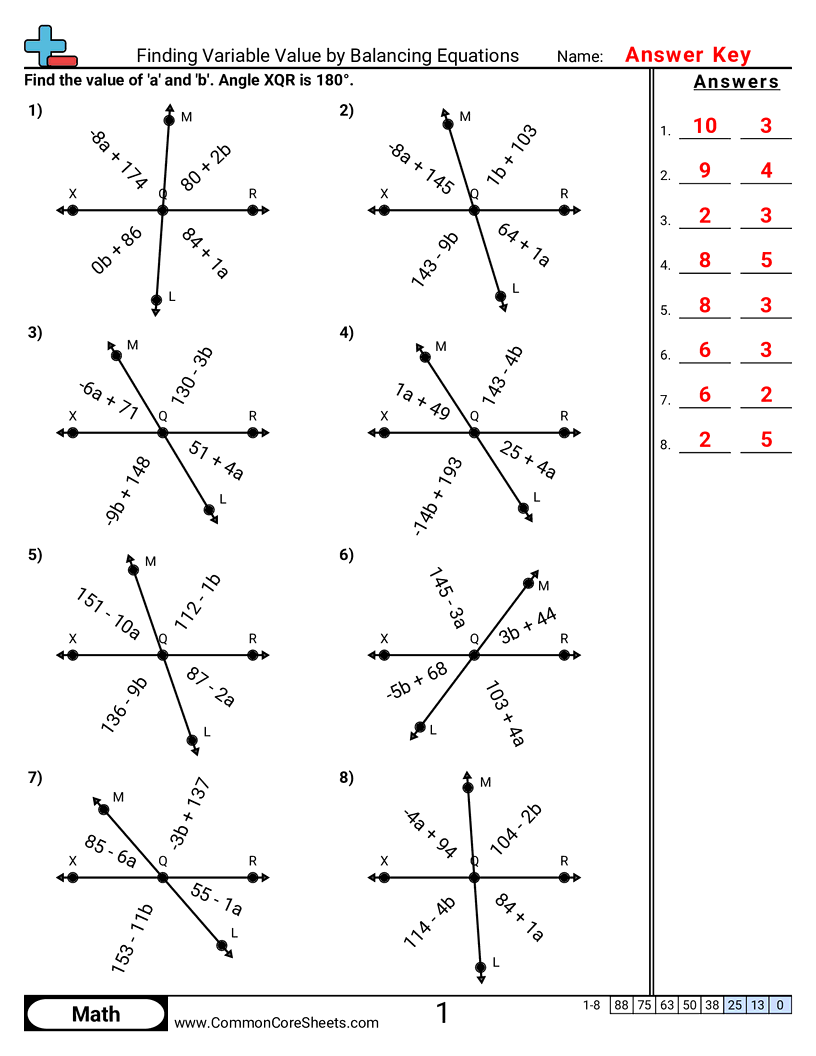
Finding Variable Value by Balancing Equations
Each worksheet has 8 problems balancing an equation to determine the missing variable value for an angle.
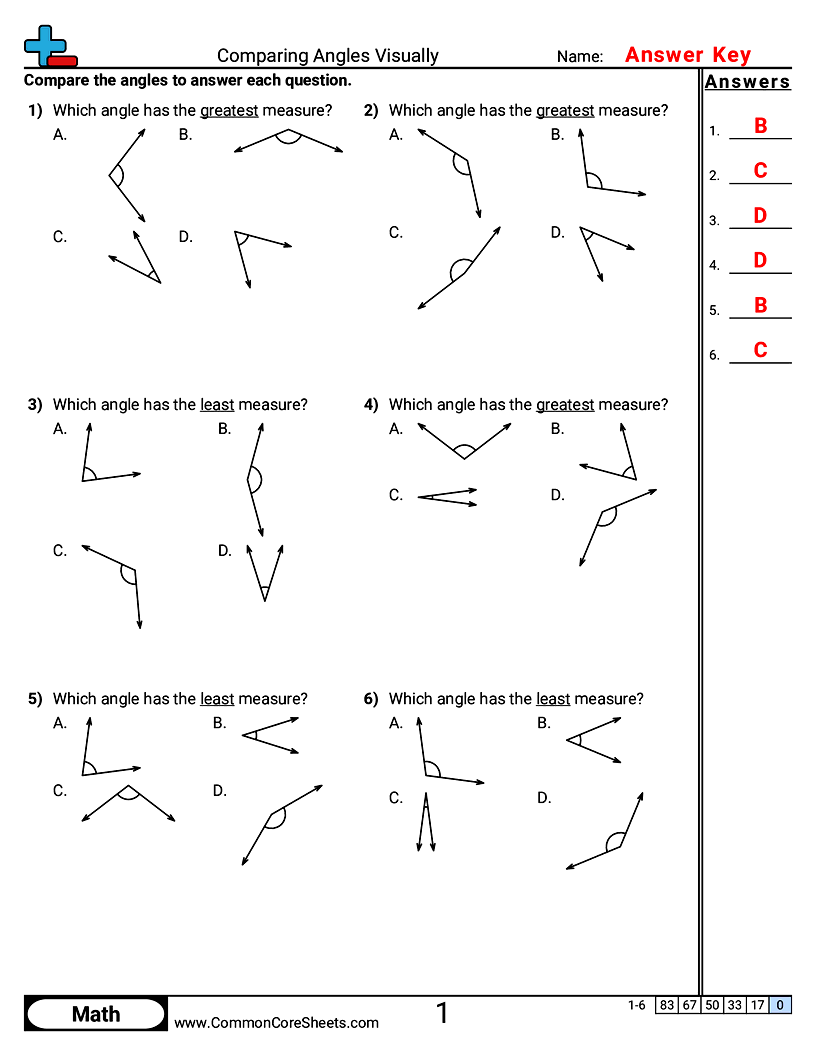
Comparing Angles Visually
Four angles are drawn without any measurements and students pick the one with the greatest or least measure.
Using the Angle Sum of a Triangle
A triangle is shown with two of its angles equal and one measure given, and students pick the statement that must be true.
Finding Angles Formed by Intersecting Lines
Each worksheet has 6 problems finding a missing angle where several lines cross at one point.
Naming the Relationship Between Two Angles
Each worksheet has 5 problems naming whether two marked angles are vertical, complementary, supplementary or unrelated.
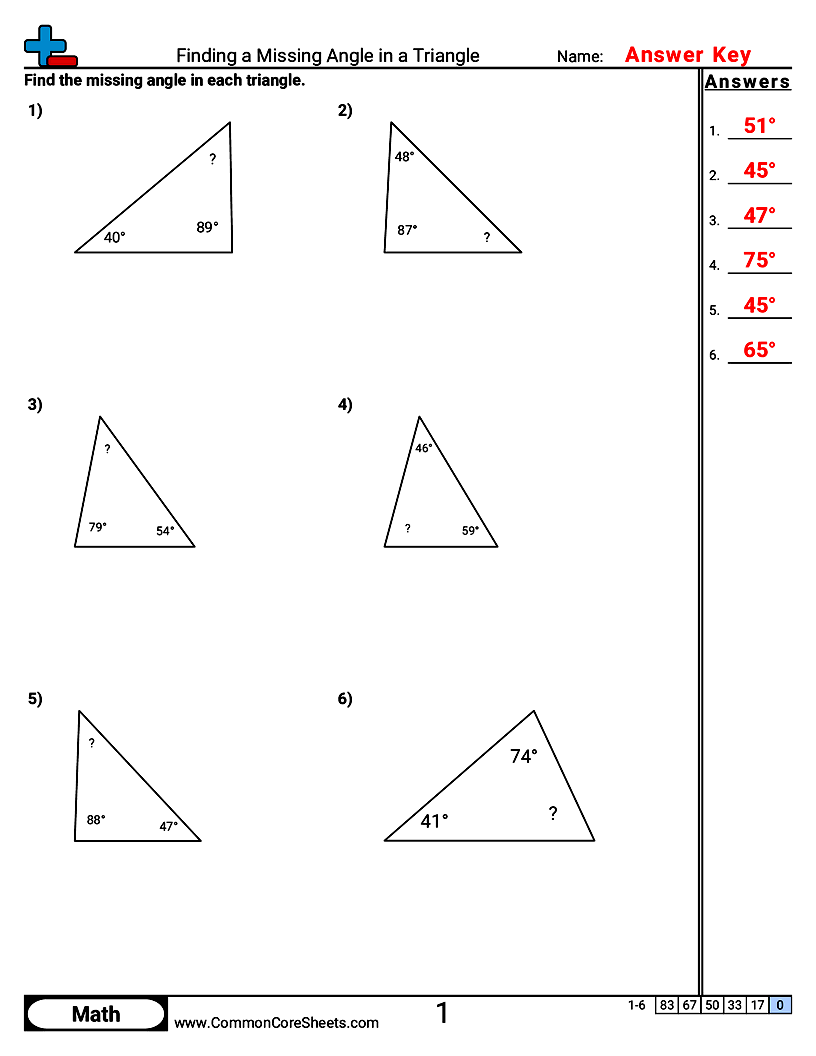
Finding a Missing Angle in a Triangle
Each worksheet has 6 problems finding the third angle of a triangle from the other two.
Why the Angles of a Triangle Add to 180
Each worksheet has 4 problems showing the three corners of a triangle fitted together on a straight line.
Playwire Advertisement