American Bullfrog Worksheet Download
Free reading worksheets on American Bullfrog. Each worksheet has 20 problems with an answer key and are ideal for teachers and homeschooling. You can download the PDF, create a set of flash cards or set it up for online learning.


Sheet Information >
Available at 2nd grade, 3rd grade, 4th grade, 5th grade and 6th grade reading levels.
Read the passage
Hey there, have you ever heard of the American bullfrog? These cool creatures are large, green frogs with a deep, loud call that can be heard from far away. They can grow up to 8 inches long and are known for their strong legs, which help them jump really far.
Let's explore where these bullfrogs live and what they like to eat. American bullfrogs can be found in a variety of wet habitats like ponds, swamps, and lakes across the United States. They are not picky eaters and will eat almost anything they can catch, including insects, fish, and even small birds!
Now, let's learn about their life cycle and how they interact with other animals. Bullfrogs start their lives as tiny tadpoles in the water, and after about a year, they transform into young frogs. As they grow, they can become both predator and prey, with other animals like snakes and birds hunting them, while they hunt smaller creatures.
Hey there, have you ever heard of the American bullfrog? They are big frogs with smooth, greenish-brown skin and long, strong legs. You can find them living near ponds, lakes, and slow-moving streams in North America. These amazing amphibians are great jumpers and swimmers, making their home in the water most of the time.
Now, let's talk about what these cool creatures like to eat. American bullfrogs are carnivores, which means they eat other animals like insects, fish, smaller frogs, and even small mammals. Their life cycle is pretty interesting too, starting as eggs laid in the water, then hatching into tadpoles, and finally growing into adult frogs through a process called metamorphosis. Bullfrogs are known to live for about 7-9 years in the wild, but some have been known to live even longer in captivity.
Lastly, let's explore how these fascinating frogs interact with humans and other animals. To protect themselves, bullfrogs have a loud, deep call that can scare away predators and warn other frogs. Though they are not directly harmful to humans, they can be considered an invasive species in some areas, causing problems for native plants and animals. Despite this, American bullfrogs are an important part of their ecosystem and are always fun to learn about and observe in their natural habitats.
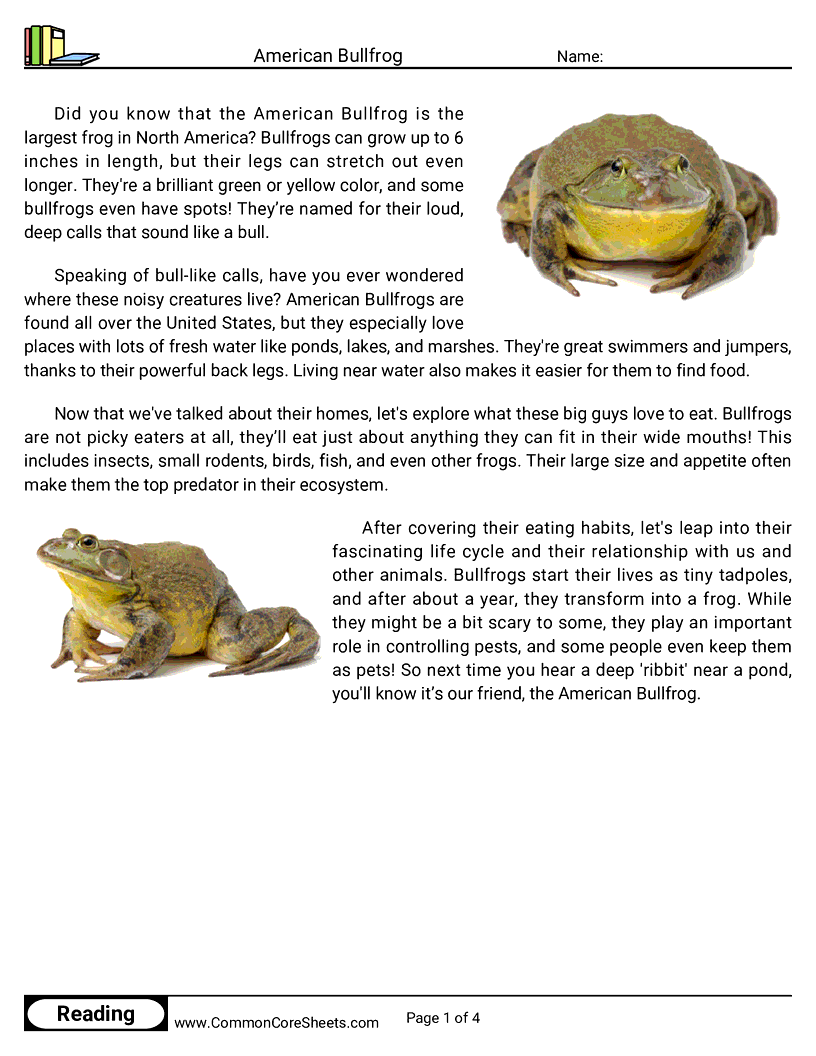
Did you know that the American Bullfrog is the largest frog in North America? Bullfrogs can grow up to 6 inches in length, but their legs can stretch out even longer. They're a brilliant green or yellow color, and some bullfrogs even have spots! They’re named for their loud, deep calls that sound like a bull.
Speaking of bull-like calls, have you ever wondered where these noisy creatures live? American Bullfrogs are found all over the United States, but they especially love places with lots of fresh water like ponds, lakes, and marshes. They're great swimmers and jumpers, thanks to their powerful back legs. Living near water also makes it easier for them to find food.
Now that we've talked about their homes, let's explore what these big guys love to eat. Bullfrogs are not picky eaters at all, they’ll eat just about anything they can fit in their wide mouths! This includes insects, small rodents, birds, fish, and even other frogs. Their large size and appetite often make them the top predator in their ecosystem.
After covering their eating habits, let's leap into their fascinating life cycle and their relationship with us and other animals. Bullfrogs start their lives as tiny tadpoles, and after about a year, they transform into a frog. While they might be a bit scary to some, they play an important role in controlling pests, and some people even keep them as pets! So next time you hear a deep 'ribbit' near a pond, you'll know it’s our friend, the American Bullfrog.
Let's talk about the American bullfrog, a fascinating amphibian that can be found all across the United States. These amazing creatures have a green or brownish color with dark spots, and can grow up to 8 inches long. Their powerful hind legs, which are perfect for jumping and swimming, can be twice as long as their bodies! You can recognize them by their unique call, which sounds like a deep, loud 'jug-o-rum.'
American bullfrogs live in freshwater environments like ponds, lakes, and slow-moving streams. They prefer areas with lots of plants, as it provides them with plenty of hiding spots and food sources. These habitats also allow them to lay their eggs and protect their tadpoles until they become fully-grown frogs. Bullfrogs can adapt to different environments and can even be found in some urban areas!
These frogs have a very diverse diet and are known for being voracious eaters. They eat insects, fish, small mammals, and even other frogs, including their own species! Using their long, sticky tongues, they can quickly snatch up their prey. Bullfrogs are also known to be active hunters, especially at night.
The life cycle of an American bullfrog starts when a female lays thousands of eggs in a shallow water area. These eggs will hatch into tadpoles, which will then grow and eventually develop into baby bullfrogs called froglets. This process can take up to 2 years, depending on the environment and temperature. Once they become adult bullfrogs, they can live for up to 10 years in the wild.
Bullfrogs interact with humans and other animals in various ways. They can be considered both helpful and harmful to humans, as they help control insect populations but can also prey on native species in areas where they have been introduced. They have few natural predators, but some animals like snakes, birds, and even other bullfrogs may try to eat them. To defend themselves, bullfrogs use their strong legs to leap away or stay hidden in the water.
In conclusion, the American bullfrog is a fascinating creature with a diverse diet, interesting life cycle, and unique interactions with humans and other animals. Learning about these amazing amphibians can help us better understand and appreciate the world around us.
Let's talk about the fascinating American bullfrog, a creature that's sure to grab your attention! These amphibians are the largest frog species found in North America, with males reaching around 6 inches and females up to 8 inches in length. American bullfrogs have a distinct appearance, featuring smooth, greenish skin with dark spots, and a pale yellow throat. Their powerful hind legs are perfect for leaping and swimming, while their large, round eyes help them spot prey from a distance. You can recognize their unmistakable call, which sounds like a deep, rumbling 'jug-a-rum'!
Now, let's explore the habitats where you can find these intriguing amphibians. American bullfrogs are native to the eastern United States, but have also been introduced to other parts of the country. They thrive in various aquatic environments, such as ponds, lakes, swamps, and slow-moving streams. Bullfrogs prefer areas with plenty of vegetation, which provides both shelter and hunting grounds. Due to their adaptable nature, they have become an invasive species in some regions, causing problems for native wildlife.
Let's dive into the captivating life cycle of the American bullfrog. Their life begins as eggs laid in water, which hatch into tiny tadpoles after about a week. Tadpoles undergo metamorphosis, a process that takes between 12 and 24 months, transforming them into adult frogs. During this time, they develop lungs, grow legs, and lose their tails, while their diet shifts from herbivorous to carnivorous. American bullfrogs can live up to 10 years, and reach reproductive maturity at around 2 to 3 years of age.
The American bullfrog has some fascinating relationships with humans and other animals. As predators, they eat a wide variety of creatures, including insects, fish, birds, and even small mammals. In turn, they serve as prey for animals like raccoons, snakes, and birds of prey. Humans have various interactions with bullfrogs, ranging from cultural appreciation to hunting them for their tasty legs. Unfortunately, human activities have led to habitat loss and pollution, which can negatively affect bullfrog populations.
Lastly, let's learn about the unique features and interesting facts about the American bullfrog. One of the main differences between them and other frog species is their size, as they are significantly larger. American bullfrogs have a unique defense mechanism called the 'unken reflex,' where they puff up their bodies and raise their heads to appear larger and more intimidating to predators. They also possess a highly developed sense of hearing, thanks to their large tympani (eardrums) located behind their eyes. These amazing amphibians can jump up to six times their body length, making them expert jumpers and escape artists!
In conclusion, the American bullfrog is a captivating and unique creature with a fascinating life cycle, diverse diet, and adaptable nature. Learning about these amazing amphibians can inspire an appreciation for the diverse wildlife that our world has to offer.
About this worksheet
Students read a passage about the American bullfrog and answer comprehension questions about its habitat, diet, and behavior.
This worksheet is designed to enhance children's reading and understanding about the American Bullfrog. It presents 20 engaging questions about the frog's characteristics, habitat, lifecycle, and role in the ecosystem. Ideal for distant learning, this worksheet is customizable and can even be converted into flash cards for interactive study and review.
Student objectives
- Read a nonfiction passage about the American bullfrog
- Find key facts about where bullfrogs live and what they eat
- Answer questions using details from the text
- Learn new vocabulary related to frogs and their environment
Everyday practice
- Understand facts you read in a nature or animal book
- Explain what a bullfrog eats after reading about it
- Point out where you might find a bullfrog near a pond or lake
- Talk about how frogs grow and change with a friend or parent