Tortoise Worksheet Download
Free reading worksheets on Tortoise. Each worksheet has 20 problems with an answer key and are ideal for teachers and homeschooling. You can download the PDF, create a set of flash cards or set it up for online learning.
Select a Different Activity
>


Sheet Information >
Available at 2nd grade, 3rd grade, 4th grade, 5th grade and 6th grade reading levels.
Read the passage
Tortoises are fascinating reptiles that have been around for millions of years. They come in many different sizes and shapes, and can be found living in various habitats around the world. Tortoises are land-dwelling creatures, and depending on the species, they can be found in deserts, grasslands, and forests.
These gentle creatures have a unique diet and life cycle that sets them apart from other animals. Tortoises are mainly herbivores, which means they eat plants, but some species may also eat insects and other small animals. Their life cycle begins when they hatch from eggs, and they can live to be over 100 years old in some cases!
Tortoises have some interesting relationships with humans and other animals. Many people keep tortoises as pets, while others help protect them in the wild by creating safe habitats. Their hard shells serve as a great defense against predators, allowing them to hide from danger and stay safe.
In conclusion, tortoises are remarkable creatures with unique characteristics and long life spans. Their gentle nature and fascinating features make them a favorite among animal lovers and a valuable part of our ecosystem. So next time you see a tortoise, take a moment to appreciate these ancient and intriguing animals!
Hey there, have you ever met a tortoise? These friendly reptiles can be found in various places around the world, such as deserts, wetlands, and grasslands. Their hard shells protect them from predators, and they can live a very long time, sometimes even over 100 years old! Some tortoises can grow quite large, while others are small and cute, but they all have one thing in common - they\'re fascinating creatures.
Tortoises are known for their slow and steady pace, but do you know what they eat? These herbivores love munching on plants, fruits, and vegetables, making them great natural gardeners. Their unique beak-like mouths help them tear and chew their food, and they\'re always on the lookout for a tasty treat. Some people even keep tortoises as pets, and they quickly become treasured members of the family.
Tortoises have a very interesting life cycle and relationships with other animals. Female tortoises lay eggs in a hole, and after a few months, the baby tortoises hatch and start their life journey. Tortoises are gentle creatures, and they usually don\'t bother other animals, but if they feel threatened, they can retreat into their hard shells for protection. One cool fact about tortoises is that they\'re different from turtles, as tortoises live on land, while turtles are more adapted for life in water.
In this article, we learned about the amazing world of tortoises, their diets, habitats, and their unique characteristics. These gentle reptiles can teach us a lot about patience and perseverance, just like the famous story of the tortoise and the hare. So next time you see a tortoise, be sure to appreciate its incredible qualities and the fascinating life it leads.
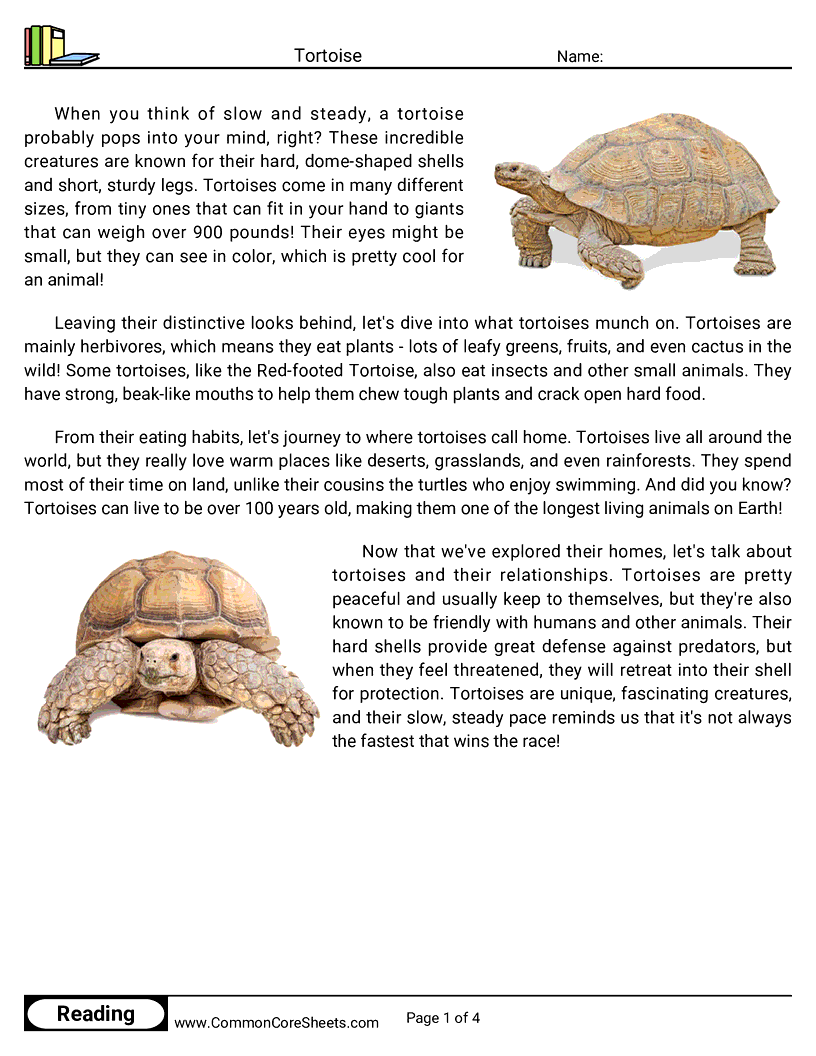
When you think of slow and steady, a tortoise probably pops into your mind, right? These incredible creatures are known for their hard, dome-shaped shells and short, sturdy legs. Tortoises come in many different sizes, from tiny ones that can fit in your hand to giants that can weigh over 900 pounds! Their eyes might be small, but they can see in color, which is pretty cool for an animal!
Leaving their distinctive looks behind, let's dive into what tortoises munch on. Tortoises are mainly herbivores, which means they eat plants - lots of leafy greens, fruits, and even cactus in the wild! Some tortoises, like the Red-footed Tortoise, also eat insects and other small animals. They have strong, beak-like mouths to help them chew tough plants and crack open hard food.
From their eating habits, let's journey to where tortoises call home. Tortoises live all around the world, but they really love warm places like deserts, grasslands, and even rainforests. They spend most of their time on land, unlike their cousins the turtles who enjoy swimming. And did you know? Tortoises can live to be over 100 years old, making them one of the longest living animals on Earth!
Now that we've explored their homes, let's talk about tortoises and their relationships. Tortoises are pretty peaceful and usually keep to themselves, but they're also known to be friendly with humans and other animals. Their hard shells provide great defense against predators, but when they feel threatened, they will retreat into their shell for protection. Tortoises are unique, fascinating creatures, and their slow, steady pace reminds us that it's not always the fastest that wins the race!
Let\'s learn about the incredible world of tortoises, fascinating creatures that have been around for millions of years. These gentle reptiles are known for their hard shells and slow movements, which make them unique among other animals. In this article, we\'ll explore their diet, habitat, life cycle, and relationship with humans and other animals. So sit back, relax and get ready to dive into the amazing life of tortoises.
First, let\'s talk about what tortoises like to eat. Tortoises are mainly herbivores, which means they mostly eat plants. Their diet consists of leaves, grass, fruit, and even flowers. Sometimes, tortoises might munch on a few insects or worms, but plants are their primary food source.
Now, let\'s discuss where tortoises live and their life cycle. Tortoises can be found on every continent except Antarctica, living in a variety of habitats like deserts, grasslands, and forests. Their life cycle begins with the female tortoise laying eggs in a hole she has dug. Once the eggs hatch, young tortoises will grow and eventually become adults that can live up to 100 years or more!
Tortoises have a unique relationship with humans and other animals. Some people keep tortoises as pets, while others admire them in their natural habitats. Tortoises are also important to the environment, as they help spread seeds and maintain a healthy ecosystem. As for their relationships with other animals, tortoises are generally peaceful creatures that coexist with a variety of wildlife.
Lastly, let\'s explore some interesting facts and differences between tortoises and other species. One key difference between tortoises and turtles is that tortoises live on land, while turtles live in water. Tortoises also have a unique defense mechanism: when threatened, they retract their head, legs, and tail into their hard shell for protection. Did you know that the largest tortoise ever recorded weighed over 900 pounds and was over 6 feet long?
In conclusion, tortoises are truly amazing creatures with unique characteristics, diets, and habitats. As we learn more about these gentle reptiles, we can continue to appreciate their important role in our world and the environment.
Tortoises are fascinating creatures that have been around for millions of years! They are reptiles, which means they are cold-blooded and have scales on their bodies. Tortoises can be found in various sizes, with some species growing as big as 4 feet in length! They have a hard shell called a carapace that protects them from predators and other dangers. Did you know that the oldest known tortoise lived to be 188 years old? That\'s a long time!
These amazing animals can be found all over the world in different habitats. Some prefer dry, desert-like environments, while others live in grasslands, forests, or even near bodies of water. Tortoises usually spend their days basking in the sun to warm up and searching for food. At night, they rest in burrows or other sheltered spots that they dig themselves or find in their surroundings. Adapting to their environment is key to their survival!
One of the most important aspects of a tortoise\'s life is their diet. Most tortoises are herbivores, which means they eat plants like grasses, flowers, and fruits. However, some species occasionally snack on insects or other small animals for extra nutrients. It\'s essential for them to eat a balanced diet to keep their shells healthy and strong. Proper nutrition also helps them grow and maintain their energy levels.
Tortoises have some unique relationships with other animals, including humans. Many people keep tortoises as pets, providing them with a safe and comfortable home. In the wild, tortoises sometimes share their burrows with other animals like snakes or rodents, creating a mutual living arrangement. Some birds even help tortoises by eating parasites off their shells! It\'s interesting to see how these creatures interact with others in their environment.
Finally, let\'s explore some differences between tortoises and their close relatives, turtles and terrapins. While all three belong to the same family, they have distinct characteristics that set them apart. Tortoises are mainly land-dwelling, while turtles and terrapins spend more time in the water. Tortoises also have a more dome-shaped shell and sturdy, elephant-like legs, compared to the flatter shells and webbed feet of their aquatic cousins. Understanding these differences helps us appreciate the diversity of these amazing reptiles!
In conclusion, tortoises are truly fascinating creatures with a rich history and unique characteristics. Learning about their diets, habitats, relationships, and differences from other species helps us appreciate their role in the world. Next time you see a tortoise, take a moment to marvel at these incredible animals and the wonderful world they inhabit.
About this worksheet
Students read a short passage about tortoises and answer questions to show they understood the key details and information.
This worksheet is designed to improve children's reading skills and broaden their knowledge about tortoises. Covering a range of topics including tortoise behaviour, diet, lifespan, and habitat, each of the 20 reading comprehension problems encourages comprehensive reading and critical thinking skills. The versatile format allows it to be adapted for use in distance learning, or converted into flashcards for a more personalized learning experience.
Student objectives
- Read an informational passage about tortoises
- Find and recall specific facts from the text
- Answer questions using details from what you read
- Understand new vocabulary words about tortoises
Everyday practice
- Read a fact page about an animal at the zoo and tell someone what you learned
- Answer questions about a nature show you just watched
- Look up facts about a pet you want and explain them to a parent
- Read an animal book and point out interesting details to a friend