Red Fox Worksheet Download
Free reading worksheets on Red Fox. Each worksheet has 20 problems with an answer key and are ideal for teachers and homeschooling. You can download the PDF, create a set of flash cards or set it up for online learning.


Sheet Information >
Available at 2nd grade, 3rd grade, 4th grade, 5th grade and 6th grade reading levels.
Read the passage
Have you ever seen a red fox? They are beautiful animals with their bright red fur and bushy tails. Red foxes are the largest of the true fox species and can be found in many different parts of the world, including North America, Europe, Asia, and even Northern Africa.
Red foxes are very smart and resourceful when it comes to finding food. They eat a wide variety of things like small mammals, birds, insects, and even plants like berries and fruit. Foxes are known to be very sneaky, which helps them catch their prey and avoid being caught by other animals.
Red foxes have a fascinating life cycle and live in a variety of habitats. They usually mate in the winter and have their babies, called kits, in the spring. Red foxes have a special relationship with humans, as they are often seen as clever and cunning creatures in stories and legends, but they can also be a problem for farmers because they sometimes eat chickens or other farm animals.
Now you know a little more about the amazing red fox, and how they live their lives in the wild. These curious creatures have adapted to many different environments and continue to be a fascinating part of our natural world.
Let's talk about the amazing red fox! These intelligent creatures are known for their reddish-brown fur, pointy ears, and bushy tails. Red foxes can be found in various habitats such as forests, grasslands, mountains, and even deserts! Interestingly, they have whiskers on their legs and face, which help them to navigate and hunt.
Now, let's explore the red fox's life cycle and what they eat. They are omnivores, which means they eat both plants and animals, like berries, insects, small mammals, and birds. Red foxes mate between December and February, and after about 52 days, the female gives birth to a litter of 1 to 12 pups. The pups are born in a den and stay with their parents for about six to seven months before venturing out on their own.
Red foxes have fascinating relationships with humans and other animals. While they are generally shy and avoid people, they have been known to adapt to living in urban environments. In the wild, they share their habitats with other animals, and their main predators include coyotes, eagles, and humans. Their incredible sense of hearing, agility, and ability to play dead, or 'foxing,' are some of the ways they defend themselves.
In this article, we discussed the captivating red fox, their life cycle and diet, as well as their relationships with humans and other animals. Remember, these fascinating creatures are part of our natural world, and it's essential to respect and protect them.
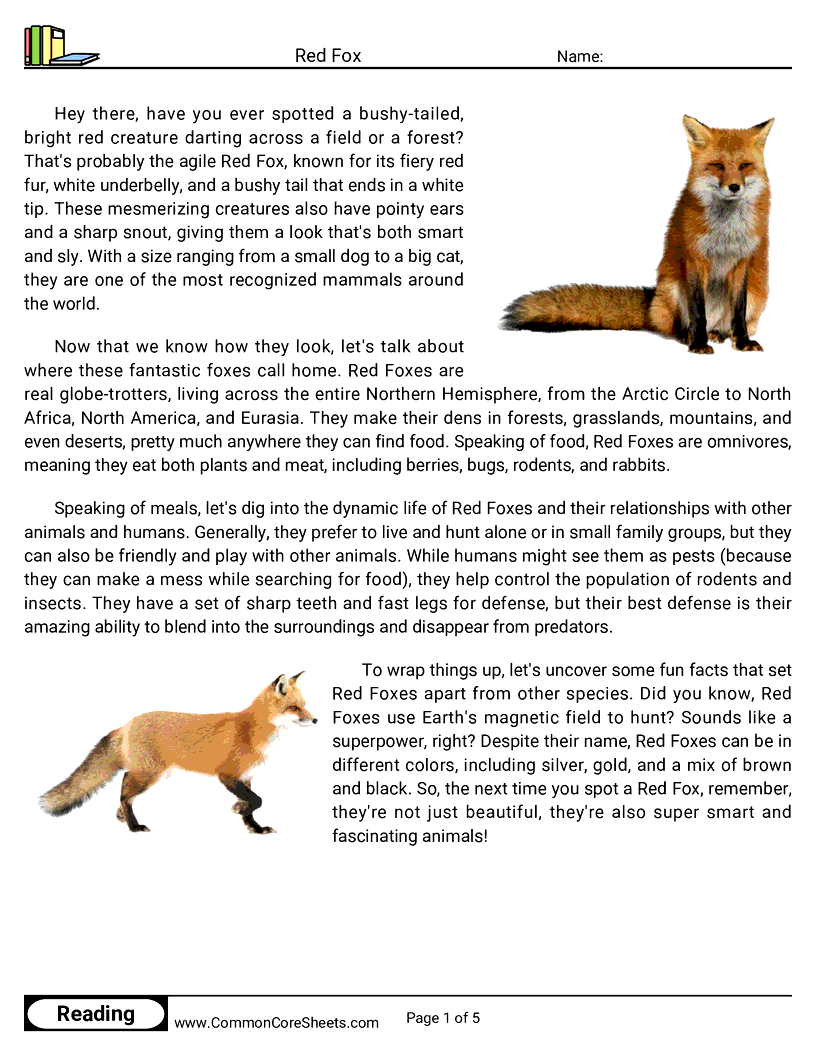
Hey there, have you ever spotted a bushy-tailed, bright red creature darting across a field or a forest? That's probably the agile Red Fox, known for its fiery red fur, white underbelly, and a bushy tail that ends in a white tip. These mesmerizing creatures also have pointy ears and a sharp snout, giving them a look that's both smart and sly. With a size ranging from a small dog to a big cat, they are one of the most recognized mammals around the world.
Now that we know how they look, let's talk about where these fantastic foxes call home. Red Foxes are real globe-trotters, living across the entire Northern Hemisphere, from the Arctic Circle to North Africa, North America, and Eurasia. They make their dens in forests, grasslands, mountains, and even deserts, pretty much anywhere they can find food. Speaking of food, Red Foxes are omnivores, meaning they eat both plants and meat, including berries, bugs, rodents, and rabbits.
Speaking of meals, let's dig into the dynamic life of Red Foxes and their relationships with other animals and humans. Generally, they prefer to live and hunt alone or in small family groups, but they can also be friendly and play with other animals. While humans might see them as pests (because they can make a mess while searching for food), they help control the population of rodents and insects. They have a set of sharp teeth and fast legs for defense, but their best defense is their amazing ability to blend into the surroundings and disappear from predators.
To wrap things up, let's uncover some fun facts that set Red Foxes apart from other species. Did you know, Red Foxes use Earth's magnetic field to hunt? Sounds like a superpower, right? Despite their name, Red Foxes can be in different colors, including silver, gold, and a mix of brown and black. So, the next time you spot a Red Fox, remember, they're not just beautiful, they're also super smart and fascinating animals!
Let's learn about the fascinating red fox, a widely known and adaptable animal. The red fox is a small, dog-like creature with a bushy tail and reddish-brown fur. You can find them in a variety of habitats, from forests and grasslands to mountains and even deserts. Their keen senses and intelligence make them excellent hunters and survivors in the wild.
Red foxes have a diverse diet that helps them thrive in various environments. They are omnivorous, which means they eat both plants and animals. Their menu includes small mammals, birds, insects, fruits, and even human leftovers. They are skilled hunters and use their sharp teeth and claws to catch their prey.
The life cycle of a red fox is quite interesting. They usually mate between January and March, with the female giving birth to a litter of 4-6 pups after a 52-day gestation period. The parents work together to raise and protect their offspring until they are ready to leave the den at around 7 months old. Red foxes can live up to 14 years in the wild, but many only make it to 3 or 4 years due to various threats.
Humans and red foxes have a complex relationship. Some people appreciate their beauty and role in controlling rodent populations, while others see them as pests that attack livestock and spread diseases. In some areas, they are hunted for their fur, while in others, they are protected by law. It's essential to understand and respect these creatures as a part of our ecosystem.
Finally, let's explore some interesting facts about red foxes and their unique characteristics. Unlike other fox species, red foxes can climb trees and swim well. They communicate with each other using a wide range of vocalizations, body language, and scents. In fact, they are known to have around 28 different types of calls to communicate with other members of their species.
Now that you know more about red foxes, you can appreciate their adaptability and unique skills in the animal kingdom.
Let's dive into the fascinating world of red foxes, one of the most captivating species in the animal kingdom. These beautiful creatures are known for their reddish-orange fur, bushy tails, and pointy ears. They are about the size of a medium-sized dog, with males being slightly larger than females. Red foxes can be found all over the world, but they are most commonly found in North America, Europe, and Asia. One interesting fact is that red foxes have partially retractable claws, which help them climb trees when necessary.
Red foxes are omnivores and have a varied diet to suit their diverse habitat. They mainly eat small mammals like rabbits, rodents, and birds, but they also enjoy fruits, vegetables, and insects. When food is abundant, they have been known to store their leftovers in secret caches. This clever behavior helps them survive when food becomes scarce later on. Their keen sense of smell, hearing, and sight make them excellent hunters, even in the dark.
Now, let's take a look at the life cycle of red foxes. They typically live in family groups called 'leashes' or 'skulks' and create dens, also known as 'earths', to raise their young. Mating season occurs during the winter months, and after a gestation period of around 52 days, the female, called a vixen, gives birth to a litter of 4-6 pups. Both parents care for their young, teaching them how to hunt and survive in the wild. By the time they are 7 months old, the young foxes are ready to venture out on their own and establish their own territories.
Red foxes interact with humans and other animals in various ways. In some cultures, they are considered symbols of cunning and intelligence, while in others, they are seen as pests that prey on livestock. Although they are usually shy and avoid humans, some red foxes have adapted to urban environments and can be seen scavenging for food in cities. In the wild, they play an important role in controlling populations of rodents and other small mammals. Their main predators include coyotes, wolves, and large birds of prey.
Lastly, let's examine some differences between red foxes and other species of foxes. There are over 20 different species of foxes, but the red fox is the largest and most widespread. Arctic foxes, for example, have thick, white fur to help them survive in cold climates, while fennec foxes, native to the deserts of North Africa, have large ears to help them dissipate heat. Gray foxes, found in North and Central America, are the only species of fox that can climb trees, thanks to their hooked claws. Each species of fox has unique adaptations that help them survive in their specific environments.
About this worksheet
Students read a nonfiction passage about the red fox and answer questions about its habitat, diet, and behavior.
This worksheet is designed to hone reading comprehension while teaching children about Red Foxes. It covers their physical characteristics, habitats, hunting abilities, and diet. The 20-problem worksheet can be customized to individual learning needs, transformed into flashcards for hands-on learning, or used in distance learning settings for flexible education. A perfect blend of education and entertaining trivia about a captivating creature.
Student objectives
- Read a nonfiction passage and understand the main ideas
- Find specific facts about the red fox in the text
- Learn new vocabulary words related to animals
- Answer questions using details from the reading
Everyday practice
- Read about an animal you saw at a park or on a nature show
- Look up facts about wild animals in a library book
- Tell a family member interesting facts you learned about foxes
- Understand a sign or exhibit description at a zoo