Razor-backed Turtle Worksheet Download
Free reading worksheets on Razor-backed Turtle. Each worksheet has 20 problems with an answer key and are ideal for teachers and homeschooling. You can download the PDF, create a set of flash cards or set it up for online learning.
Select a Different Activity
>


Sheet Information >
Available at 2nd grade, 3rd grade, 4th grade, 5th grade and 6th grade reading levels.
Read the passage
Let\'s learn about the fascinating razor-backed turtle! These turtles have a unique and cool look, with a spiky, sharp-edged shell. Razor-backed turtles are usually greenish-brown, which helps them blend in with their surroundings.
Now, let\'s explore their habitat and what they eat. You can find razor-backed turtles living in rivers, ponds, and lakes in North America. They enjoy eating plants, insects, and small fish, making them omnivores.
Finally, let\'s talk about their life cycle, defenses, and relationships with other animals and humans. Razor-backed turtles lay eggs and their young are called hatchlings, just like other turtles. Their spiky shell is a great defense against predators, and while they don\'t pose a threat to humans, it\'s important to treat them with respect and care. These turtles coexist with other animals in their ecosystems, contributing to a diverse and balanced environment. One interesting fact is that razor-backed turtles can live up to 40 years!
In this fun article, we learned all about razor-backed turtles - their unique appearance, where they live, what they eat, and their life cycle. We also discovered their relationship with humans and other animals, as well as their defenses and some cool facts. Remember to always treat these amazing creatures with kindness and respect.
Hey there, friends! Let\'s learn about the amazing razor-backed turtle, which is a fascinating creature found in nature. This unique turtle is known for its distinct shell, which has a ridge or 'keel' running along its back, giving it a razor-like appearance. Razor-backed turtles can be found in freshwater habitats, such as rivers, lakes, and ponds, mostly in the southeastern United States. These turtles are omnivores, which means they eat both plants and animals like small fish, insects, and different types of vegetation.
Now let\'s dive into the life cycle of the razor-backed turtle and how they grow up. Female turtles lay eggs in a safe spot on land, and after a few months, baby turtles hatch and make their way to water. As they grow, they become strong swimmers and can live for many years, with some reaching up to 40 years old! During their lives, they play an important role in the ecosystem as both predators and prey for other animals.
You might be wondering how razor-backed turtles interact with humans and other animals. While they are generally shy and prefer to avoid humans, they can sometimes be found in areas where people live, like ponds in parks or near homes. Their main defense is their hard shell, which protects them from predators like raccoons, birds, and even alligators! Razor-backed turtles are different from other turtles because of their unique shell shape and their preference for strong water currents in their habitats.
So there you have it, a fun and interesting look at the wonderful world of the razor-backed turtle! These awesome creatures play a crucial role in the ecosystems they live in, and we can learn a lot from them.
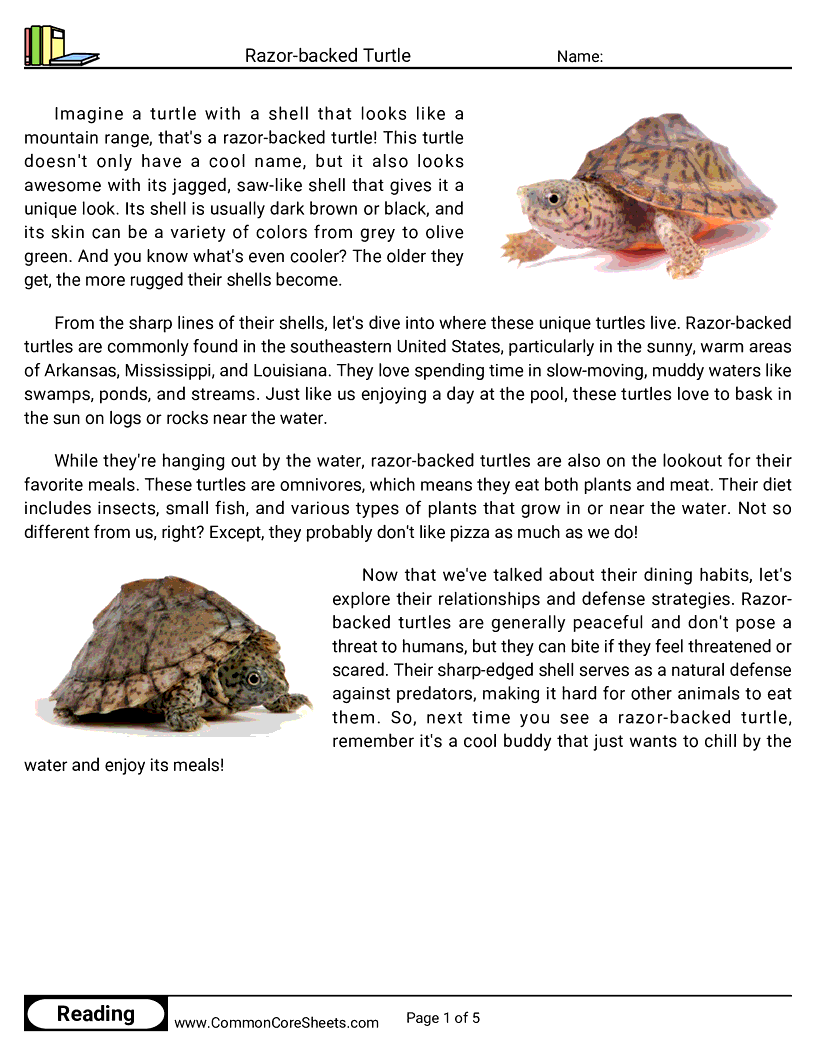
Imagine a turtle with a shell that looks like a mountain range, that's a razor-backed turtle! This turtle doesn't only have a cool name, but it also looks awesome with its jagged, saw-like shell that gives it a unique look. Its shell is usually dark brown or black, and its skin can be a variety of colors from grey to olive green. And you know what's even cooler? The older they get, the more rugged their shells become.
From the sharp lines of their shells, let's dive into where these unique turtles live. Razor-backed turtles are commonly found in the southeastern United States, particularly in the sunny, warm areas of Arkansas, Mississippi, and Louisiana. They love spending time in slow-moving, muddy waters like swamps, ponds, and streams. Just like us enjoying a day at the pool, these turtles love to bask in the sun on logs or rocks near the water.
While they're hanging out by the water, razor-backed turtles are also on the lookout for their favorite meals. These turtles are omnivores, which means they eat both plants and meat. Their diet includes insects, small fish, and various types of plants that grow in or near the water. Not so different from us, right? Except, they probably don't like pizza as much as we do!
Now that we've talked about their dining habits, let's explore their relationships and defense strategies. Razor-backed turtles are generally peaceful and don't pose a threat to humans, but they can bite if they feel threatened or scared. Their sharp-edged shell serves as a natural defense against predators, making it hard for other animals to eat them. So, next time you see a razor-backed turtle, remember it's a cool buddy that just wants to chill by the water and enjoy its meals!
Razor-backed turtles are fascinating creatures that can be found in the wild. These turtles are known for their distinctive appearance, featuring a sharp, serrated ridge along their shells. They can grow up to 24 inches in length and have a unique pattern on their shells, making them easy to identify. In this article, we\'ll learn more about their habitat, diet, and how they interact with humans and other animals.
The preferred habitat of razor-backed turtles is freshwater environments such as ponds, lakes, and slow-moving rivers. They can be found in the southeastern United States, from Texas to Florida, and up to Oklahoma and Arkansas. These turtles enjoy basking in the sun on rocks or logs near the water during the day, and can often be seen swimming just below the surface. At night, they burrow into the mud at the bottom of the water to sleep.
When it comes to their diet, razor-backed turtles are omnivores, meaning they eat both plants and animals. They mainly feed on aquatic plants, insects, snails, and small fish. These turtles have strong jaws that allow them to crush the shells of snails and clams. They are also known to scavenge for dead animals in the water.
Razor-backed turtles have a unique relationship with humans and other animals. While they are not considered dangerous to humans, they can bite if they feel threatened or scared. They are sometimes kept as pets in captivity, but it is essential to provide them with a suitable habitat and diet to ensure their health and wellbeing. In the wild, these turtles play an essential role in their ecosystem by helping to control insect and snail populations.
Let\'s learn some interesting facts about the razor-backed turtle and how they differ from other turtle species. The razor-backed turtle is also known as the sawback turtle due to the sharp, serrated ridge on its shell. Unlike some other turtle species, the razor-backed turtle can\'t completely hide inside its shell, making it more vulnerable to predators. However, their unique shell design may help deter predators by making them harder to bite or grasp.
In conclusion, razor-backed turtles are fascinating creatures that play an essential role in their ecosystems. Their unique appearance, diet, and habitat make them an interesting species to study and admire.
Meet the fascinating razor-backed turtle, a unique reptile that\'s sure to capture your interest. This amazing creature is known for its distinct appearance, which includes a sharp, keel-like ridge running down the center of its shell. Razor-backed turtles can be found in a variety of colors, from olive green to dark brown, helping them blend in with their surroundings. They\'re relatively small in size, with adult turtles measuring around 5 to 6 inches in length. These turtles are native to the southeastern United States, particularly in areas with slow-moving bodies of water such as ponds, lakes, and swamps.
In the wild, razor-backed turtles have a diverse diet that keeps them healthy and strong. They are omnivores, which means they eat both plants and animals. Some of their favorite foods include insects, tadpoles, small fish, and various aquatic plants. In fact, they play an important role in their ecosystem by controlling insect populations and helping to maintain the balance of their habitats. Their sharp beaks and strong jaws help them catch and eat their prey with ease.
The life cycle of a razor-backed turtle is quite fascinating and filled with unique stages. During mating season, which usually occurs in the spring, female turtles lay their eggs in sandy or loamy soil near the water\'s edge. The eggs incubate for about 70 to 80 days before the baby turtles, or hatchlings, emerge and make their way to the water. These hatchlings grow and develop into juveniles, then eventually into adult turtles. Razor-backed turtles can live up to 15 to 20 years in the wild, depending on their environment and the availability of food.
Razor-backed turtles have some interesting relationships with both humans and other animals. In some areas, people enjoy keeping these turtles as pets because of their unique appearance and manageable size. However, it\'s important to remember that they are wild animals and require proper care and attention to thrive in captivity. In their natural habitats, these turtles share their homes with many other animals, such as frogs, fish, and birds. Their presence contributes to the overall health and balance of their ecosystems.
Lastly, let\'s explore the razor-backed turtle\'s defenses and how they differ from other turtle species. Their most noticeable defense is their sharp, keel-like shell ridge, which can deter predators from attempting to eat them. Like many turtles, they also have the ability to retract their head and limbs into their shell for protection. Compared to other turtle species, razor-backed turtles have a more streamlined shell, which aids in swimming and navigating through their aquatic habitats. These unique features not only set them apart from other turtles but also contribute to their survival in the wild.
About this worksheet
Students read an informational passage about the razor-backed turtle and answer comprehension questions about its features and habitat.
This worksheet is designed to enrich kids' reading comprehension with a focus on the unique Razor-backed Turtle. Boasting 20 interactive questions, students will explore various aspects from the turtle's physical characteristics to their behavior, diet, and habitat. Offering flexibility, this worksheet can be customized to suit individual needs, transformed into flashcards for tactile learning, or used effectively in distance learning environments.
Student objectives
- Read a nonfiction passage about an animal and understand the main points
- Find specific facts and details in the text to answer questions
- Learn new vocabulary related to turtles and their habitats
- Practice explaining what you read in your own words
Everyday practice
- Read an information card at a zoo or aquarium about an animal you're looking at
- Look up facts about a pet or wild animal you're curious about
- Answer questions after reading a nature article or book
- Share interesting facts about an animal with a friend or family member