Green Iguana Worksheet Download
Free reading worksheets on Green Iguana. Each worksheet has 20 problems with an answer key and are ideal for teachers and homeschooling. You can download the PDF, create a set of flash cards or set it up for online learning.
Select a Different Activity
>


Sheet Information >
Available at 2nd grade, 3rd grade, 4th grade, 5th grade and 6th grade reading levels.
Read the passage
Meet the green iguana, a fascinating and colorful reptile that is loved by many! Green iguanas have a vibrant green color and can grow up to 6 feet long, making them easy to spot in their natural habitats. These amazing creatures are mostly found in the rainforests of Central and South America, as well as some Caribbean islands, where they spend most of their time lounging on tree branches or basking in the sun.
When it comes to food, green iguanas are herbivores, which means they only eat plants. They love munching on leaves, flowers, and fruits, making them important for the environment as they help control the growth of plants. In the wild, green iguanas need to be careful of predators like hawks, snakes, and even large mammals, but they have some cool defenses to protect themselves, like their strong tail that they can whip at enemies, or their ability to drop from high branches and run away quickly!
Green iguanas have a unique life cycle and interesting relationships with humans and other animals. Female iguanas lay eggs in burrows, and after about three months, baby iguanas hatch and start their journey exploring the world. While some people keep green iguanas as pets, it\'s important to remember that they are wild animals and should be treated with care and respect.
In the above multidimensional PHP array, each paragraph is split into sentences, following the format provided in the question. Each paragraph introduces a topic about green iguanas, with the final sentence of the last paragraph serving as a concluding statement.
Get ready to learn all about the fascinating green iguana! These cool reptiles are known for their bright green color and long tails. They spend most of their time in the trees, as they love to climb and bask in the sun. Green iguanas can be found in Central and South America, as well as some parts of the Caribbean.
Now, let\'s talk about what green iguanas like to eat and their life cycle. These reptiles are herbivores, which means they mostly eat plants, like leaves, flowers, and fruits. Green iguanas start their life as eggs, then hatch into tiny babies and grow into adults, which can live around 20 years. These interesting creatures have a special relationship with humans, as some people have them as pets or admire them in the wild.
Lastly, we\'ll explore how green iguanas interact with other animals and protect themselves. In the wild, they share their habitat with many other creatures, like birds, insects, and other reptiles. When they feel threatened, green iguanas can use their tails to whip at their attackers, or simply run away and hide. Although they are similar to other iguana species, green iguanas stand out because of their unique color and size.
Now that you know more about the amazing green iguana, you can share these fun facts with your friends and family.
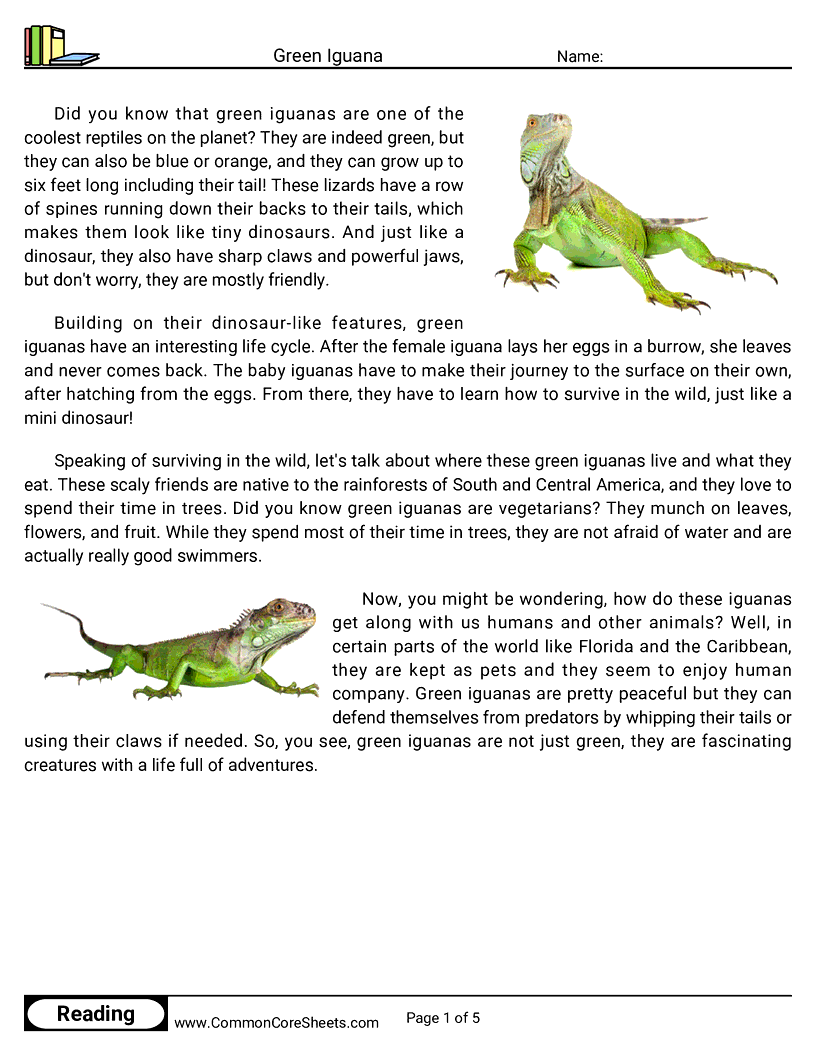
Did you know that green iguanas are one of the coolest reptiles on the planet? They are indeed green, but they can also be blue or orange, and they can grow up to six feet long including their tail! These lizards have a row of spines running down their backs to their tails, which makes them look like tiny dinosaurs. And just like a dinosaur, they also have sharp claws and powerful jaws, but don't worry, they are mostly friendly.
Building on their dinosaur-like features, green iguanas have an interesting life cycle. After the female iguana lays her eggs in a burrow, she leaves and never comes back. The baby iguanas have to make their journey to the surface on their own, after hatching from the eggs. From there, they have to learn how to survive in the wild, just like a mini dinosaur!
Speaking of surviving in the wild, let's talk about where these green iguanas live and what they eat. These scaly friends are native to the rainforests of South and Central America, and they love to spend their time in trees. Did you know green iguanas are vegetarians? They munch on leaves, flowers, and fruit. While they spend most of their time in trees, they are not afraid of water and are actually really good swimmers.
Now, you might be wondering, how do these iguanas get along with us humans and other animals? Well, in certain parts of the world like Florida and the Caribbean, they are kept as pets and they seem to enjoy human company. Green iguanas are pretty peaceful but they can defend themselves from predators by whipping their tails or using their claws if needed. So, you see, green iguanas are not just green, they are fascinating creatures with a life full of adventures.
Hey there, let\'s talk about the amazing green iguana! These fascinating creatures are a type of lizard, known for their vibrant green color and friendly nature. Green iguanas can grow up to 6 feet long, including their long, whip-like tail. They also have unique features like the row of spines running down their back and their dewlap, which is a flap of skin under their chin!
Green iguanas are found in a variety of habitats, mostly in Central and South America. They love to live in tropical rainforests, near rivers and in trees, as they are excellent climbers. Sometimes, you can even find them in suburban areas, like backyards and parks! But remember, they are wild animals and should be admired from a distance.
Did you know that green iguanas are herbivores? This means they mostly eat plants, such as leaves, flowers, and fruits. Occasionally, they might munch on insects or other small animals, but it\'s pretty rare. It\'s important for them to eat a balanced diet to stay healthy and strong.
Let\'s explore the life cycle of a green iguana! First, the female lays her eggs - usually around 20 to 70 - in a hole she digs in the ground. After about 3 months, tiny baby iguanas hatch from the eggs and begin their journey of life. Green iguanas can live for 10 to 15 years in the wild, but in captivity, they can live even longer!
Lastly, green iguanas interact with humans and other animals in different ways. In some places, they are kept as exotic pets, but they require a lot of care and attention. In the wild, they have some natural predators like birds of prey, snakes, and large mammals. To defend themselves, they use their sharp claws, strong tail, and even their ability to change color to blend in with their surroundings.
As we have discovered, green iguanas are fascinating creatures with unique features, interesting diets, and a life cycle filled with adventure. Remember to always respect these beautiful animals and their habitats, and perhaps one day you can spot one in the wild!
Meet the green iguana, a fascinating reptile that\'s sure to capture your attention! These large lizards are known for their vibrant green color and can grow up to 5-7 feet in length. They have a row of spines that run down their back, and they\'re equipped with strong limbs and sharp claws. Green iguanas are excellent climbers and are often found high up in trees. They\'re native to Central and South America, and can also be found in parts of the Caribbean.
Did you know that green iguanas are herbivores? This means that they mainly eat plants, including leaves, flowers, and fruits. In fact, they have a special digestive system that allows them to break down plant material more efficiently. It\'s important for green iguanas to have a balanced diet to stay healthy and strong. They can occasionally eat insects or other small animals, but it\'s not a significant part of their diet.
Let\'s talk about the life cycle of a green iguana. They start their life as eggs, which are laid by the female in a burrow or a nest. After about 10-15 weeks, the baby iguanas hatch and start their journey into the world. Green iguanas can live for around 10-15 years in the wild, but some in captivity have been known to live for over 20 years. They reach adulthood at about 3 years of age, and then they\'re ready to find a mate and continue the cycle.
Green iguanas have some interesting relationships with humans and other animals. In their natural habitat, they play an important role in the ecosystem by spreading seeds and controlling the growth of plants. However, they can also be considered pests in some areas, where they damage crops or infrastructure. Many people keep green iguanas as pets, but they require a lot of care and attention to thrive in captivity. In the wild, iguanas need to watch out for predators such as birds of prey, snakes, and large mammals.
There are some key differences between green iguanas and other species of iguanas. For instance, they\'re much larger than most other types, and their bright green color sets them apart. Some other iguana species, like the marine iguana, have adapted to live in completely different environments. Green iguanas also have a unique set of behaviors, like their ability to 'drop' their tail as a defense mechanism. All in all, green iguanas are truly amazing creatures with their own unique characteristics and adaptations.
About this worksheet
Students read an informational passage about the green iguana and answer comprehension questions about its habitat, diet, and traits.
This worksheet is designed to enhance children's reading skills featuring engaging problems about green iguanas. It cleverly educates them on this creature's habitat, behavior, dietary habits, physical characteristics, and more. This printable worksheet, boasting 20 questions, is customizable to meet specific learning needs and can be converted into flash cards or utilized in distance learning environments.
Student objectives
- Read a nonfiction passage about green iguanas and understand the main ideas
- Find specific facts in the text such as what iguanas eat and where they live
- Answer questions using details from the reading
- Learn new vocabulary related to reptiles and their environment
Everyday practice
- Read a sign or exhibit card about an iguana at the zoo or a pet store
- Pull key facts from an article about an animal you like
- Explain to a friend what you learned about a reptile after reading about it
- Look up information about a pet lizard before caring for one