Goliath Beetle Worksheet Download
Free reading worksheets on Goliath Beetle. Each worksheet has 20 problems with an answer key and are ideal for teachers and homeschooling. You can download the PDF, create a set of flash cards or set it up for online learning.


Sheet Information >
Available at 2nd grade, 3rd grade, 4th grade, 5th grade and 6th grade reading levels.
Read the passage
Meet the Goliath beetle, one of the largest insects on our planet! These fascinating creatures can be found in the tropical rainforests of Africa, where they like to live in warm and humid environments. Goliath beetles are known for their big size and strong bodies, which can reach up to 4 inches in length and weigh up to 3.5 ounces.
Let's learn about the life cycle of the Goliath beetle and what they eat. These beetles start their lives as small eggs, grow into larvae, then turn into pupae, and finally become adults. Goliath beetles are not picky eaters – they love to munch on fruits, tree sap, and even the remains of other plants and animals.
Now, let's explore their relationship with humans and other insects, as well as their defenses. Goliath beetles don't usually bother humans and are even admired by insect collectors who appreciate their beauty and unique size. When it comes to defending themselves, Goliath beetles rely on their tough exoskeleton and strong wings to scare away predators.
In conclusion, Goliath beetles are truly remarkable creatures with interesting characteristics and a fascinating life cycle. Next time you learn about insects, don't forget to mention these gentle giants of the insect world!
Meet the Goliath beetle, one of the largest and coolest insects on our planet! These amazing creatures can be found in the warm, tropical forests of Africa. Goliath beetles have a shiny, armored body and can grow up to 4 inches long and weigh up to 3.5 ounces. They have strong wings and can fly, but they mostly like to crawl around on trees and plants.
Now let's learn about the Goliath beetle's life cycle and what they eat. Like other insects, they go through four stages of life: egg, larva, pupa, and adult. During the larva stage, they eat a lot of decaying plant material and even some animal remains to grow big and strong. As adults, they like to snack on tree sap, fruits, and even sugary human foods if they can find it.
Finally, let's explore the Goliath beetle's relationships and how they protect themselves. These beetles usually keep to themselves and don't bother other insects, but they do have some natural predators like birds and small mammals. When threatened, Goliath beetles use their strong, horn-like structures to defend themselves. Just remember, even though Goliath beetles are fascinating creatures, it's important to admire them from a distance and protect their natural habitats.
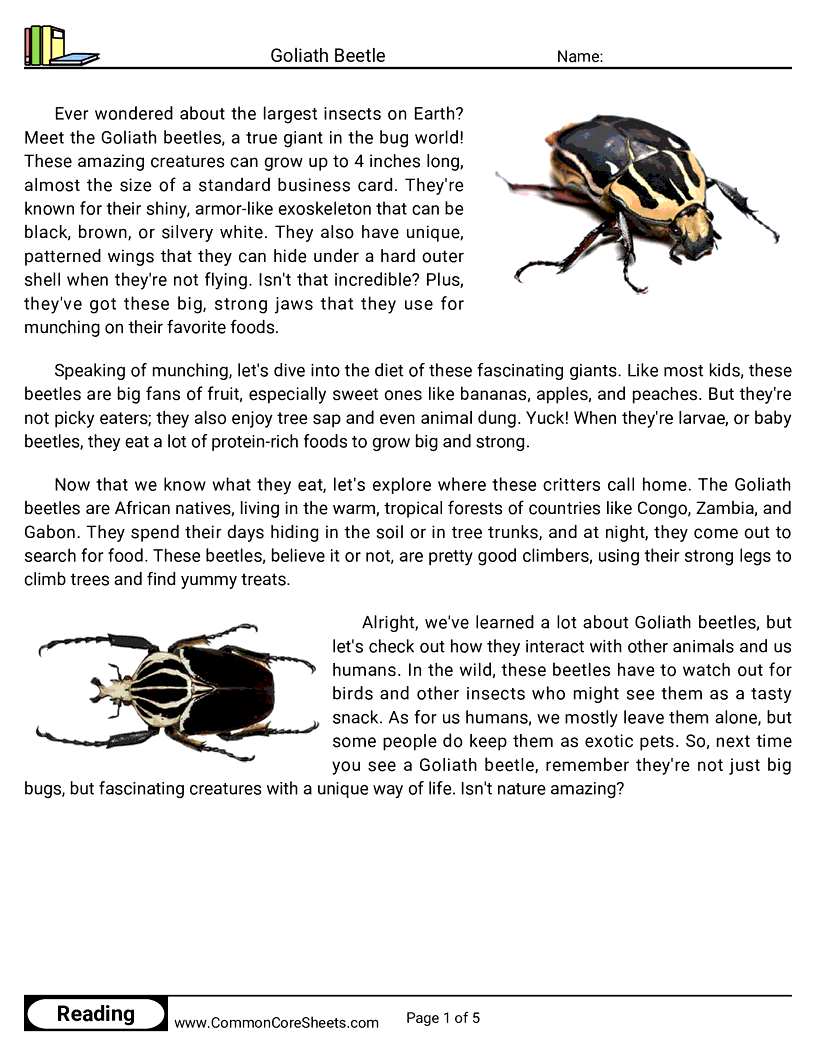
Ever wondered about the largest insects on Earth? Meet the Goliath beetles, a true giant in the bug world! These amazing creatures can grow up to 4 inches long, almost the size of a standard business card. They're known for their shiny, armor-like exoskeleton that can be black, brown, or silvery white. They also have unique, patterned wings that they can hide under a hard outer shell when they're not flying. Isn't that incredible? Plus, they've got these big, strong jaws that they use for munching on their favorite foods.
Speaking of munching, let's dive into the diet of these fascinating giants. Like most kids, these beetles are big fans of fruit, especially sweet ones like bananas, apples, and peaches. But they're not picky eaters; they also enjoy tree sap and even animal dung. Yuck! When they're larvae, or baby beetles, they eat a lot of protein-rich foods to grow big and strong.
Now that we know what they eat, let's explore where these critters call home. The Goliath beetles are African natives, living in the warm, tropical forests of countries like Congo, Zambia, and Gabon. They spend their days hiding in the soil or in tree trunks, and at night, they come out to search for food. These beetles, believe it or not, are pretty good climbers, using their strong legs to climb trees and find yummy treats.
Alright, we've learned a lot about Goliath beetles, but let's check out how they interact with other animals and us humans. In the wild, these beetles have to watch out for birds and other insects who might see them as a tasty snack. As for us humans, we mostly leave them alone, but some people do keep them as exotic pets. So, next time you see a Goliath beetle, remember they're not just big bugs, but fascinating creatures with a unique way of life. Isn't nature amazing?
Let's dive into the fascinating world of Goliath beetles, one of the largest and most unique insects on our planet. These amazing creatures can grow up to 4.3 inches long and weigh up to 3.5 ounces. Goliath beetles have strong wings, which allow them to fly, and their bodies are covered in a hard, protective shell. Their unique appearance, with a mix of black, white, and brown patterns, makes them stand out from other beetle species.
Goliath beetles are found in the warm, tropical forests of Africa, where they can thrive in the lush environment. They spend most of their time living in trees, searching for food, and hiding from predators. The African rainforests provide the perfect habitat for these beetles, with plenty of food and shelter to support their growth and development. It is in these forests that Goliath beetles play a crucial role in the ecosystem by breaking down dead plant material.
The life cycle of a Goliath beetle is quite interesting, starting with the female laying her eggs in the soil. Once the eggs hatch, the larvae begin to feed on decaying plant matter, growing rapidly over several months. As the larva reaches its full size, it will form a protective cocoon and transform into a pupa. Finally, the adult Goliath beetle emerges from the pupa, ready to search for a mate and continue the cycle.
Goliath beetles have a unique relationship with humans and other insects, often being admired for their size and beauty. In some cultures, they are even considered good luck charms and are kept as pets. Despite their intimidating size, Goliath beetles are harmless to humans and mainly focus on eating plants and fruits. Other insects, such as ants and termites, may share their habitat but do not pose a threat to these gentle giants.
Lastly, let's look at some interesting facts about Goliath beetles that make them even more fascinating. Each Goliath beetle has a small horn on its head, which males use for fighting and impressing females during mating season. These beetles can also release a foul-smelling odor as a defense mechanism when they feel threatened. Goliath beetles are a great example of the incredible diversity of life on Earth, showcasing the unique adaptations and features that set them apart from other species.
Meet the Goliath beetle, one of the largest and most fascinating insects on our planet. These incredible creatures can grow up to 4 inches long and weigh as much as a golf ball. Their name is inspired by the biblical giant Goliath, which is fitting considering their impressive size. Goliath beetles are known for their stunning, colorful appearance, with a combination of black, white, and brown patterns. You can easily recognize them by their large, fan-like antennae and strong, bulky bodies.
Goliath beetles call the African continent their home, where they live in tropical forests and savannas. They prefer to stay close to the ground, hiding among the leaf litter and decomposing plant material. These beetles thrive in warm, humid environments, which provide the perfect conditions for them to grow and reproduce. During the day, they are usually inactive and well-camouflaged among the plants. However, at night, they become more active and start searching for food and mates.
Speaking of food, Goliath beetles have quite an interesting diet. As larvae, they feed on decaying plant material and animal remains, making them nature's little recyclers. Once they become adults, their diet changes to include tree sap, ripe fruits, and even other insects. They use their powerful jaws to bite and chew their food, making it easier for them to digest. Despite their intimidating size, Goliath beetles are not considered dangerous to humans.
The life cycle of a Goliath beetle is truly remarkable. It all starts when a female beetle lays her eggs in the soil or rotting wood. After a few weeks, the eggs hatch into larvae, which then start feeding on their surroundings to grow and develop. This larval stage can last up to several months, during which the larvae will molt several times before transforming into a pupa. Finally, the pupa will metamorphose into a fully-grown adult beetle, ready to start the cycle all over again.
Goliath beetles have unique relationships with both humans and other insects. For example, people in some African cultures believe that these beetles bring good luck and even keep them as pets. In the wild, Goliath beetles have few natural predators, thanks to their tough exoskeletons and strong defenses. However, they do share their habitat with many other insects, creating a complex web of interactions and dependencies. As one of the most iconic and captivating insects in the world, Goliath beetles truly stand out among their peers.
About this worksheet
Students read a passage about the Goliath beetle and answer questions to show they understood the key details.
This worksheet is designed to enrich children's reading and comprehension skills by delving into the intriguing world of Goliath beetles. Through multiple-choice questions, kids will learn about the beetle's size, diet, habitat, and interactions with other creatures. This customizable worksheet can be adapted for flashcards or used in distance-learning environments, providing an engaging way to build reading proficiency while exploring zoology.
Student objectives
- Read a nonfiction passage about the Goliath beetle
- Find specific facts and details in what you read
- Answer questions using information from the text
- Learn new vocabulary about insects and their habits
Everyday practice
- Reading a fact sheet at a zoo or insect exhibit and answering questions about it
- Looking up information about an animal for a school report
- Reading a nature article and telling someone what you learned
- Understanding a science book or magazine about bugs