Filbert Weevil Worksheet Download
Free reading worksheets on Filbert Weevil. Each worksheet has 20 problems with an answer key and are ideal for teachers and homeschooling. You can download the PDF, create a set of flash cards or set it up for online learning.


Sheet Information >
Available at 2nd grade, 3rd grade, 4th grade, 5th grade and 6th grade reading levels.
Read the passage
Meet the Filbert Weevil, a teeny-tiny insect that loves to munch on nuts and seeds. These little creatures have a long snout and are usually brown or black in color. They can be found in forests, gardens, and even your backyard, especially if you have nut trees like hazelnuts or filberts.
The life of a Filbert Weevil starts when it is just an egg laid by its mom inside a nut. As the egg hatches, a small larva comes out and begins to eat the nut, growing bigger and bigger until it's ready to become an adult weevil. This whole process can take several months, and once they grow up, they start the cycle all over again.
Filbert Weevils are a part of the big insect world, and they have their own ways of staying safe. Their brown or black color helps them blend in with the tree bark and avoid being spotted by birds or other predators. While Filbert Weevils may not be the most popular insects among humans, they play a role in nature by helping to break down and recycle plant materials.
Meet the fascinating Filbert weevil! These tiny bugs are a type of beetle that love to munch on hazelnuts, also known as filberts, which is how they got their name. They have long snouts, called rostrums, which they use to bore holes into the nuts to lay their eggs. Filbert weevils are usually brown or black and can be found in many parts of the world where hazelnut trees grow.
Let's explore the life cycle of Filbert weevils! Adult weevils lay their eggs inside the nuts, and when the larvae hatch, they have a safe and yummy place to grow. As they eat the nut, they grow bigger and eventually turn into pupae, which is a resting stage before they become adult weevils. Once they're all grown up, they leave the nut and start the cycle all over again.
Now, let's learn about their relationship to humans and other insects. For people who grow hazelnuts, Filbert weevils can be a bit of a problem, as they can damage the nuts and make them unsellable. In the insect world, Filbert weevils have a unique defense - they play dead when they feel threatened, tricking predators into leaving them alone. While there are many types of weevils, Filbert weevils stand out for their specific love of hazelnuts and their interesting life cycle.
In conclusion, Filbert weevils are fascinating little creatures that play a unique role in the world of insects and have a special connection to the hazelnut trees they call home.
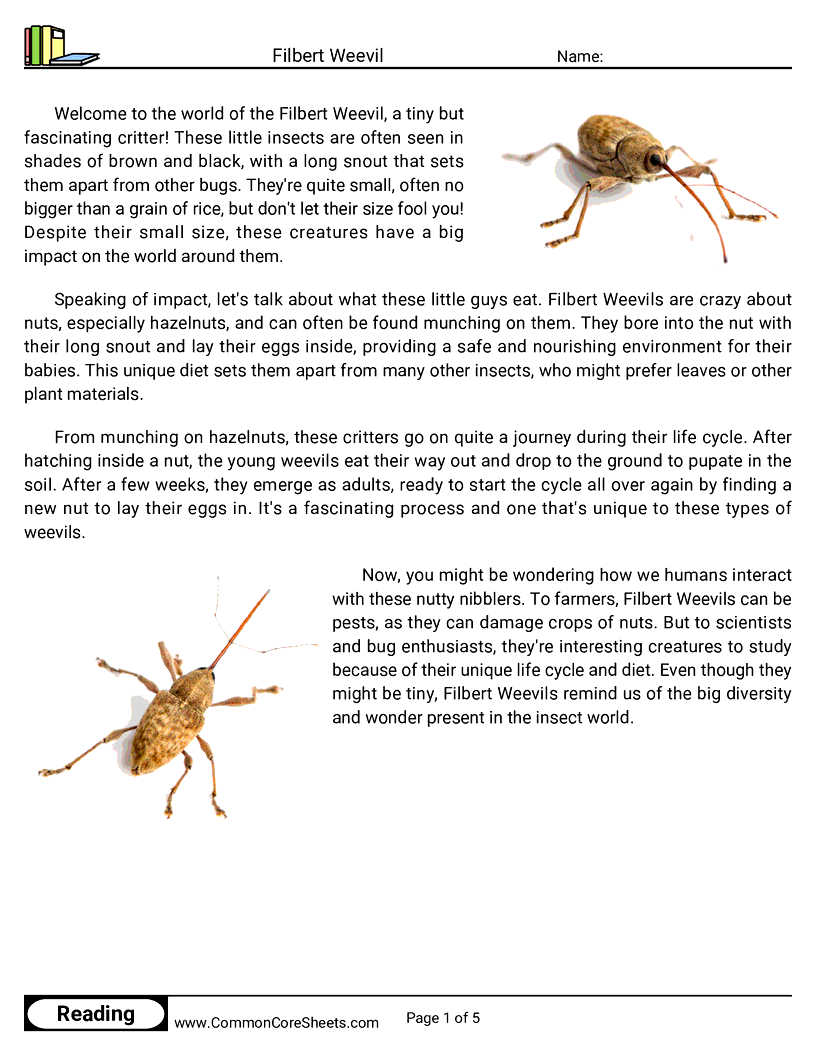
Welcome to the world of the Filbert Weevil, a tiny but fascinating critter! These little insects are often seen in shades of brown and black, with a long snout that sets them apart from other bugs. They're quite small, often no bigger than a grain of rice, but don't let their size fool you! Despite their small size, these creatures have a big impact on the world around them.
Speaking of impact, let's talk about what these little guys eat. Filbert Weevils are crazy about nuts, especially hazelnuts, and can often be found munching on them. They bore into the nut with their long snout and lay their eggs inside, providing a safe and nourishing environment for their babies. This unique diet sets them apart from many other insects, who might prefer leaves or other plant materials.
From munching on hazelnuts, these critters go on quite a journey during their life cycle. After hatching inside a nut, the young weevils eat their way out and drop to the ground to pupate in the soil. After a few weeks, they emerge as adults, ready to start the cycle all over again by finding a new nut to lay their eggs in. It's a fascinating process and one that's unique to these types of weevils.
Now, you might be wondering how we humans interact with these nutty nibblers. To farmers, Filbert Weevils can be pests, as they can damage crops of nuts. But to scientists and bug enthusiasts, they're interesting creatures to study because of their unique life cycle and diet. Even though they might be tiny, Filbert Weevils remind us of the big diversity and wonder present in the insect world.
Meet the Filbert Weevil, a fascinating little insect that you may not have heard of before. These small, brown beetles are known for their long snouts, which they use to bore into nuts and seeds. They're a part of the Curculionidae family, which is one of the largest families of beetles in the world. Let's dive into the interesting world of Filbert Weevils and learn some fun facts about them.
First, let's talk about what Filbert Weevils like to eat. Their favorite food is the filbert, also known as the hazelnut, but they also enjoy acorns and other nuts. They use their long snouts to drill holes into the nuts and then lay their eggs inside. When the eggs hatch, the larvae feed on the nuts, making them a part of their diet.
Now, let's discuss where Filbert Weevils like to live. They can be found in many parts of North America, Europe, and Asia. These weevils prefer wooded areas where they can find plenty of nuts and seeds to munch on. They're especially common in areas where hazelnut trees are grown, which is where they get their name.
Let's take a look at the life cycle of the Filbert Weevil. The female weevil lays her eggs inside a nut, and after about two weeks, the eggs hatch into small, white larvae. The larvae feed on the nut for several weeks, then pupate, transforming into adult weevils. The entire life cycle lasts about a year, and adult weevils live for several months.
Lastly, let's explore the relationship between Filbert Weevils, humans, and other insects. While Filbert Weevils are not harmful to humans, they can be a nuisance to people who grow hazelnut trees or other nut-bearing plants. In the insect world, Filbert Weevils have few natural enemies, but some birds and small mammals might eat them. When compared to other weevil species, Filbert Weevils stand out due to their preference for nuts and seeds, as well as their long snouts.
In conclusion, Filbert Weevils are fascinating insects with unique characteristics and an interesting life cycle. While they may be a nuisance to nut growers, they are an important part of our natural world and offer a glimpse into the diverse and complex lives of insects.
Get ready to learn about the fascinating Filbert Weevil, a tiny but mighty insect! These little creatures might be small, but they have a big impact on their environment. With their unique features and behaviors, Filbert Weevils are an interesting subject for curious minds like yours. So let's dive in and explore the world of these amazing insects. In this article, we'll discover their diet, habitat, and even some cool facts you might not know.
First, let's talk about what Filbert Weevils eat. These tiny insects are big fans of filberts, also known as hazelnuts. In fact, they're so into these nuts that they even lay their eggs inside them! The larvae then feast on the nut until they're ready to become adults and start the cycle all over again. While they may cause some damage to hazelnut crops, Filbert Weevils play an important part in the life cycle of these tasty nuts.
Now, let's discuss where Filbert Weevils call home. These insects can be found in various parts of North America, especially in areas with lots of hazelnut trees. You might spot them in forests, fields, or even your own backyard if you have hazelnut trees nearby. Filbert Weevils are most active during the warmer months, so that's the best time to catch a glimpse of them. Just remember to look closely, as they're quite small and can be hard to spot!
Let's take a closer look at the life cycle of Filbert Weevils. These insects go through four stages of development: egg, larva, pupa, and adult. As we mentioned earlier, the female Filbert Weevil lays her eggs inside a hazelnut. The larvae then eat their way through the nut, growing and developing until they become pupae. Finally, the adult weevil emerges, ready to find a mate and start the cycle all over again.
Finally, let's explore some fun facts about Filbert Weevils and their relationships with other creatures. While they can cause damage to hazelnut crops, they don't pose any harm to humans. In fact, they can even be helpful by providing a food source for other insects and animals like birds. Their main defense against predators is their size and ability to blend in with their surroundings. So, although they may be small, Filbert Weevils play a big role in the ecosystem they inhabit.
In conclusion, Filbert Weevils are tiny insects with a fascinating life cycle, unique diet, and important role in their ecosystem. By learning about these remarkable creatures, you can gain a greater appreciation for the often-overlooked world of insects. So next time you're outside, keep an eye out for the amazing Filbert Weevil!
About this worksheet
Students read an informational passage about the filbert weevil and answer comprehension questions about its traits, habits, and life cycle.
This worksheet is designed to engage children in learning about the Filbert Weevil through reading comprehension exercises. It includes 20 unique problems focusing on key insights such as the insect's characteristics, life cycle, diet, and impact on nut crops. It's versatile enough to be customized and converted into flash cards for a more hands-on experience. Its content is also catered to encourage distance learning. Promote fun, in-depth understanding of the Filbert Weevil with this resourceful reading worksheet.
Student objectives
- Read a nonfiction passage about an insect and understand the main ideas
- Find specific facts and details stated in the text
- Learn new vocabulary about bugs and how they live
- Answer questions using evidence from what you read
Everyday practice
- Read a fact sheet about an animal at a zoo or nature center
- Look up information about a bug you find outside
- Understand a description on a nature app or website
- Explain to a friend what you learned from an article you read