Emu Worksheet Download
Free reading worksheets on Emu. Each worksheet has 20 problems with an answer key and are ideal for teachers and homeschooling. You can download the PDF, create a set of flash cards or set it up for online learning.


Sheet Information >
Available at 2nd grade, 3rd grade, 4th grade, 5th grade and 6th grade reading levels.
Read the passage
Let's learn about Emus, a special bird from Australia. These birds are really tall, sometimes up to 6 feet, and they have long necks and legs, just like ostriches but they're a bit smaller. They live in lots of different places in Australia, like forests, grasslands, and even deserts, and they love to eat plants, bugs, and sometimes even small animals.
Now, let's talk about the life cycle of an Emu and how they interact with others. Did you know that it's the dad Emu who takes care of the eggs and the babies? He sits on the eggs for about 8 weeks without eating or drinking anything. They're friendly with other animals, but if they feel scared, they can run really fast and even kick with their strong legs.
Finally, let's look at how Emus are different and some fun facts about them. Unlike other birds, Emus can't fly, but they can swim! They also make a cool drumming sound, not like any other bird. People in Australia sometimes keep them as pets, but they also live freely in the wild. Emus are really unique and fascinating, aren't they?
Let's talk about Emus, the second-largest bird in the world after the ostrich! These tall, fluffy birds are native to Australia and can be found all over the continent, from the hot desert to the snowy mountains. Emus have long necks, sharp beaks, and big, brown eyes. They're famous for their large size, standing up to 6.2 feet tall, and for their soft, brown feathers that give them a shaggy look.
Now, let's find out about their life cycle and diet. Unlike many other birds, it's the male emu who incubates the eggs, sitting on them for about eight weeks until they hatch. Emus are omnivores, which means they eat both plants and insects. They like to munch on fruits, seeds, flowers, insects, and even small animals when they can catch them.
Lastly, did you know that emus have a unique relationship with humans and other animals? Emus are usually friendly towards humans, but they are also known to defend themselves with a strong kick if they feel threatened. They generally get along well with other animals, but will compete with kangaroos for food. So, that's the emu for you - a giant, friendly bird that's full of surprises!
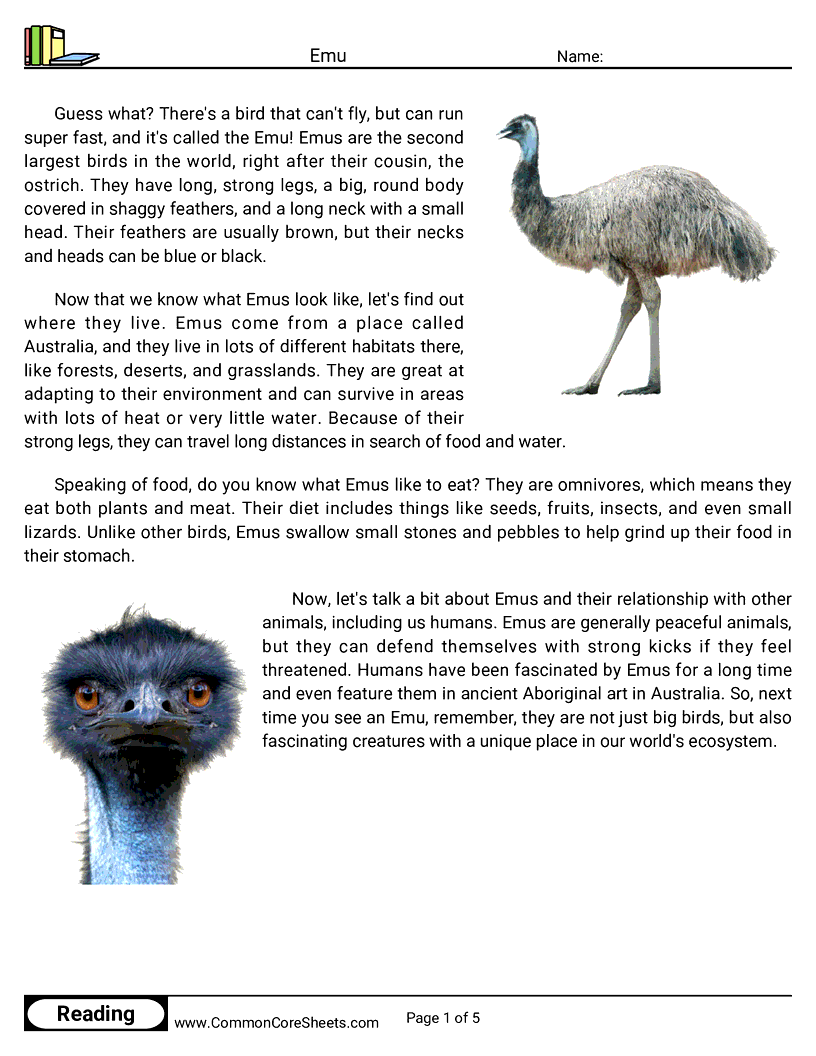
Guess what? There's a bird that can't fly, but can run super fast, and it's called the Emu! Emus are the second largest birds in the world, right after their cousin, the ostrich. They have long, strong legs, a big, round body covered in shaggy feathers, and a long neck with a small head. Their feathers are usually brown, but their necks and heads can be blue or black.
Now that we know what Emus look like, let's find out where they live. Emus come from a place called Australia, and they live in lots of different habitats there, like forests, deserts, and grasslands. They are great at adapting to their environment and can survive in areas with lots of heat or very little water. Because of their strong legs, they can travel long distances in search of food and water.
Speaking of food, do you know what Emus like to eat? They are omnivores, which means they eat both plants and meat. Their diet includes things like seeds, fruits, insects, and even small lizards. Unlike other birds, Emus swallow small stones and pebbles to help grind up their food in their stomach.
Now, let's talk a bit about Emus and their relationship with other animals, including us humans. Emus are generally peaceful animals, but they can defend themselves with strong kicks if they feel threatened. Humans have been fascinated by Emus for a long time and even feature them in ancient Aboriginal art in Australia. So, next time you see an Emu, remember, they are not just big birds, but also fascinating creatures with a unique place in our world's ecosystem.
Let's embark on an exciting journey to learn about the Emu, the second-largest bird by height, native to Australia. Emus have a unique fluffy appearance with long necks, legs, and a small beak. They can reach up to 6 feet tall and can weigh between 30 to 45 kilograms. Despite their large size, emus are flightless birds but they make up for it by being excellent runners.
Now, let's venture into the dietary habits of an emu. Emus are known to be omnivores, which means they eat both plants and small animals. Their diet mainly consists of fruits, seeds, flowers, insects, and other small creatures they find. Emus have also been known to eat stones and metals to help grind food in their digestive system.
Emus have a fascinating life cycle that might surprise you. The female emu lays a clutch of eggs, usually around 8 to 10, and then it's the male emu's job to incubate the eggs for about 55 days. Once hatched, the male continues to protect and nurture the chicks until they are old enough to fend for themselves. The young emus become fully independent at around 12 to 14 months of age.
Emus share a very interesting relationship with humans and other animals. Humans have long been fascinated by emus, and they are important in Australian Aboriginal mythology and culture. Emus generally live peacefully with other animals, but they will defend themselves fiercely if threatened. Their strong legs, equipped with sharp claws, are their primary defense against predators.
Lastly, let's look at some intriguing facts and differences between emus and other species. Unlike most birds, emus have only three toes on each foot and they lay dark green eggs. Their feathers are also unique as they have two shafts, unlike most birds that have only one. So, there you have it, the emu is indeed a fascinating creature that stands out in the bird kingdom.
Let's start off by talking about what emus are. Emus are large, flightless birds that are native to Australia. Despite their inability to fly, emus are quite fast and can reach speeds up to 30 miles per hour! Standing up to 6.2 feet tall, these birds are the second tallest bird in the world, right after the ostrich. And you know what's even cooler? They have two sets of eyelids - one for blinking and one for keeping out the dust.
Now, let's explore what these fascinating birds eat. Emus are omnivores, meaning they eat both plants and animals. Their diet includes a variety of seeds, fruits, insects, and even small animals. They also swallow small stones to grind up food in their gizzard, a special part of their stomach. And to stay hydrated, emus can go for weeks without water by extracting moisture from the food they eat.
Ever wondered about the life cycle of an emu? Their life cycle is pretty unique - the female lays the eggs, but it's the male who incubates them for two months. After the chicks hatch, the male takes care of them for up to 18 months. Emus live for about 10 to 20 years in the wild, and during their lifetime, they can lay hundreds of eggs. Interestingly, emus are solitary birds, but during breeding season, they form pairs or small groups.
Now, let's talk about emus' relationship with humans and other animals. Historically, Aboriginal people in Australia hunted emus for their meat, feathers, and oil, which was used for medicinal purposes. Today, emus are farmed for their meat, oil, and feathers, and are also popular attractions in zoos. In the wild, emus are generally peaceful, but they can become aggressive if threatened, and use their strong legs and sharp claws to defend themselves against predators. They also have a unique relationship with dingoes, as these two species often compete for the same food sources.
Finally, let's explore how emus differ from other species. While emus might look similar to ostriches, there are a few key differences. For one, emus have three toes on each foot, whereas ostriches have only two. Emus also have a distinctive pouch in their throat, which they use to make drumming or booming sounds. So there you have it, the amazing emu - a unique bird that's full of surprises!
About this worksheet
Students read a short informational passage about emus and answer comprehension questions about the facts they learned.
This worksheet is designed to enhance children's reading and comprehension skills, focusing on the subject of Emus. It contains 20 problems covering topics like the emu's physical characteristics, habitat, diet, and cultural significance. The resource is versatile - it can be customized, converted into flashcards, and utilized for distance learning, offering an engaging way to learn about this fascinating bird.
Student objectives
- Read a nonfiction passage about emus
- Find and recall facts stated in the text
- Answer questions using details from the reading
- Learn new vocabulary about animals and birds
Everyday practice
- Read a fact sheet at the zoo about an animal you see
- Look up information about a bird in a nature book
- Share interesting facts you read about with family
- Answer questions after reading an article about animals