Elk Worksheet Download
Free reading worksheets on Elk. Each worksheet has 20 problems with an answer key and are ideal for teachers and homeschooling. You can download the PDF, create a set of flash cards or set it up for online learning.


Sheet Information >
Available at 2nd grade, 3rd grade, 4th grade, 5th grade and 6th grade reading levels.
Read the passage
Elks are amazing creatures that roam the forests and grasslands of North America and eastern Asia. These large animals, also known as wapiti, have big antlers and can weigh over 700 pounds! Elks are herbivores, which means they love to munch on grass, leaves, and the bark of trees.
Now let's explore the fascinating life cycle of an elk and how they interact with other animals. Elk calves are born in the spring, and they grow up quickly, learning to walk within minutes of being born. Elks live in large groups, called herds, where they protect each other from predators like bears and wolves.
Humans and elks have a complex relationship, as these animals are both admired and hunted. Some people like to watch elks in their natural habitat, while others hunt them for their meat and antlers. It is important to respect and protect these magnificent creatures, so future generations can enjoy their beauty and majesty.
Elk, also known as wapiti, are fascinating creatures that roam the forests and grasslands of North America and Eastern Asia. These majestic animals are one of the largest members of the deer family, standing as tall as 5 feet at the shoulder and weighing up to 1,000 pounds. Elk have a unique appearance with their large antlers that can grow up to 4 feet long, which they shed and regrow every year. Their coats are brown with a lighter tan color on their rumps, and they have a distinctive bugling call that can be heard during mating season.
Elk are herbivores, which means they eat plants like grass, leaves, and bark. They live in a variety of habitats, including forests, grasslands, and even high up in mountain meadows. Elk have an interesting life cycle, starting as a calf born in the spring, growing up over the summer, and eventually becoming part of a herd with other elk. During the fall, elk participate in a mating season called the rut, where males compete for the attention of females.
Elk have a unique relationship with humans and other animals in their environment. They are an important source of food for predators like wolves and bears, and they also provide valuable resources for humans, such as meat and antlers for tools and decorations. Elk have strong defenses, like their powerful legs for running and their antlers for fighting off predators. Although they may look similar to other deer species, elk are actually more closely related to the European red deer.
In conclusion, elk are remarkable animals that can teach us a lot about the importance of respecting and understanding the natural world.
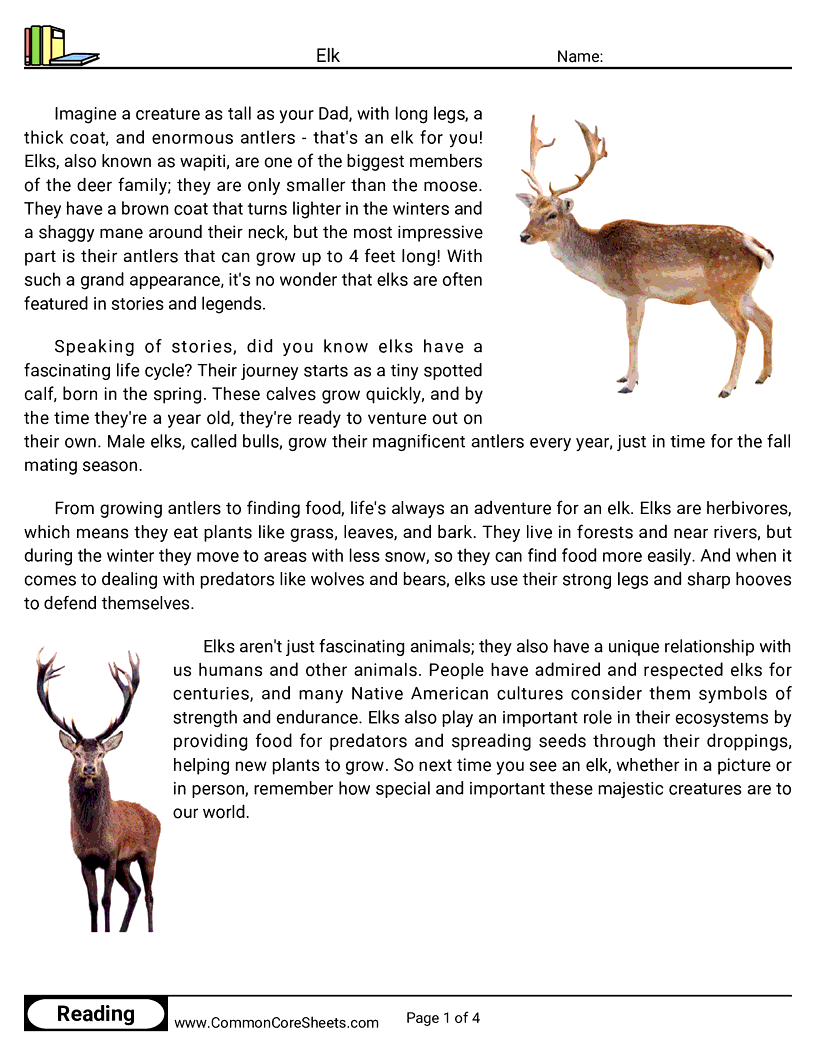
Imagine a creature as tall as your Dad, with long legs, a thick coat, and enormous antlers - that's an elk for you! Elks, also known as wapiti, are one of the biggest members of the deer family; they are only smaller than the moose. They have a brown coat that turns lighter in the winters and a shaggy mane around their neck, but the most impressive part is their antlers that can grow up to 4 feet long! With such a grand appearance, it's no wonder that elks are often featured in stories and legends.
Speaking of stories, did you know elks have a fascinating life cycle? Their journey starts as a tiny spotted calf, born in the spring. These calves grow quickly, and by the time they're a year old, they're ready to venture out on their own. Male elks, called bulls, grow their magnificent antlers every year, just in time for the fall mating season.
From growing antlers to finding food, life's always an adventure for an elk. Elks are herbivores, which means they eat plants like grass, leaves, and bark. They live in forests and near rivers, but during the winter they move to areas with less snow, so they can find food more easily. And when it comes to dealing with predators like wolves and bears, elks use their strong legs and sharp hooves to defend themselves.
Elks aren't just fascinating animals; they also have a unique relationship with us humans and other animals. People have admired and respected elks for centuries, and many Native American cultures consider them symbols of strength and endurance. Elks also play an important role in their ecosystems by providing food for predators and spreading seeds through their droppings, helping new plants to grow. So next time you see an elk, whether in a picture or in person, remember how special and important these majestic creatures are to our world.
Elk are fascinating creatures that live in North America and eastern Asia. These large animals, also known as wapiti, are part of the deer family and are related to the smaller deer you might see in your backyard. They have long, slender legs and a distinctive reddish-brown coat, while the males grow impressive antlers that can reach up to four feet in length. Elk are known for their impressive size, with males weighing up to 700 pounds and females around 500 pounds.
Elk live in various habitats, such as forests, meadows, and even deserts. They migrate with the seasons, moving to higher elevations in the summer and returning to lower elevations in the winter. This migration is essential for their survival, as it helps them find food and escape harsh weather conditions. Another interesting fact about elk is that they are social animals and live in large groups called herds.
The elk's diet mainly consists of plants, including grasses, leaves, and bark. They have a four-chambered stomach, which allows them to break down and digest their food efficiently. Elk need to eat a lot to maintain their large bodies, so they spend the majority of their day grazing. During the winter months, when food is scarce, elk will dig through the snow with their hooves to find buried plants.
The life cycle of an elk is quite interesting, starting from when they are born as calves. Elk calves are born in the spring, and they stay with their mothers for about a year before they become independent. Males will eventually grow large antlers, which they use during the mating season, called the rut, to show off to females and compete with other males. Elk can live up to 15 years in the wild, but they face many challenges, such as predators and harsh weather conditions.
Elk have a unique relationship with humans and other animals. Humans have hunted elk for thousands of years for their meat, hides, and antlers. Elk also play an important role in their ecosystem, as their grazing helps maintain the health of the plant life in their habitat. Predators, such as wolves and bears, rely on elk as a food source, demonstrating the interconnectedness of the natural world.
In conclusion, elk are incredible animals that play a significant role in their ecosystems. They have adapted to their environments, showcasing their resilience and ability to survive. Learning about elk helps us better understand and appreciate the complexities of nature, and highlights the importance of protecting these magnificent creatures and their habitats.
Elk are fascinating animals that roam the wild landscapes of North America and parts of Asia. These majestic creatures, also known as wapiti, are one of the largest species of deer with their distinct large antlers. They have a beautiful coat that changes color with the seasons, turning from a reddish-brown in summer to a grayish-brown in winter. Elk are social animals that live in groups called herds, which are usually led by a dominant male. Their impressive size, strength, and grace make them a sight to behold in the wild.
The diet of an elk primarily consists of grasses, shrubs, and other plants. During the warmer months, they will graze on fresh, green vegetation, while in the winter they'll consume twigs, bark, and even the occasional small tree. Elk have a unique four-chambered stomach, which helps them break down and digest tough plant materials. This efficient digestive system allows them to extract the maximum amount of nutrients from their food. An adult elk can eat up to 20 pounds of vegetation each day!
Elk have a fascinating life cycle that includes a unique mating season called the rut. During the rut, male elk will compete with each other for the attention of females by bugling, a loud and eerie sound that can be heard from miles away. After mating, the female elk will give birth to a single calf about eight months later, usually in the spring. Calves are born with spots that help them blend in with their surroundings and stay hidden from predators. By the time they are a year old, the young elk will be almost fully grown and ready to start their own families.
Humans have shared a long relationship with elk, dating back thousands of years. Native American tribes revered the elk for its strength and grace, using its meat for food and its hide for clothing and shelter. Today, elk populations are managed through hunting and conservation efforts to ensure their survival in the wild. Many people enjoy watching elk in their natural habitats, and some even travel to national parks and wildlife refuges for a chance to see these magnificent animals up close. It's important for us to respect and protect elk and their habitats, so future generations can continue to enjoy their presence.
Elk have a unique relationship with other animals in their ecosystem. They are an important food source for predators such as wolves, bears, and mountain lions. Elk have strong defenses, like their powerful kicks and sharp antlers, to ward off these predators. Their large size sets them apart from other deer species, like the smaller and more common white-tailed deer. An interesting fact about elk is that their antlers can grow up to an inch per day during their peak growth period in the summer.
About this worksheet
Students read a short informational passage about elk and answer comprehension questions about the details.
This worksheet is designed to enhance children's reading skills through interactive multiple-choice questions about elks. Covering topics from elk biology to their cultural significance in Native American societies, students will get to improve their knowledge about this fascinating animal. The comprehensive content can be tailored to individual learning needs, converted into flash cards for review, or utilized for effective distance learning.
Student objectives
- Read an informational passage about elk and understand the main idea
- Find specific facts and details in the text
- Answer questions using evidence from the reading
- Build vocabulary related to animals and their habitats
Everyday practice
- Understand facts you read about animals in a nature book
- Recall details from a sign at a zoo or wildlife park
- Explain to someone what an elk is after reading about one
- Answer questions about an article you read online or in a magazine