Desert Cotton Tail Rabbit Worksheet Download
Free reading worksheets on Desert Cotton Tail. Each worksheet has 20 problems with an answer key and are ideal for teachers and homeschooling. You can download the PDF, create a set of flash cards or set it up for online learning.


Sheet Information >
Available at 2nd grade, 3rd grade, 4th grade, 5th grade and 6th grade reading levels.
Read the passage
Desert cottontails are fascinating creatures that live in the dry habitats of North America. These cute, fluffy animals have big ears, powerful hind legs, and a small, fluffy tail that looks like a cotton ball. You can find desert cottontails in places like deserts, grasslands, and scrublands, where they can easily hide from predators.
These little bunnies have a varied diet that helps them grow and stay healthy. They love to munch on grasses, plants, and even cactus. Desert cottontails are also known to eat their own poop, which helps them get more nutrients from their food.
Desert cottontails are masters of survival, with many interesting ways to stay safe and interact with other animals. They have a special zig-zag running pattern to escape predators like coyotes and hawks. Although they are sometimes considered pests by humans, they play a vital role in their ecosystem by helping to spread seeds and provide food for other animals.
In the multidimensional array above, each paragraph is represented by a key-value pair, with the key being the paragraph number and the value being another associative array containing the sentences of the paragraph. Each sentence is also represented by a key-value pair, with the key being the sentence number and the value being the actual text of the sentence.
Desert cottontail rabbits are fascinating creatures that live in the southwestern United States and Mexico. These cute, fluffy animals have a soft, brownish-gray fur with a white tail that resembles a cotton ball, which is how they got their name. They make their homes in the dry, arid areas of the desert, hiding in burrows or under bushes to stay cool and avoid predators. Desert cottontails can be found in various habitats, such as grasslands, deserts, and even the edges of forests.
These rabbits have a varied diet, which helps them thrive in their environment. They love munching on grass, leaves, and flowers, but they will also eat fruits and vegetables when they can find them. Desert cottontails have a unique relationship with humans, as they are considered both a pest and a valuable part of the ecosystem. While they can cause damage to gardens and crops, they also serve as an important prey species for many predators, like coyotes and hawks.
Desert cottontails also have some interesting ways to protect themselves from danger. They have excellent hearing and can detect predators from far away, allowing them to quickly escape to safety. These rabbits are also good at blending in with their surroundings, thanks to their camouflaged fur. When comparing them to other species of rabbits, desert cottontails are smaller and have longer ears to help them stay cool in the hot desert climate.
In conclusion, desert cottontail rabbits are amazing animals that have adapted well to life in the harsh desert environment. Their unique features and behaviors make them a fascinating species to learn about, and they play an important role in the ecosystems they inhabit. So, next time you're exploring the great outdoors, keep an eye out for these adorable, cotton-tailed creatures!
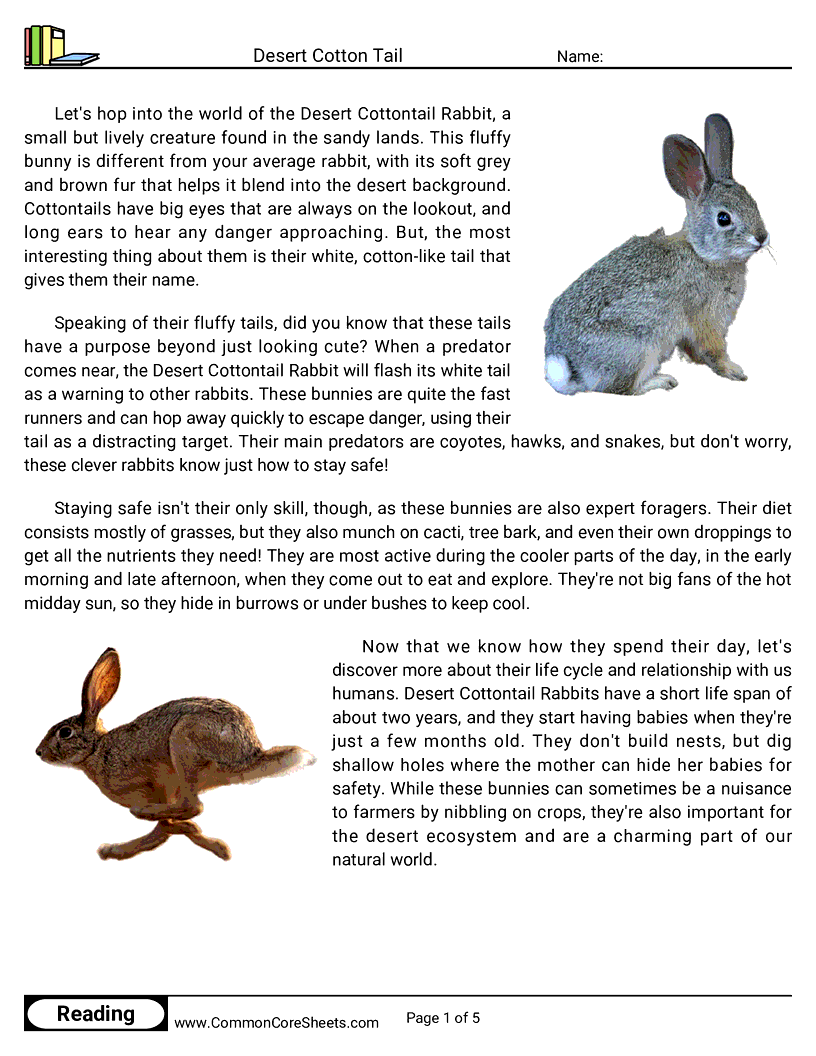
Let's hop into the world of the Desert Cottontail Rabbit, a small but lively creature found in the sandy lands. This fluffy bunny is different from your average rabbit, with its soft grey and brown fur that helps it blend into the desert background. Cottontails have big eyes that are always on the lookout, and long ears to hear any danger approaching. But, the most interesting thing about them is their white, cotton-like tail that gives them their name.
Speaking of their fluffy tails, did you know that these tails have a purpose beyond just looking cute? When a predator comes near, the Desert Cottontail Rabbit will flash its white tail as a warning to other rabbits. These bunnies are quite the fast runners and can hop away quickly to escape danger, using their tail as a distracting target. Their main predators are coyotes, hawks, and snakes, but don't worry, these clever rabbits know just how to stay safe!
Staying safe isn't their only skill, though, as these bunnies are also expert foragers. Their diet consists mostly of grasses, but they also munch on cacti, tree bark, and even their own droppings to get all the nutrients they need! They are most active during the cooler parts of the day, in the early morning and late afternoon, when they come out to eat and explore. They're not big fans of the hot midday sun, so they hide in burrows or under bushes to keep cool.
Now that we know how they spend their day, let's discover more about their life cycle and relationship with us humans. Desert Cottontail Rabbits have a short life span of about two years, and they start having babies when they're just a few months old. They don't build nests, but dig shallow holes where the mother can hide her babies for safety. While these bunnies can sometimes be a nuisance to farmers by nibbling on crops, they're also important for the desert ecosystem and are a charming part of our natural world.
Desert cottontails are fascinating creatures that live in the arid regions of North America. These small, furry animals have a soft coat of fur that is brownish-gray with a white fluffy tail. They have large ears that help them stay cool in the hot desert environment. Desert cottontails are most active during the early morning and late afternoon when the temperatures are cooler.
A desert cottontail's diet mainly consists of plants found in its habitat. This includes grasses, shrubs, and cacti, as well as some flowers and fruits. During times of scarcity, they will also eat insects and small animals like lizards. This varied diet helps them adapt to the changing conditions of the desert.
The life cycle of a desert cottontail begins when they are born in a small nest. Baby cottontails, called kittens, are born hairless and blind, but they grow quickly. In just a few weeks, they are ready to leave the nest and start exploring the world. Desert cottontails live for about two to three years in the wild.
Desert cottontails have various relationships with humans and other animals. Humans often find them cute and enjoy watching them, but they can also be seen as pests when they eat garden plants. Cottontails play an important role in the food chain, as they are a source of food for predators like coyotes, snakes, and birds of prey. In turn, they help control the population of the plants they eat.
There are some interesting differences between desert cottontails and other rabbit species. Desert cottontails are generally smaller than other rabbits and have longer ears to help them stay cool. Their white fluffy tail, which gives them their name, is unique to this species. Desert cottontails can also jump up to 15 feet in one leap to escape from predators.
Desert cottontails are fascinating creatures that live in the arid regions of North America. These fluffy little rabbits have big ears, long legs, and a cute, short tail that resembles a cotton ball. They are well-adapted to their desert environment, with a coat that changes color to blend in with their surroundings. Desert cottontails are most active during dawn and dusk, spending their days hiding from predators and staying cool in burrows. Let's dive deeper into the life of these adorable bunnies!
One of the most interesting aspects of desert cottontails is their diverse diet. These herbivores love to munch on grass, cacti, and other desert plants. During times of scarcity, they'll even eat twigs and bark from trees. Since water is scarce in the desert, they rely on the moisture from their food to stay hydrated. Their favorite treats are prickly pear cactus fruits, which provide them with both nutrition and water.
The life cycle of a desert cottontail is full of fascinating stages. They usually mate between January and August, with females giving birth to multiple litters each year. Each litter can have up to six baby bunnies, called kits, which are born hairless, blind, and helpless. After about a month of nursing and growing, the kits venture out of the nest and start to explore the world on their own. These young rabbits grow up quickly and can start having babies of their own when they're just three months old.
Desert cottontails have a unique relationship with humans and other animals. While they are often considered a nuisance by gardeners, they play a vital role in the desert ecosystem by spreading seeds and providing food for predators. Animals like coyotes, hawks, and snakes all rely on these rabbits as a food source. Desert cottontails have a special defense mechanism called "freezing," where they stay completely still to avoid being noticed by predators. They can also escape danger by hopping quickly in a zig-zag pattern to confuse their pursuers.
There are some key differences between desert cottontails and other rabbit species. One major distinction is their habitat, as desert cottontails are specifically adapted to survive in arid environments. Their large ears help them dissipate heat and stay cool in the scorching desert sun. Unlike other rabbits, desert cottontails do not dig their own burrows, instead, they use abandoned burrows or hide under rocks and bushes. These remarkable adaptations make the desert cottontail a truly unique and interesting species.
About this worksheet
Students read a passage about the desert cottontail rabbit and answer comprehension questions about its habitat, diet, and behaviors.
This worksheet is designed to enhance children's reading abilities through engaging content about the Desert Cottontail Rabbit. Comprising 20 in-depth questions, it encompasses the rabbit's physical characteristics, lifestyle, habitats, and interaction with the environment. This resource can be customized into flashcards or adapted for distance learning, offering educators convenience and flexibility in teaching about desert wildlife.
Student objectives
- Read a nonfiction passage about desert cottontail rabbits
- Find and recall facts stated in the text
- Answer questions about the rabbit's habitat and diet
- Understand new vocabulary about desert animals
Everyday practice
- Read a nature article and remember key facts about an animal
- Answer questions about a book you read at the library
- Explain what a wild rabbit eats after reading about it
- Share facts about desert animals from a magazine or website