Cuban Crocodile Worksheet Download
Free reading worksheets on Cuban Crocodile. Each worksheet has 20 problems with an answer key and are ideal for teachers and homeschooling. You can download the PDF, create a set of flash cards or set it up for online learning.
Select a Different Activity
>


Sheet Information >
Available at 2nd grade, 3rd grade, 4th grade, 5th grade and 6th grade reading levels.
Read the passage
Hey kids, let\'s talk about the Cuban crocodile! These amazing creatures are known for their bright colors and unique patterns. Cuban crocodiles are smaller than some other crocodile species, but they are still very strong and fast.
Now let\'s explore where these cool crocodiles live and what they like to eat. Cuban crocodiles can be found in the freshwater swamps of Cuba, which is an island in the Caribbean Sea. They love to eat fish, turtles, and even small mammals that come near the water.
Lastly, it\'s important to know about their life cycle and how they interact with humans and other animals. Cuban crocodiles lay eggs, and the baby crocodiles are called hatchlings, which grow into adults in about 4 to 5 years. While they are usually shy around humans, it\'s important to remember that they are wild animals and should be respected from a safe distance. Cuban crocodiles are also known for being very social with each other, which is quite different from other crocodile species.
In conclusion, Cuban crocodiles are fascinating creatures with unique features, interesting diets, and intriguing relationships with humans and other animals. So next time you\'re learning about crocodiles, don\'t forget about these special reptiles from Cuba!
Hey kids, let\'s learn about the Cuban crocodile! These unique reptiles live in Cuba, an island in the Caribbean Sea. They have bright, bumpy skin and are smaller than other crocodile species, growing up to 11 feet long. Cuban crocodiles are amazing swimmers and love munching on fish, turtles, and small mammals.
Now, let\'s talk about their life cycle and relationships with other animals. Cuban crocodile moms lay their eggs in nests made of plants and mud, and after about 80 days, baby crocodiles hatch! These little ones are called hatchlings and they have a close relationship with their mom, who protects them from other animals. Cuban crocodiles play an important role in their environment by controlling the population of their prey.
Lastly, let\'s discuss their relationship with humans and their unique features. Cuban crocodiles are not very dangerous to humans, but their habitat is shrinking due to human activities. These crocodiles have strong legs and can even leap to catch their prey, which is something that sets them apart from other crocodile species. One interesting fact is that they are considered one of the most intelligent crocodiles, using teamwork to hunt their food.
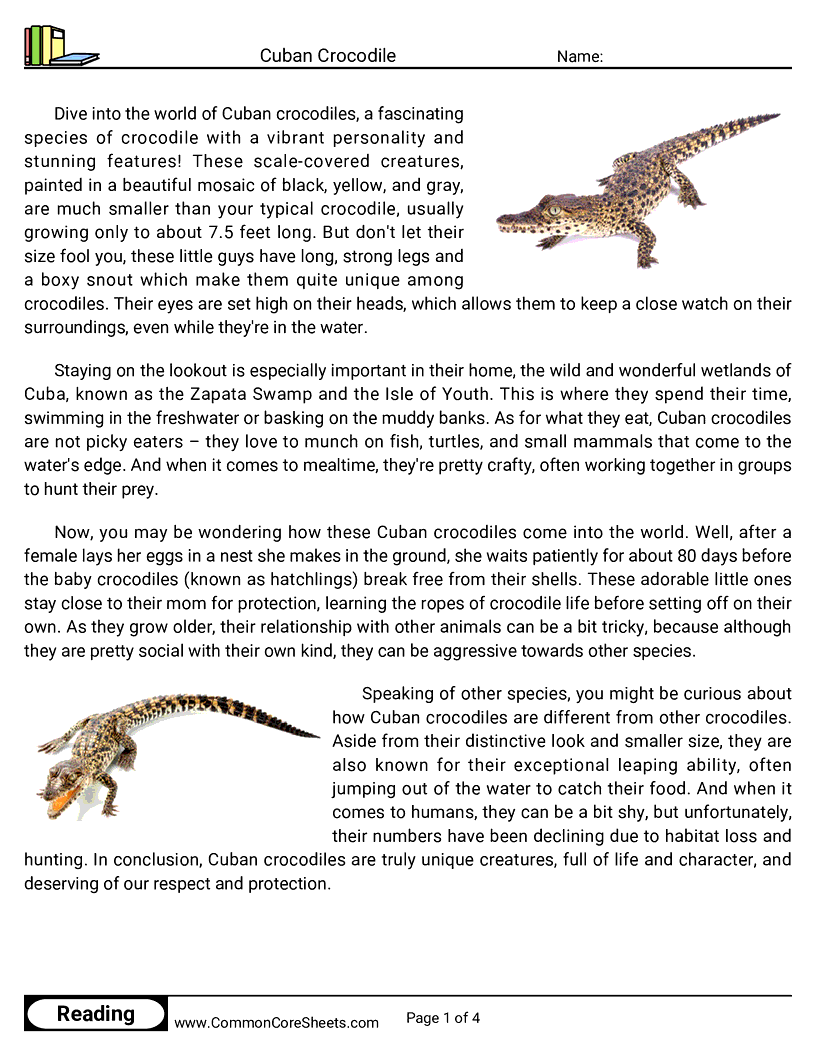
Dive into the world of Cuban crocodiles, a fascinating species of crocodile with a vibrant personality and stunning features! These scale-covered creatures, painted in a beautiful mosaic of black, yellow, and gray, are much smaller than your typical crocodile, usually growing only to about 7.5 feet long. But don't let their size fool you, these little guys have long, strong legs and a boxy snout which make them quite unique among crocodiles. Their eyes are set high on their heads, which allows them to keep a close watch on their surroundings, even while they're in the water.
Staying on the lookout is especially important in their home, the wild and wonderful wetlands of Cuba, known as the Zapata Swamp and the Isle of Youth. This is where they spend their time, swimming in the freshwater or basking on the muddy banks. As for what they eat, Cuban crocodiles are not picky eaters – they love to munch on fish, turtles, and small mammals that come to the water's edge. And when it comes to mealtime, they're pretty crafty, often working together in groups to hunt their prey.
Now, you may be wondering how these Cuban crocodiles come into the world. Well, after a female lays her eggs in a nest she makes in the ground, she waits patiently for about 80 days before the baby crocodiles (known as hatchlings) break free from their shells. These adorable little ones stay close to their mom for protection, learning the ropes of crocodile life before setting off on their own. As they grow older, their relationship with other animals can be a bit tricky, because although they are pretty social with their own kind, they can be aggressive towards other species.
Speaking of other species, you might be curious about how Cuban crocodiles are different from other crocodiles. Aside from their distinctive look and smaller size, they are also known for their exceptional leaping ability, often jumping out of the water to catch their food. And when it comes to humans, they can be a bit shy, but unfortunately, their numbers have been declining due to habitat loss and hunting. In conclusion, Cuban crocodiles are truly unique creatures, full of life and character, and deserving of our respect and protection.
Let\'s dive into the fascinating world of the Cuban crocodile! This unique reptile is known for its incredible leaping ability and bright colors. The Cuban crocodile is one of the smallest crocodile species in the world, with adults usually growing to be about 7 to 10 feet long. These special crocodiles are only found in Cuba, making them a very rare and interesting species to learn about.
Now let\'s talk about what Cuban crocodiles like to eat. Their diet mainly consists of fish, turtles, and small mammals found in their habitat. Cuban crocodiles are excellent hunters, using their powerful jaws and sharp teeth to catch their prey. They are also known to work together in groups to hunt larger animals such as deer.
Cuban crocodiles have an interesting life cycle and relationship with other animals. During mating season, the male crocodile performs a unique dance to attract a female partner. Once they mate, the female lays eggs in a nest and guards them until they hatch. Baby crocodiles, known as hatchlings, are born with bright yellow and black stripes, which fade as they grow older.
You might be wondering how Cuban crocodiles interact with humans and other species. In the wild, they are generally shy and avoid contact with humans, but they can be dangerous if they feel threatened. Cuban crocodiles are also known to be territorial and sometimes aggressive with other crocodile species. Due to habitat loss and illegal hunting, the Cuban crocodile is considered to be critically endangered, and conservation efforts are in place to protect them.
Finally, let\'s explore some interesting facts and differences between Cuban crocodiles and other species. One unique feature is their ability to leap almost completely out of the water, which is helpful when catching prey. Cuban crocodiles have a more vibrant coloration than most other species, with dark green, yellow, and black patterns. Their tails are also shorter and more muscular, allowing them to move quickly and easily through the water. Now that you know more about the amazing Cuban crocodile, you can share your knowledge with your friends and family!
The Cuban crocodile is a fascinating and unique reptile that lives in the Caribbean. These crocodiles have a distinctive look, with bright, pebbly skin and a broad snout. They can grow up to 3.5 meters long, but despite their size, they are known for being very agile on land and in water. Their powerful legs allow them to leap and make high-speed lunges at their prey. These interesting creatures are only found in two places on Earth: the Zapata Swamp and the Isle of Youth in Cuba.
Cuban crocodiles have a diverse diet, which includes both animals and plants. They are known to eat fish, crustaceans, small mammals, and even other reptiles. Their strong jaws and sharp teeth make it easy for them to crush the shells of turtles and other hard prey. Sometimes, they will even eat fruits that fall into the water. This varied diet helps them grow strong and healthy throughout their lives.
The life cycle of a Cuban crocodile is quite intriguing. Like other crocodile species, they lay their eggs in nests made of rotting vegetation. The eggs incubate for about 80 days, and the temperature during this time determines whether the baby crocodiles will be male or female. Once they hatch, the mother will carry her young to the water in her mouth, protecting them from predators. Cuban crocodiles can live for more than 50 years, but their population is currently endangered due to habitat loss and human activity.
Humans and Cuban crocodiles have a complex relationship. While they are considered dangerous to humans, attacks are rare, and they are typically shy creatures. However, their habitat is being destroyed by human activities, such as agriculture and development. In addition, they are sometimes hunted for their meat and skin, which is highly prized. Conservation efforts are underway to help protect these amazing reptiles and their natural habitats.
Finally, Cuban crocodiles have interesting relationships with other animals. In their natural habitat, they share their space with other crocodile species, such as the American crocodile. While they may compete for food and territory, they also have been known to interbreed, creating hybrid offspring. As predators, they help control the population of other animals, maintaining a balanced ecosystem. Despite their fearsome appearance, they play a crucial role in their environment.
In conclusion, Cuban crocodiles are fascinating creatures with unique features and behaviors. Their relationships with humans and other animals are complex, but they play an essential role in maintaining the balance of their ecosystem. As we learn more about these amazing reptiles, it is important to continue efforts to protect and conserve their natural habitats for future generations to enjoy and appreciate.
About this worksheet
Students read a nonfiction passage about the Cuban crocodile and answer comprehension questions about its habitat, behavior, and features.
This worksheet is designed to engage children in reading while increasing their knowledge about Cuban crocodiles. It consists of 20 interactive questions about the crocodile's size, habitat, behavior, and threats to its survival. With options for customization, it can be easily transformed into flashcards or adapted for distance learning, making comprehension about this unique species both informative and versatile.
Student objectives
- Read a nonfiction passage and understand the main ideas
- Find specific facts and details about the Cuban crocodile in the text
- Answer questions using evidence from the reading
- Learn new vocabulary related to animals and habitats
Everyday practice
- Read facts about an animal at a zoo exhibit and remember key details
- Pull out the important information when reading a magazine article about wildlife
- Answer questions about something you just read in a book
- Explain to a friend what a Cuban crocodile is like after reading about it