Cotton Mouse Worksheet Download
Free reading worksheets on Cotton Mouse. Each worksheet has 20 problems with an answer key and are ideal for teachers and homeschooling. You can download the PDF, create a set of flash cards or set it up for online learning.


Sheet Information >
Available at 2nd grade, 3rd grade, 4th grade, 5th grade and 6th grade reading levels.
Read the passage
Hey kids, let's learn about the cotton mouse, a small but interesting rodent! Cotton mice have brownish-grey fur, white bellies, and large, round ears. They are mainly nocturnal, which means they are most active during the night.
Now, let's explore the cotton mouse's habitat and what they like to eat. These little creatures live in forests, swamps, and grasslands in the southeastern United States. Their diet consists of seeds, fruits, insects, and even other small animals like baby birds.
Finally, let's talk about the cotton mouse's relationships and some interesting facts. Cotton mice are important to their ecosystem, providing food for predators like snakes, birds, and larger mammals. Even though they are similar to house mice, cotton mice have a longer tail and a different color pattern.
In conclusion, cotton mice are fascinating creatures that play an important role in their environment. They may be small, but they have a big impact on the world around them.
Hey there, have you ever heard of the cotton mouse? It's a small brownish-gray rodent with large ears, soft fur, and a long tail. These little creatures can be found throughout the southeastern United States, living in forests, swamps, and even sometimes in your own backyard. They are called cotton mice because they sometimes use cotton to build their cozy nests!
Cotton mice are omnivores, which means they eat a bit of everything. Their diet consists of seeds, fruits, insects, and sometimes even small reptiles or amphibians. These tiny mammals play an important role in their ecosystem as they help control insect populations and serve as a food source for other animals like snakes, birds, and larger mammals. Their life cycle includes four stages: birth, growth, reproduction, and death, just like most other animals.
Now, let's talk about their relationship with humans and other animals. While cotton mice might not be your first choice for a pet, they usually do not cause any harm to humans. However, they can sometimes carry diseases, so it's best to leave them in their natural habitat and admire them from a distance. In the wild, they use their quick speed and agility to escape from predators, making them an interesting and unique species to learn about.
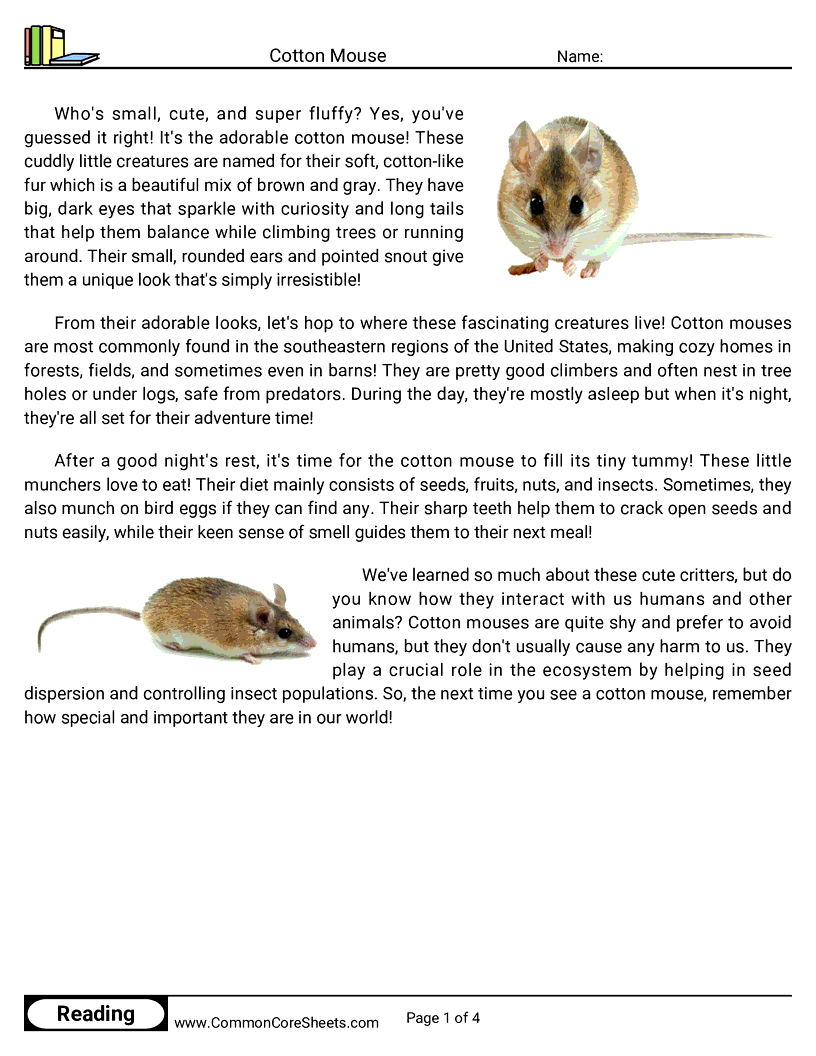
Who's small, cute, and super fluffy? Yes, you've guessed it right! It's the adorable cotton mouse! These cuddly little creatures are named for their soft, cotton-like fur which is a beautiful mix of brown and gray. They have big, dark eyes that sparkle with curiosity and long tails that help them balance while climbing trees or running around. Their small, rounded ears and pointed snout give them a unique look that's simply irresistible!
From their adorable looks, let's hop to where these fascinating creatures live! Cotton mouses are most commonly found in the southeastern regions of the United States, making cozy homes in forests, fields, and sometimes even in barns! They are pretty good climbers and often nest in tree holes or under logs, safe from predators. During the day, they're mostly asleep but when it's night, they're all set for their adventure time!
After a good night's rest, it's time for the cotton mouse to fill its tiny tummy! These little munchers love to eat! Their diet mainly consists of seeds, fruits, nuts, and insects. Sometimes, they also munch on bird eggs if they can find any. Their sharp teeth help them to crack open seeds and nuts easily, while their keen sense of smell guides them to their next meal!
We've learned so much about these cute critters, but do you know how they interact with us humans and other animals? Cotton mouses are quite shy and prefer to avoid humans, but they don't usually cause any harm to us. They play a crucial role in the ecosystem by helping in seed dispersion and controlling insect populations. So, the next time you see a cotton mouse, remember how special and important they are in our world!
Meet the cotton mouse, a fascinating little creature that roams the southeastern United States. These small mammals are about 3 to 5 inches long, with a tail adding another 2 to 4 inches. Their fur is usually a reddish-brown color on their back and a grayish-white color on their belly. They get their name from their cotton-like fur and their tendency to use cotton and other soft materials to build their nests.
Cotton mice are quite adaptable when it comes to where they live. They can be found in a variety of habitats, such as forests, swamps, and even abandoned buildings. Their nests are often built in tree cavities, hollow logs, or under rocks. However, they might also build nests in attics or crawlspaces if they find their way into human homes.
These tiny creatures are omnivores, meaning they eat both plants and other animals. Their diet includes seeds, nuts, fruits, insects, and even small vertebrates like lizards and frogs. Cotton mice are also known for being good climbers, which helps them find food in trees and bushes. They are mostly active at night, foraging for food while avoiding predators.
Cotton mice have an interesting life cycle and relationship with other animals. They usually mate between February and October, with females giving birth to litters of 2 to 6 babies after a gestation period of about 23 days. These little mice are an important part of the food chain, serving as prey for larger animals like owls, snakes, and foxes. In return, they help control insect populations and disperse seeds.
Finally, let's talk about their defenses and how they differ from other mouse species. Cotton mice rely on their agility and speed to escape predators, and their nocturnal lifestyle helps them avoid some dangers. They are often mistaken for the similar-looking white-footed mouse, but cotton mice have longer tails and larger ears. Additionally, cotton mice are more likely to be found in the southeastern United States, while white-footed mice are more widespread.
Let's learn about the cotton mouse, a small but fascinating creature! Cotton mice are small mammals that can be found in the southeastern United States. They are nocturnal creatures, which means they are active during the night and sleep during the day. Cotton mice have brownish-gray fur with white bellies and can grow up to 4-5 inches long, not including their tails. Their large ears and big eyes make them look very cute and curious.
Now, let's explore the diet and habitat of the cotton mouse. Cotton mice are omnivores, which means they eat both plants and animals. Their diet consists of seeds, fruits, insects, and even small animals like lizards and snails. These mice prefer living in dense forests, grassy areas, and swamps, where they can find plenty of food and shelter. They are also known to make their nests in tree cavities or abandoned bird nests.
Understanding the life cycle of a cotton mouse is quite interesting. These mice have a relatively short lifespan, living only about 1-2 years in the wild. Cotton mice breed throughout the year, but they have more babies during the warmer months. Females can have up to 5 litters per year, with each litter containing 2-6 baby mice. Baby cotton mice grow quickly and are independent after just a few weeks.
Cotton mice have unique relationships with both humans and other animals. While they don't pose a direct threat to humans, they can sometimes carry diseases that can be transmitted through their droppings. Cotton mice are also considered a nuisance when they make their way into homes and cause damage to stored food or property. In the wild, they play an important role in the food chain as both predators and prey. Their main predators are snakes, owls, and other larger mammals.
Lastly, let's look at some interesting facts and differences between cotton mice and other species. Cotton mice are excellent climbers, which helps them escape from predators and find food in trees. Unlike house mice, cotton mice have longer tails and larger ears. They are also known to be more aggressive than other mouse species when defending their territory. One interesting fact is that cotton mice can swim well, which is useful when they live near swamps and marshes.
About this worksheet
Students read a short passage titled 'Cotton Mouse' and answer questions about the details, events, and main ideas in the text.
This worksheet is designed to enhance children's reading skills on the interesting topic of a Cotton Mouse. It contains 20 engaging multiple-choice questions about its physical characteristics, habitat, diet, and behaviors. Flexible in its use, it can be easily customized for different learning levels, converted into flash cards for fun revision, or incorporated into distance learning programs. An interactive combo of education and entertainment.
Student objectives
- Read a short story carefully and understand what happens
- Find specific details and facts stated in the passage
- Answer questions using information from the text
- Figure out the main idea of the story
Everyday practice
- Retell a story you just read to a friend or family member
- Answer questions about a book you read at bedtime
- Look back at a page to find an answer someone asks about it
- Explain what a short article or note was about