Brown Bear Worksheet Download
Free reading worksheets on Brown Bear. Each worksheet has 20 problems with an answer key and are ideal for teachers and homeschooling. You can download the PDF, create a set of flash cards or set it up for online learning.


Sheet Information >
Available at 2nd grade, 3rd grade, 4th grade, 5th grade and 6th grade reading levels.
Read the passage
Brown bears are fascinating creatures that live in many parts of the world. They can be found in North America, Europe, and Asia, usually living in forests and mountains. These big animals have thick fur that can range in color from light brown to almost black, and they can weigh up to 1,500 pounds!
Brown bears have a diverse diet, which means they eat many different things. They love to munch on berries, fruits, nuts, and plants, but they also eat fish like salmon and smaller animals like rodents. Since they are such powerful animals, they don't have many predators, but they do need to watch out for other bears and humans.
Brown bears have a unique life cycle and interesting relationships with humans and other animals. They usually live alone, but can sometimes be seen with their cubs or during the salmon season when food is plentiful. While some people might be afraid of bears, it's important to remember that they are an important part of our ecosystem and we should respect and protect them.
Brown bears are fascinating animals that live in various parts of the world. They have long, thick fur that can be different shades of brown, a hump on their shoulders, and sharp claws on their feet. These bears can be found in North America, Europe, and Asia, living in forests, mountains, and even arctic tundra. Their habitat depends on the availability of food and the climate they prefer.
When it comes to food, brown bears have a diverse diet and are considered omnivores. They love to eat berries, nuts, insects, fish, and other small animals, but they can also eat plants and grasses. Brown bears have a unique relationship with other animals, such as wolves and birds, who may try to steal their food or even eat together. Humans should always respect and keep a safe distance from brown bears, as they can be dangerous when they feel threatened.
The life cycle of a brown bear is quite interesting, beginning as a cub and growing into a large adult. Cubs are born in the winter while the mother is hibernating, and they stay with her for at least two years to learn how to survive in the wild. Brown bears have some differences from other bear species, such as their size, color, and habitat preferences. Now that you know a bit more about these amazing creatures, you can appreciate their role in nature and the importance of protecting their habitats.
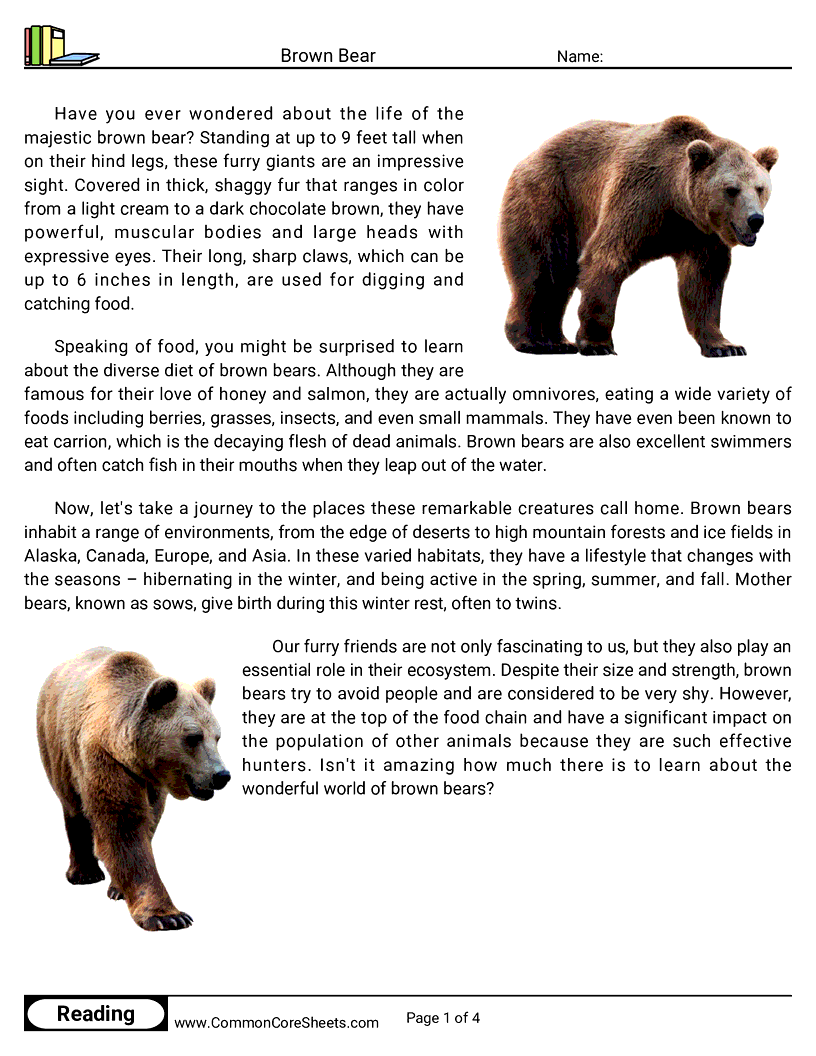
Have you ever wondered about the life of the majestic brown bear? Standing at up to 9 feet tall when on their hind legs, these furry giants are an impressive sight. Covered in thick, shaggy fur that ranges in color from a light cream to a dark chocolate brown, they have powerful, muscular bodies and large heads with expressive eyes. Their long, sharp claws, which can be up to 6 inches in length, are used for digging and catching food.
Speaking of food, you might be surprised to learn about the diverse diet of brown bears. Although they are famous for their love of honey and salmon, they are actually omnivores, eating a wide variety of foods including berries, grasses, insects, and even small mammals. They have even been known to eat carrion, which is the decaying flesh of dead animals. Brown bears are also excellent swimmers and often catch fish in their mouths when they leap out of the water.
Now, let's take a journey to the places these remarkable creatures call home. Brown bears inhabit a range of environments, from the edge of deserts to high mountain forests and ice fields in Alaska, Canada, Europe, and Asia. In these varied habitats, they have a lifestyle that changes with the seasons – hibernating in the winter, and being active in the spring, summer, and fall. Mother bears, known as sows, give birth during this winter rest, often to twins.
Our furry friends are not only fascinating to us, but they also play an essential role in their ecosystem. Despite their size and strength, brown bears try to avoid people and are considered to be very shy. However, they are at the top of the food chain and have a significant impact on the population of other animals because they are such effective hunters. Isn't it amazing how much there is to learn about the wonderful world of brown bears?
Let's learn about the amazing brown bear, a fascinating animal that you might be curious about. Brown bears are large mammals with thick fur that can range in color from light brown to almost black. They have strong, curved claws that help them dig and climb trees, as well as a powerful sense of smell that is even better than a dog's! Adult brown bears can weigh between 300 to 1,500 pounds, and they can stand up to 9 feet tall on their hind legs!
Brown bears have a diverse diet, which means they eat many different things. They are omnivores, so they eat both plants and animals such as berries, roots, fish, and small mammals. During the summer months, they love to catch and eat salmon as the fish swim upstream to spawn. They can eat up to 90 pounds of food per day, especially when preparing for hibernation!
These incredible animals can be found in various parts of the world, such as North America, Europe, and Asia. They prefer to live in forests, mountains, and tundra regions, where they can find plenty of food and shelter. Brown bears are solitary animals, which means they usually live alone except when it's time to mate or raise their young. In the winter months, they hibernate in dens to conserve energy and stay warm.
Brown bears have interesting relationships with humans and other animals. While they usually avoid humans, they can become dangerous if they feel threatened, especially if a mother bear is protecting her cubs. Brown bears play an essential role in their ecosystem by controlling the populations of smaller animals, such as rodents and insects. They can also help spread seeds and nutrients through their droppings, which helps plants grow.
Finally, let's explore some differences between brown bears and other bear species, as well as some fun facts. Compared to the smaller black bear, brown bears are generally larger and have a more prominent shoulder hump. One interesting fact is that the famous Grizzly bear is actually a subspecies of the brown bear! Did you know that brown bears can run up to 30 miles per hour, which is faster than the fastest human runner?
Let's learn about the fascinating brown bear, a majestic creature that captures our imagination. Brown bears are large mammals with a thick coat of fur that can range from light brown to almost black in color. They have a distinctive hump on their shoulders, which is actually a mass of muscles that help them dig and run. Their powerful limbs and sharp claws make them excellent hunters and climbers. Brown bears are found in various parts of the world, including North America, Europe, and Asia.
Brown bears have an omnivorous diet, which means they eat both plants and animals. They enjoy feasting on berries, fruits, nuts, and even insects like ants and bees. However, they are also known to hunt for fish, especially salmon, and sometimes even other animals like deer and elk. During the fall, brown bears eat a lot to gain enough weight to last them through their winter hibernation. During hibernation, they can lose up to one-third of their body weight!
The life cycle of a brown bear is quite interesting. They mate in the summer, and the female bear gives birth to one or more cubs during hibernation in the winter. Cubs are born blind and helpless, but they grow quickly and are able to walk within a few months. They stay with their mother for about two to three years, learning how to hunt and survive in the wild. Brown bears can live up to 30 years in the wild.
Brown bears share a complex relationship with humans and other animals. In some cultures, they are revered as symbols of strength and wisdom, while in others, they are feared as dangerous predators. Brown bears typically avoid humans, but they can be dangerous if they feel threatened or if their cubs are in danger. In the wild, they have few natural predators, with the exception of other bears and occasionally wolves. Their large size and powerful build make them one of the top predators in their ecosystem.
Lastly, let's explore some interesting facts and differences between brown bears and other bear species. Although they are called brown bears, their fur color can vary greatly, even within the same family. The Kodiak bear, a subspecies of the brown bear, is the largest bear in the world, even bigger than the polar bear! In contrast, the North American black bear is smaller and has a more slender build. Brown bears are truly fascinating creatures, and understanding them helps us appreciate the beauty and complexity of our natural world.
About this worksheet
Students read the passage 'Brown Bear' and answer questions about key details, sequence, and meaning in the text.
This worksheet is designed to enhance children's reading comprehension through engaging educational content about the Brown Bear. It shows 20 varied questions about the bears' habits, environment, physical attributes, and lifecycle. Perfect for subjects enrichment, it can be customized and transformed into flashcards. It also lends itself well to distance learning, serving as a fun, interactive tool to spark young minds' curiosity about wildlife".
Student objectives
- Read a short passage carefully and understand what it says
- Find answers to questions using details from the text
- Remember the order that events happen in a story
- Figure out the meaning of words from how they are used
Everyday practice
- Answer questions about a story after reading it at bedtime
- Retell what happened in a book to a friend or family member
- Look back at a page to find an answer you missed
- Follow the order of steps in a recipe or set of directions