Big Brown Bat Worksheet Download
Free reading worksheets on Big Brown Bat. Each worksheet has 20 problems with an answer key and are ideal for teachers and homeschooling. You can download the PDF, create a set of flash cards or set it up for online learning.


Sheet Information >
Available at 2nd grade, 3rd grade, 4th grade, 5th grade and 6th grade reading levels.
Read the passage
Hey kids, let's learn about the big brown bat, a fascinating creature that flies around at night. These bats are called big brown bats because they have a wingspan of about 13 inches, which is pretty big for a bat! They have glossy brown fur, tiny ears, and they use echolocation to find their food, which is mostly insects like beetles, moths, and mosquitoes.
Now let's talk about where these bats live and how they grow up. Big brown bats can be found all over North America, and they love to live in dark, quiet places like caves, trees, and even attics. Their life cycle is quite interesting; they have only one baby, called a pup, each year, and after a few months, the pup can fly and hunt on its own.
Lastly, let's discuss how big brown bats interact with humans and other animals. These bats are actually very helpful to people because they eat lots of insects that can be harmful to crops and gardens. They are different from other bat species because they can survive in cold temperatures and even hibernate during winter. In conclusion, big brown bats are amazing creatures that play an important role in our world by controlling insect populations and helping to maintain a balanced ecosystem.
Let's learn about the fascinating big brown bat! These furry creatures have a wingspan of about 13 inches and weigh around half an ounce. Big brown bats can be found throughout North America, living in forests, cities, and even in your own backyard! They love to make their homes in dark, cozy places like tree cavities, caves, and even buildings.
You might be wondering about the big brown bat's diet and relationships with other animals. These bats are insectivores, which means they eat insects like moths, beetles, and mosquitoes. Since they eat pesky bugs, they're helpful to humans and are considered the guardians of the night! However, big brown bats have some predators too, like owls, hawks, and snakes.
Now let's explore their life cycle and a few more interesting facts. Female big brown bats give birth to one or two pups each year, and the baby bats can fly within a month! One big difference between big brown bats and other species is their ability to survive in cold temperatures, making them more resilient during winter months. Did you know that big brown bats can live up to 19 years? That's a long time for such a small creature!
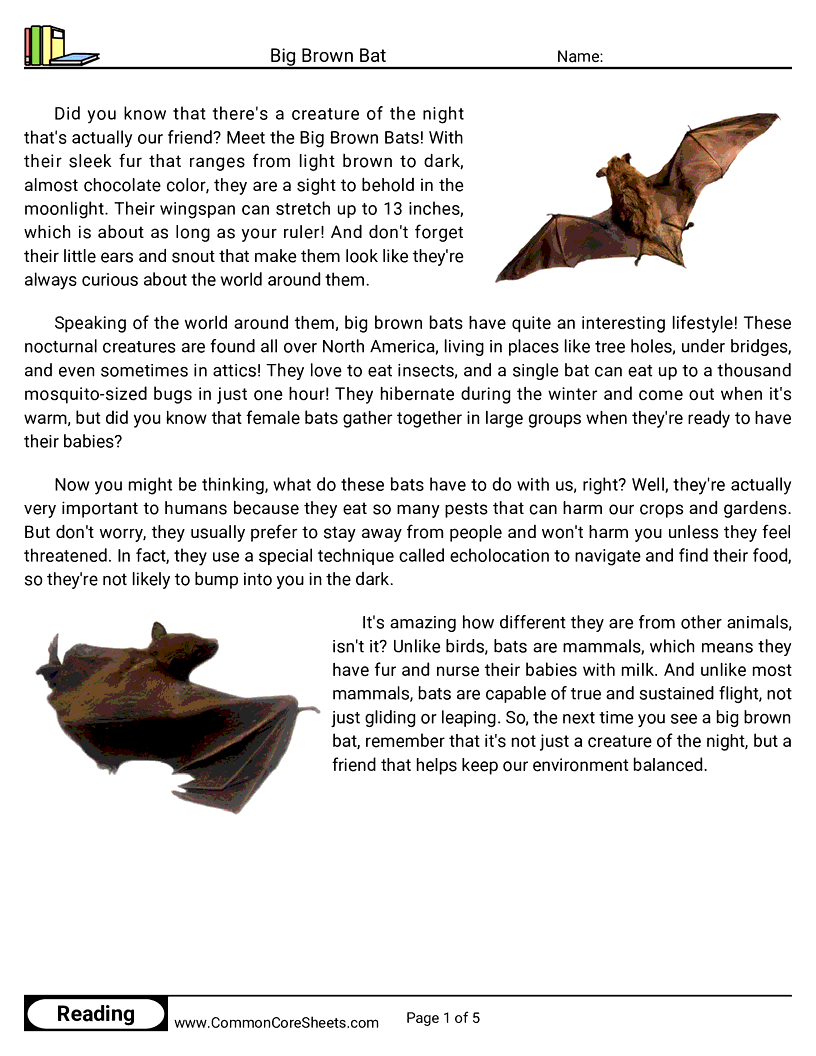
Did you know that there's a creature of the night that's actually our friend? Meet the Big Brown Bats! With their sleek fur that ranges from light brown to dark, almost chocolate color, they are a sight to behold in the moonlight. Their wingspan can stretch up to 13 inches, which is about as long as your ruler! And don't forget their little ears and snout that make them look like they're always curious about the world around them.
Speaking of the world around them, big brown bats have quite an interesting lifestyle! These nocturnal creatures are found all over North America, living in places like tree holes, under bridges, and even sometimes in attics! They love to eat insects, and a single bat can eat up to a thousand mosquito-sized bugs in just one hour! They hibernate during the winter and come out when it's warm, but did you know that female bats gather together in large groups when they're ready to have their babies?
Now you might be thinking, what do these bats have to do with us, right? Well, they're actually very important to humans because they eat so many pests that can harm our crops and gardens. But don't worry, they usually prefer to stay away from people and won't harm you unless they feel threatened. In fact, they use a special technique called echolocation to navigate and find their food, so they're not likely to bump into you in the dark.
It's amazing how different they are from other animals, isn't it? Unlike birds, bats are mammals, which means they have fur and nurse their babies with milk. And unlike most mammals, bats are capable of true and sustained flight, not just gliding or leaping. So, the next time you see a big brown bat, remember that it's not just a creature of the night, but a friend that helps keep our environment balanced.
Let's learn about the fascinating big brown bat! These amazing creatures are nocturnal mammals found in North America, and they are a type of microbat. They have a wingspan of 12 to 16 inches and weigh around half an ounce to an ounce. Their fur is brown, as suggested by their name, and they have large ears for echolocation.
Big brown bats have a unique diet that helps keep our environment healthy. They mainly eat insects like beetles, moths, and flies, which they catch while flying at night. By eating these insects, they help control insect populations and protect crops from pests. Did you know a single big brown bat can eat up to 1,000 insects in just one hour?
These bats can be found in various types of habitats. They live in forests, deserts, and even urban areas, making their homes in caves, trees, attics, and under bridges. During the day, they roost in dark, quiet places to sleep and stay hidden from predators. In winter, they hibernate in caves or mines, where the temperature is stable.
Big brown bats have interesting relationships with other animals and humans. Some birds of prey, like owls, may eat big brown bats, while other animals like raccoons might try to catch them when they're roosting. Humans can benefit from big brown bats because they help control insect populations. However, humans should avoid handling bats, as they can carry diseases like rabies.
There are many fascinating facts about big brown bats that set them apart from other species. Unlike some other bat species, big brown bats can survive in cold temperatures and do not need to migrate to warmer areas during winter. Their ability to use echolocation allows them to navigate in complete darkness and catch their prey mid-flight. Big brown bats can live up to 20 years in the wild, which is quite a long time for such a small mammal.
Now that you've learned about the amazing big brown bat, you can appreciate the important role they play in our ecosystem and how they benefit us by keeping insect populations under control.
Let's dive into the fascinating world of the big brown bat, one of the most intriguing creatures in the animal kingdom. These amazing mammals are commonly found across North America, inhabiting a wide variety of environments. Big brown bats have a wingspan of about 13 inches, making them quite large compared to other bat species. They have a unique appearance, with brown fur covering their bodies, large ears, and a distinctive nose. Though they may seem a bit scary at first, these bats are actually quite harmless and play an important role in our ecosystem.
Big brown bats are known for their diverse diet, which helps keep the insect population in check. They primarily feast on insects such as beetles, moths, and flies, using their excellent echolocation skills to detect and catch their prey. In fact, a single big brown bat can eat up to 1,200 mosquito-sized insects in just one hour! Their feeding habits are quite beneficial to humans, as they control pests that could otherwise damage crops and spread diseases. So, these bats are not only interesting, but also helpful to us!
The life cycle of the big brown bat is quite remarkable. Females typically give birth to one or two pups each year, usually during late spring or early summer. The pups are born hairless and helpless, relying on their mothers for food and protection. As they grow, they learn to fly and hunt for insects on their own. Big brown bats can live up to 20 years, which is quite impressive for such small creatures.
These bats share a unique relationship with both humans and other animals. As mentioned earlier, they help control insect populations, which is beneficial to farmers and gardeners. Big brown bats also serve as a food source for some predators, such as owls and raccoons. As nocturnal animals, they spend their days resting in dark, secluded spaces like caves, tree hollows, and even man-made structures like attics. Their ability to coexist with humans and other animals showcases their adaptability and importance in the ecosystem.
Finally, let's explore some fascinating facts about big brown bats and what sets them apart from other species. While some bat species migrate to warmer climates during the winter, big brown bats often hibernate in colder regions. They can even withstand freezing temperatures by lowering their body temperature and entering a state of torpor. Another interesting fact is that big brown bats are one of the few bat species that use echolocation to detect not only their prey but also their predators. This incredible adaptation helps them stay safe and thrive in their environment.
Now that we've explored the captivating world of big brown bats, it's clear that these creatures are not only fascinating but also vital to our ecosystem. From their unique appearance to their impressive hunting skills and adaptability, big brown bats are truly remarkable animals that deserve our appreciation and respect.
About this worksheet
Students read a short informational passage about the big brown bat and answer comprehension questions about its habits and traits.
This worksheet is designed to enhance children's reading and comprehension skills through a fascinating exploration of the Big Brown Bat. It offers 20 interactive questions on bat characteristics, behaviors, and habitats. This customizable resource can be easily converted into flash cards or adapted to distance learning, making it a versatile tool for engaging young learners in biology.
Student objectives
- Read a nonfiction passage about big brown bats and understand the main ideas
- Find and recall details about where bats live and what they eat
- Learn new facts and vocabulary about bats
- Answer questions using information from the reading
Everyday practice
- Understand facts you read in a wildlife book or nature magazine
- Answer questions about an animal you saw at a zoo or park
- Explain to a friend what bats eat and where they sleep
- Recognize a big brown bat if you spot one flying at dusk