Bed Bugs Worksheet Download
Free reading worksheets on Bed Bugs. Each worksheet has 20 problems with an answer key and are ideal for teachers and homeschooling. You can download the PDF, create a set of flash cards or set it up for online learning.


Sheet Information >
Available at 2nd grade, 3rd grade, 4th grade, 5th grade and 6th grade reading levels.
Read the passage
Hey there, do you know about bed bugs? They are tiny insects that feed on human blood, and they are really good at hiding. Bed bugs are flat, reddish-brown, and about the size of an apple seed. They usually come out at night when people are sleeping, so they can have a quick meal. These bugs don't fly, but they can crawl very fast, making it easier for them to move around and find their next meal.
Now, let's talk about where bed bugs live and their life cycle. They love to live in places close to humans, like beds, couches, and even in clothes. Bed bugs lay their eggs in tiny hiding spots, and after about two weeks, the eggs hatch into baby bed bugs called nymphs. Nymphs grow into adult bed bugs after shedding their skin five times. An adult bed bug can live for up to 10 months, and during that time, they can lay hundreds of eggs.
Bed bugs are different from other insects in several ways. For example, they only feed on blood, while most other insects eat plants or other insects. When it comes to defense, bed bugs don't have stingers or strong jaws to bite, but they do have a special trick: they can release a smell that warns other bed bugs of danger. An interesting fact about bed bugs is that they can survive for several months without eating, which makes them really hard to get rid of.
Hey there! Let's talk about bed bugs, those tiny little insects that love to live close to humans. Bed bugs are reddish-brown and about the size of an apple seed, making them hard to spot. They like to hide in places like mattresses, bed frames, and even luggage. Did you know that their favorite food is human blood? That's why they like to live near us!
Now, let's learn about the life cycle of a bed bug. They start as tiny eggs, then hatch into baby bed bugs called nymphs, which are even smaller and harder to see. As they grow, they shed their skin five times before becoming an adult bed bug. Adult bed bugs can live up to a year, and they can go a long time without a meal, just waiting for their next human host.
Finally, let's explore how bed bugs are different from other insects and some interesting facts about them. Unlike fleas or mosquitoes, bed bugs can't fly or jump, but they are excellent crawlers. They also have a special defense mechanism: they can emit a musty smell to ward off potential predators. An interesting fact is that bed bugs have been around for thousands of years, even living with ancient Egyptians! Now you know more about bed bugs and their unique characteristics. Remember, if you ever think you might have bed bugs, it's important to tell an adult so they can help you get rid of them. Stay curious and keep learning!
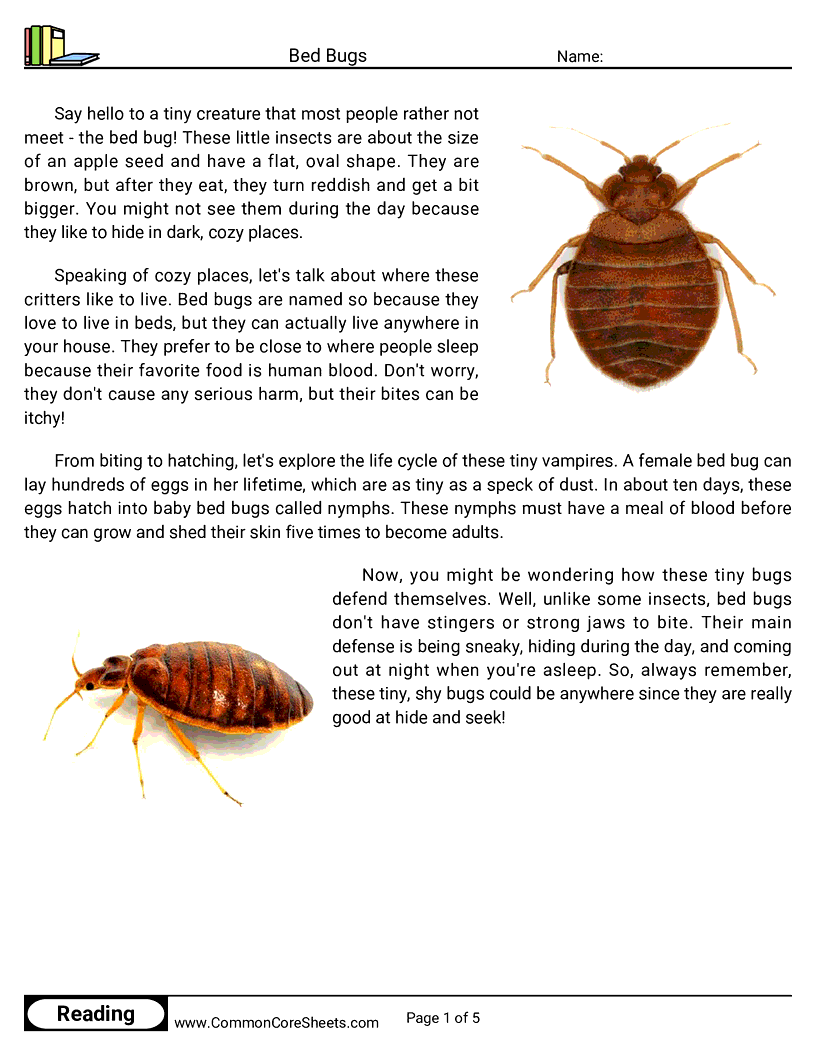
Say hello to a tiny creature that most people rather not meet - the bed bug! These little insects are about the size of an apple seed and have a flat, oval shape. They are brown, but after they eat, they turn reddish and get a bit bigger. You might not see them during the day because they like to hide in dark, cozy places.
Speaking of cozy places, let's talk about where these critters like to live. Bed bugs are named so because they love to live in beds, but they can actually live anywhere in your house. They prefer to be close to where people sleep because their favorite food is human blood. Don't worry, they don't cause any serious harm, but their bites can be itchy!
From biting to hatching, let's explore the life cycle of these tiny vampires. A female bed bug can lay hundreds of eggs in her lifetime, which are as tiny as a speck of dust. In about ten days, these eggs hatch into baby bed bugs called nymphs. These nymphs must have a meal of blood before they can grow and shed their skin five times to become adults.
Now, you might be wondering how these tiny bugs defend themselves. Well, unlike some insects, bed bugs don't have stingers or strong jaws to bite. Their main defense is being sneaky, hiding during the day, and coming out at night when you're asleep. So, always remember, these tiny, shy bugs could be anywhere since they are really good at hide and seek!
Hey there, let's talk about bed bugs, those tiny little insects that can sometimes be found in our homes. Bed bugs are small, brownish, and have a flat, oval shape. They like to hide in small crevices and cracks, especially in mattresses, furniture, and walls. These insects can be a nuisance, but don't worry, we'll learn all about them and how to spot them.
You might be wondering, 'What do bed bugs eat?' Well, bed bugs feed on the blood of humans and animals, such as dogs and cats. They usually come out at night and use their long, sharp mouthparts to bite and drink blood. The bites can be itchy and annoying, but luckily, they don't transmit any diseases to humans.
Now let's take a look at the life cycle of a bed bug. Bed bugs go through five stages, called nymph stages, before becoming an adult. They start as tiny eggs, hatch into nymphs, and grow by shedding their skin after each meal. The process takes about five weeks, depending on the temperature and availability of food.
Interestingly, bed bugs have unique relationships with both humans and other insects. For humans, bed bugs are considered pests because they can cause itchy bites and infest our living spaces. In the insect world, bed bugs don't have many natural enemies, but some insects, like spiders and ants, may eat them. Bed bugs are also known to be resistant to many pesticides, which makes them tough to get rid of.
Finally, let's discuss some interesting differences between bed bugs and other species. Unlike other insects, like mosquitoes, bed bugs don't fly or jump, but they can crawl quickly. Also, bed bugs can survive for several months without eating, which allows them to stay hidden for long periods. On a positive note, these insects are not known to spread diseases, unlike other pests like ticks or mosquitoes.
Bed bugs are tiny insects that can be quite a nuisance in our homes. These little critters are flat, oval-shaped, and reddish-brown in color. They are about the size of an apple seed, and they can be found all over the world. Bed bugs are nocturnal, which means they are active during the night and hide during the day. These insects are known for their ability to survive in various environments, making them hard to get rid of once they've settled in.
A bed bug's diet consists of one main thing: blood. These insects are considered parasites because they feed on the blood of humans and animals to survive. Bed bugs use their sharp beak-like mouthparts to pierce the skin and suck out the blood of their host. While they prefer human blood, they can also feed on birds, bats, and other mammals if necessary. Fortunately, bed bugs are not known to transmit any diseases through their bites, but their bites can be itchy and uncomfortable.
The life cycle of a bed bug includes several stages. They start as tiny, almost invisible eggs that are usually laid in hidden areas, like mattress seams or cracks in walls. After about 10 days, the eggs hatch into small, pale-yellow nymphs, which need to feed on blood to grow and molt through five stages before becoming adults. This process can take anywhere from five weeks to several months, depending on factors like temperature and food availability. Adult bed bugs can live for several months to over a year, and females can lay hundreds of eggs during their lifetime.
Bed bugs have some fascinating relationships with humans and other insects. In human environments, they are often considered pests because of their bites and the difficulty in getting rid of them. However, bed bugs have been around for thousands of years, and they have even been found in Egyptian tombs! In the insect world, bed bugs have natural enemies like ants, spiders, and some types of beetles, which can help control their population. Despite this, bed bugs are still very resilient and can thrive in many different environments.
Finally, let's explore some interesting facts and differences between bed bugs and other insects. Unlike many other insects, bed bugs cannot fly or jump, but they are great at crawling and hiding in small spaces. Bed bugs have a unique way of communicating with each other through chemical signals called pheromones. These pheromones help them to find each other and locate suitable places to lay their eggs. Learning about bed bugs and understanding their behavior can help us find effective ways to prevent and control infestations in our homes.
About this worksheet
Students read a passage about bed bugs and answer questions to show their understanding of the text.
This worksheet is designed to enhance children's reading and comprehension skills, focusing on the fascinating subject of bed bugs. It covers a variety of topics including bed bug behavior, diet, anatomy, and lifecycle. This interactive, 20-problem set can be customized to fit individual learning styles, converted into flashcards for easy review, or used in distance learning settings for engaging remote education.
Student objectives
- Read an informational passage about bed bugs
- Find and recall details stated in the text
- Answer questions using evidence from the reading
- Understand new vocabulary related to bed bugs
- Summarize the main ideas of the passage
Everyday practice
- Read a pamphlet about pests and understand what it says
- Follow information in an article to learn how to spot a problem at home
- Explain to a family member what you read in a magazine
- Answer questions after reading a sign or notice